FNG Building a GIB

Joined
Dec 5, 2013
Messages
1,180
New to the forum, new to knife making, got questions. I've ordered a Grinder in a Box kit from Jamie at Polar Bear Forge and expect it should be here later in the week. I've got a 2hp Weg 3ph 3450rpm motor on the way that I picked up on Ebay. Ordered the 10" contact wheel from Grizzly and will order a 2" contact wheel from USA Knife Makers Supply. I will machine all my other idlers and drive wheel myself. I'm planning to run the KBAC 27D VFD. So, I've done a lot of reading and I'm still not sure how to best set up the drive and motor with regards to RPM and surface speed. My first question is, how much belt speed is enough? I've seen that some of the Burr-Kings go up to 7000sfm. That seems really fast to me and I know the smaller wheels won't be able to handle those kinds of speeds.

My next question is, would it be better to run the motor above 60hz to get the speed I need or to use a larger drive wheel. My calculations indicate that I would probably maintain higher torque by sticking with a 4" drive wheel and over-running the motor when needed as opposed to using a 6" drive wheel and staying below 60hz. Of course there are trade-offs with that. Many of you guys seem to have a lot of knowledge on this subject so what works best in the real world?

Thanks in advance. There is so much good information on this site. I'm very excited about getting started.

Bob
 
Most grinding on knives benefits from slowing down rather than speeding up. A 4" drive wheel is fast enough. I have a 5" on my craftsman, and it is too fast for everything but hogging steel.
 
New to the forum, new to knife making, got questions. I've ordered a Grinder in a Box kit from Jamie at Polar Bear Forge and expect it should be here later in the week. I've got a 2hp Weg 3ph 3450rpm motor on the way that I picked up on Ebay. Ordered the 10" contact wheel from Grizzly and will order a 2" contact wheel from USA Knife Makers Supply. I will machine all my other idlers and drive wheel myself. I'm planning to run the KBAC 27D VFD. So, I've done a lot of reading and I'm still not sure how to best set up the drive and motor with regards to RPM and surface speed. My first question is, how much belt speed is enough? I've seen that some of the Burr-Kings go up to 7000sfm. That seems really fast to me and I know the smaller wheels won't be able to handle those kinds of speeds.

My next question is, would it be better to run the motor above 60hz to get the speed I need or to use a larger drive wheel. My calculations indicate that I would probably maintain higher torque by sticking with a 4" drive wheel and over-running the motor when needed as opposed to using a 6" drive wheel and staying below 60hz. Of course there are trade-offs with that. Many of you guys seem to have a lot of knowledge on this subject so what works best in the real world?

Thanks in advance. There is so much good information on this site. I'm very excited about getting started.

Bob

Using the Kbac drives above 60 hz results in the following: linear drop of torque from 60 to 120 hz ultimately resulting in a drop of torque by 50% @ 120hz. So driving the motor with the 2x jumper results in increased sfpm but substantial torque reduction when running all out.

When I wired up my KMG, I decided on a max speed using appropriate pulley ratios and a 6" drive. My motor is 3hp so I'm not concerned about lacking torque.

I think the gib is direct drive so you'll have to control the sfpm with the drive wheel size. You could create an indirect drive gib. You could look on the wilmont site and see how they created an indirect drive mounting option for those that wanted the adjustability.
 
Thanks for the replies. So, do either of you have any idea what your max belt speed is? I need some kind of reference so I can get where I need to be.

Bob
 
Thanks for the replies. So, do either of you have any idea what your max belt speed is? I need some kind of reference so I can get where I need to be.

Bob

I'm about 5250 all out without using the 2x jumper on the kbac29 drive and 1750 rpm motor. This was achieved with a pulley ratio of ~2 with my indirect motor setup. Hope this helps. I also have a 4" wheel if things need to get slowed down more. One thing to keep in mind is a TEFC motors ran slows down as well as the motor is slowed, so effective cooling is decreased but adding airflow is quite easy using an external fan if needed.
 
I'm about 5250 all out without using the 2x jumper on the kbac29 drive and 1750 rpm motor. This was achieved with a pulley ratio of ~2 with my indirect motor setup. Hope this helps. I also have a 4" wheel if things need to get slowed down more. One thing to keep in mind is a TEFC motors ran slows down as well as the motor is slowed, so effective cooling is decreased but adding airflow is quite easy using an external fan if needed.

Good point on the cooling. That is another argument for running the smaller drive wheel and setting the VFD to 2x. I'm really leaning that direction. It is pretty unlikely that I would run over 90hz and most of the time I would be below 60hz. I'll run some tests when I get everything together just to make sure the bearings don't overheat and the motor doesn't develop too much vibration. This particular motor is only balanced to 3600rpm but, Weg's are pretty decent; I'm thinking it should be able to spin reliably to 5500 or so.

Bob
 
Good point on the cooling. That is another argument for running the smaller drive wheel and setting the VFD to 2x. I'm really leaning that direction. It is pretty unlikely that I would run over 90hz and most of the time I would be below 60hz. I'll run some tests when I get everything together just to make sure the bearings don't overheat and the motor doesn't develop too much vibration. This particular motor is only balanced to 3600rpm but, Weg's are pretty decent; I'm thinking it should be able to spin reliably to 5500 or so.

Bob

At 5500 rpm you would be about 50% extra rpm so that would correlate with 75 of max torque. Sound a like you have made up you mind. There are NUMEROUS threads about 4 pole 1750 rpm motors and advantages of this vs. higher rpm motors. With that said, the tw90 runs with the 2x setup and I have not heard of issues. Rob Frink, the maker of the KMG, does NOT recommend running the 2x jumper.

You can read more here:

http://knifedogs.com/showthread.php?33662-KMG-with-Dayton-motor-and-KBAC-controller-issues

The. Ice thing about your situation is that you could fab any size drive wheel to achieve the desired sfpm that you decide on. Let us know how it will works out when you are up and running.
 
Okay, got a new question for the guys that have done the GIB build. I want to go ahead and get the material ordered for my tool arms and rest. I'm going to make them out of 6061 bar so cost will be a little bit of an issue. What is the appropriate length of material for the arms without a bunch of excess hanging out the back? Do you think I can get two tool arms and a rest out of a 60" bar?

Bob
 
Okay, got a new question for the guys that have done the GIB build. I want to go ahead and get the material ordered for my tool arms and rest. I'm going to make them out of 6061 bar so cost will be a little bit of an issue. What is the appropriate length of material for the arms without a bunch of excess hanging out the back? Do you think I can get two tool arms and a rest out of a 60" bar?

Bob

I got the two tool arm and a tool resty out of 48". Not a lot to spare but enough to do the job.

As you can see, not a lot sticking out, but enough.

The standard platen
 
So, I was going to order the aluminum bar online from Shapiro and a 60" bar was going to be $84.90 shipped. I gave Discount Steel in Ft. Worth a call and a 12' stick is $80. I like to have extra material on hand for whatever comes up so I think I'm going to head down to Ft. Worth tomorrow.

Bob
 
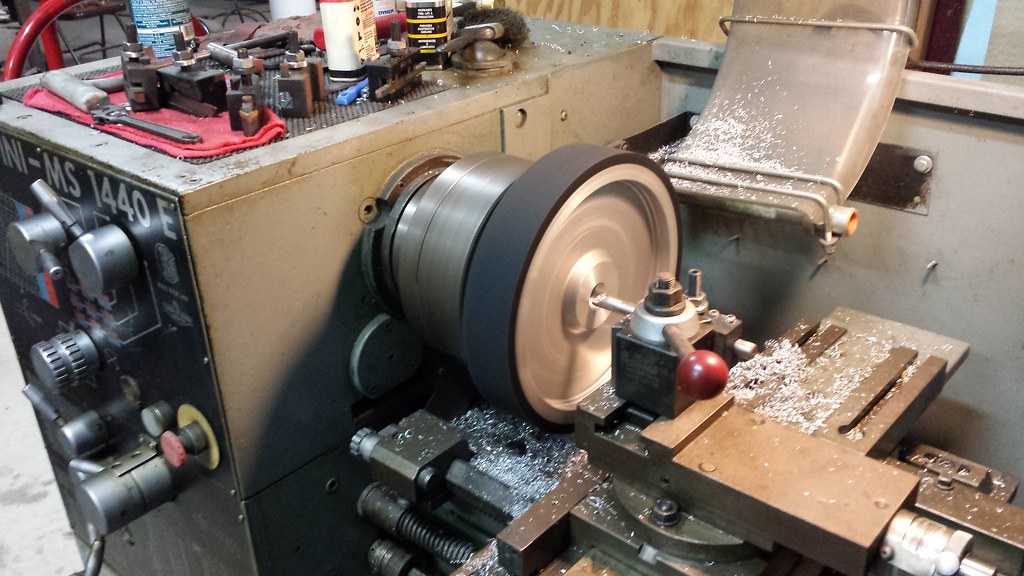
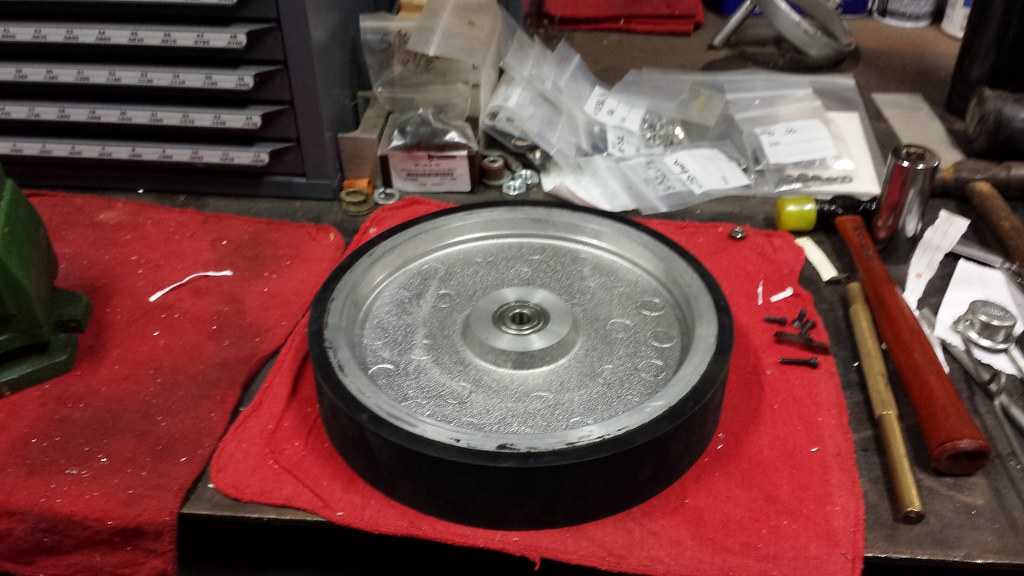
Got my GIB kit today. Box was in pretty rough shape, had a couple nails out on one end but, everything was intact. Looks pretty good. My Grizzly 10" contact wheel also arrived today and I went ahead and machined it out to accept 1/2"x1-3/8" bearings.

Bob
 
Forget about torque. That only affects getting things moving. If the motor is large enough for the grinder task, torque is not an issue. RPMs and HP is what matters on a grinder.
Use a 1.5HP or larger 3 Phase motor, preferably 1750RPM, and a VFD to get the most bang from your grinder.
 
Ranger,

How difficult would It be do remove the casting marks on the grizzly wheel? I'm just curious about the lathes uses with cast materials such as this. Thanks
 
Ranger,

How difficult would It be do remove the casting marks on the grizzly wheel? I'm just curious about the lathes uses with cast materials such as this. Thanks

I don't think it would any big deal. The wheel came with one face machined on the underside of the outer rim. I had to machine the same face on the opposite side so I could cut the bores from each side. The quality of the casting seems decent enough. The only issue is, they balance the wheels by drilling holes to remove material. My wheel has two 1/2" diameter holes bored about 3/8" deep on one side.

Bob
 
My hardware order from McMaster got delayed due to the recent crappy weather so I couldn't put the major components together yet. I did work on the tensioner arm though.

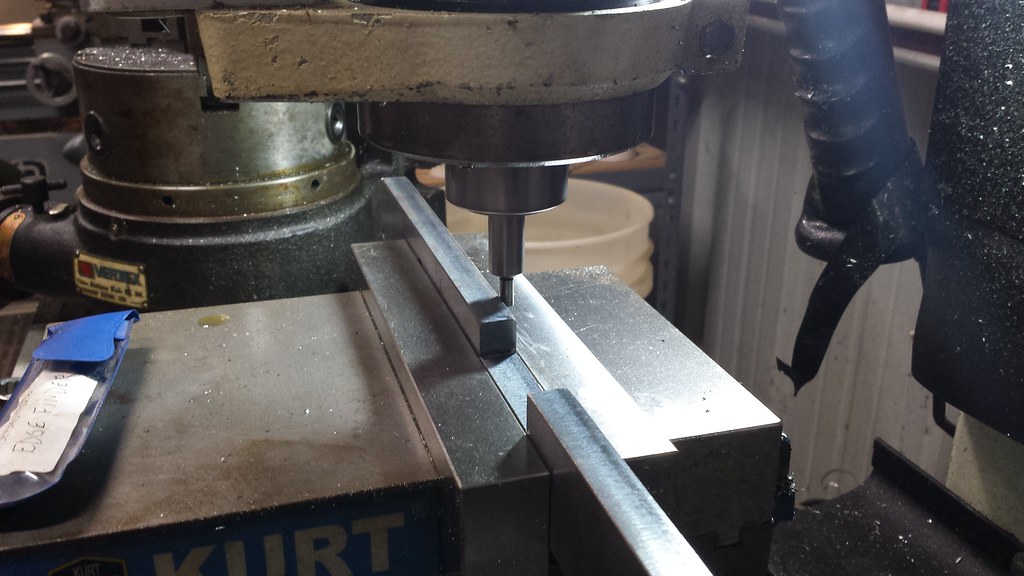
Finding the edge of the arm on the mill.

finding the edge by Ranger_Bob, on Flickr

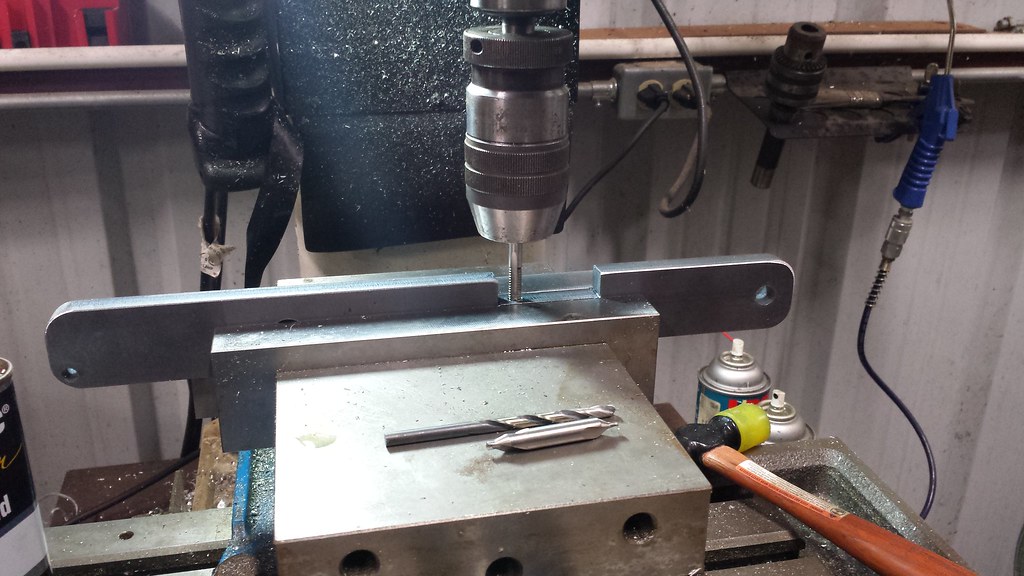
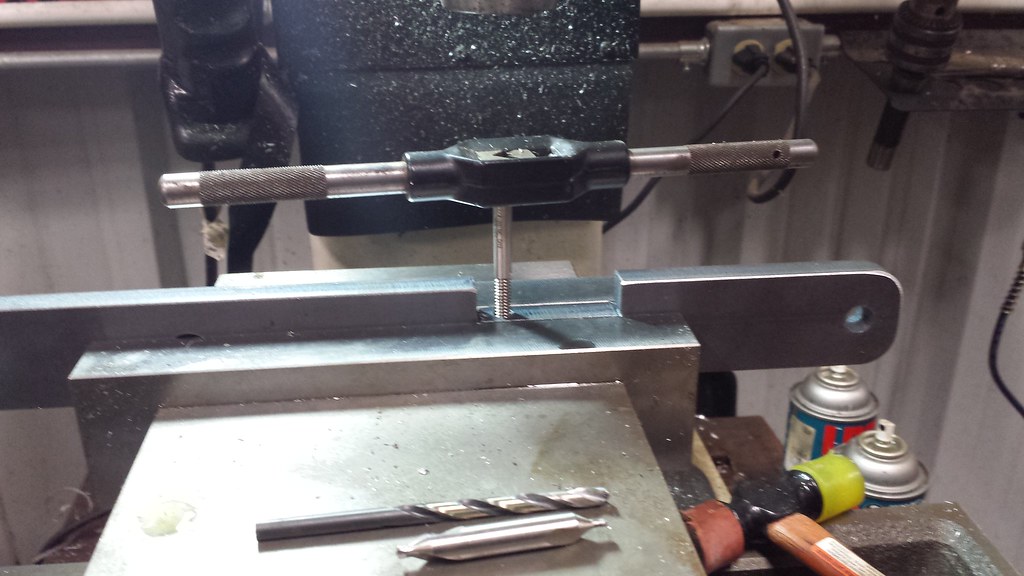
On blind holes I usually do a partial power tap to make sure the tap goes in straight. I just run it in part way at slow speed and hit the stop switch.

partial power tapping by Ranger_Bob, on Flickr

I then finish tapping by hand so I don't end up with a broken tap down in the hole.

finishing tapped hole by hand by Ranger_Bob, on Flickr

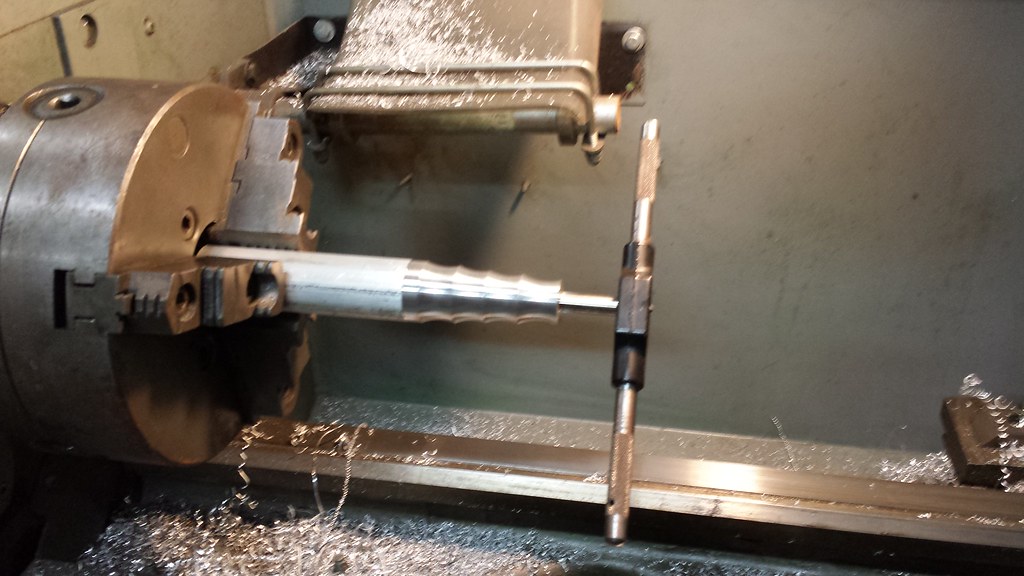
I use the same technique when tapping on the lathe. This is the handle for the tension arm.

tapping the handle by Ranger_Bob, on Flickr

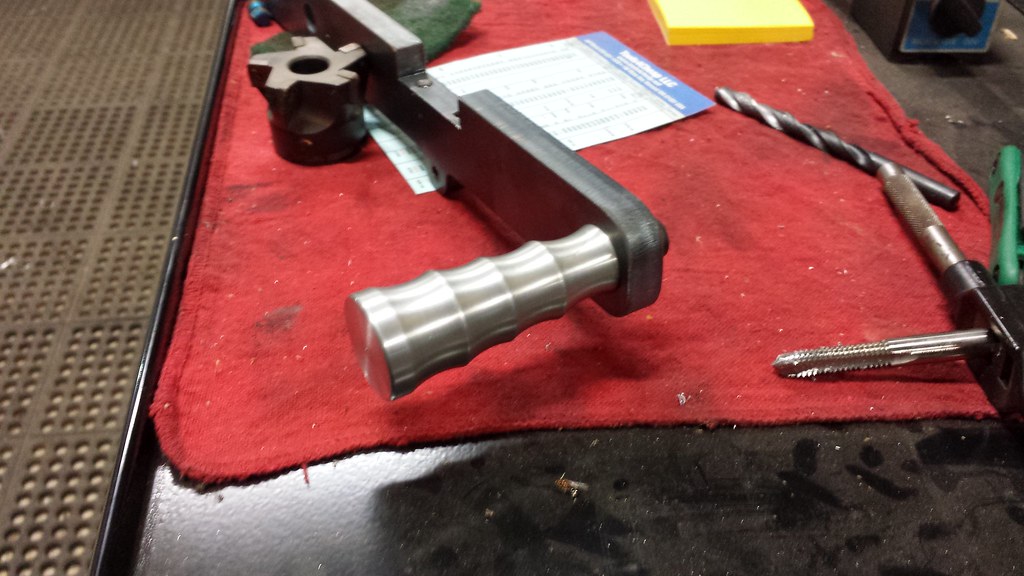
Handle attached to the arm.

finished handle by Ranger_Bob, on Flickr

Bob
 
Back
Top