Hamon Polishing... How do you know you don't have anymore activity or whispy stuff

Nick been meaning to ask ya. Dave turned me onto some loose abrasive and said to give it a try. Was wondering your method of using it. Ive been experimenting a little and tried mixing it with some thin oil and using the makeup remover pads to load it up and polish with. Do ya have any suggestions. Or anyone else for that matter.

Oh and you can flex fat I do it all the time :D
 
Flex fat... Heh I'll have to remember that.

In looking at ebay (at least the app. I don't seem to get as many results with the app) it seems that the 1500 SiC is not offered by many sources.

Let me ask this (indulge me)... Would diamond abrasive (either natural or manufactured) work the same? I'm asking because I'd like some diamond paste for my sharpening hobby anyway. I need a much finer grit but I wouldn't kick the 1500 grit outta bed.

I'm definitely subscribing to this thread. Far too much to remember, but I know I'll need this info later.

Btw, death threats? Wtf... You've GOTTA be kidding. I'm 6'5" and strong like bull, but I'd still want to be packing for that job. :D
 
Yeah. I found it hard to find the loose abrasives in any grit. I kept searching and found some 1500 one time and jumped on it.
 
What search words are you guys using?

I just looked and saw several pages of stuff.

Unfortunately, the prices were up a bit from the last time I ordered any, but still pretty damn cheap.

Search "silicon carbide 1500 polish" and there's about 6 exact matches. One is 8oz. for $4.50


Corey- to use the powders, I keep a stash of soda can bottoms (I cut the bottom of the can off with scissors, about 3/4" from the end). Flip it upside down and the concave end makes a nice little mixing bowl.

I mix a little bit of powder with some oil... good 'ol 3-n-1 works great. I apply it with the cheap cotton make-up pads, or a scrap of denim wrapped around a sanding bar.


Keep in mind that 1500X powder does not act like 1500X paper AT ALL. The loose abrasive provides a MUCH MUCH finer cut than the paper.


As far as that video--- that just boils down to internet/keyboard warriors that are really stupid and need to get a life. But they got way out of control none-the-less. :rolleyes: :grumpy: They weren't taught not to write things online that you wouldn't readily say to someone face to face. :rolleyes:
 
The guy who is selling it for the $4.50 is the guy I bought mine from in the past year and a half.

I haven't found any that was between 400 - 1000 grit that didn't look like sand blasting media, so I haven't bought any yet
 
400X and 600X rock tumbling media does look like sand-blasting grit when you look at it... but it sure doesn't cut like what you'd expect. :)
 
The beautiful and delicate hamons on a Jap katana is a long process .They do it by hand because the hamon is a mixture of different microstructures which are delicate and easy to destroy. Power tools are the ones that destroy the structures !! Slow and gentile is the only way .Once destroye3d etching can't bring it back.
 
Sorry Tom! I missed that with the page change :o

I do NOT heat the ferric. It's so aggressive at room temp, there's no need to. At least in my experience. I just dip a cotton ball or cotton make-up pad into my damascus etching tank and go to town rubbing it on the hardened areas.


Something to note--- One of the reasons I don't like submerging the blades, (ESPECIALLY in ferric) is it quickly eats into the pearlite spine and changes the look that I'm after.

When an entire blade has been heavily etched and highly polished you'll typically see a pattern that looks like Ws pattern damascus above the transition. It's actually kind'a cool... it's just not something I want in my blades.
 
The beautiful and delicate hamons on a Jap katana is a long process .They do it by hand because the hamon is a mixture of different microstructures which are delicate and easy to destroy. Power tools are the ones that destroy the structures !! Slow and gentile is the only way .Once destroye3d etching can't bring it back.

mete- I have the utmost respect for your knowledge as a metallurgist, but...um... did you forget to take your vitamins today? :p
 
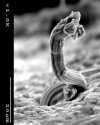
Tin_Whisker.jpg It was one of those days . I felt all twisted up like the photo - tin whisker
 
00000000-0000-0000-0000-00000000025B_zpstppek5hy.jpg


-Brian-

brian, nice proportion, plenty intense for the nihonto style...it looks like the run out crosses the tang and goes up rather than down and off behind the heel...does this mean the whole thing was heated to critical but the clay did not cover much of the tang? if so, there is a hardened stress point across the tang at the thinnest part, through that hole...

in future, if you are heating the whole thing it might be good to coat the clay a little farther back and then draw out the temper of the tang to take it down a few notches...or heat just the blade and the part under the clay if using a forge...
 
I have been following this thread with interest. All the info is good.

One trick that is helpful with a very delicate hamon fits with Nicks comment about not wanting to accidentally etching over something you took a long time to establish.

TIP:
Once you have a feature polished out like you want...protect it. Put a layer of red nail polish or lacquer paint over it. As you polish out more features and etch them to perfection, cover those, too. Using a fine sable brush, you can paint over faint wisps and ashi to cover them, without covering the ji-gane or ha-gane. When all features are covered, you can dip the blade in FC ( or apply with cotton ball or a Q-tip) without damaging or darkening the polished areas. This is the method I use to get a dark ha and a bright ji....with a white hamon between them. Once all is done, remove the paint with acetone.
 
I have been following this thread with interest. All the info is good.

One trick that is helpful with a very delicate hamon fits with Nicks comment about not wanting to accidentally etching over something you took a long time to establish.

TIP:
Once you have a feature polished out like you want...protect it. Put a layer of red nail polish or lacquer paint over it. As you polish out more features and etch them to perfection, cover those, too. Using a fine sable brush, you can paint over faint wisps and ashi to cover them, without covering the ji-gane or ha-gane. When all features are covered, you can dip the blade in FC ( or apply with cotton ball or a Q-tip) without damaging or darkening the polished areas. This is the method I use to get a dark ha and a bright ji....with a white hamon between them. Once all is done, remove the paint with acetone.

That is really clever Stacy. Thanks for the input.
 
I have been following this thread with interest. All the info is good.

One trick that is helpful with a very delicate hamon fits with Nicks comment about not wanting to accidentally etching over something you took a long time to establish.

TIP:
Once you have a feature polished out like you want...protect it. Put a layer of red nail polish or lacquer paint over it. As you polish out more features and etch them to perfection, cover those, too. Using a fine sable brush, you can paint over faint wisps and ashi to cover them, without covering the ji-gane or ha-gane. When all features are covered, you can dip the blade in FC ( or apply with cotton ball or a Q-tip) without damaging or darkening the polished areas. This is the method I use to get a dark ha and a bright ji....with a white hamon between them. Once all is done, remove the paint with acetone.


Stacy, I googled this a few times, but I get contradicting info. You have excellent knowledge of the Japanese blades. Can you give an overview of the CORRECT terms for the different parts of the Hamon, so I can know I have the terms correct.
 
The border between the ha and ji is the habuchi. The hamon is the pattern formed by the entire hardened portion of the blade.
 
Last edited:
I use these primarily ( there are probably 100 more words, but these will cover most all major areas):
ha - the hardened edge of the blade
ji - the surface between the hamon and the shinogi
habuchi - the line between the hamon and the ji ( AKA nioi-guchi)
hamon - the line indicating the border of the hardened edge. This is a group of crystals ( nie and nioi) that form in the hardening process.
ashi - lines of nioi extending from the hamon toward the edge
nie - small visible martensite crystals. Often seen as bright specks and little "islands" just above the hamon.
nioi - minute/microscopic martensite crystals visible in a groug as a milky/wispy cloud.
shinogi - the ridge line of the blade
shinogi ji - the surface between the shinogi and the mune
mune - the spine of the blade

Blade parts ( very simplified):
Top/spine - mune
edge - ha
tip - kissaki
tang - nakago
handle - tsuka
guard - tsuba
Blade collar that guard rests on - habaki
shoulders habaki and tsuba rests on - machi
where the tip and edge meet - yokote
where the bevels meet - shinogi
curvature of blade - sori
fuller on blade - bohi
blade length - nagasa
sheath - saya
 
Back
Top