
-
The BladeForums.com 2024 Traditional Knife is available! Price is $250 ea (shipped within CONUS).
Order here: https://www.bladeforums.com/help/2024-traditional/
You are using an out of date browser. It may not display this or other websites correctly.
You should upgrade or use an alternative browser.
You should upgrade or use an alternative browser.
Have we entered a Golden Age?
- Thread starter Kevin Jones
- Start date


jdm61
itinerant metal pounder
- Joined
- Aug 12, 2005
- Messages
- 47,357
Actually, the first "golden age"of American high end knifemaking, particularly when you are talking about bowies and of bespoke English percussion rifles and shotguns were both quite brief historically speaking as both were cut short by advances in basic design and manufacturing technology. What we see today is perhaps more akin to the artistic revivals of the past like rediscovery of the Greco-Roman, Egyptian, etc, arts and architecture at various times over the last 500 or so years. Another example might be that many of the "cottages" at Newport, RI and other stately homes in places like Long island and Palm Beach and much of Haussman's Paris were built from the 1850's up to 1929 in the style of the 15th-18th centuries, but they used a combination of traditional and modern materials and techniques to build them, much like we do today with a lot of our custom knives.I very much agree, Keith. A golden age is usually quite long, no?

- Joined
- Feb 28, 2002
- Messages
- 13,348
Those bemoaning a lack of advancement in function - can you articulate what it is that you expect to see? The knife has been around as a functional tool for a rather long time. The current state of the craft in terms of steel and construction methods certainly enables the production of highly functional and reliable tools of the very highest quality.
Where are you seeing room for improvement? What is it about the knives you use that you find lacking? What are examples of the functional improvements / innovations of the past that you find absent today?
I have used a good many knives and I am consistently impressed both with how well they perform and by the fact that aesthetics need not be sacrificed in pursuit of function. So I'm kind of scratching my head wondering what it is that you are seeing - that I clearly am not - that points to a lack of functional innovation today?
Roger
Where are you seeing room for improvement? What is it about the knives you use that you find lacking? What are examples of the functional improvements / innovations of the past that you find absent today?
I have used a good many knives and I am consistently impressed both with how well they perform and by the fact that aesthetics need not be sacrificed in pursuit of function. So I'm kind of scratching my head wondering what it is that you are seeing - that I clearly am not - that points to a lack of functional innovation today?
Roger

- Joined
- Oct 28, 2006
- Messages
- 13,363
Those bemoaning a lack of advancement in function - can you articulate what it is that you expect to see? The knife has been around as a functional tool for a rather long time. The current state of the craft in terms of steel and construction methods certainly enables the production of highly functional and reliable tools of the very highest quality.
Where are you seeing room for improvement? What is it about the knives you use that you find lacking? What are examples of the functional improvements / innovations of the past that you find absent today?
I have used a good many knives and I am consistently impressed both with how well they perform and by the fact that aesthetics need not be sacrificed in pursuit of function. So I'm kind of scratching my head wondering what it is that you are seeing - that I clearly am not - that points to a lack of functional innovation today?
Roger
Thank you Roger as I was scratching my head and wondering the same thing.
Thanks for everyone's participation here as it's producing good productive discussion.
Another thing that hasn't been brought up here is damascus steels.
Damascus seems to have progressed light years over the last decade.
Last edited:
jdm61
itinerant metal pounder
- Joined
- Aug 12, 2005
- Messages
- 47,357
You are correct, Kevin. There are a LOT of guys now who, using modern materials and equipment, can pretty much do everything that the Nordic, Germanic, Japanese, Arabic and Indian smiths were doing 800-1200 years ago. Another example of my "revival" theory.Thank you Roger as I was scratching my head and wondering the same thing.
Thanks for everyone's participation here as it's producing good productive discussion.
Another thing that hasn't been brought up here is damascus steels.
Damascus seems to have progressed light years over the last decade.

- Joined
- Oct 28, 2006
- Messages
- 13,363
You are correct, Kevin. There are a LOT of guys now who, using modern materials and equipment, can pretty much do everything that the Nordic, Germanic, Japanese, Arabic and Indian smiths were doing 800-1200 years ago. Another example of my "revival" theory.
Of course Henry Ford was building cars 100 years ago too, however they weren't quite what they are today.

- Joined
- Jun 29, 2007
- Messages
- 4,698

A few more links===>
Special ReportGenerally speaking, operating costs tend to be cheaper in a recession. Talent is easier to find because of widespread layoffs. And competition is usually less fierce because, frankly, many players are taken out of the game.
Innovation in a Recession
Innovating During A RecessionMore broadly, we assembled a database of the 173 disruptive developments in the U.S. from 1968 to 2003. Small sample size caveats apply, but our analysis found the correlation between the number of disruptive developments in a given year (either new companies forming or disruptive offerings launched by incumbents) and growth of real U.S. gross domestic product was a weak 0.17.
Business: The Innovation RecessionAccording to the National Science Foundation, in the years 1953 through 1955 the U.S. introduced 63 "major" technological innovations. West Germany, Japan, Britain and France had together only 20. But now foreign competitors are bringing out as many new products and processes as the U.S.or more. In the category of new patents, a key measure of R. and D. vitality, American inventors were granted 45,633 patents by major trading partners in 1966, while the U.S. gave only 9,567 to non-Americans that year. By 1976, however, the so-called patent balance had shifted radically. The number of U.S. inventors granted patents abroad dropped by more than 25%, to 33,181, while the number of foreigners gaming U.S. patents had almost doubled, to 18,744. Says Frank Press, the chief White House science adviser: "It is the trends that are important, and the percentage increases in some countries are growing faster than here."
Eye of The Tiger!!!!...lol....This doesn't mean that big new ideas emerge because of turmoilin fact, the data shows no relationship between major breakthroughs and economic conditions. But the benefit of a global money drought is that competition tends to vaporize. And for some, the stress of tough times has an amazing way of concentrating the mind on the way forward. Bill Hewlett of HP committed to building the pocket calculatorat the time, a supposedly impossible taskduring the 1969-70 recession

Back to the Garage: How Economic Turmoil Breeds Innovation
*******************************
How are the innovations in the knife world debuted?
How does the guy with the quadruple axis, bio metric locking mechanism introduce it to the world?
Blade Show?
Small blurb in a knife magazine?
His website?
Here on BF??:thumbup:

In other words==>
When you guys go to The Blade Show
Are the A LOT of new innovations being debuted?
Is there one booth with a new , patented knife design? 10 booths?

- Joined
- May 14, 2001
- Messages
- 1,414
Something that has a real factor during the past recessionary economy is that I (and I'm sure other makers as well) have spent more effort designing & building for the collector. At least for me, the "blue collar" customer wanting a low-end user knife hasn't been there recently like he was a few years ago. Since the collector is a larger percentage of my annual sales, I have spent more time & effort in creating pieces that will ultimately end up in a showcase rather than a hunting camp equipment box. This naturally lends itself to being more innovative in order to please the collector.
I would be interested in hearing if this is the case for other makers as well.
Gary
I would be interested in hearing if this is the case for other makers as well.
Gary

- Joined
- Dec 5, 2005
- Messages
- 2,018
Trent, that's not innovation, that's marketing. Maybe not even marketing, but packaging. "How do you sell more baby shampoo in a recession?" Make the opening larger so that people inadvertently use more.
"With NEW wide-mouth easy-pour spout- It makes it even easier than ever to use more than you need..."
If Tide works great, why do we need new concentrated Tide? Because the average user will use the same amount of concentrated Tide as they did regular Tide, and the company can charge more per ounce for the concentrated stuff. Marketing, not innovation.
A knife is a knife. Knives have been knives for a long time. A handle on one end, a point on the other, and a sharp edge in between. We are not in a performance revolution, but the marketing and packaging (fit/finish/high end materials and embellishments) is better than it has ever been. If anything I think that as an industry, there has been a design contraction (not innnovation) relative to 1800-1940 or so. How many patterns are there, really? Bowies, hunters, tactical folders, and a smattering of "traditional folding pocket knives?" 100 years ago a company may list for sale >>100 patterns of folding pocket knives. Indeed there were well over 1000 individually named pocket knife patterns. It is a great time to be a collector- or accumulator- but this is no golden age.
"With NEW wide-mouth easy-pour spout- It makes it even easier than ever to use more than you need..."
If Tide works great, why do we need new concentrated Tide? Because the average user will use the same amount of concentrated Tide as they did regular Tide, and the company can charge more per ounce for the concentrated stuff. Marketing, not innovation.
A knife is a knife. Knives have been knives for a long time. A handle on one end, a point on the other, and a sharp edge in between. We are not in a performance revolution, but the marketing and packaging (fit/finish/high end materials and embellishments) is better than it has ever been. If anything I think that as an industry, there has been a design contraction (not innnovation) relative to 1800-1940 or so. How many patterns are there, really? Bowies, hunters, tactical folders, and a smattering of "traditional folding pocket knives?" 100 years ago a company may list for sale >>100 patterns of folding pocket knives. Indeed there were well over 1000 individually named pocket knife patterns. It is a great time to be a collector- or accumulator- but this is no golden age.
- Joined
- Jun 29, 2007
- Messages
- 4,698
I posted over on BRL's sub forum about a tool that may answer some questions here in Custom Knives
http://www.bladeforums.com/forums/showthread.php?p=9018651#post9018651
I believe there is a glut of knifemakers currently
Mostly because of information flow (the Internet) and the affordabilty of "garage forges"
I'm not saying the glut is good or bad
Just my observations
Seems like there are A LOT on custom knife makers now
(based mostly on webpages and Google results)
Will the trend continue on it's fast rise?
Is it in the decline phase??
I have no idea
Has it hit the peak (maturity) of the custom knife product life cycle?

I have no idea
There was a discussion about it in another thread here in the Custom Knives forum..BTW


Why the spike in 1998?


This one is for Les!!! ===>
===>

Do the graphs jibe with real world observations for you all?
was 1998 a good year for custom knives?
Ans 1990 a BAD year??
http://www.bladeforums.com/forums/showthread.php?p=9018651#post9018651
I believe there is a glut of knifemakers currently
Mostly because of information flow (the Internet) and the affordabilty of "garage forges"
I'm not saying the glut is good or bad
Just my observations
Seems like there are A LOT on custom knife makers now
(based mostly on webpages and Google results)
Will the trend continue on it's fast rise?
Is it in the decline phase??
I have no idea
Has it hit the peak (maturity) of the custom knife product life cycle?
I have no idea
There was a discussion about it in another thread here in the Custom Knives forum..BTW
Why the spike in 1998?
This one is for Les!!!
===>
Do the graphs jibe with real world observations for you all?
was 1998 a good year for custom knives?
Ans 1990 a BAD year??
- Joined
- Oct 28, 2006
- Messages
- 13,363
Trent, it's often interesting when a past thread such as this is resurrected after months to see if/how views/opinions have changed over time.
I agree that there's been a dramatic increase in the number of knifemakers over recent years. I'm still not sure whether this increase has had a 'positive' or 'negative' impact on our seeing significant changes or innovations in design, embellishment, materials and construction methods over the last several years.
From a positive perspective, a poor economy to an extent stimulates creativity and "new" ideas as makers look to distinguish themselves/their knives from the pack in hopes of capturing sales?
But then, increased competition or more makers competing for the same collector dollar can cause knifemakers to become stagnant in their creativity by more relaying on existing designs which have consistently produced sales and/or to create less costly and less sophisticated designs to capture sales in the lower-end market.
An example of the latter could be more and more established makers starting to offer "brute de forge" or entry level custom knives.
I believe our annual year end Blade Forum "best bowie" competition offers a tool, or will offer a tool in the years to come to help us gauge whether or whether not at least "bowie style" knives progress in regard to design, embellishment, materials and construction methods over the years.
I agree that there's been a dramatic increase in the number of knifemakers over recent years. I'm still not sure whether this increase has had a 'positive' or 'negative' impact on our seeing significant changes or innovations in design, embellishment, materials and construction methods over the last several years.
From a positive perspective, a poor economy to an extent stimulates creativity and "new" ideas as makers look to distinguish themselves/their knives from the pack in hopes of capturing sales?
But then, increased competition or more makers competing for the same collector dollar can cause knifemakers to become stagnant in their creativity by more relaying on existing designs which have consistently produced sales and/or to create less costly and less sophisticated designs to capture sales in the lower-end market.
An example of the latter could be more and more established makers starting to offer "brute de forge" or entry level custom knives.
I believe our annual year end Blade Forum "best bowie" competition offers a tool, or will offer a tool in the years to come to help us gauge whether or whether not at least "bowie style" knives progress in regard to design, embellishment, materials and construction methods over the years.
- Joined
- Jun 29, 2007
- Messages
- 4,698
I think having a lot of makers is generally a good thingTrent, it's often interesting when a past thread such as this is resurrected after months to see if/how views/opinions have changed over time.
I agree that there's been a dramatic increase in the number of knifemakers over recent years. I'm still not sure whether this increase has had a 'positive' or 'negative' impact on our seeing significant changes or innovations in design, embellishment, materials and construction methods over the last several years.
From a positive perspective, a poor economy to an extent stimulates creativity and "new" ideas as makers look to distinguish themselves/their knives from the pack in hopes of capturing sales?
But then, increased competition or more makers competing for the same collector dollar can cause knifemakers to become stagnant in their creativity by more relaying on existing designs which have consistently produced sales and/or to create less costly and less sophisticated designs to capture sales in the lower-end market.
An example of the latter could be more and more established makers starting to offer "brute de forge" or entry level custom knives.
I believe our annual year end Blade Forum "best bowie" competition offers a tool, or will offer a tool in the years to come to help us gauge whether or whether not at least "bowie style" knives progress in regard to design, embellishment, materials and construction methods over the years.
MORE CHOICES for the consumer
It's only "bad" (from a profit standpoint) for the makers who enter the game after the maturity phase (decline phase)
They are late for the show and miss out on some of the profits

I do think that since there is more competition ===>
There is a bigger NEED for product differentiation
I.E. brute de forge, LOW Damascus count, meteorite bolsters, titanium pins, Himalayan Oak, etc
Which is good in general
If it is an improvement (BETTER than the knives at the table next you)
Sometimes I think makers just add different features to just to make it different
And so the knife description has more FEATURES to list
I know I would rather buy a knife that lists a ton of features, than a knife just listed as "high quality steel with wood handles"...though....
..I had never heard of brute de forge
Maybe you can start a brute de forge thread so I can check them out
jdm61
itinerant metal pounder
- Joined
- Aug 12, 2005
- Messages
- 47,357
Kevin, I think that the one thing that the "glut" has clearly done is held prices in check for quite some time, at least for the majority of us poor schlubs trying to make knives. You have seen some of my work. What could I have gotten for that walrus ivory handled damascus hunter that is on my web site in say 1992? In 92 or 93, I bought a maple burl handled clip point fighter from Joe Flournoy at the Guild show. It was one of his last JS knives and he had just gotten his MS stamp. It came in a plain sheath and I sem to recall paying $375 for the knife and I thought that I got a good deal. What would a small wood handled JS stamped fighter from one of this past year's MS (not a ringer) class have sold for at Blade? Maybe $600-650? if you want to talk about JS knives, I can go on Les Robertson's website right now and buy one of Craig Camerer's "Slim Pickins" fighters with an ironwood handle for $425. if you ever wanted to find a good case study in supply and demand, the custom knife biz wouldbe a good one.Trent, it's often interesting when a past thread such as this is resurrected after months to see if/how views/opinions have changed over time.
I agree that there's been a dramatic increase in the number of knifemakers over recent years. I'm still not sure whether this increase has had a 'positive' or 'negative' impact on our seeing significant changes or innovations in design, embellishment, materials and construction methods over the last several years.
From a positive perspective, a poor economy to an extent stimulates creativity and "new" ideas as makers look to distinguish themselves/their knives from the pack in hopes of capturing sales?
But then, increased competition or more makers competing for the same collector dollar can cause knifemakers to become stagnant in their creativity by more relaying on existing designs which have consistently produced sales and/or to create less costly and less sophisticated designs to capture sales in the lower-end market.
An example of the latter could be more and more established makers starting to offer "brute de forge" or entry level custom knives.
I believe our annual year end Blade Forum "best bowie" competition offers a tool, or will offer a tool in the years to come to help us gauge whether or whether not at least "bowie style" knives progress in regard to design, embellishment, materials and construction methods over the years.
I, like many others, sold my early stuff for cheap. Shame on me, perhaps, but I wanted to sell it. As I got a little bit better, I raised my prices. Bad timing at a minimum, what with the economy. But, very expereinced knifemakers still say "you should be selling that knife for $X, especially with that nice sheath" Well, the problem is that nobody is willing to pay $X.
What's a poor boy to do in the Golden Age?
- Joined
- Oct 28, 2006
- Messages
- 13,363
I had never heard of brute de forge
Maybe you can start a brute de forge thread so I can check them out
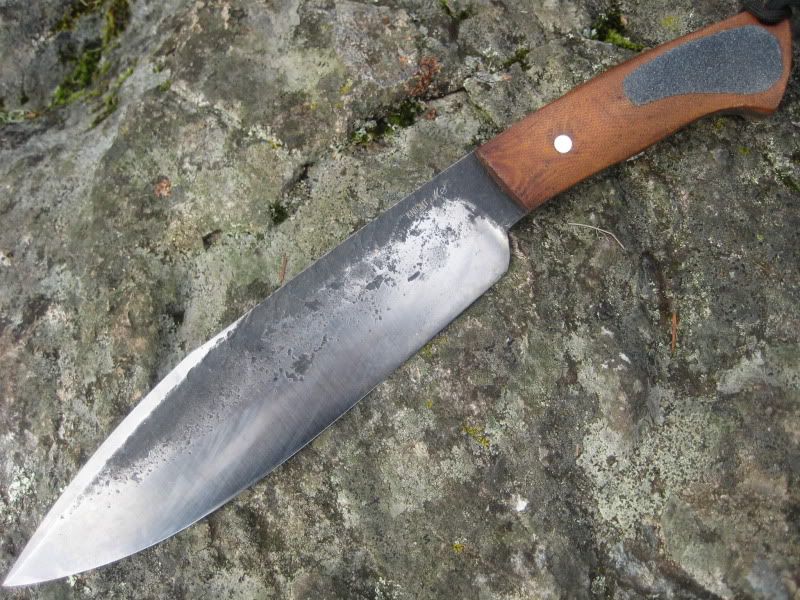
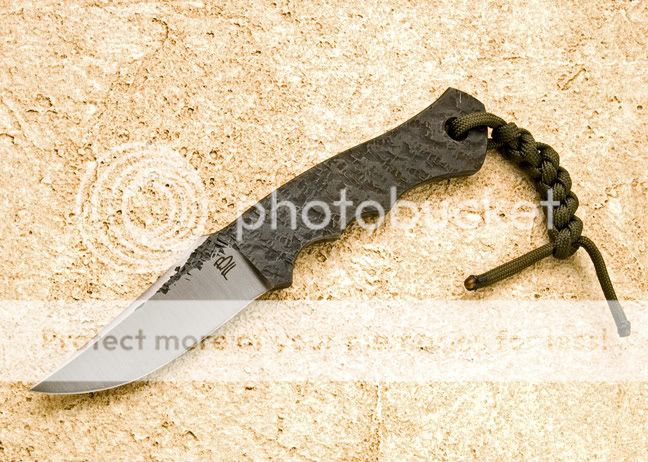
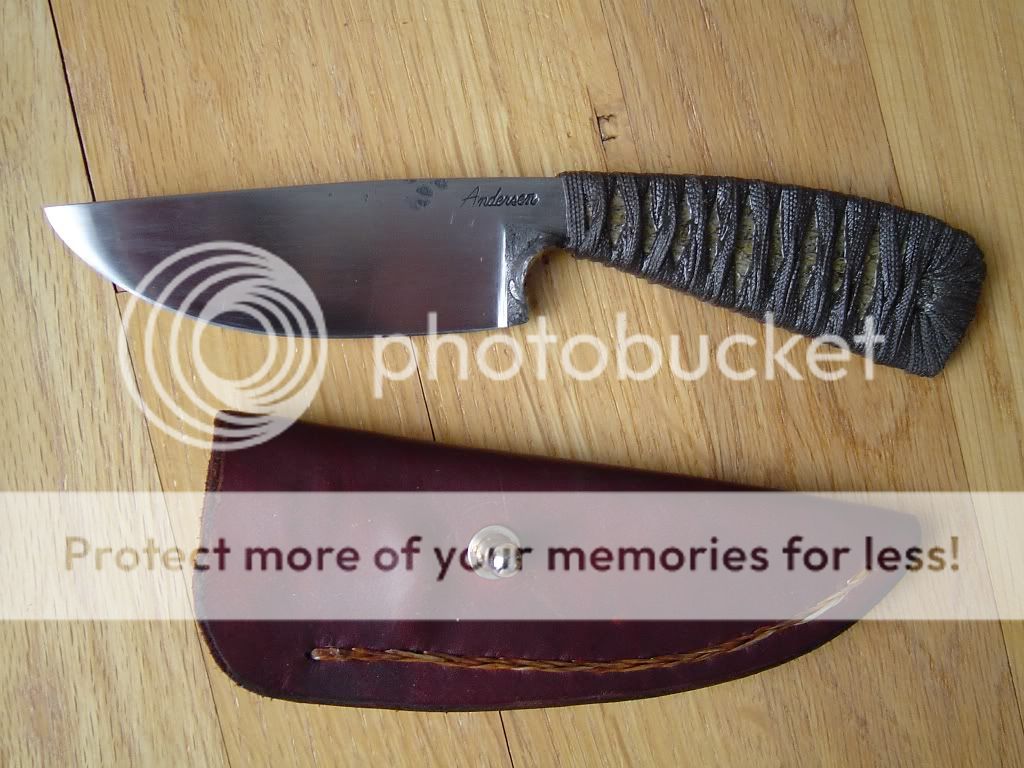
Treat, "brute de forge" is a term often used to describe knives which are purposely made to a lessor degree of finish, materials, components etc. than a maker's normal knives (forging marks left in, no handle scales or guards for example), thus enabling the maker to compete in a lower price market then he normally trades in.
Jason Knight:
Burt Foster:
Karl Andersen:
- Joined
- Feb 28, 2002
- Messages
- 13,348
From a positive perspective, a poor economy to an extent stimulates creativity and "new" ideas as makers look to distinguish themselves/their knives from the pack in hopes of capturing sales?
But then, increased competition or more makers competing for the same collector dollar can cause knifemakers to become stagnant in their creativity by more relaying on existing designs which have consistently produced sales and/or to create less costly and less sophisticated designs to capture sales in the lower-end market.
An example of the latter could be more and more established makers starting to offer "brute de forge" or entry level custom knives.
I most certainly do not see higher end makers choosing to make less costly brut-de-forge pieces as indicative, in any way shape or form, of a stagnation of their creativity.
Roger
- Joined
- Oct 28, 2006
- Messages
- 13,363
I most certainly do not see higher end makers choosing to make less costly brut-de-forge pieces as indicative, in any way shape or form, of a stagnation of their creativity.
Roger
Is a high end maker who is building an abundance of non-sophisticated brute de forge knives as opposed to filling commissioned orders from collectors who are allowing them to stretch their creativity to the limit not risking a stagnation of their creativity? Or at least are they not taking full advantage of opportunities to fully maximize their creativity?
I have nothing against brute de forge knives as I use the one pictured above from Karl Andersen about everyday, however it's not like it takes a lot of creativity to bang these knives out as opposed to when makers are given full freedom to create via commissions.
Last edited:
- Joined
- Feb 28, 2002
- Messages
- 13,348
Is a high end maker who is building an abundance of non-sophisticated brute de forge knives as opposed to filling commissioned orders from collectors who are allowing them to stretch their creativity to the limit not risking a stagnation of their creativity? Or at least are they not taking full advantage of opportunities to fully maximize their creativity?
No. If they abandon their custom orders and the broad range of their repertoire to produce exclusively lower end pieces, then yes - obviously. But I can't think of a single case where that has happened. Nor do I consider that to be reasonably likely scenario. It is beyond unrealistic to expect that every piece a maker turns out will be an epic, horizon-expanding undertaking. A good maker is perfectly capable of extending his skill set and exercising his creativity while at the same time turning out some popular "standard" models and / or simple, lower cost pieces.
I have nothing against brute de forge knives as I use the one pictured above from Karl Andersen about everyday, however it's not like it takes a lot of creativity to bang these knives out as opposed to when makers are given full freedom to create via commissions.
Yes, but it's not an "either / or" proposition. Making a few less-demanding / lower cost / more affordable knives that will be accessible to a broader range of the buying public can be a smart move. Not for every maker (I don't see it as a workable strategy for, say, a Wolfgang Loerchner). But I REALLY fail to see any free-standing risk of stagnation simply by a maker choosing to produce a few affordable pieces to round out his public offerings.
Oh - and some of us can see quality, skill and creativity in a comparatively simple knife. Joe Keeslar does a lot of brut-de-forge pieces. I think he's a pretty creative bladesmith.
Roger
Last edited:
- Joined
- Oct 28, 2006
- Messages
- 13,363
**********************No. If they abandon their custom orders and the broad range of their repertoire to producte exclusively lower end pieces, then yes - obviously. But I can't think of a single case where that has happened. Nor do I consider that to be reasonably likely scenario.
Here's not only a reasonably likely scenario for you but an actual one, collectors waiting 3-4 years for commissions that are past due as their makers are since producing "brute de forge" pieces 'for sale' on a regular basics.
Oh - and some of us can see quality, skill and creativity in a comparatively simple knife. Joe Keeslar does a lot of brut-de-forge pieces. I think he's a pretty creative bladesmith.
Yes, and Oh - some of us know the deference between makers such as Joe Keeslar and Daniel Winkler (and others) utilizing forging marks as beautiful design elements resulting in very creative and fine knives as opposed to leaving the forging marks to reduce labor resulting in offering less expensive knives.
Last edited:

- Joined
- Mar 13, 2002
- Messages
- 2,125
Some "brute de forge" knives are really ugly. But it doesnt mean they arent useful- as these are both (1) in the hands of people to use, and (2) as a stepping stone to a wider acceptance from knife buying public who might otherwise choose the production or factory collaboration route.
I would ask the maker "what is it doing for your sales of high end" too?
Its all propaganda!
btw, can someone post photos of Joe Keeslar knives?
I would ask the maker "what is it doing for your sales of high end" too?
Its all propaganda!
btw, can someone post photos of Joe Keeslar knives?
- Joined
- Oct 28, 2006
- Messages
- 13,363
Some "brute de forge" knives are really ugly. But it doesnt mean they arent useful- as these are both (1) in the hands of people to use, and (2) as a stepping stone to a wider acceptance from knife buying public who might otherwise choose the production or factory collaboration route.
I would ask the maker "what is it doing for your sales of high end" too?
Its all propaganda!
btw, can someone post photos of Joe Keeslar knives?
Hi David, I don't think anyone has said that brute de forge knives aren't useful and don't serve a worthwhile purpose. As I said above I currently use one more than any other knife I own. I also see where its a good business decision for some makers to produce/sell them.
I don't have any photos of Joe Keeslar knives but he's made some real beauties and is one of the finest sheathmakers imo.