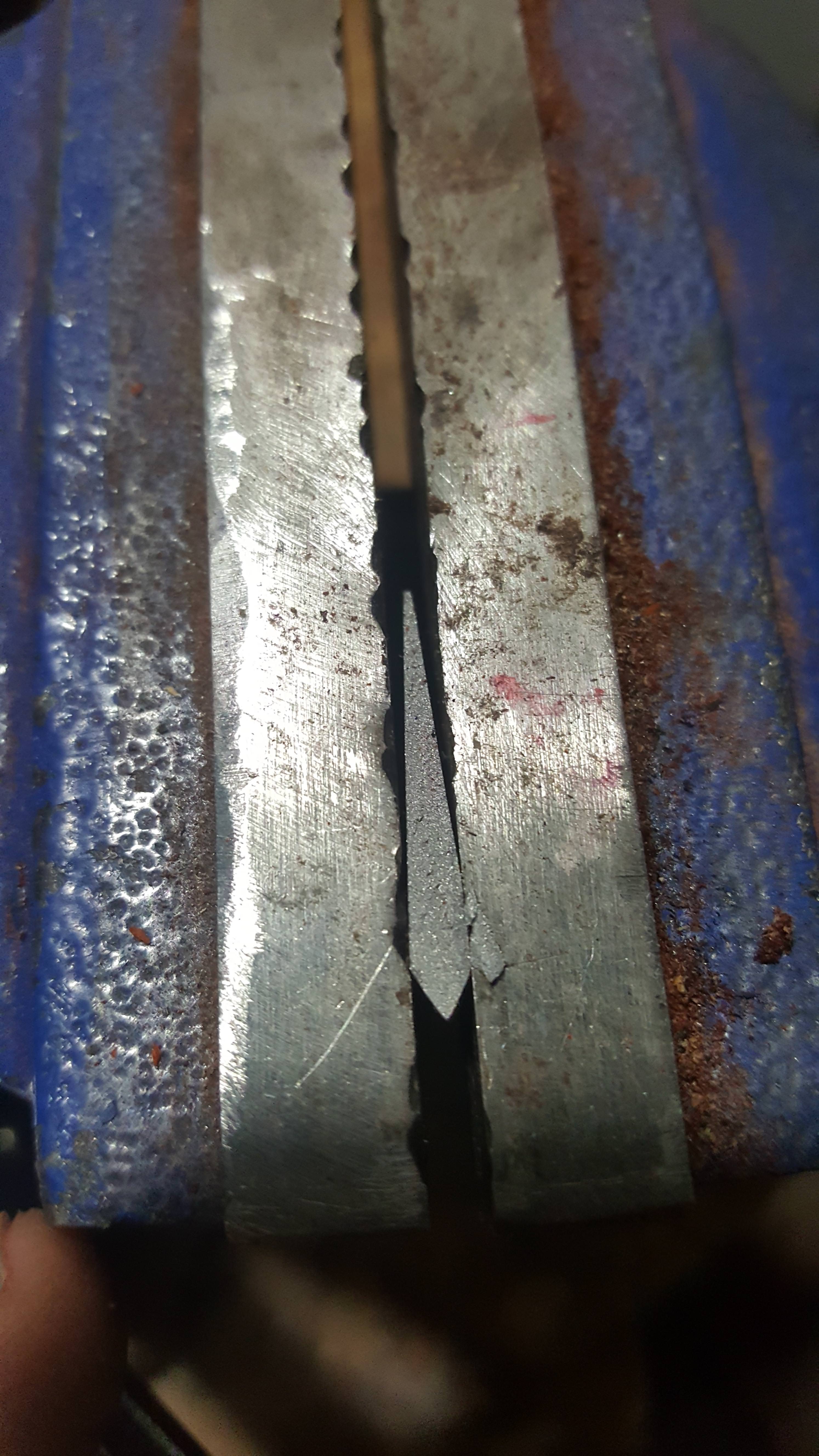
I think the important thing here, that's being omitted, is whether you're just "following a recipe" or refining, tweaking, and testing your HT. Hardness is only one of many factors. People also fixate on the "on paper" potential of this or that steel, pick an industry recommended (broad, general) HT recipe, and assume that the performance is there.
You can have high hardness and huge grain with stress fractures, or all sorts of other things. One batch of steel can hit different numbers and perform differently from the next batch, even though it's the "same steel" by designation.
Hardness testing is only one factor, one method, that can be used to make sure you're getting *some* of the results you expect, when everything else is nominally the same.
I do have and use a hardness tester, but I don't use it to "validate" my perceptions of performance. I still test each one, with criteria I've determined, that indicates a given steel that I've picked to use, is performing the way I expect it to, for the target use scenarios and characteristics *I* am most concerned with. I've picked a couple of steels, and I try to get enough of each one to last me many knives, so that I can come up with a HT regime that is repeatable, and will give consistent results. That being said, I know guys without hardness testers, that HT in forges without PIDs, that can get much better performance than I can, with steels they've mastered, utilizing, the same ideology.
Many top makers do have hardness testers, just as many, or more, do not. Almost all of them though, that don't have picked a single steel, or a couple, and figured out how to make the most of it, as opposed to jumping around from this to that hypothetically "superior" steel, or buying one bar at a time from whomever, and expecting the manufacturer's baseline HT regime to give optimal performance in an object that was never the focus of that baseline HT recommendation.
It all depends on what you wanna do. However, if you do want to play around with lots of different steel, and lots of different style of knives, I'd say, it behooves you to have as many tools in your arsenal as possible, to measure potential performance. Digital kiln or better, cryo, hardness tester, etc, are help you with that, but nothing will be as valuable as extensive testing in real use scenarios, with not just different edge geometry and other physical attributes, but changes to times, temps, etc.