RyanW
Moderator
- Joined
- Jul 17, 2009
- Messages
- 3,327
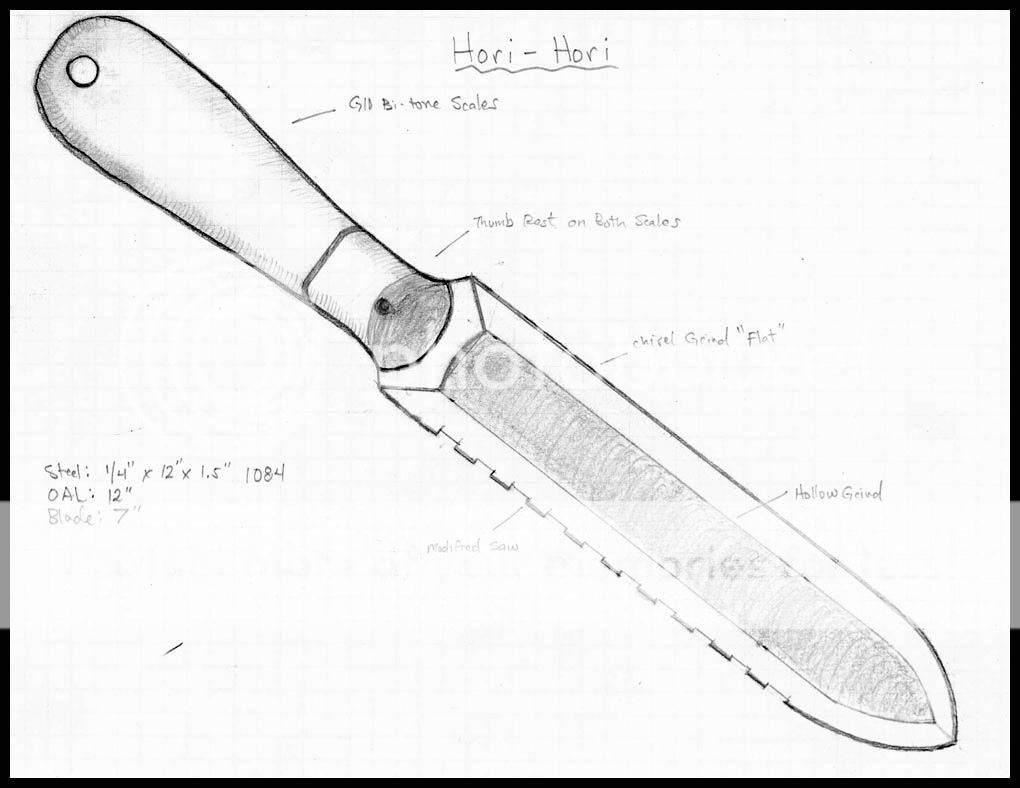
I was over at BF Member Ursusrubrum's House working on some kydex sheaths for some finished knives. He is a great sheathmaker and likes to trade sheath work for custom knives. He mentioned he was an archeologist and would like to see someone make a Custom Hori - Hori. I was unfamiliar with the tool so he drew me a quick photo of what it looks like.
When I got home I did some online research This is what I found: Hori-Hori (Dig-Dig or Digging-Digging) is a Japanese tool used often by bonzai "Masters" and simple gardeners alike, Seems Archeologist like them too. I found a few different models available for purchase online, some better than others. They are inexpensive ($20 - $30) and cheaply built for the most part. Jason wanted a full tang version that he could use while working in the yard or in the field. I was game to give it a shot, I knew it would be a little rough as a new maker.
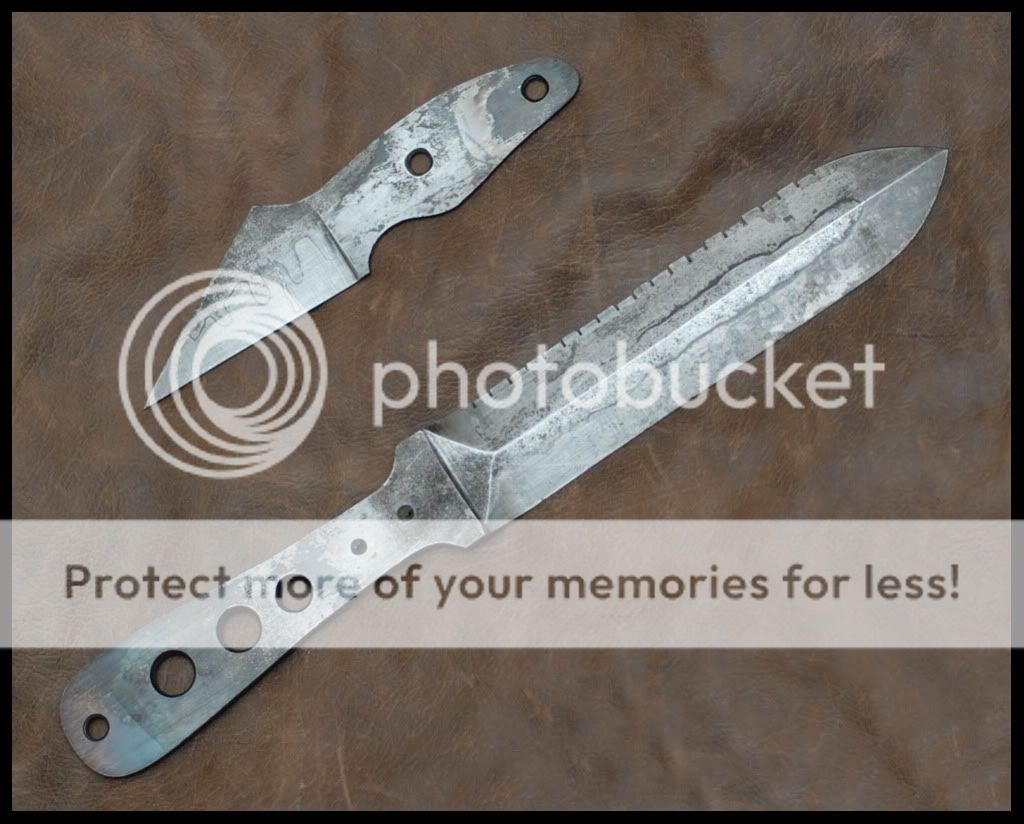
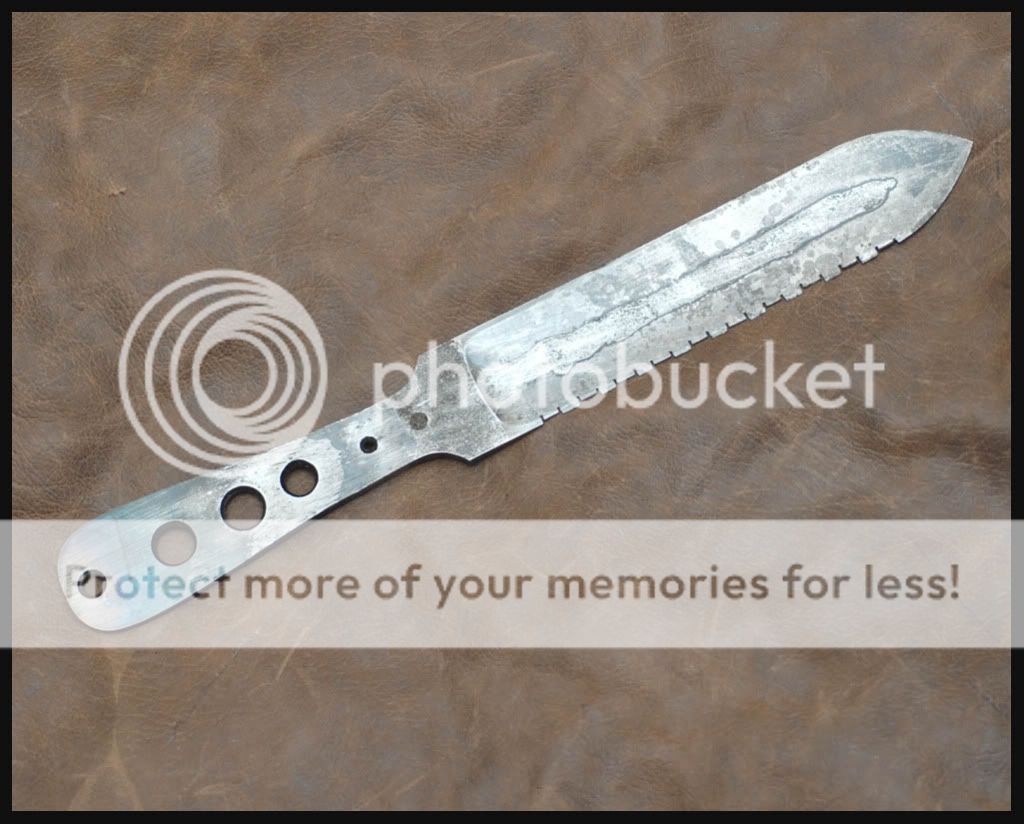
I started with a piece of 1/4" x 1.5" x 12" Aldo 1084. I drew up a dagger looking design that was symmetrical on both sides to enable Right and Left hand Use since I was planning on leaving one side completely flat and the other side Hollow ground down the middle and chisel grind on both edges (Think Blood Groove).
Here is the Original Design
A few concerns that I had:
I marked out the design on the steel, drilled the pin and weight reduction holes in the tang, profiled and flat ground the blank. (No photos of this process... Sorry)
I started with the hollow grind on one side it turned out great IMO. I went right down the middle edge to edge, the center thickness (thinnest point) sat right around 1/8" which Jason and I thought was spot on....
Hollow Grind:
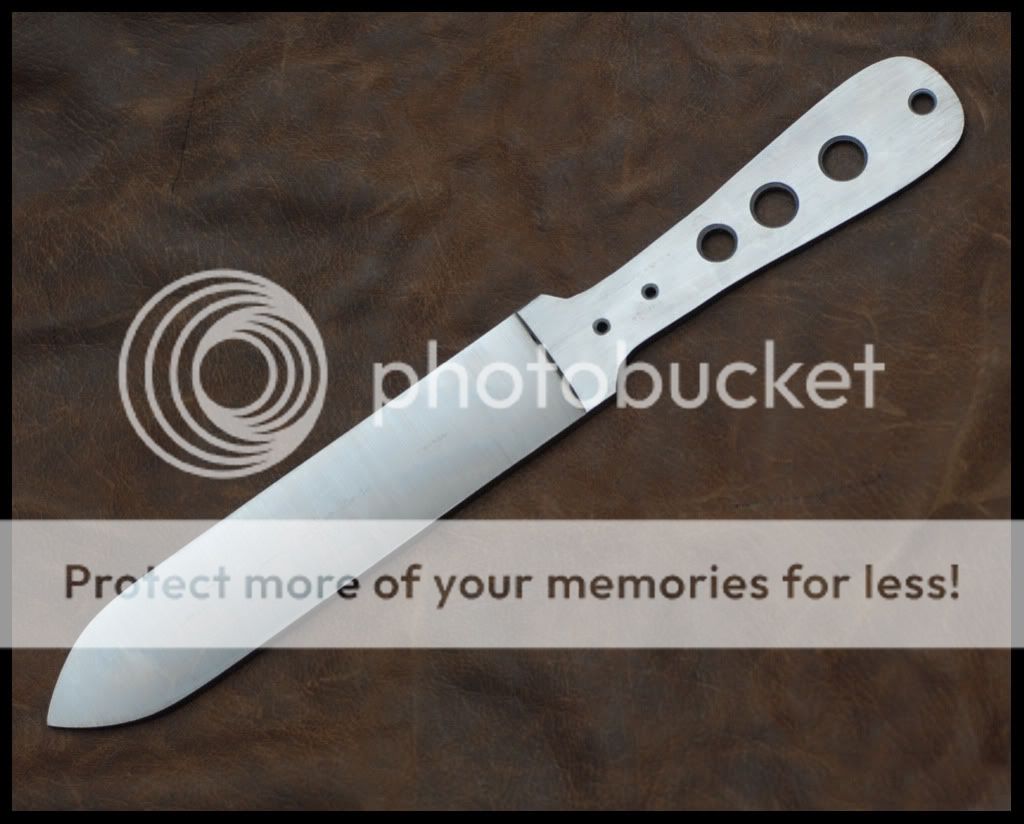
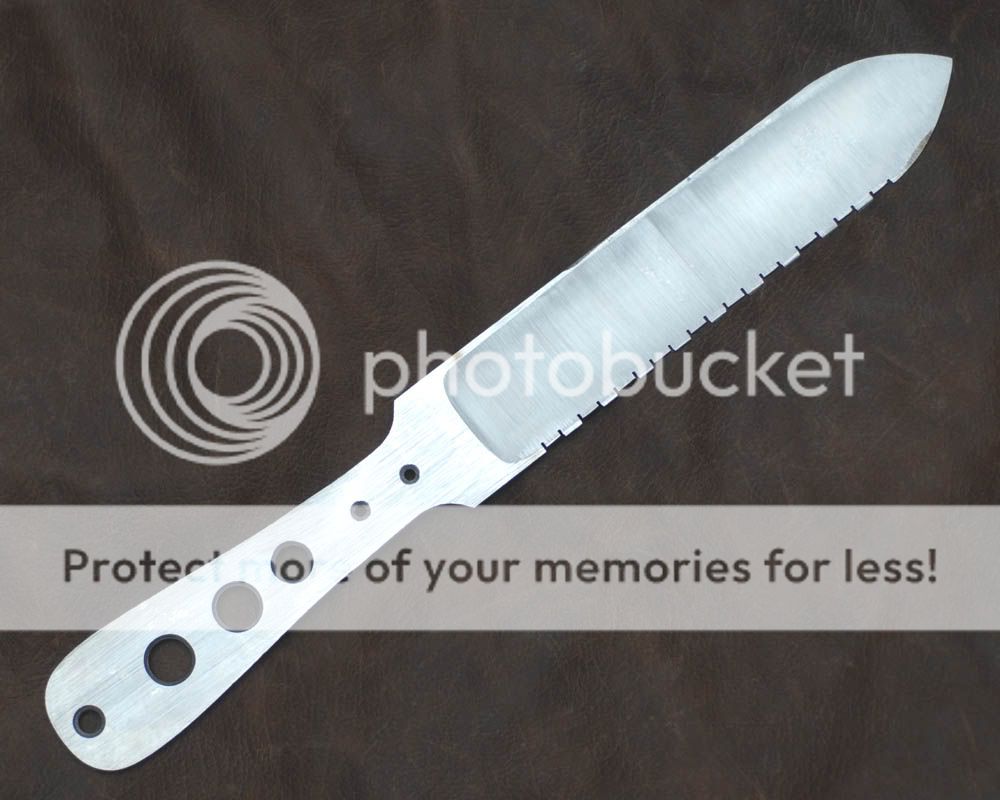
I then started grinding the flat chisel grinds on the same side as the hollow grind. I kept them even and straight and went approx 1/4" in from both edges. I quickly realized that I was correct in my earlier concern (#1 above) The hollow grind was too shallow due to the 10" wheel. As the chisel grinds came close together (in the center of the blade) the hollow grind started to look flat. I contacted Jason for input (it's his blade after all), He said "Why don't you turn the chisel grind into a dagger grind, flip it over and hollow grind the other side so it is like a spoon" Crazy... I thought. After an hour or so of holding the blade and contemplating I realized it was the only option. I flipped the blade over and started grinding. I LOVED IT! The blade was now thinner than I had planned so the bending/snapping blade became an even bigger concern. I cut in some saw teeth, filing every other one down in the opposite direction of the flat grinds.


Now to address the HT and Tempering: Jason and I thought it would definitely need a differential heat treat to keep the edge hard and the center soft, clay hardening was the only option IMO. That is today's project, I will keep you posted.
Thanks for Looking, Comments welcome and Encouraged!
Ryan W.
When I got home I did some online research This is what I found: Hori-Hori (Dig-Dig or Digging-Digging) is a Japanese tool used often by bonzai "Masters" and simple gardeners alike, Seems Archeologist like them too. I found a few different models available for purchase online, some better than others. They are inexpensive ($20 - $30) and cheaply built for the most part. Jason wanted a full tang version that he could use while working in the yard or in the field. I was game to give it a shot, I knew it would be a little rough as a new maker.
I started with a piece of 1/4" x 1.5" x 12" Aldo 1084. I drew up a dagger looking design that was symmetrical on both sides to enable Right and Left hand Use since I was planning on leaving one side completely flat and the other side Hollow ground down the middle and chisel grind on both edges (Think Blood Groove).
Here is the Original Design
A few concerns that I had:
- The hollow grind will be too wide since I only had a 10" contact wheel
- I had done Serrations on blades before but never made a functional Saw edge, the plan was to land somewhere in the middle.
- This tool will be used for Digging, Sawing and Cutting. In my mind that is a hard combination get the right HT on. The edges needed to be relatively hard to maintain an edge after being plunged into the earth time and time again. It's entire blade needed to be able to flex (not Break) but still not bend when digging.
I marked out the design on the steel, drilled the pin and weight reduction holes in the tang, profiled and flat ground the blank. (No photos of this process... Sorry)
I started with the hollow grind on one side it turned out great IMO. I went right down the middle edge to edge, the center thickness (thinnest point) sat right around 1/8" which Jason and I thought was spot on....
Hollow Grind:
I then started grinding the flat chisel grinds on the same side as the hollow grind. I kept them even and straight and went approx 1/4" in from both edges. I quickly realized that I was correct in my earlier concern (#1 above) The hollow grind was too shallow due to the 10" wheel. As the chisel grinds came close together (in the center of the blade) the hollow grind started to look flat. I contacted Jason for input (it's his blade after all), He said "Why don't you turn the chisel grind into a dagger grind, flip it over and hollow grind the other side so it is like a spoon" Crazy... I thought. After an hour or so of holding the blade and contemplating I realized it was the only option. I flipped the blade over and started grinding. I LOVED IT! The blade was now thinner than I had planned so the bending/snapping blade became an even bigger concern. I cut in some saw teeth, filing every other one down in the opposite direction of the flat grinds.
Now to address the HT and Tempering: Jason and I thought it would definitely need a differential heat treat to keep the edge hard and the center soft, clay hardening was the only option IMO. That is today's project, I will keep you posted.
Thanks for Looking, Comments welcome and Encouraged!
Ryan W.
Last edited: