Iron bolsters?

I have no knowledge of GEC's materials but I would believe their bolsters on STL marked knives are a very low carbon steel alloy. Pure iron in its elemental form is very soft and malleable. A small amount of carbon must be added to make it harder.

All Iron and Steel is quite susceptible to oxidation until you start adding chromium to the mix to give it stainless properties.

I think the confusion comes in is that the nomenclature is not consistent. Some refer to what we are referencing as low carbon steel and others as low carbon iron. Neither are wrong.

I agree one hundred percent! Great explanation, Justin!!
 
No it doesn't bother me, it just taught me that the TC bolsters are different steel than the #55 for example. I bet you would pull your hair out Primble :eek::barf::D

Maybe/Probably !!?? :eek::barf::confused::D

More iron bolsters ( I am trying my best to pull other pictures out of the wood work from some of you guys ):
21bj39h.jpg


Where did Gevo go - I saw his name at the bottom for a good while - got any pics Gevo :confused::confused: - I doubt Charlie has any/many iron bolstered knives either.

:eek::eek::eek::D:D:D:D:D:D:D
 
I might have a few Iron Bolsters!:rolleyes:

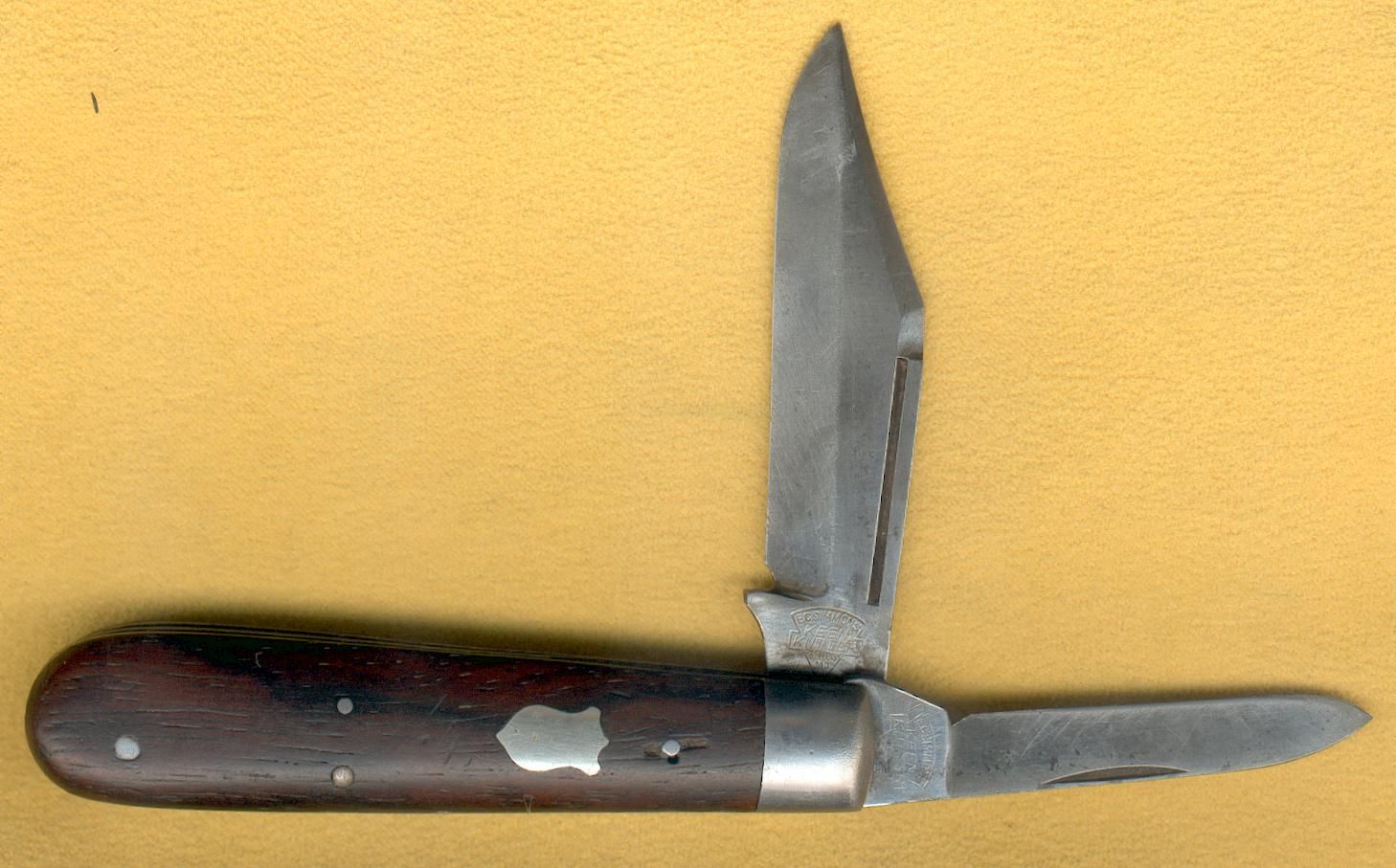
Here's an interesting old KeenKutter Jack with IBs.

OreCoast6.jpg
 
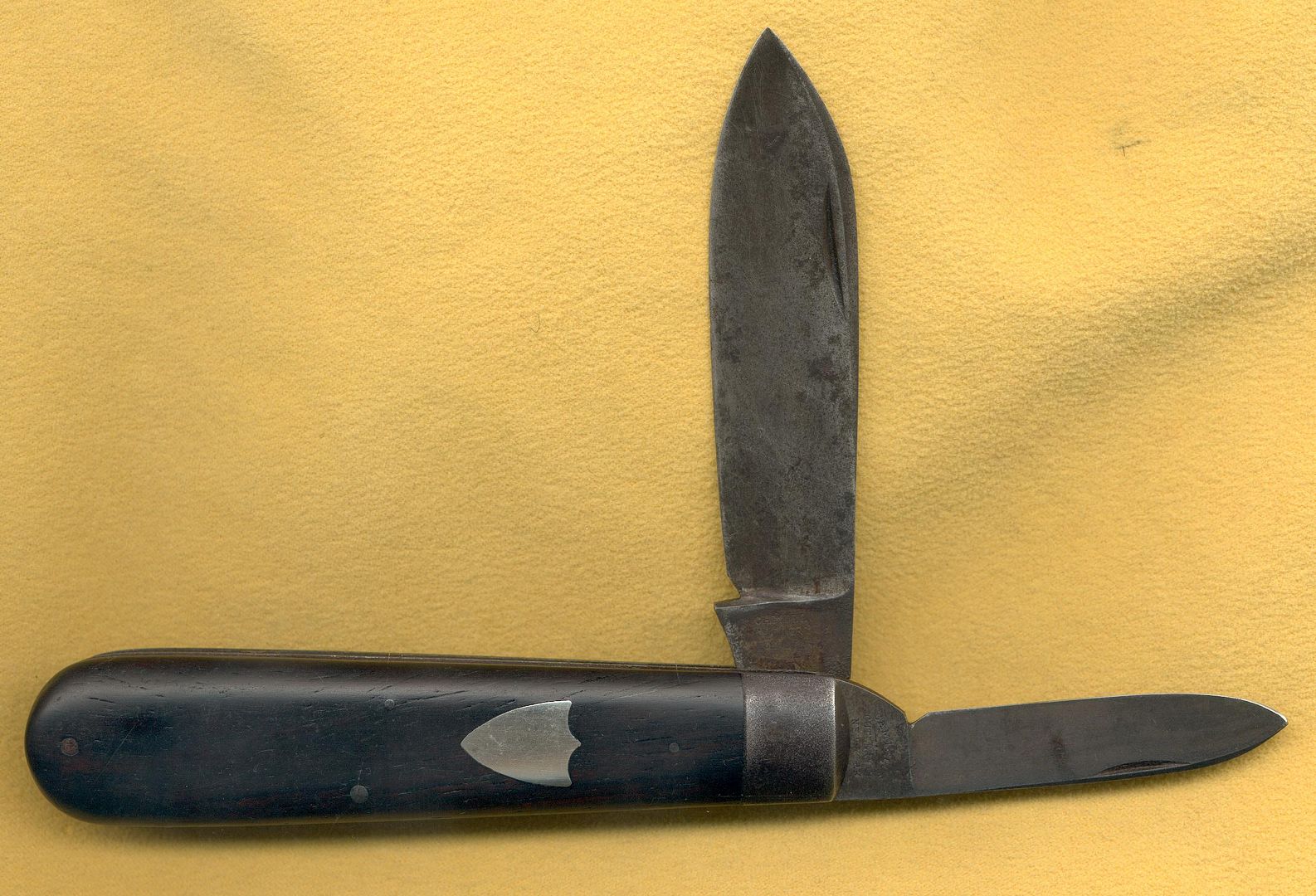
An A.Field "Progress", clearly Iron.

AFieldJack1.jpg


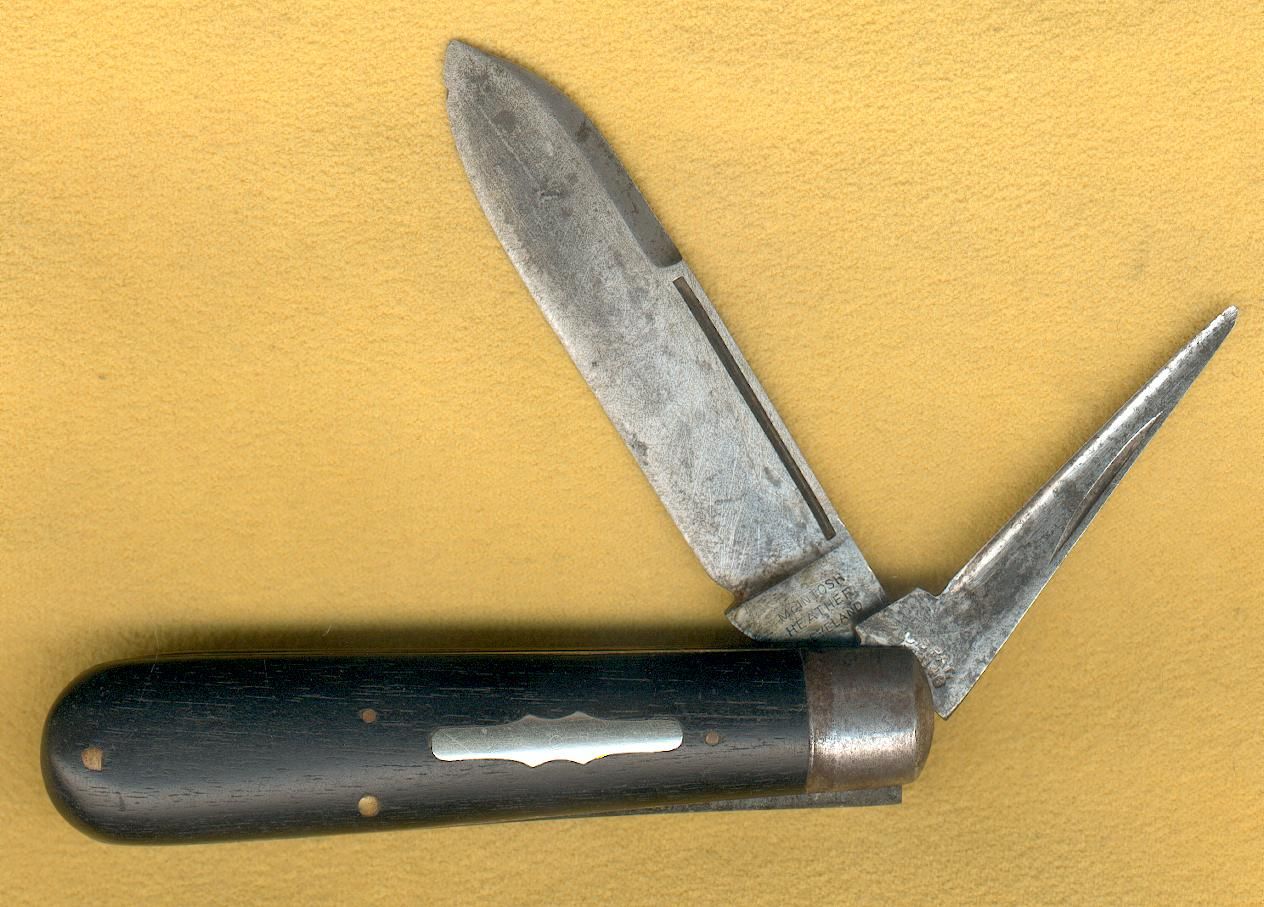
McIntosh Heather, Cleveland, made by Empire.

EmpContractHJ.jpg


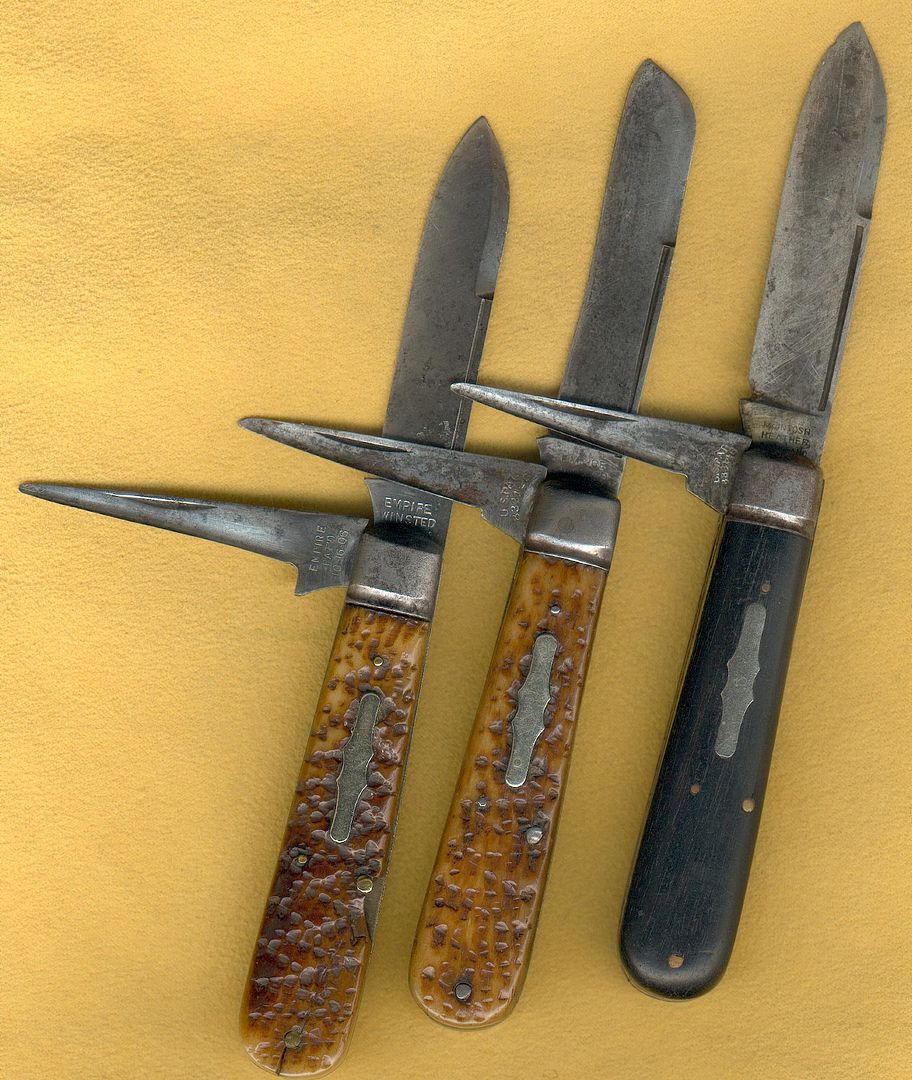
More Empire contract HJs with IBs.

EmpContractHJplusBoneEmps.jpg


Early Camillus, probably my favorite knife from that Company!
IBs:

UberCam3.jpg
 
Last edited:
I think the confusion comes in is that the nomenclature is not consistent. Some refer to what we are referencing as low carbon steel and others as low carbon iron. Neither are wrong.

I beg to differ. If it has carbon in it, it is no longer "iron"; it is "steel".

There is such a thing as "cast iron", which does not contain carbon.
 
Early Camillus, probably my favorite knife from that Company!
IBs:

UberCam3.jpg

Every example posted was fantastic, but, the Camillus might be crowned "King of Patina" for me - the iron bolsters and even the pins on that knife have aged perfectly.

Thanks for the picture show Charlie. :eek::eek::thumbup::thumbup::)

Out of pure curiosity - I wonder how the Camillus achieved that kind of patina - I don't believe it would happen that way if frequently carried in a pocket with change and keys - would they not tend to clean or polish the bolster more :confused::confused: - maybe it just sat in an outdoor toolbox or a not too damp place - possibly outdoor shed or something - just thinking out loud. :confused::confused::confused::rolleyes:;):)
 
I beg to differ. If it has carbon in it, it is no longer "iron"; it is "steel".

There is such a thing as "cast iron", which does not contain carbon.

Actually, Iron that contains less than 2% of carbon is called steel whereas Iron which contain more than 2% of carbon is known as pig iron.
 
Maybe they should be deemed Ferrous Bolsters....that ought to cover all needs.:confused::D

I have an old Schatt Swayback that has a ferrous rat-tail bolster and what appears to be a NS endcap, odd.

Thanks, Will
 
Actually, Iron that contains less than 2% of carbon is called steel whereas Iron which contain more than 2% of carbon is known as pig iron.

OK. That does not change the fact that "low carbon iron" is called "steel".
 
Last edited:
Exactly my point. The correct name is "low carbon steel", not "low carbon iron".
 
I beg to differ. If it has carbon in it, it is no longer "iron"; it is "steel".

There is such a thing as "cast iron", which does not contain carbon.

I do not disagree. I prefer to use the technical terms (my background is in chemistry), but that does not change the fact that the words steel and iron are often used interchangeably.

This is not the proper venue to discuss the technical differences between the two materials, but the take home message is that if you see a knife advertised as having iron bolsters or liners, you can safely assume it is a low carbon steel alloy.
 
I do not disagree. I prefer to use the technical terms (my background is in chemistry), but that does not change the fact that the words steel and iron are often used interchangeably.

This is not the proper venue to discuss the technical differences between the two materials, but the take home message is that if you see a knife advertised as having iron bolsters or liners, you can safely assume it is a low carbon steel alloy.

Bingo! :thumbup::)
 
Another example of Schrade iron/steel bolsters:
2087ak6.jpg


A lesson you will not forget Mark. I suppose you could try again if it bothers you much.? :thumbup:;):D

OMG Primble that there is one beautiful and unique knife - I love everything about that one! NICE :thumbup:
 
Ref it more accurately being "steel" I don't doubt, but I suspect "iron" bolsters was used loosely in this context when speaking of pocket knives.
 
Every example posted was fantastic, but, the Camillus might be crowned "King of Patina" for me - the iron bolsters and even the pins on that knife have aged perfectly.

Thanks for the picture show Charlie. :eek::eek::thumbup::thumbup::)

Out of pure curiosity - I wonder how the Camillus achieved that kind of patina - I don't believe it would happen that way if frequently carried in a pocket with change and keys - would they not tend to clean or polish the bolster more :confused::confused: - maybe it just sat in an outdoor toolbox or a not too damp place - possibly outdoor shed or something - just thinking out loud. :confused::confused::confused::rolleyes:;):)

We will never know, I'd say, Rob. I just thank heaven that the previous owner loved the patina, or alternately, did not own a buffing wheel!!:eek: Phew!!:)

Those Low-Carbon Steel Bolsters would never be the same again!!:eek:

Nor would the Higher-Carbon Steel Blades!! Nor the Medium-Carbon Steel pins!!!!!:eek:

Well, I have to go Iron a carboniferous [mostly (C6-H10-O5)n] shirt for tomorrow!!
Good night all!!

:D:D:D:D
Good thing everyone has a sense of humor around here!!:):):rolleyes:
 
Last edited:
Back
Top