Is it traditional or something else?

Status
Not open for further replies.
A muskrat can have one or two springs. A two spring is more desirable as a full time working knife, just because of its built in backup. You can break a spring and stay in business. They are also double end trappers, with a special use, hence "Muskrats. A trapper is a special jack!
Isn't that special??

A pen is usually about 3 1/4" or less and of slimmer/lighter construction.

Thanks Waynorth. I have always thought that a muskrat was a pen style knife. I guess I need to make a trip to the book store.


Paul
 
51QQ8Z86EYL._SL500_.jpg


There are other incarnations and editions but if you can find one at a reasonable price, this is the best of the breed...
 
Thanks Roland and Kerry. While Serpentine Jack is probably the most accurate, I've always called them single-blade trappers only because it seems to narrow it down a bit more. IE. a knife with a single blade in a trapper style handle.
 
Let me see if I can get whats in my head into this post.

For a knife to be traditional it must be a traditional pattern and use traditional scales or handle material i.e. Stag, bone, ivory, some woods, celluloid, and I'm sure there are a few I have left out. It has to be hafted in a material that was available to the old makers.

To put Canvas Micarta on a traditional pattern then say if they had it they would have used it doesn't really work with me because they didn't have it. If a Saddle Horn (for example) is built and it is a shadow pattern with Canvas Micarta, to me it is a "slip joint" if the same pattern is built say in barehead with bone scales I would call it "traditional." I'm not saying one is better than the other, just that one is traditional and one is not.

You've illustrated a divide that I think we're gonna keep getting hung up on, Jeremy. The problem for me in saying that the materials determine whether or not a knife slip joint is traditional or not is that materials technology continues to evolve, but the construction methods don't (for the most part, at least; Jason's old catalog scan demonstrates how far back screwed construction goes). If we disallow micarta as a material for traditional slip joints, we might oughta disallow modern stainless steels, too, since the old companies didn't have them. I'm really not trying to be a smart alec, I promise, I'm just trying to illustrate my point that this is a slippery slope and it's easier (for me, at least) to concentrate first on construction and second on pattern.

James
 
1. When does traditional "pattern X" cross the line and become something that should be renamed?

2. What constitutes a traditional knife? (ie, materials used?, shape of blade(s)?, number of blades?, shape of handle?, etc.)


I'd say the answer to #1 is when it's been copied enough that it remains recognizable despite all but the most drastic modifications. There won't be a day when it's "renamed". The name will gradually come from either the first adopters or the first maker.

Any knife that satisfies #1 fits #2, regardless of shape or material. There will always be new traditions.
 
I'm really not trying to be a smart alec, I promise, I'm just trying to illustrate my point that this is a slippery slope and it's easier (for me, at least) to concentrate first on construction and second on pattern.

James

O heck James, I don't think your being a smart alec, there was a discussion going on and I jumped in, and you had a different view. No worries.

About the steel, it is still metal, just because a few elements have been added hasn't changed it so much that it is no longer steel. They had no way to make carbon fiber for example.

You mentioned construction, what do you mean by that? The tools that were used or the way a knife is put together?

For me, it has to come down to pattern and scale material to be traditional.

Heres an example. It has nickel silver bolsters and bone scales which says traditional, but theres no way I could call it traditional because the pattern isn't.

Picture4-7.png


What say you?

p.s. I'm glad Kerry didn't pose the question of what constitutes Hand Made :D
 
FWIW, I agree with your idea of not forcing a fit and naming the pattern...but that don't make it traditional in my book!

I agree that it doesn't make it traditional. I was actually directing this comment toward the knives like GEC's Muskrat and Whittler that clearly don't fit in the traditional sense of those patterns aside from the blade configuration. Just because they call it something doesn't necessarily make it that.

You guys have changed my opinion on this. For it to be a 'traditional knife' it should be made with only traditional materials including steel. The more that I think about this it seems that the vast majority of traditional knives are vintage ones. Many new knives are modern reproductions, traditionally inspired, or 'something else' and that's okay with me. At first I was thinking about it as 'traditional knife'. That to me means a knife made in the traditional style regardless of materials and probably belongs in one of the other categories. Hope this makes sense.

I think from now on I'm just going to stick with slip joint or just plain ol' pocketknife.;)


Oh and don't give Kerry any more crazy ideas, he's got enough as it is.:p:D
 
.....SNIP....If we disallow micarta as a material for traditional slip joints, we might oughta disallow modern stainless steels, too, since the old companies didn't have them....SNIP....

I'm not trying to speak for everyone, but the fundamental reason I include modern steels to be still within the realm of "traditional slipjoints" is because they don't jump as strikingly different from a visual standpoint the way modern handle materials do. A well executed custom premium stockman with modern steel hafted with jigged bone or stag can look very vintage and traditional.

Take that same knife and put some Orange G-10 or Carbon Fiber on it and while I may still like it and even want it, it ain't gonna look traditional;)
 
... You mentioned construction, what do you mean by that? The tools that were used or the way a knife is put together?

For me, it has to come down to pattern and scale material to be traditional.

Heres an example. It has nickel silver bolsters and bone scales which says traditional, but theres no way I could call it traditional because the pattern isn't.

What say you? ...

By construction I meant the methods, not the tools. And yeah, I don't think any of us would call that traditional. Any knife with a thumb stud and/or a pocket clip is totally non-traditional.

I'm not trying to speak for everyone, but the fundamental reason I include modern steels to be still within the realm of "traditional slipjoints" is because they don't jump as strikingly different from a visual standpoint the way modern handle materials do. A well executed custom premium stockman with modern steel hafted with jigged bone or stag can look very vintage and traditional.

Take that same knife and put some Orange G-10 or Carbon Fiber on it and while I may still like it and even want it, it ain't gonna look traditional;)

Nah, I'll give you that one. The funny thing is that I don't care for the wild colors, whether they're celluloid, G-10, or GEC's crazy acrylics. I was just playing devil's advocate, because I think this is an interesting question.

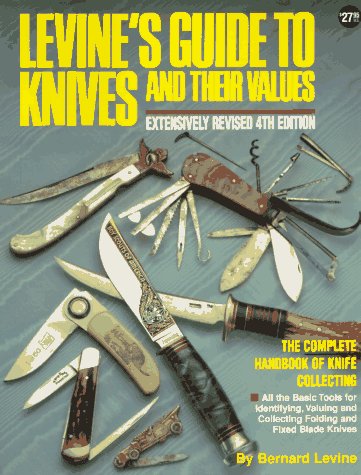
And from now on, if I can't find the pattern is Levine's 4th edition, it ain't traditional. ;)

James
 
This whole deal is over my head. My new K.R. Johnson "sodbuster" is likely not a "sodbuster" at all, but just a modern slipjoint that sort of favors a sodbuster. I don't know if I'd call it traditional even because of the modified blade shape, newfangled steel, and the micarta scales. It kinda looks like a duck and it kinda walks like a duck, but maybe it is a coot and not a duck.

Even my avatar knife the single blade Mutz canoe may be just a modern slipjoint. Stretching the envelope?

Here's a photo of both of them together:

KRJohnsonsodbuster.jpg


My thoughts are if I have a question, I'll fire it off to the resident supermod and let him decide if it belongs in this forum or not. I will say that the half a cigar box full of Gerber, Kershaw and Benchmade one hand openers are not traditional and certainly not slipjoints --- more like turkeys than ducks and they do not belong in this forum.

I've stayed out of this discussion because of there is a lot of black and white, but there is a lot of gray, too, many shades of it. I stuck this little post in here, thinking all the while that I should just keep quiet and just watch where the thread goes. That's what I'm going to do from here out.

Ed
 
Last edited:
I've stayed out of this discussion because of there is a lot of black and white, but there is a lot of gray, too, many shades of it.
Ed

And therein is the rub for me -- the gray area.

In BL Guide 4th Edition, Mr. Levine says:

"The BULL-HEAD or equal-end double-end jack knife is a two-blade version of the standard cattle knife."

Ok, I guess that's fair but where did Mr. Levine come up with that fact? Is it his fact or did he read it or hear it from another source and is just repeating it? I mean nothing negative to Mr. Levine here -- I'd just like to know where that piece of information came from.

There are a lot of things said about knife patterns and other knife subjects by individuals with no reference as to where or how they came up with a particular fact.

It's not just Mr. Levine but many other authors/individuals. I look at the BL Guide 4th Edition and other books like it as a GUIDE and not a book of hard, fast, facts.


Earlier in this thread KnifeHead said:

"Muskrat: a slim, serpentine, equal-end frame with slim, clip blades pivoting out of each end." Where did he get that? Is it his thought, did he make it up, or did he get it from another source?

He went on to show a picture of a knife he said was a Muskrat and a GEC knife that GEC claimed to be a Muskrat but by "KnifeHead's" belief wasn't a Muscrat. As far as I'm concerned, the GEC knife is a Muskrat. It might not fall exactly into "KnifeHead's" description but it is at least a sub-patterned Muskrat.

For all the purists, I'm sorry but to me the art of naming patterns is not an exact (for the lack of a better word) science. Pattern names change between companies/individuals and I suppose that's the way it will be forever.

I only put forth my thoughts for discussion and mean nothing negative to any player -- Mr. Levine, KnifeHead, or anyone else.

I guess we won't get into names but I'll just say that when I was a kid in the 1940s and visited my Great-Uncle Rupert in Harrellsville, NC, he called his 5" Granddaddy Barlow his Back Pocket knife on a regular basis.

This is a great thread with a lot of useful information. Thanks for starting it.

 
Last edited:
The muskrat pattern is very recognizable by those who know. Some people don't know that they DON'T know.
 
The muskrat pattern is very recognizable by those who know. Some people don't know that they DON'T know.


see Epistemology...

...or... how we know what we know, and how we know we know it.

;)
 
Question #2 in OP:

Using materials to define whether a knife is Traditional or not seems to be a very slippery slope. You could end up all the way back to the first time a rock was sharpened to cut something. Polymers, of the synthetic variety and otherwise known as plastic, date to around 1905-10 and have been widely used in knife construction since shortly thereafter. That particular polymer was Novolak, renamed Bakelite which Westinghouse immediately modified into Micarta. Micarta is not new, no later than 1910. Back to the rock, polymers exist in nature as well, besides the synthetic versions. Then there is the issue of metals. Where would one begin with this one. First known folding knife, early Iron Age, 600-500 BC.

It would seem IMHO what is or is not Traditional is probably better left sufficiently broad in definition and largely in the eye of the beholder when it comes to materials.

Mechanical aspects may be where you can screw it down a bit.

What an interesting thread. Think of knife collectors reading this stuff 100 years from now. For some interesting knives and thoughts on this topic see here:

http://www.bladeforums.com/forums/showthread.php?t=768545
 
See, none of you guys got the right answer...it's only traditional if Gus and I say it is...


:eek:


:p

(Boy, that Kerry fella sure knows how to stir it up though... :cool:)
 
See, none of you guys got the right answer...it's only traditional if Gus and I say it is...


:eek:


:p

(Boy, that Kerry fella sure knows how to stir it up though... :cool:)


Well that was gonna be my short answer:o:D
 
Well that was gonna be my short answer:o:D

:p

(Well, it was just meant as a tongue in cheek remark but I do rely on my earlier reference and homage to Justice Potter Stewart. :thumbup: )
 
Here is a real Rem. Muskrat that I shot laying on an old HTT Magazine ad. for the same knife, circa late 1920s. I realize even this doesn't mean a thing to some people..and I say to them, keep workin on those turds. :D

main.php
 
Nice looking knife and thanks for including the copy of the advertisement in the picture. Thanks for posting it KnifeHead. One of the points I was trying to make earlier is that, when it comes to knives, guns, etc., not everything is set in stone. My turds are fine -- blunt on one end and tapered on the other end. It doesn't get much better than that but thanks for your concern.:)
 
Status
Not open for further replies.
Back
Top