John White Hunter

No such thing as TMI on here, John. When I saw 12 turns per inch, I recoiled in horror, but that was probably because the only twist that I have done so far was on a bar that was at least 1 3/8 square before I pressed the corners and I was twisting with a 24 inch pipe wrench with no cheater handle. Can you say "down and to the right?" :rolleyes: I might have gotten 2 turns per inch before my bad shoulder broke down. It was a bold W billet and I tiled it after twisting and squaring to get an "end grain firestorm" type pattern. It worked out, but I think I will try smaller bars next time. :D
 
(Joe, When I'm speaking of twisting so many "to the inch" I'm counting the way bolts are denominated, as in "threads to the inch." Starting with a square bar, one 360 degree turn will give 4 threads , so 12 to the inch will be three 360 degree twists per inch.)

Well, I'll bring us up to date on this, and start up with the handle probably tomorrow, "as I do it." It's usually prudent to wait til everything is finished to start a Forum WIP, just in case. I like to send pics to a client as I work on a knife though, just as part of the fun, so what you've seen so far, is just what someone who orders a knife from me often gets along the way.

After the billet was forged to profile, one of the most important parts of knife-making takes place. It's not too photogenic, but it makes the blade. That's the normalization, grain reduction, and spheroidizing. Forging and welding operations leave the steel with strong internal residual stresses, and enlarged grain. Both are bad.

A five minute soak at 1600 degrees F, followed by cooling to ambient in still air removes most of the internal stresses, and evens out the grain size, though it's still a bit larger than wanted. Three more soaks for this steel at descending temps of 1500, 1450, and 1425, with cooling to a "black heat" of about 800 degrees between soaks, removes remaining stress, and refines the grain to proper size. In simple carbon steels like 1084 & 15n20, this grain refinement can be taken so far the steel won't harden. Enough's enough.

Finally, the steel needs to be softened to allow grinding. I choose a sub-critical spheroidizing soak for one hour at 1200 F and air cooling to ambient. This is all done in a digitally controlled oven.

Here's a shot of another blade in the oven for a look at 1600 F .

Joe3001.jpg


I can then grind the profiled edges of the billet to the exact profile of my steel forging pattern, and use a granite slab, and height gage to mark off parallel lines on the edges to allow me to grind the billet to blade thickness. (If I had a surface grinder this'ld be a lot easier.)

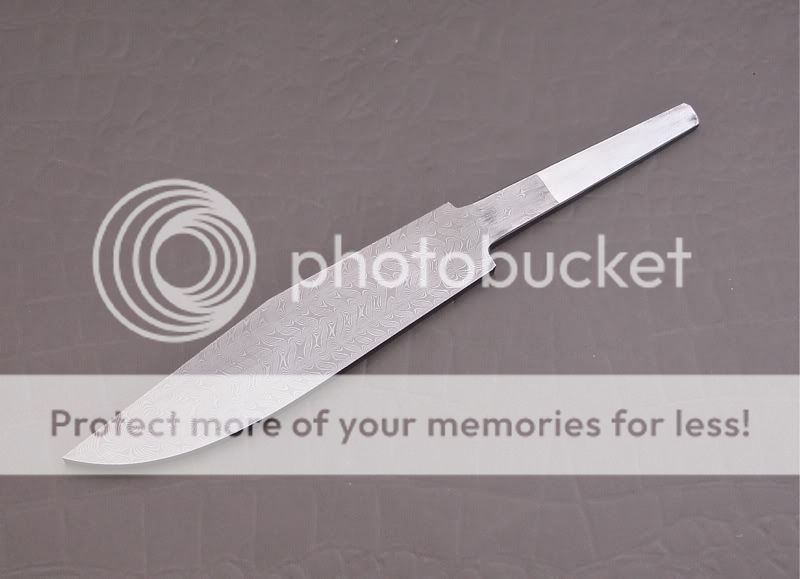
Here's the, let's call it a blade now, ground to .220, and given a quick etch. This is the first time I can get a look at the pattern. Sometimes this is when I get to add to the scrap bucket. I'll have nearly 15 hours into a Bowie billet at this point.

97986e62.jpg


I sent this pic to Will, and asked about fine details such as exact thickness , taper, etc. Will wanted about 3/16ths at the ricasso, with a strong distal taper, and an essentially zero bevel final grind.

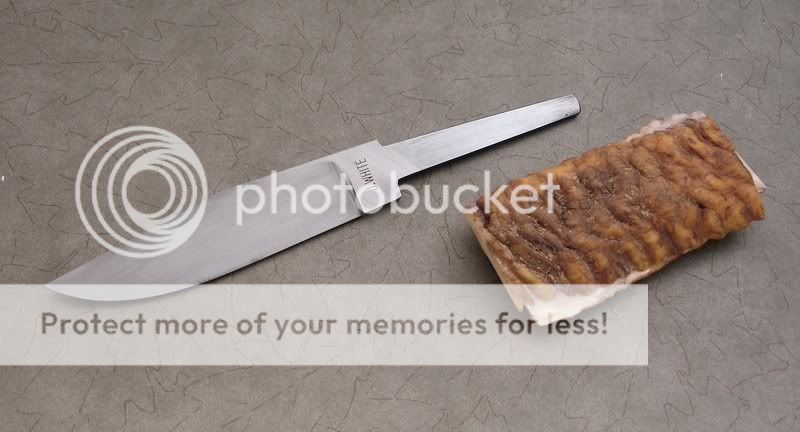
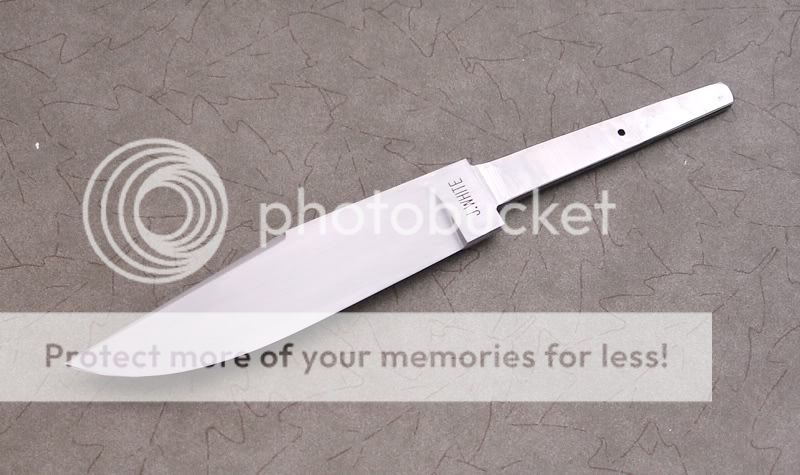
Here's the photo you saw at the beginning of this thread. The blade has been ground to .183 at the ricasso, distal tapered, and the edge ground to about .025 for hardening without warping. The stamps are on the ricasso, and I've done a final stress relieve soak at 1150 F for an hour. It's ready to harden and temper.

f70ae58b.jpg


Here's it is, hardened, tempered at 420 F, the clip draw filed in, and sanded to 1000 grit.

6f3eceb0.jpg


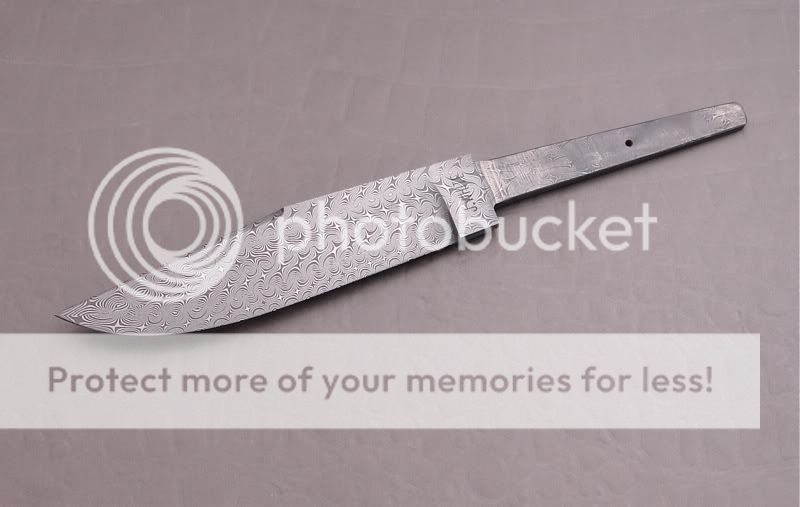
And here we are up to date, the blade etched, and ready for guard, collar, and handle.

7845877a.jpg


At this point, in a 10 inch , multi-bar Bowie, with a fairly complex pattern, I'll have 40 hours in. That don't count the trash bucket offerings!

More as it's done over the next few days.

John

 
Last edited:
That's beautiful John.

I don't think I'll ever get used to the idea of you guys (top makers) trashing blades. I totally understand why you won't release blades that don't meet your standards, but it still just makes me cringe to think about you throwing away something that's substantially better than what we can get anywhere else. A fact of life, but it hurts :D

Will, having John make your design was a great move!
 
Will, having John make your design was a great move!

Yep--I was really happy when he took this one and even moreso as I see it unfold. I'm afraid I may have made him tip his hand a little early by ambushing him with this thread--didn't mean to. The early pics he was sending just got me a little too excited to hold off sharing with you guys.

Sorry about that, John. :D Looks amazing, though. :thumbup:

Will
 
When we decided to show this knife as a WIP, I already had the guard roughed in. Here's a few shots of work on guard, collar, and spacer, including one interesting fixture for installing guards.

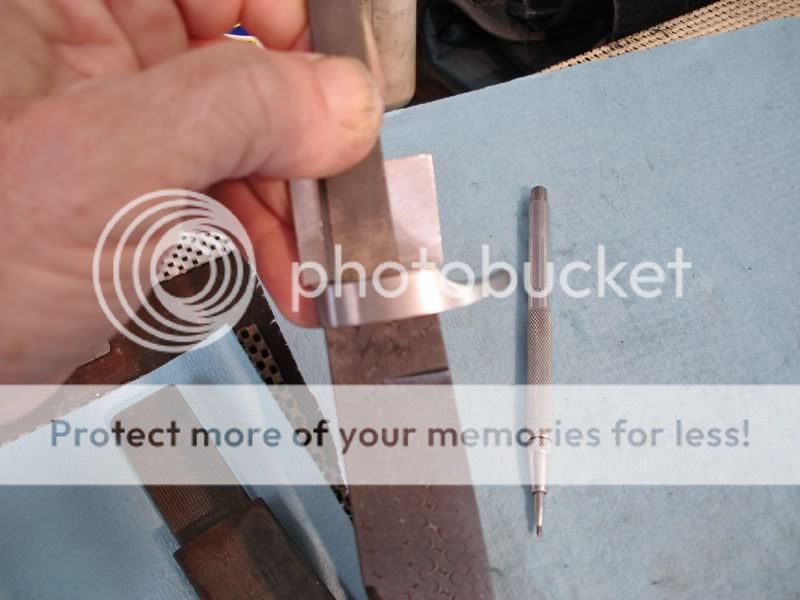
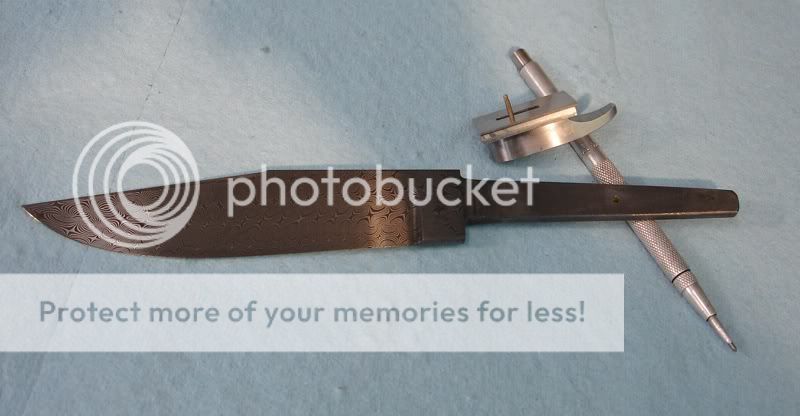
With the roughed in guard dropped into place, I can use the tang to mark a piece of 1/8" stainless for a collar.

65f57c6c.jpg


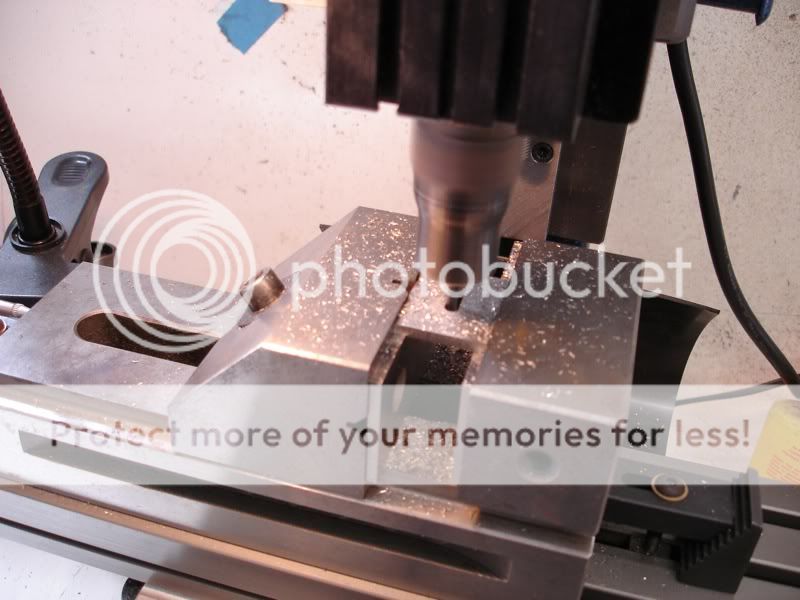
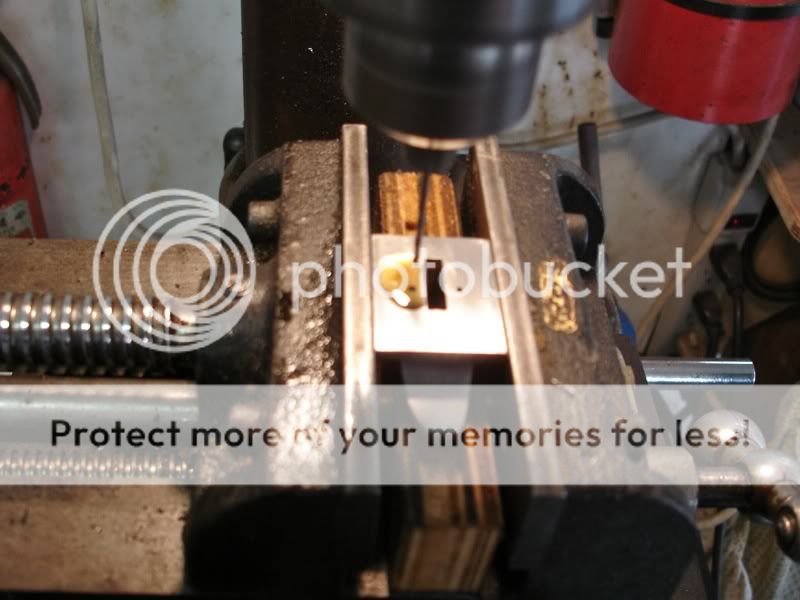
After slotting the collar on the Micro-mill,

4aa285fc.jpg


and cutting the slot square on the ends with a "two-safe-sides" square needle file,

434eeb75.jpg


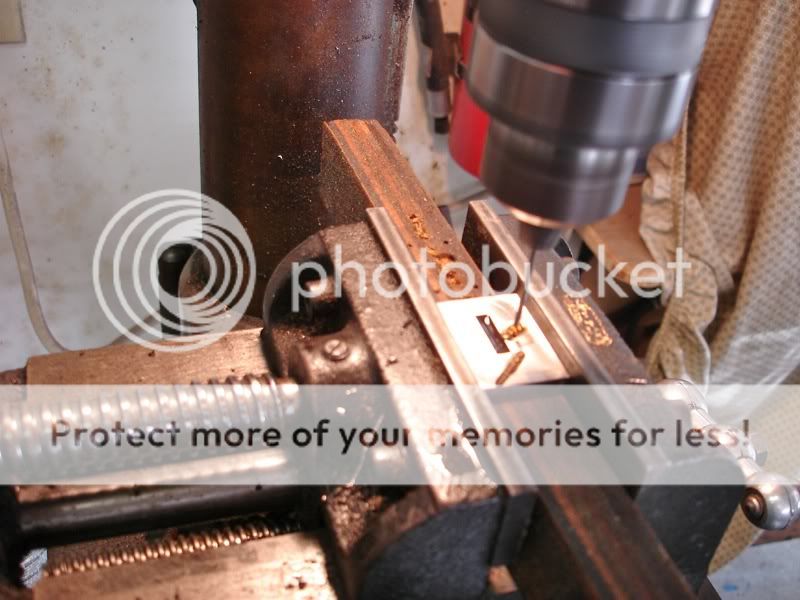
I can drill a pair of #52 holes for a press fit for 1/16" assembly pins.

7bbc714c.jpg
 
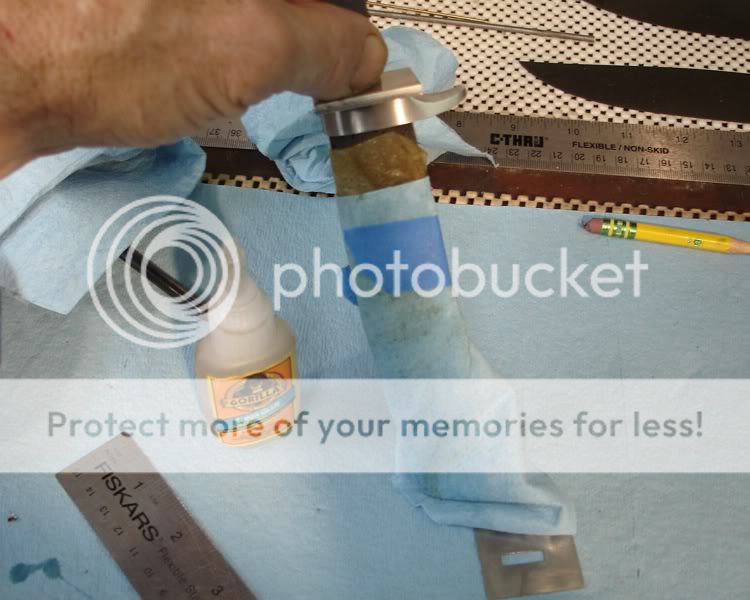
With four drops of superglue on top of the guard, sliding the collar in place will stick it precisely,

1a20fb80.jpg


allowing me to back drill through the collar into the guard,

e78eb9d1.jpg


Back-drilling the other way into a spacer piece will allow me to assemble the guard , collar, and spacer as a unit, that will fit back into place exactly, as I shape and file-work the pieces.

a5eb5c1a.jpg


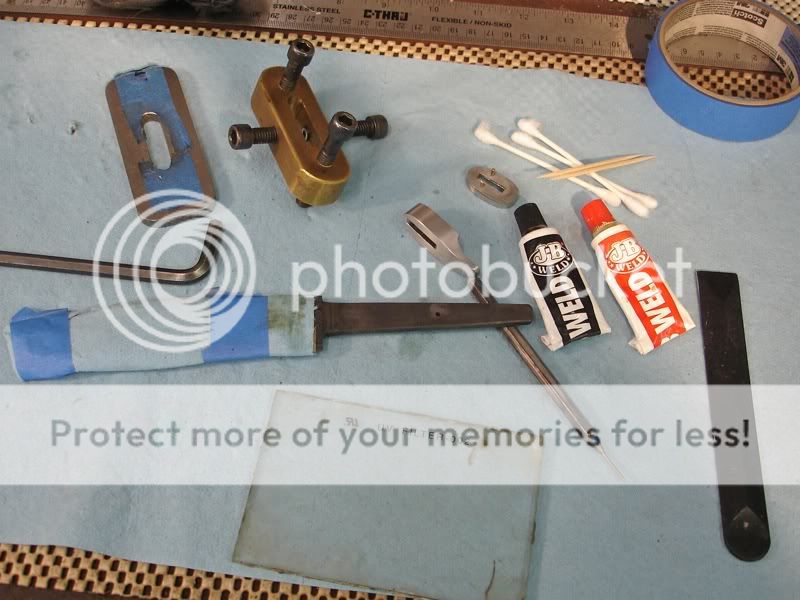
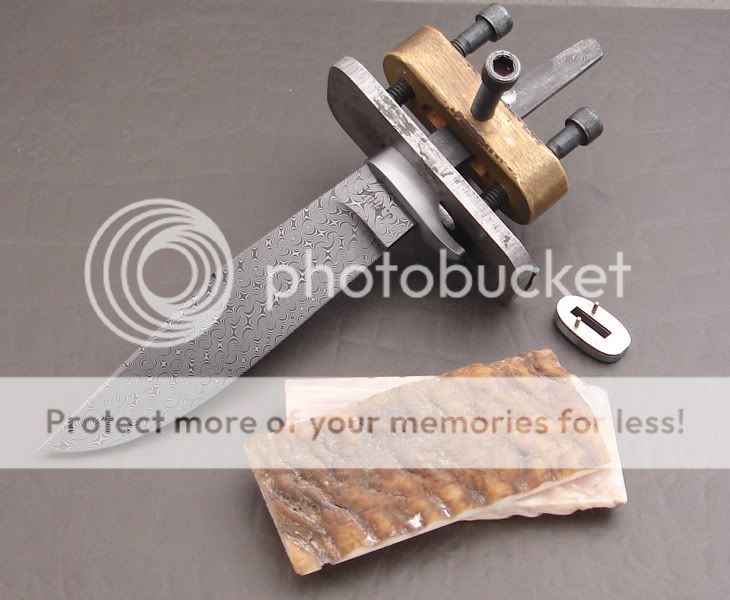
Here comes the fun part. Setting aside the collar and spacer for later, it's time to JB Weld the guard in place. The guard is 90% pre-shaped, and I can do the same for collar and spacer, but I like to do the final shaping of all three on the blade as a unit with the scales, so now's the time to glue up the guard. Here's all the necessary supplies.

6924d606.jpg


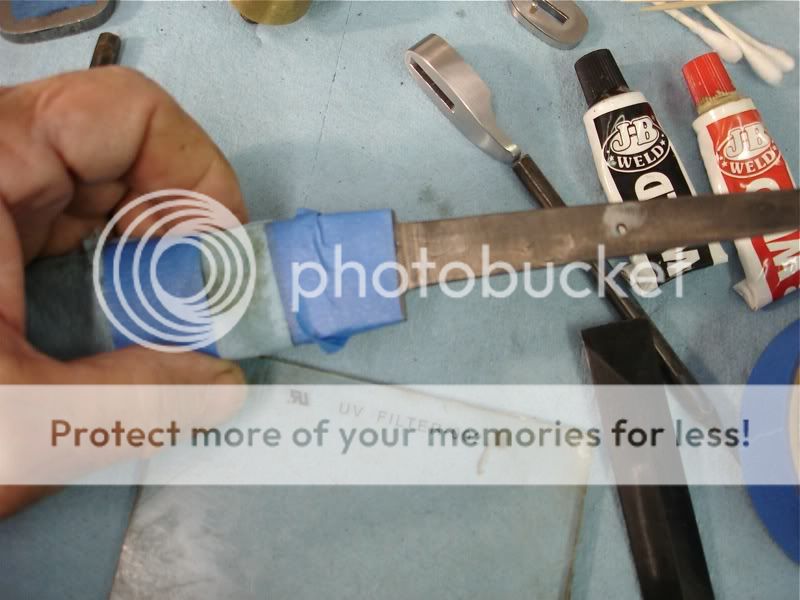
I'll tape off the ricasso, leaving only a 64th or so exposed next to where the guard will fit, then clean the tang and shoulders with acetone.

83080871.jpg
 
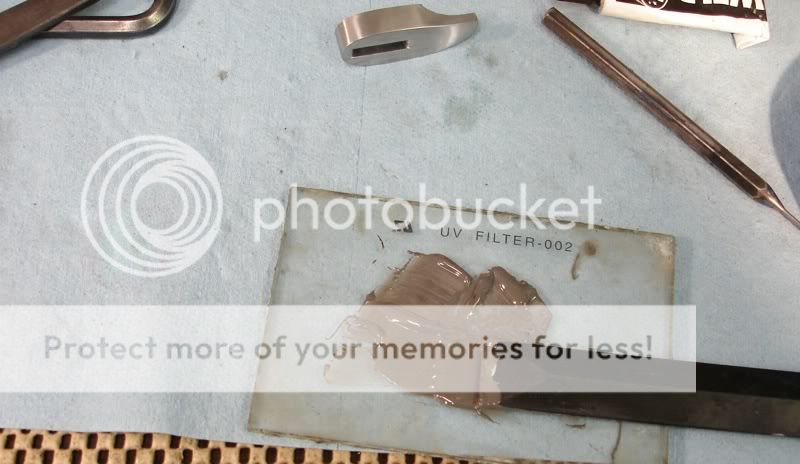
Mix up the JB Weld,

103ab76d.jpg


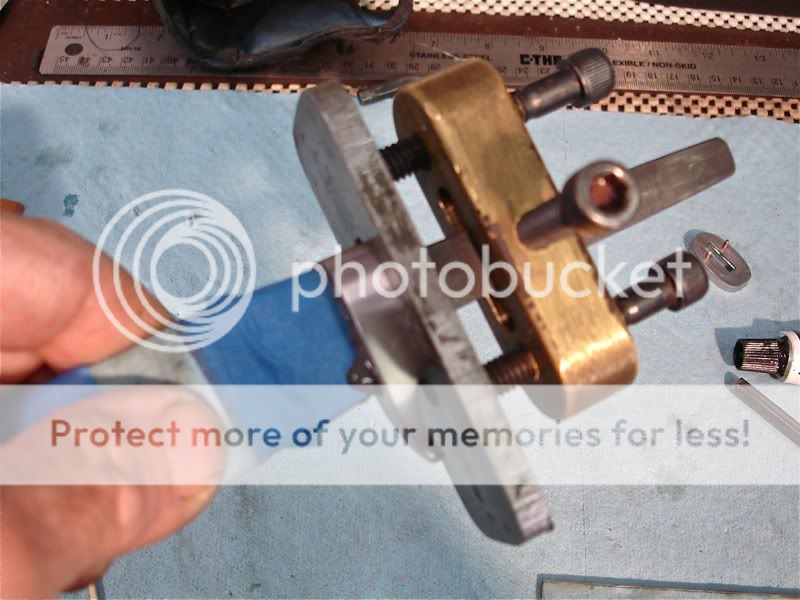
Apply to tang, shoulders , and guard slot, and press into place with this fixture. This is a massively sturdy version of a "Mike's Soldering Fixture" I bought from Uncle Al. It was useful as could be, but was designed to hold a guard firmly in place while soldering. I used it to press fit guards onto tangs, until I destroyed it, since it was made of aluminum. This one I made of bronze, with hardened screws, and a steel pressure plate. I can screw- press tight fitting guards down into place, applying a huge amount of pressure, without anything touching the blade.

8060703b.jpg


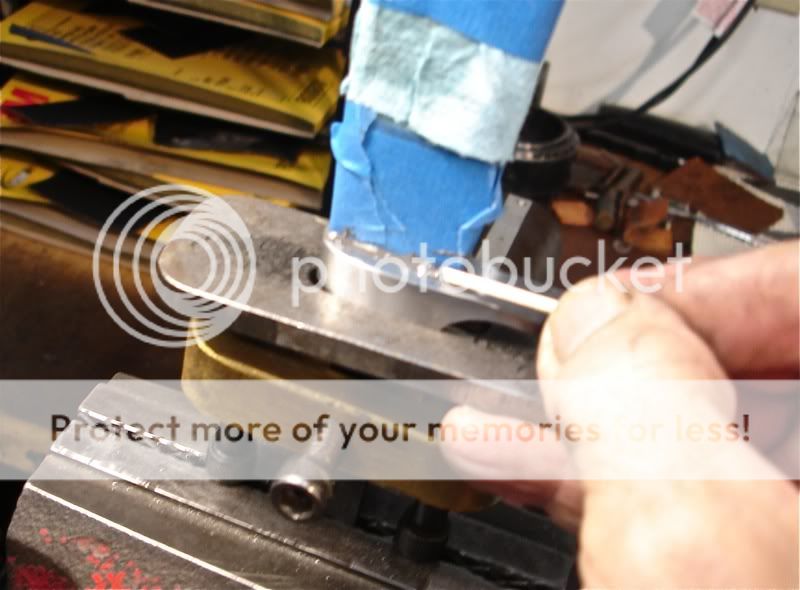
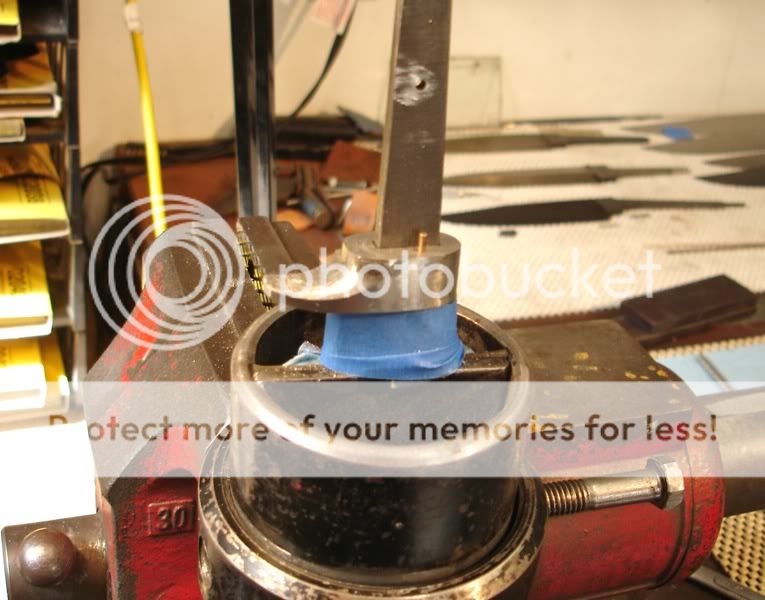
Grabbing the tang in a vise, I'll use a tiny wooden chisel made from a tooth-pick,

e9ada0db.jpg


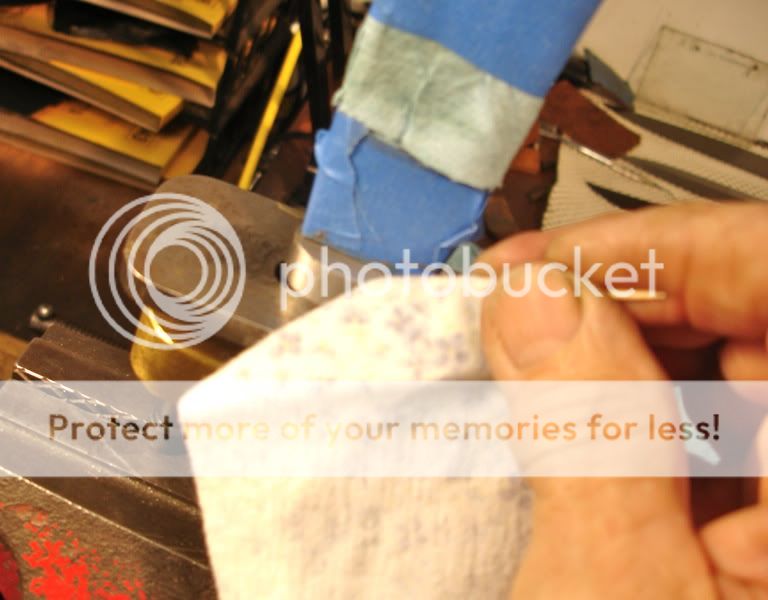
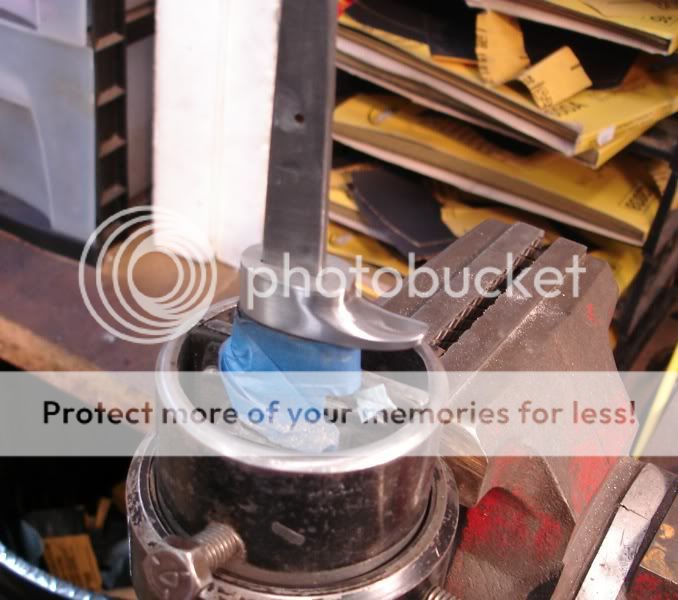
and a piece of flannel moistened with WD-40 to clean up the JB Weld. The tape keeps the gritty JB Weld from marring the ricasso. WD -40 is a good solvent and rust preventative while I work.

39ae88b8.jpg


With the JB Weld completely clean, this puppy can set up over-nite, and we'll be ready to final shape the guard/collar intersection, and install the sheep-horn scales.

d726cf53.jpg


Final installment coming soon, then... OFF TO COOP!

John
 
The lengths you go to for "ease" of precision have me shaking my head and grinning. What a surgeon you are, sir. I really enjoy the WIP--otherwise it would be impossible to imagine all that goes into a John White knife.

I get a little giddy gazing into that gorgeous blade--have an idea I'll enjoy losing myself in that twist pattern for many years to come. :D
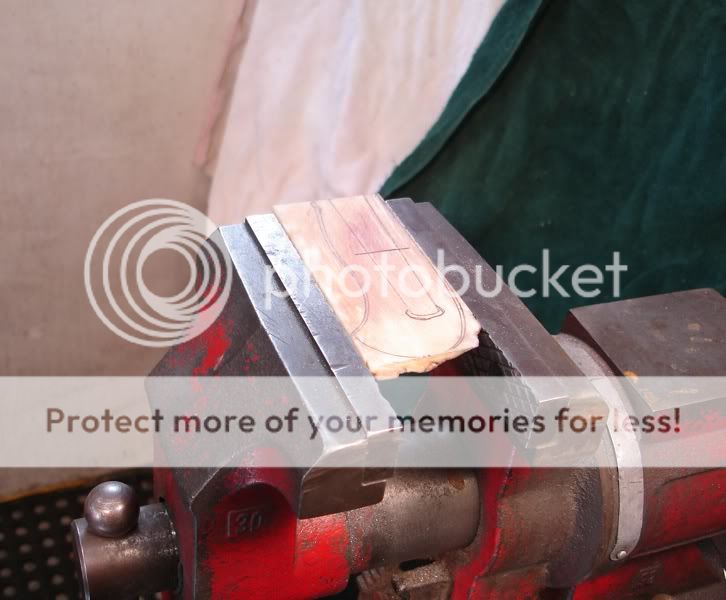
 
Have really enjoyed this WIP and have learned a lot. Will be making myself one of those "tang" jigs very soon. Have wanted to try a Turkish twist but was a bit unsure with some of the steps involved, now I see what's involved i'm gonna give it a shot sometime soon.
 
I know how much extra time these Wips are but I sure appreciate the time your taking to do it for us, wonderfull work!


Steve.

 
Another wonderfully informative tutorial of a fantastically talented MS....soaking up all the info with 2 loafs of bread!!!!
 
Glued up the guard yesterday with JB Weld. This keeps moisture, which would promote rust over time, out from under the guard. It serves the same function as solder,and is a lot kinder to etched damascus.
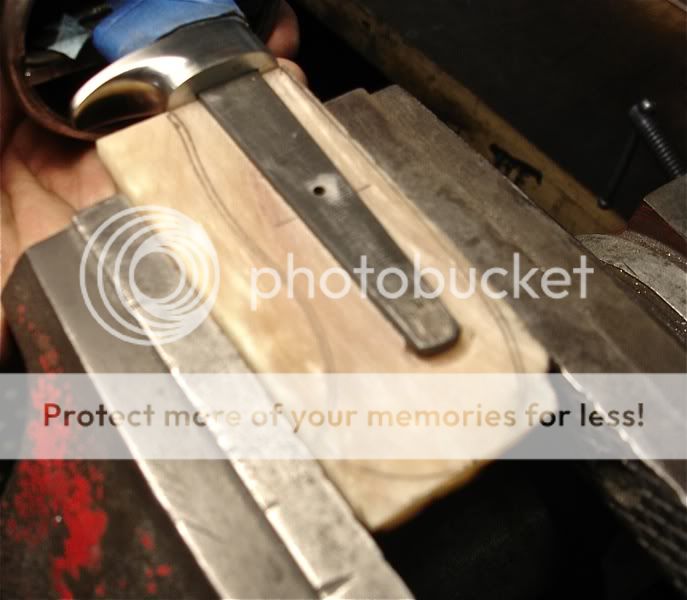
The guard was 90% shaped before installation, and now that it's solidly in place, it's time to finish out the guard/ collar/ spacer unit.

Holding the blade in a padded Moran vise from Uncle Al, I can shape with a chain-saw file.

264c9b2a.jpg


and sand out to 800 grit.

665cecda.jpg


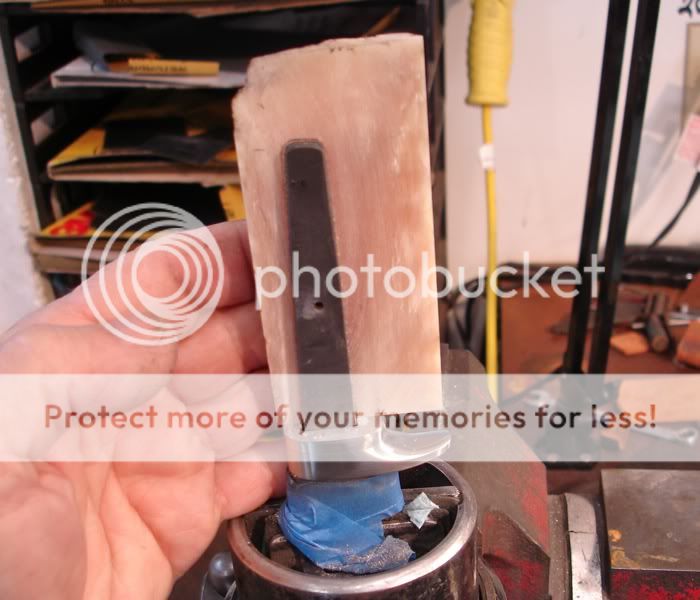
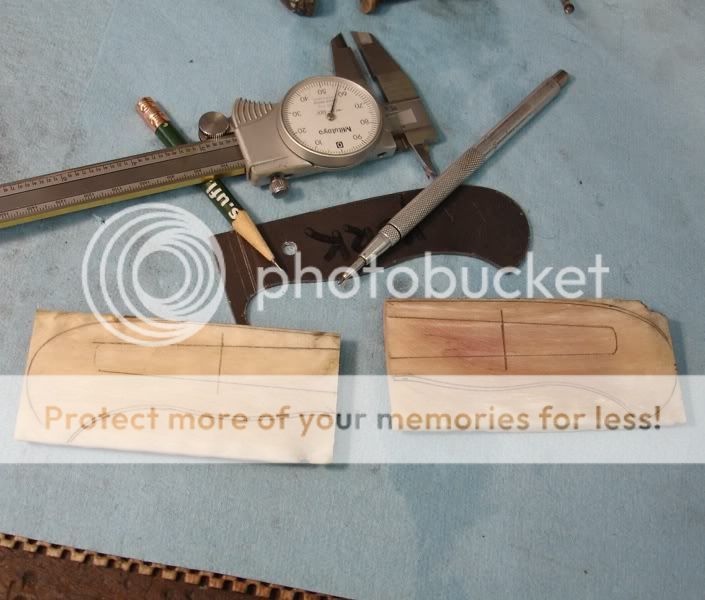
With the guard/ collar unit finalized, I can hold one scale, already cut and flattened to thickness, in place for scribing to the tang. I can also mark where the front meets the spacer.

978fa4f1.jpg


Using my handle pattern and the scribe marks, I can mark out the handle and tang on both scales. I've also cut the scales to parallel, so I can grip them in a vise for routing and drilling.

62448b32.jpg


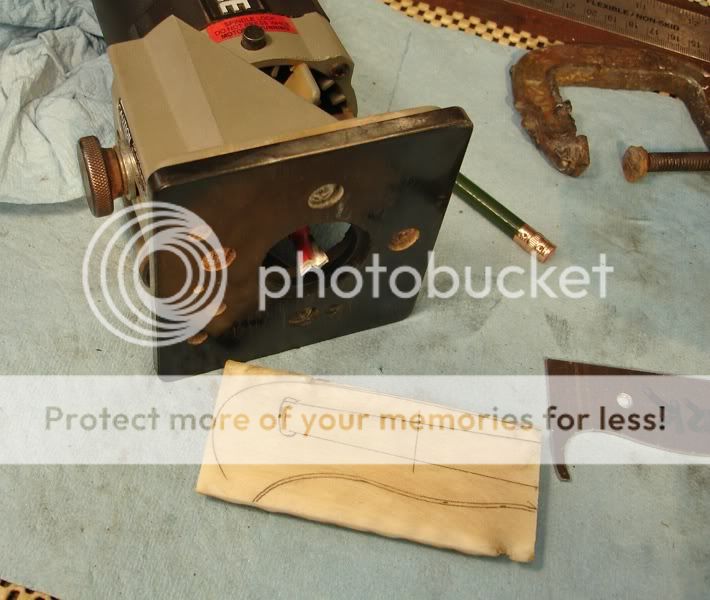
To route out recesses for the tang, I use a Porter-Cable laminate trimmer, with a 3/8 carbide tip, 60 degree dovetail bit. The P-C is easier to handle for small work than my big router, and the dovetail bit cuts easily, and leaves a small under-cut to grab the epoxy. Note that I'll cut the sides of the tang rabbet exactly, but cut extra at the end, so it won't bottom out when I press the handle on.

7345f5c5.jpg
 
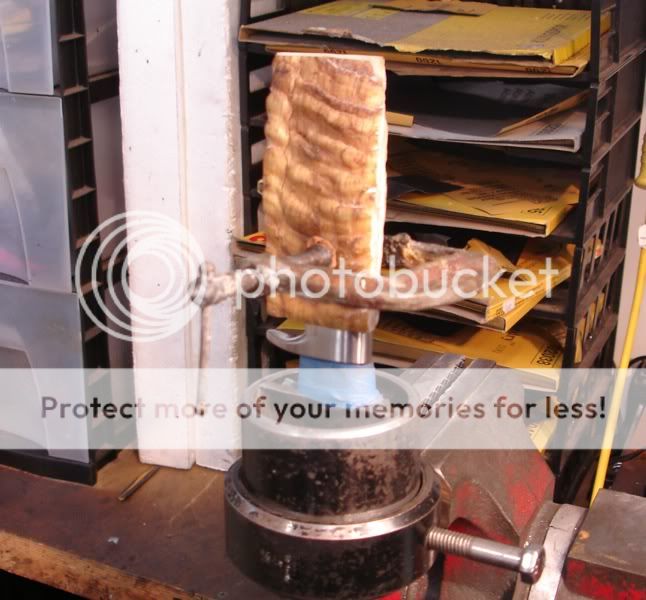
I'll set the scale up in the vise, and free-hand the rabbet. With a good router and sharp bit, it is easy to cut right up to the line.

900c6cbc.jpg


Note that with a tapered tang, by setting the router depth to half the thickness of the tang at the ricasso, and then, in a second cut, to half the tang thickness half way up, you can have the tang contact the scale rabbet at two points. Also note the undercut.

f1cd1802.jpg


With the rabbet complete, the tang fits tightly, and is recessed half-way into each scale.

aaf78f66.jpg


Now, I can hold the scales together lightly with a c-clamp, and, having put some SuperGlue on the spacer, slide the scales down on the tang and capture the spacer for back-drilling.

9cc3de7d.jpg
 
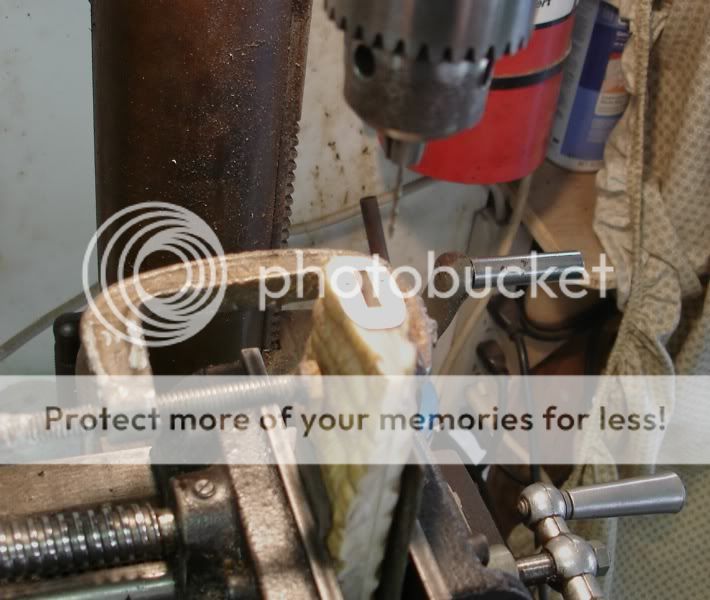
Back-drilling the spacer holes into the scales will re-locate everything for glue-up.

7aac377c.jpg


the next step in prepping the scales for glue-up is to drill a series of matching holes in each mating scale face, to capture epoxy as "blind epoxy pins" to help bond the scales.

6f51c5f8.jpg


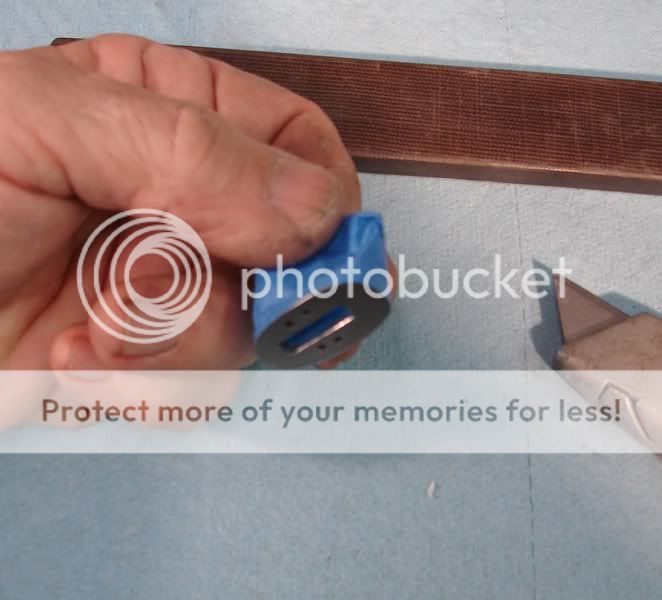
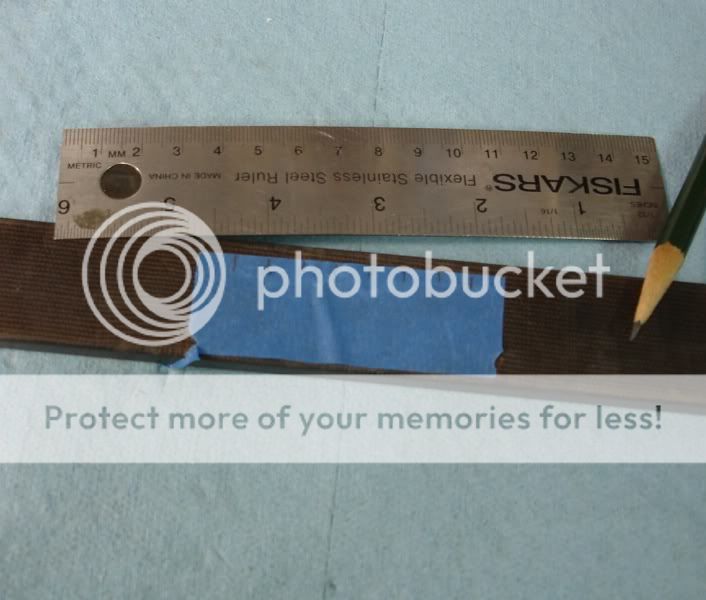
Will asked me to include a file-worked collar as sort of a "Trademark." Now's the time to do the file-work. In my own compulsive way, I like to mark off the collar evenly, and an easy way to mark off something with a complex shape is to wrap a piece of blue tape around it , and cut the overlap with a razor knife. ( Did they make knives before blue tape?)

785a4b93.jpg


Then the tape can be laid flat, marked,

7c164962.jpg


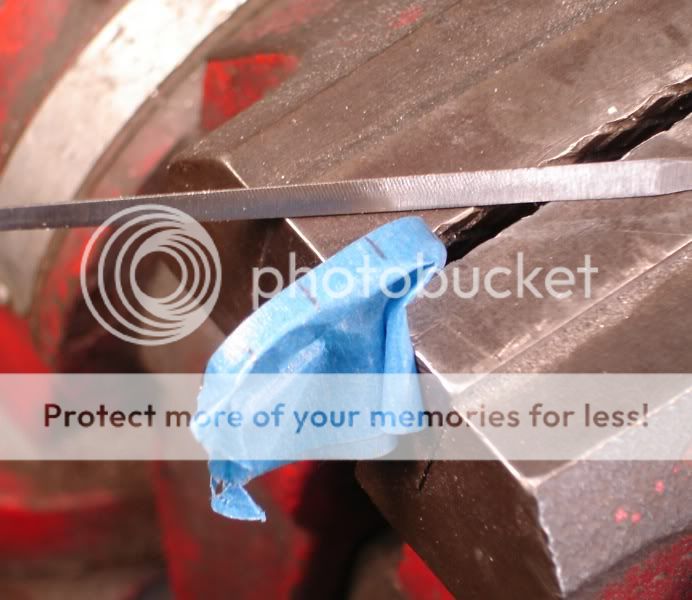
and the marks transferred with a triangle file.

d15ba4c2.jpg
 
Back
Top