

- Joined
- Mar 12, 2013
- Messages
- 1,167
Hey Guys!
It's been a while since I posted, I've been having a bit of a stressful time contemplating the depth of my backorder list. Part of my stress has been coming from the prospect of having to make sheathes, which has always been a hit or miss process for me. In the past I've probably ended up throwing out about 50% of the sheaths I've made because the retention wasn't spot on.
I didn't want to deal with that anymore, and I realized I needed to start working smart instead of working hard, this is actually a motto I'm trying my best to apply to all of my processes now. (And I should have been doing that all along!)
After thinking about it for a bit I realized that I was likely getting such variable results with the sheaths because there was not much process control. I had a *process*, but there were many not-entirely-obvious factors within that process that weren't being controlled tightly, and this was leading to the variable results I was getting. Sheaths were also taking me much longer than they should because I was doing everything by hand and eye every time rather than using templates and so on..
I set out over the last couple of days to fix this and thought I would share the results!
Lessons learned:
* Consistency in every step is vitally important.
* Repeatable pressure in the kydex press
* Repeatable temperature and time when heating the kydex
* Repeatable shape and rivet placement
* Throw out the toaster oven, they're too inconsistent, use a griddle instead
* Get a rivet press, they're really worth it
Some of these learnings are not applicable if you're not making the same type of sheath repeatedly, but I think anyone working with Kydex would benefit from consistent heating process and pressing process.
So here's the new overall process that I'm using:
The griddle (cheap black and decker unit) is pre-heated to 340ºF
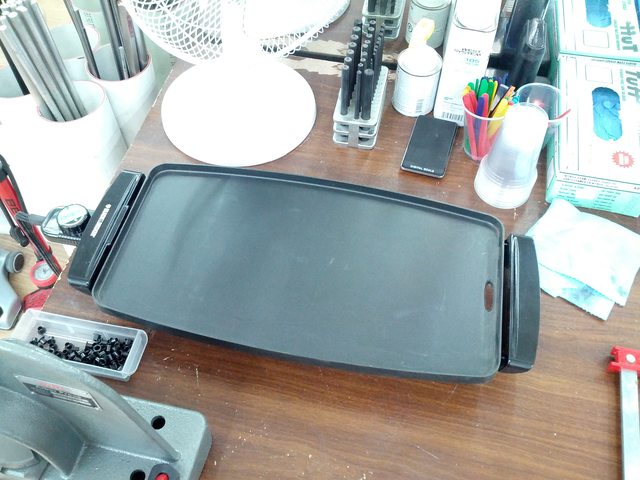
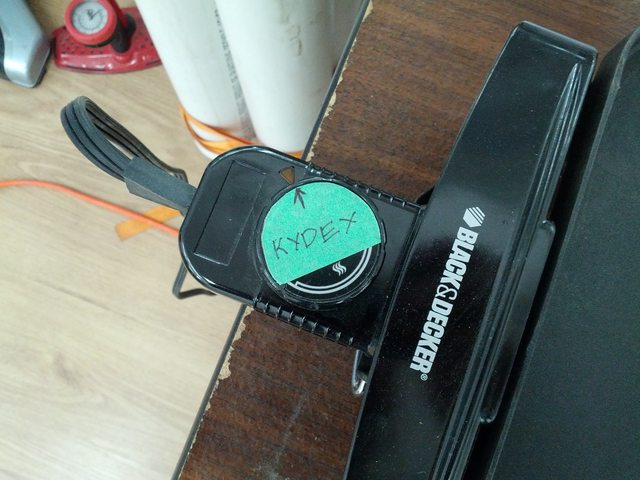
I used an infrared heat gun to check the surface temperature of the griddle, then placed a mark on the knob at the temperature I wanted:
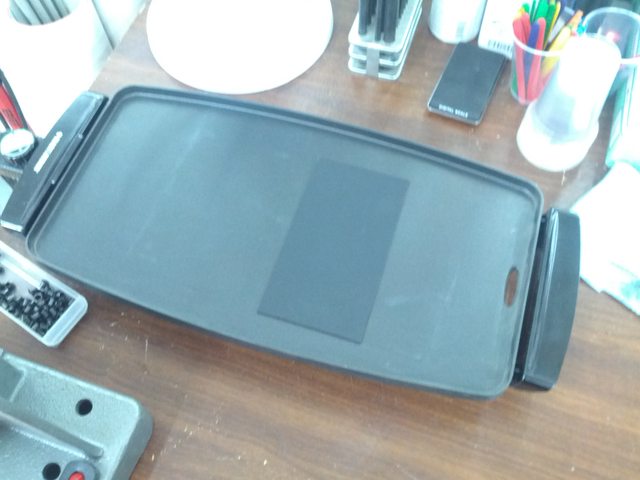
The kydex sheets are placed on the griddle, shiny side down, and left for exactly 2 minutes to heat up. Any longer and the plastic will be too soft, it will stick to itself in the press, and it will over-mold. Any cooler and the kydex won't hold to itself at all, and when you take the sheath out the two halves will fall apart and you won't be able to line them up again:
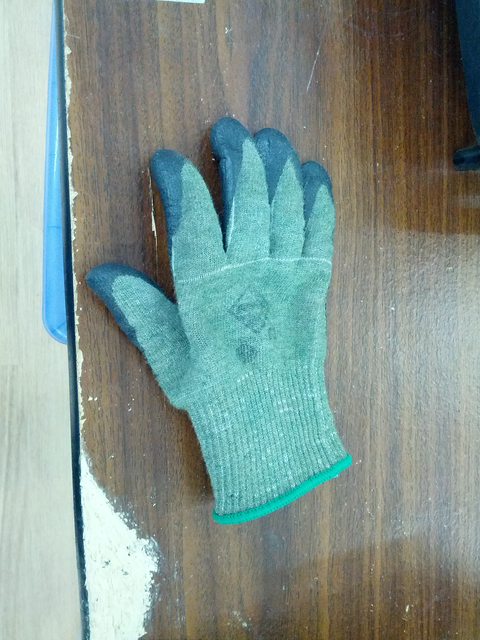
I use lumber handling gloves to handle the hot kydex, they keep the heat at bay while maintaining dexterity:
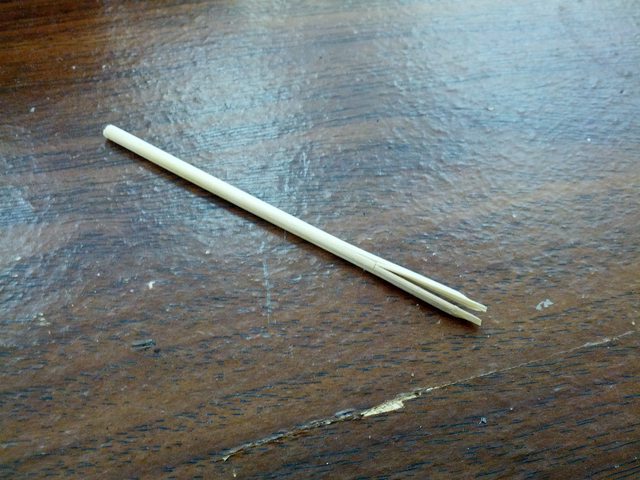
A small piece of bamboo skewer is split and slid onto the tip of the knife blade, this is what creates the drainage channel in the sheath:
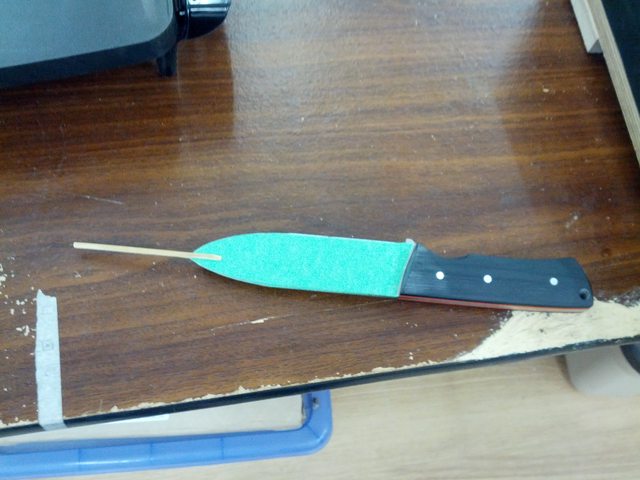
The knife blade is covered with masking tape (3 layers each side) to make sure there's enough room inside the sheath for a smooth sliding fit. The skewer is then added to the tip:
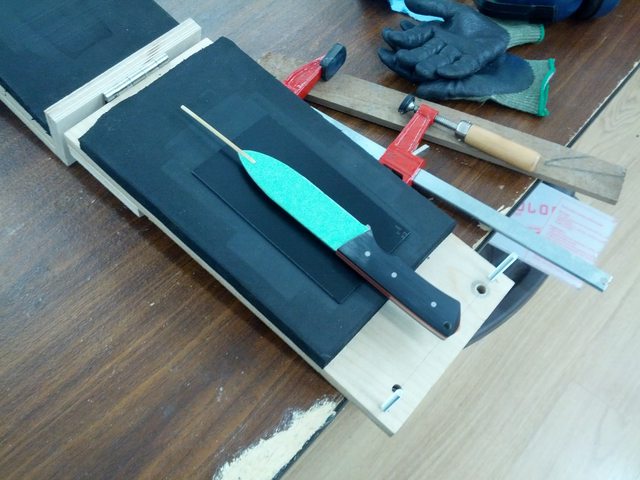
The heated sheets of kydex are then placed in the press with the knife in between:
The kydex press is then clamped closed:
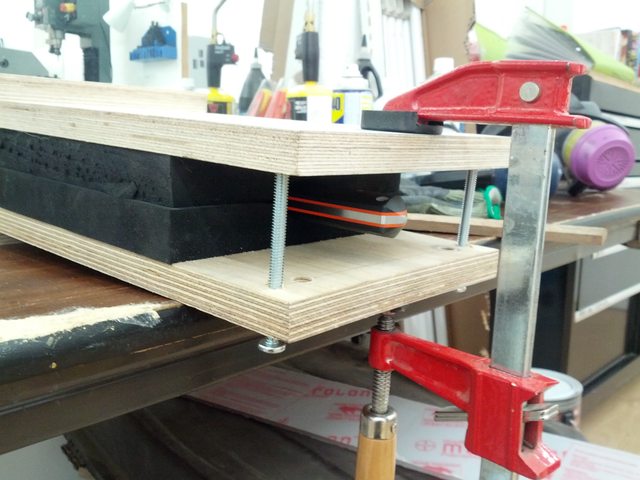
The bolts you see at the front of the kydex press prevent the press from closing more than a set amount, this allows me to make the pressure that the press applies perfectly consistent. The clamp can never be over-tightened:
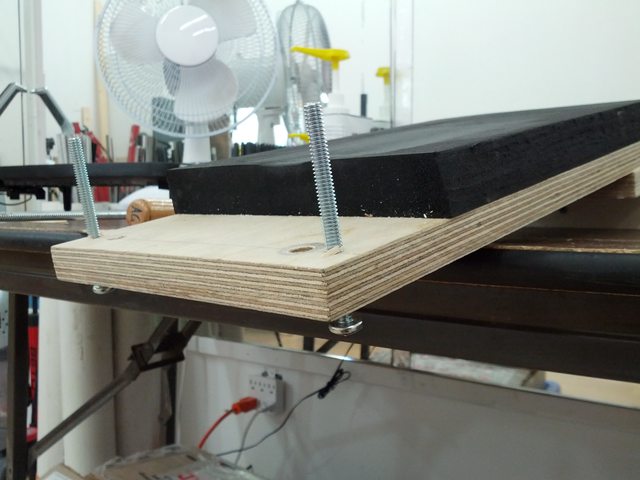
After resting for a few minutes in the press the sheath is removed and allowed to cool. If the kydex is still deformable with your fingers when it's removed from the press then it hasn't cooled enough and needs to go back in:
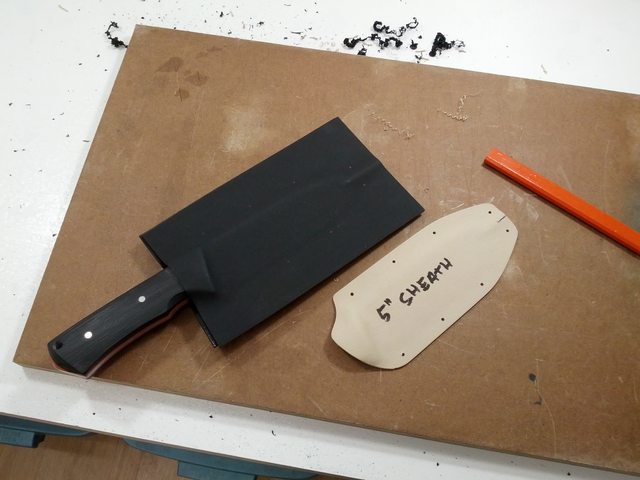
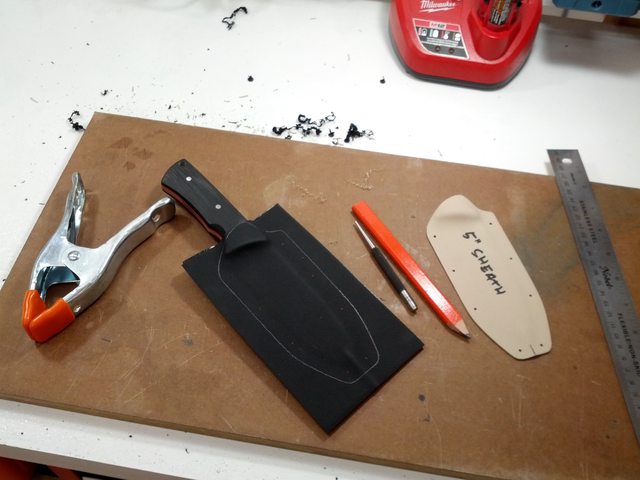
I then use a template that I made earlier to mark the rivet holes and the sheath outline. This template was made from a known-good sheath by heating some tan kydex and molding it over the already made sheath. This template lets me get the rivet placement identical each time, which makes it much easier to also make belt loops and such with holes that need to line up:
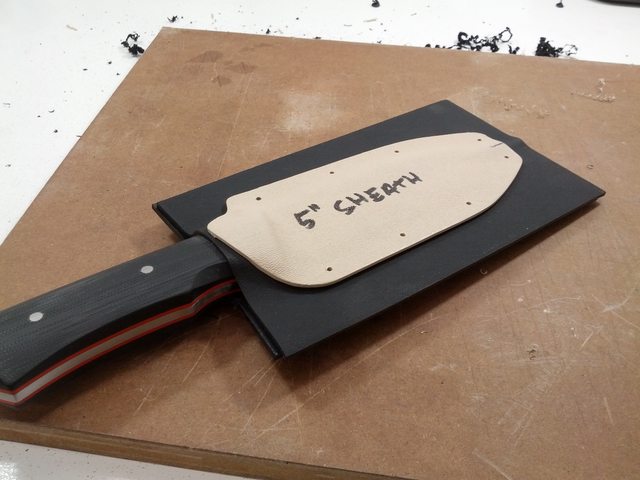
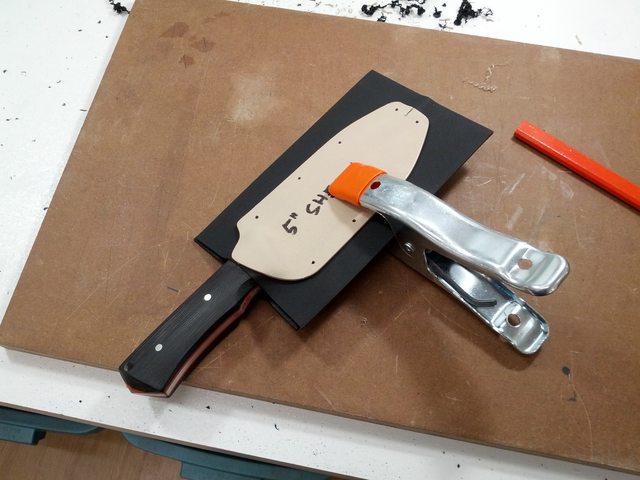
The rivet holes are marked through the template with a small sharp center-punch. The outline is traced with pencil. Don't use sharpie on sheaths, it can be very hard to get off!
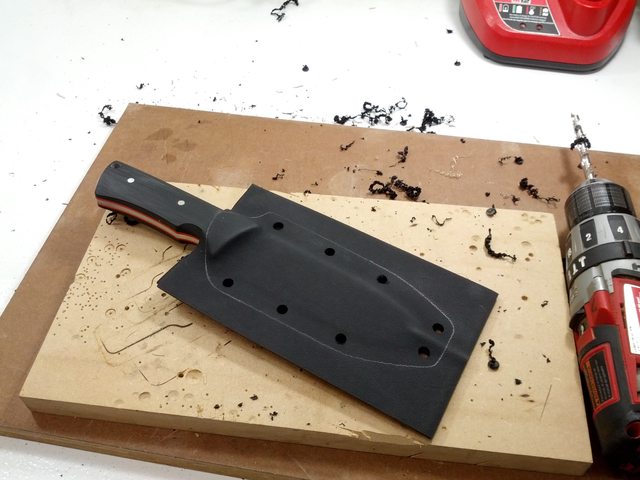
The holes for the rivets are then drilled using a 'brad point' drill bit. Regular drill bits will wander and also create burrs. Don't use regular drill bits!
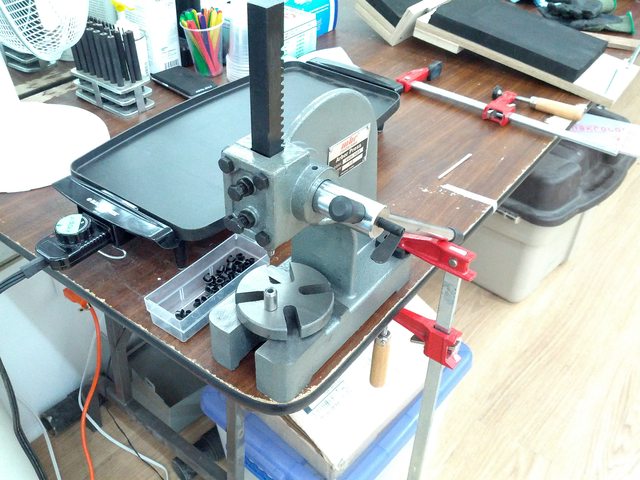
I used to always just use a hammer and a pair of dies to form my rivets, but since taking the plunge and buying a rivet press I've noticed the whole process is faster and less stressful:
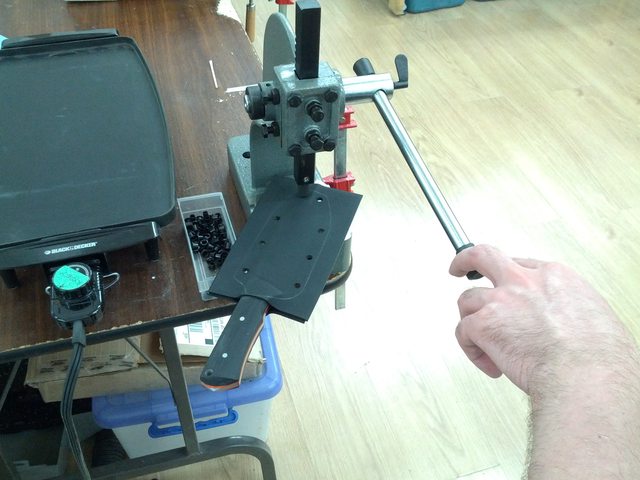
Two rivets are applied at the tip of the sheath before the knife is removed:
The sheath is then pried apart by twisting the knife handle, and the knife is removed:
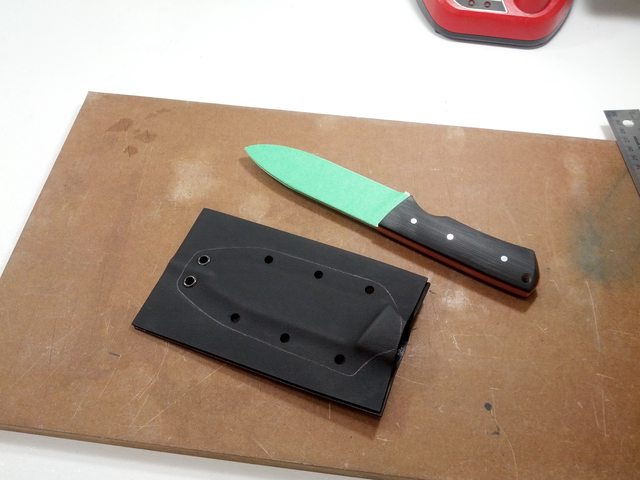
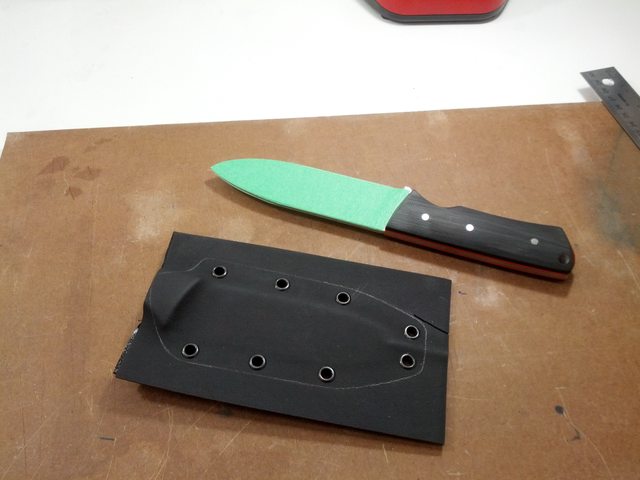
The rest of the rivets are then added, using the rivet press:
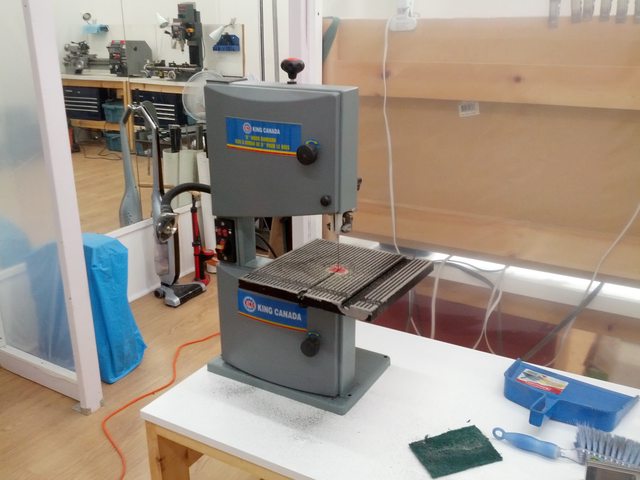
I keep a small (crappy) bandsaw on hand just for rough-cutting out the outlines of the sheaths. Doing this without a bandsaw is a real pain. I got this one for free from a junk pile:
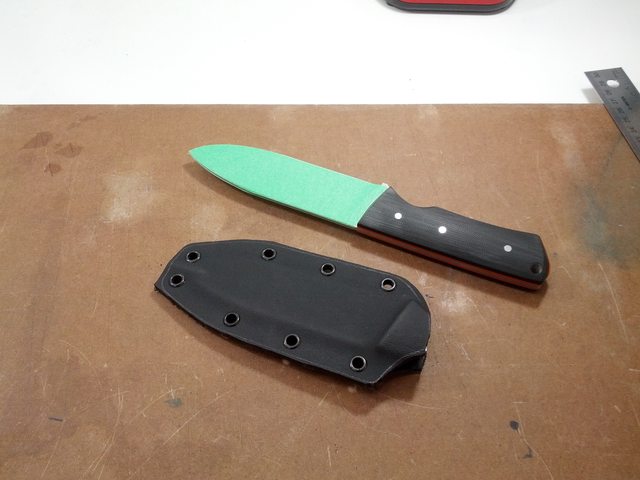
This is what the sheath looks like after being rough-cut. Notice that I left at least 1/16" excess all round:
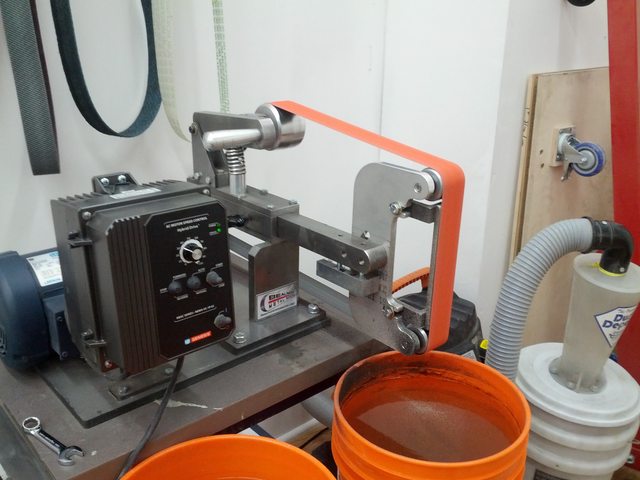
The edges of the sheath are then sanded to final shape. You can do this by hand, but I use my belt grinder:
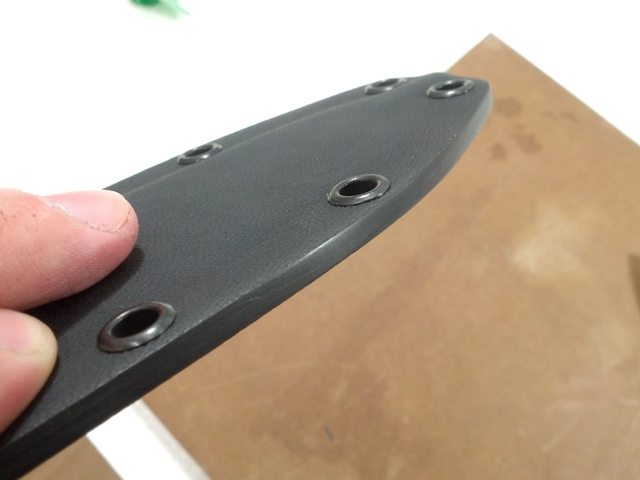
The edges of the sheath are sanded to 220 grit by hand (only takes a minute) then buffed with a green scotchbrite pad. If the process so far has gone right then the seams of the sheath should be invisible, and the edge should be nice and shiny. If you don't leave enough space between the rivets and the sheath edge you will take the black coating off the rivets while finishing the edges, don't do this!
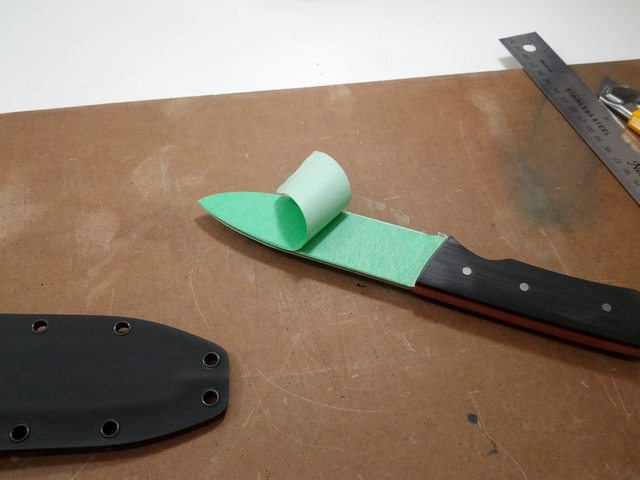
2 of the 3 layers of tape on the blade are then peeled off so the knife can be test-fitted in the sheath. The last layer of tape will protect the blade finish but won't interfere with the fit:
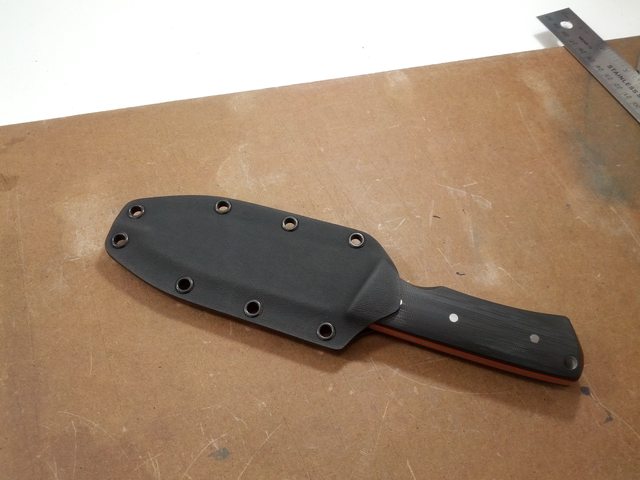
If the sheath is too tight, then you'll need to sand some more material off the 'lips' that hold the handle in place. If the sheath is too loose, throw it out and start again, this one came out perfect because I followed the process:
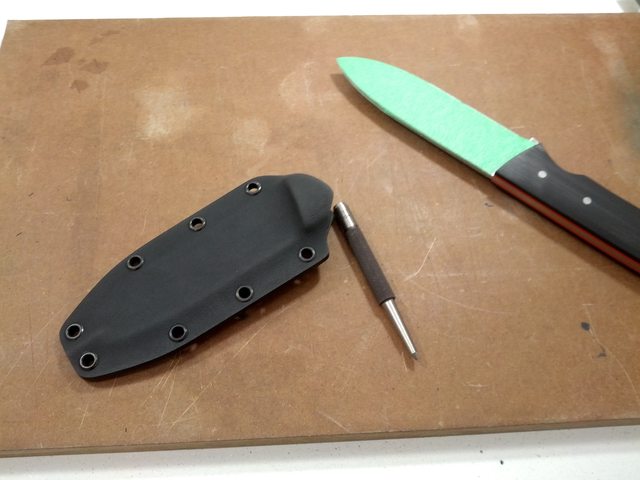
The 'thumb ramp' on a kydex sheath can get slippery if your hands are wet, so we'll add a little grip to it by using the knurling on a center-punch as a rolling die:
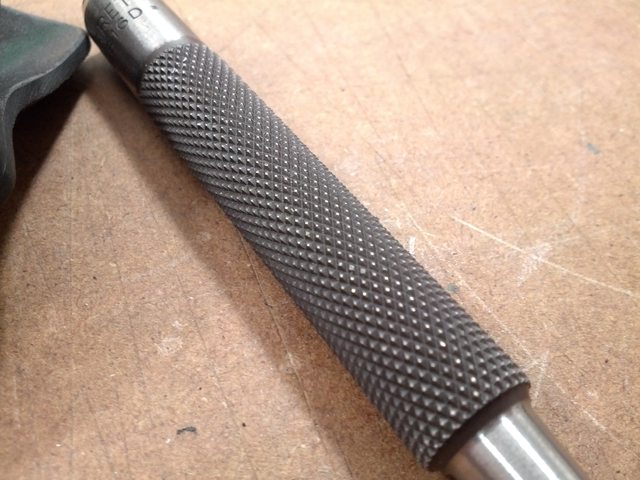
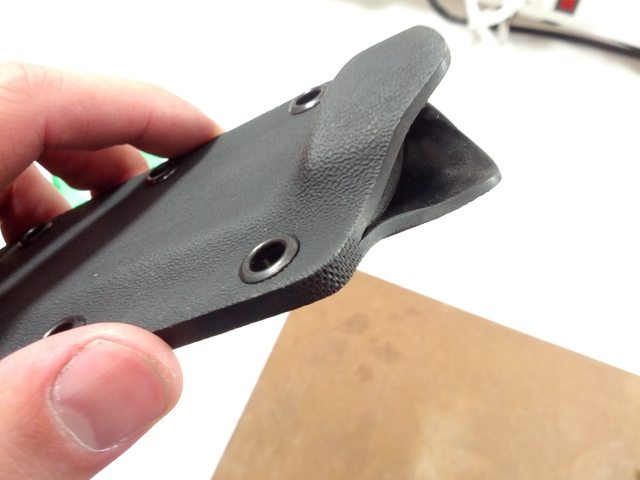
That little bit of texture makes all the difference to how usable the sheath is when your hands are wet:
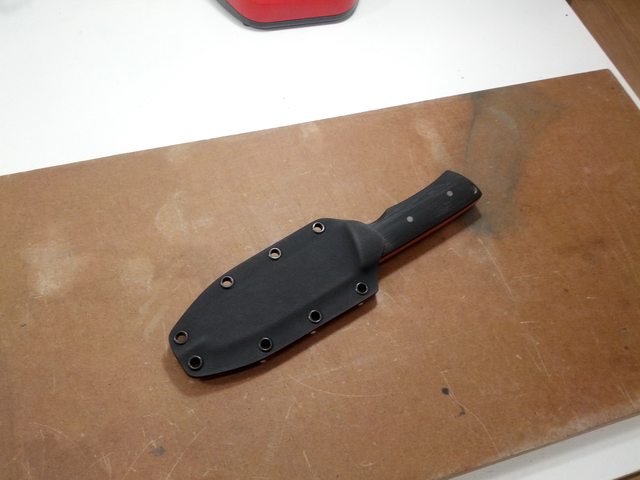
Here's what the finished sheath looks like:
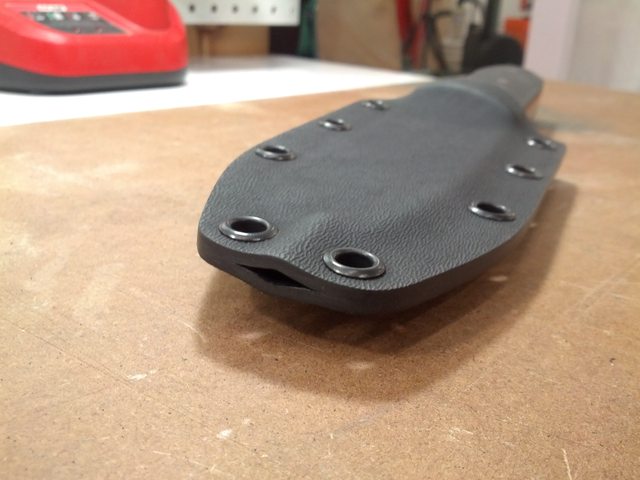
Drainage hole (vital for allowing the user to clean the sheath):
Thumb ramp:
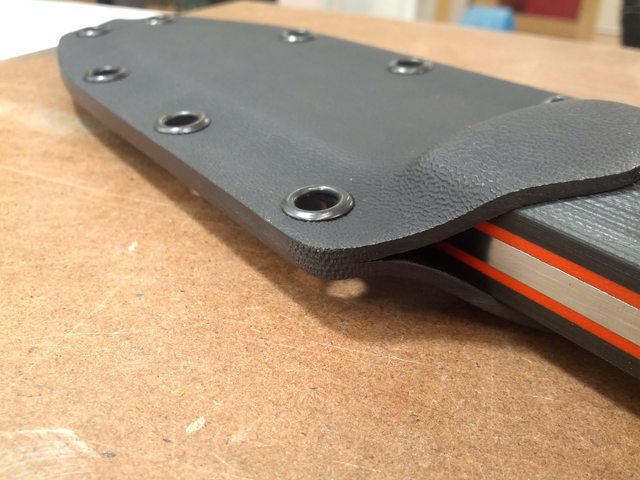
My standard for the fit of my sheaths is that the user should be able to easily remove the knife from the sheath just by holding the handle and pushing their thumb against the thumb-ramp, but the knife should be retained strongly enough that the sheath can be shaken upside down and the knife will not fall out. Here's a quick video demonstrating an ideal fit:
[video=youtube;l7DQlOOG1D0]https://www.youtube.com/watch?v=l7DQlOOG1D0[/video]
If you guys have any suggestions for changes to my process I'de love to hear them! I'm also happy to answer any questions.
Hope this is useful to someone!
-Aaron
It's been a while since I posted, I've been having a bit of a stressful time contemplating the depth of my backorder list. Part of my stress has been coming from the prospect of having to make sheathes, which has always been a hit or miss process for me. In the past I've probably ended up throwing out about 50% of the sheaths I've made because the retention wasn't spot on.
I didn't want to deal with that anymore, and I realized I needed to start working smart instead of working hard, this is actually a motto I'm trying my best to apply to all of my processes now. (And I should have been doing that all along!)
After thinking about it for a bit I realized that I was likely getting such variable results with the sheaths because there was not much process control. I had a *process*, but there were many not-entirely-obvious factors within that process that weren't being controlled tightly, and this was leading to the variable results I was getting. Sheaths were also taking me much longer than they should because I was doing everything by hand and eye every time rather than using templates and so on..
I set out over the last couple of days to fix this and thought I would share the results!
Lessons learned:
* Consistency in every step is vitally important.
* Repeatable pressure in the kydex press
* Repeatable temperature and time when heating the kydex
* Repeatable shape and rivet placement
* Throw out the toaster oven, they're too inconsistent, use a griddle instead
* Get a rivet press, they're really worth it
Some of these learnings are not applicable if you're not making the same type of sheath repeatedly, but I think anyone working with Kydex would benefit from consistent heating process and pressing process.
So here's the new overall process that I'm using:
The griddle (cheap black and decker unit) is pre-heated to 340ºF
I used an infrared heat gun to check the surface temperature of the griddle, then placed a mark on the knob at the temperature I wanted:
The kydex sheets are placed on the griddle, shiny side down, and left for exactly 2 minutes to heat up. Any longer and the plastic will be too soft, it will stick to itself in the press, and it will over-mold. Any cooler and the kydex won't hold to itself at all, and when you take the sheath out the two halves will fall apart and you won't be able to line them up again:
I use lumber handling gloves to handle the hot kydex, they keep the heat at bay while maintaining dexterity:
A small piece of bamboo skewer is split and slid onto the tip of the knife blade, this is what creates the drainage channel in the sheath:
The knife blade is covered with masking tape (3 layers each side) to make sure there's enough room inside the sheath for a smooth sliding fit. The skewer is then added to the tip:
The heated sheets of kydex are then placed in the press with the knife in between:
The kydex press is then clamped closed:
The bolts you see at the front of the kydex press prevent the press from closing more than a set amount, this allows me to make the pressure that the press applies perfectly consistent. The clamp can never be over-tightened:
After resting for a few minutes in the press the sheath is removed and allowed to cool. If the kydex is still deformable with your fingers when it's removed from the press then it hasn't cooled enough and needs to go back in:
I then use a template that I made earlier to mark the rivet holes and the sheath outline. This template was made from a known-good sheath by heating some tan kydex and molding it over the already made sheath. This template lets me get the rivet placement identical each time, which makes it much easier to also make belt loops and such with holes that need to line up:
The rivet holes are marked through the template with a small sharp center-punch. The outline is traced with pencil. Don't use sharpie on sheaths, it can be very hard to get off!
The holes for the rivets are then drilled using a 'brad point' drill bit. Regular drill bits will wander and also create burrs. Don't use regular drill bits!
I used to always just use a hammer and a pair of dies to form my rivets, but since taking the plunge and buying a rivet press I've noticed the whole process is faster and less stressful:
Two rivets are applied at the tip of the sheath before the knife is removed:
The sheath is then pried apart by twisting the knife handle, and the knife is removed:
The rest of the rivets are then added, using the rivet press:
I keep a small (crappy) bandsaw on hand just for rough-cutting out the outlines of the sheaths. Doing this without a bandsaw is a real pain. I got this one for free from a junk pile:
This is what the sheath looks like after being rough-cut. Notice that I left at least 1/16" excess all round:
The edges of the sheath are then sanded to final shape. You can do this by hand, but I use my belt grinder:
The edges of the sheath are sanded to 220 grit by hand (only takes a minute) then buffed with a green scotchbrite pad. If the process so far has gone right then the seams of the sheath should be invisible, and the edge should be nice and shiny. If you don't leave enough space between the rivets and the sheath edge you will take the black coating off the rivets while finishing the edges, don't do this!
2 of the 3 layers of tape on the blade are then peeled off so the knife can be test-fitted in the sheath. The last layer of tape will protect the blade finish but won't interfere with the fit:
If the sheath is too tight, then you'll need to sand some more material off the 'lips' that hold the handle in place. If the sheath is too loose, throw it out and start again, this one came out perfect because I followed the process:
The 'thumb ramp' on a kydex sheath can get slippery if your hands are wet, so we'll add a little grip to it by using the knurling on a center-punch as a rolling die:
That little bit of texture makes all the difference to how usable the sheath is when your hands are wet:
Here's what the finished sheath looks like:
Drainage hole (vital for allowing the user to clean the sheath):
Thumb ramp:
My standard for the fit of my sheaths is that the user should be able to easily remove the knife from the sheath just by holding the handle and pushing their thumb against the thumb-ramp, but the knife should be retained strongly enough that the sheath can be shaken upside down and the knife will not fall out. Here's a quick video demonstrating an ideal fit:
[video=youtube;l7DQlOOG1D0]https://www.youtube.com/watch?v=l7DQlOOG1D0[/video]
If you guys have any suggestions for changes to my process I'de love to hear them! I'm also happy to answer any questions.
Hope this is useful to someone!
-Aaron
Last edited:
 . Thanks a lot for the tips!!!


