- Joined
- Jan 15, 2013
- Messages
- 425
Does this knife look like it would work with a kydex sheath? I just finished making it today and want to buy some budget kydex tools to make one, but just wanted to check to see if you thought it would work first.

The BladeForums.com 2024 Traditional Knife is available! Price is $250 ea (shipped within CONUS).
Order here: https://www.bladeforums.com/help/2024-traditional/

Great tutorial. Are you still expecting to open up your order list in August?
Great tutorial Aaron!
I've been struggling alot with consistency, especially in my machete sheaths. Drilling consistent holes in a 2 foot piece of kydex is just about impossible to do freehand. A hole template is something I am going to need to implement in the future as well as a more consistent molding method. Id also like to develop a more professional and defined look for my sheaths. The ones I've been making are not very confidence inspiring in terms of visuals. :grumpy:
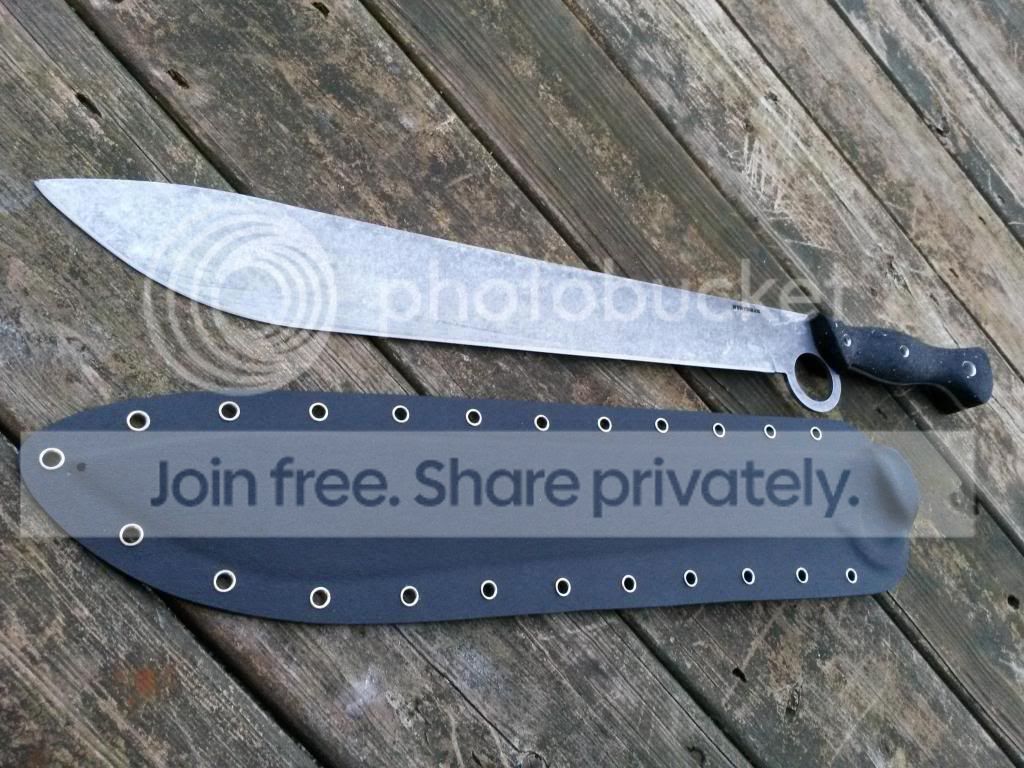
One thing alot of us who do our own sheaths may overlook is the amount of time we spend on them. On my run of 23 machetes I did, I probably spent 40 hours making the sheaths--something I include for free. I spent so much time and money on the sheaths that I ended up making no profit at all on the machetes. Your tips are definitely going to help me get faster and more consistent.
An idea I had for molding was to secure the top piece of foam+backing and then attach the bottom piece to a floor jack. That way I could quickly put the kydex on the foam and then quickly crank the floor jack a few times to achieve fast and even molding pressure.
Does this knife look like it would work with a kydex sheath? I just finished making it today and want to buy some budget kydex tools to make one, but just wanted to check to see if you thought it would work first.
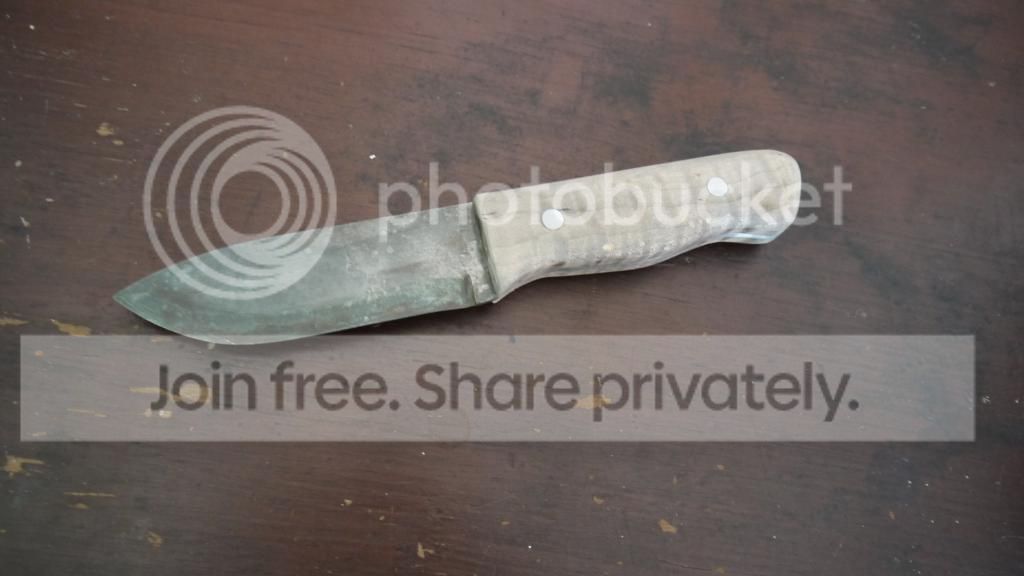
I'm not 100% sure unfortunately. I've slowed down quite a bit recently because I was finding the repetitive labour parts of the process very disenchanting. I'm updating my process to bring in some more technology so that hopefully it stays fun! I'm still getting knives out the door, just not as frequently as I'd like...
I'm just about to start a batch of 16 knives that were all blanked out using a waterjet! Quite excited about that!


Oops, my bad. THIS knife?
The water jet sounds like it could open up the doors to all kinds of fun stuff. I had been putting off ordering a knife from you for a while and when I was ready I found out you had closed the list. So now I've been just hanging back and waiting. The positive side is that between having to wait and watching all your videos I went ahead and made my first knife. It was an experience for sure and I gained a whole new respect for the amount of time and skill it takes to make a knife.
Hopefully you should never ever have to throw away a kydex sheath. A real big benefit of kydex is if you do not get a good fit...you just re-heat and do it again.
Using 2-3 layers of blue tape on the blade while pressing will give you clearance for the kydex. Use temporary clamps to check fit and if it is too loose...re heat and do a press again with only 2 layers of tape. Pre heating the foam also gives a much better press of the sheath.
Check again with temporary clamps in place. When you get the fit drill and install rivets except the last one on lock up side. Determine placement of that rivet by placing a clamp and move the knife in and out of sheath to see the best place to set it for retention.
Once all the rivets are set check blade tension. If it is to tight ....run a heat gun on the sheath to loosen the grip a bit.
Then use the heat gun to fine tune the retention point and flare the mouth of the sheath a bit and install a lip for your thumb to push off on when removing the knife.
Hopefully it will help to keep the Kydex out of the trash can
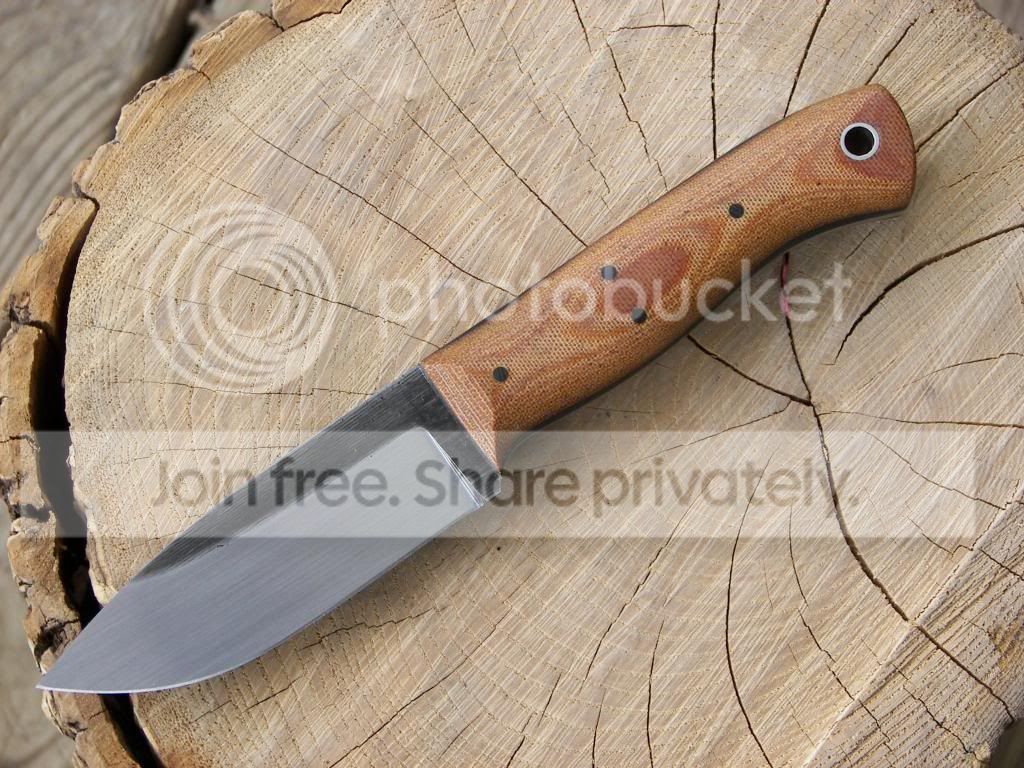
The front of the handle either needs and angle or to be rounded off before it would likely work nicely with Kydex, this is so the handle can slide into the sheath easily. That being said I'm sure people have made it work with squared off handles before...
Cool, thanks for the pointers. Just to clarify, you mean like this knife, right?

The front of the handle either needs and angle or to be rounded off before it would likely work nicely with Kydex, this is so the handle can slide into the sheath easily. That being said I'm sure people have made it work with squared off handles before...
Cool, thanks for the pointers. Just to clarify, you mean like this knife, right?
Yep! Exactly like that! The angle doesnt have to be quite that shallow, and it could be rounded instead, but you get the idea.
Aaron, thanks! Getting into kydex and this is bigtime helpful.
Great! Hope it helps!
did I miss this ?
What temp are you finding works for you ?
Hey count!
The temp is listed in the first post, but it's in with other stuff. The surface of the griddle is about 340ºF as measured with an infrared heat gun. Seems to work well. If you leave the kydex on too long at that temp the bottom will melt though, so the timing is very important too...
-A
I'll have to try the split skewer and texturing the edge with a knurled punch, nice techniques.
I like to wipe down my Kydex sheaths with Armour All. It evens out the color.
Thanks for sharing!
Ric
No worries! Armour-all is an interesting idea! Does it make the sheathes slippery?
Initially it does seem a bit slippery, but be just fine after a little bit. Try it on a scrap piece and see how you like it.
Ric