- Joined
- Sep 13, 2001
- Messages
- 816
OK, worked for another 4-5 hrs today ( that is 4-5 hrs on this one.....3+ hrs at the shop....Saturday IS a work day you know)
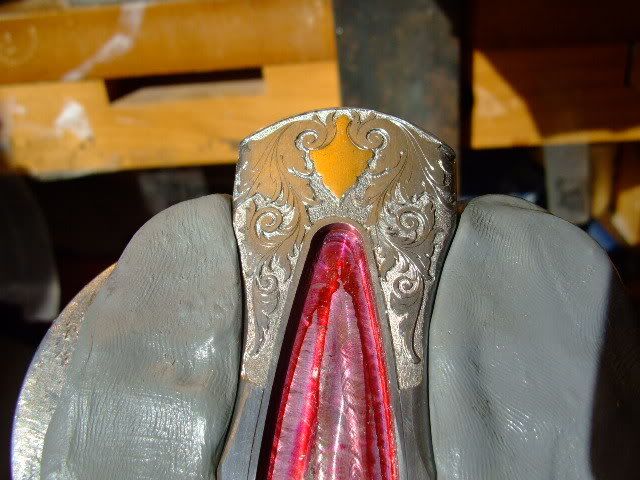
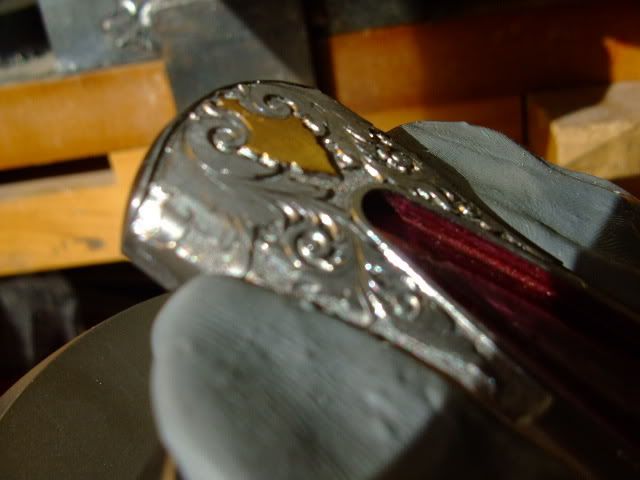
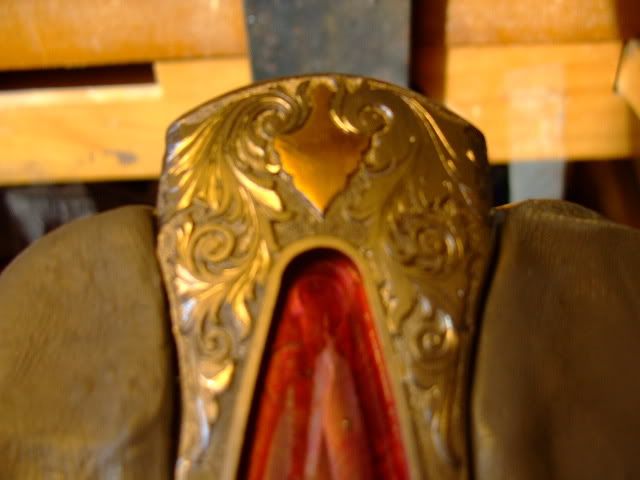
I needed to get the large inlay in before I remove the background, so the first few pics are of that process, and taken through the microscope at 10X.

First step is to lower the inlay pocket. It's done with a square graver making cuts very close together, like checkering. A flat graver is used to level off the surface.
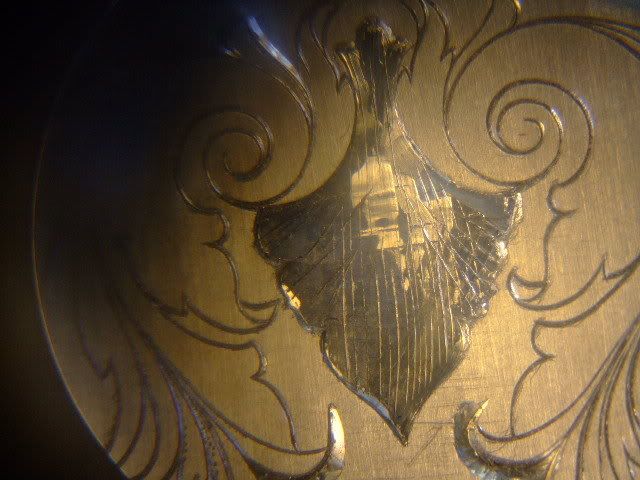
There are several methods to doing large inlays. Some use a single piece of gold sheet, cut it to shape with a jewelers saw and secure it with dozens of tiny burrs raised by diving the graver point into the steel. The problem with this method is the gold expands as you hammer it into the cavity and onto the burrs. Allow it to expand too much and it can come loose from the burrs, work harden and not fit the cavity anymore. The burrs can also poke through the gold and cause the whole job to be for naught.
I like to use several wire inlays to fill the cavity and hammer weld them flush. It's a little easier to control, and if the is a problem, one wire can be removed to fix it. So to start, I cut the line inlay pockets and undercut them. I also undercut the edges of the pocket by driving a thin flat graver under the edge. This raises the edge a little and helps trim the gold as it mushrooms over the edge of the pocket. The problem can be finding the edge of the inlay without overcutting and getting into the inlay area itself. The reason I do this before the background is removed is for the integrity of the walls of the inlay pocket.
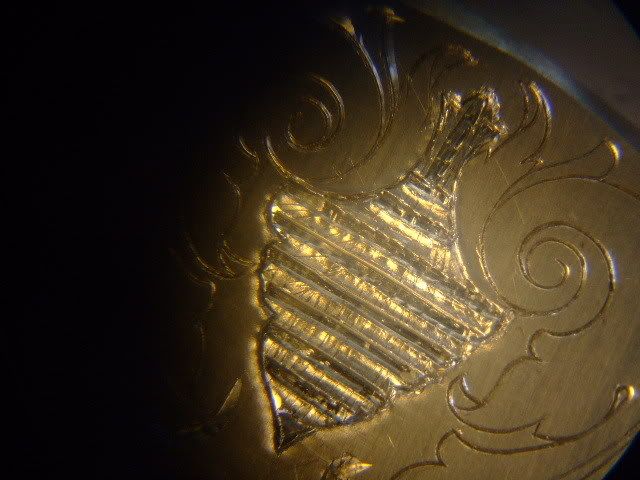
Now the gold is put into place and lightly hammered into every other line. Then go back and fill in the gaps. Putting the gold in every line initially can cause problems if the spacing isn't just right. Now the gold is in and hammered to fill the cavity and cold weld together so there are no seams visible. I then draw file it flush and use a flat graver to trim the edges. trimming is done by moving the graver under the edge of the mushroomed over gold and prying up while moving into the edge. This tests the inlay and exposes where the raised edge of the inlay pocket has creased the gold, making it bend sharply at theat point. Then just trim off the excess with the flat.
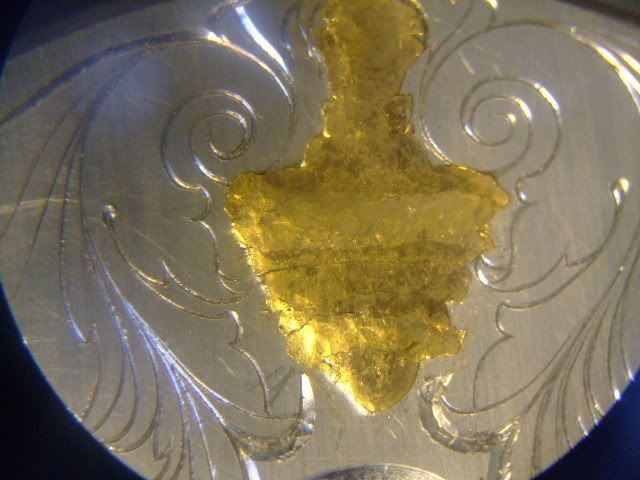
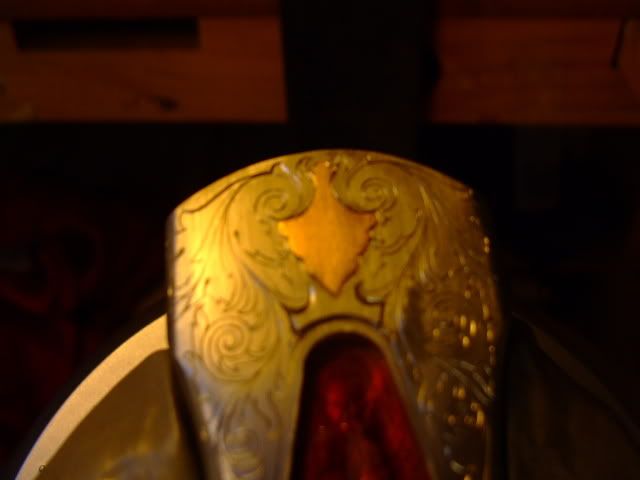
Once I have the inlay trimmed and flat ( remember this is a raised inlay, otherwise I would stone it flush with the steel), I begin the background removal by making a deeper cut around the perimeter of the scrolls. Basically re-cutting the entire pattern, just much deeper. This creates the steep, clean side of the engraving, and a buffer that keeps me from needing to get close to the scrolls. I will use a dental rotary tool ( 300,000 RMP) and .5mm carbide burs for the bulk of the removal, followed up by very small gravers for the corners.
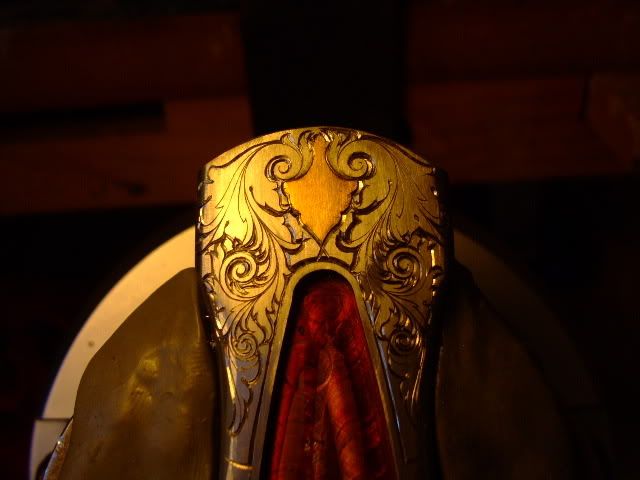
All for now
I needed to get the large inlay in before I remove the background, so the first few pics are of that process, and taken through the microscope at 10X.
First step is to lower the inlay pocket. It's done with a square graver making cuts very close together, like checkering. A flat graver is used to level off the surface.
There are several methods to doing large inlays. Some use a single piece of gold sheet, cut it to shape with a jewelers saw and secure it with dozens of tiny burrs raised by diving the graver point into the steel. The problem with this method is the gold expands as you hammer it into the cavity and onto the burrs. Allow it to expand too much and it can come loose from the burrs, work harden and not fit the cavity anymore. The burrs can also poke through the gold and cause the whole job to be for naught.
I like to use several wire inlays to fill the cavity and hammer weld them flush. It's a little easier to control, and if the is a problem, one wire can be removed to fix it. So to start, I cut the line inlay pockets and undercut them. I also undercut the edges of the pocket by driving a thin flat graver under the edge. This raises the edge a little and helps trim the gold as it mushrooms over the edge of the pocket. The problem can be finding the edge of the inlay without overcutting and getting into the inlay area itself. The reason I do this before the background is removed is for the integrity of the walls of the inlay pocket.
Now the gold is put into place and lightly hammered into every other line. Then go back and fill in the gaps. Putting the gold in every line initially can cause problems if the spacing isn't just right. Now the gold is in and hammered to fill the cavity and cold weld together so there are no seams visible. I then draw file it flush and use a flat graver to trim the edges. trimming is done by moving the graver under the edge of the mushroomed over gold and prying up while moving into the edge. This tests the inlay and exposes where the raised edge of the inlay pocket has creased the gold, making it bend sharply at theat point. Then just trim off the excess with the flat.
Once I have the inlay trimmed and flat ( remember this is a raised inlay, otherwise I would stone it flush with the steel), I begin the background removal by making a deeper cut around the perimeter of the scrolls. Basically re-cutting the entire pattern, just much deeper. This creates the steep, clean side of the engraving, and a buffer that keeps me from needing to get close to the scrolls. I will use a dental rotary tool ( 300,000 RMP) and .5mm carbide burs for the bulk of the removal, followed up by very small gravers for the corners.
All for now