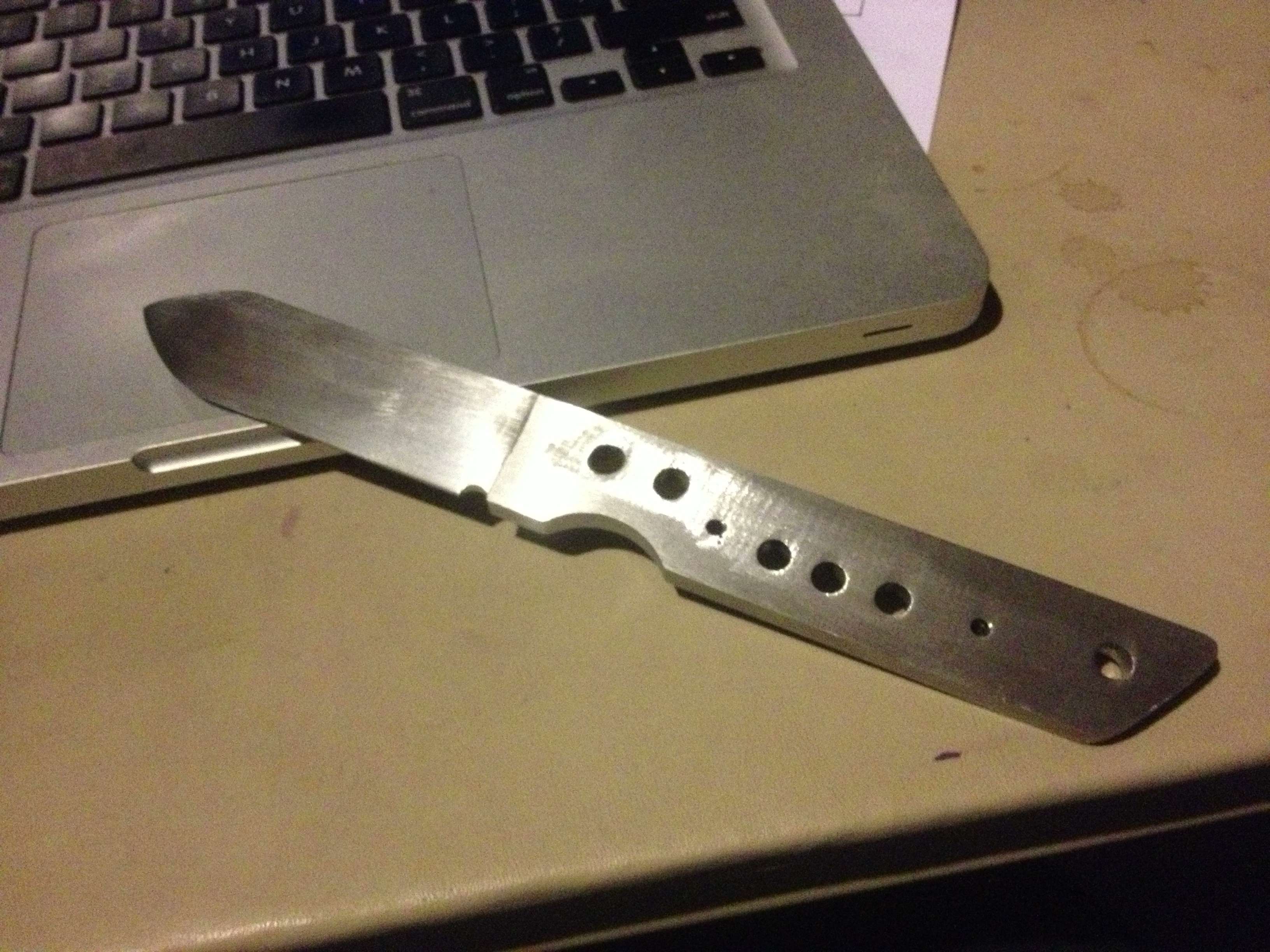
My First Knife WIP

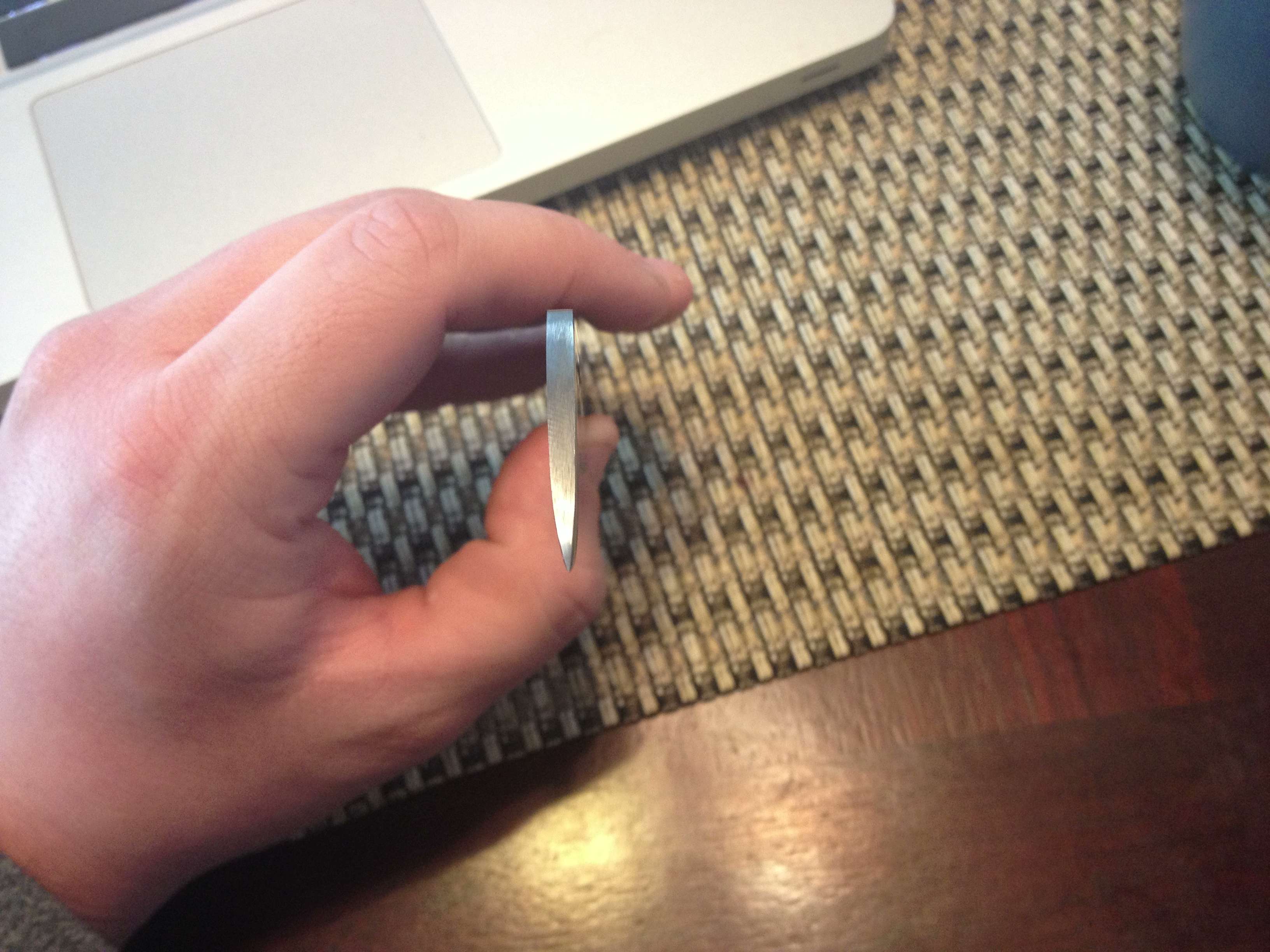
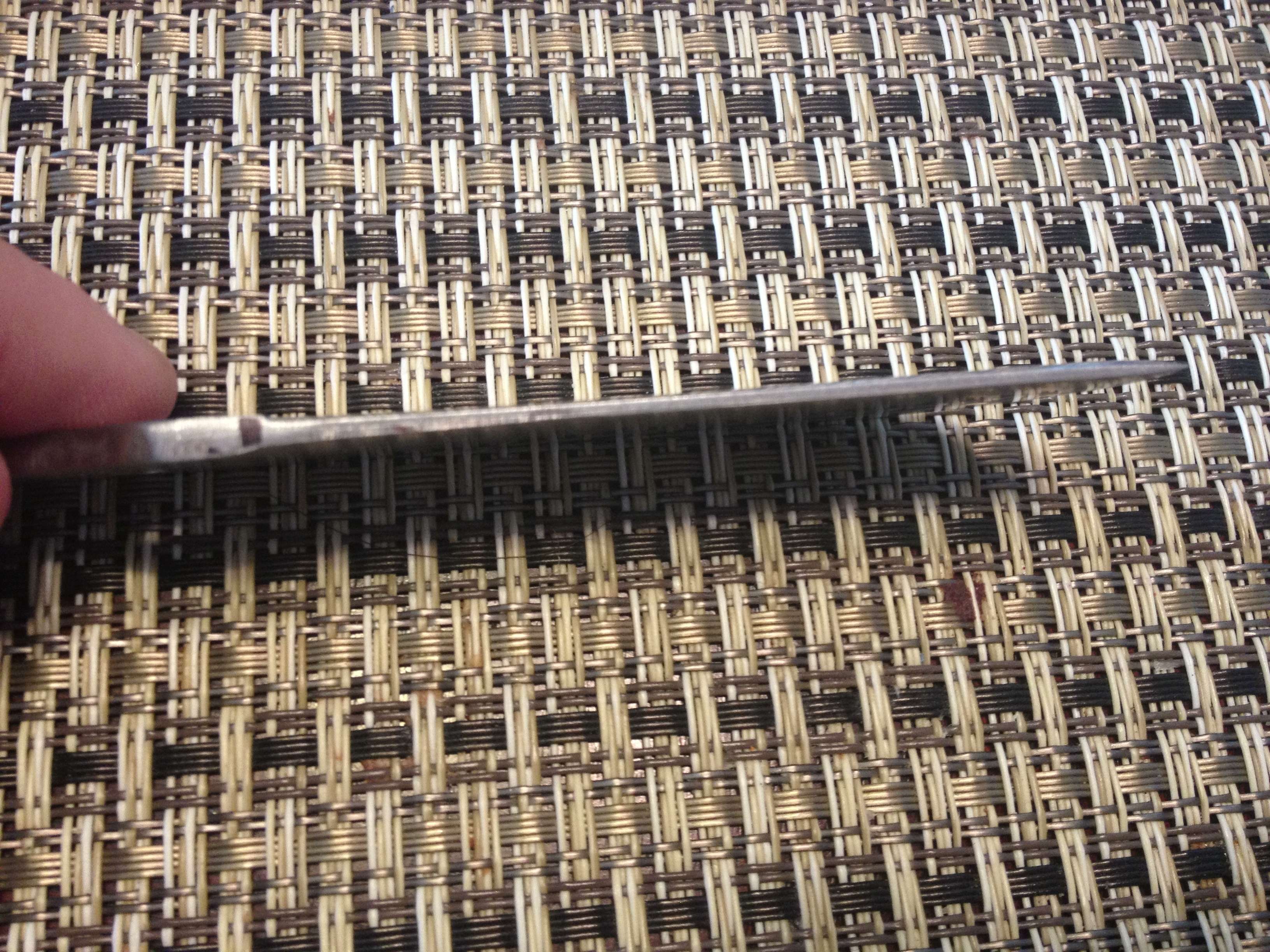
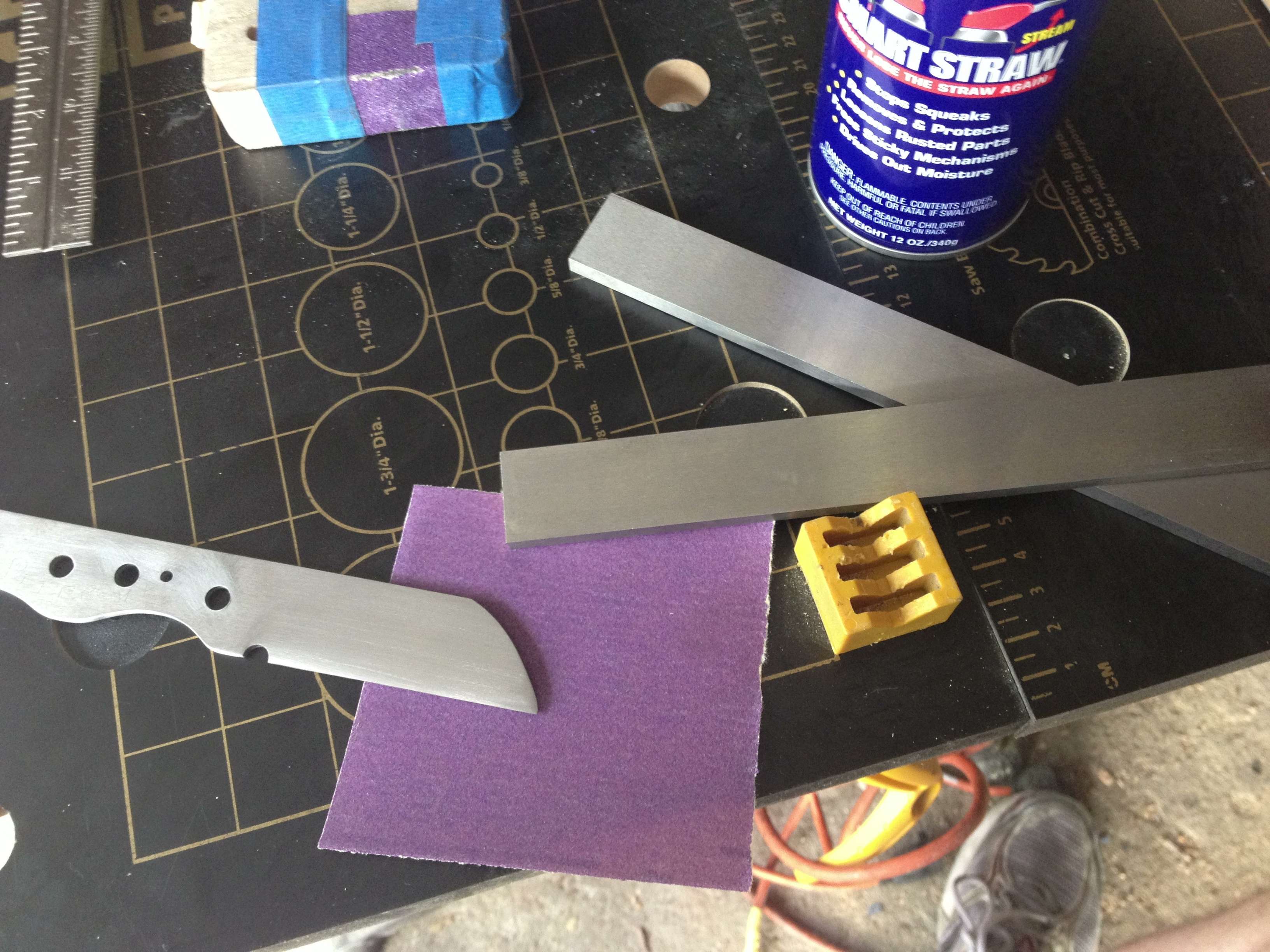
That's not the worst starter blade I ever saw. Keep sanding and try to smooth out the plunges a bit. Don't try and do them separately, though. Just sand the whole bevel and try and make a very straight stroke down the plunge. If the edge is a nickel thickness now, you have plenty left to remove. The final edge thickness at 400 grit should be about half the thickness of a dime.
Nickels are roughly about 2mm/.075" and dimes are 1.4mm/.05"
 
StereoPete,
I'm enjoying watching your progress. I guess I just wanted to throw out some encouragement from another beginner. So far my only knife is a small one I 'forged' (used very loosely) and it didn't turn out great but I had fun making it. You're taking a more methodical (sane) approach and will surely get better results.

I'd been expecting to have to forge or remove huge amounts since I have 3/16. Seeing you make a knife similar to what I want to make next with thicker stock, using the same range of tools as I have at hand is in its own way I'm as inspired to see another person starting as I am seeing masters turn out things I doubt I ever could.

As for the pregnant bulge, I tend to agree that it seems a little much. Now, I have one of the lesser experienced eye for knive designs (or pair of eyes) here but I have noticed that many of the first knife designs seem to have more extensive curves than those made later. Extra curvy handles in particular. Yours is less extreme than the others with this.

I'm no expert so someone with more knowledge should check my work but here are some filing pointers I've picked up over time that are now helping me as I make my first tool and knife blades:
The two types of filing serve different purposes and, as such, are used at different points in the process.
Draw filing, in which the file is moved perpendicularly to the length of the file, in this case the ricasso to tip motion with the file and blade make a + shape from above, potentially leaves a much smoother finish. It is also easier to keep the bevel angle consistent this way compared to cross filing (the other way) when each are done free-hand. I've read you can end up with a washboard type waviness if not careful: the bevel angle may be the same but the amount removed can vary. I haven't run into that in my non-knife draw filing but it makes sense.

Now, I've also read a couple places you can cut in each direction when draw filing with less risk of dulling the file. I don't think this is true - it makes no sense to me and I've seen others say it is a bad idea. Just a warning that it's out there. The teeth are still rubbing the wrong way IMO. Maybe someone can clarify?

Cross filing - the other use of a file - is good for faster stock removal. Using the jig shown in the video would take care of the angle control issue.

Don't use any pressure on the return stroke, keep your files clean and remove filings as you work with a file card, don't let them bang into each other in storage but wrap them separately, keep magnets well away from them (goes with keeping them clean and clearing the filings), always use handles so you don't stab yourself and have good control, chalk for softer metals that clog (aluminium etc.)...

Well, that sums up what I know. There is a lot more out there, including, of course, here:
http://www.bladeforums.com/forums/showthread.php/341886-Draw-filing-tutorialhttp://www.appropedia.org/Filing_Metal

hope this helps

 
For some odd ball reason, every time I try to create a new post on this thread with pics the website just freezes.
 
Well, I am taking a break from working on the knife and enjoying a cigar and a delicious Founders All Day IPA. Here's the latest...


wip21z.jpg
 
wip20g.jpg


wip19q.jpg


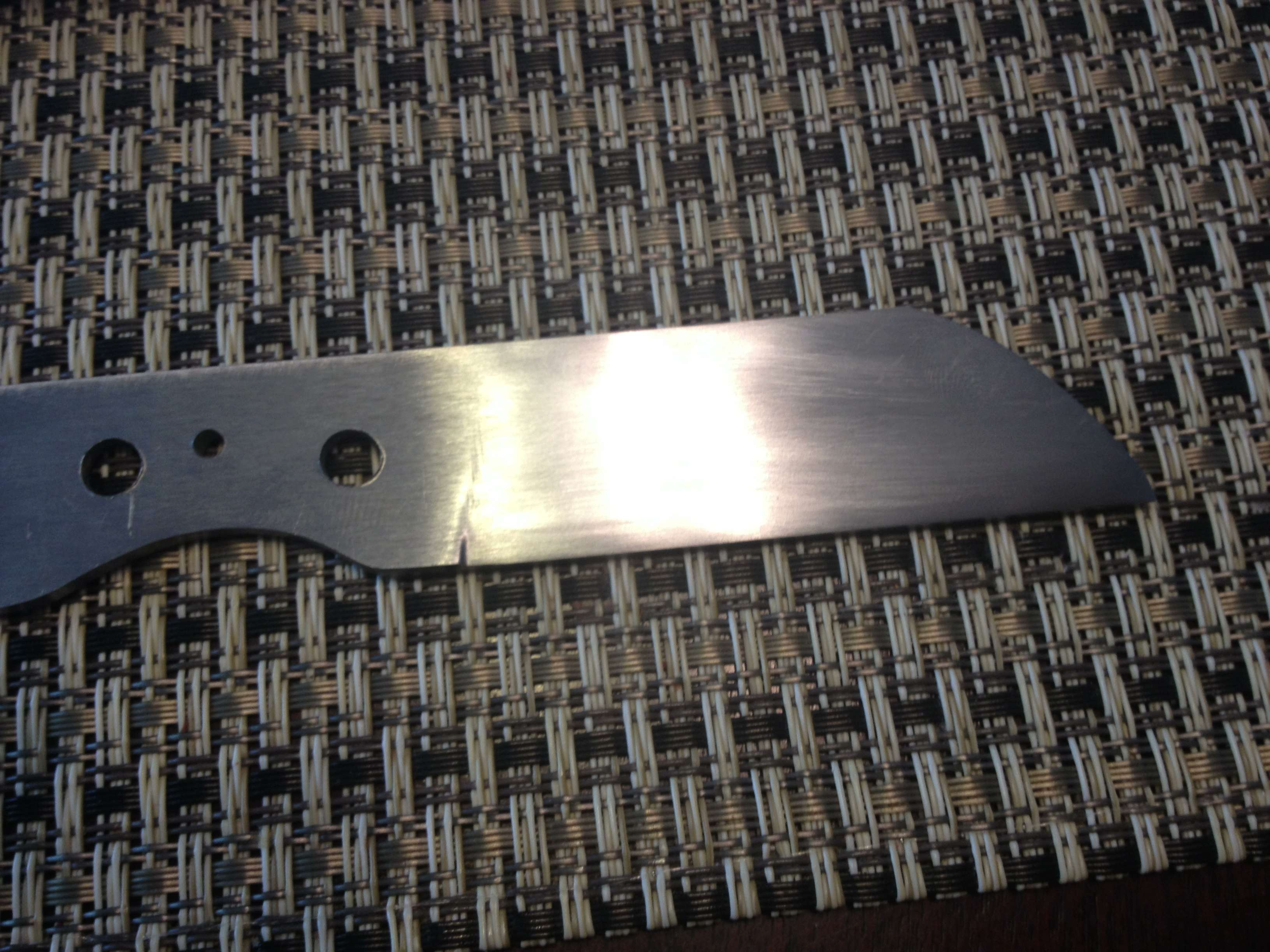
I botched the plunge big time so I decided to cut in a spanish notch in the ricasso to fix the issue visually.


wip23.jpg


wip22e.jpg


Thoughts / comments?
 
I'm also getting really anxious about meeting both sides of the edge in a straight line down the middle. Am I over thinking this and freaking myself out or is there a good chance that I will end up with a wavy edge? Yes, I have marked a center line down the middle but I have overgrinds in several placed along each side. Any tips or tricks to ensure they meet in the same place all the way down?
 
Ok, here is where I ended up today. I have thinned the edge and I kept checking the blade and noticed it begin to straighten out (the edge). I was really excited and was eager to post pics but now after reviewing the pictures it looks like my blade is more crooked than I originally believed. What would you recommend I do? It could just be the fact that I completely botched filing in the bevel and that's just a super thick blade right behind the emerging edge. Let me know your thoughts, thanks!


wip25.jpg


wip24.jpg
 
When starting on a blade:
1) First, mark the edge center. Use a drill bit the size of the metal thickness to mark it if you don't have a special edge scribe. Lay the drill bit down on its side on a flat surface and clamp it in place. Slide the profiled blade blank along it and the tip will scribe a line down the edge. Flip the blade over and repeat. The result will usually be two close together lines down the center. Use this as your guide to find and keep the center straight.

2) File or grind the edge into a "V" at about 45°. This is just to remove some metal from both sides of the center mark. When you are done, the blade will have an "edge" centered, but no bevels.

3) Start filing or grinding in the bevels. Slowly bring then up toward the spine and down toward the edge you just made. When everything is right, the bevel will reach the spine as well as be at the edge. If it is approaching one faster than the other, you will clearly be able to see this, and should shift the pressure and angle to make it go the way needed.

4) Do one side part way, flip the blade over and do the other side. Repeat often, sneaking up on an evenly tapered blade. As the two get close, you can fine-tune the bevels to meet perfectly with good plunges that line up. Errors in judgment on how far to file/grind a bevel are easy to fix if you have some metal left to fix them. Once you meet the spine and the edge....you are out of metal....and any more changes will not be easily done.

Two of the biggest problems most new makers have is trying to "eyeball" the edge and also trying to do one side all the way, then the other.
 
Thanks for the reminder Stacy!

I marked the edge with the marking tool I picked up from Jantz supply and scribed one line down the middle and then two lines just to either side of that center line. After doing more research I think the problem was in my filing technique and the fact that as I filed I did not support underneath the blade with a shim and that caused the dishing in the center of the blade edge. The problem is that I had no idea what I was doing when it comes to metalwork and filing but we learn from reading, watching and actually doing so I feel confident about my next knife.

I found videos of a step by step work in progress by Sugar Creek Forge and he is using the same tools that I am, unfortunately I stumbled upon these great videos far too late. Like I said before though, after watching these many times, I feel much more confident about my next blade.

I think I found a way to fix the current problem and that is using a very hard flat surface with sand paper, WD40 and slowly sanding away the high spots in the edge until they meet the low spots. In theory, at least in my mind it should work, whether or not the two sides meet perfectly in the center, we will just have to see.

Thanks again for everyone's help!
 
Here's the latest update...

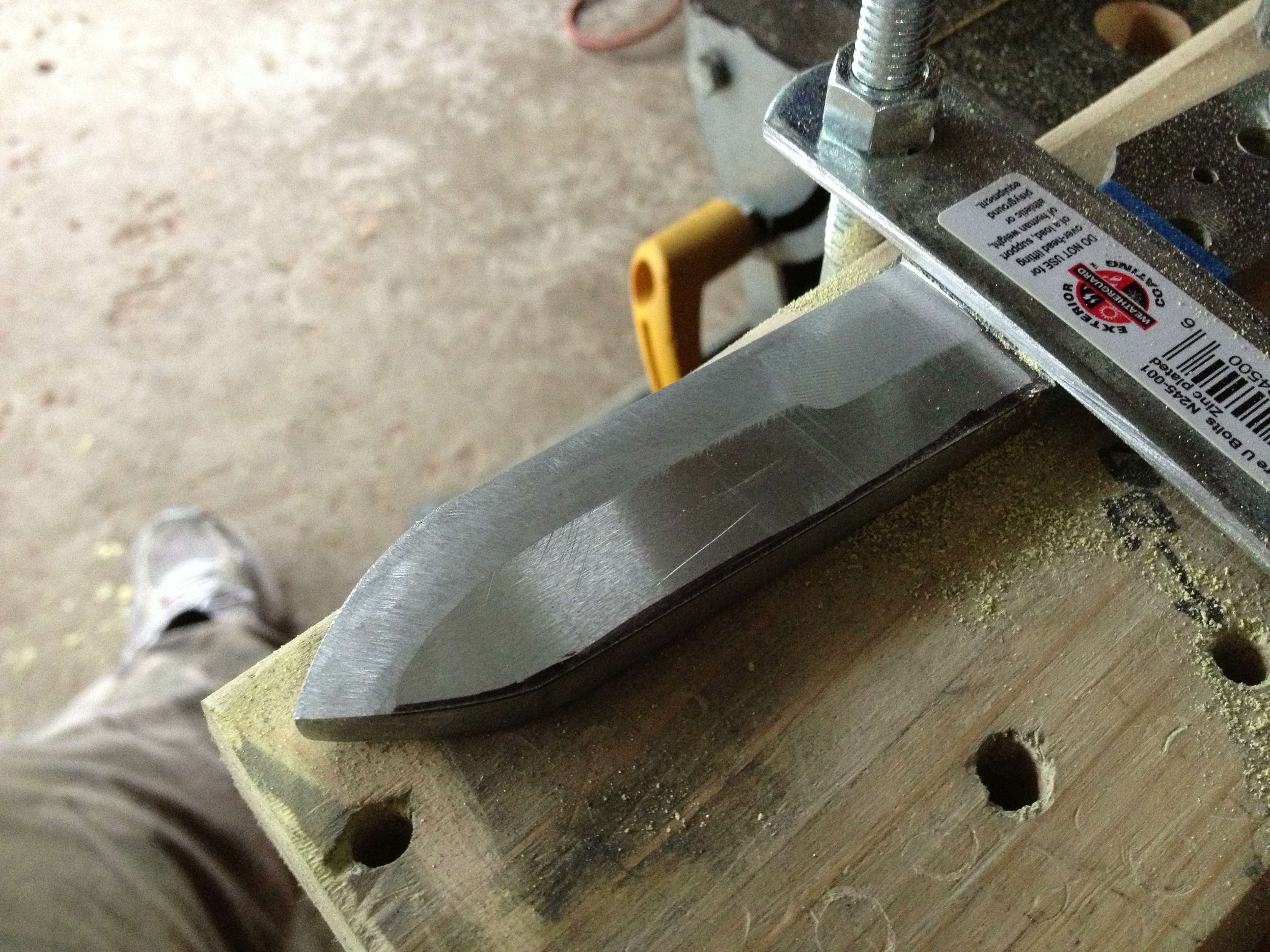
Wonky grind on the right side of the blade face, clearly a result of me not supporting the knife while grinding in the bevels. Hopefully this dishing won't ruin this knife down the road. I was able to straighten out the edge using the method of sanding on a hard flat surface with wd40 and 3M Wet/Dry automotive sand paper. Right now I am debating on whether or not to send out a single blade for HT or send out a couple more at the same time.


wip26.jpg


wip27.jpg
 
Fletch,

To be honest I tried a bit of draw filing and push filing, but really I had no idea what I was doing (clearly from the picture). I am going to go about it much slower and deliberate with my next knife.
 
Fletch,

To be honest I tried a bit of draw filing and push filing, but really I had no idea what I was doing (clearly from the picture). I am going to go about it much slower and deliberate with my next knife.

I have only draw filed a few times since I have a disk and belt grinder. However if you take the file handle in your left hand and the top of the file in your right and pull from the plung to the tip you'll find that you are able to remove quite a bit of steel and the blade stays relatively flat versus filing the traditional way. I actually attached a 3/8" steel tube to the tang of the file and set up an adjustable pivot point with which I could put the tube through using an eye bolt. This keeps the angle more precise and takes the error out to some degree. Just remember to clean the file every two or three pulls so you do not put a long gouge into your softened steel that you'll need to sand out later.
Do this to both sides of the blade before adjusting the angle. Keep doing this until you have reached the correct bevel. Its pretty simple with an easy to make jig and it takes out the guess work of trying to eye the bevel.
 
I have only draw filed a few times since I have a disk and belt grinder. However if you take the file handle in your left hand and the top of the file in your right and pull from the plung to the tip you'll find that you are able to remove quite a bit of steel and the blade stays relatively flat versus filing the traditional way. I actually attached a 3/8" steel tube to the tang of the file and set up an adjustable pivot point with which I could put the tube through using an eye bolt. This keeps the angle more precise and takes the error out to some degree. Just remember to clean the file every two or three pulls so you do not put a long gouge into your softened steel that you'll need to sand out later.
Do this to both sides of the blade before adjusting the angle. Keep doing this until you have reached the correct bevel. Its pretty simple with an easy to make jig and it takes out the guess work of trying to eye the bevel.

I plan on making a jig very similar to that if not the same. I bought an aluminum dowel and just need to pick up a 2x4 and I will start the build process.

On a side note, I wanted to show you that I really appreciate taking the time to help me out. Here's evidence that I am learning from you folks!
wip24.jpg


wip28.jpg


Look at that plunge line!!!

This new knife will be a gift to my Dad for Father's day if all goes well! *crosses fingers* :D
 
you are making some great progress. I've just started my first two knives using the HF 1x30 and am thinking I need to do at least one knife using files. I think one gains a little bit by trudging through some manual work sometimes and I think I'm missing that aspect by using even the cheap HF sander. On a related note, my wife asked me to help her build a birdhouse, I wonder if she will change her mind when I break out the handsaws for her.


BTW nice choice on the Founders. I'll now be returning too my short changed american "pint" of Troeganator.
 
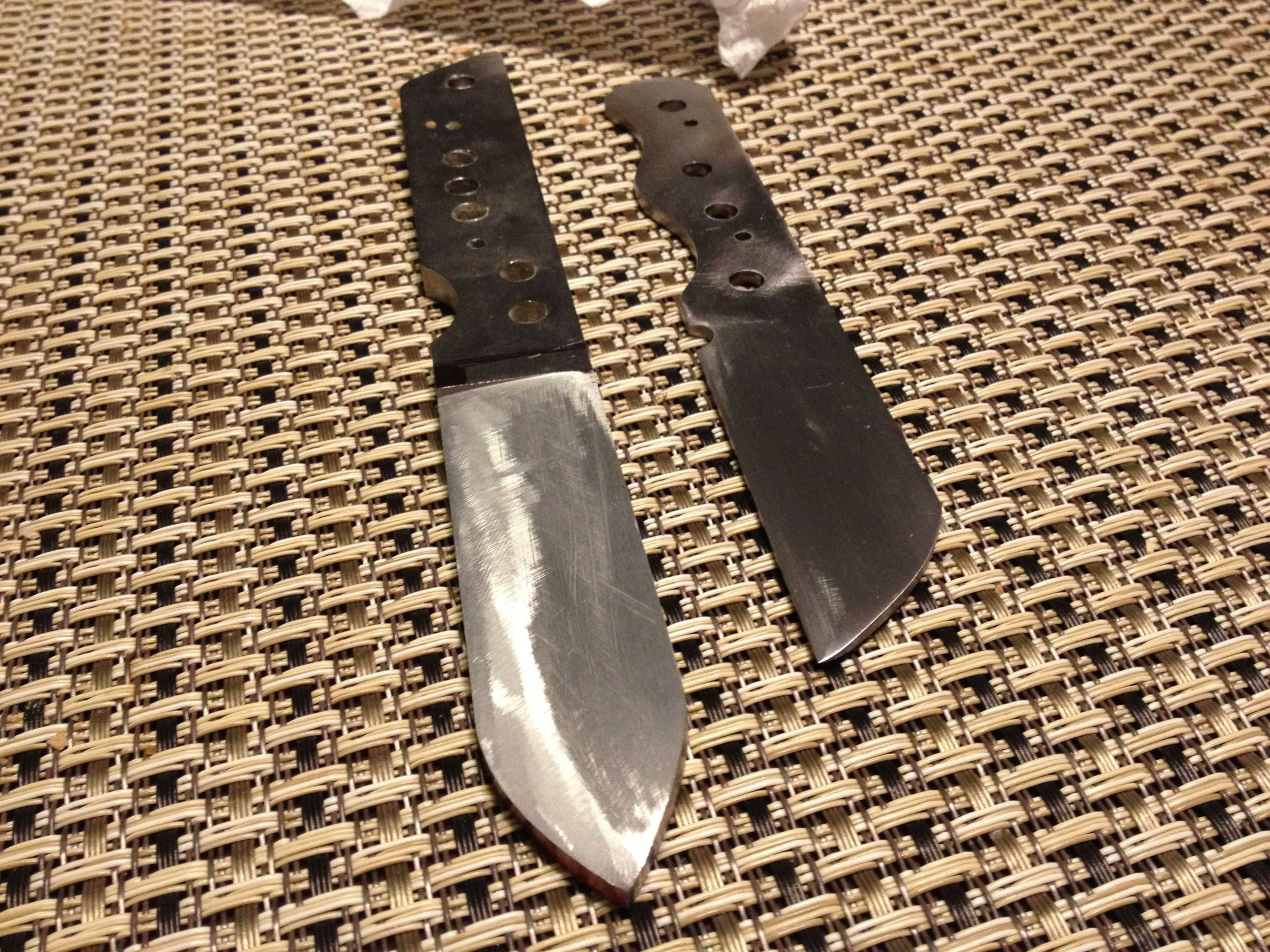
Instead of making another thread I am just going to add my WIP #2 into this one since I won't be finishing #1 until I send them both out for heat treat. I may also go back using what I've learned working on #2 here and thin #1 out so make it more serviceable.

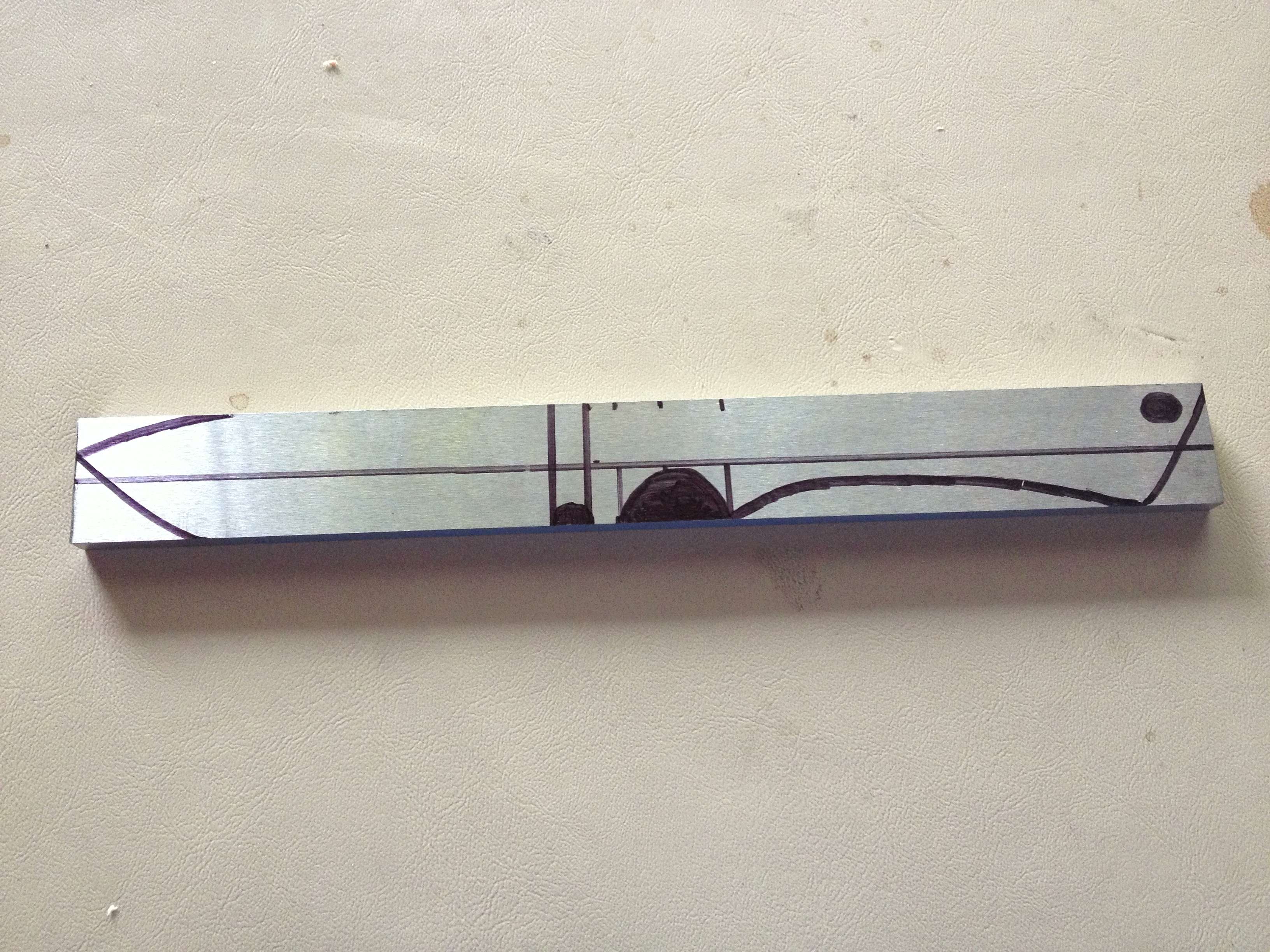
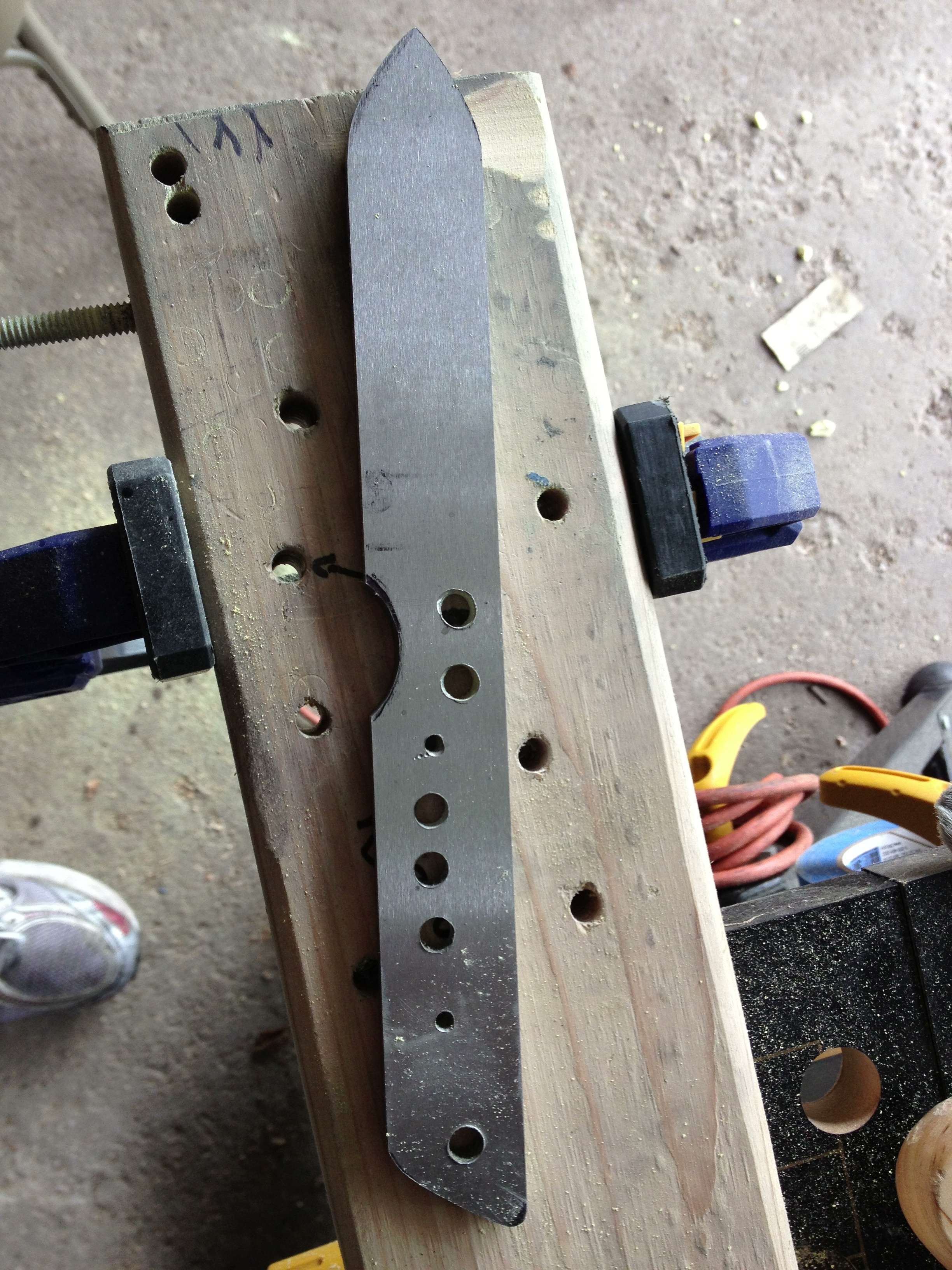
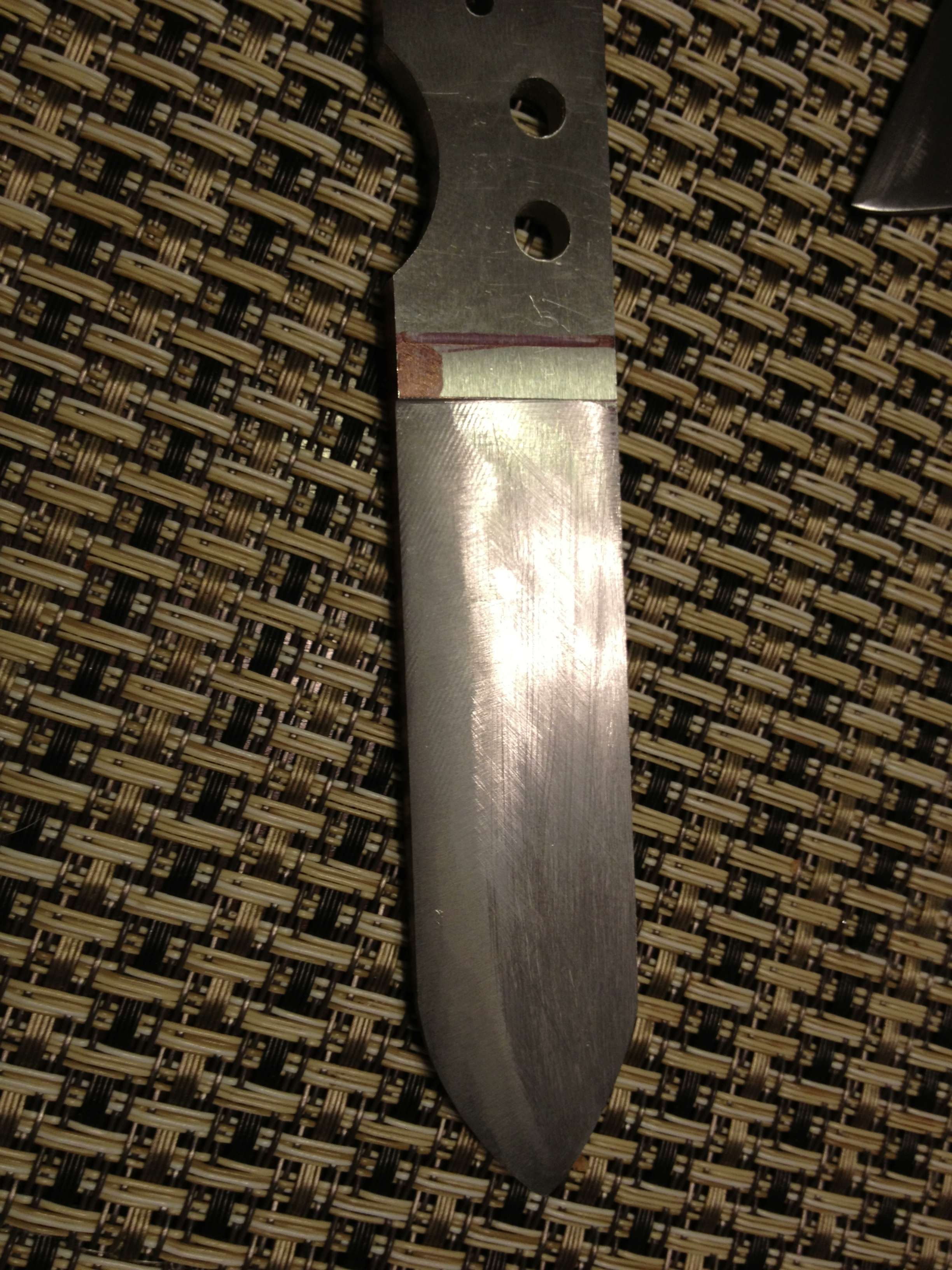
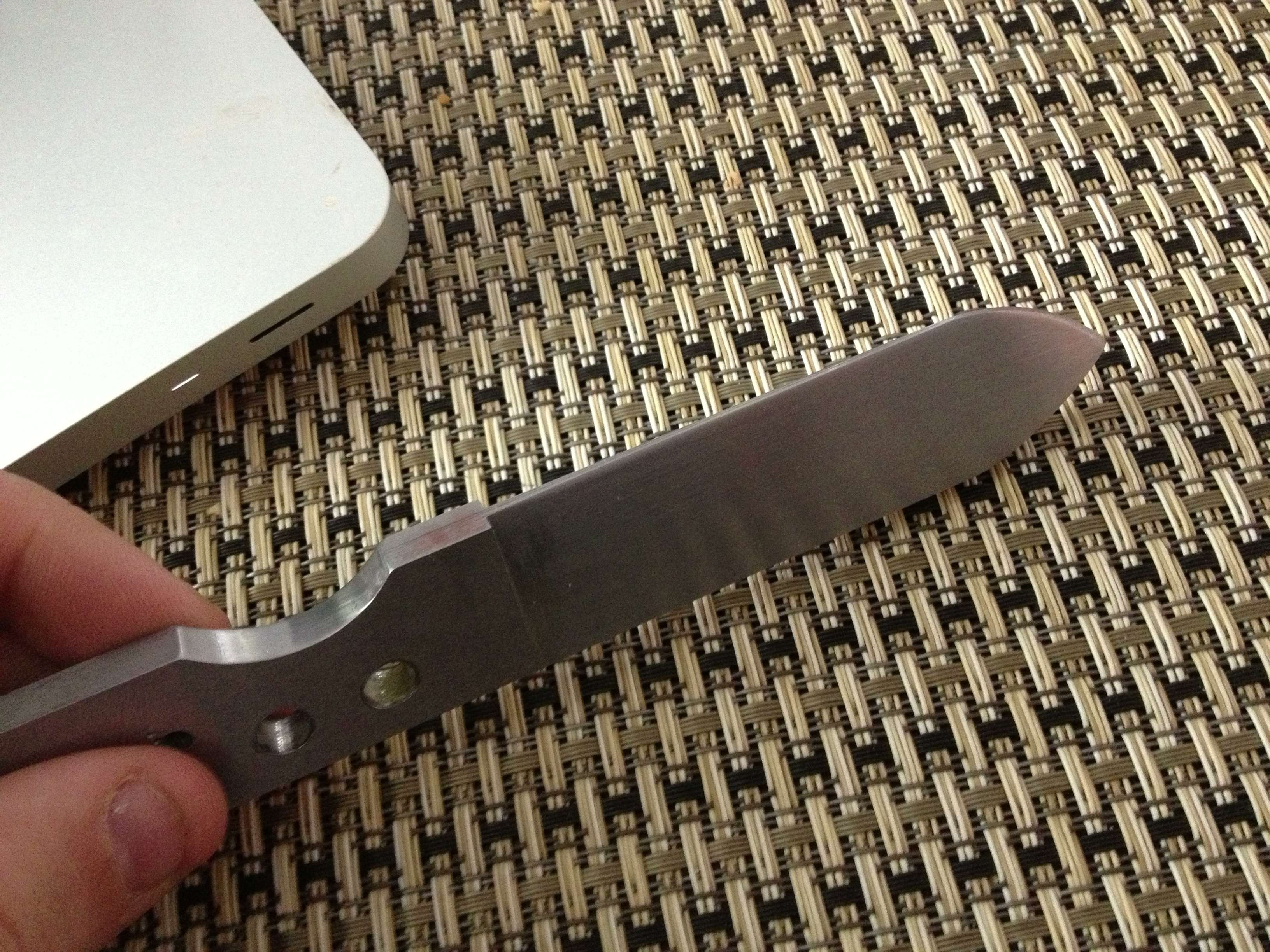
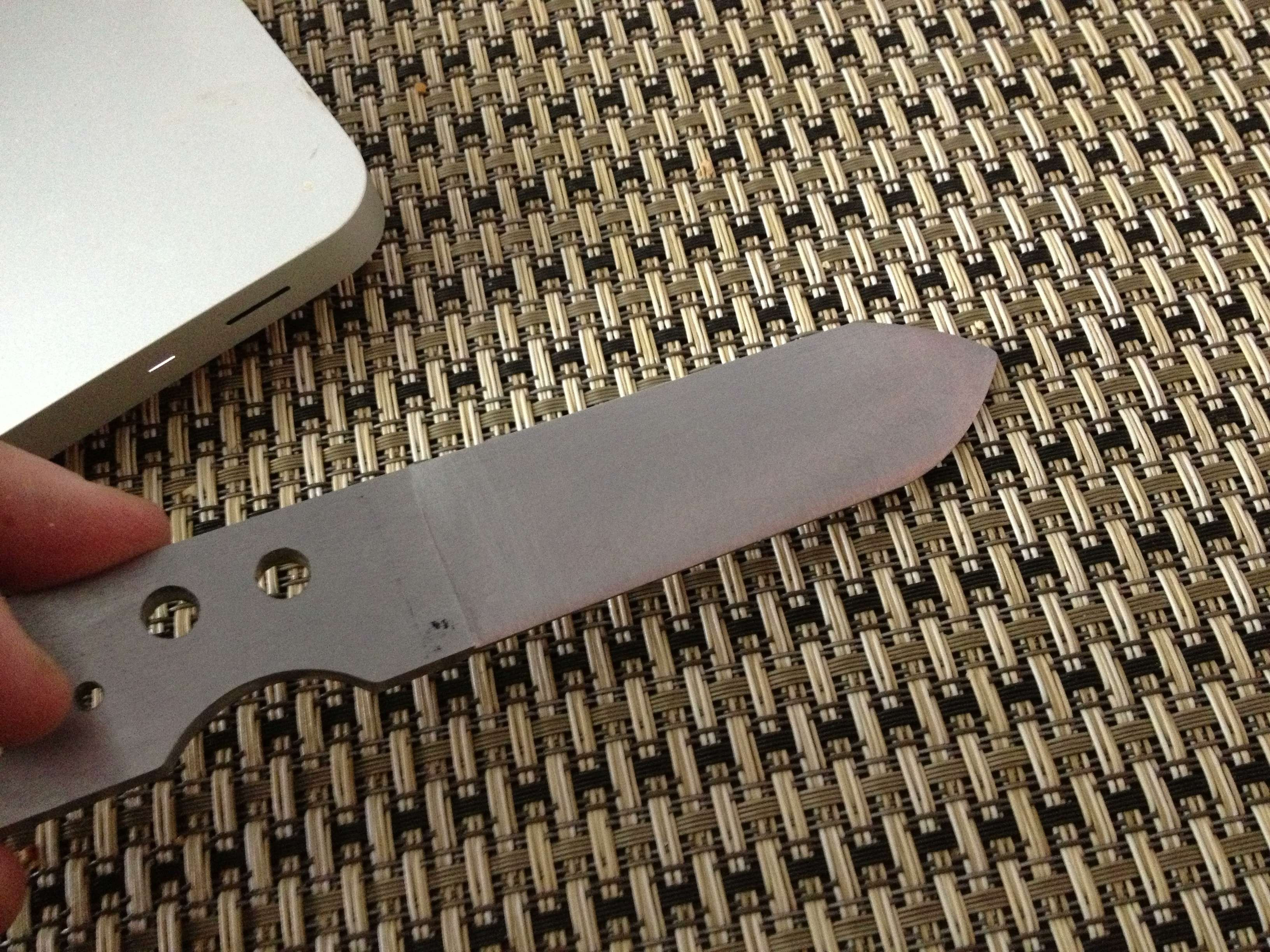
This knife is the product of my mistake of ordering a 1/4" thick bar of O1 before doing enough research. I decided to use the bar and turn it into an extremely tough knife for my Dad for Father's Day. The pictures speak for themselves...

Nice design IMO however being only 1" thick that handle would be way too narrow to hold comfortably.
wip21.jpg


wip22o.jpg


wip23.jpg


wip24.jpg


wip24.jpg


wip25.jpg


wip26.jpg


wip210.jpg


wip211.jpg


wip212.jpg
 
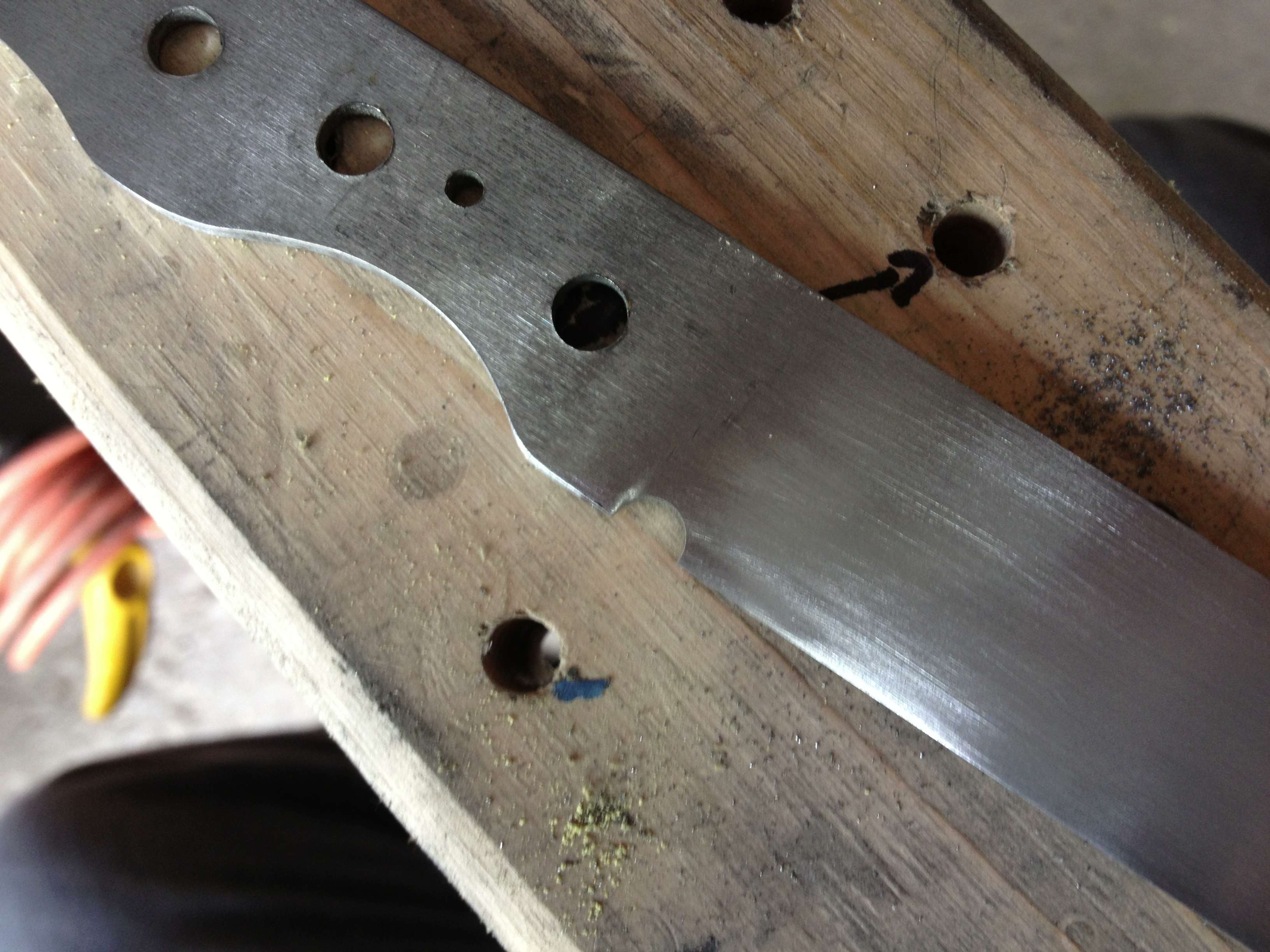
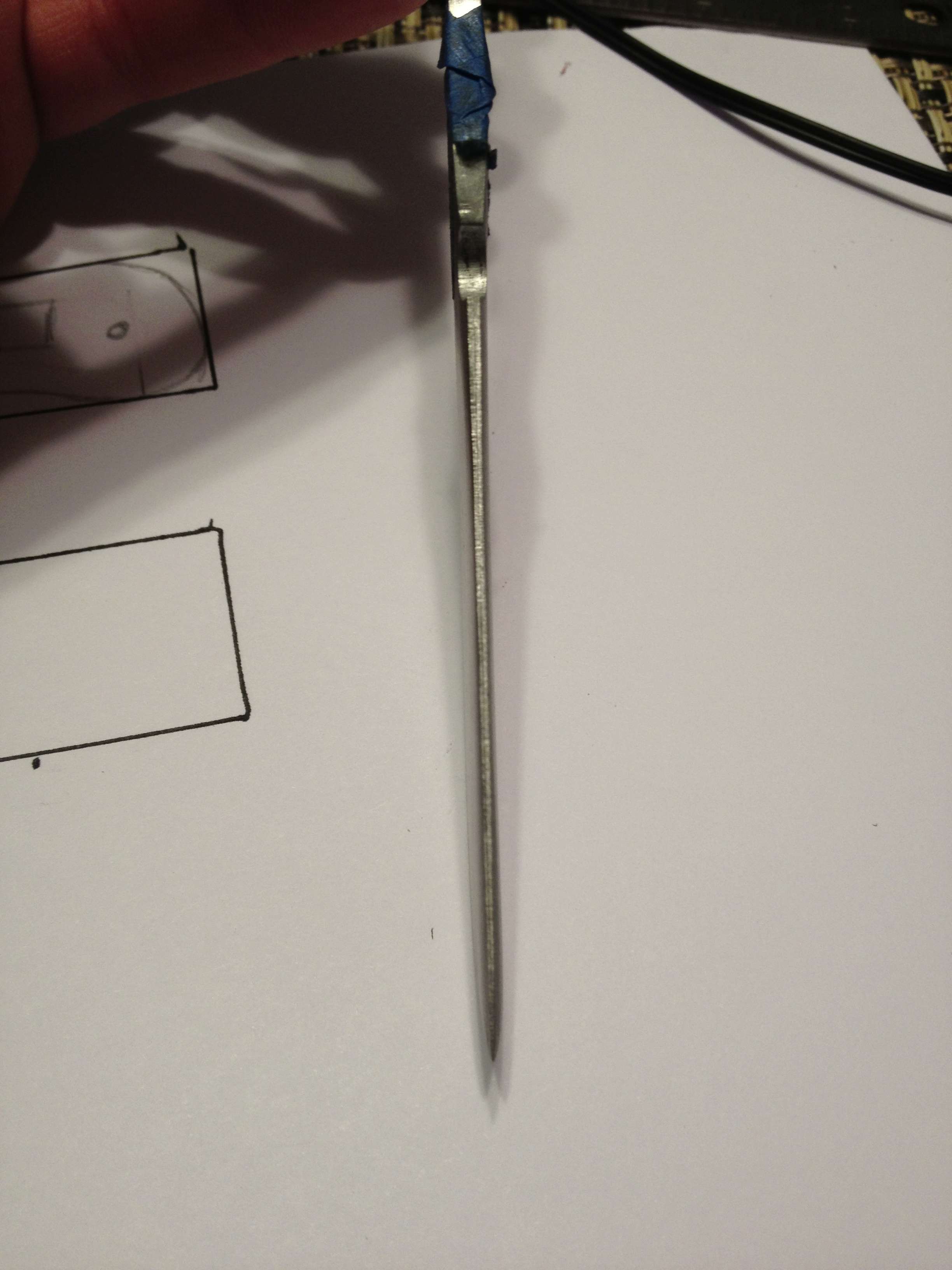
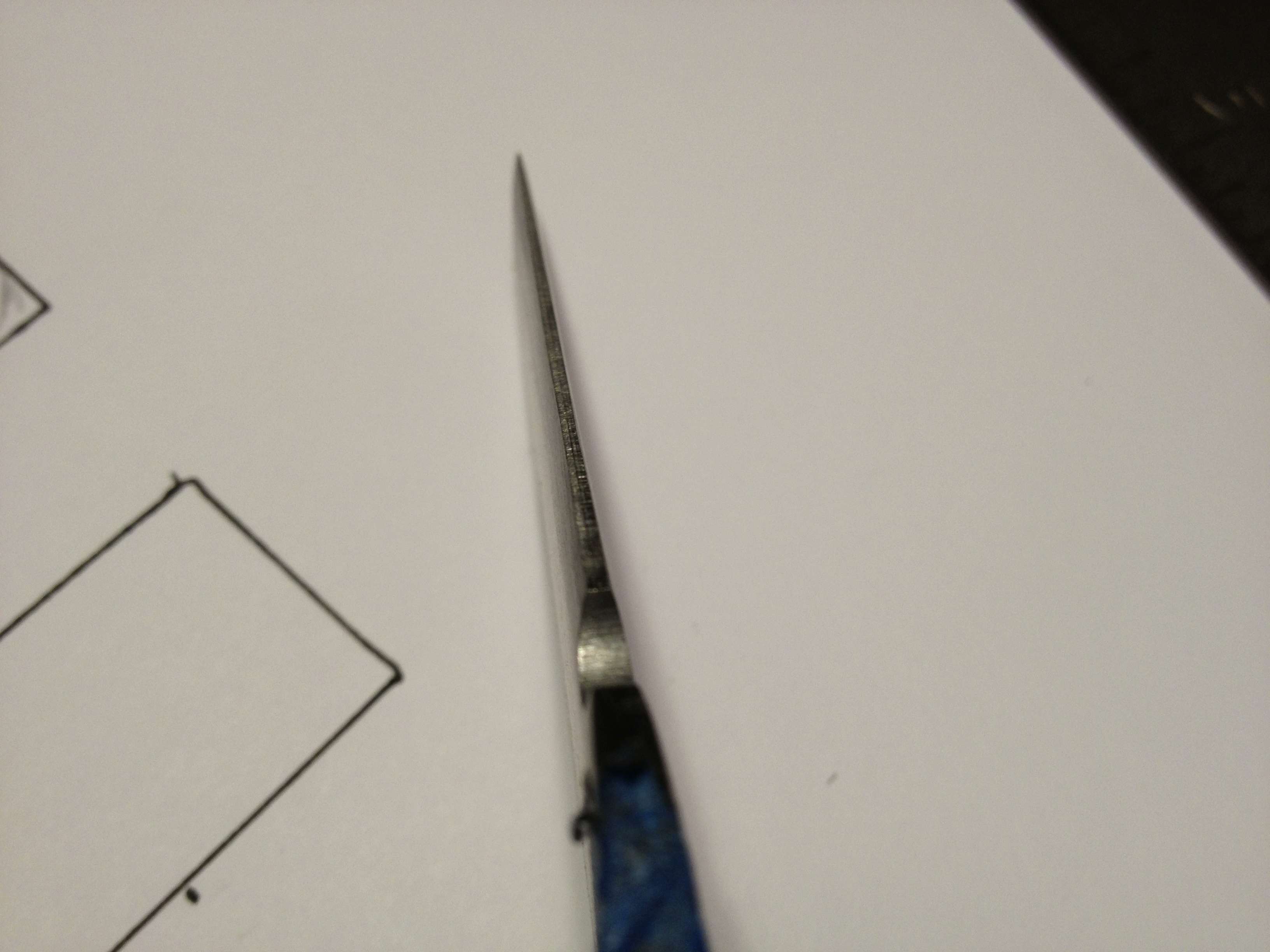
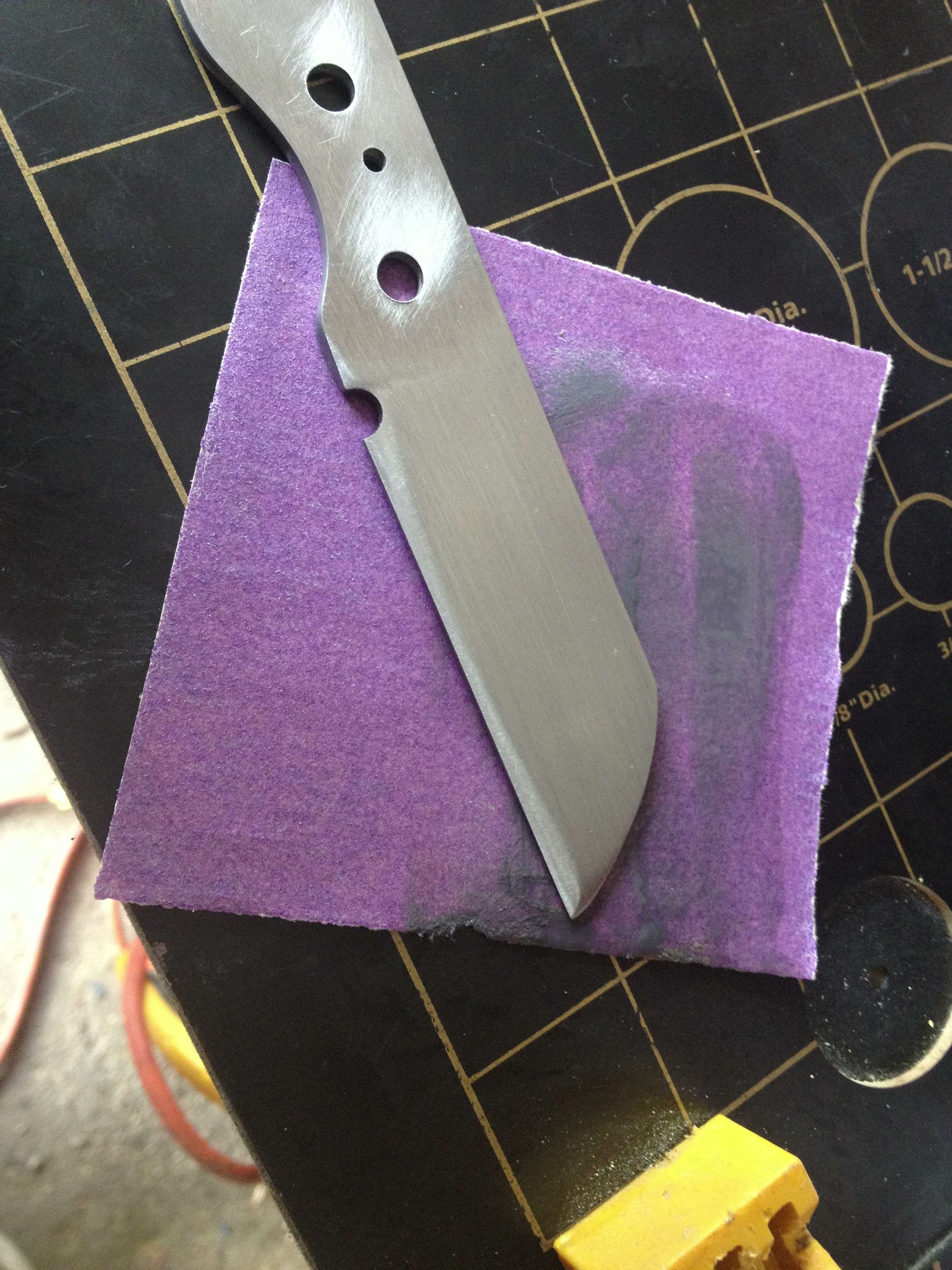
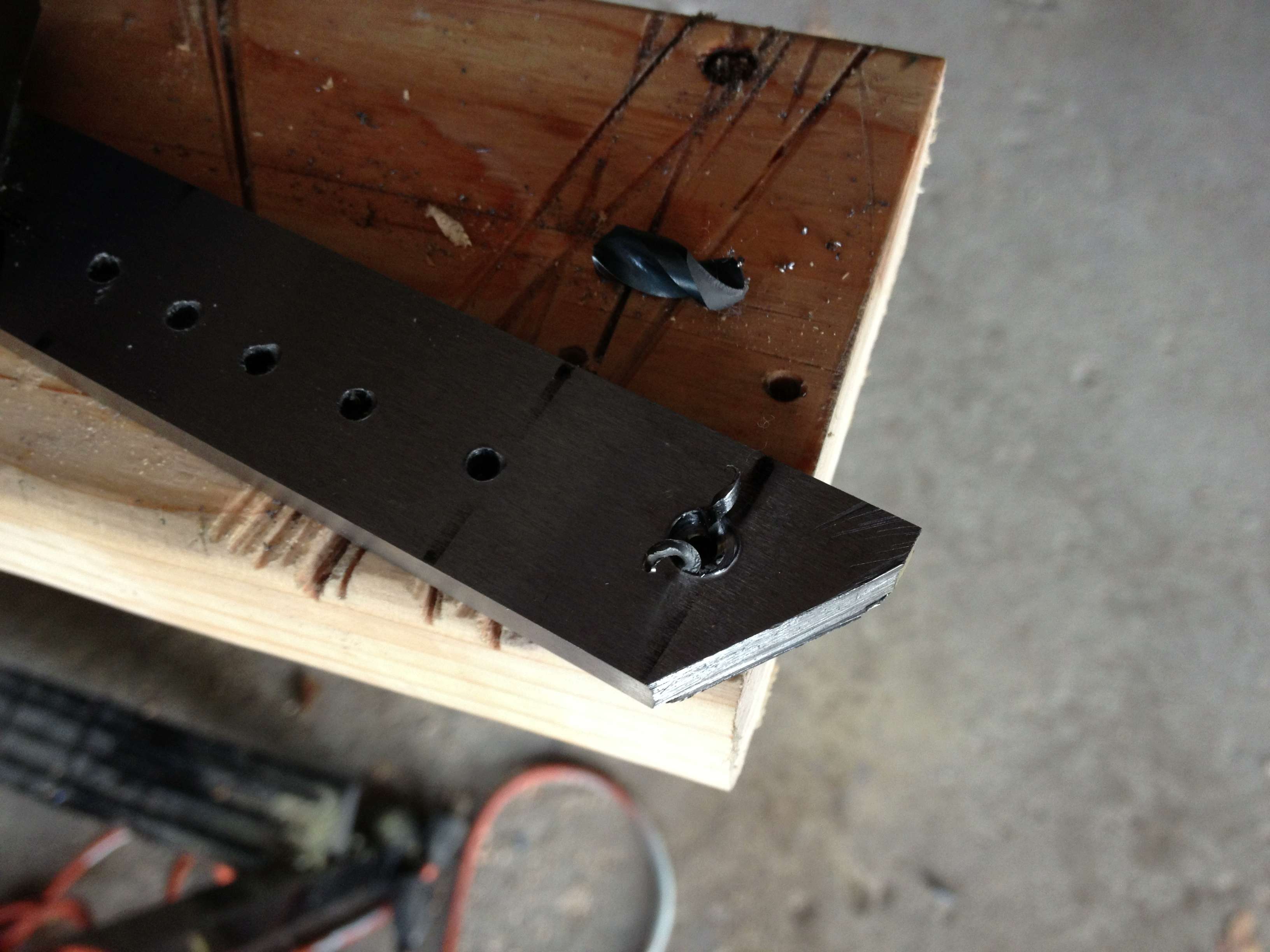
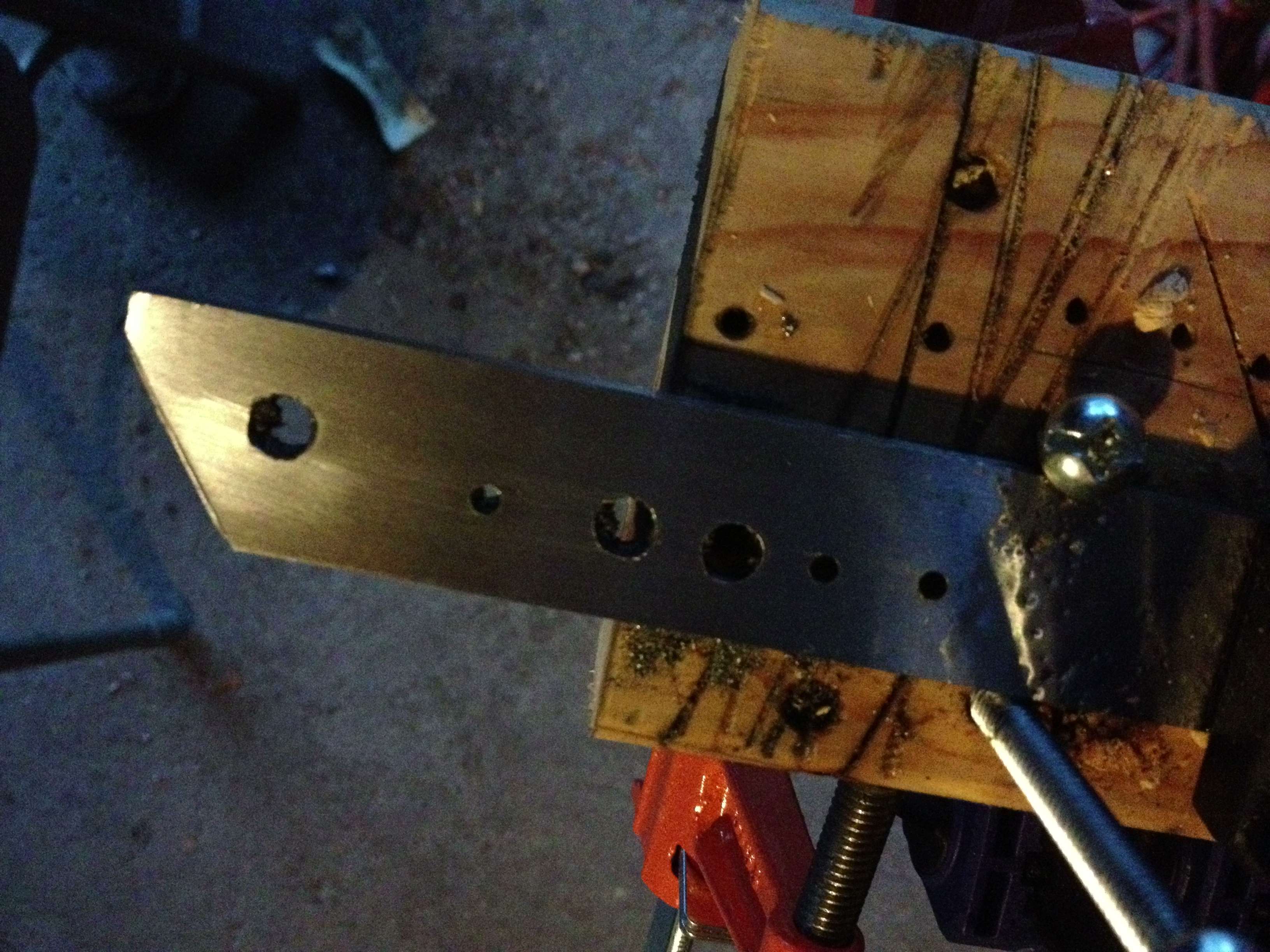
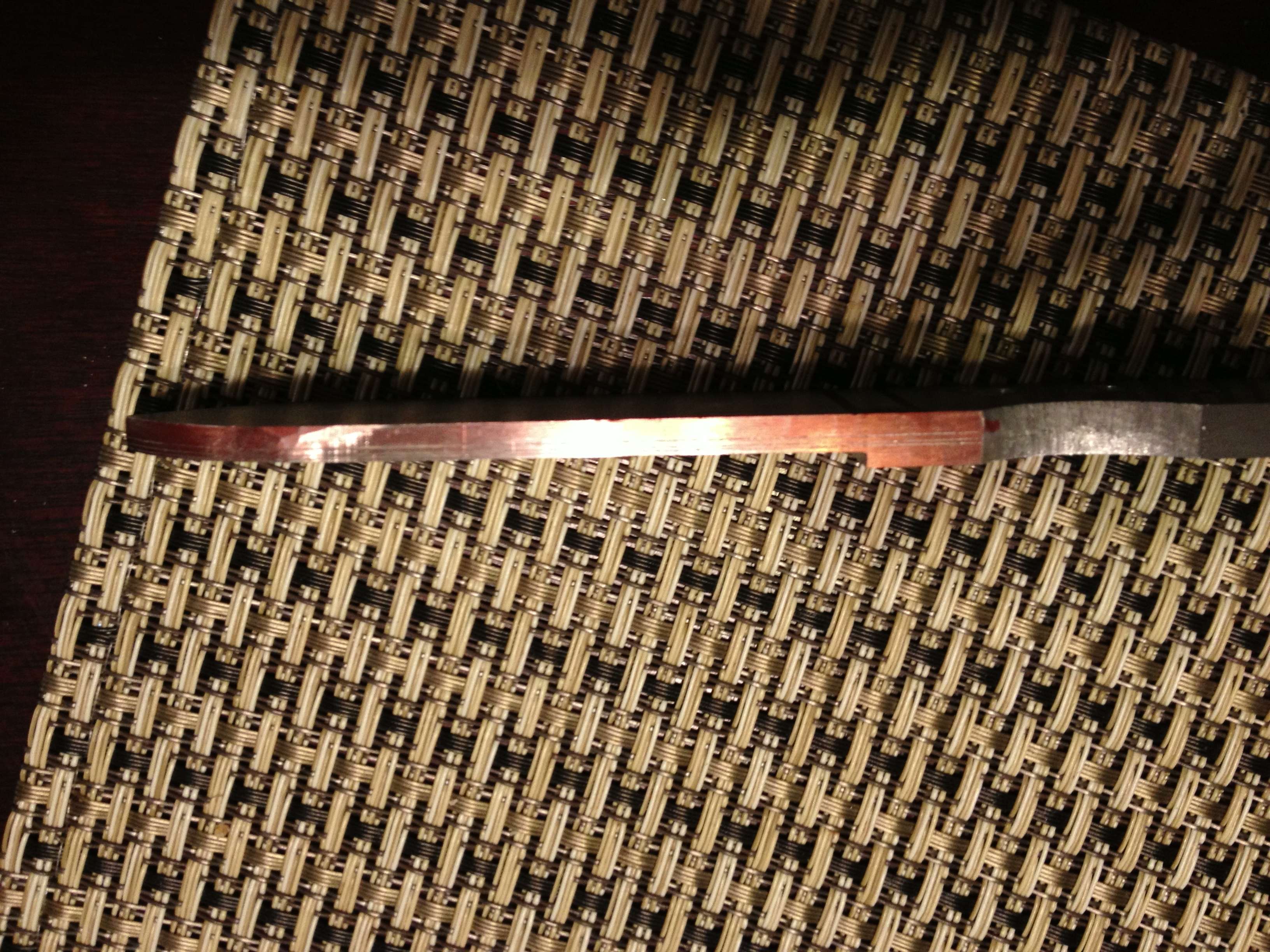
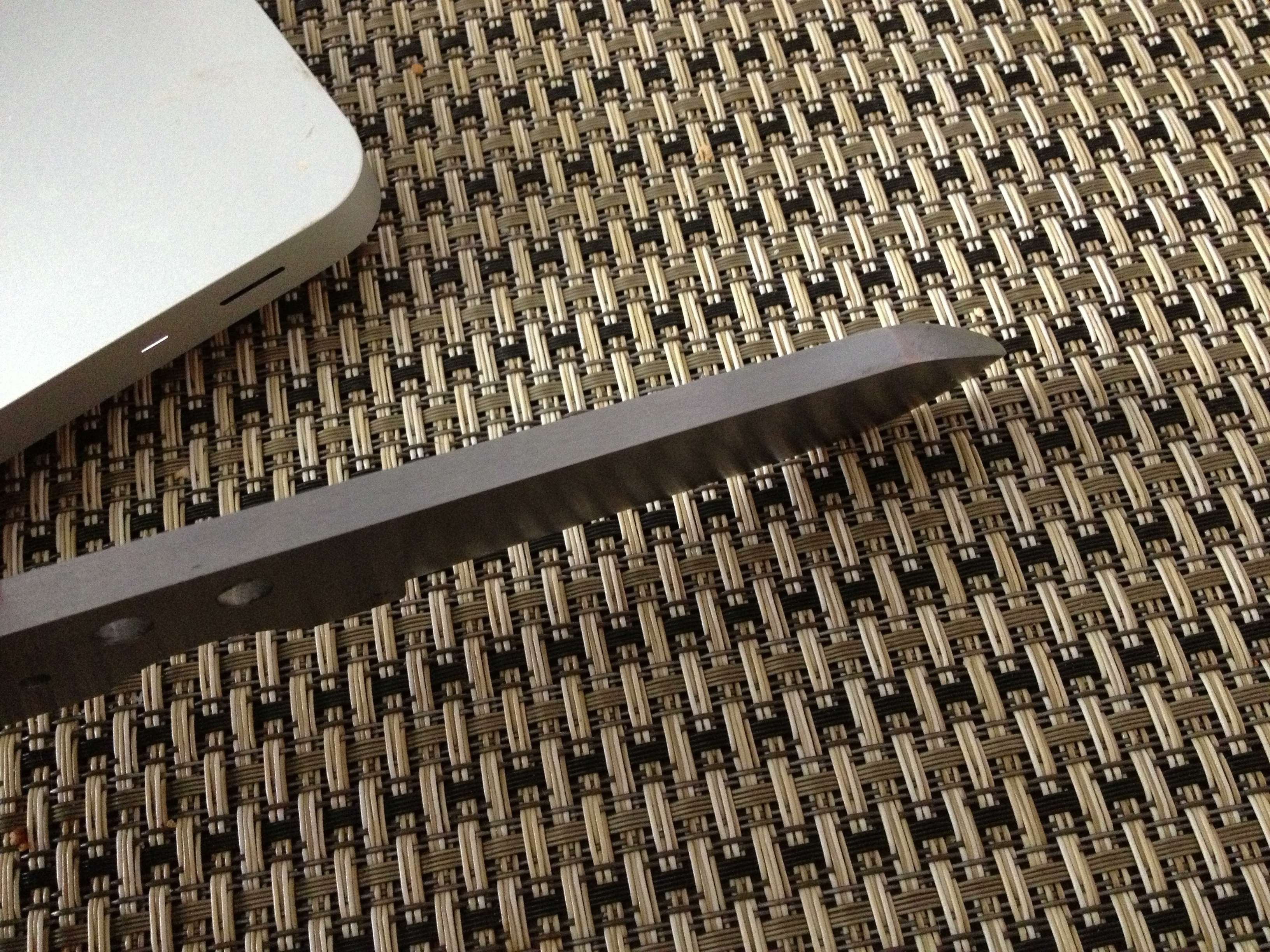
Using a file to grind away 1/4" bar stock is a major pain in the butt. Makes me want to sell some stuff and buy a belt grinder but I have to build a work bench in the garage first. Not to mention a drill press would come in handy as you can see by my terrible work. I'm at about nickel thickness and will continue to sand to dime thickness before I sent it out for heat treatment. I also need to buy a dremel to knock down the burrs caused from the drilling.

One question that I need your help with...

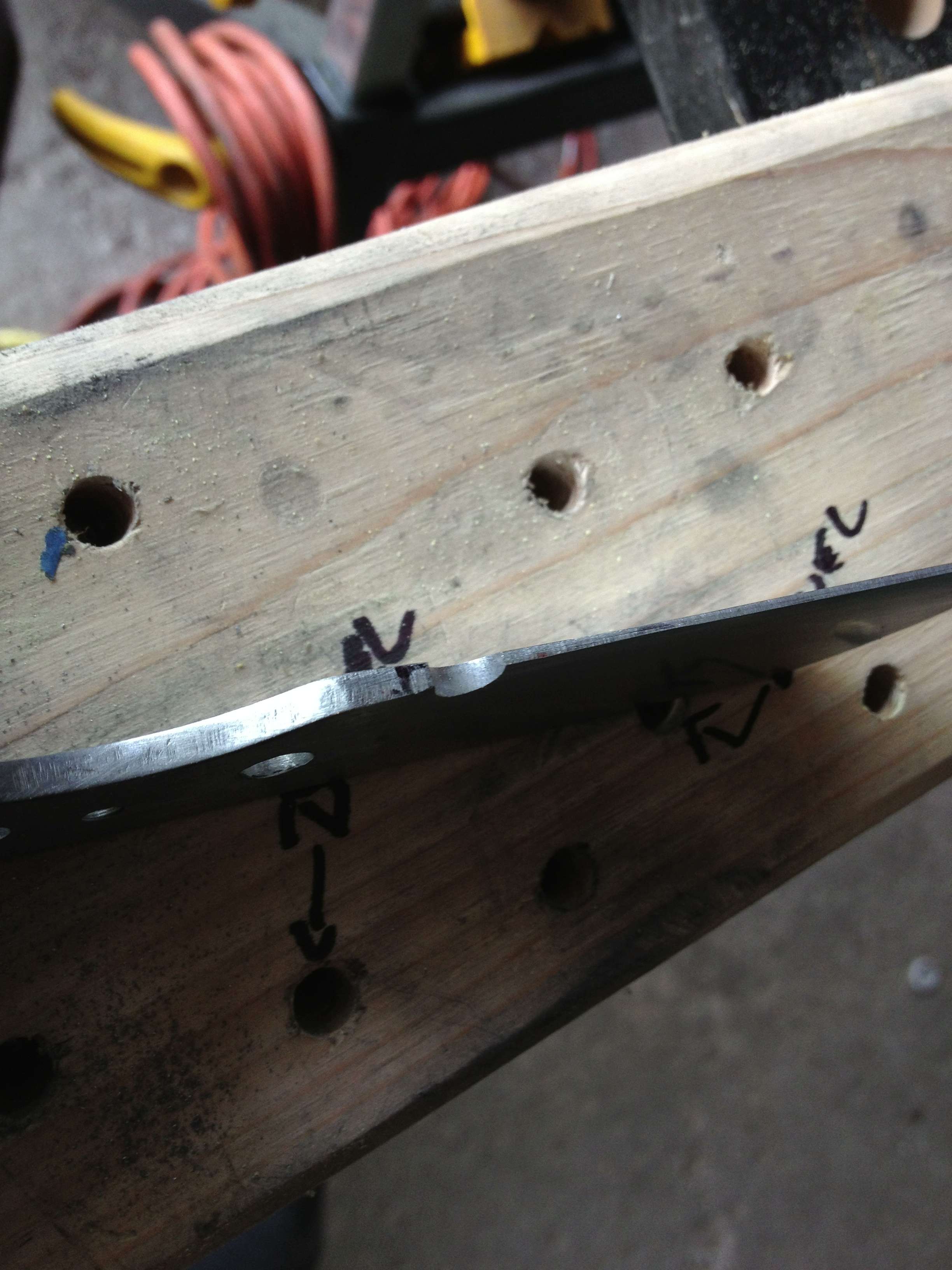
I noticed while filing and sanding today that right where the blade sweeps up I have ground that area thinner than the rest of the blade. This happened on both sides, is there a trick to doing this evenly and if so what is the technique. I used both vertical and push/draw filing to cut the bevels in. Once again now, as with the first knife, I am worried about not meeting the edge in the center at the same time along the entire edge.

Any advice?
 
File less in those areas.

Alright Stacy, you got me there I guess it was a bit of a stupid question. I thought it might be my sanding technique similar to when someone first learns to sharpen, they tend to create a birds beak on the tip. This is of course different but thought it might be a technique driven error, although without video it would be difficult to put it in words clearly.
 
Back
Top