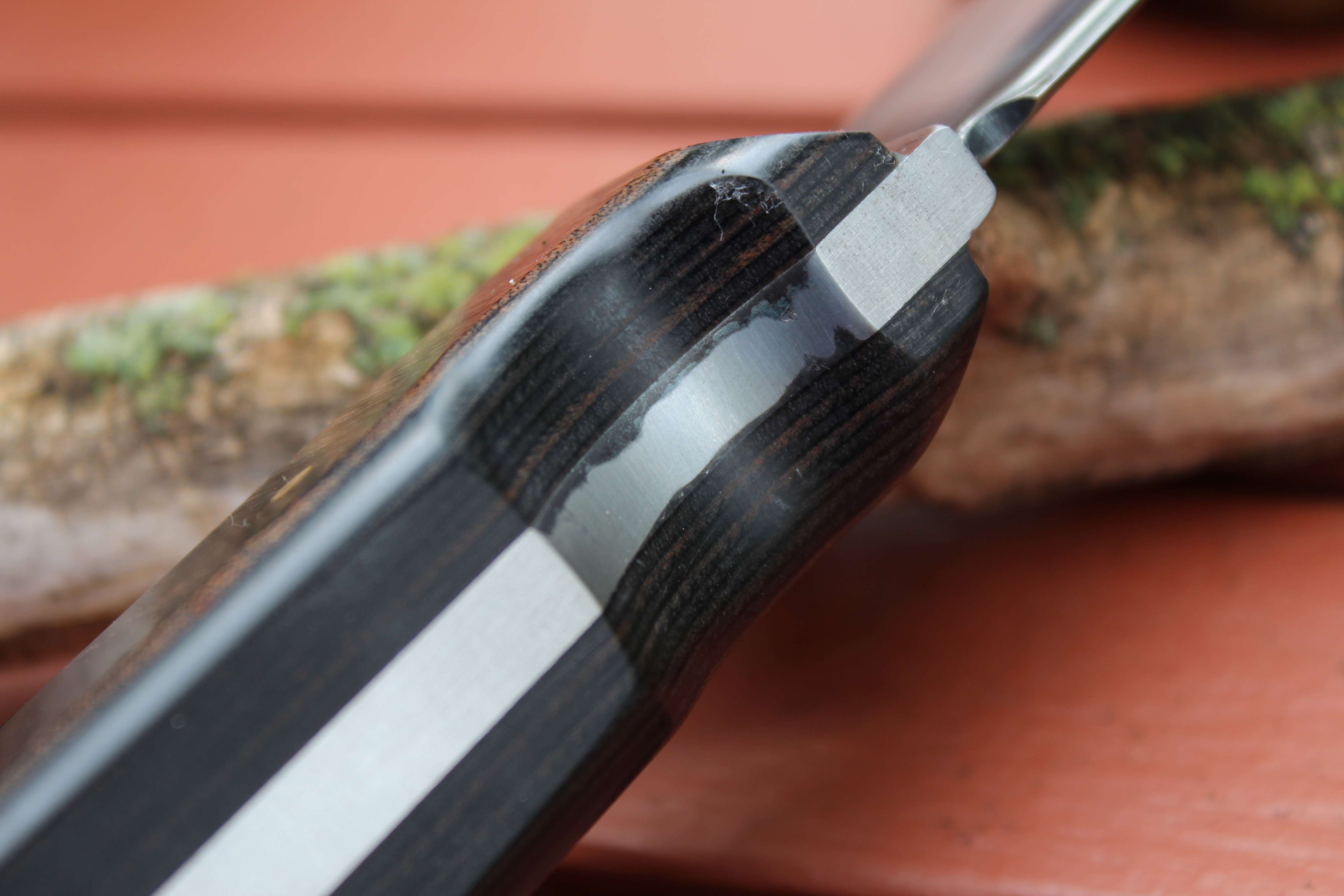
My First Knife WIP

I couldn't resist it :)

Try things like blackening the blade with a marker or DyChem and seeing where you are sanding the most. Lighten the stroke in those areas, or increase it in the less sanded places. What you DON'T want to do is just sand or file one place. That will guarantee a line/dip/groove somewhere.
 
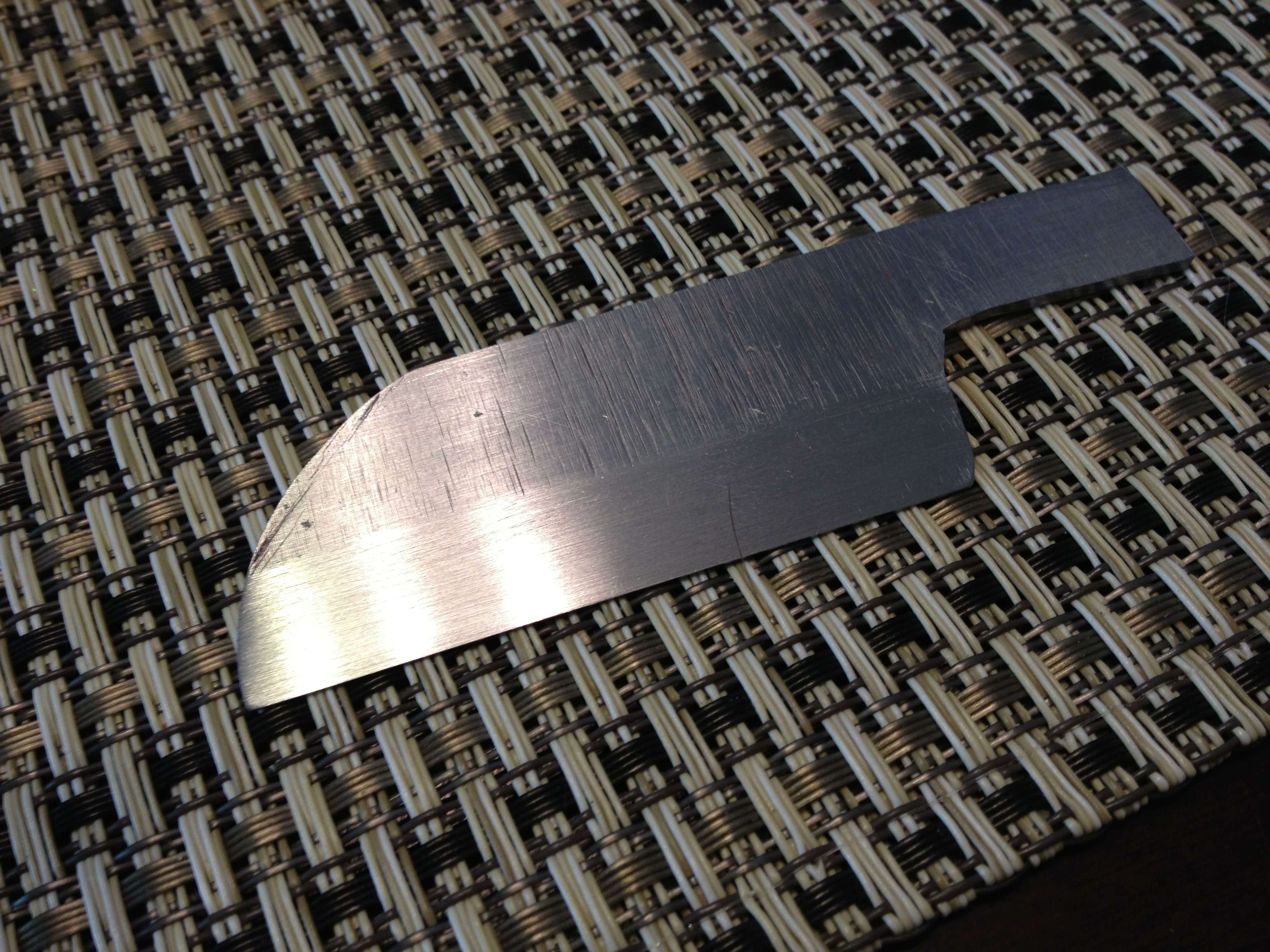
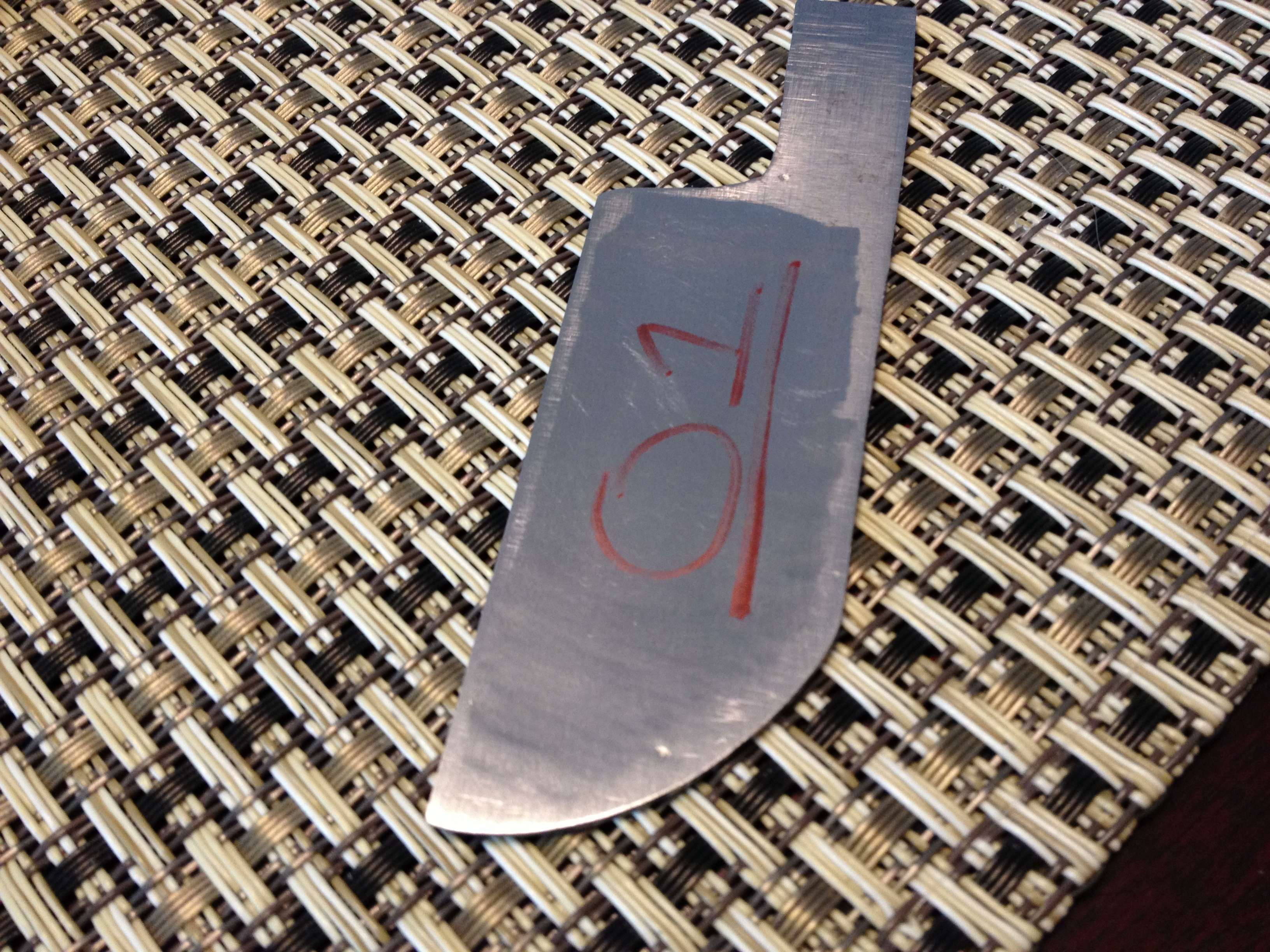
My Father-In-Law dropped off some steel a few weeks back that he found at a work site. It came in a clear plastic package with a label from Pacific Steel and the steel is designated as precision ground O1. Now this isn't my idea of precision ground but I feel obligated to use the steel for something, since it was a gift and the fact that it is identifiable makes it worthy of heat treat. The problem is that it's only 1/16th thick which limits the possibilities between pairing knives and steak knives.

I decided why not use it to make a chisel ground pairing knife but before I went through all of the work of manually sawing the steel, profiling the blank with files and yadda yadda yadda, I would test it out. There was a small piece of the steel that had been lopped off the bar already so I did a quick profile with a shoddy bench grinder, and then cleaned it up with some 80 grit sandpaper to rid the blank of the burrs from grinding. Now in my haste I ended up creating a single bevel for a left hander instead of a right hander :beatinghead: ,but the concept is the same.

I was forced to use a dremel tool to create a terrible hollow grinder on the reverse side, although with my pairing knife I may not bother and see how she performs.


chiseltest2.jpg


chiseltest1.jpg


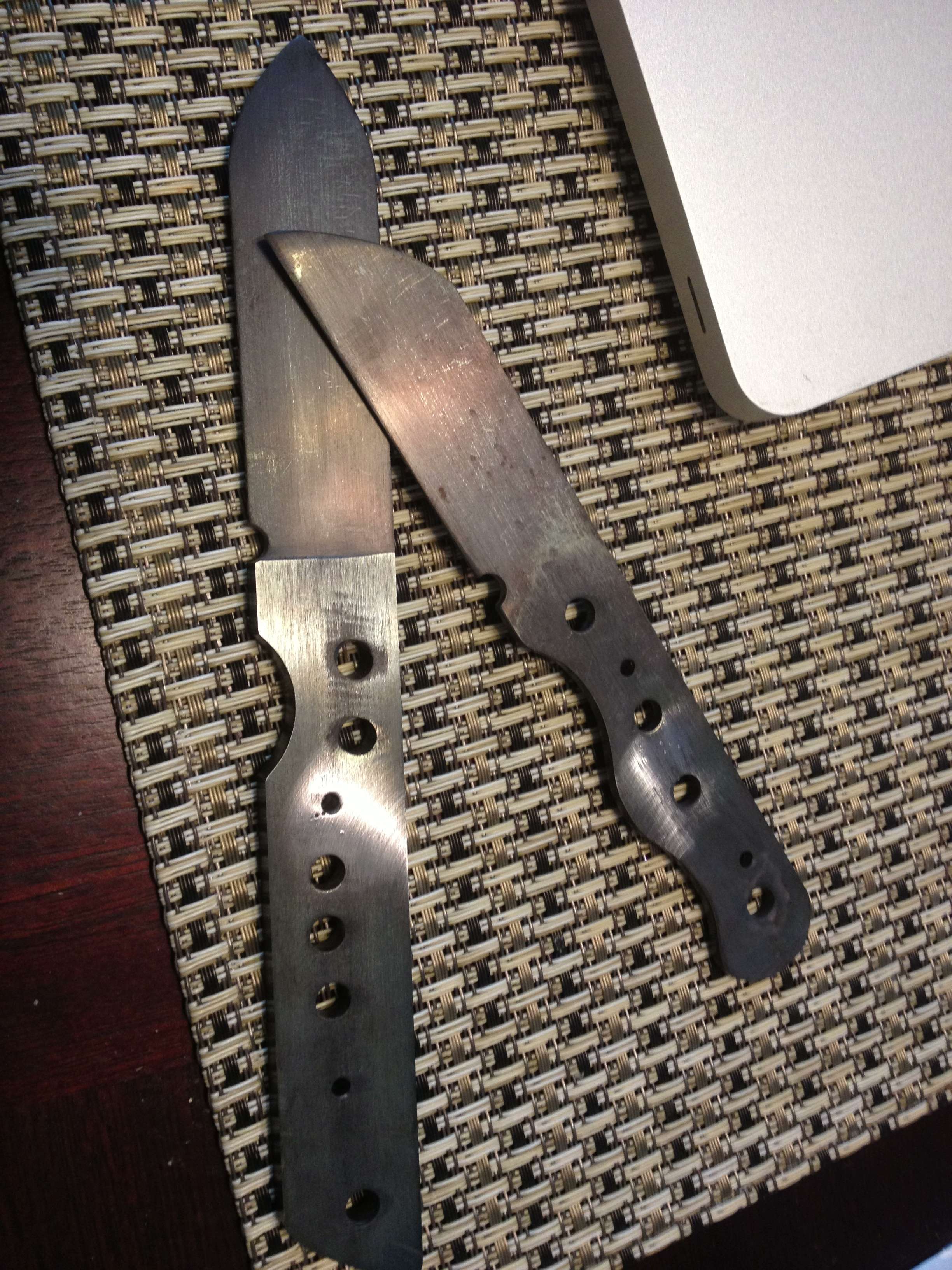
My freehand filing is definitely getting better with each blade so I am at least happy with that.
 
When it comes handle time get yourself either modeling clay or Play-dough and use it to get a feel for the handle. Also if you haven't done it spend some time looking at the knife makers gallery and for sale sections on here frequently and get an idea on some handle designs. Then you can "make" them out of your clay and see how they feel and look in hand. If you want to take it a step further once you get a shape you like take a bunch of pictures of it this way when you are shaping the handle you have a good reference to go off of.
 
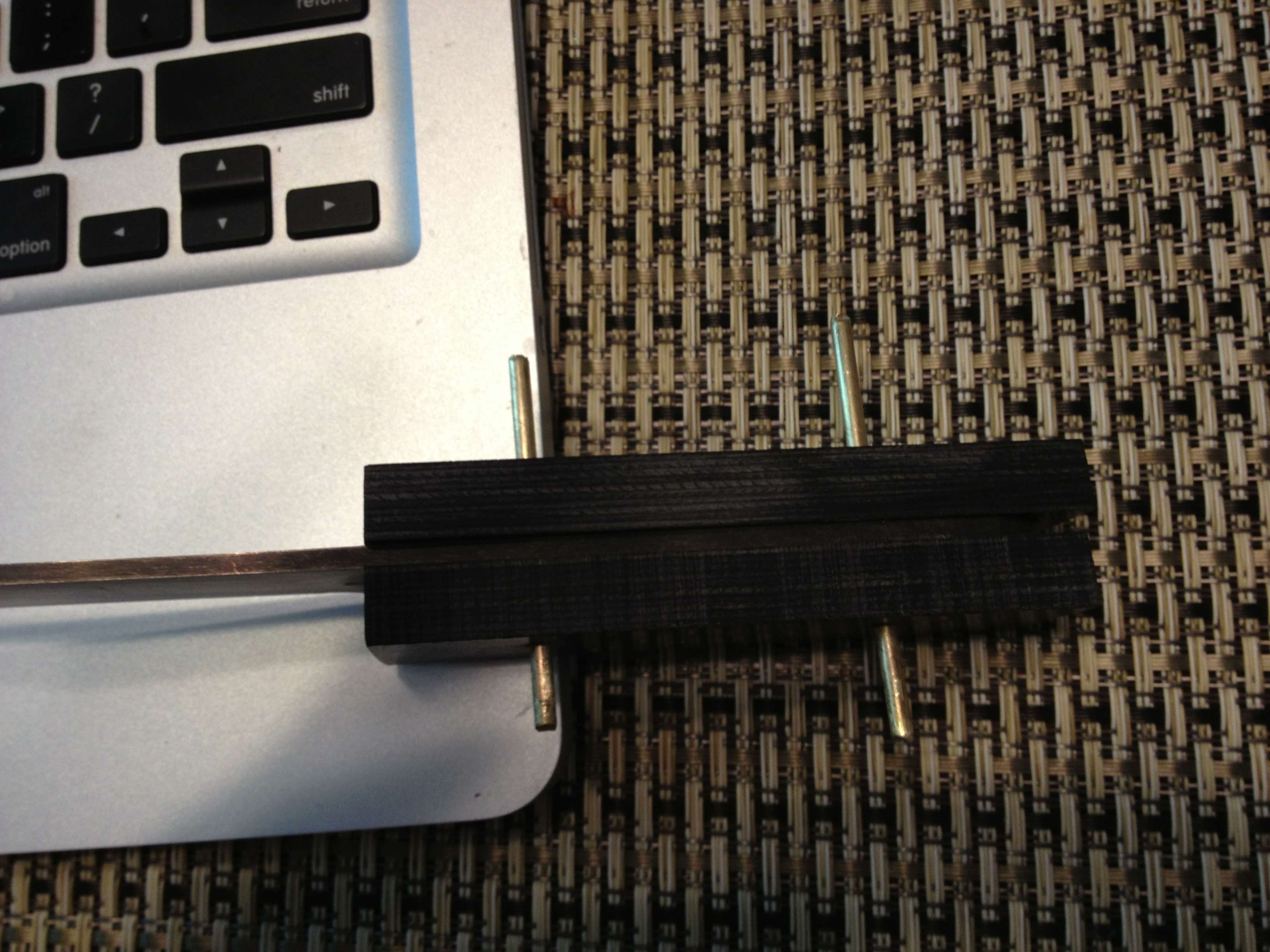
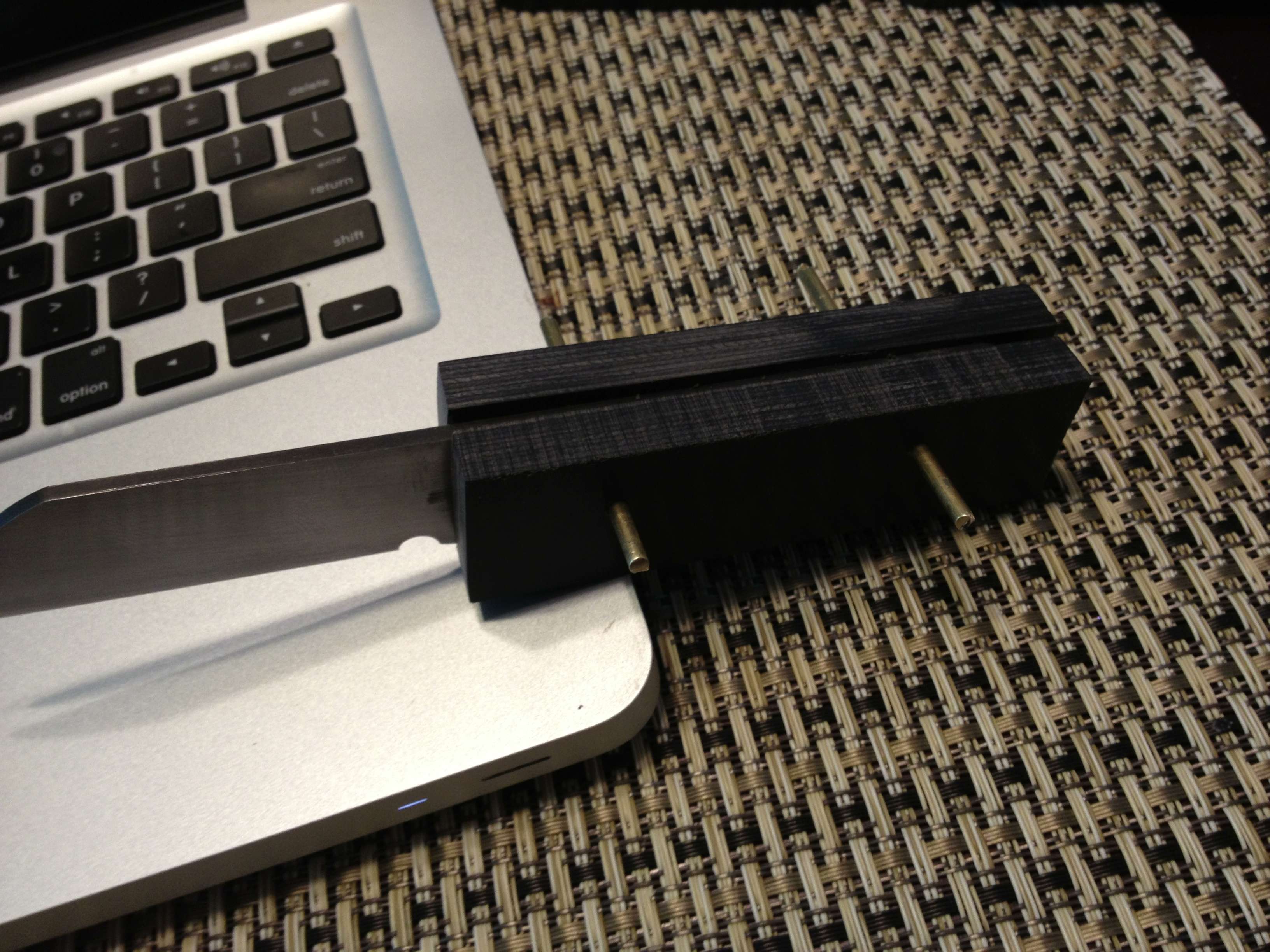
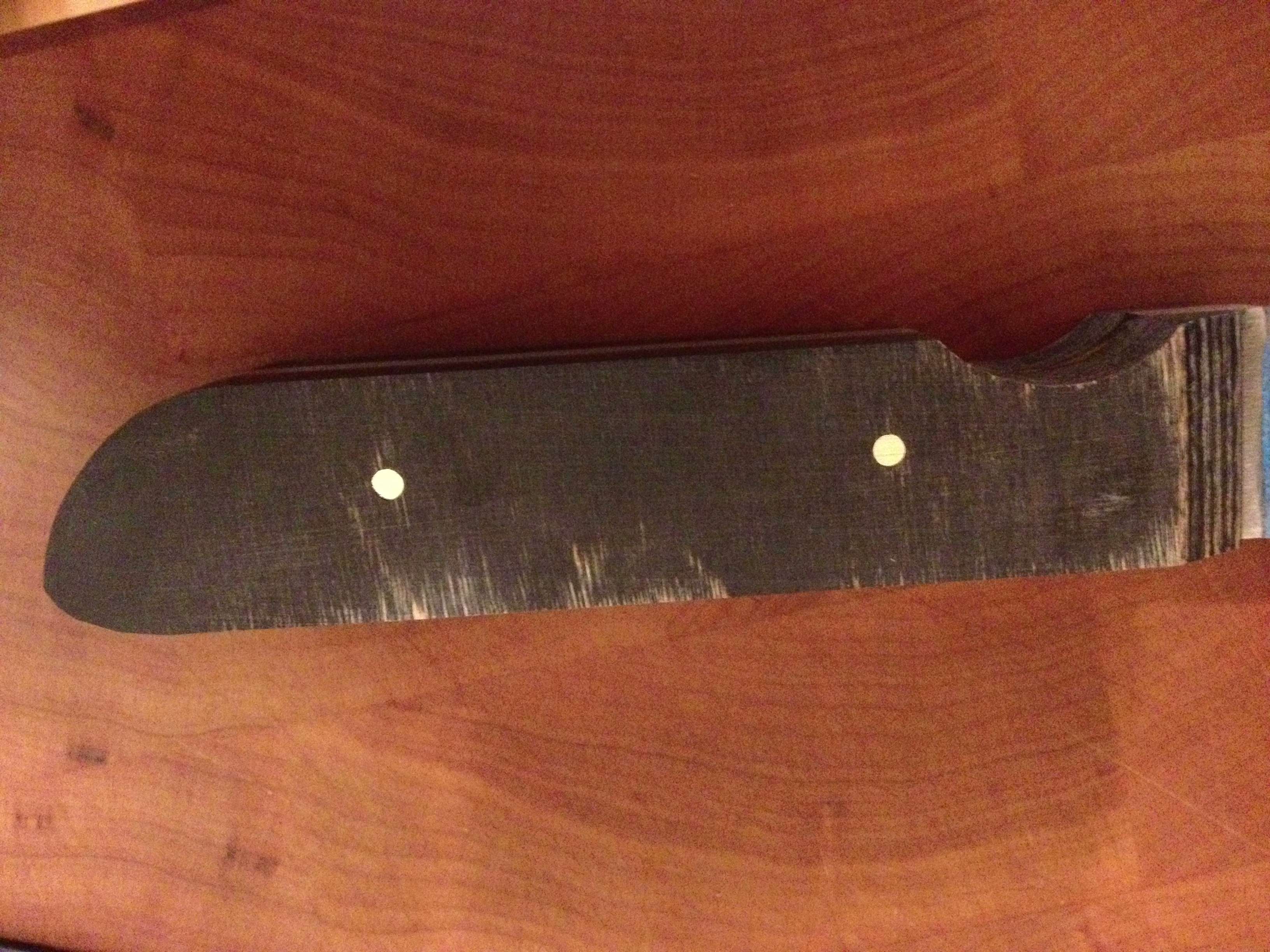
I had a little free time before work today so I figured I would start working on the handle of the wharncliffe. Here's where I left off...


wip29.jpg

and

wip28.jpg
 
Good deal. You have them glued or just pinned?
I usually go with just pinned until I have the scales about 90% there with the front and back edges 100% then I glue up... This also allows you to pin the scales together and ensure they are exactly flush front and rear...

Just remember... this is the point most new makers start to rush because they want to see that finished product... Take it slow and with the same attention to detail you have shown so far. I am sure you will, but hey, nothing wrong with a pep talk!

Looking good.
 
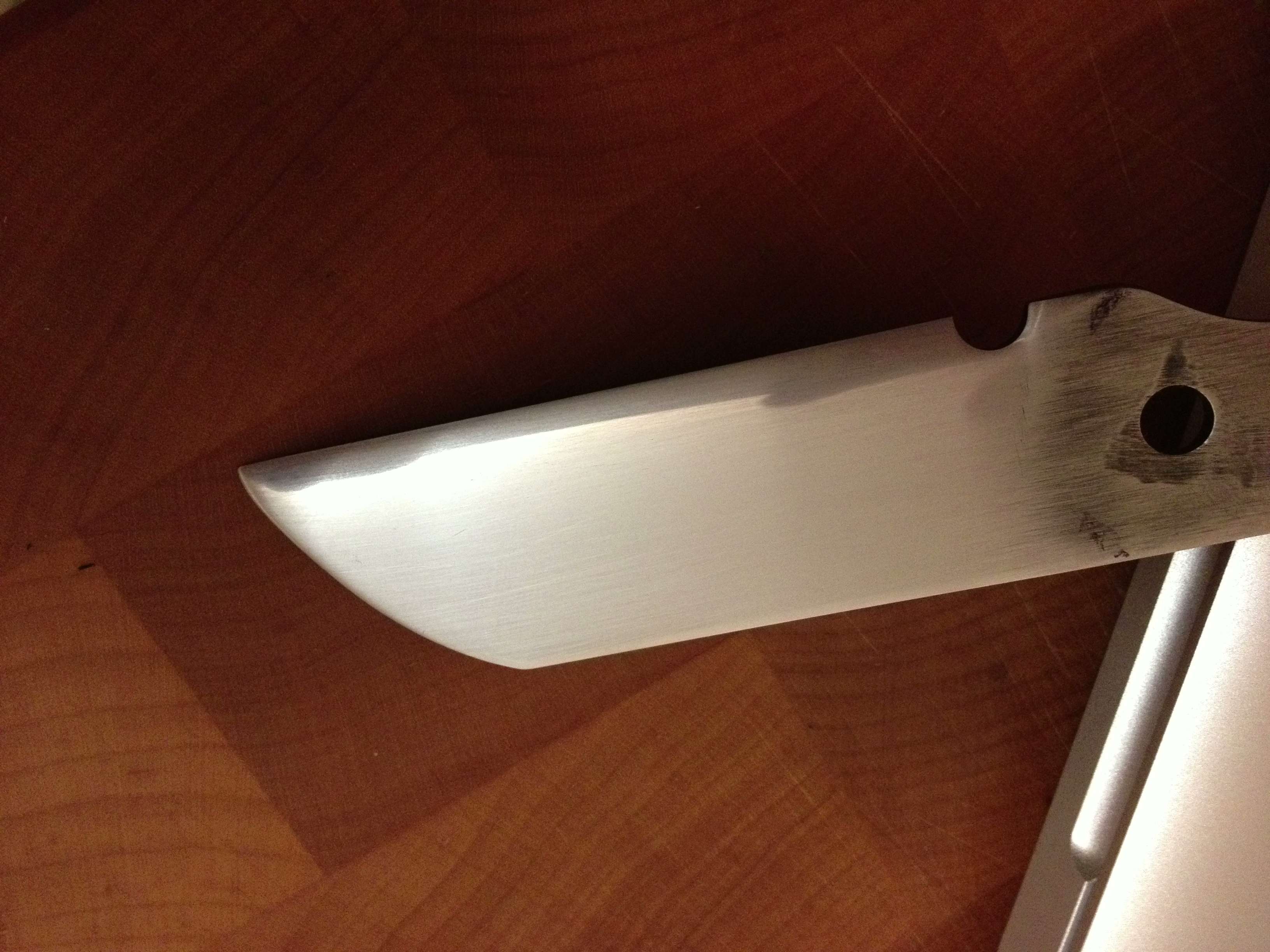
Well, the big 1/4" thick railroad spike of a knife has scales epoxy'd and waiting to cure. I figured I'd polish the blade of the wharncliffe up a bit before I glue up and finish the handles. Here's a quick pick of the wharncliffe at 600 grit.


v9m.JPG
 
Make sure you sand and buff the front of the scales to the shape and finish you want before you put them on the blade. You can't do that area after the glue-up.
 
Make sure you sand and buff the front of the scales to the shape and finish you want before you put them on the blade. You can't do that area after the glue-up.

Good advice Stacy, I shaped the fronts but did not sand them to the final grit, oops. I am using cheap black dymond wood, what type of finish/grit do you guys recommend?
 
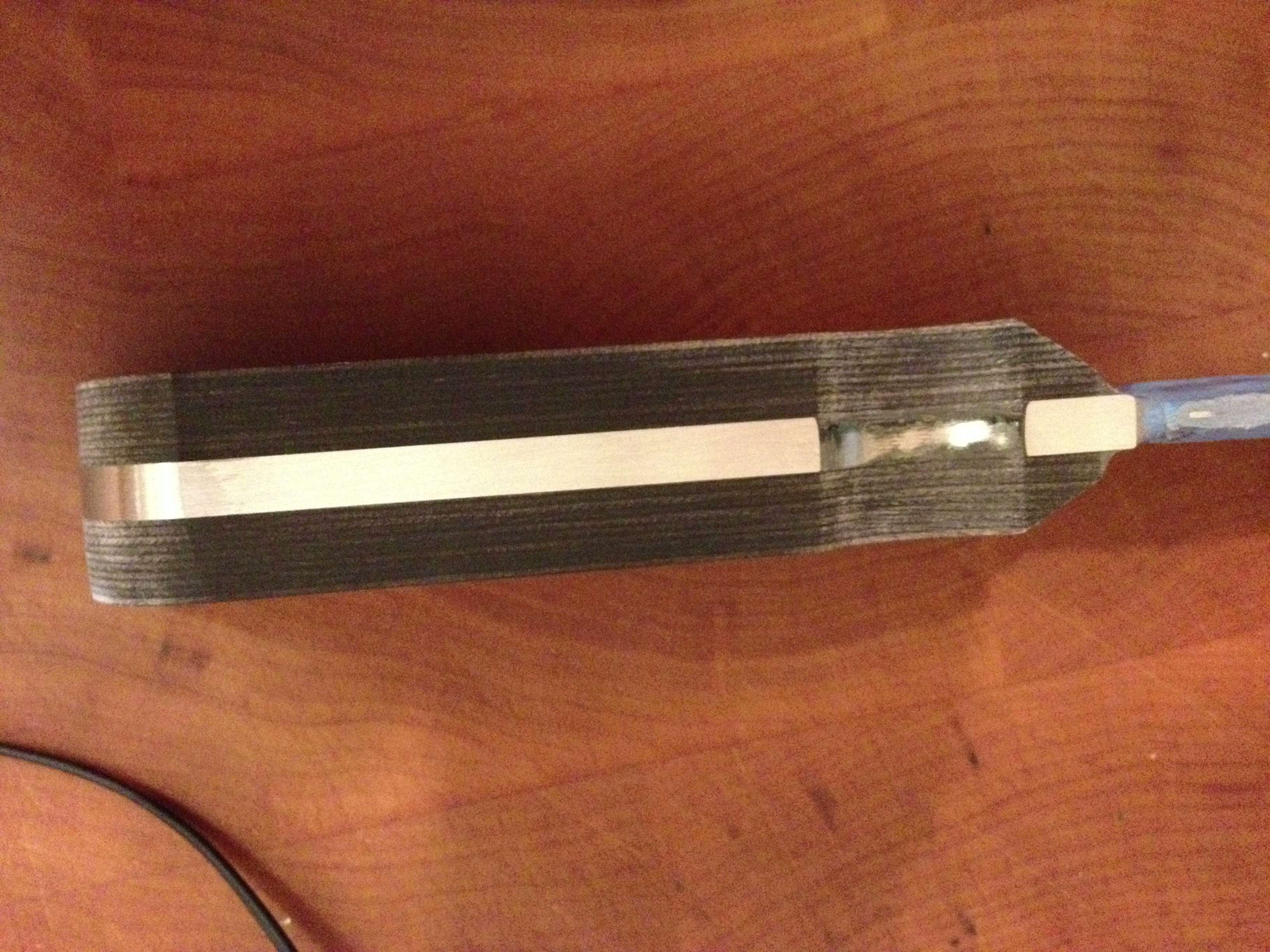
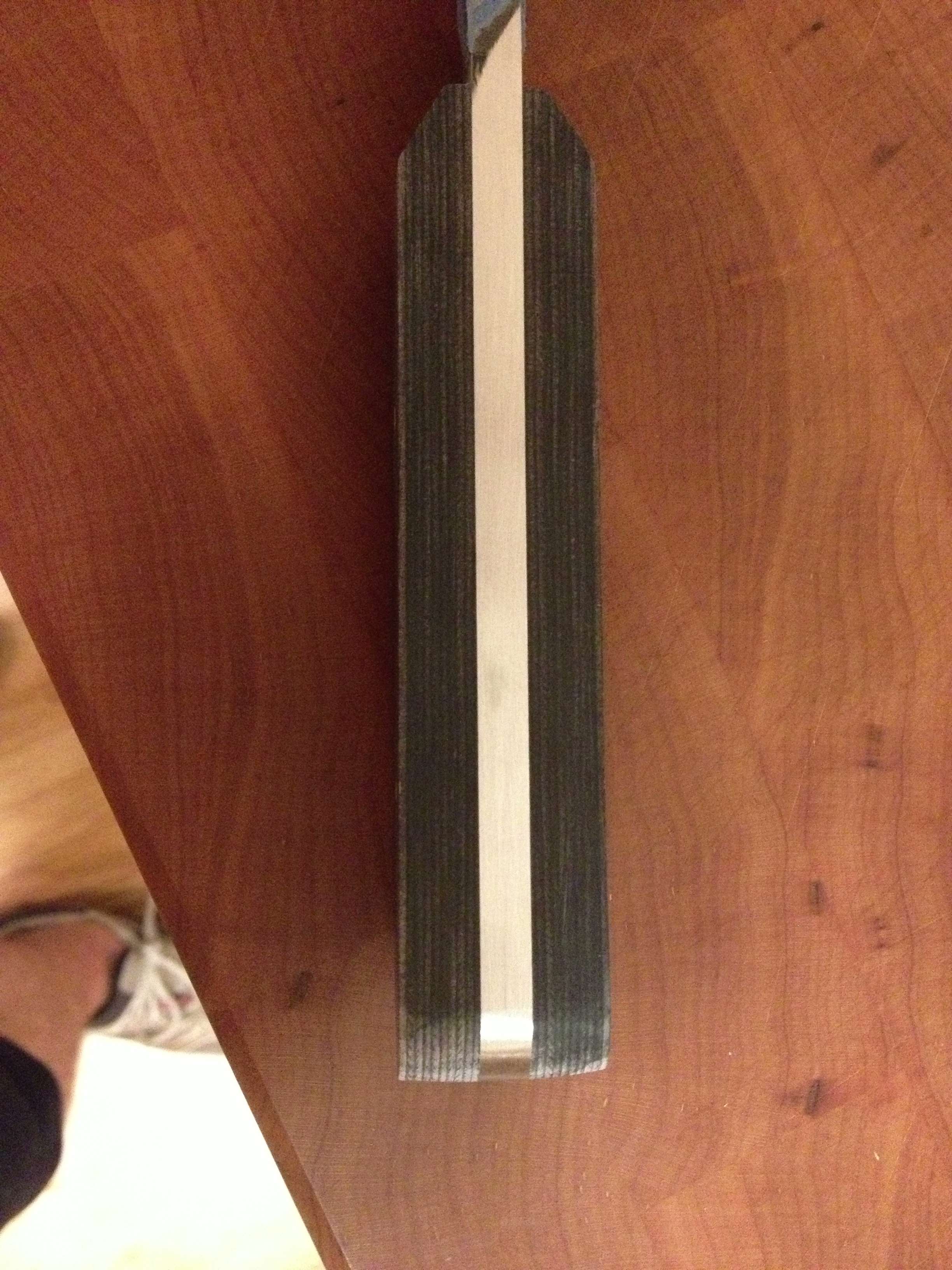
I spent some time with the old upside down belt sander and made some progress on the handle.


i563.jpg


sdvc.jpg


riee.jpg


Granted my experience with grinding is extremely limited, I find it very difficult to square up curves if that makes sense. For example, in one of the pics you can see where I had trouble balancing the grind on the but of the knife. Any tips or tricks to correct these problems?
 
Tip: it just takes practice to get the right feel and muscle memory.
 
Per your last question, if you don't have the ability to set your piece square with the sander, can you make a square cut with a bandsaw or another tool? I've used a bandsaw to make a very shallow notch or two that I knew would be square with the piece and then when grinding I can see how far to take down the material and when both sides are even.
 
Relic from another time or my first finished knife? All that is left is to put a final edge on this one and then it will be ready to be gifted to my Father.

**Teaser pic

i2f.jpg


I will post more detailed pictures once I completely finish the above blade. I love this new hobby of mine, it's the first hobby that allows me to create something rather than consume it. Thanks to everyone here for their input, advice and patience with my questions. I still have another blade that is near completion, I am confident that my third blade will break the ugly barrier with everything I have learned from the 2 knives featured in this thread.
 
Last edited:
It looks good, but you might want to round the scales more. You did a great job sanding the steel, so don't get impatient now.
 
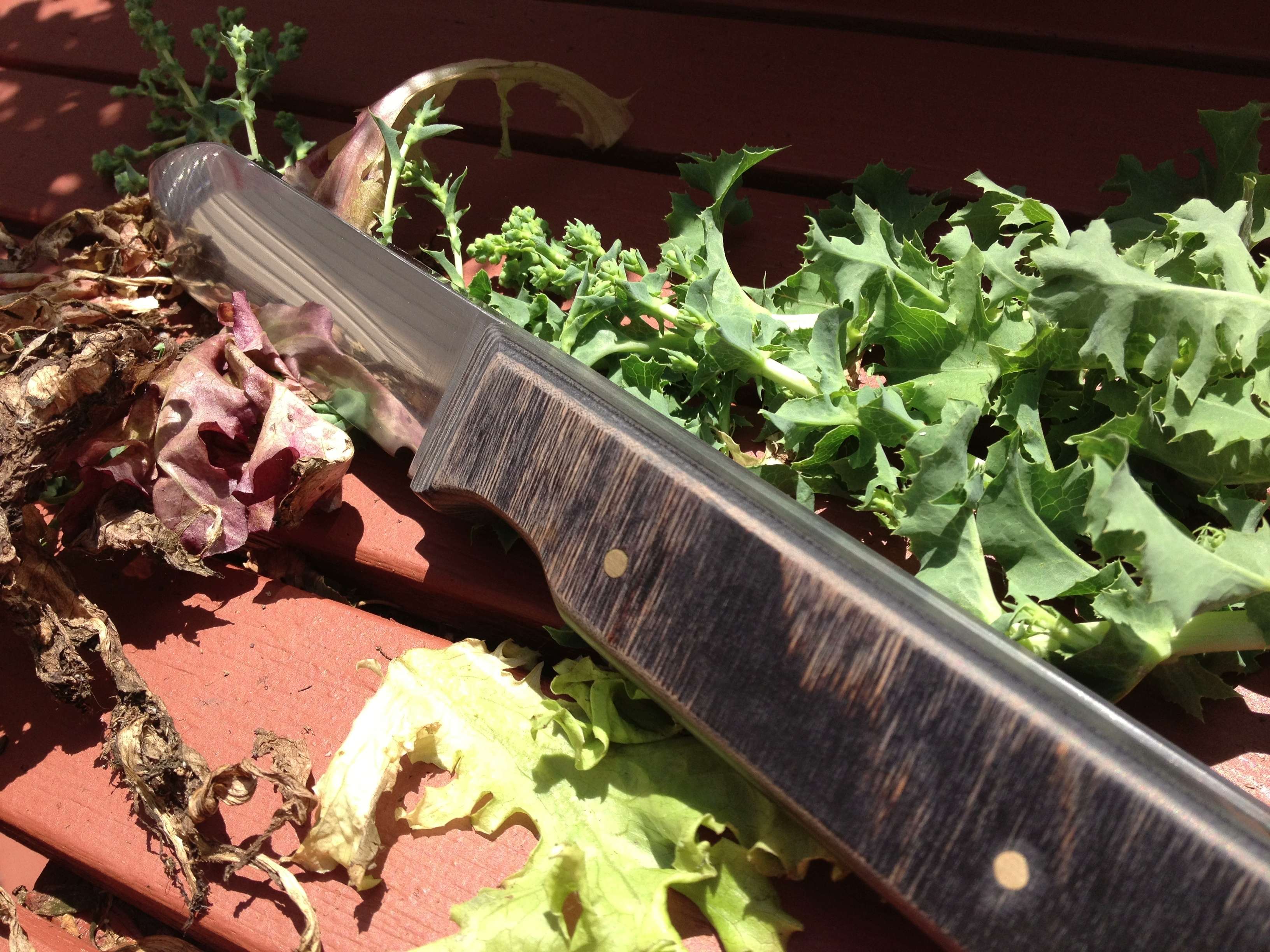
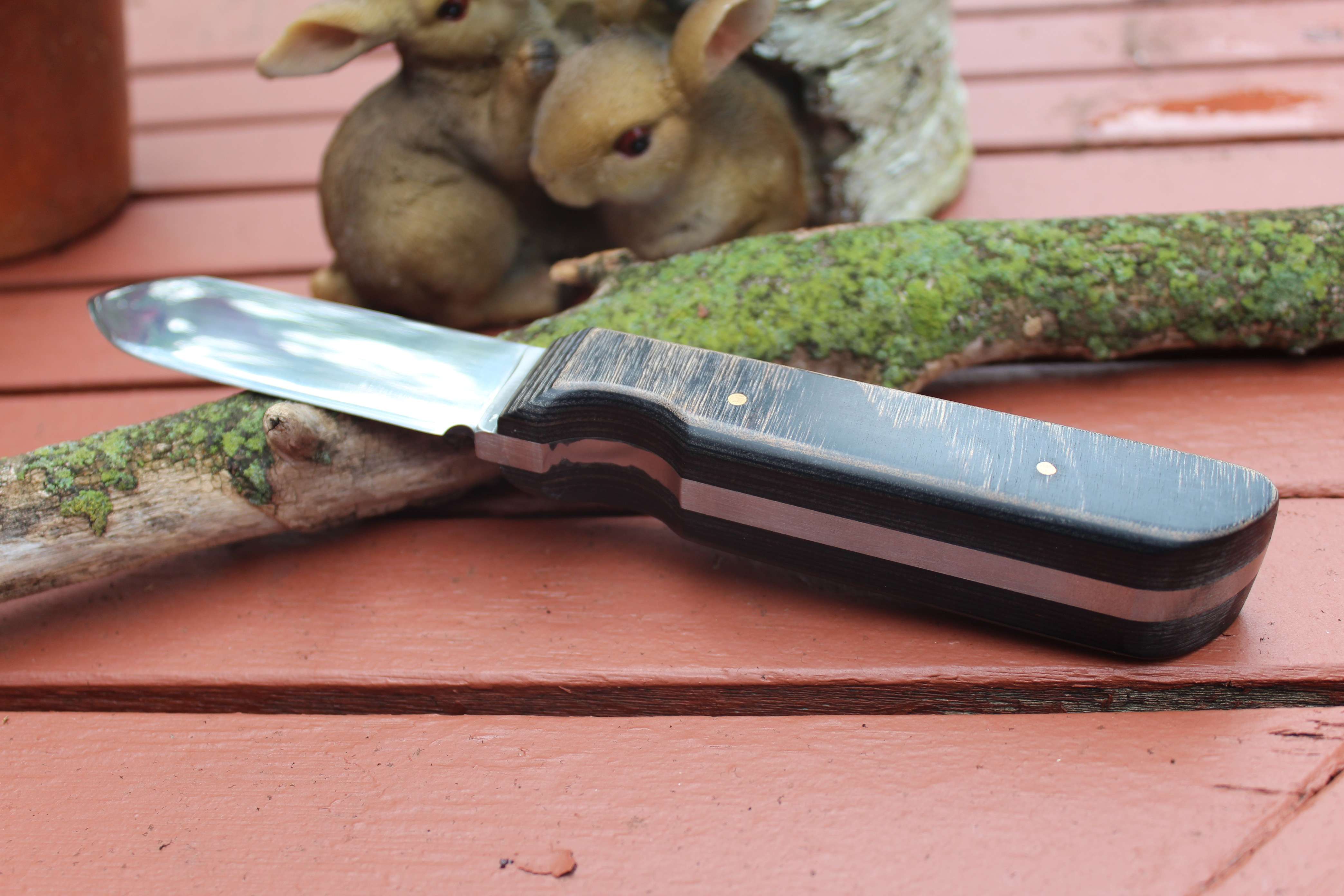
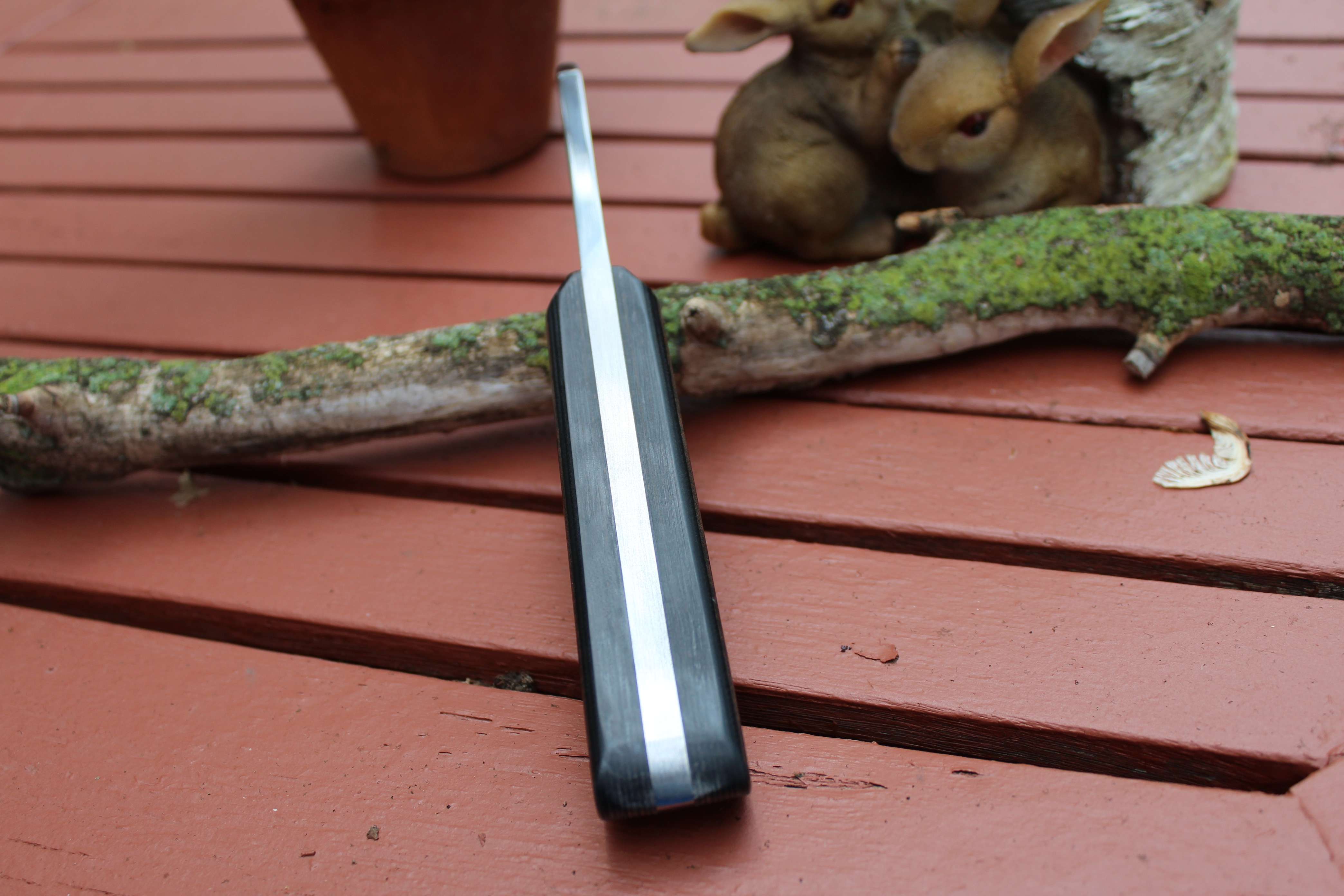
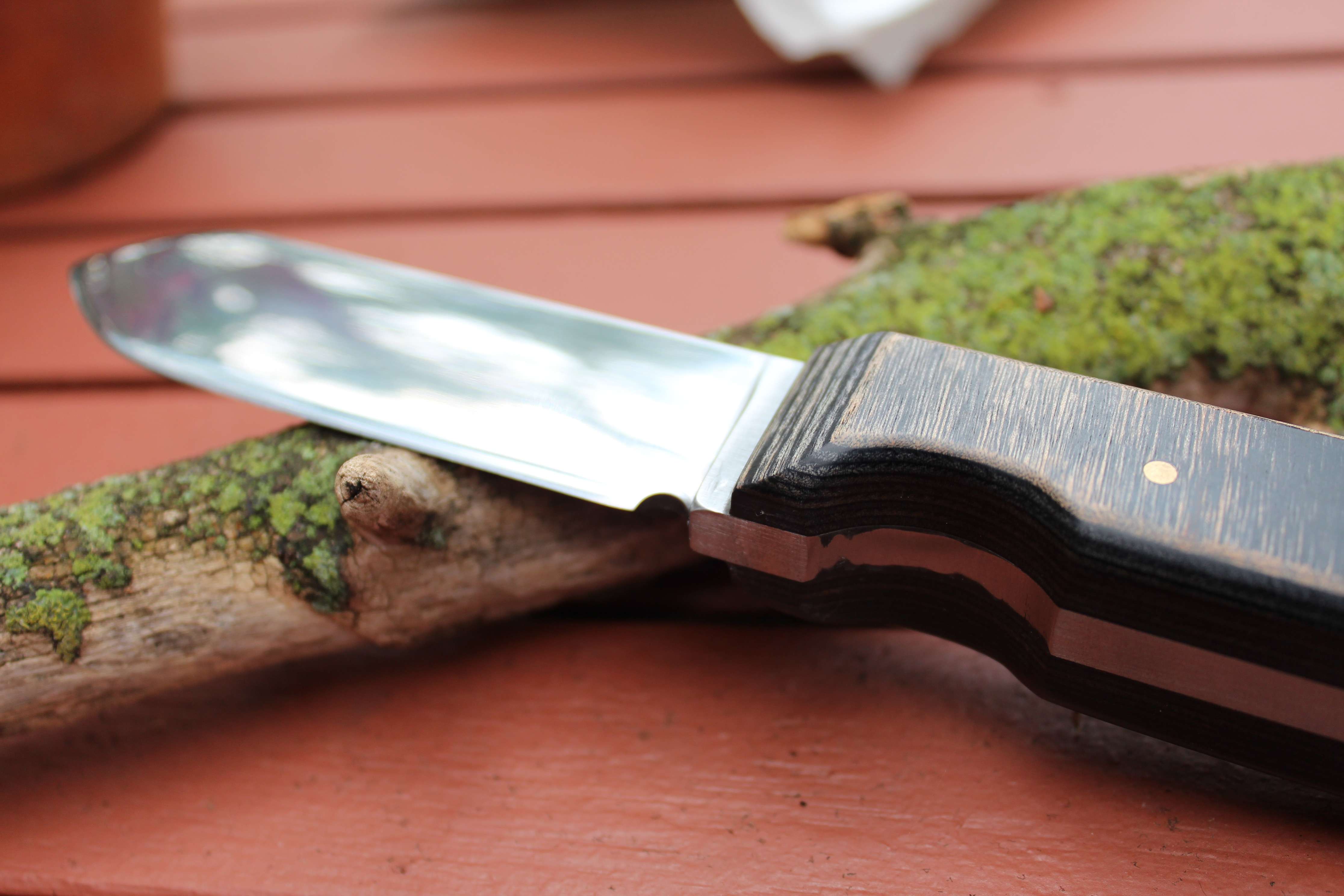
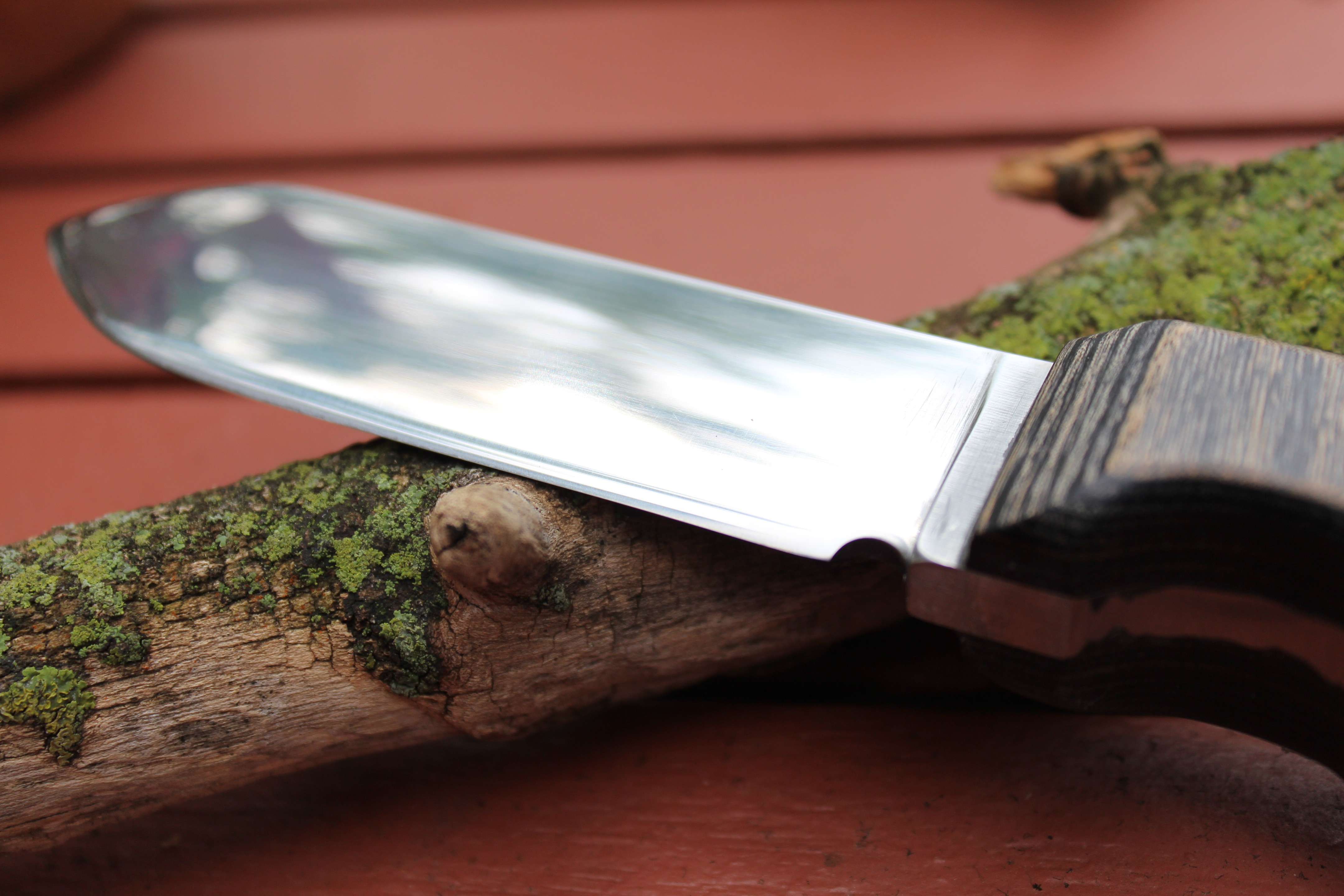
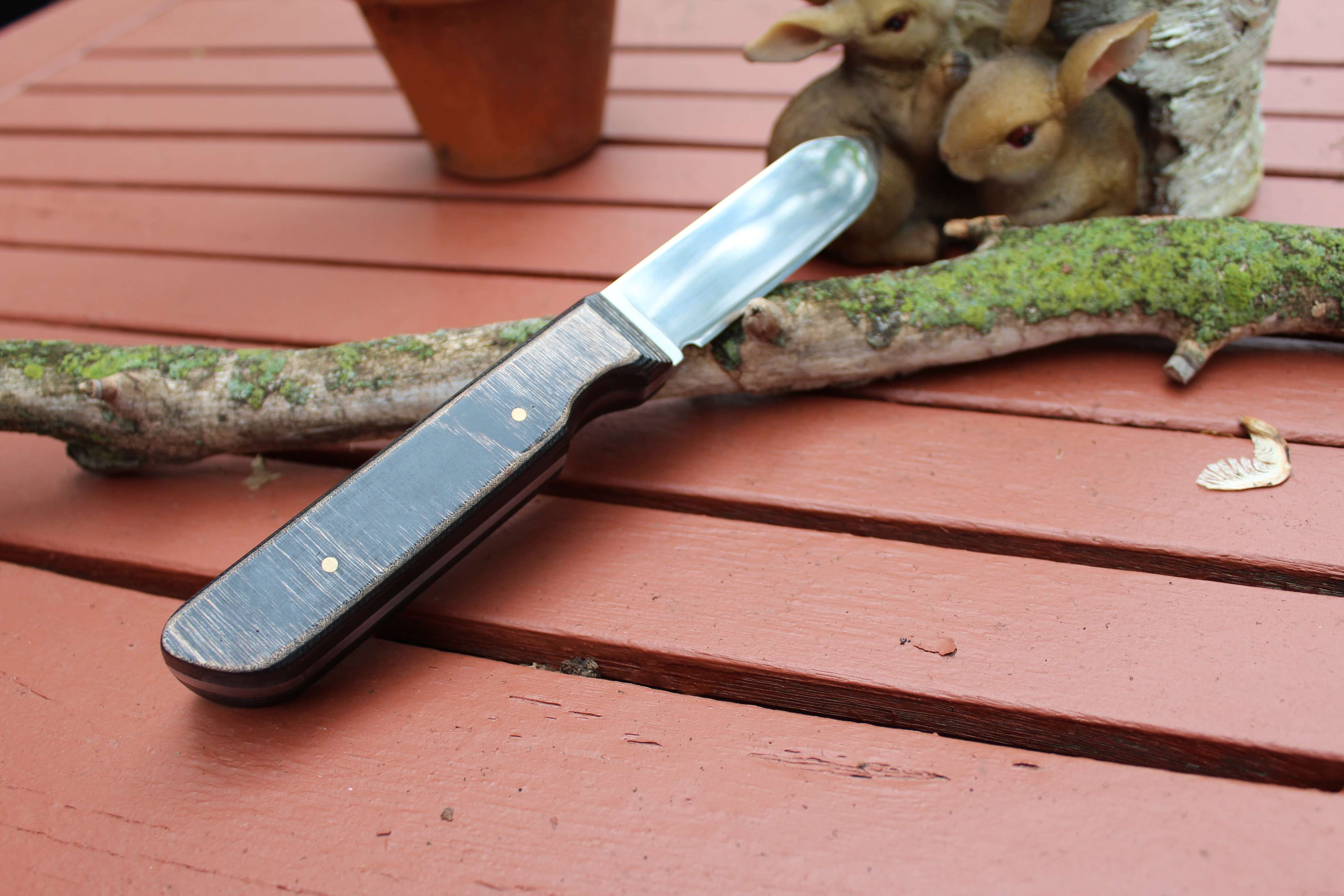
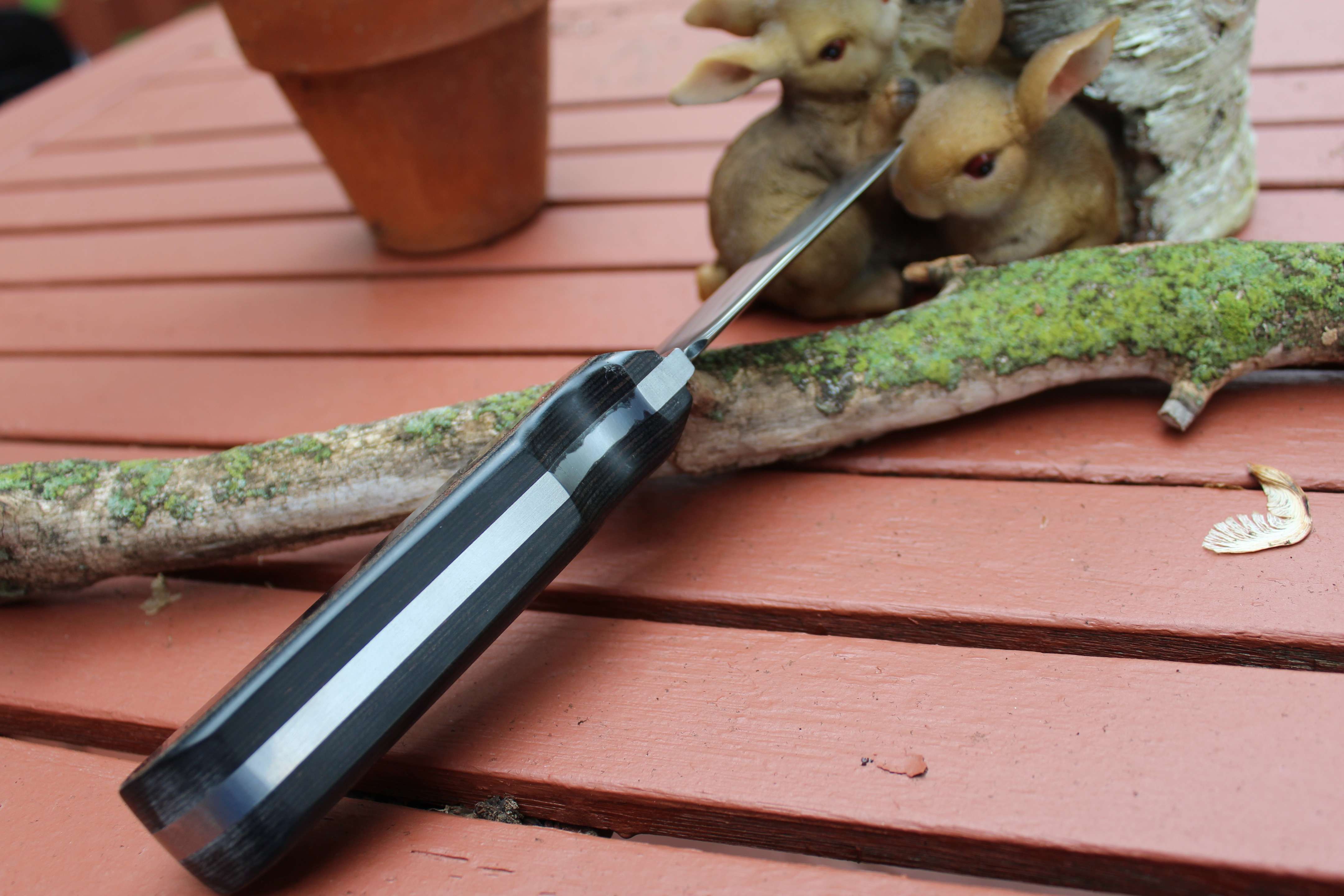
Alright, here's my first finished knife. Just a quick reminder that I've had absolutely no metal working experience and to be honest, very little craft experience other than stained glass. This knife is definitely an ugly design, largely in part due to my lack of experience in knives other than kitchen cutlery. Specifications are as follows...

Steel: O1 with a HT from Peter's at 59R/C
1/4" stock
Black Dymond Wood grips
Brass 1/8" pins
Blade Length is 3 7/8"
OAL is 8 3/4"

Currently I am having a hard time getting the blade sharp. I started sharpening after heat treating using a flat granite tile with a soft/spongy shelf liner and then sand paper clamped on top of that. I started with 80 grit and ground the two edges until they became one. I then progressed from 120, 220, 320, 500, 600, 800, 1000 and finally 2000 grit. I also stropped on felt and diamond spray loaded leather. The knife will not shave, cut paper nor does it feel really sharp if I run my fingers across the edge. What I think is keeping the knife from getting sharp is the extreme thickness behind the edge. Granted this is my first time sharpening a convex edge versus my typical flat bevels on my kitchen knives. Any suggestions on what I might try to get the knife sharper?

The blade was taken to 2000 grit but I did not take it high enough before HT, so there some deep scratches I was unable to get out. I finished the handle up to 600 grit, there are no sharp edges on the knife and it is very comfortable. My Pops has large handles so I purposely made the handle a bit bulky. There is still some epoxy in the finger guard that I was unable to get off. I am leaving it as it offers a weathered look just like the dymond wood. This will be the last knife I make out of 1/4" stock until I can rationalize spending the funds on a 2x72 belt grinder.

Obviously I am looking for your critiques and suggestions. I can tell you I learned an incredible amount from this first knife and I am really excited to start designing a brand new one that will definitely break the ugly barrier.

whjz.jpg


az1v.jpg

xcwj.jpg

oll0.jpg

fbxx.jpg

hva5.jpg

3em6.jpg


Thanks for everyone's help and once again please share your feedback.

Thanks,

Pete

 
Back
Top