paper sharpening wheels - when your time is important to you

Recovered some pictures from an old harddisk.
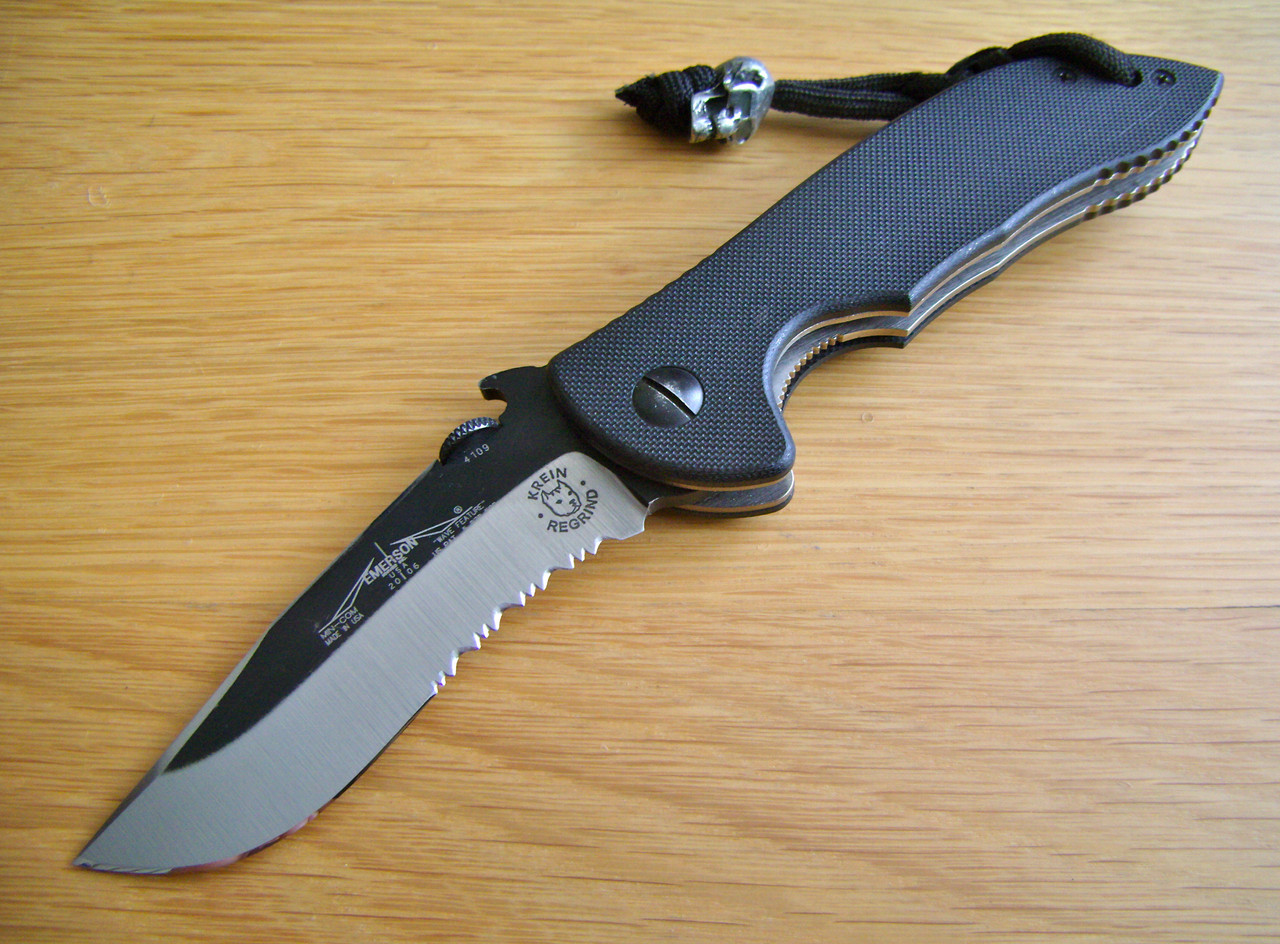
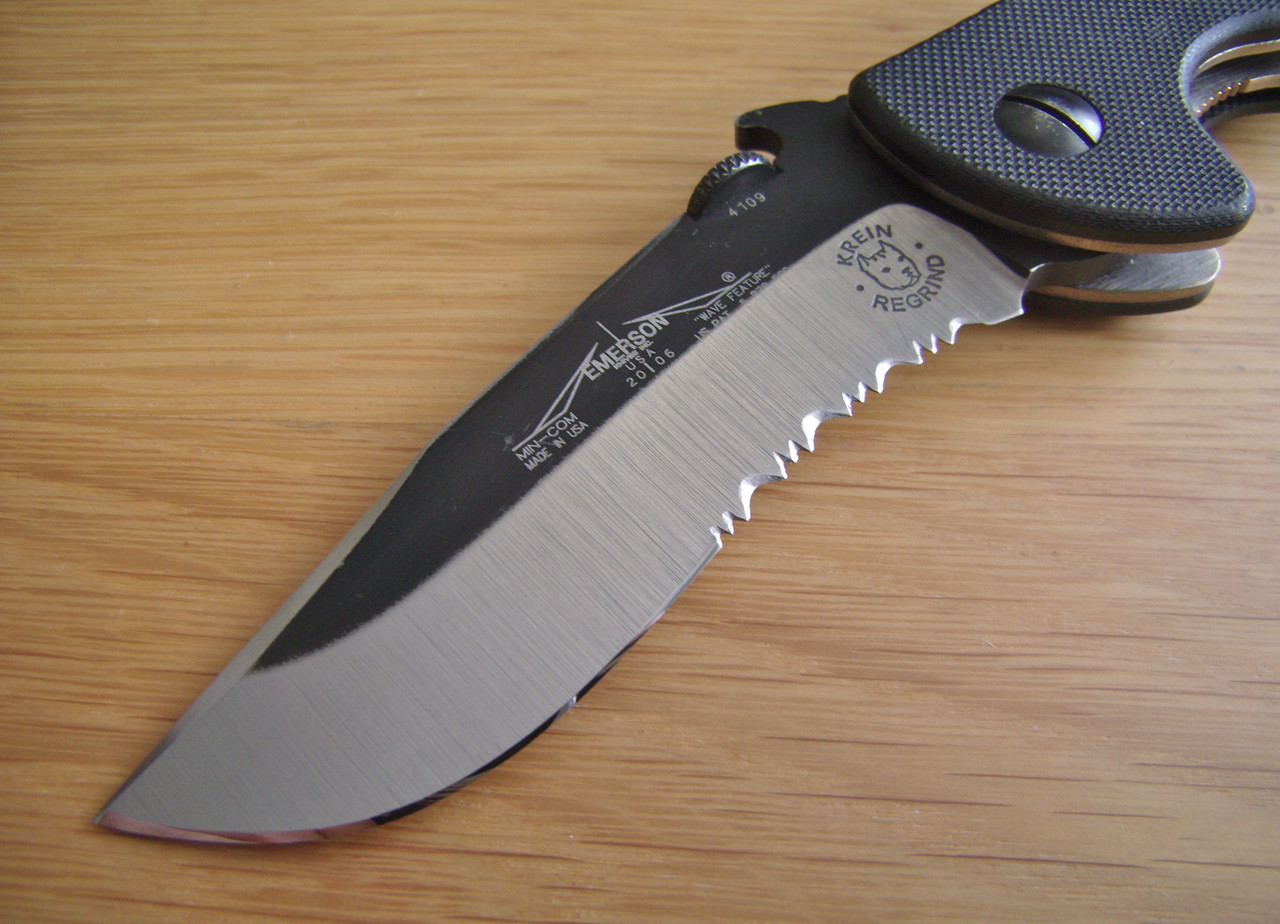
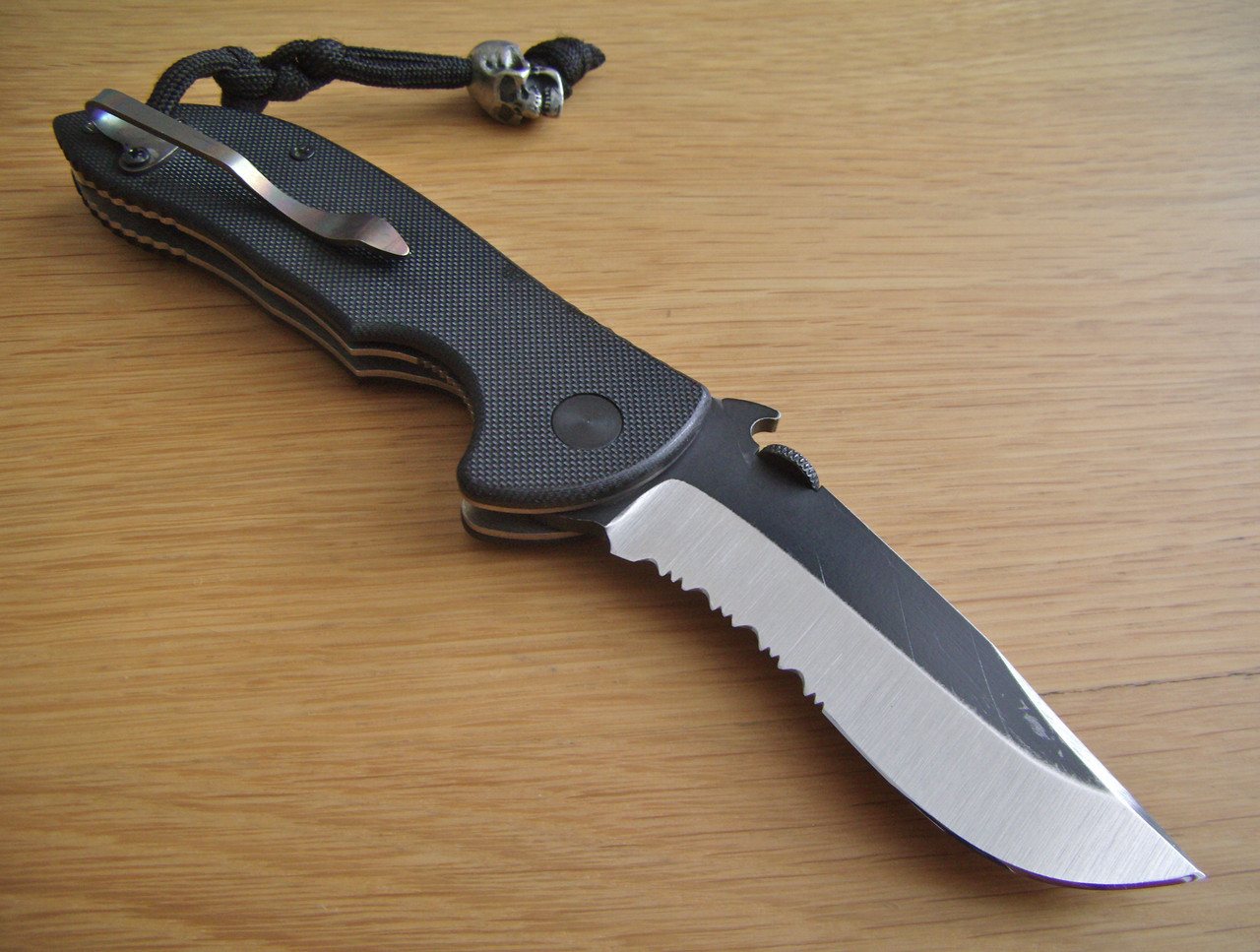
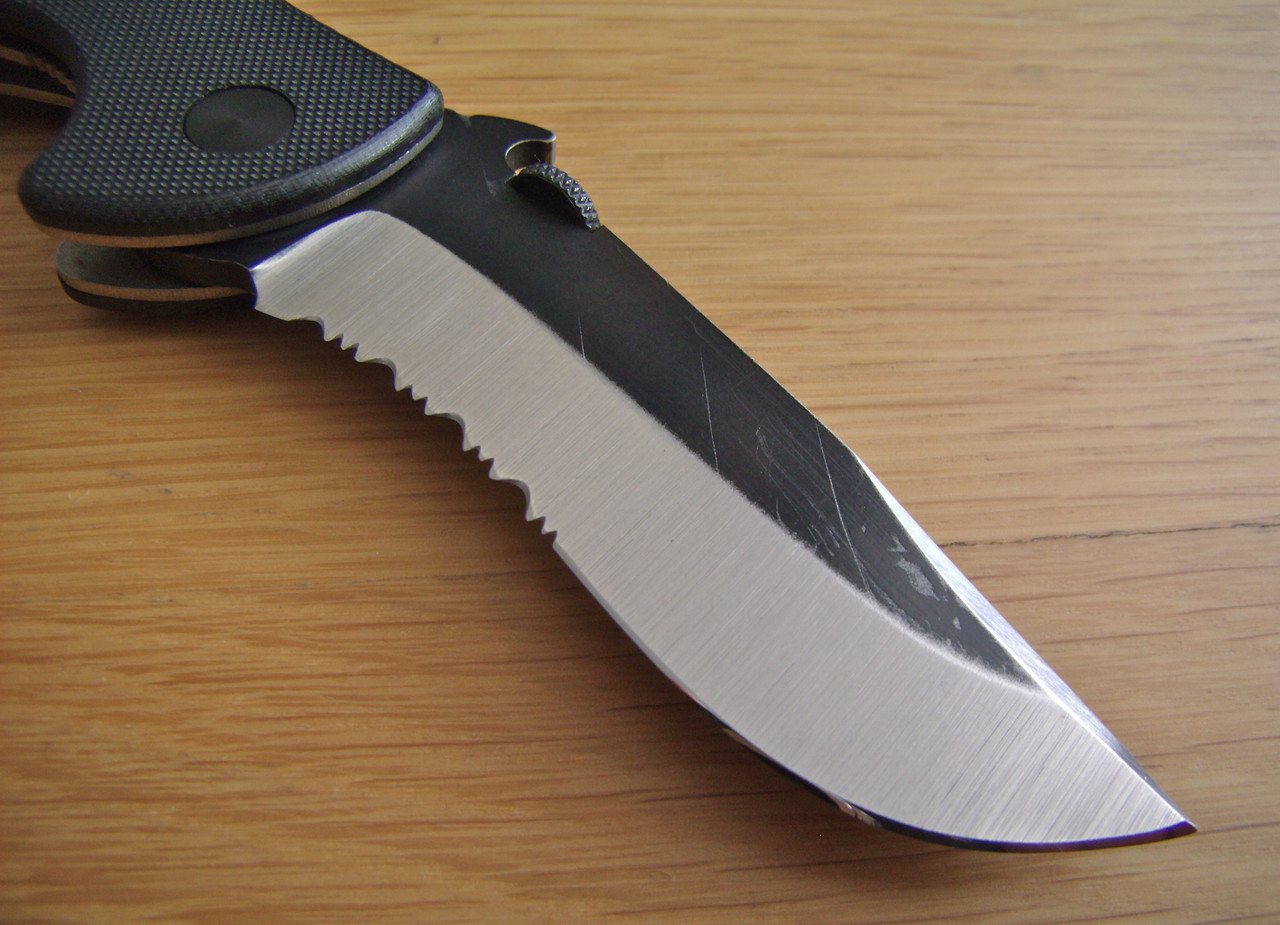
Several years ago i got sent these two user Emerson folders from neighboring country Belgium; a Commander model with a Krein regrind and a CQC7 model.
The owner was unable to get them sharp again with only his Sharpmaker, and the request was also to give the new edges a bit of bling.

As they came in:


After sharpening/polishing.


On the CQC7 i made the asymmetric bevel a bit wider to remove all different scratch patterns, and just touched up the existing mini-bevel on the other side.
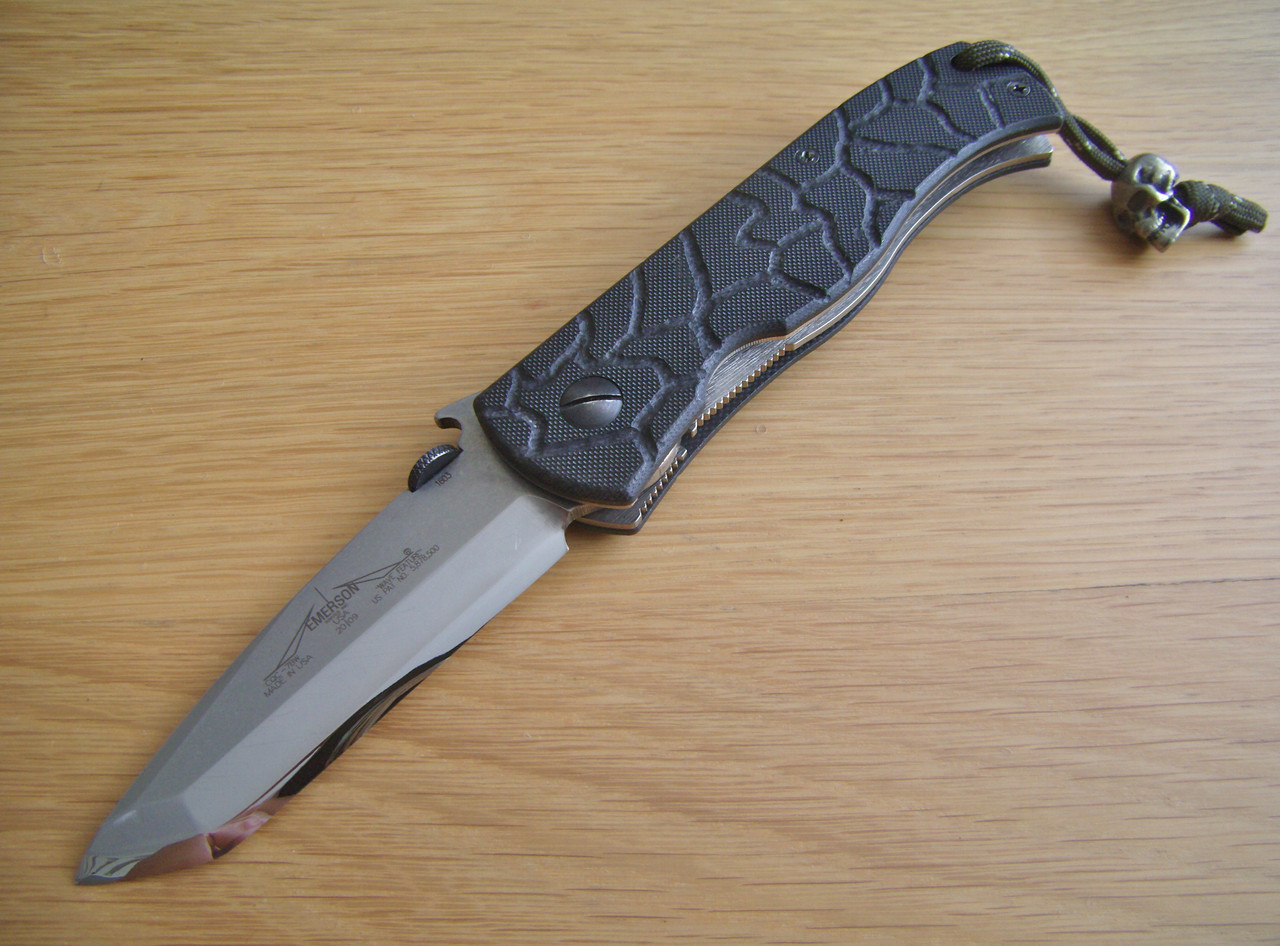
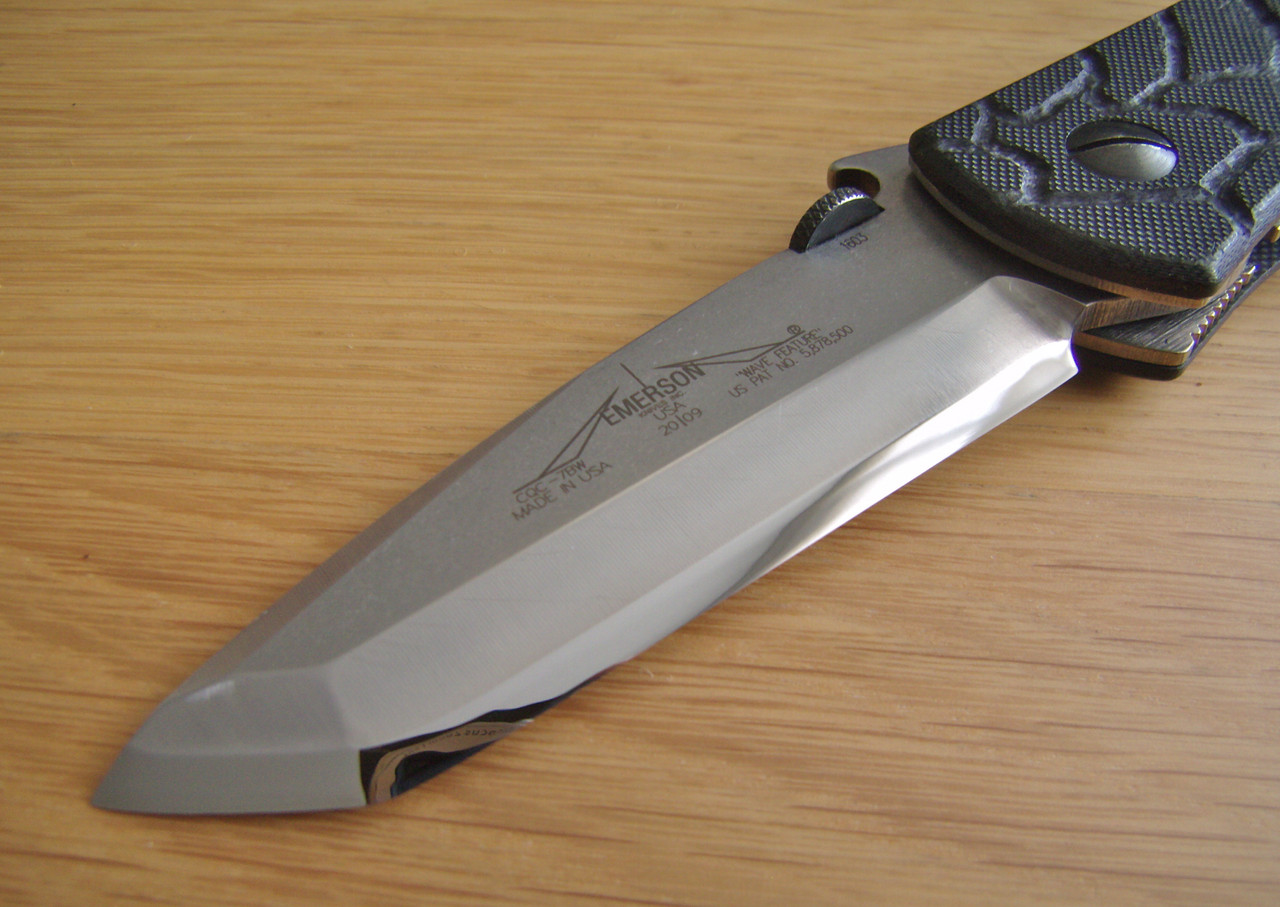
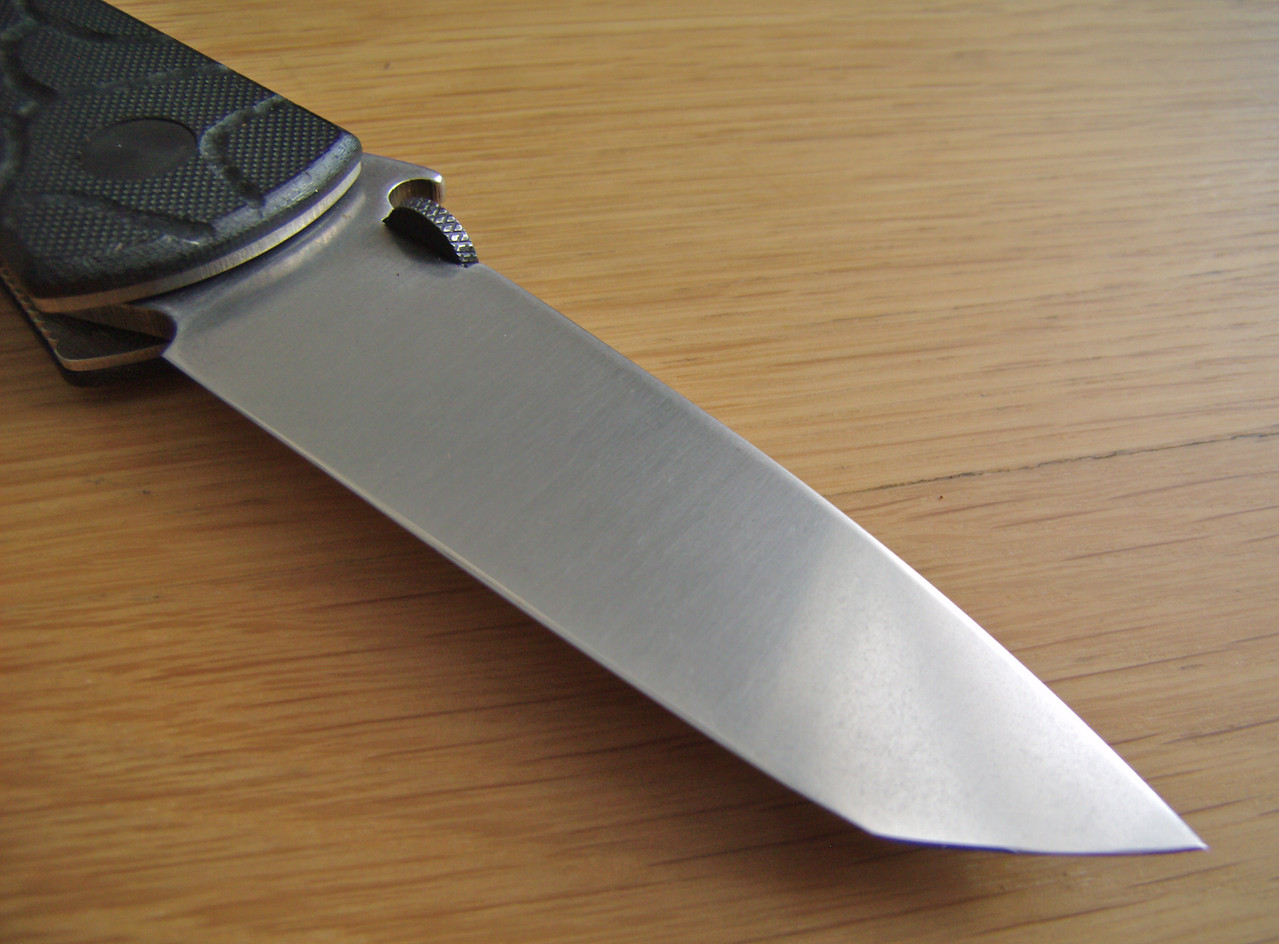


Both knives could now be easily touched up on the Sharpmaker again and the owner was happy, :-)
 
Recovered some pictures from an old harddisk.
Several years ago i got sent these two user Emerson folders from neighboring country Belgium; a Commander model with a Krein regrind and a CQC7 model.
The owner was unable to get them sharp again with only his Sharpmaker, and the request was also to give the new edges a bit of bling.

As they came in:


After sharpening/polishing.


On the CQC7 i made the asymmetric bevel a bit wider to remove all different scratch patterns, and just touched up the existing mini-bevel on the other side.


Both knives could now be easily touched up on the Sharpmaker again and the owner was happy, :-)
Beautiful work!
Are you using paper wheels to grind and polish? What percentage of the knives you work on do you do with the paper wheels?
I’m just curious…
 
Last edited:
Yes, i use Paper Wheels both for grinding & polishing.
For some time now with coarse diamond grits & wax for grinding and various diamond pastes & oil for polishing.

A rough estimate would be that 1/3 is done on Paper Wheels, 1/3 on my Tormek T7, and 1/3 is done by hand with diamond files, bench stones and wet & dry SiC paper.
Depends on the job as well as on my eyesight on that particular day.
 
Yes, i use Paper Wheels both for grinding & polishing.
For some time now with coarse diamond grits & wax for grinding and various diamond pastes & oil for polishing.

A rough estimate would be that 1/3 is done on Paper Wheels, 1/3 on my Tormek T7, and 1/3 is done by hand with diamond files, bench stones and wet & dry SiC paper.
Depends on the job as well as on my eyesight on that particular day.
I use controlled angle sharpening...
I haven't been using my paper wheels much as I never really took the time to make them true. Consequently, after measuring the wheel is not hitting the bevel in the right spot as the wheel isn't perfectly round. Then, I have to fiddle. It's hard to make anything repeatable because of that. I am on a crusade to true them.

Do use wax, oil or dried grease on your honing wheels?

I did pick up some temperature sensitive paint. If I pull the knife slowly it gets hot very quickly and will change the paint. Vadim stated a pull of 10cm per second onn a full speed buffer or 5cm a second for 1/2 speed buffers will avoid overheating. My results seem to be similar. I wonder about the very apex though? At .4 microns or less I wonder how much faster that apex reaches 300 degrees?
The good news, you've been doing this a while and seem satisfied with your results.

I'm guessing you don't do toothy grinds on the paper wheels?
 
Answering took some time as i'm currently trying to recover from a 6th eye surgery, and my eyesight is still quite hazy.

Truing your Paper Wheels is indeed very important, as without it your results will always be disappointing.
And i use American made Paper Wheels on a European slow-speed grinder (with different size axles), so i had an extra problem.
But in the end i found a rather simple solution (a few layers of wood glue on the inside of the central hole)

On my Wheels that use various diamond compounds i only use oil.
For several years now my oil of choice is 5 weight Nano-Oil, best i have found so far.

Before i started using Paper Wheels in 2009 i already had a fairly extensive background in hand sharpening on bench stones & wet & dry SiC paper, as well as working with a Tormek, so when these Paper Wheels came along i also had my doubts about overheated edges.

Although i was the one who put Vadim on those Tempilsticks, i use a different method to check for possibly overheated edges:

1) Sharpen the edge, 2) deburr the edge, 3) test (reverse-) hairwhitting ability in several spots on one or more chest hairs, 4) slice cut a test block using the entire edge with appropriate force, then repeat step 3.
If the result is the same there is no overheated apex.

I actually do quite a lot of toothy edges on the Paper Wheels, as it is A) very fast, and B) often by far the best choice for the majority of knives brought in.

Polished edges with their really dark black values can look quite good in pictures, but i reserve these edge types mostly for ceramic knives (mandatory imo), certain specialty steels & purposes, as well as collector knives for which the owner has no problem paying my ridiculous fee ;-)
 
Thank you for your reply. I understand the vision thing, I lost the central vision in my right eye several years ago. Hope that this last surgery is successful and your last.
I’m a controlled angle guy but am attempting to embrace freehand work on the paper wheels. So far, stropping only, I am having meh results getting them hair splitting. Most coming out around 125 on the Bess. Do you continue to work the apex to increase sharpness? Not sure what repeated passes on the wheel does to the steel? Could it “work harden” the apex?
 
If the lost central vision in your right is is due to macular degeneration look into DMSO, there is a chance this will partially or even completely restore it.
This natural fluid derived from wood pulp can be beneficial for many (eye-) ailments.
I have a CRVO in my right eye as a complication from surgery, which my eye surgeon said is completely incurable.
Yet, with oral DMSO use i went from literally 0 % vision to currently about 25 % vision within ~3 months, so i will definitely continue on this path to find out if i can regain even more.

On my Tormek T7 i do both controlled angle and free hand sharpening (if my vision allows it on that day)

With sharpening on Paper Wheels; when i'm just after a good sharp toothy edge, i mostly use just 2 Wheels: a gritted Wheel and a deburring Wheel (= a minimum of passes)
But when i'm after a more polished edge type i sometimes use multiple Wheels in succession (= many more passes)
I do not own a Bess tester, instead i test keenness on my own chest hair.

I haven't noticed any work hardening, as this would be very detrimental to edge longevity in hardened steels, which is one of my main goals when sharpening/polishing, often for others.
I know this also because of the feedback from a variety of users for whom i sharpen, some of which have been loyal customers for over two decades.
Especially the pro-Chefs would simply stop being return customers if their edges failed prematurely, instead they keep coming back so i must be doing something right.
Key in all this imo is listening carefully to their requirements, and trying to meet these as best as you can.

Examples of my edges complete with user feedback can be found both in this thread and others.

PS: where would this grape slicing be on the BESS scale ?
(I did the edge on Paper Wheels, the pro-Chef owner of the knife did the slicing)

www.youtube.com/watch?app=desktop&v=ID9KZW0d9ss&ebc=ANyPxKoyX72SsCjqu911cdH_dCkEw68tPNE8oUCSzdcOran-LlZb1WqXiuKv1H4EA5q0nOhue4ImgsX__7quwMf7REhAJl26rg
 
If the lost central vision in your right is is due to macular degeneration look into DMSO, there is a chance this will partially or even completely restore it.
This natural fluid derived from wood pulp can be beneficial for many (eye-) ailments.
I have a CRVO in my right eye as a complication from surgery, which my eye surgeon said is completely incurable.
Yet, with oral DMSO use i went from literally 0 % vision to currently about 25 % vision within ~3 months, so i will definitely continue on this path to find out if i can regain even more.

On my Tormek T7 i do both controlled angle and free hand sharpening (if my vision allows it on that day)

With sharpening on Paper Wheels; when i'm just after a good sharp toothy edge, i mostly use just 2 Wheels: a gritted Wheel and a deburring Wheel (= a minimum of passes)
But when i'm after a more polished edge type i sometimes use multiple Wheels in succession (= many more passes)
I do not own a Bess tester, instead i test keenness on my own chest hair.

I haven't noticed any work hardening, as this would be very detrimental to edge longevity in hardened steels, which is one of my main goals when sharpening/polishing, often for others.
I know this also because of the feedback from a variety of users for whom i sharpen, some of which have been loyal customers for over two decades.
Especially the pro-Chefs would simply stop being return customers if their edges failed prematurely, instead they keep coming back so i must be doing something right.
Key in all this imo is listening carefully to their requirements, and trying to meet these as best as you can.

Examples of my edges complete with user feedback can be found both in this thread and others.

PS: where would this grape slicing be on the BESS scale ?
(I did the edge on Paper Wheels, the pro-Chef owner of the knife did the slicing)

www.youtube.com/watch?app=desktop&v=ID9KZW0d9ss&ebc=ANyPxKoyX72SsCjqu911cdH_dCkEw68tPNE8oUCSzdcOran-LlZb1WqXiuKv1H4EA5q0nOhue4ImgsX__7quwMf7REhAJl26rg
I will look into DMSO as they definitely add vision in that eye seems to be fading away. Not macular degeneration, a hemorrhage in the optic nerve once upon a time. Sis has macular degeneration though, I’ll pass this on to her as well, thanks.

Not sure about the grape, but I can take a stab at the hair… a hair off your head that you can peel a piece off of is probably under 70 on the Bess. When the apex is thin enough it slips between the hair follicles. I’ll look in “Knife Deburring” to make sure but, Vadim stated the apex needed to be .30 of a micron thick to achieve that. There are different degrees of hair splitting though… here’s the chart: http://knifegrinders.com.au/Manuals/Sharpness_Chart.pdf

I will keep messing with those wheels as they definitely add value to my process at times.
Thanks
Al
 
Here's a Spyderco PM2 in S110V steel i did a few years ago.
The new edge was done on a Paper Wheel with 15 micron diamond compound, and then refined with 6.0 micron, 3.0 micron, and 1.0 micron diamond compound, all on dedicated Paper Wheels.

The apex is keen enough to whittle several curls in a row on one of my chest hairs while holding the hair at the root end only, what i call reverse hair whittling.
No hair scales to slip between, and the apex needs to be more keen than for normal hair whittling.
Where would this be on the Bess scale ?


No idea on the bess score there... guessing under 40. I've had edges in the 30 range before and the hair pops apart when you touch it. Never tried it against the follicles...
Stunning bevels though...
I considered additional paper wheels. I decided I need to become proficient with the two I have.
Do you have multiple buffers or do you change the wheels?
 
I have only one slower-speed Creusen brand bench grinder on which i change the different Paper Wheels.
Just as anyone else i started out with the standard set of two, and later i bought 4 naked Wheels which i charged with diamond paste & oil.

The trick with reverse hair whittling is to see how far from the point of holding the apex will still catch & whittle the hair, as the further away the keener the apex is.
I do this test before & after i slice my test block using the entire edge and a certain force: less force with quality kitchen knives with a thin apex in the 20-22,5 degrees inclusive range, and noticeably more force with folders & fixed blades with edges in 25-30 degrees inclusive range.
This double test makes sure that there is no sharp burr involved, and that the new apex itself is truly keen.
Cheap yet effective.
 
I have only one slower-speed Creusen brand bench grinder on which i change the different Paper Wheels.
Just as anyone else i started out with the standard set of two, and later i bought 4 naked Wheels which i charged with diamond paste & oil.

The trick with reverse hair whittling is to see how far from the point of holding the apex will still catch & whittle the hair, as the further away the keener the apex is.
I do this test before & after i slice my test block using the entire edge and a certain force: less force with quality kitchen knives with a thin apex in the 20-22,5 degrees inclusive range, and noticeably more force with folders & fixed blades with edges in 25-30 degrees inclusive range.
This double test makes sure that there is no sharp burr involved, and that the new apex itself is truly keen.
Cheap yet effective.
Are you using the test block to de burr?
 
No, that would leave a subpar edge, or at least not one as keen as the PM2 shown above.
Imo to get the keenest of edges the burr needs to be carefully abraded away as completely as possible, not simply torn off.

This test shows that all burr remnants are gone, and it really is the new apex itself that is doing the cutting.
Plus it also shows that there are no overheated apex sections, as these would immediately fold or crumble while slicing the test block.
 
No, that would leave a subpar edge, or at least not one as keen as the PM2 shown above.
Imo to get the keenest of edges the burr needs to be carefully abraded away as completely as possible, not simply torn off.

This test shows that all burr remnants are gone, and it really is the new apex itself that is doing the cutting.
Plus it also shows that there are no overheated apex sections, as these would immediately fold or crumble while slicing the test block.
Ahhh... I didn't think you would be attempting burr removal that way. I ordered a couple test pens when I got into sharpening. It's a soft plastic you run along the apex to check for consistency or missed chips. Don't use them much any more as by the time I have the burr removed the rest of the edge is good to go.
 
Back
Top