Another quick hike on Monday and another poisonous plant to add to the collection.
This is Jack-in-the-Pulpit, possibly Arisaema triphyllum although, apparently, there is some disagreement in botany circles about how the species should be designated IIRC.
Another colourful common name is Dragon Root, with good reason.
I'm going to quote fairly closely from Peterson's Guide to Edible Wild Plants and it says,- the thinly sliced, THOROUGHLY DRIED, corms (the enlarged, fleshy base of certain plants, like a bulb but solid, not layered. A radish would be a good example of a corm) can be eaten as is, like potato chips, or ground into a pleasant cocoa-like flour (page156). Now, if you don't hear anything else I say about Jack in the Pulpit, please hear the words, 'thoroughly dried', because if you don't, hopefully, you'll live to regret it. Let me explain.
These plants contain sharp-pointed crystals of calcium oxalate that, even though microscopic in size, can readily penetrate the tender tissue of the mouth and tongue. When this happens, intense burning occurs. More than one person has lost their life when tissue about the back of the tongue swelled up and blocked breathing from just one mouthful of the plant. Thorough drying removes this problem.
According to Euell Gibbons, a well known wild food foraging guru of the 60's and 70's, said in 'Stalking the Healthful Herbs' that he could completely dry the plant in 3 weeks, but it took up to 5 months for the peppery quality to completely disappear. He also says that dry heat will work, but that boiling does not. He says that anybody that maintains that boiling will work, hasn't tried it.
As always, the final responsibility for determining the suitability of using any wild plant as a food or medicine is YOURS! In other words, you try it, you get sick, it's your fault!!!!! 
An interesting use of Jack in the Pulpit was as a fish poison by California natives.
Ain't Nature amazing?!!

Doc



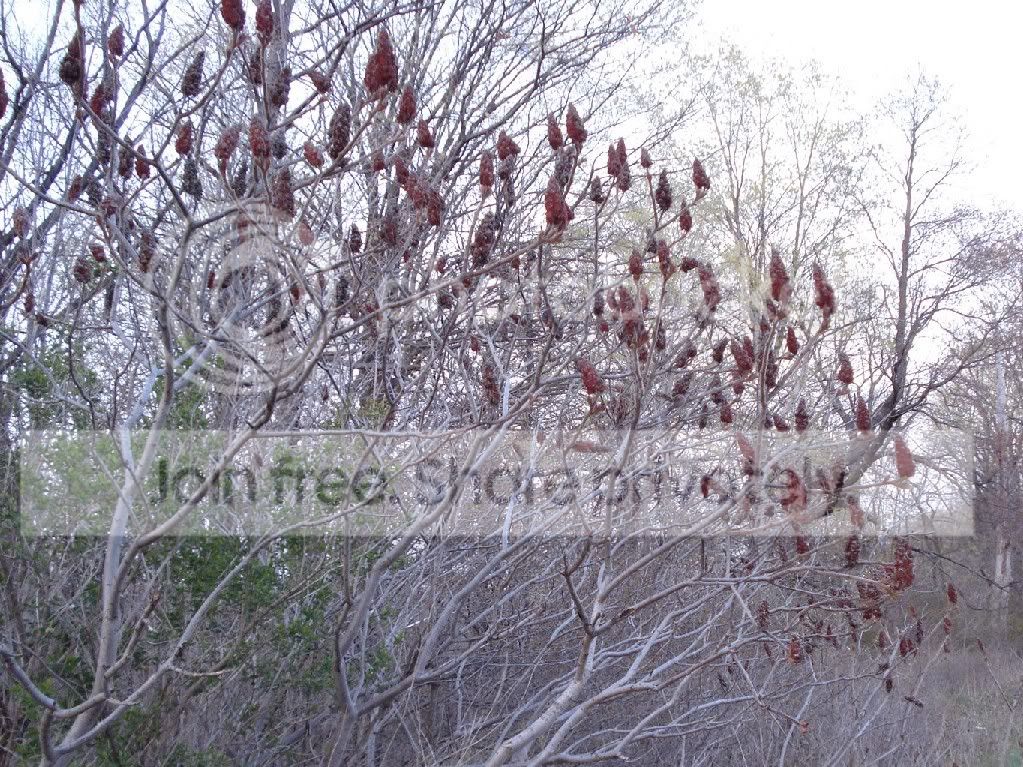
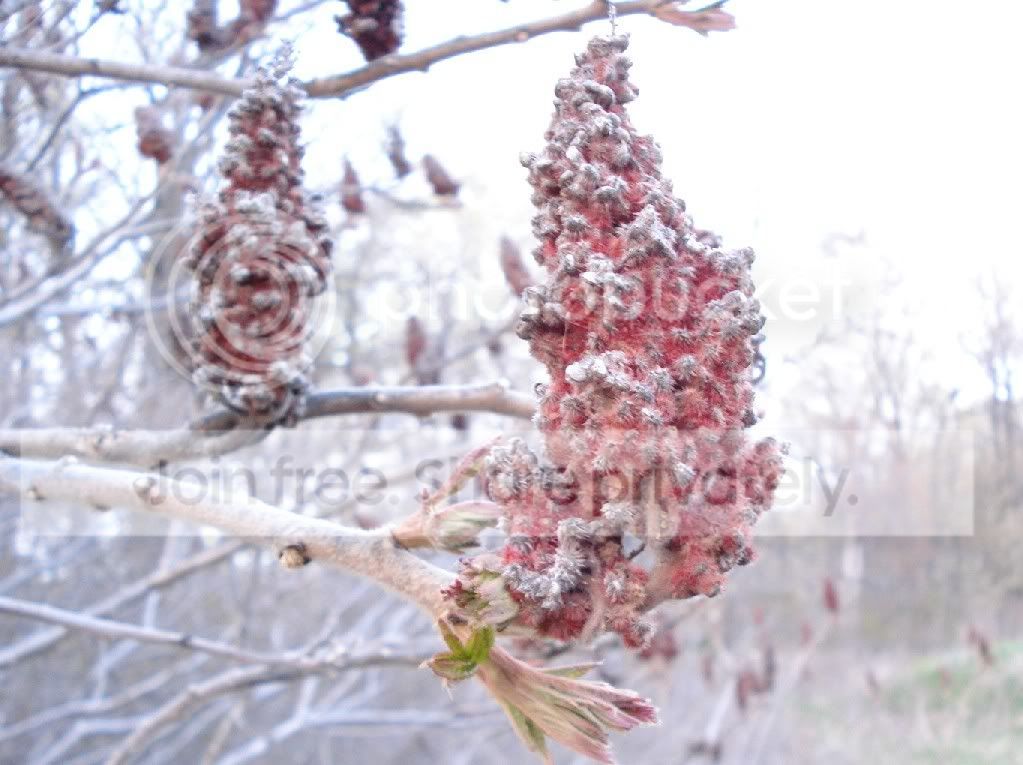
 ......... hike, that is, right after work. Didn't take a tripod, so you'll have to ignore the quality of the pictures. This is Staghorn Sumac (Rhus typhina).