- Joined
- Dec 2, 2005
- Messages
- 157
I guess I've been hanging around here for a while so I thought I would snap some pictures and do a little write up on how I make a knife. A lot of what I have learned has come from other makers doing threads like this so I hope this helps someone out. I tried to be as thorough as I could but if you have any questions pleases don't hesitate to ask.
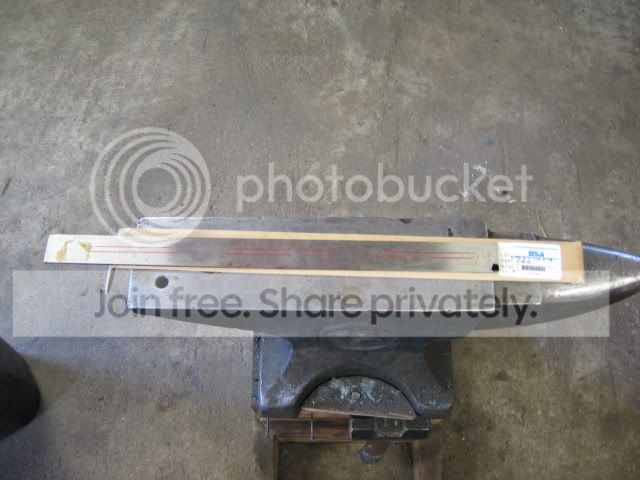
1.) For this knife I will be using O1 tool steel. The “O” in the name designates that this is an oil hardening tool steel. O1 is a very popular tool steel for all different levels of knife makers. This piece is precision ground which means that it has been ground perfectly flat. This is advantageous because too makers who don’t have the capability to forge because the steel is annealed and ready to work. The size of this piece is 18” x 1 ¼” x 5/32”. Most pieces of precision ground steel come in 18” or 36” lengths.
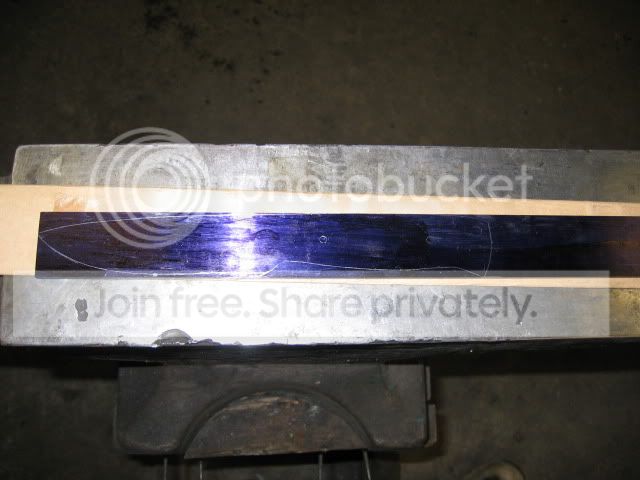
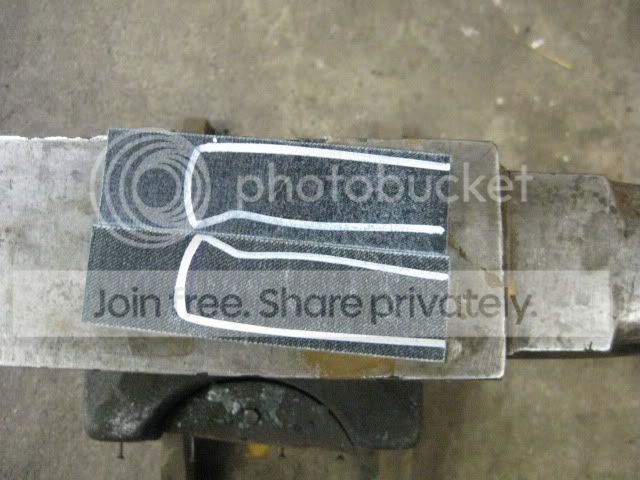
2.) The first thing I do to the steel is to use Dykem to “paint” one of the sides. Dykem is a type of fluid that machines use to layout parts on a piece of steel. As you can see in this picture I have traced the knife outline as well as the holes in the handle onto the piece of steel.
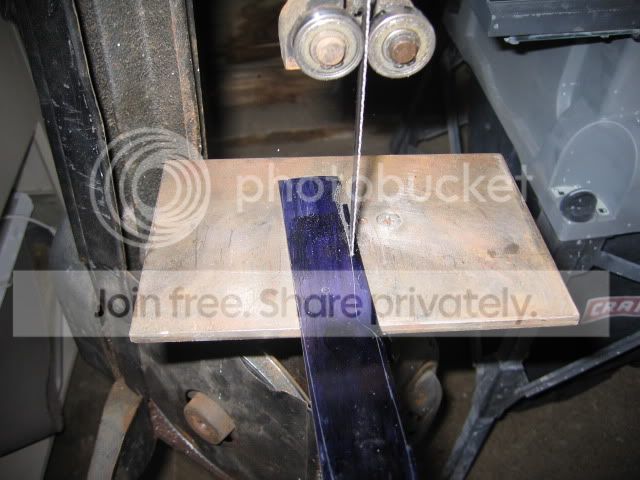
3.) The next step is to cut out the shape as good as I can on my metal cutting band saw. This can also be done on the grinder as you will see in the next step but using the band saw is much faster and saves on belts.
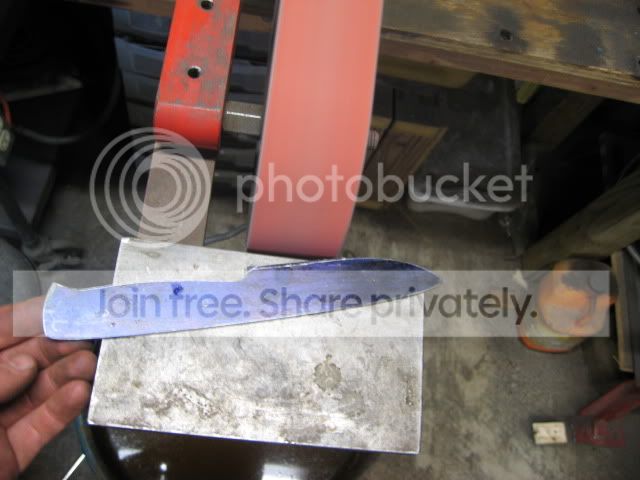
4.) Here I am using a 6” contact wheel on my KMG to grind off what I couldn’t get with the band saw.
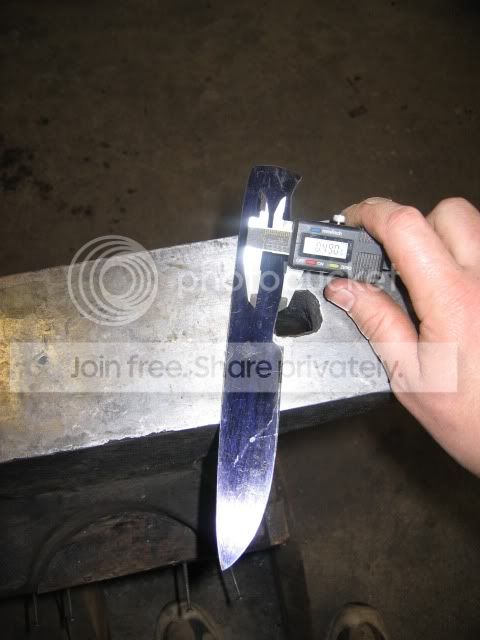
5.) Now that I have the shape I want I will double check to make sure the holes for my handle pins are perfectly centered. I picked up this particular caliper at Harbor Freight for $6 on sale and it’s been one of the best things I have ever bought. I use it almost every day I’m in my shop and after three years it’s still going strong. If you don’t have one of these I would strongly advise to get one. Even when they’re not on sale they are less than twenty bucks. All I am doing here is measuring how wide the handle is where I am going to drill a hole for the pin and dividing it in half to find the exact center. Once I find the center I will use the caliper to make a mark.
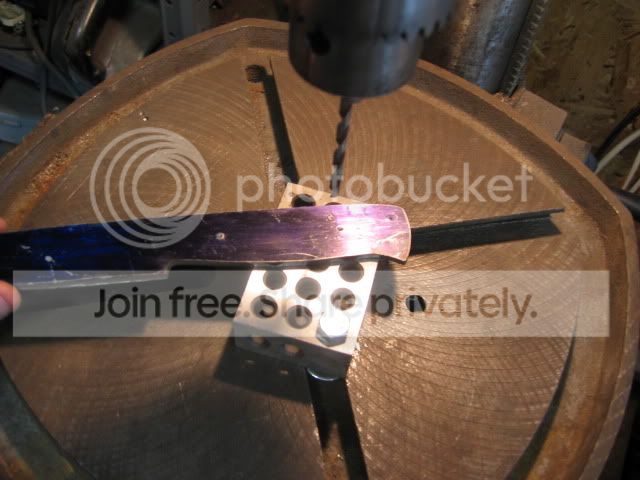
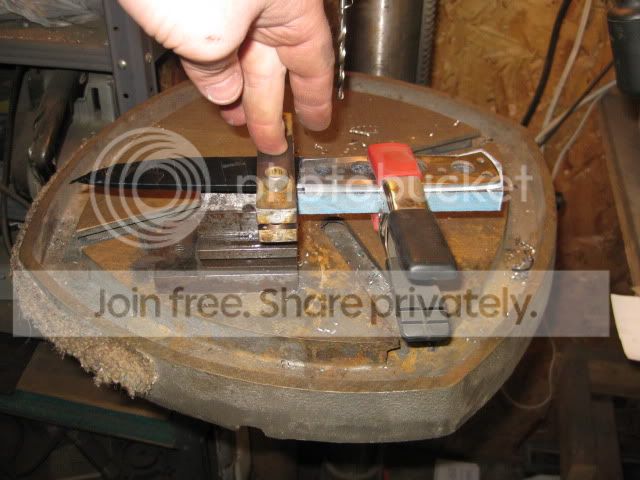
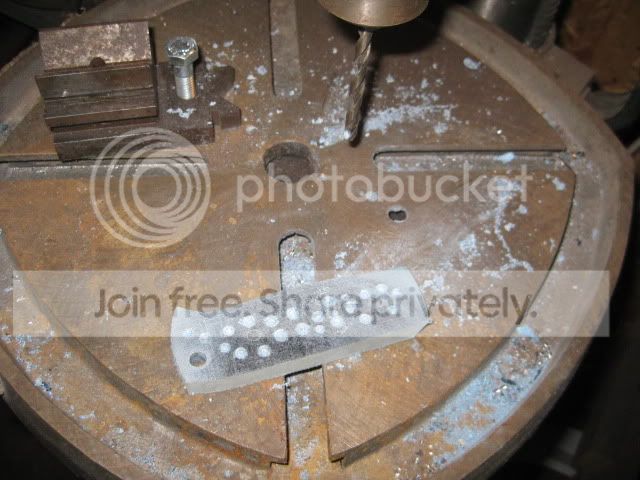
6.) After I scribe the center I use a center punch to make a small divot so that my drill bit won’t wander as I am drilling the hole. I am using a 1-2-3 block that is bolted to my drill press table so that I can drill on a perfectly flat surface and get the holes as straight as possible through the tang. A 1-2-3 block is a metal block with dimensions measuring one, two, and three inches long respectively. I don’t know what their exact use is but I have found various uses for them and they are inexpensive.
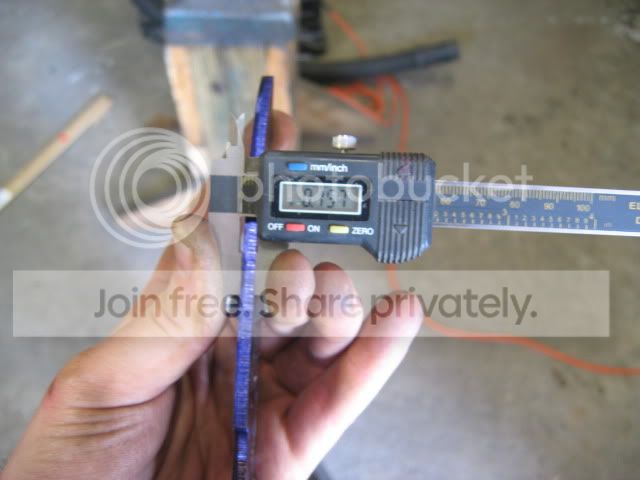
7.) Here I am measuring the thickness of my steel so I can scribe a center line for grinding. As you can see it is 0.157” thick. I divide this number to get the center and then subtract 0.015 from that number so that when I scribe I have two lines with .030 distance between them. So the equation I use is 0.157/2=0.78. Next I do 0.78-.015=0.765, this is the number I set my caliper to. The reason I do this is so that I have 0.030 distances between the lines. This is how thick I want my edge to be after I am done grinding.
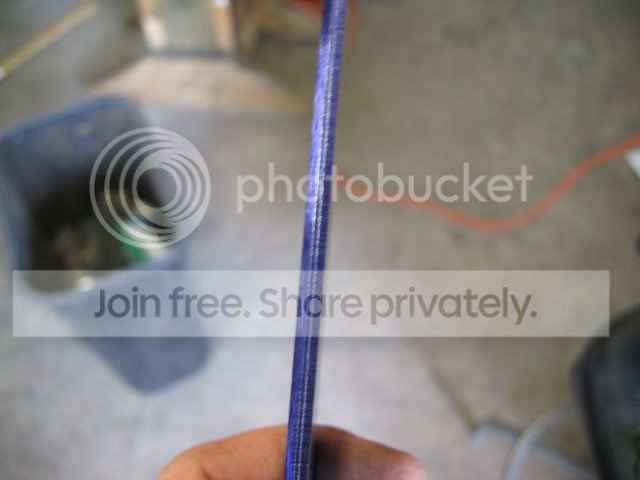
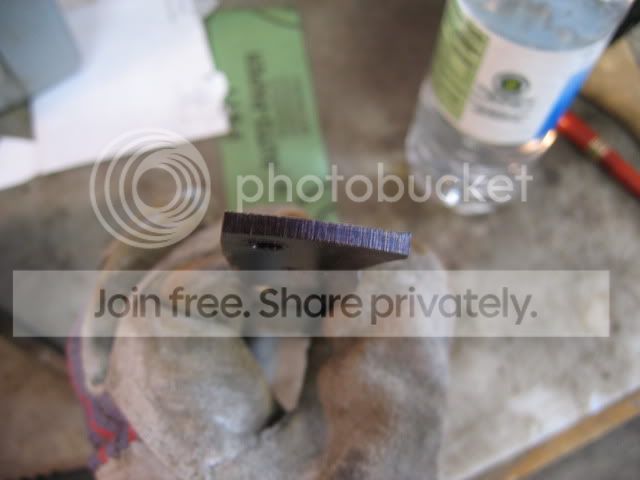
8.) Here are the two lines I will use so I can make sure and grind evenly on each side.
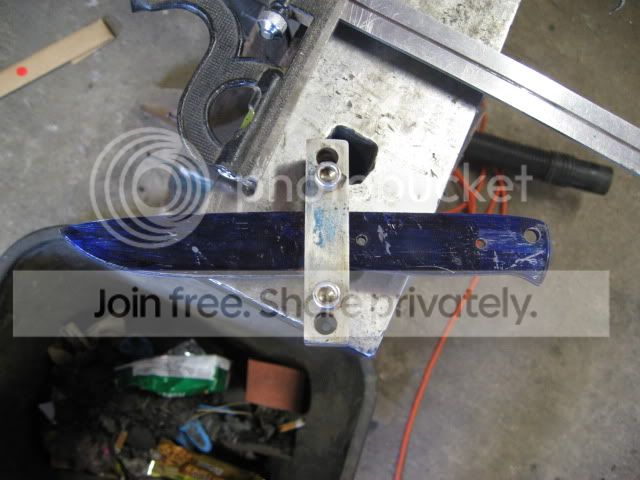
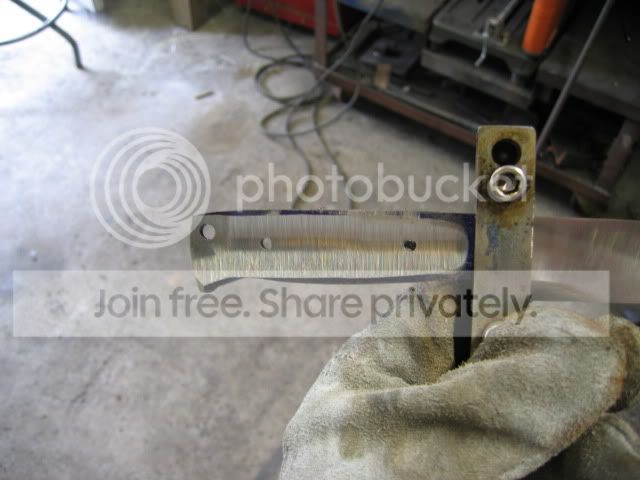
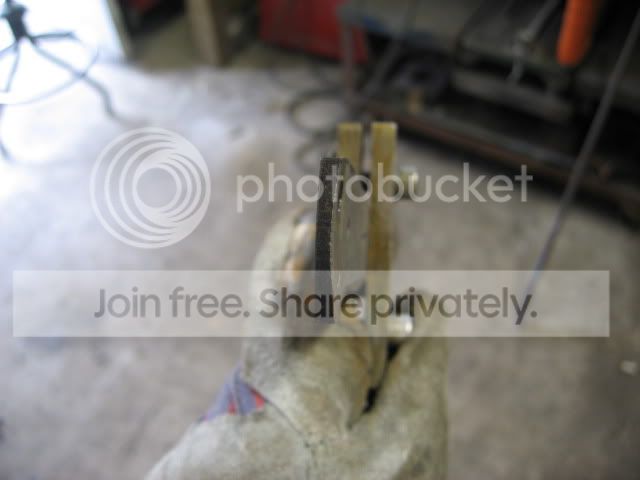
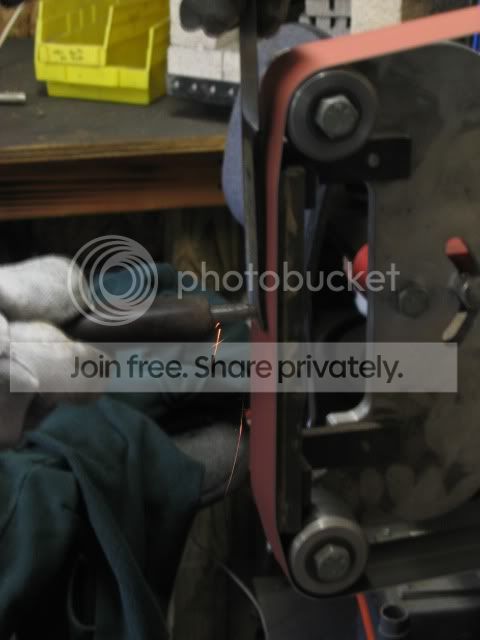
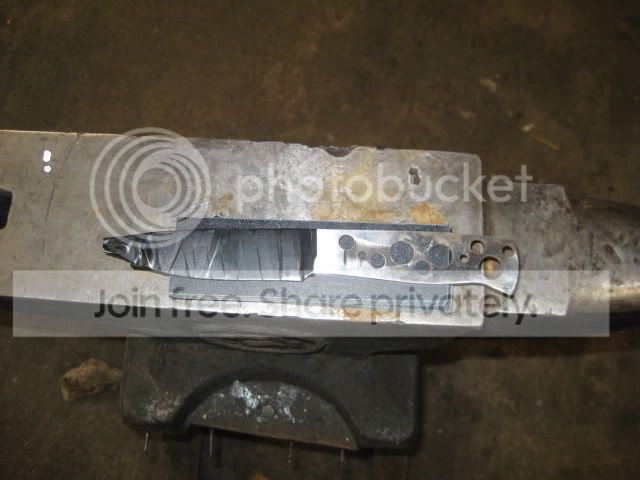
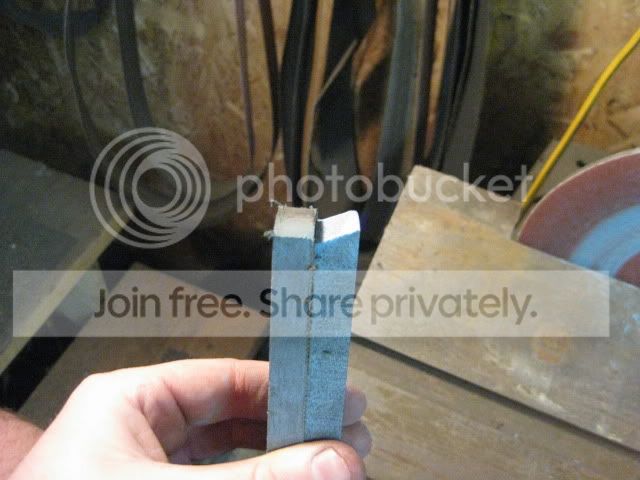
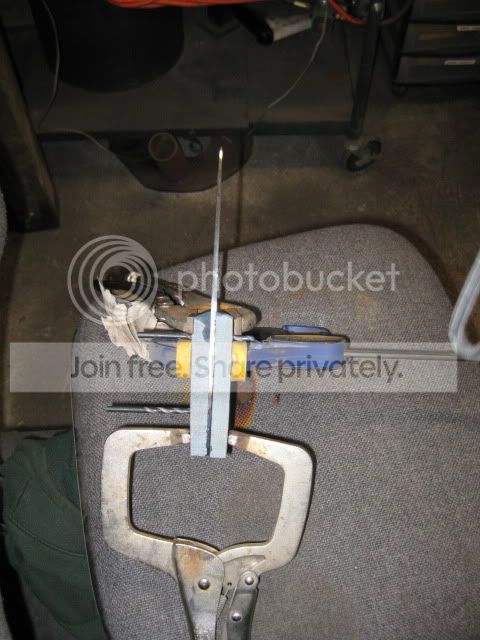
9.) This is a guide I made so that I can keep my plunge cuts square to each other. I will mark the angle I want my plunge cuts to be on one side in the Dykem and then attach my guide.
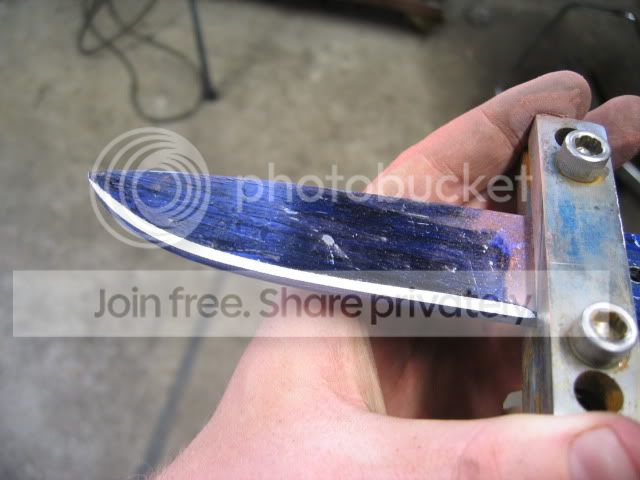
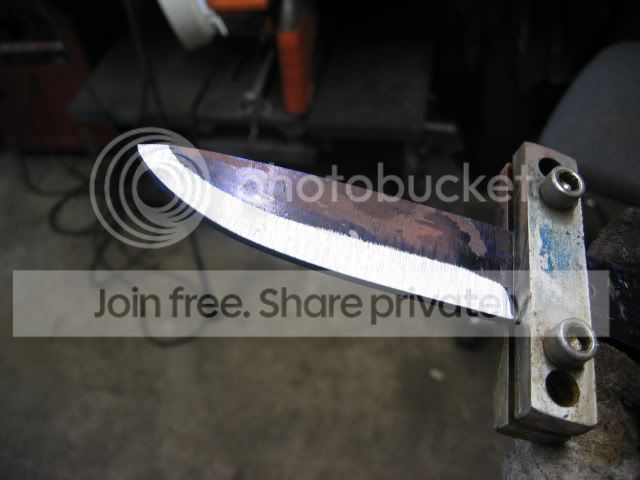
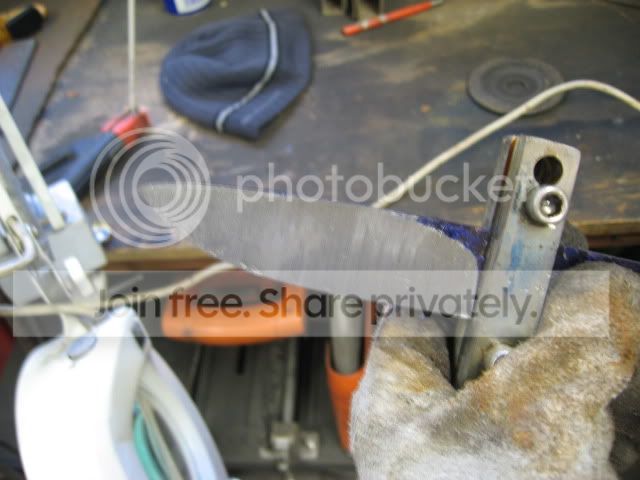
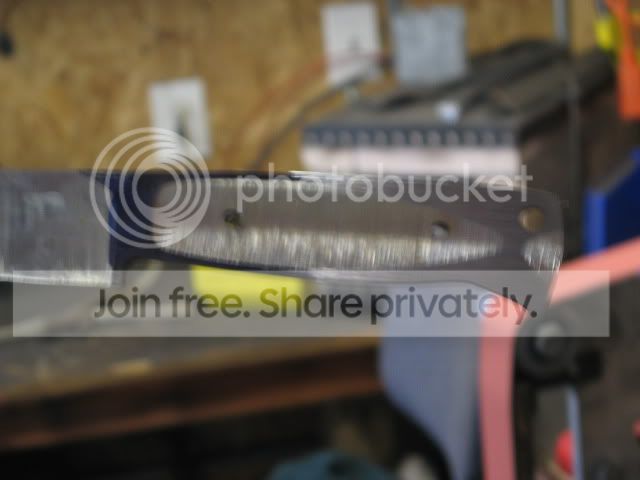
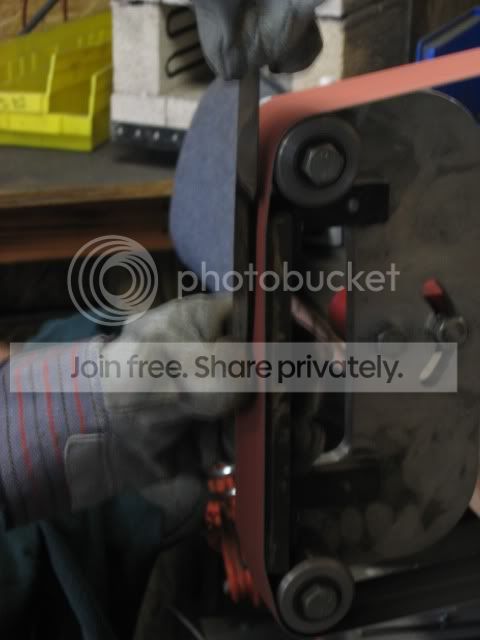
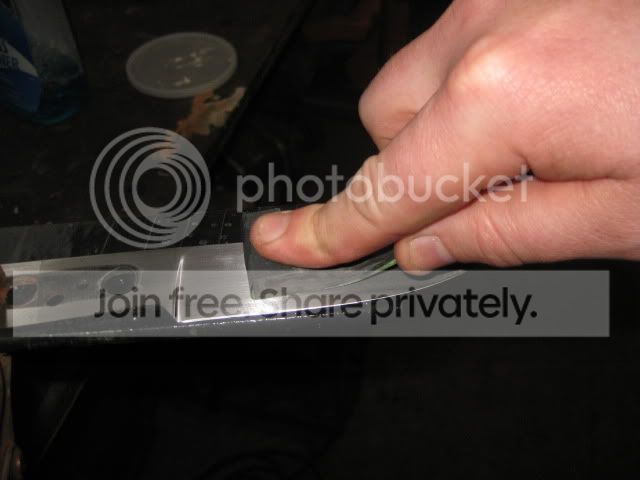
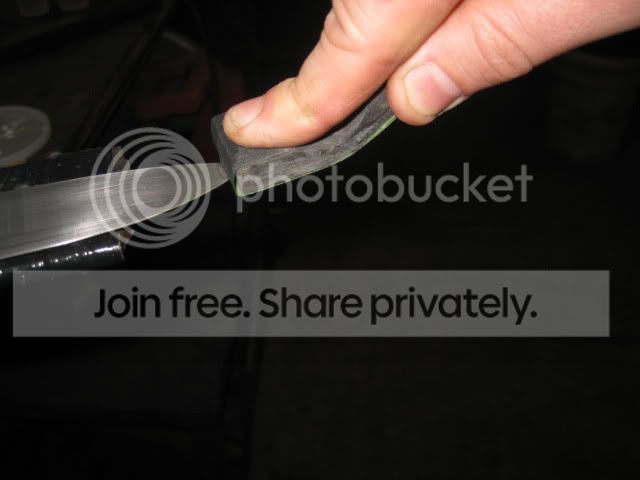
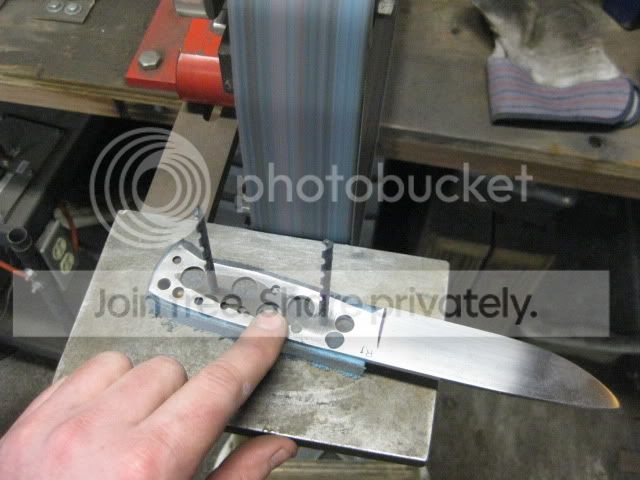
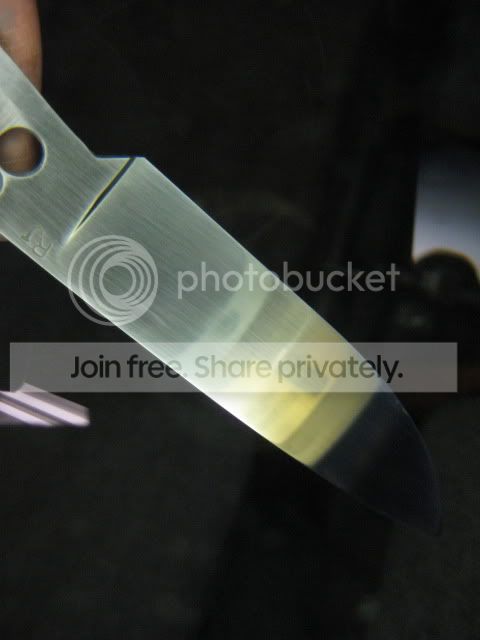
10.) This is after the first pass on a 60 grit belt. I first grind down to the line I scribed. Once I do this I will start to work the ground down area up towards the spine.
1.) For this knife I will be using O1 tool steel. The “O” in the name designates that this is an oil hardening tool steel. O1 is a very popular tool steel for all different levels of knife makers. This piece is precision ground which means that it has been ground perfectly flat. This is advantageous because too makers who don’t have the capability to forge because the steel is annealed and ready to work. The size of this piece is 18” x 1 ¼” x 5/32”. Most pieces of precision ground steel come in 18” or 36” lengths.
2.) The first thing I do to the steel is to use Dykem to “paint” one of the sides. Dykem is a type of fluid that machines use to layout parts on a piece of steel. As you can see in this picture I have traced the knife outline as well as the holes in the handle onto the piece of steel.
3.) The next step is to cut out the shape as good as I can on my metal cutting band saw. This can also be done on the grinder as you will see in the next step but using the band saw is much faster and saves on belts.
4.) Here I am using a 6” contact wheel on my KMG to grind off what I couldn’t get with the band saw.
5.) Now that I have the shape I want I will double check to make sure the holes for my handle pins are perfectly centered. I picked up this particular caliper at Harbor Freight for $6 on sale and it’s been one of the best things I have ever bought. I use it almost every day I’m in my shop and after three years it’s still going strong. If you don’t have one of these I would strongly advise to get one. Even when they’re not on sale they are less than twenty bucks. All I am doing here is measuring how wide the handle is where I am going to drill a hole for the pin and dividing it in half to find the exact center. Once I find the center I will use the caliper to make a mark.
6.) After I scribe the center I use a center punch to make a small divot so that my drill bit won’t wander as I am drilling the hole. I am using a 1-2-3 block that is bolted to my drill press table so that I can drill on a perfectly flat surface and get the holes as straight as possible through the tang. A 1-2-3 block is a metal block with dimensions measuring one, two, and three inches long respectively. I don’t know what their exact use is but I have found various uses for them and they are inexpensive.
7.) Here I am measuring the thickness of my steel so I can scribe a center line for grinding. As you can see it is 0.157” thick. I divide this number to get the center and then subtract 0.015 from that number so that when I scribe I have two lines with .030 distance between them. So the equation I use is 0.157/2=0.78. Next I do 0.78-.015=0.765, this is the number I set my caliper to. The reason I do this is so that I have 0.030 distances between the lines. This is how thick I want my edge to be after I am done grinding.
8.) Here are the two lines I will use so I can make sure and grind evenly on each side.
9.) This is a guide I made so that I can keep my plunge cuts square to each other. I will mark the angle I want my plunge cuts to be on one side in the Dykem and then attach my guide.
10.) This is after the first pass on a 60 grit belt. I first grind down to the line I scribed. Once I do this I will start to work the ground down area up towards the spine.