Take Down Fighter Progression!

Hi everyone! I hope you all had a great Christmas. I'm glad you are liking this so far.

I have 42 pictures to put on here tonight. Enjoy.

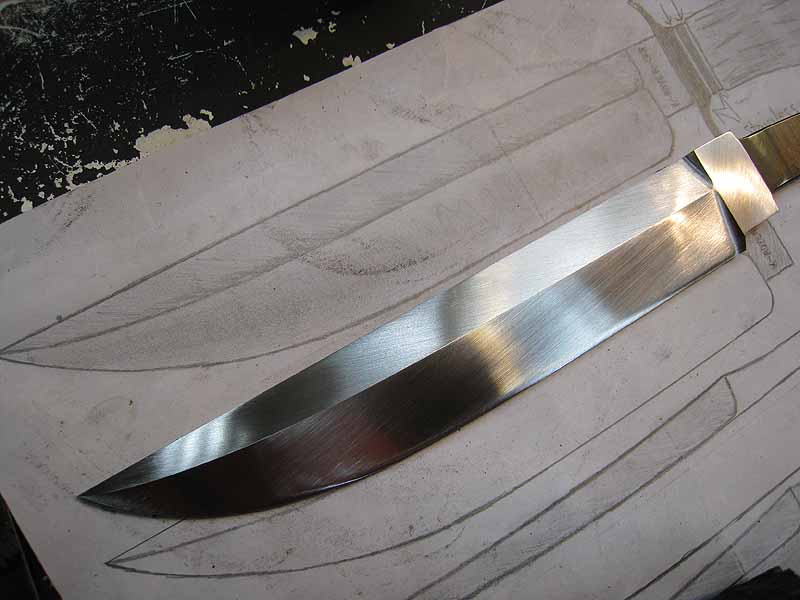
Here the blade has been sanded a little more so it is at 220 grit throughout. It is ready for hand sanding.
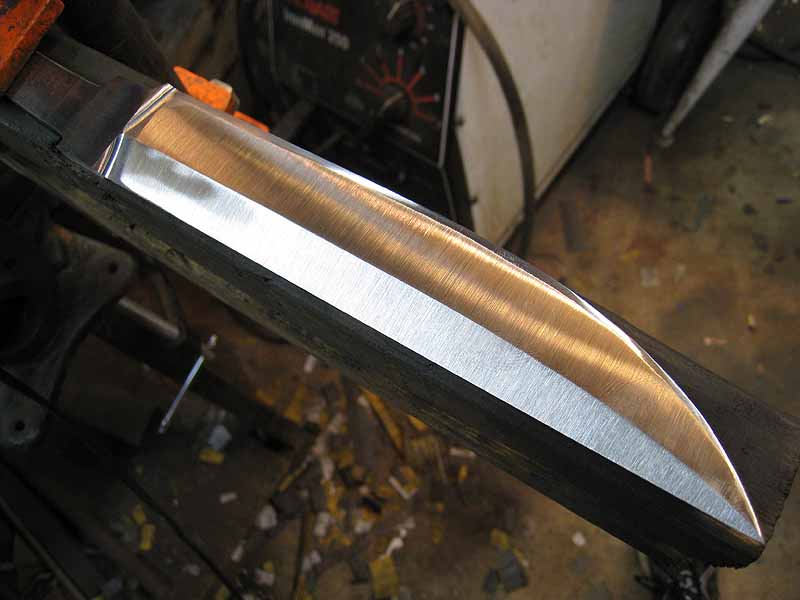

This is my hand sanding end of the workbench. I know it's a little rough looking however it works great and it is safe. Notice the 2X4 the blade is on extends past the point of the blade; this is to ensure I don't stick myself by falling on the blade or by being startled from behind ect...
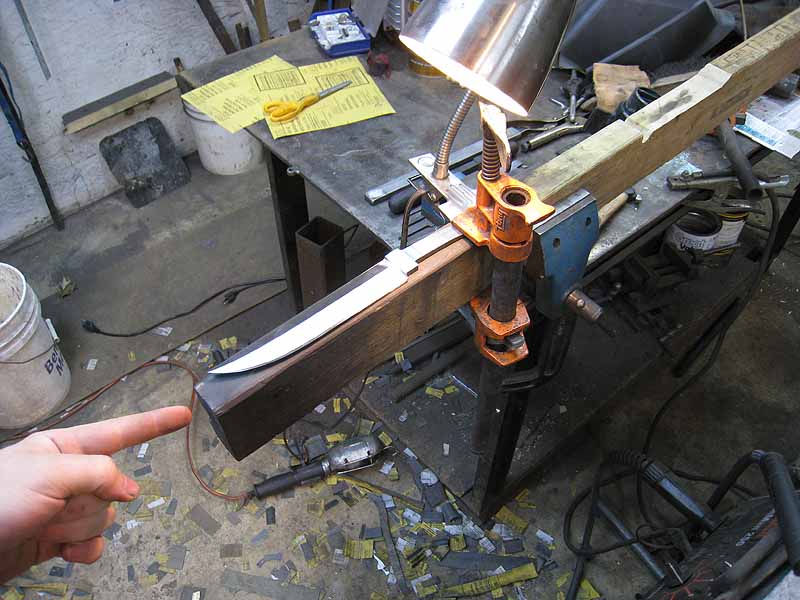

Now I am sanding with 220 grit paper. I use a backer with a large surface area on the 220 grit to help eliminate any dips or bumps I made while grinding.
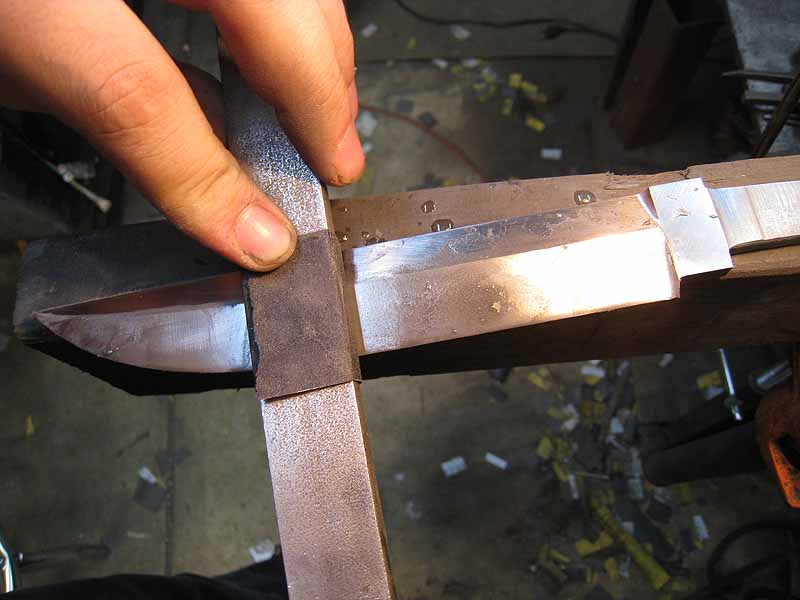

Sanded to 220 grit. I am liking how the plunge cuts are looking.
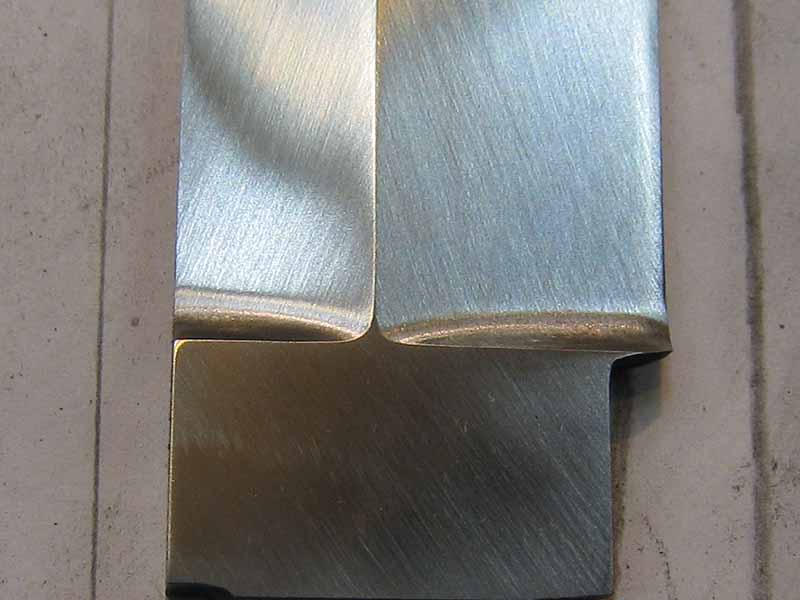


Sanded to 320 grit. I'll stop here until the handle is done, then I'll go to 600.
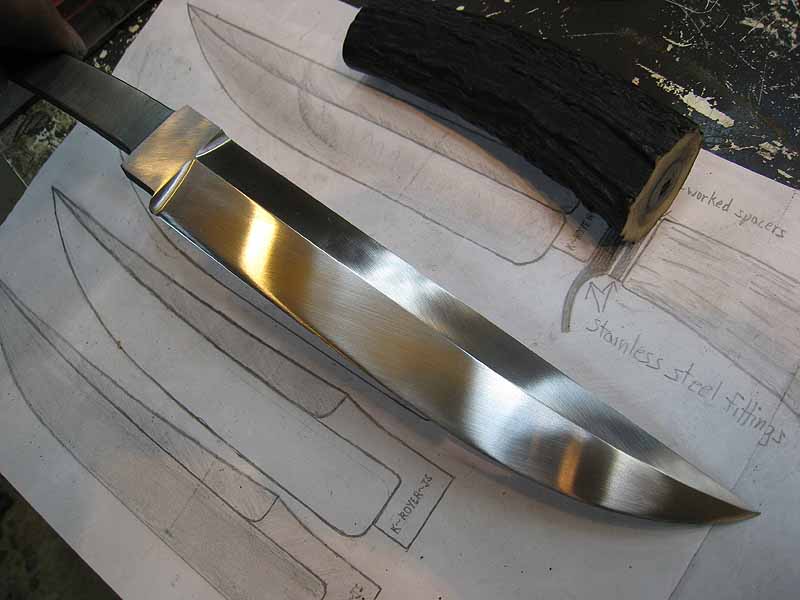

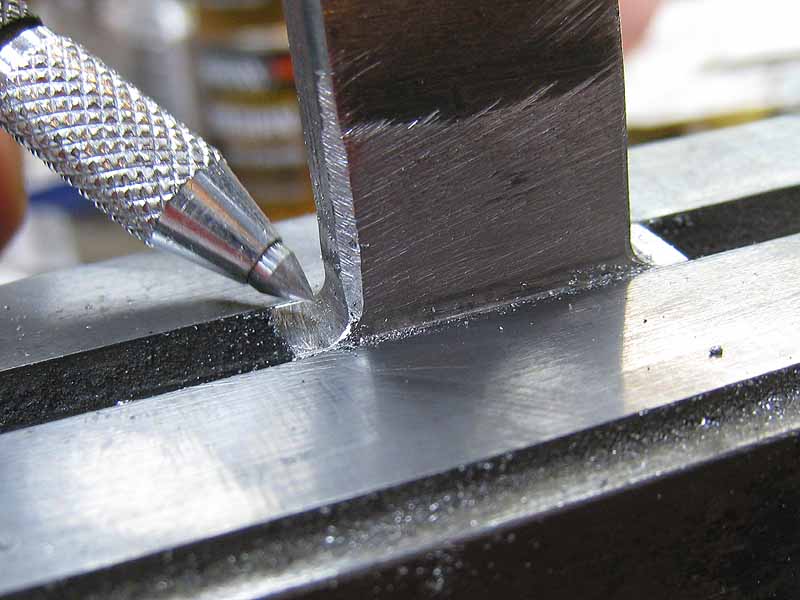
Here I've made a line on the bottom of the ricasso so I can grind up to it and refine the choil area.
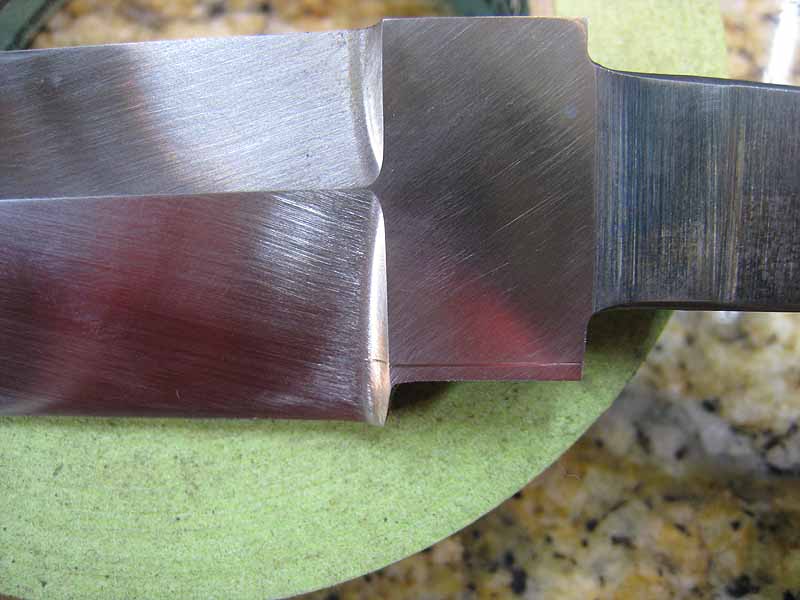

I am using a square and a scribe to mark where I want my ricasso to end and the guard to start.
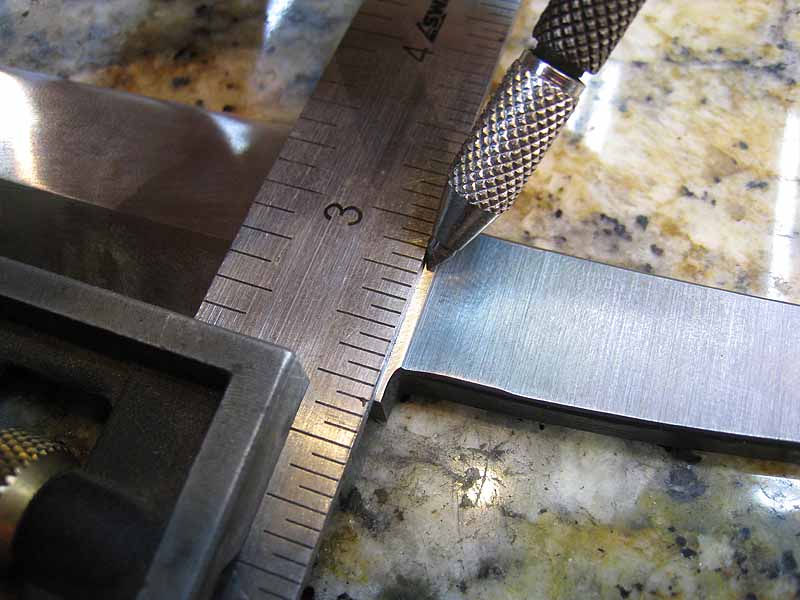

I am going to use my "Uncle Al Carbide Topped Filing Jig" to prep for the guard.
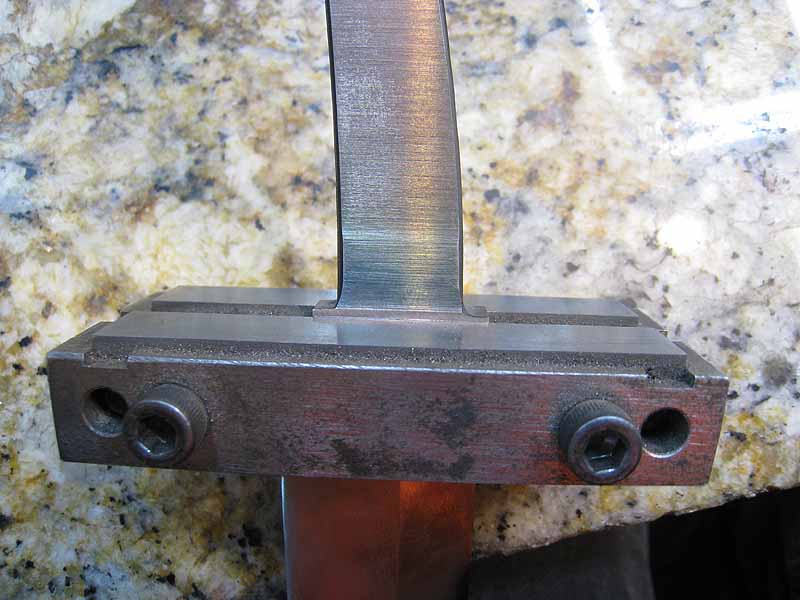

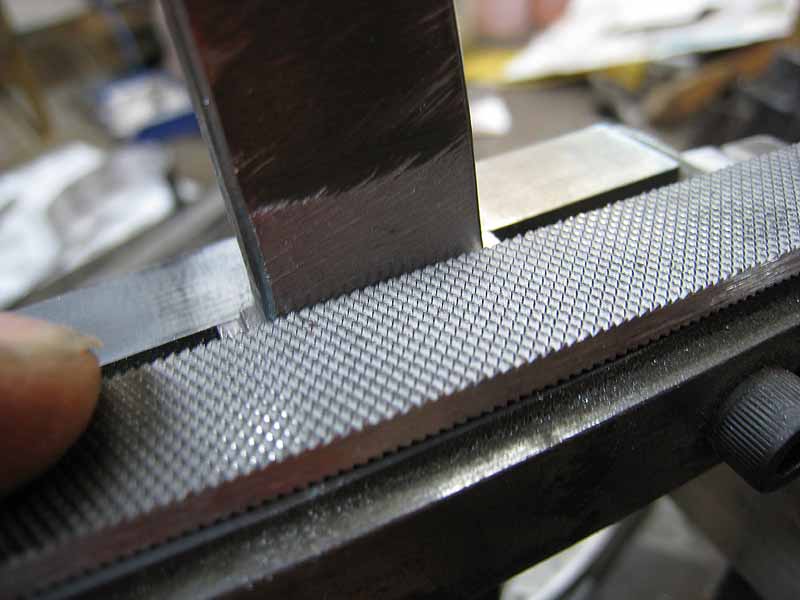
Here I am about half way through filing the ricasso for the guard fit.
 
I am cleaning up the sides of the ricasso cuts here with a double cut file, which has a safe side that I grind clean after each knife so it will have a new, sharp edge on the corner of the file.


And last I file a 1/8 inch radius on the sides of the tang that transfer into the ricasso. I do this so there won't be a sharp corner at the transition from tang to ricasso.


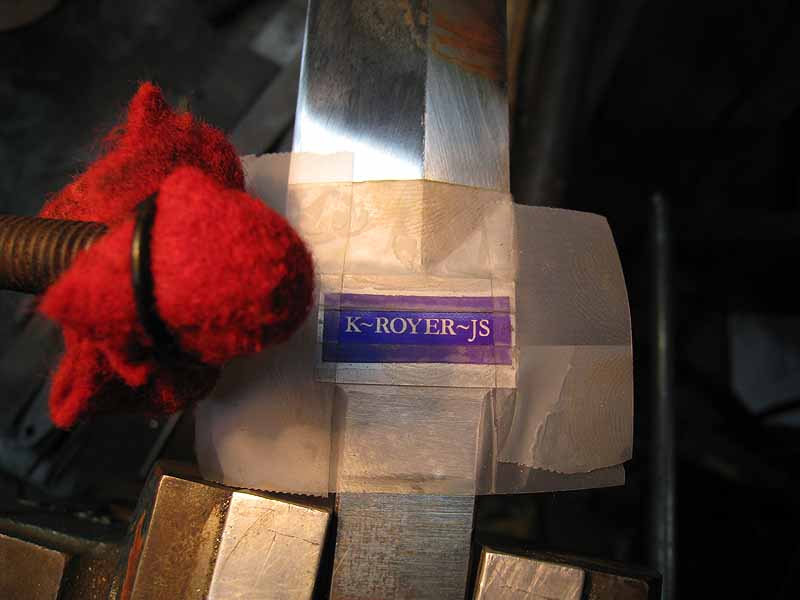
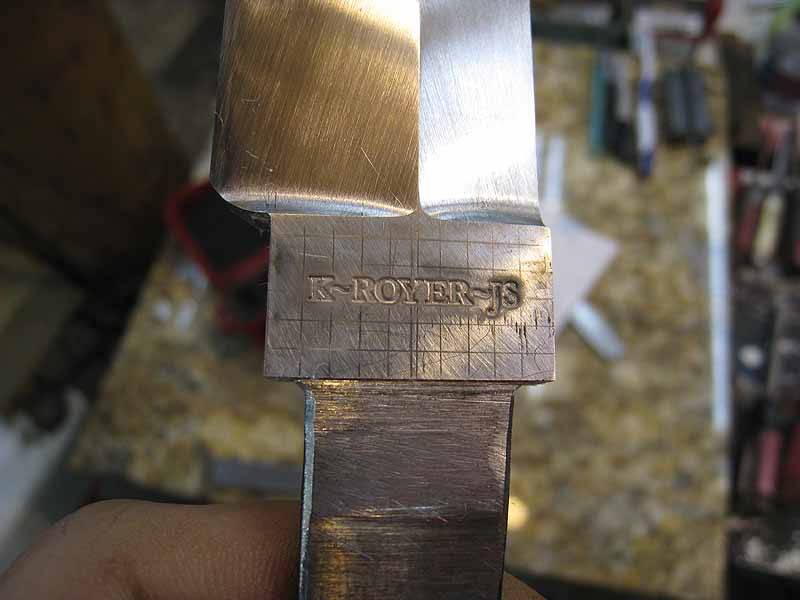
Now it's time for my mark.


It's kind of scary looking until I get it cleaned up.


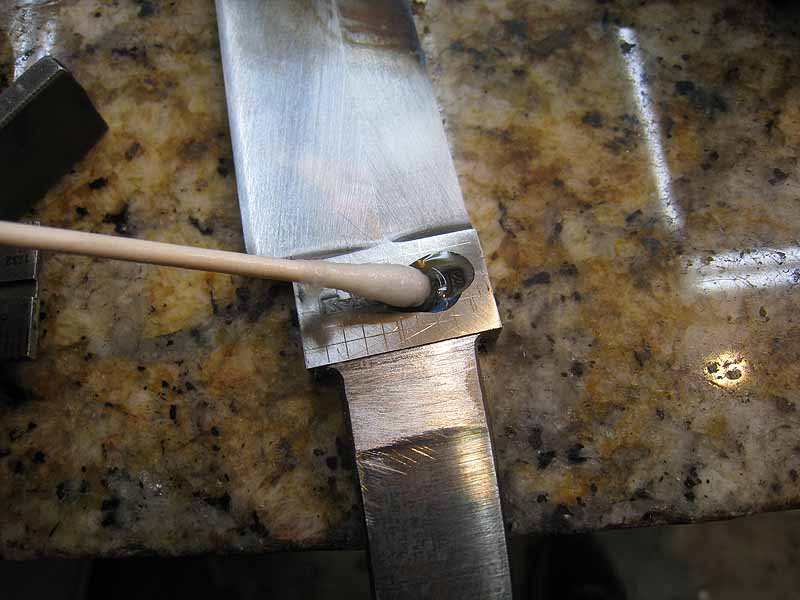
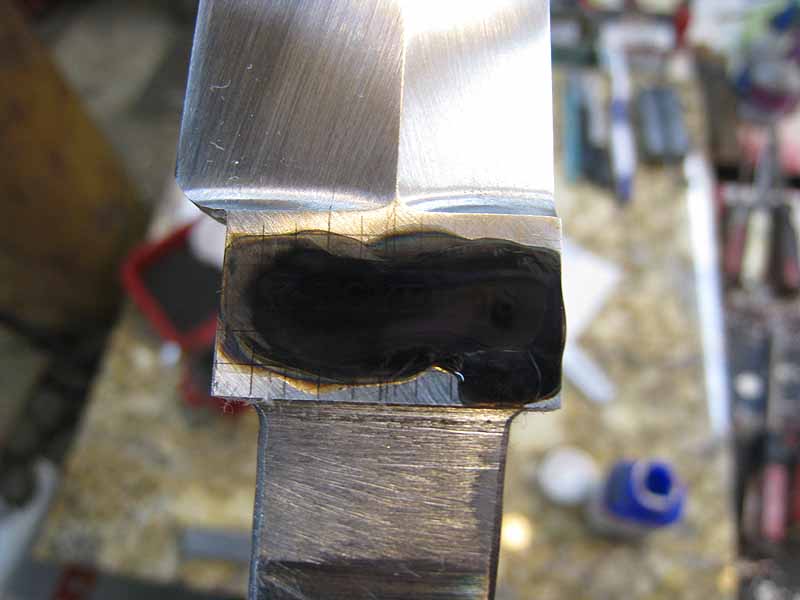
A little cold blue to darken the background is what I'm using.


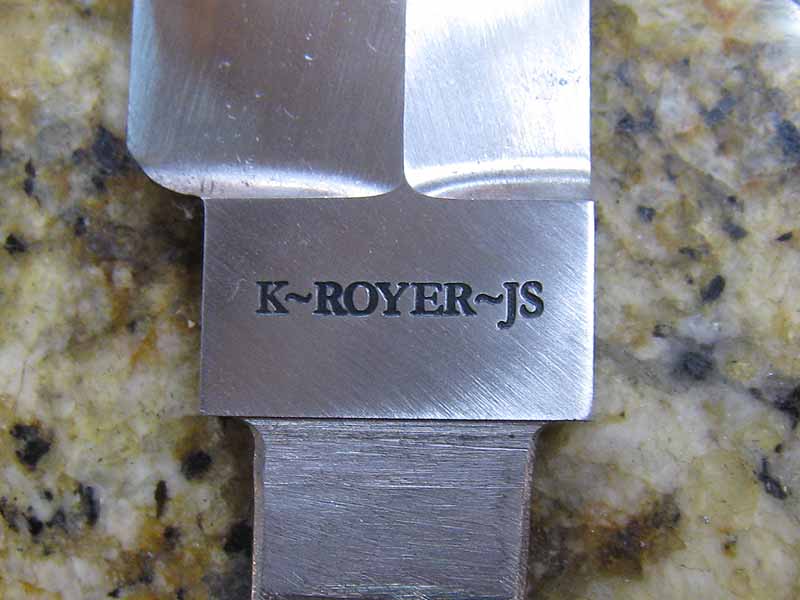
Let it sit. Sand it clean and...


There you are. Looks good.


On the top of this picture is my old keyed chuck for my mill, on the bottom of this pic is my Christmas gift. It's an Albrecht keyless chuck. It is fantastic!!!


Here is my other Christmas gift. A 2" 52100 ball bearing for me to forge into a knife.


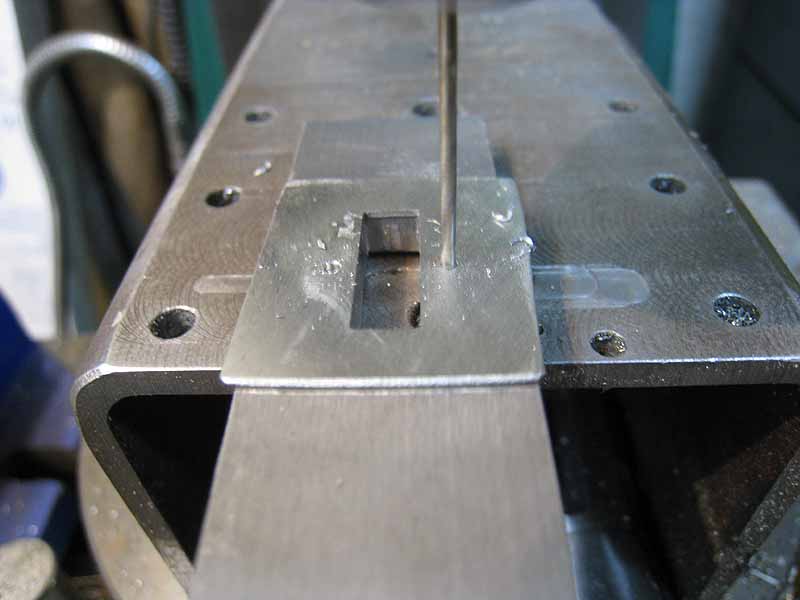
Now I am milling the slot for the spacer that will go in between the guard and handle.
 
I am using a dial indicator to ensure I am milling the slot in the spacer the proper length.


It's all milled out and ready for the corners to be filed square.


In no time the spacer fits onto the tang.


I went through the same procedure for the guard and here it is fit to the blade.


And now the two spacers that will have file work on them.


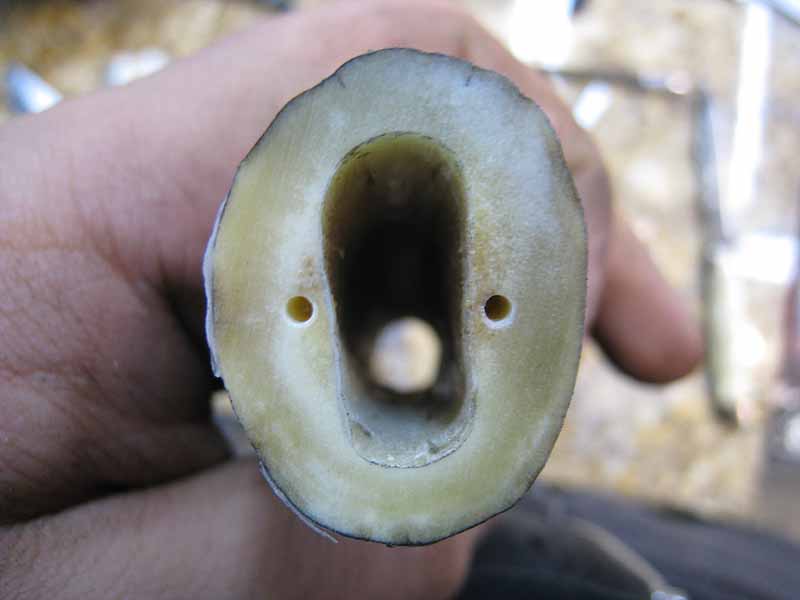
Here I've drilled and broached out the inside of the stag to fit the blade. I also took out all the pith in the stag which will be replaced by epoxy later.


The stag had a little curve to it so I a ground a little off the front and back of this side.


And a little on the middle of this side to straiten it up. It looks like I ground a lot of this side however I didn't. There wasn't a lot of texture on this side. I could have left the stag untouched with the little bit of curve in it however I rather grind into the stag a little like I did and have it strait.


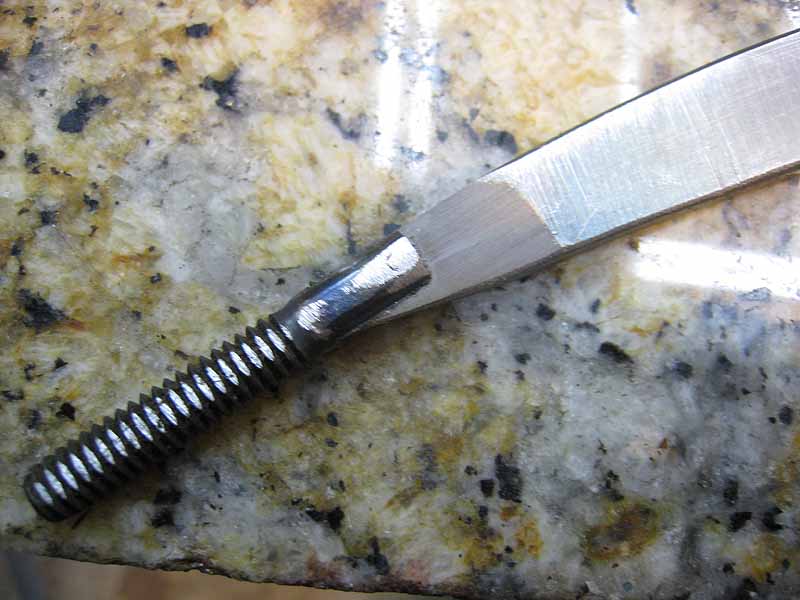
Here I've surface ground the end of the tang down so I can pin a bolt to it.


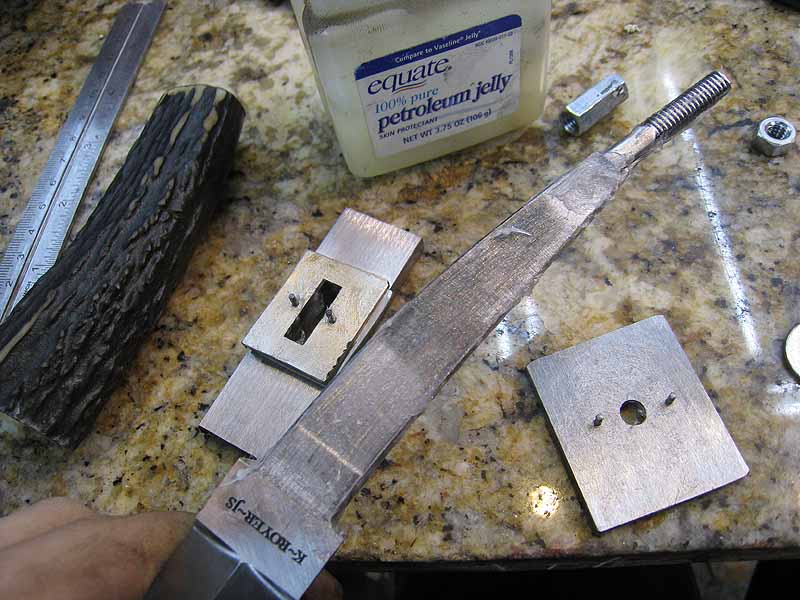
I will forge the head of the bolt down, slot it and pin it. The coupling nut will get soldered to my pommel nut.
 
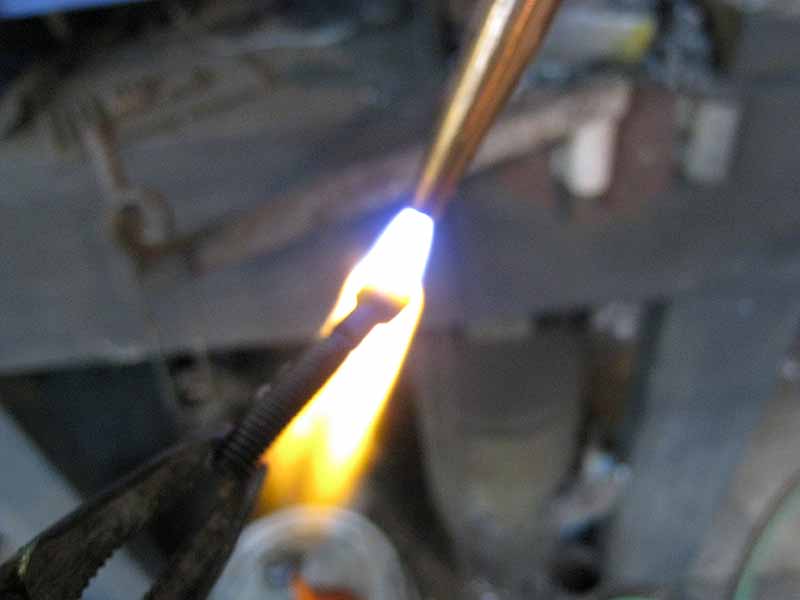
Here I'm heating up the bolt.


I heated the head of the bolt with a torch and will forge it out.


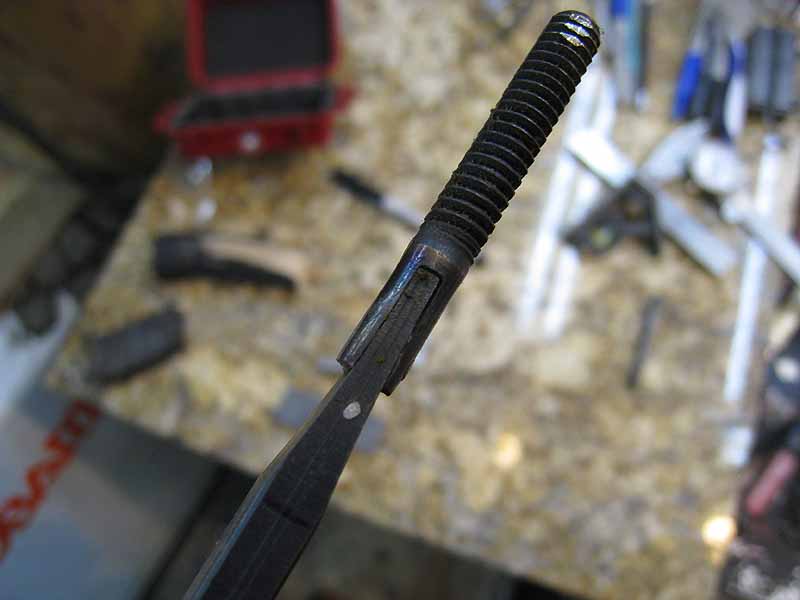
Here is a pic of the bolt, pinned on the tang with one 52100 pin. It will have two pins in it later when I calibrate for the drop of the handle.


Here is a top view of the bolt to tang fit up.


Here I'm drilling two holes for hardened 52100 line-up pins in the spacer and guard.


This is the front end of the stag where I have drilled the line-up pin holes for the spacers and guard.


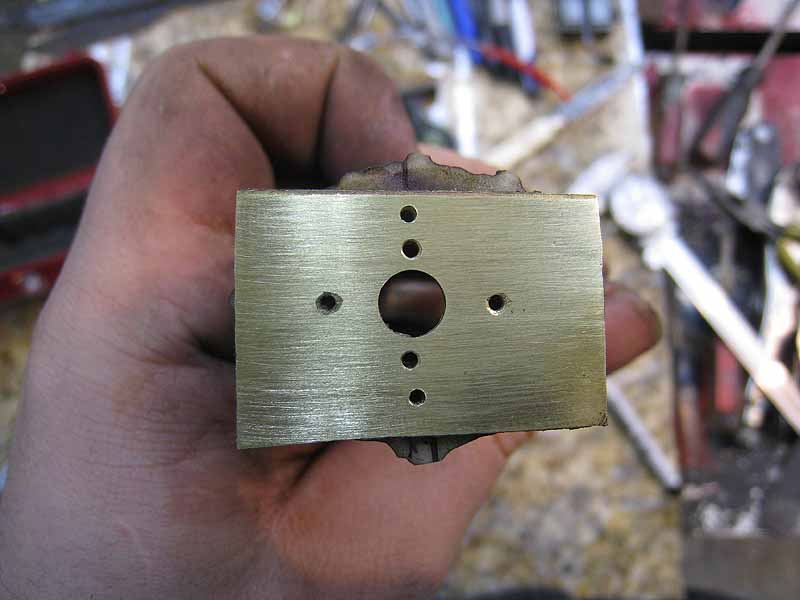
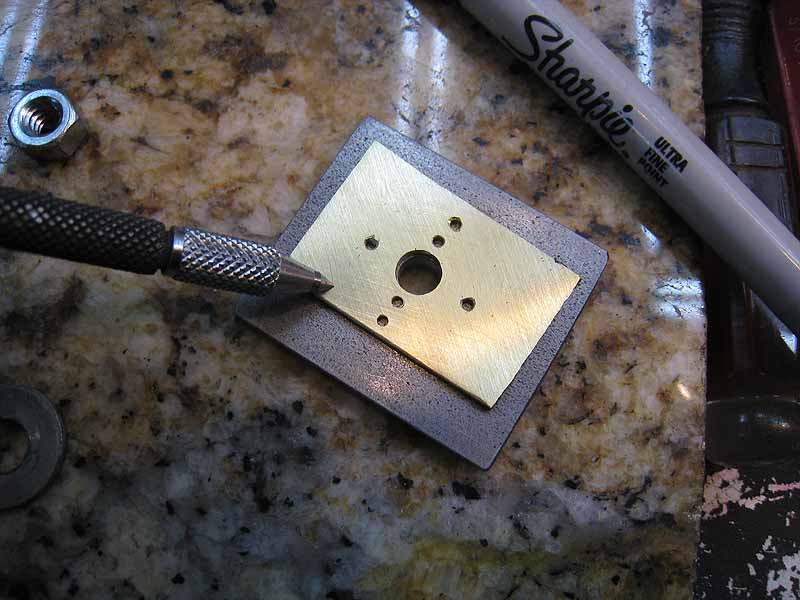
This is a brass template that I'll use as a pattern for my line-up pins. I am going to use the outside two holes for this knife.


Here I have super glued my template to the pommel so I can drill the line-up pin holes in it to match the holes in the stag.


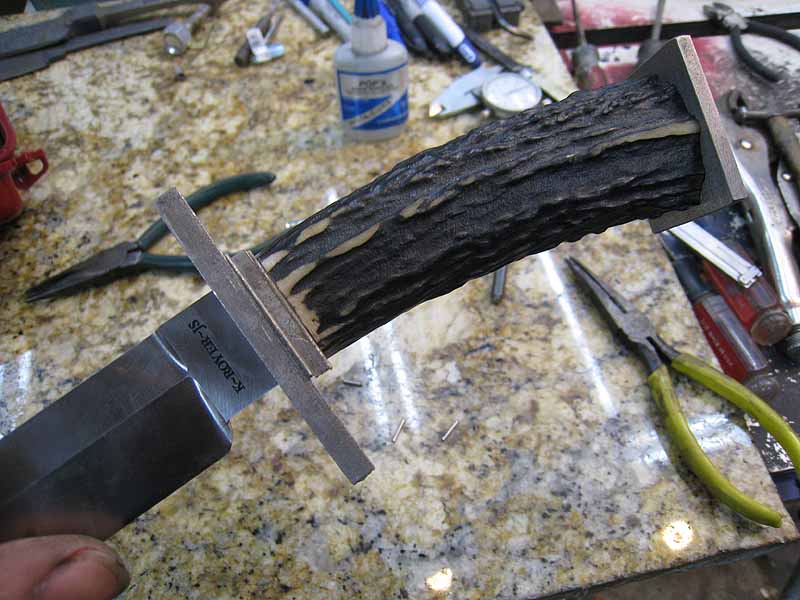
Now that I have all the line-up pins in the front and back in I can make the handle fit-up where I want it.


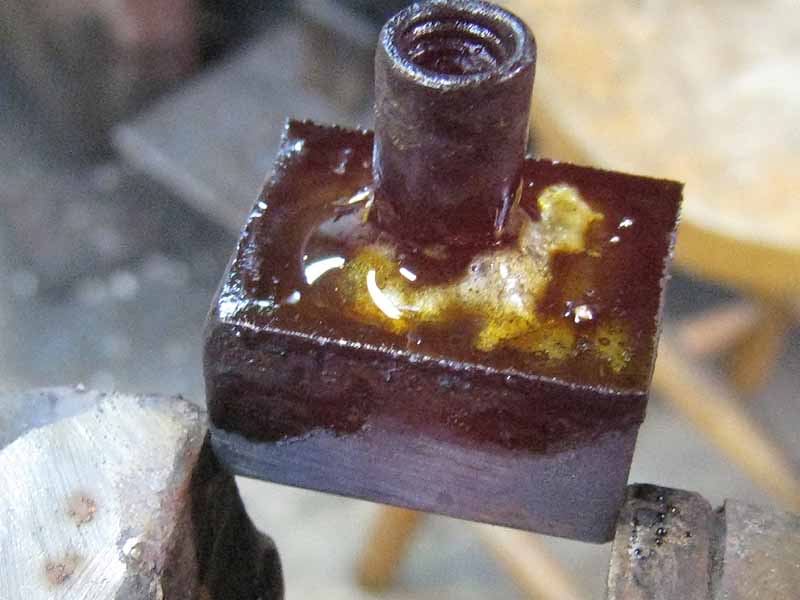
The next step is to cover anything that you don't want epoxied with petroleum jelly, because I am going to seat the handle in epoxy for a solid fit to the tang which will take stress off the line-up pins when chopping.
 
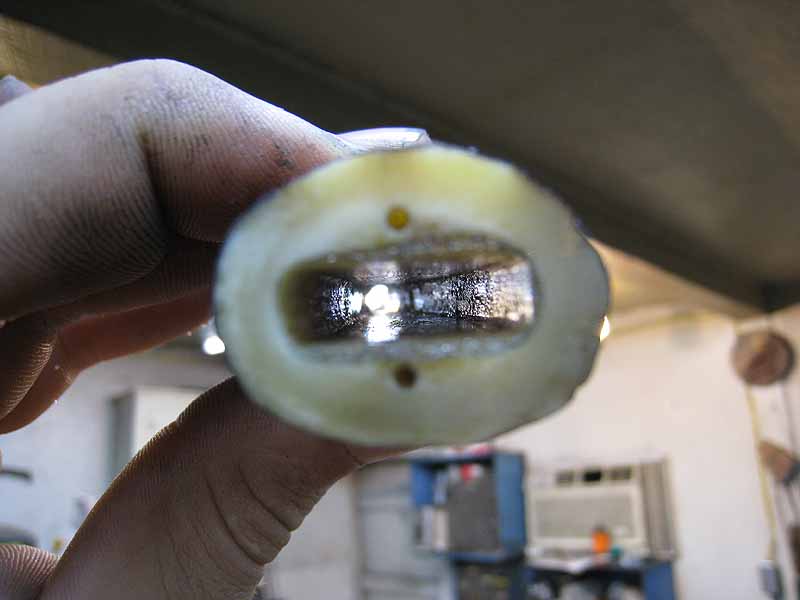
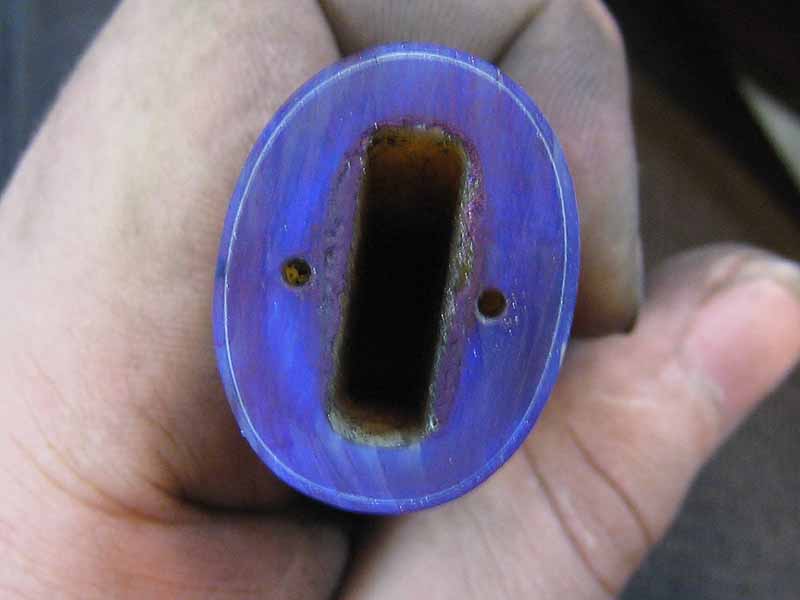
I seated the handle in epoxy and you can see how the slot in the handle looks exactly like the tang. It fits like a glove.


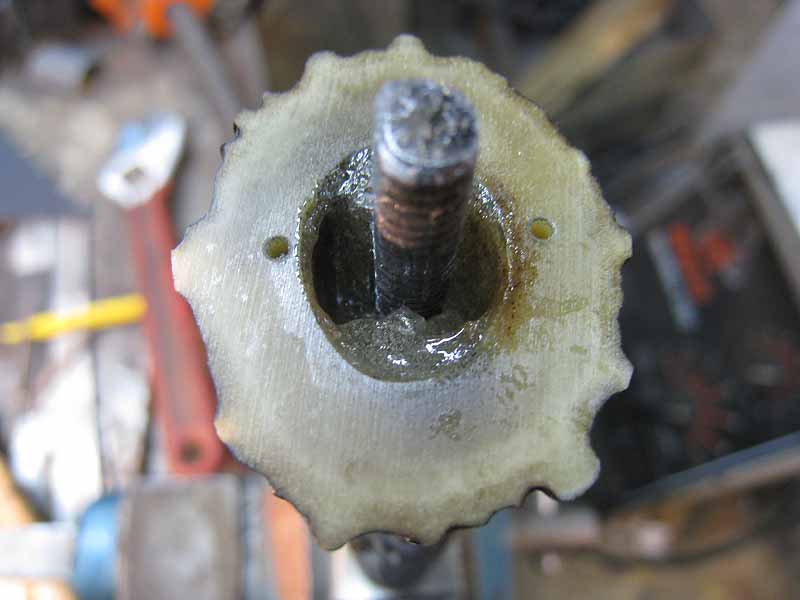
I had a little bit of a void on the end of the handle so I will mix up a little more epoxy and put it in to cure overnight. It should be looking good on the inside tomorrow.


That is all for tonight. Thanks for looking!
 
fantastic and detailed Kyle! I love the use of dowl pins and have yet to use them but I want to try now.

Is the antler stabilized?
 
Excellent processes you have developed Kyle. Every step is very logical and well planned.

Congrats on the Christmas gifts! Albrecht chucks are as good as they get.

Peter
 
Kyle, I really appreciated all the fine detail you go into. Please keep it up, you do beautiful work....Don :thumbup:
 
Many times I have been asked by friends, "why do you pay that much money for a handmade knife." They have no idea what goes into "handmade" but if they could see this WIP thread, they may better understand.

Thanks for sending this out.
 
fantastic and detailed Kyle! I love the use of dowl pins and have yet to use them but I want to try now.

Is the antler stabilized?

It was not professionally stabilized however it was stabilized by me in 26 inches of vacuum which should help the stag not shrink and expand or crack.

I am still trying different things with my stabilizing, although I think I've got it just about where I want it.

Thanks for the complements everyone! It has been a pleasure so far. :D
 
Last edited:
Great Thread/Pics Kyle. What "juice" is used to Stabilize the Stag? Do you, Can you Dye it at the same time? Thanks:thumbup:
 
Looking really good Kyle!!! :thumbup: :cool:

Funny, we do a lot of things the same... must be knowledge you've learned from Ron Newton and stuff I've picked up from Mike Vagnino and Tim Hancock (who has a similar approach to many things as Ron)! :)

Some of the stuff I do just happened as a result of trying to figure out a consistent approach. I'm sure that's the case for you too.

On a side note, your pommel pin jig... Obviously yours works!!! But I wanted to mention I made mine from O1 and hardened it... you won't warble out your pin holes at all that way and it really doesn't take much more time than brass. Plus it's easy to surface grind it if you scuff it up.

And something I'm curious about, why do you fit your guard before prepping the guard face more? It seems when I tried doing it that way, I messed up my nice fit by the time I got the face taken from mill scale to 600grit. Maybe I just didn't hold my mouth right! ;) :D

Thanks for sharing Kyle... GREAT thread!!!
:thumbup: :thumbup: :thumbup: :cool: :)
 
Hi Nick,

Good question and great idea!

Answers in bold.

Looking really good Kyle!!! :thumbup: :cool:

Funny, we do a lot of things the same... must be knowledge you've learned from Ron Newton and stuff I've picked up from Mike Vagnino and Tim Hancock (who has a similar approach to many things as Ron)! :)

Yip, Ron has some great knowledge. I also learned a lot of what I do from people on this forum and makers a knife shows. Almost everyone I've me has been instrumental in helping me learn.

Some of the stuff I do just happened as a result of trying to figure out a consistent approach. I'm sure that's the case for you too. Yes, Now that I've been making knives a little longer I find that I can do certain procedures the same and they work, instead of guessing what I'm doing on some things like when I first started.

On a side note, your pommel pin jig... Obviously yours works!!! But I wanted to mention I made mine from O1 and hardened it... you won't warble out your pin holes at all that way and it really doesn't take much more time than brass. Plus it's easy to surface grind it if you scuff it up.

That is a great idea. I'll have to make me one out of O-1. I have only used my brass pattern three or four times and the holes are getting a little lose. On many of my knives I have a spacer in-between the pommel and handle that I can use for the pattern also.

And something I'm curious about, why do you fit your guard before prepping the guard face more? It seems when I tried doing it that way, I messed up my nice fit by the time I got the face taken from mill scale to 600grit. Maybe I just didn't hold my mouth right! ;) :D

I do it either way, with a surface ground finish or a sanded finish around 400 grit. I haven't had a problem with either, though on occasion I will have to touch up the fit if I had started with a surface ground finish. Other than that I don't have a reason.


Thanks for sharing Kyle... GREAT thread!!! :thumbup: :thumbup: :thumbup: :cool: :)
 
Last edited:
Awesome thread, as usual!

One question: Where are you getting the 52100 pin stock?

Inquiring minds want to know:)
 
Awesome thread, as usual!

One question: Where are you getting the 52100 pin stock?

Inquiring minds want to know:)

MSC and or Enco. Both places have just about anything you could think of for machining.

Here are the last WIP pictures of the knife. Caleb will work on the final pic of which I'll post here when he is done. Also I am going to take pics of the sheath as I make it.

OK, here we go! I took the handle apart after the epoxy had dried overnight and the void looks like it filled nicely.


In this pic I put the knife together and marked around the fittings so I can rough grind them apart from the handle.


Here are the pommel and front spacer rough ground. Also I have turned down a coupling nut on the lathe which will be used for the pommel nut.


Here I've milled out a small block of 416 with a 0.070 deep area for the coupling nut to be soldered with high temp solder.


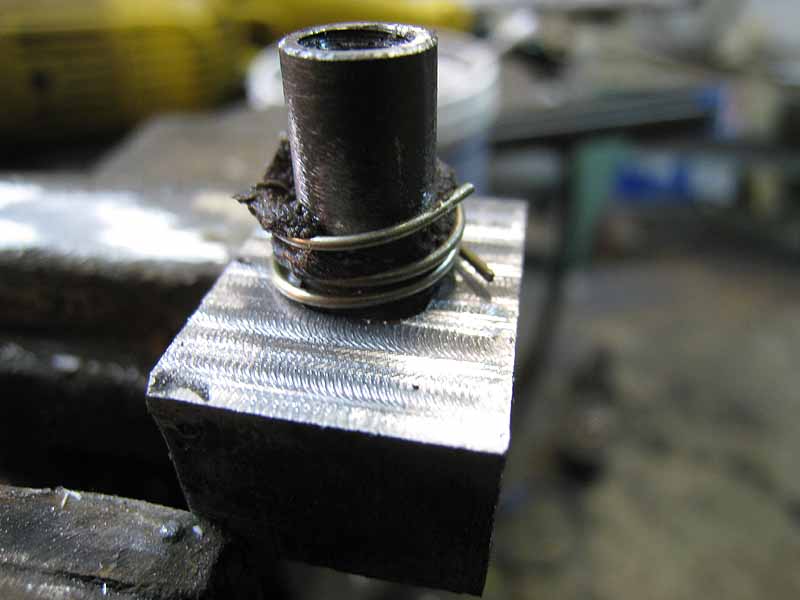
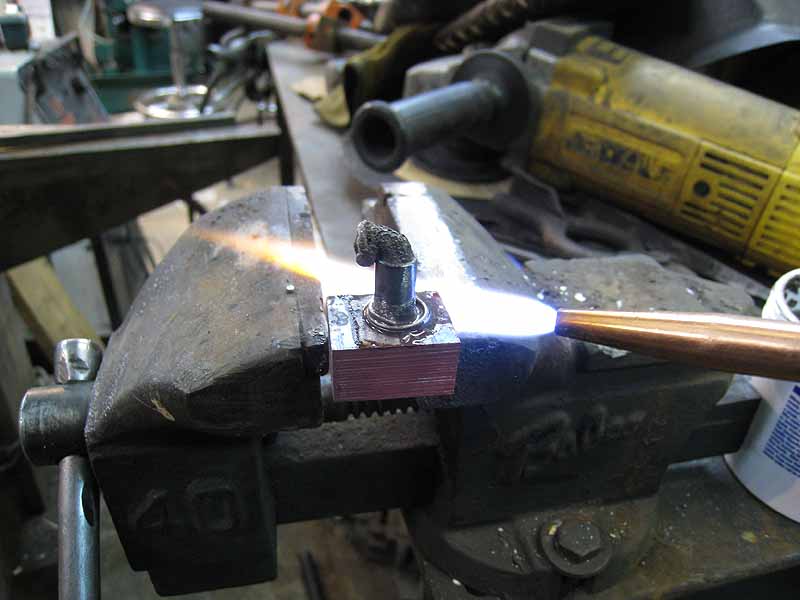
I am ready to solder. Here you can see the hight temp silver solder wrapped around the coupling nut with a little flux.


soldering.


Soldered. It looks a little messy, it will clean up when I lathe it down.


Here is the pommel nut turned down and sanded to 220 grit.


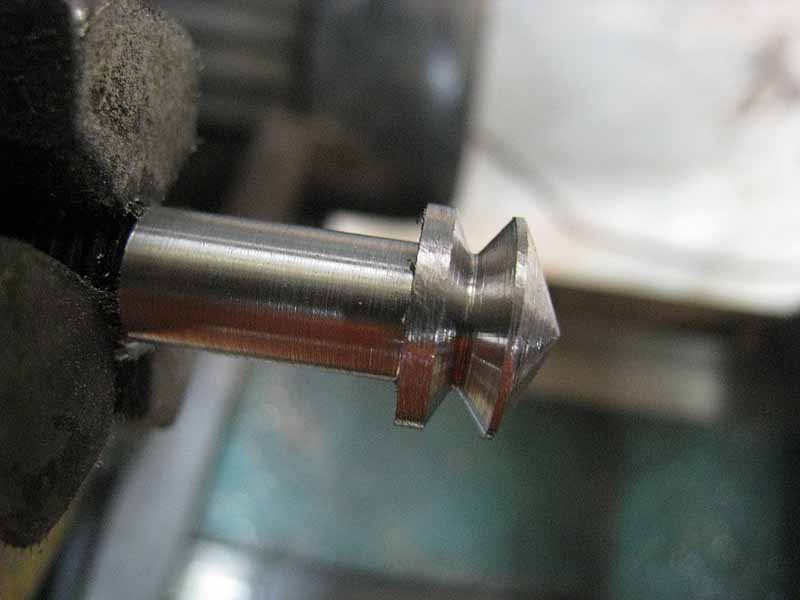
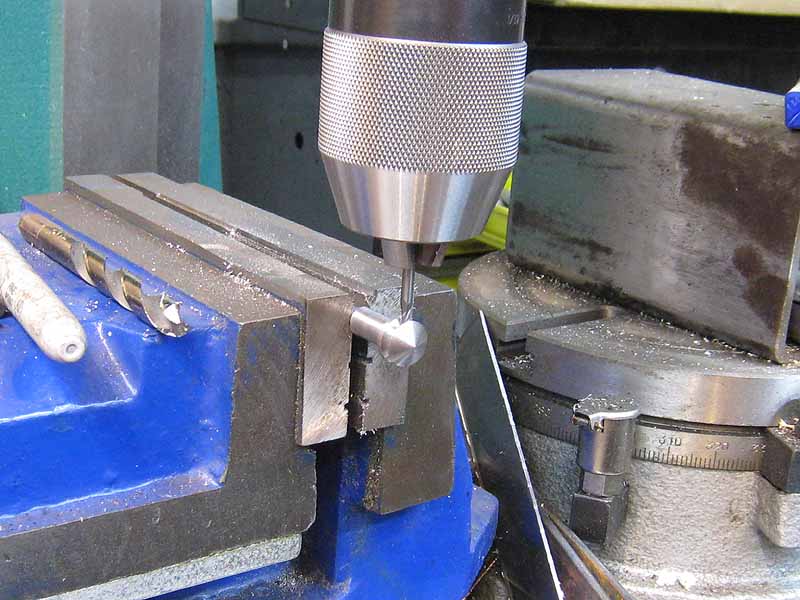
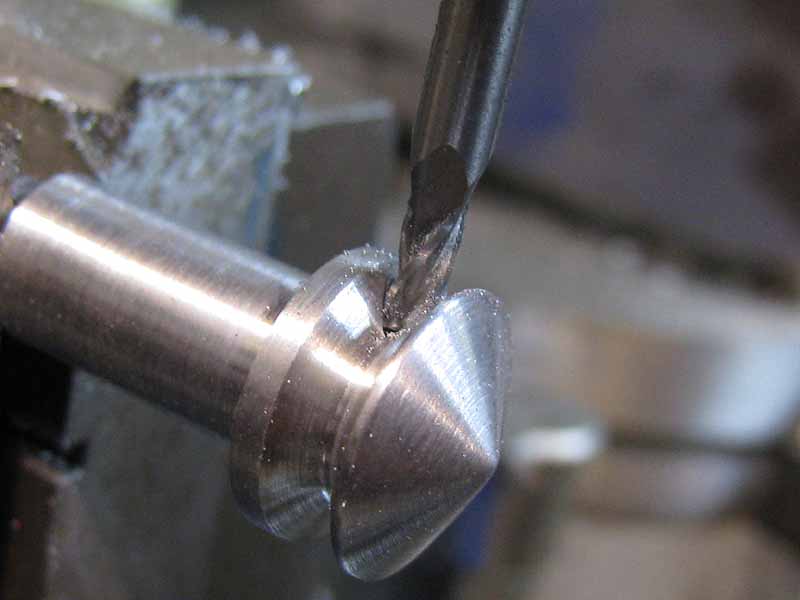
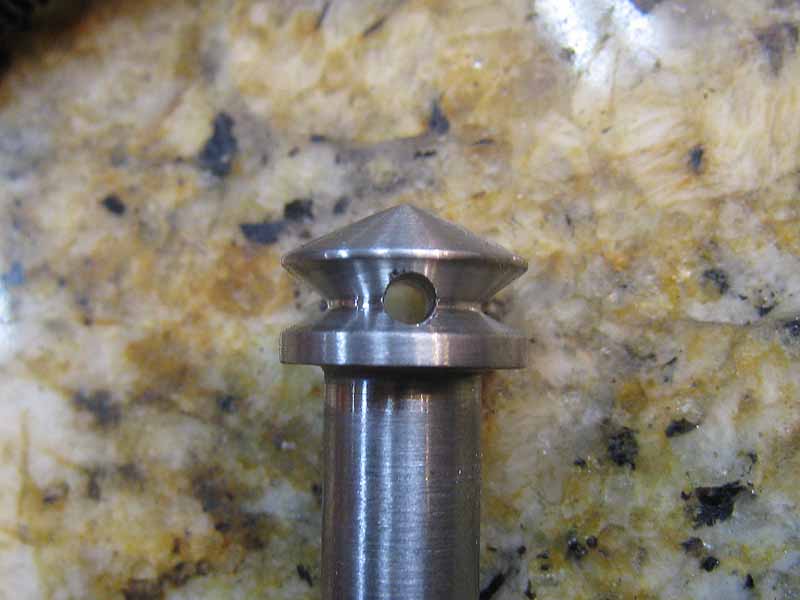
I am making a 3/32 hole through the pommel nut for the take down tool.


I started the hole with an end mill an finished it with a drill bit.
 
I sanded the nut to 320 grit which is as far as I'll take it until the handle is done.


Here is the handle belt sanded to 400 grit.


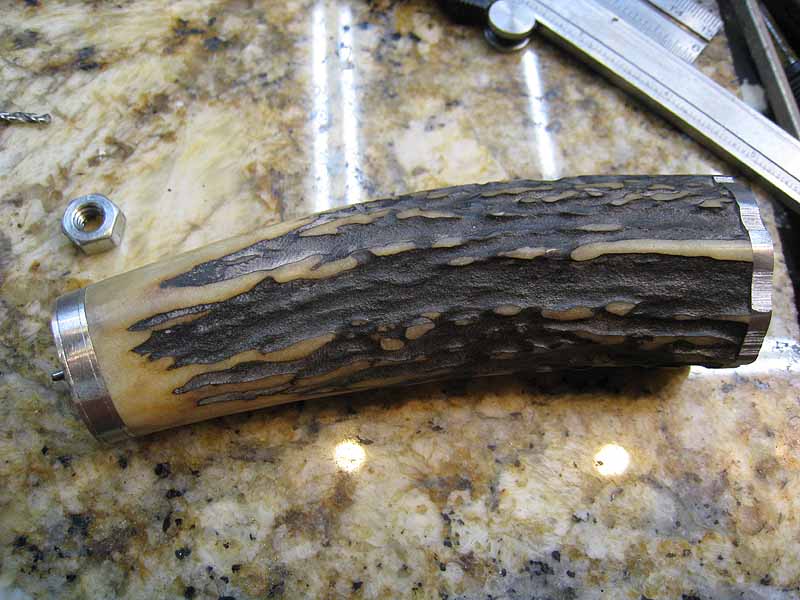
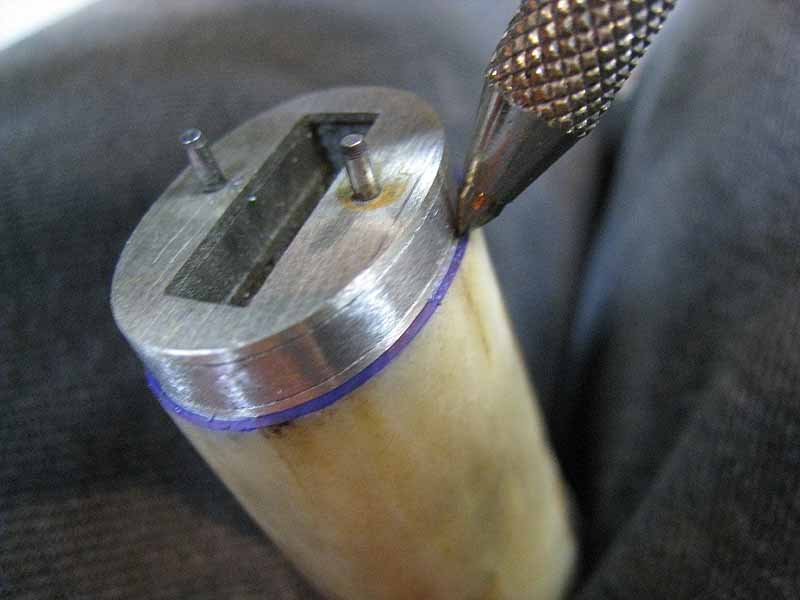
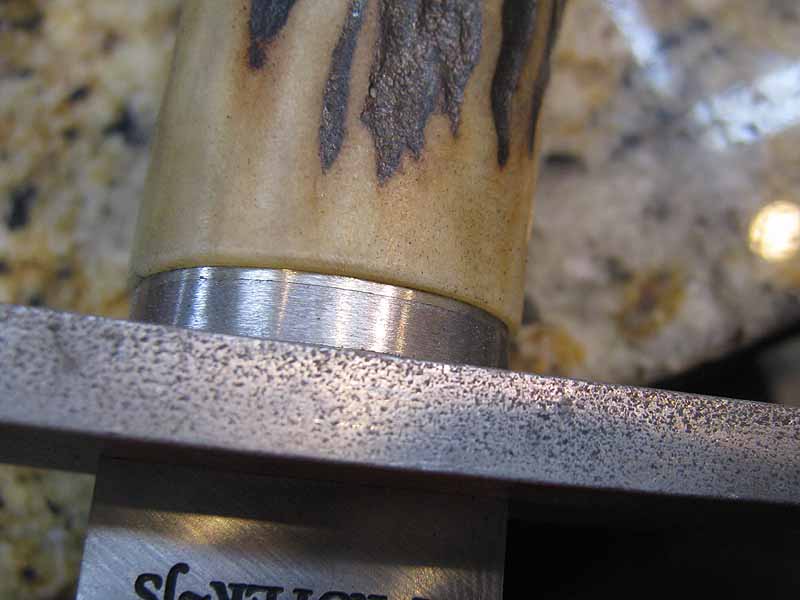
I ground the front spacer down a little and I'm scribing a line around it onto the stag so I can round the edge to give a bull nose. This will help if the handle ever decides to shrink or expand.


I'll round the stag to this line.


Here is what the bull nosed end of the handle looks like.


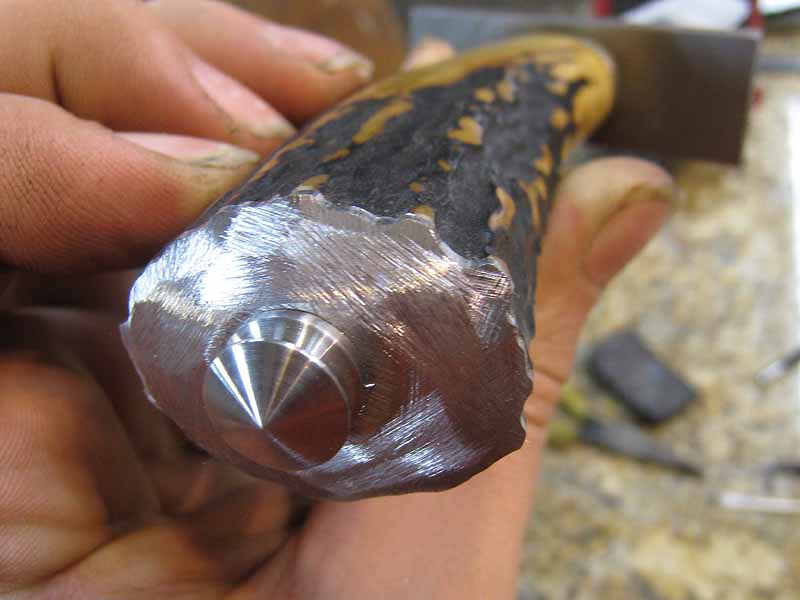
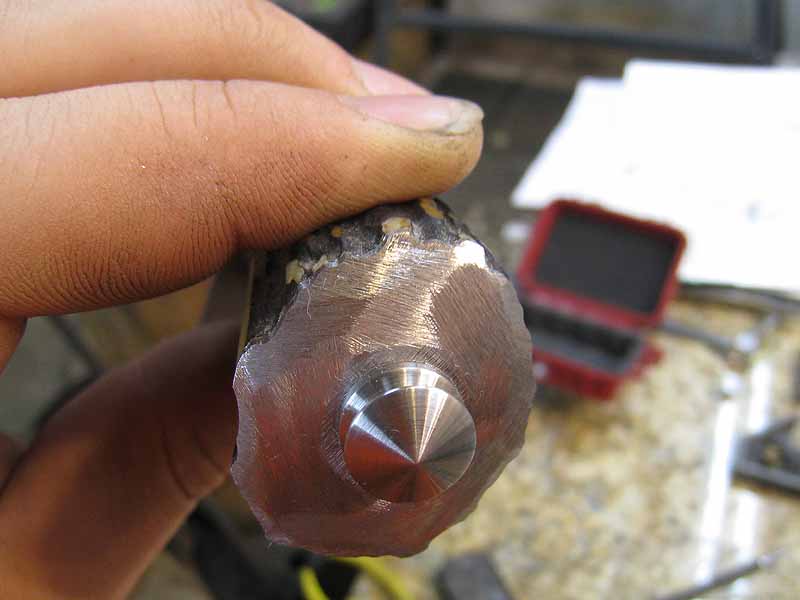
Here I shaped the edges of the pommel with a carbide bur to match it to the texture of the stag.


Time to work on the guard. I marked lines on the guard to help me make it symmetrical.


Now I'm making around the front spacer so I can shape the guard to my mark.
 
Last edited:
Back
Top