
-
The BladeForums.com 2024 Traditional Knife is available! Price is $250 ea (shipped within CONUS).
Order here: https://www.bladeforums.com/help/2024-traditional/
You are using an out of date browser. It may not display this or other websites correctly.
You should upgrade or use an alternative browser.
You should upgrade or use an alternative browser.
Tantos
- Thread starter JJaggar
- Start date


- Joined
- Feb 10, 2014
- Messages
- 4,120
GREAT for splitting blunts...

- Joined
- Jun 29, 1999
- Messages
- 10,125
I used my CS original tanto when cutting up a moose a few years back; it worked fine. The tip sliced through the cartilage of the joints beautifully, and it sliced very well (the CS tanto has a marked curve to the edge). The textured kraton handle grip was excellent, especially when it got greasy/bloody. The Master Hunter is a better blade for this task, for sure, but I was impressed how well the tanto worked in this case.
I have a Crkt m-16 tanto, I know I know, it was my first folder and last ever crkt purchase..but it's my beater..I mostly use my knives at work cutting plastic, boxes, tape, but I also like to keep them on me at all times for self defense..I use public transportation at all hours to and from work, walk through good and bad parts of D.C. so I do keep self defense in mind with my knife purchases along with general functionality. I'm looking at my next purchase being possibly a Chris Reeve Professional Soldier Tanto, so I'd like to find out more about them from people who actually use them on here.
I guess a better question for me to ask is, what kinds of cutting jobs/tasks are Tanto blades not the best/suited for?
I guess a better question for me to ask is, what kinds of cutting jobs/tasks are Tanto blades not the best/suited for?
This is a traditional tanto blade:
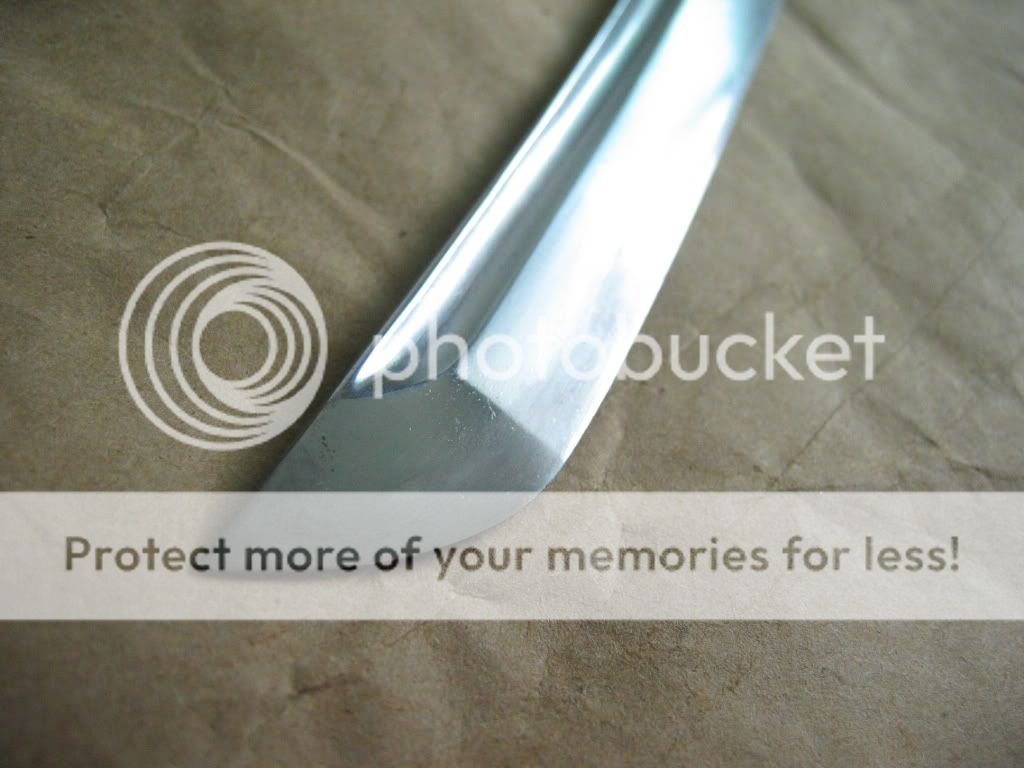
And this is what people like to call a tanto:

The first one is about as useful as any other field knife - and is really similar to many Scandinavian knife grinds. It is known as a straight back blade tip, and they all have similar tip strength.
The second one is an American invention.
I have found the that the American style tanto blades can be useful for lots of things if they have a rounded corner - especially for carving a depression in wood. But the sharp cornered kind is like having a knife with two tips: I would expect penetration to be worse - but slashing might be better because of the second tip.
And this is what people like to call a tanto:
The first one is about as useful as any other field knife - and is really similar to many Scandinavian knife grinds. It is known as a straight back blade tip, and they all have similar tip strength.
The second one is an American invention.
I have found the that the American style tanto blades can be useful for lots of things if they have a rounded corner - especially for carving a depression in wood. But the sharp cornered kind is like having a knife with two tips: I would expect penetration to be worse - but slashing might be better because of the second tip.

- Joined
- Dec 8, 2014
- Messages
- 457
In my youthful ignorance I used to think Tanto blades were just tactical blades for combat or for people who want their knife to look intimidating, and so I avoided them for a long time....until I went backpacking with a buddy who brought a tanto blade.
At first I though "what an idiot, carrying that overweight slab of steel..who does he think we're going to knife-fight in the Sierra Nevada Mountains??" Then, on day 3 when his stove broke I learned something about Tanto blades. We decided to try to make a stove out of his stainless water bottle. He stabbed holes all over the bottom and lower sides of the bottle to allow air in, we put kindling inside and lit a fire in that metal bottle and it was a surprisingly bad-ass little stove (I still had my own stove and fuel, so we were really just using the fact that his stove broke as an opportunity to practice things we could do if we had to). As I watched him stabbing that steel bottle I kept thinking, "there's no way I want to try that with my drop point". I also thought "damn, that tip goes through that steel bottle better than I would have expected". Since I really see knives as tools, not weapons, this opened my eyes to the fact that the Tanto design is a superior tool for piercing....and not just piercing people. I bought a Microtech Currahee when I got home.
I was reminded of this experience last night while I was watching Ultimate Survival Alaska (love that show!) and the military team made the same kind of stove using a rusty Camillus Tanto of some sort.
So these days, I look at Tanto blades with more respect. They have a practical emergency use in my mind now. They are excellent hard-use tools. Great for people that like to abuse knives and/or use them as pry bars. That said, I only take one with me if there's a chance I might be making a hillbilly stove along the way....which isn't very often.
At first I though "what an idiot, carrying that overweight slab of steel..who does he think we're going to knife-fight in the Sierra Nevada Mountains??" Then, on day 3 when his stove broke I learned something about Tanto blades. We decided to try to make a stove out of his stainless water bottle. He stabbed holes all over the bottom and lower sides of the bottle to allow air in, we put kindling inside and lit a fire in that metal bottle and it was a surprisingly bad-ass little stove (I still had my own stove and fuel, so we were really just using the fact that his stove broke as an opportunity to practice things we could do if we had to). As I watched him stabbing that steel bottle I kept thinking, "there's no way I want to try that with my drop point". I also thought "damn, that tip goes through that steel bottle better than I would have expected". Since I really see knives as tools, not weapons, this opened my eyes to the fact that the Tanto design is a superior tool for piercing....and not just piercing people. I bought a Microtech Currahee when I got home.
I was reminded of this experience last night while I was watching Ultimate Survival Alaska (love that show!) and the military team made the same kind of stove using a rusty Camillus Tanto of some sort.
So these days, I look at Tanto blades with more respect. They have a practical emergency use in my mind now. They are excellent hard-use tools. Great for people that like to abuse knives and/or use them as pry bars. That said, I only take one with me if there's a chance I might be making a hillbilly stove along the way....which isn't very often.
Last edited:

- Joined
- Mar 29, 2007
- Messages
- 3,220
This is a traditional tanto blade:
And this is what people like to call a tanto:
The first one is about as useful as any other field knife - and is really similar to many Scandinavian knife grinds. It is known as a straight back blade tip, and they all have similar tip strength.
The second one is an American invention.
I have found the that the American style tanto blades can be useful for lots of things if they have a rounded corner - especially for carving a depression in wood. But the sharp cornered kind is like having a knife with two tips: I would expect penetration to be worse - but slashing might be better because of the second tip.
The second one being an American invention is a myth, this shape, though probably not called a tanto, is documented on blades from many, many years ago. I think the "Americanized tanto" is an American marketing invention, but nothing more.
Check out the top image in this link, it can't get any more Cold Steel Americanized tanto that that: http://www.japaneseswordindex.com/sugata/shape.htm
Last edited:
The first one is about as useful as any other field knife - and is really similar to many Scandinavian knife grinds. It is known as a straight back blade tip, and they all have similar tip strength.
The second one is an American invention.
No, it's a traditional Japanese design too. The Japanese Tanto you posted has an ikubi-kissaki. The "American style" is a kamasu-kissaki. They had all kinds of tip designs, here's a pic of a chart with some. (There are lots more)
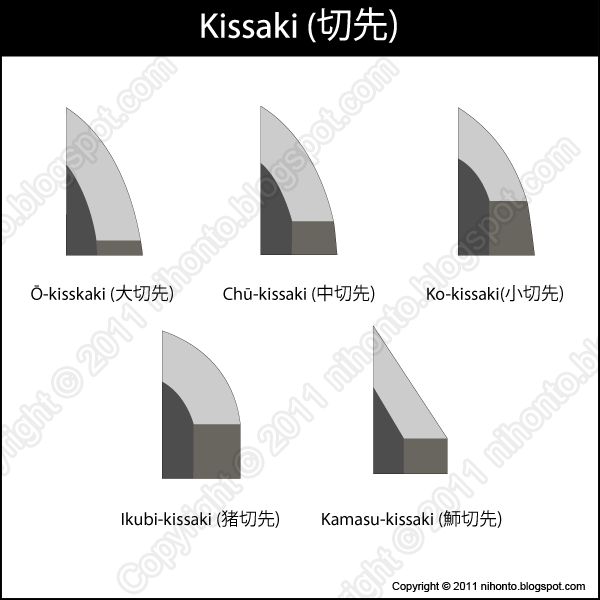
View attachment 522951
The second one being an American invention is a myth, this shape, though probably not called a tanto, is documented on blades from many, many years ago. I think the "Americanized tanto" is an American marketing invention, but nothing more.
Check out the top image in this link, it can't get any more Cold Steel Americanized tanto that that: http://www.japaneseswordindex.com/sugata/shape.htm
I sincerely doubt that any blade shape we think of as modern wasn't done at some point in the past. My point is that a typical Japanese tanto has none of the characteristics of what we call a "tanto grind" in the US.
If all those modern tantos with their hollow grinds were actually directly inspired by 9th century long swords - I'd be awfully surprised. Bob Lum's tanto blades don't look anything like that, and Cold Steel's look only a little more along those lines. The completely flat ground, pointed transition blades came after and was inspired by those.
Here's a typical Bob Lum blade profile. Hollow ground belly, convex curved tip.
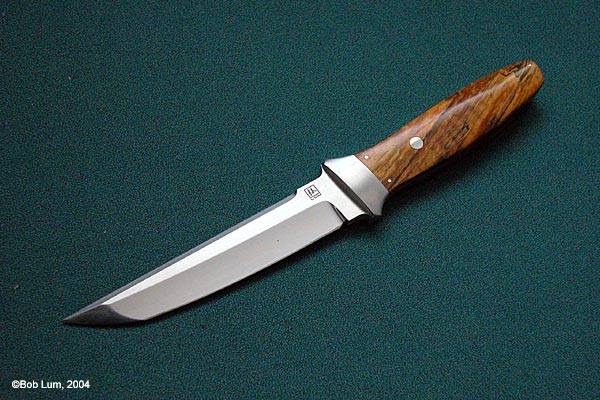
Here's the original Cold Steel tanto grind - hollow with flat tip and curved edge transition:

And then there's this:

Those three are effectively very different in how they would cut, and you would have a hard time finding a Japanese tanto that is ground like any of them. The majority of Japanese tantos actually have long, tapered tips ideal for stabbing. Like this:

Looks more like that CRKT Hissatsu thing than a Cold Steel.
All I meant by "American" is Bob Lum and Cold Steel may have been inspired by real tantos, but they created new grinds based very loosely on them. And those new grinds have inspired other grinds that are even more different from a Japanese tanto. What we have today are a bunch of different shapes that have very little to do with each other or the Japanese knife they take their name from.
The curved Lum and Japanese styles don't even match our conception of what a "Tanto point" is and would be classified as "Straight back". The fact that "tanto grind" can mean so many different things makes discussions about the use of the grind pretty difficult.
I would happily skin a dear with a curved point tanto. The sharp transition ones I would not. So they aren't really all the same grind.
Last edited:
Have you ever seen a Kamasu-kissaki on a tanto? I have only seen them on swords.No, it's a traditional Japanese design too. The Japanese Tanto you posted has an ikubi-kissaki. The "American style" is a kamasu-kissaki. They had all kinds of tip designs, here's a pic of a chart with some. (There are lots more)
View attachment 522951
Lycosa said:RX- Check out some authoritative books on the Japanese blades. There's nothing new under the Sun. Well, not much.
I don't believe they used the hollow grind.
I have several of those books. I realize it was used on swords - I've just never seen it on tanto knives.
Doesn't mean it never was. I just think the term "tanto" for a grind type has recently evolved out of meaningfulness.
i personally think the "american tanto" isn't that good of a stabber. maybe through hard material like sheet metal or wood. but if it comes to flesh, clip point or a bowie is way better. with that being said, tantos are also good for one more thing; snap cuts.
I sincerely doubt that any blade shape we think of as modern wasn't done at some point in the past. My point is that a typical Japanese tanto has none of the characteristics of what we call a "tanto grind" in the US.
If all those modern tantos with their hollow grinds were actually directly inspired by 9th century long swords - I'd be awfully surprised. Bob Lum's tanto blades don't look anything like that, and Cold Steel's look only a little more along those lines. The completely flat ground, pointed transition blades came after and was inspired by those.
Here's a typical Bob Lum blade profile. Hollow ground belly, convex curved tip.
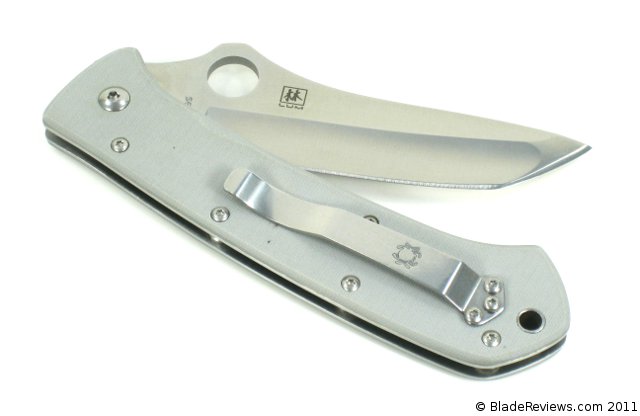
Here's the original Cold Steel tanto grind - hollow with flat tip and curved edge transition:
And then there's this:
Those three are effectively very different in how they would cut, and you would have a hard time finding a Japanese tanto that is ground like any of them. The majority of Japanese tantos actually have long, tapered tips ideal for stabbing. Like this:
Looks more like that CRKT Hissatsu thing than a Cold Steel.
All I meant by "American" is Bob Lum and Cold Steel may have been inspired by real tantos, but they created new grinds based very loosely on them. And those new grinds have inspired other grinds that are even more different from a Japanese tanto. What we have today are a bunch of different shapes that have very little to do with each other or the Japanese knife they take their name from.
The curved Lum and Japanese styles don't even match our conception of what a "Tanto point" is and would be classified as "Straight back".
There really isn't such a thing as a typical Japanese Tanto. They varied greatly through different periods & within those periods. Plenty were double-edged even.
The kamasu-kissaki was not an uncommon style at all; it was based on the Chinese equivalent tip design that was in common military use, and the "American tanto" very obviously copied the kamasu tip.
Here's a small blurb about that type of tip:
https://books.google.com/books?id=zPyswmGDBFkC&pg=PA56&lpg=PA56&dq=kamasu+kissaki&source=bl&ots=976Ai5aTTa&sig=FYOX-CkX541cQ_Ce98nd2sh3ROI&hl=en&sa=X&ei=n1T_VJPsC42nyASnyYLABg&ved=0CEoQ6AEwBA#v=onepage&q=kamasu%20kissaki&f=false
Have you ever seen a Kamasu-kissaki on a tanto? I have only seen them on swords.
I have several of those books. I realize it was used on swords - I've just never seen it on tanto knives.
Doesn't mean it never was. I just think the term "tanto" for a grind type has recently evolved out of meaningfulness.
They used all kinds of tip designs on all sizes of sword. A tanto is a short sword.
They used all kinds of tip designs on all sizes of sword. A tanto is a short sword.
And all swords are just long knives. But I would like to see a tanto with that kind of tip. I've never seen one or been able to find one. Despite tantos being similar in construction, they weren't really used like a sword.
Anyway, all I was really getting at is that the term "tanto grind" doesn't tell us anything. Even all the US tanto grinds are all different from each other, and none of them seem to be directly based on anything Japanese with that name.