Temperature Controlled Forge

Thanks Phil, that is the sort of information I was looking for. Also I managed to get both valves out of the tanks. I didn't have a pipe wrench, but I do have a 3 pound cross peen hammer so I just started pounding on the end of the valve till they started to move. After about one full rotation I was able to twist them out by hand. I think having them more less full of water gave them enough weight that I didn't have to clamp them between my legs.

No the question is how long should I let them sit filled with water before get at them with the angle grinder and a cutting disc?
 
The idea with filling them with water is to just displace the propane/air mixture inside.

One you fill with water and drain, you should have just air inside & the boom risk is gone.
 
Now the question is how long should I let them sit filled with water before get at them with the angle grinder and a cutting disc?
I've heard it's not just risky residual propane gases, but there can also be sludge that builds up in the tank with possible combustibility. In cases like this, I rather err on the side of caution. With the water still in the shell, I use an angle grinder cut-off wheel and cold chisel to cut the 8" diameter circle of steel that served as a valve guard and handle. Drilling and cutting--with water still inside--can be done as long as there are a couple of inches of air space for clearance for drill bits and jig saw blades when they go through. I've found a jig saw with a good metal cutting blade the easiest way to cut the shell. It can be quite precise and generates minimal mess. Sometimes I grind the back side of the blade down to make it thinner so it can cut tighter curves. Once a good sized initial opening is made I don't much worry about the boom factor any more.

Have you seen Michael Porter's book on forges and atmospheric burners? It doesn't go into building controllers, but has a lot of great info. There's a whole chapter specifically on making a a forge out of a 5lb (20gal) propane tank.

attachment.php
attachment.php


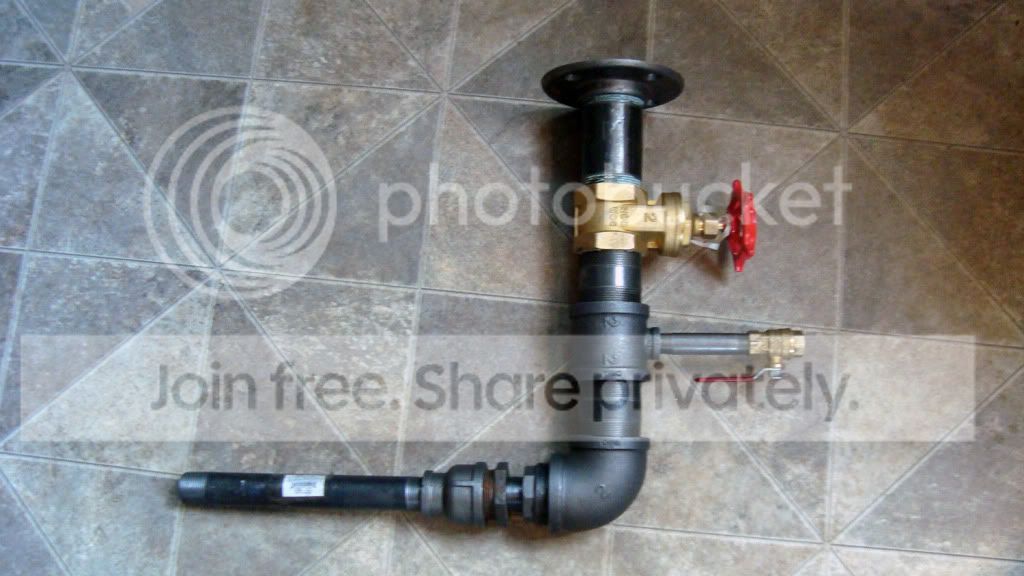
Here's a pic of the valving system I made. It has an idler bypass line and both a manual main line or a solenoid controlled main line. I've only used it manually as I still have to get the controller finished up. (I was originally putting it together to control an electric jeweler's burnout oven for heat treating, but got an Evenheat when my grandma died and left me around a grand. It seemed like a good way to memorialize the dear old gal. )

attachment.php
 
Last edited:
I have a freon tank forge I built, but stopped and switched to a solid steel sch 40 pipe for my shell because I was having a hard time with the problem you mentioned about the firebricks Phil... I thought maybe this would be a good addition for you Unky when you build yours. I found this pick in the Forge forum on Iforge.

Freon Forge.jpg

Dodge, on Iforge took a small piece of mild steel round and tacked it around the cut out shell to stiffen it. It also looks like by doing that he made the front openable to get bigger pieces in. You could easily do that to your propane forge to allow you to add a shelf, bracket for fire bricks, or for a tool rest.:thumbup:

I wish you lived on this side of the border Unky, I can get all the fittings you need to build your blown forge for free....(sorry for the tease) I assume even free shipping from Oregon would be expensive? If it's affordable I'll send you some black iron fittings for the cost of shipping...:D

Make sure you get the type K 2300 degree thermocouple... Also, if you end up forge welding, a PID that goes over 2300 degrees might be desired... I was at a hammer in at A C Richards' place a couple weeks ago and he was running his forge at 2350+ while forge welding...he said his old PID would just go to ---- when he crossed 2300.....I hope I'm not muddying the waters...
 
Ooo thats tempting, would it all fit in a small or medium sized international flat rate box?

USPS-Produced Small Box: 8-5/8" x 5-3/8" x 1-5/8".
Maximum weight 4 pounds.

USPS-Produced Medium Box:
13-5/8" x 11-7/8" x 3-3/8" or 11" x 8-1/2" x 5-1/2".
Maximum weight 20 pounds.

If its not too much trouble I would be more than willing to pay shipping, because it looks like I will be paying both shipping and parts right now.
 
I like your manual main line with idler by-pass . I may use that as part of my next build.
 
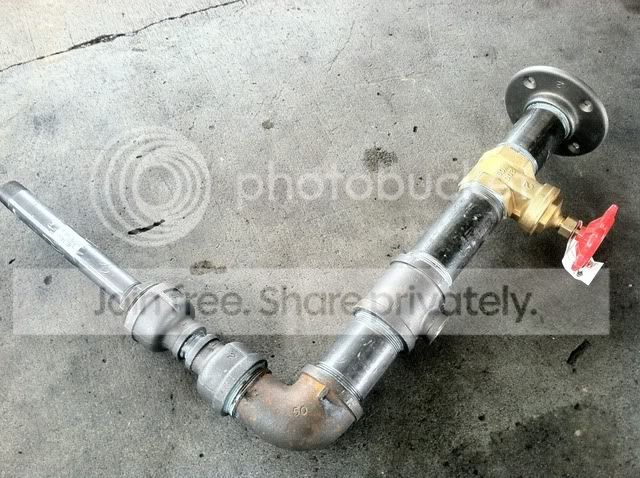
Sure.... the parts are yours... it's more than 4# but less than 20#. I can send you these exact parts on this forge blower I'm building.. They list can be modified if someone thinks anything different would be better. I had almost every part here left over from a job...It's a modified version of Indian George's burner and the burner Nathan(Silver Pilate) got from Hightemptools(formerly Ellis).....with a Bladsmith inspired mixing chamber... I still have to add the needle valve....
1 2" floor flange, 3-2"x4"(ish) nipples, 1-2" ST 90, 1-2"x1/2" tee, 2-2"x1" bell reducers, 1-2"x1"bushing,1-1"xclose nipple,1-1"x10" nipple.
I might not get it fired for the first time this week... Maybe next. So.... I don't know from experience if it will work well... I assume it will... Anybody with a blown forge that would change what I did before I ship Unky the parts?

Here's my built burner...

I-Phone246.jpg
 
My opinion might be skewed because I have both a Paragon and a digitally controlled salt bath.... but for forging I think having it temp controlled versus just temp monitored is overkill. From general forging to welding, I can dial my forge in to pretty tight parameters with the gas and air controls.... and I like it just running smoothly versus the constant on/off/on/off you get with the solenoid.
 
I see your point, Nick. Once the forge comes up to heat, it's not all that hard to regulate the temperature to a near-steady state with the needle valves. If you are heat treating and need a more accurate soaking temp, or if you're like me and like to completely over-complicate things, then the PID forge is the way to go! :D

--nathan
 
Nick, That is the benefit of the two-stage controller. No on/off/on/off. Just Hi/Low/Hi/Low.

For general forging, the gas and air can be well regulated without a controller. If the forge will be used for temperature specific purposes, like HT, then the controller is well worth its cost.
 
I think I will just start off with a temperature monitored forge, and add in the high low control a bit later as I wrap my head around it and heat treating a bit more. When I got my tanks I got a 30 and a 33 pound. Today I got the 30 pound tank cut and ready for a bit of welding, and I just cut a hole in the top of the 33 pound tank. After all the cutting I stood back and thought to myself that the larger tank that is more less still intact could make a good quench tank with a heating element added, then I got think that it could be a bit big. Right now I am just using an old ammo case and some canola oil to pay with and test out my perceptions on heat treating. Would the large volume of the big tank be too much or is the larger volume better to dissipate the heat from the blade?

Right now I have to do a little math to figure out how much more ceramic wool I need to buy to get my 3" thickness I want.
 
I sent you a PM as soon as I got in, I was out all day then went straight to work on cutting the tanks. It is suppose to get below freezing here tonight and I didn't want to deal with ice in the tanks.

Sure.... the parts are yours... it's more than 4# but less than 20#. I can send you these exact parts on this forge blower I'm building.. They list can be modified if someone thinks anything different would be better. I had almost every part here left over from a job...It's a modified version of Indian George's burner and the burner Nathan(Silver Pilate) got from Hightemptools(formerly Ellis).....with a Bladsmith inspired mixing chamber... I still have to add the needle valve....
1 2" floor flange, 3-2"x4"(ish) nipples, 1-2" ST 90, 1-2"x1/2" tee, 2-2"x1" bell reducers, 1-2"x1"bushing,1-1"xclose nipple,1-1"x10" nipple.
I might not get it fired for the first time this week... Maybe next. So.... I don't know from experience if it will work well... I assume it will... Anybody with a blown forge that would change what I did before I ship Unky the parts?

Here's my built burner...

I-Phone246.jpg
 
So I got the package from Brian today, and quickly screwed it together. Nothing is tight yet This is just my way of keeping the parts together till it is permanently assembled.

burner.jpg


Next will be getting the propane fittings and the blower attached so I can test fire it, and then its doing all the welding on the forge body. My next set of questions though are, is there any special type of pipe that I need to make the burner holder? Can it be anything strong enough to hold the burner, or are there things to stay away from, like galvanized pipe. Secondly gas supply, I am thinking I will just order the 0 - 17 PSI Propane Regulator/Assembly Kit from High Temperature Tools & Refractory, the 10' hose with pressure gauge one. Will I still need to get a needle valve as well, or will the regulator and shut off valve that Brian supplied do the job?

Like I said in the previous post I think I will be putting temperature controlled on hold for now and just go with temperature monitored. For the simple steels I will be working with for the next little bit I think I will be able to get by with that. If I venture into the more complex steels in the mean time I will just send them out.
 
Unky, I finished my forge up a couple weeks ago and used a very similar burner. You will defiantly want the needle valve for fins adjustment of the gas. As far as the tube to hold the burner, I just used 1-1/4" pipe as my 1" burner fit snug inside it. I wouldn't use galvanized. I used copper rather than a hose for gas supply...just seemed safer. By cranking mine way down I can idle at around 1300 degrees at 1/2 psi on the gauge. With minor adjustments of the air valve and needle valve I can hold my HT temps. Have been forging at 1-1/2 psi at around 1800 degrees. It seems to work fine just monitoring the temp. Just stand to the side when you light it.
 
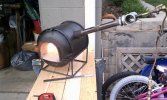
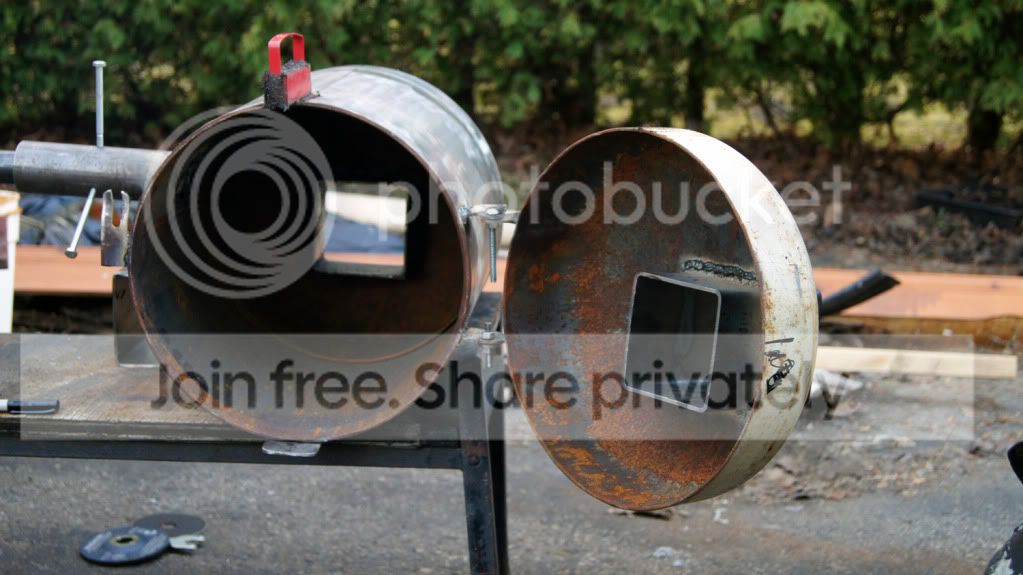
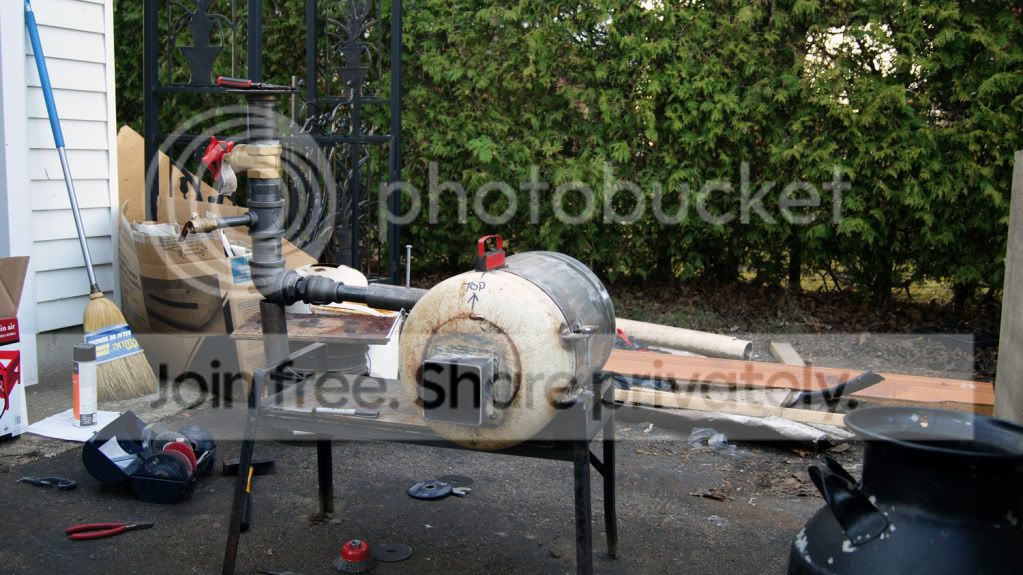
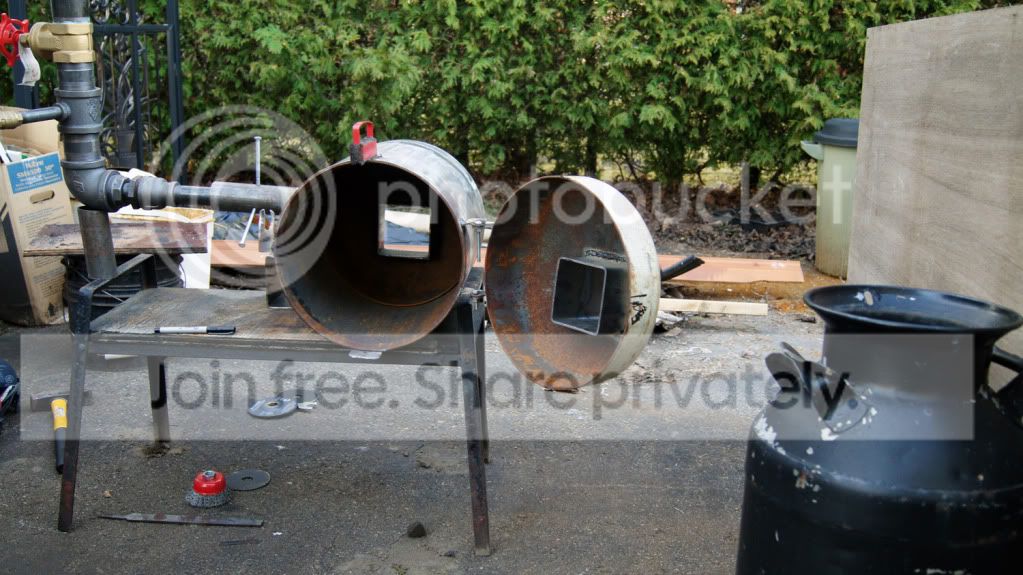
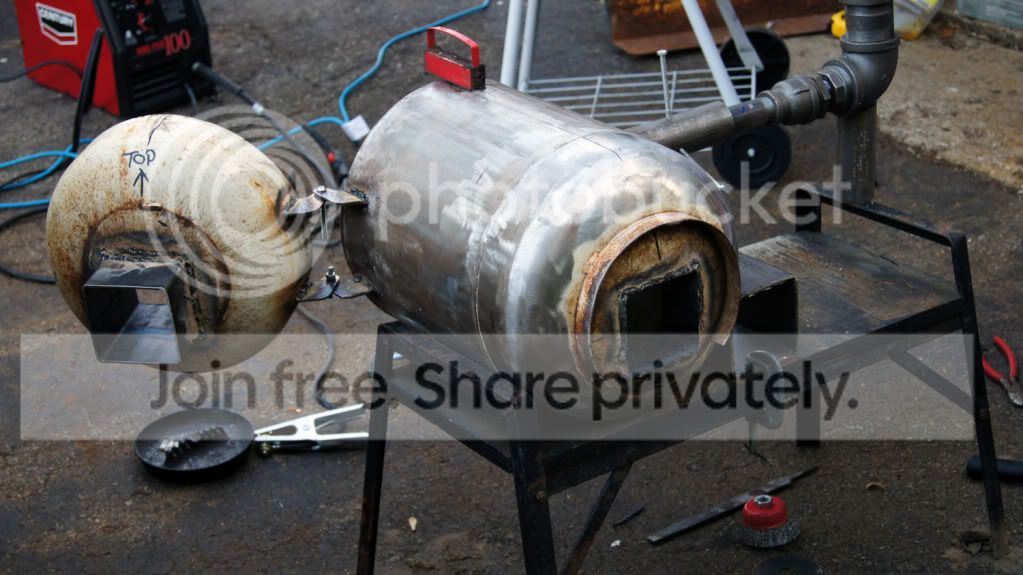
Its been a while since I have worked on this, life just kept piling other things up in front of it:o. Well today after attending my Aunt's funeral I had some spare time and a new wire feed welder so I went to work. My welding leaves a lot to be desired, but it holds so I guess that is a good thing. I have a few more supplies to pick up before I am finished welding, and I still need to get into Ottawa to pick up some ceramic wool so its not finished yet. I found a propane hose that may work for me, if I can find a few fittings to adapt it to the black pipe, and I still need to finish the door's latch, but this is what I got done today
DSC00471.jpg


DSC00473.jpg


DSC00476.jpg


DSC00474.jpg


I have an old Propane grill frame that I will be mounting it to, but I don't have it hear right now to measure up for the leg placement, and the little piece of pipe is just there to support the burner while it is on the makeshift stand.
 
Last edited:
Sweet!!!!

I'm(Greg's) hoping to have my forge up and running by Saturday. Looking forward to seeing it done!
 
That thing looks really good. Nice job on it.

A question about the pipe work for the blower unit. Why do you have it going up? Most of the other furnaces like this I have seen the blower and pipes going vertical like yours. The way I look at it is gravity works really well. If it isn't held in place tightly and almost perfectly vertically, it would probably try to fall over. Why not flip the pipe over so that it is already hanging down. That would eliminate the possibility of it falling over while everything is hot. Not trying to give you crap about it, just trying to understand why most I have seen are going up, not down.
 
The reasoning is that propane is heavier than air. If the pipe points down and you have a slight leak the gas will pool at the lowest point and risk being ignited when the motor is turned on.
That is how I understand it any how
 
Back
Top