The "Ask Nathan a Question" Thread

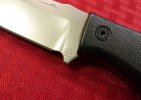
IMG_0354.jpeg

Hi Nathan, I’m pondering modern knife design a little bit, here. I’ve noticed that you include different choils with different knives, and I know there’s always a reason.

I understand finger choils, I think. A place for your finger. But I’ve never *really* understood the logic behind sharpening choils.

In a well-used knife with no choil at all, after five or ten years you’ll see wear due to sharpening. And there’s the thicker, unsharpened bit at the heel of the blade, where it transitions into the ricasso. But a choil wouldn’t have made that bit of edge useful — it would have simply deleted it. Right? Or no? It’s muddy, in my mind.

Your thinking is always clear, here, so I’m curious to hear your thoughts on when sharpening choils are useful in your knives, and when they’re not. Thanks!
 
I understand finger choils, I think. A place for your finger. But I’ve never *really* understood the logic behind sharpening choils.
The point is that without this choil, you accidentally catch the ricasso and might slightly nick the guard, leaving abrasive marks on it—which basically can ruin the knife's visual appearance.


When you need to sharpen, say, 10 knives in a day, or more, a sharpening choil is VERY handy.(If you sharpen more than 10 blades in a day, you'll really start wishing they all had a choil.)


All the other reasons are mostly not that serious.


!MY OPINION!

Additionally, most blades have a transitioning geometry from the guard, through the plunge line, to the ricasso—and that section of the blade. The sharpening choil makes it so that the geometry of the cutting edge stays essentially even/consistent, and you don’t have to excessively twist or maneuver the blade while sharpening/stropping it.
 
Back
Top