The "Ask Nathan a Question" Thread

From my limited understanding, issues with full tang hawks are balance, shock absorption, potential for metal fatigue over time, and inability to replace a broken handle. Maybe poor geometry too, depending on the design.

Maybe the right design could mitigate the concerns. I’m probably off on them anyway.

Bad design is bad design. Not all full tang 'hawks share all of those shortcomings. And in some cases, it's more of a tradeoff, since there are shortcomings to traditional friction-fit 'hawks as well.

Not sure how likely it is to break a well made full tang hawk.

Not likely. Unless one is doing something extraordinarily stupid with it. No different than a well-made knife in that regard - use it within its designed use case, and it's fine. Go beyond that and you may win stupid prizes.
 
Last edited:
You're going to pay $1,000 for an axe?

Did you bump your head?
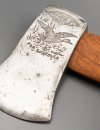
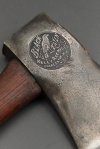
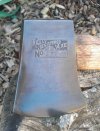
With all due humility, I am confident you would be surprised. Especially it would have an awesome LARGE scenic type engraving and a deep makers mark on the reverse side. And the weight mark also under the poll. People like me would buy that. UNHUNG! There are makers starting to pop up selling CNC axes in A2 and other tool steels. It's rare but I have contacted 1. And vintage axes going for 750 to 2, 000 is not uncommon.

The makers mark and the artwork could be iconic. And put it into historic axe collections. Screenshot_20260621_200454_Chrome.jpgScreenshot_20260621_200636_Chrome.jpgScreenshot_20260621_201014_Chrome.jpg

And what shape? Ahhh... That's a deep discussion.

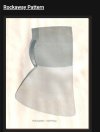
Screenshot_20260621_201943_Chrome.jpg the Rockaway would fit the camp axe / carver / hunter idea very well. And is a highly prized and rare profile.

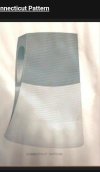
Screenshot_20260621_202040_Chrome.jpg. The Connecticut is also a prized shape. The North Carolina pattern has a more narrow bit, so probably not a candidate?
 
Hello, I have a question regarding the exposed tang of the knife handle. Do you recommend wiping it down and applying a light coat of oil after each use or handling? How do you personally care for and maintain it?

I do absolutely nothing to maintain it and I never have a problem with it
 
If I make a response that's long enough, it won't fit into the translation apps

Lol 😁


The GV-503 is going to run the Kukri.

Once the swords come off, that will get started. I do still have some R&D to do.

Every blade has a very specific center of percussion. I can calculate this in ProE. But that calculation is an imperfect estimate.

For most knives, this really is not that critical. Center of gravity can be calculated precisely, CP requires some assumptions about how it is held and how it will react in your hand on impact. There are additional, difficult to quantify, variables.

For most knives, if you're off a half an inch in your estimation, you're fine. The same is not true for a Kukri. That CP needs to land just ahead of a specific part of the geometry, the convex part just before it transitions into concave. And every American manufactured Kukri that I have evaluated has gotten it wrong.

(Ask me about this if you come out this october, I will show it to you)

We're going to get it right, but this is going to require physical prototypes before we start production.

Anyway, I was going to run the semi integral dagger on there first (the material is ready) but we're getting behind on the Kukri project so we're going to move that to the front.

I was not aware that the grind on Kukri will be convex. I believe this is a first from CPK! I guess that means Kukris will be get a hand grounding to achieve the convex geometry. I am so glad I got a spot in pre-order.
 
I was not aware that the grind on Kukri will be convex. I believe this is a first from CPK! I guess that means Kukris will be get a hand grounding to achieve the convex geometry. I am so glad I got a spot in pre-order.
I’m not a 100% sure that should be read as a ‘convex grind’. I think he might just be using that term to describe the ‘belly’ of the curve in a kukri’s edge (i.e. ‘convex’ = widest part of the blade, vs ‘concave’ where it begins to narrow towards the handle).

I could be wrong, though. I think Lorien’s original prototype did have a convex grind.
 
I’m not a 100% sure that should be read as a ‘convex grind’. I think he might just be using that term to describe the ‘belly’ of the curve in a kukri’s edge (i.e. ‘convex’ = widest part of the blade, vs ‘concave’ where it begins to narrow towards the handle).

I could be wrong, though. I think Lorien’s original prototype did have a convex grind.
Oh that makes sense. I was not expecting a convex grind as it requires hand grinding but I was positively surprised when I read the post thinking I will be getting one of the only convex ground (to my knowledge) CPK pattern.
 
So does that mean some of the older K20 orders are likely to be completed before October 17?


Also, I wanted to ask if you have any plans to make larger Japanese-style blades in the future. Besides the K20 (wakizashi), have you ever considered producing a standard-sized katana with a blade length of around 70 cm, or even a larger Kinno-to with a blade length of around 90 cm?


Would you ever consider making something like that?
 
I don't want to say those are lame because people are going to misconstrue my meaning
I would love to hear your opinions on RMJ and Winkler full tang 'hawks - especially since you are implying as "lame" tools that have seen extensive use overseas in the hands of top tier Special Operations guys

I personally think a full tang CPK 'hawk or camp axe would absolutely crush it, even at $1,000 (the price point around which many Winkler 'hawks sell for in 80CrV2)

HFB is producing a 12.6'" overall, .20 thick, full tang 3V camp hatchet and selling for $650
 
Last edited:
Back
Top