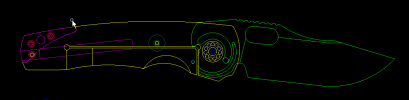
The road to my first framelock

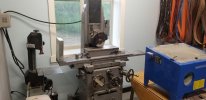
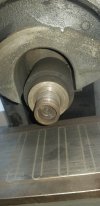
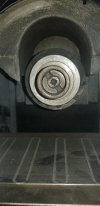
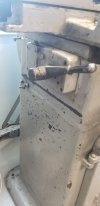
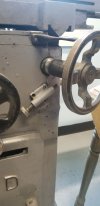
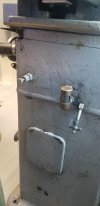
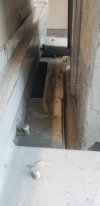
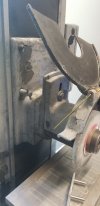
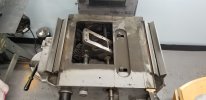
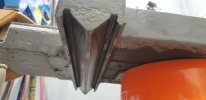
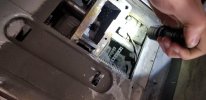
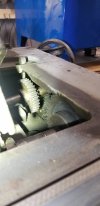
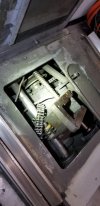
I have been doing a bit of research about surface grinders and I quickly learned that the wheels should be balanced. I have watched several videos on the topic now and im left with some questions. My older machine does not have a tapered arbor and im not sure if it can be removed for use in a balancing stand. The wheel has a small amount of play when on the shaft so if I cant balance it on the actual arbor the balancing seems useless because the wheel could be mounted slightly differently. I am wondering if anyone has any tips for balancing wheels on this type of surface grinder or if it is really necessary for a knifemaking application. I want to avoid stress on the bearings and get the best finish possible but im not sure how possible it is with this machine. As always any help is greatly appreciated. I will include pics below. On a side note if anyone knows what some of the levers and fittings are for I would love to know. Other than the 3 main wheels I dont know what anything else does. I realize that this is alot of questions all at once.
20190701_093900.jpg 20190701_093921.jpg 20190701_094213.jpg
 
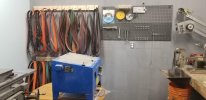
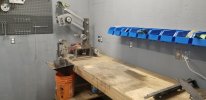
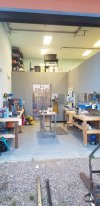
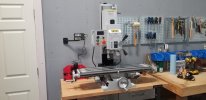
Your shop is looking great!
Thanks. Its been quite the project but i figured do it now before i get too many heavy machines or it will never happen. I learned alot in the process and im sure the learning is just starting. I even roughed in for a giant haas cnc so hopefully I will never need to upgrade my shop again (just in case...)
 
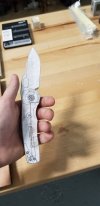
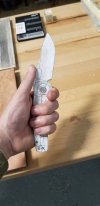
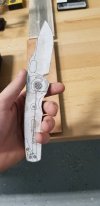
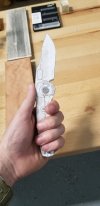
I made a quick model of the framelock to test the ergonomics. For my hands it seems good and im happy with the changes. I need to make a slight change to the clip then it will be ready for waterjet. The knife is designed to work in 2 grips kind of like a pm2 but both positions are on the handle. Let me know what you think. For reference my hands are a medium in most gloves.20190706_095323.jpg 20190706_095315.jpg 20190706_095300.jpg 20190706_095307.jpg
 
Surface grinder tear down continues and I installed a dro on the mill. I also realigned the stock quill dro bacause it was binding from factory. Much better now. I have my titanium and blade steel now. I need to finish my waterjet cad and then send the parts to be cut. I think for now my surface grinder rebuild is my largest obstacle. Im pretty sure my rotary table is too small. Any advice on a decent one that doesn't cost a fortune?
20190714_142930.jpg 20190714_142923.jpg 20190714_143029.jpg 20190714_143016.jpg 20190714_143006.jpg 20190714_142954.jpg 20190714_130001.jpg
 
I had an 8 inch and thought it was too big. I use a 4 or 5" china rotary table and turn it with a battery power drill. I also use a drill to raise and lower the mill head.
 
I had an 8 inch and thought it was too big. I use a 4 or 5" china rotary table and turn it with a battery power drill. I also use a drill to raise and lower the mill head.
I have a 4 inch now. I want to get a 5 inch with a MT center so i can easily center it. My small one has an oblong hole in the middle. I know ghis can be done with a dial indicator but it seems slower. I found an r8 to mt2 adapter on amazon. I figured i could use a dead center to center my table provided it was a precise fit. If anyone has any other methods I would love to hear them.
 
My rotary table has a mt2 center. I made a tapered shaft bigger than the mt2 with a 1/2 inch end that fits in a collet to center with. The I turned the other end of a mt2 drill chuck shaft to fit the pivots. Easy peasy.
 
Last edited:
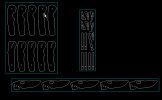
I finished the CAD for my waterjet. I hope to take the materials in early next week before I leave for work. If anyone has any comments or suggestions based on my waterjet profiles let me know. I have oversized the outer perimeter by .025 and undersized the holes by at least that much. I have had slip joints cut by this company before and they seem to be pretty precise. There is a bit of kerf but I'm sure this can be corrected by cuttings slower. the kerf results in extra material on the outside perimeters and the inside of the holes. Because of the tighter tolerances and less forgiving materials (compared to slipjoints) I have only spotted certain holes. I plan to use my backspacer to spot the holes onto my lock side then use the lockside to transfer to the show side. The only hole spotted on both sides is the pivot hole. I will use this to help line up the scales. The extra .025 will make up for any small discrepancy. Because of the kerf I have not decided to cut the lockbar. I don't want to mess up the lock geometry so I will use a slitting saw to cut them.
Below is my layout plan plotted on my raw materials.
upload_2019-7-16_22-10-32.png
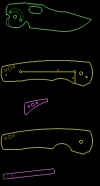
Here is a pic of my final dimension parts plotted over the waterjet parts to show where the extra material is left.
upload_2019-7-16_22-11-57.png
And here is my final design.
upload_2019-7-16_22-12-42.png
If anyone has any questions let me know. I have never tried this before so I am not sure how well this process will work. I didn't spot every hole because I want some wiggle room for certain things like the clip and stabilizer. I also only spotted a hole for the stop pin on the lockside. I plan to have a blind hole on the showside to help the finished knife look a little nicer. This was based on the recommendation of ti connector. I also finally placed an order on their site for my parts and some tooling.
 
Everything looks good, but kerf isn't the same piece to piece. I think if you only cut your holes .025" undersized, your going to be scrapping all those pieces. Spot hit the holes only. Like literally the jet will go above its spot, turn on, and not move at all. This will pin hole pierce your piece and be a repeatable centerpunch essentially. Your lockbar wont have THAT much kerf that it cant be cleaned up with some strips of sandpaper and a little elbow grease. Your going to spend so much time and money on slitting saws. I highly highly recommend getting them jetted and then just clean them up with some sandpaper strips you slide in the slot and sand it even.

You only have 1 screw for the clip? That wont work well, itll twist all over the place. Add a blind screw in the back or put a detent in it to alleviate twisting.
 
I can reduce the hole sizes. For my slipjoints I have undersized my holes by .022 and they have always been good. I have had about 20 cut out and they have been bang on. That being said its easy to go smaller and drill more. As far as the clip goes, my frames are contoured so i plan to mill a flat island for the clip to sit on. This will provide shoulders to prevent the clip from twisting. Having only one screw allows for the clip to be a little deeper carry. Simillar to a sebanza clip. I think this will be easier than trying to manually match the contour on my frame. I dont want any gaps on the mating surface. Let me know what you think. Thanks for your input.
 
I can reduce the hole sizes. For my slipjoints I have undersized my holes by .022 and they have always been good. I have had about 20 cut out and they have been bang on. That being said its easy to go smaller and drill more. As far as the clip goes, my frames are contoured so i plan to mill a flat island for the clip to sit on. This will provide shoulders to prevent the clip from twisting. Having only one screw allows for the clip to be a little deeper carry. Simillar to a sebanza clip. I think this will be easier than trying to manually match the contour on my frame. I dont want any gaps on the mating surface. Let me know what you think. Thanks for your input.

If that hole sized worked in the past for you, then rock on and continue that way! These just need to be even more precise in accuracy than slipjoints - just keep that in mind! Good idea with the clip, in that case youll be more than okay with any twisting or anything. Only thing that maybe will make the knife THAT much cleaner is spot jet a hole for the clip in the frame, and cut the profile of the clip, and use blind screws to attach it from the back. Should give it a nice clean look but its personal preference in the hidden vs non hidden hardware aspect.
 
the kerf on waterjetting can vary in width so you may be fine to have them cut it w/ the waterjet - would check on this. I would just make sure they cut it from the back side if so - that way the taper is most narrow on the outside of the scales.

Also, on your choil it looks a little deep and snaggy - would consider making that shallower and the customer can always deepen it or have it deepened over time as they sharpen. Or at least, make it more angled so if they are cutting rope it will slip out of the choil and up on to the edge. looking killer!!!

 
the kerf on waterjetting can vary in width so you may be fine to have them cut it w/ the waterjet - would check on this. I would just make sure they cut it from the back side if so - that way the taper is most narrow on the outside of the scales.

Also, on your choil it looks a little deep and snaggy - would consider making that shallower and the customer can always deepen it or have it deepened over time as they sharpen. Or at least, make it more angled so if they are cutting rope it will slip out of the choil and up on to the edge. looking killer!!!
My plan was to request as straight a cut as possible on the perimeter and then judge based off that for next time. If it looks good ill have the lockbars cut from then on. The choil is something i have played with alot. On one hand I see what you are saying about snagging and on the other I want it to be easily user sharpened. Spyderco is a good example of a no snag setup but they are a pain to sharpen nicely to the heel. It also limits you to only using a 90 degree plunge. Personally i prefer the sebenza style that is larger and gradual that allows for easier sharpening. This comes at the cost of potential snagging. I could minimize it but I feel that having a smaller choil will likely still cause issues when cutting those types of materials. I realize that the end user can expand a choil but not everyone is comfortable with that especially on a custom that is pricey when compared to a production knife. Everything is a tradeoff and I may try to play with things a bit but ultimately for this model I have decided to accept some potential snagging to provide a larger choil that is easier to sharpen and provides a longer sharpening life. Hopefully that is the right call i can always change it if im the only wierdo who thinks that is a good tradeoff. Thanks for your input and advice on this process. I like hearing this type of feedback. I would also love to hear other peoples opinions on my sebenzaish choil vs a smaller one.
 
At least at this stage its my plan to mill the pivot barrel to the exact dimension from one pivot counterbore to the other so that when its firmly tightened there is no play and a free action. Kind of like a sebenza 21. Im not sure how easy that will be but its my goal. Unfortunately i dont think a d shape pivot is possible with a manual mill. The pivot will be tooled on both sides and if i can nail the tolerances so that the screws are firmly tightened they should not come loose (again like a 21). I also plan to have a shouldered 3/16 hardened stop pin. Thanks for your interest. Once I actually make one ill go over every detail. Im sure by the time its done it will look a bit different.

Please make sure to make both the female and male pivot/body screws keyed to accept torx wrenches if that is the case. There is nothing more annoying than a free spinning screw that has no keying on both sides.

I see it is like that in the drawings but please make sure this makes it to final product.

Also congratulations on what looks to be coming along as a great project!
 
Please make sure to make both the female and male pivot/body screws keyed to accept torx wrenches if that is the case. There is nothing more annoying than a free spinning screw that has no keying on both sides.

I see it is like that in the drawings but please make sure this makes it to final product.

Also congratulations on what looks to be coming along as a great project!
Thanks,
I will be sure that both sides are tooled. They will both have t-15 torx. I completely agree that free spinning non tooled anything is awful. I have completed a rendering of what I expect the finished knife to look like. I will post it up shortly.
 
Back
Top