The VHG Belt Grinder Build - (PICTURE Heavy!)

Joined
Aug 2, 2009
Messages
525
So I am finally getting around to building a belt grinder. A belt grinder is something that I have wanted for a long time now. Actually I have wanted one for about 15 years since I got interested in knife making when I was in high school. Well my wife and I finally bought a house so I figured it is time to do it.

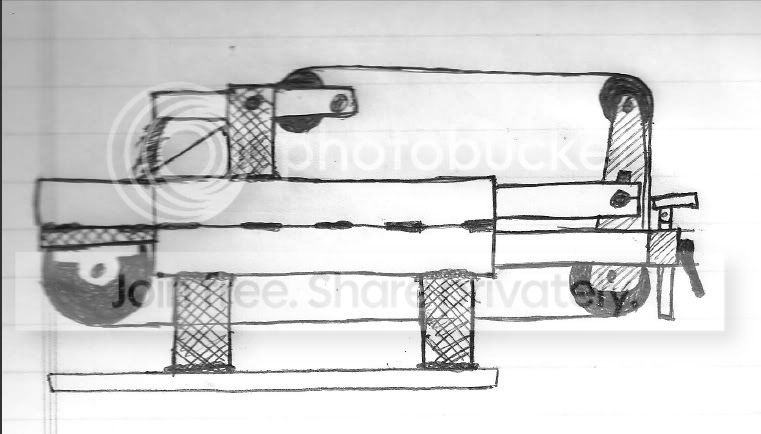
I decided to do a KMG style belt grinder but not the regular bolt together routine. So I ended up designing my own version that I thought would suite my requirements. One of the big things that I wanted, was for the whole belt grinder to be able to tilt so that I can use it in the horizontal mode as well. I see no reason to build two grinders, so will be making it to serve both the vertical and horizontal positions. For this reason I have decided to name this grinder the VHG Belt Grinder (Vertical Horizontal Grinder).

Here is a simple sketch of what I have in mind.
VHGDrawing-1.jpg


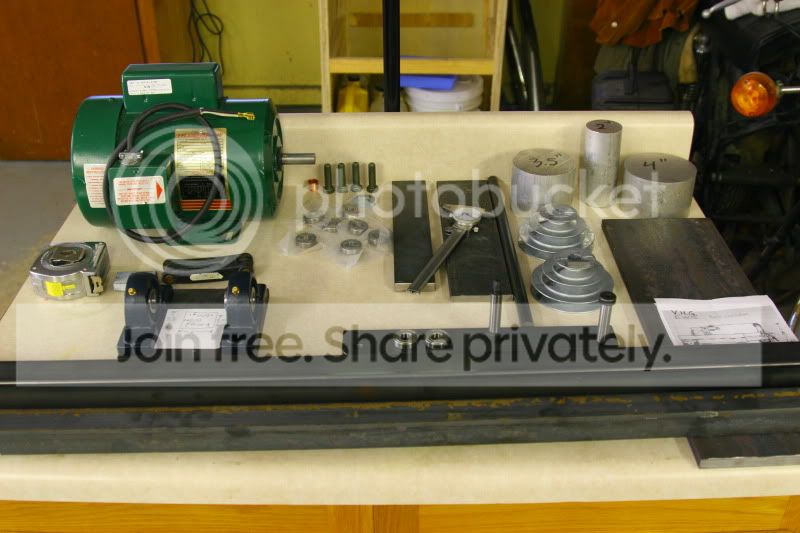
For my VHG build, I am going to be using steel tube and welding it together. Here is most of the raw materials I will be using after cutting some of them up on the band saw. My main goal was to use as small of a variety of steel as possible. I wanted to make getting materials as simple as possible, as the material list on a KMG is quite long.
IMG_1985.jpg


The main list of materials so far, are as follows.

For the frame and other steel grinder parts:
4' - 1.25" solid square bar
4' - 1.5" square tube, .125" wall thickness
2' - .5 x 6" bar stock
2' - .5 x 2" bar stock
1' - .375" x 3" bar stock

6061 Aluminum for the wheels ( I decided to make my own):
4" OD x 2.5" long (drive wheel)
3.5" OD x 2.75" long (tracking wheel)
2" OD x 4.5" long (platen wheels)

TEFC Motor, and a pair of 3 step pulleys with 2",3",4" diameters and 5/8" center wholes.

I have got a lot of the pieces cut and getting close to welding things up. I will keep posting information and pictures as I make more progress, so keep checking back.

Greebe
 
Last edited:
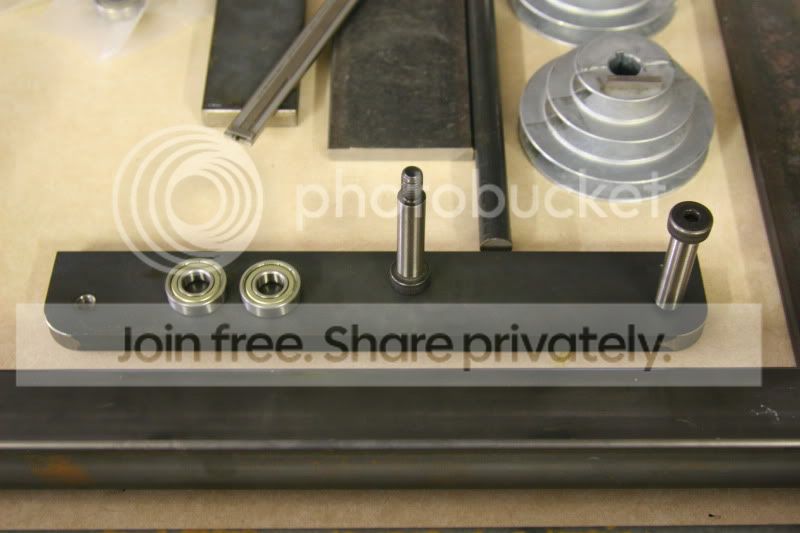
Here are some more pictures of the build.

First we have the flat platen arm. It is a piece of 1/2" x 2" x 12 " mild steel. The ends were drilled and tapped for the bolts to hold the platen wheels and the corners rounded off at the bench grinder.
IMG_1987.jpg


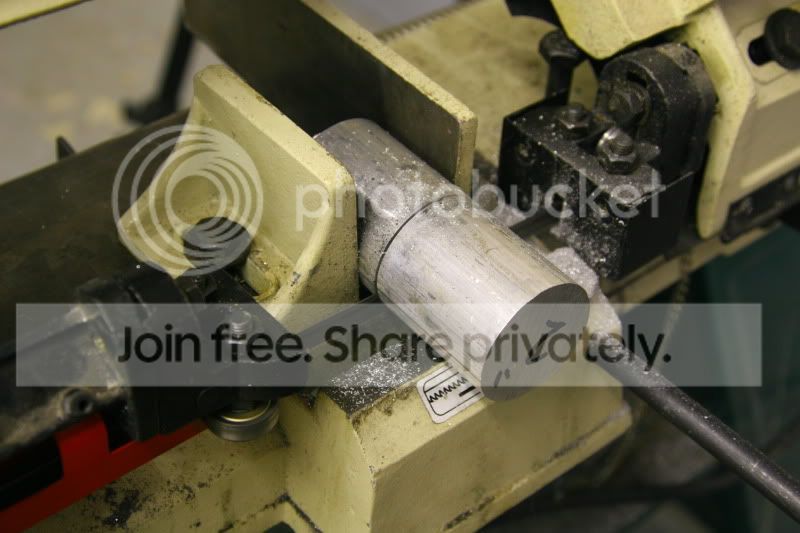
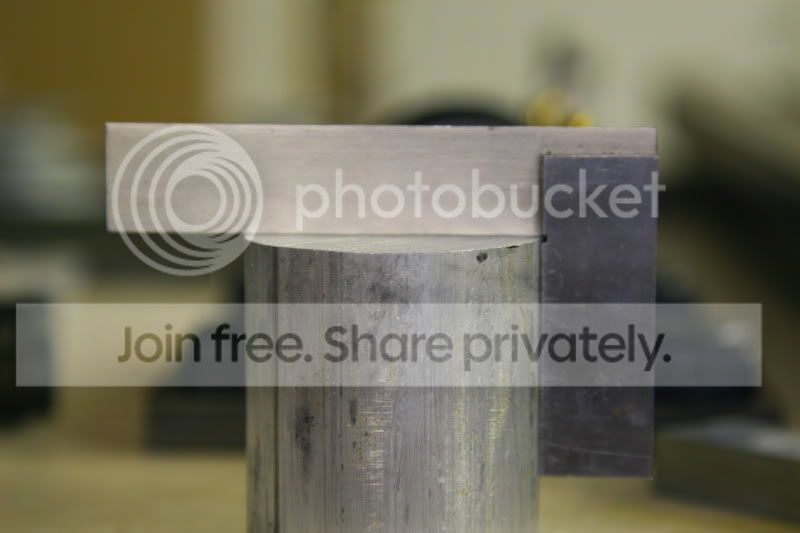
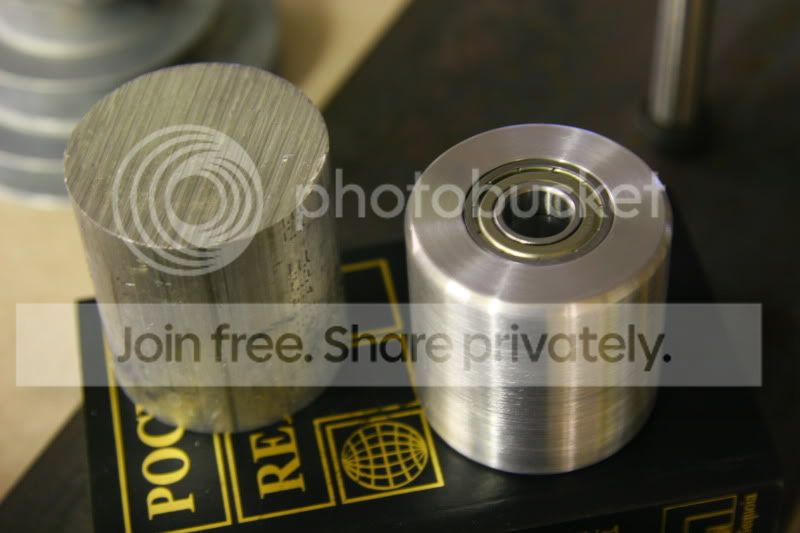
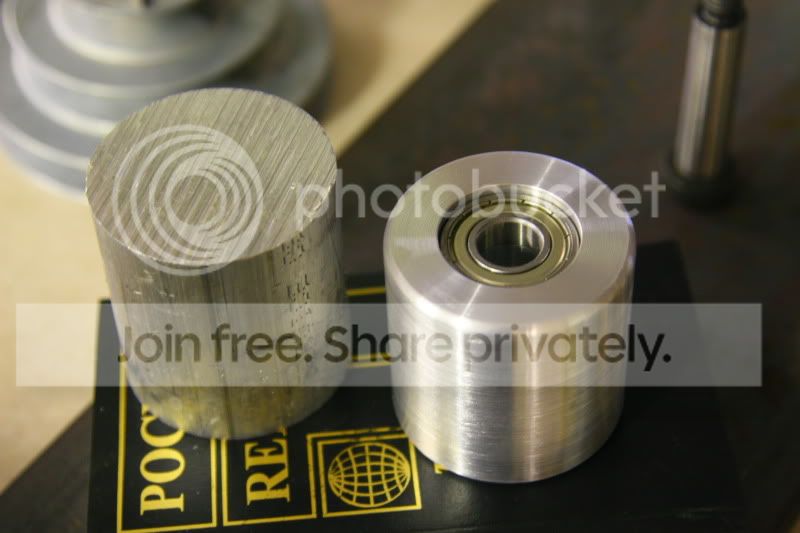
Next I cut the 2" piece of aluminum in half on the band saw to make the platen wheels out of.
IMG_1990.jpg


This picture shows how well the little Grizzly handsaw works.
IMG_1991.jpg


Stay tuned, there will be more to come. Up next will be machining the platen wheels on the lathe.

Greebe
 
Question? How will you keep the link belt tension for the step pulleys tight when the grinder's horizontal? Will you use springs instead of a hinged motor setup? Direct drive with or without a VFD seems the easiest practical way. Thanks for sharing!
 
Question? How will you keep the link belt tension for the step pulleys tight when the grinder's horizontal? Will you use springs instead of a hinged motor setup? Direct drive with or without a VFD seems the easiest practical way. Thanks for sharing!

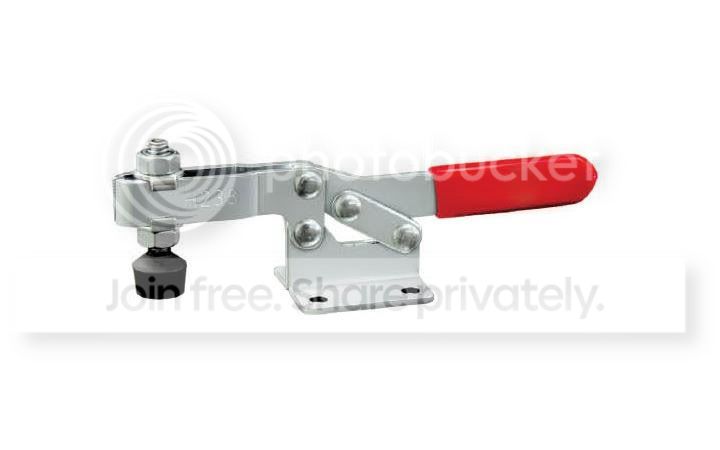
The plan is to hinge the motor and use a toggle clamp for adjusting and removing tension on the motor. This will keep it tight when it is put into the horizontal position. A direct drive with VFD would be great, but that was way out of my price range at the moment. One day I might do that if the grinder makes some money for me. Here is a picture of the toggle clamp style I was planning on using:

TOGGLE_CLAMP.jpg


Thanks,
Greebe
 
Looks like you are off to a good start. Keep us posted and good luck!
 
Thanks guys. I am looking forward to getting this thing done. I have had all the parts sitting around the shop since the summer, but have been to busy to spend time on it. Hope to have a little time each day to do a little now. It will be super nice to finally have a belt grinder in the shop.
 
Looking good so far. I wish you great success. With the ability to turn your own idlers, you're building in style!
 
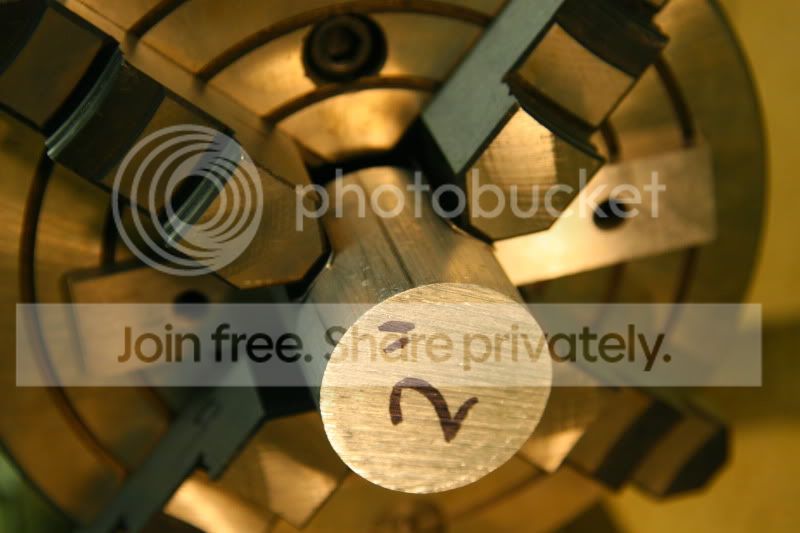
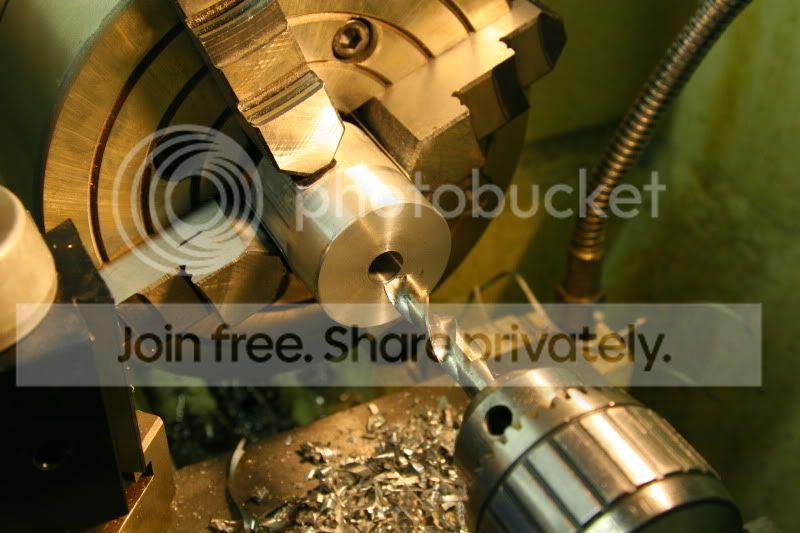
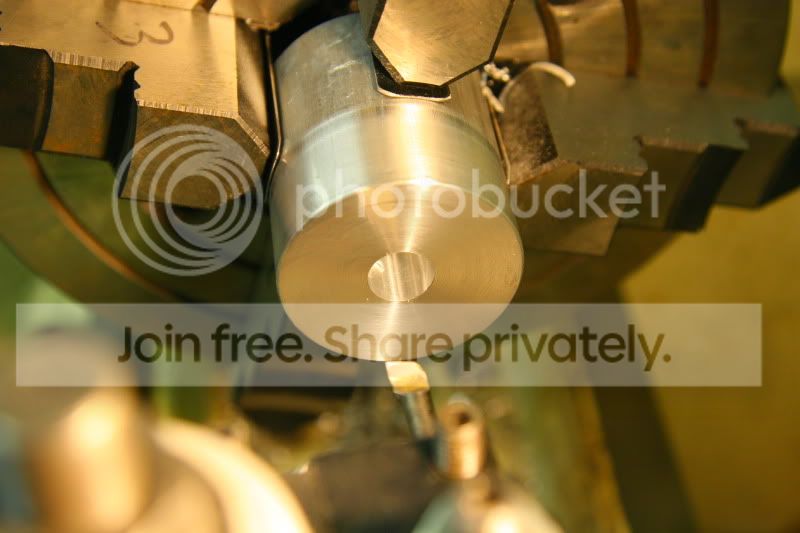
The 2" bars of 6061 aluminum will become the platen wheels. They get chucked up in the 4 jaw chuck and then are drilled and bored out for the bearings. You will notice that there are thin metal shims in between the jaws and aluminum bar stock. They are put there to keep from marring the surface of the aluminum workpiece.

I didn't take pictures of everything, but this is more or less what I did. First I faced off the piece, and then just knocked off the edge with a file. After the bearing pocket was bored, the edge was then rounded to a 1/8" radius or to the same curve as a 1/4" circle. I will post the pictures of the completed wheels in the next day or so.

The outside diameter was turned just enough to make it concentric with the bearing pocket. It was then hit with a bit of sand paper and left with light scratches to help it grip the abrasive belts better when in use. I did not show turning the other sides, but basically it was the same. Just dialed in the workpiece in the 4 jaw chuck and did the same ops.

Hope that helps clarify things a little.

Greebe

Set up and getting centered in the chuck:
IMG_1992.jpg


Center drilled and final drilling with 1/2” drill bit:
IMG_1993.jpg


Boring out the center to 5/8” to give clearance for the bolt:
IMG_1994.jpg


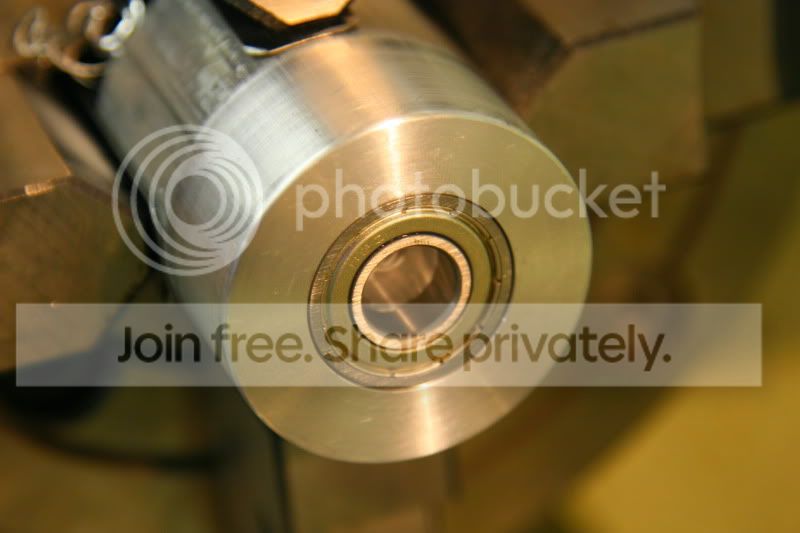
Rough boring the bearing pocket:
IMG_1995.jpg


Bearing fit after final boring job:
IMG_1996.jpg


There you have it, that is the process I used to make two platen wheels.

Greebe
 
Last edited:
Should have some more time today to work on this project. Man I can't wait to finally have a belt grinder. Hopefully it works as well as I hope.
 
Nice looking turning. Is that a Grizzly lathe? Also, how do you come to not yet have a belt grinder, but already own a lathe? I'm a bit jealous of your machine, I have to drive to town to use one.
 
Nice looking turning. Is that a Grizzly lathe? Also, how do you come to not yet have a belt grinder, but already own a lathe? I'm a bit jealous of your machine, I have to drive to town to use one.
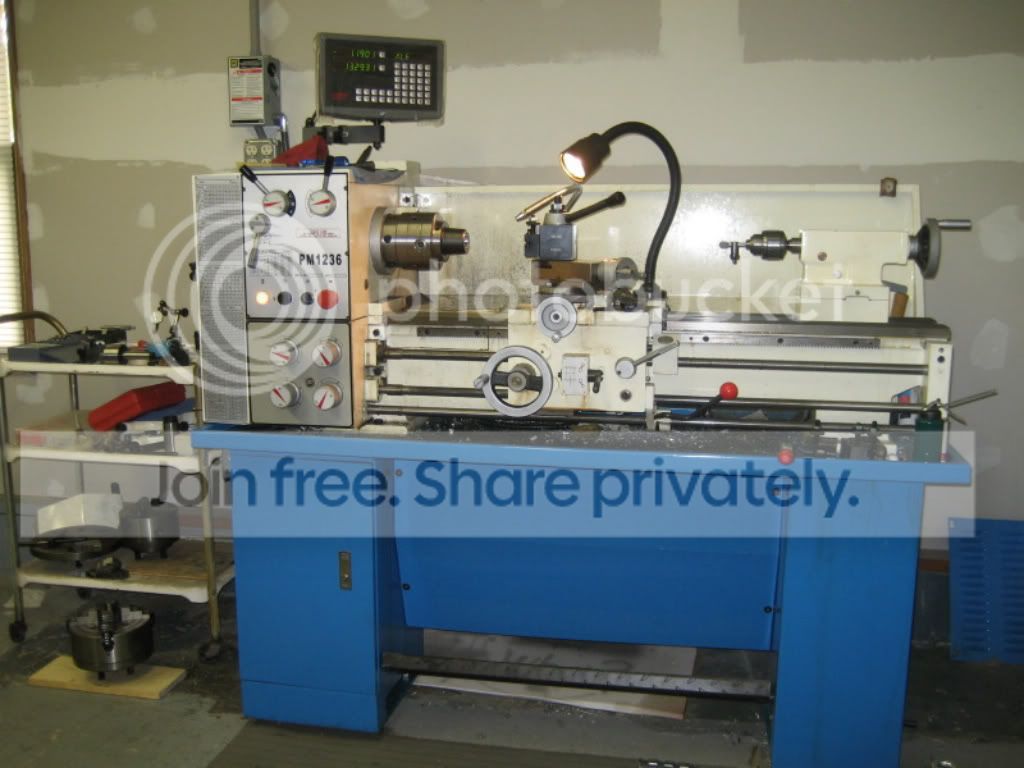
Nope not a Grizzly, but similar. It is a PM1236 form Precisions Mathews. They are a better machine with more features and made for a little harder work. I have put well over 2000 hours on this little lathe and it is still nice and tight.

Not only do I have this lathe but I also have a manual mill, and a Wasino LG-6 CNC lathe, 60 gal compressor, abrasive blast cabinets, forge set up, grinder, and just about everything I could want besides a belt grinder and heat treat oven. I have been in the business of producing small machine parts for the past few year now, but am just getting into the knife thing.

Here is a picture of it. It is a bit dirty but that's what happens when you use them.

IMG_4345.jpg


That is a Bison Set-Tru 5c collet chuck as well. Pretty expensive but well worth it. They are guaranteed .0004" TIR, but it only has about .0002" even when taking the chuck off and remounting it. The collets are killer expensive for a set though through Hardinge, but this is how I get such low TIR.

Greebe
 
Last edited:
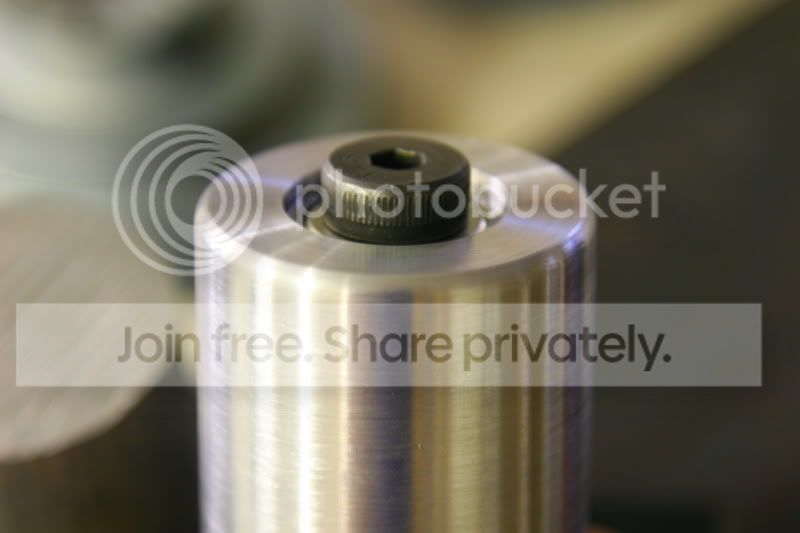
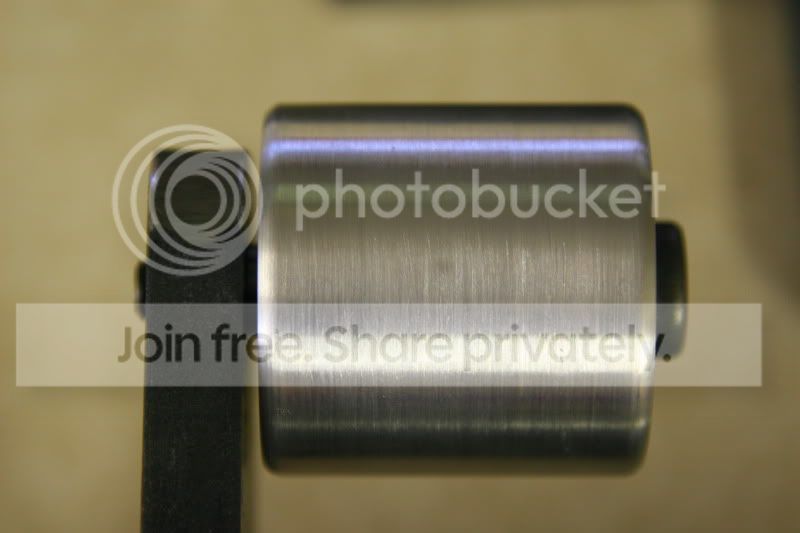
Here is a finished wheel. Actually both are finished, but I took pictures after completing the first one.

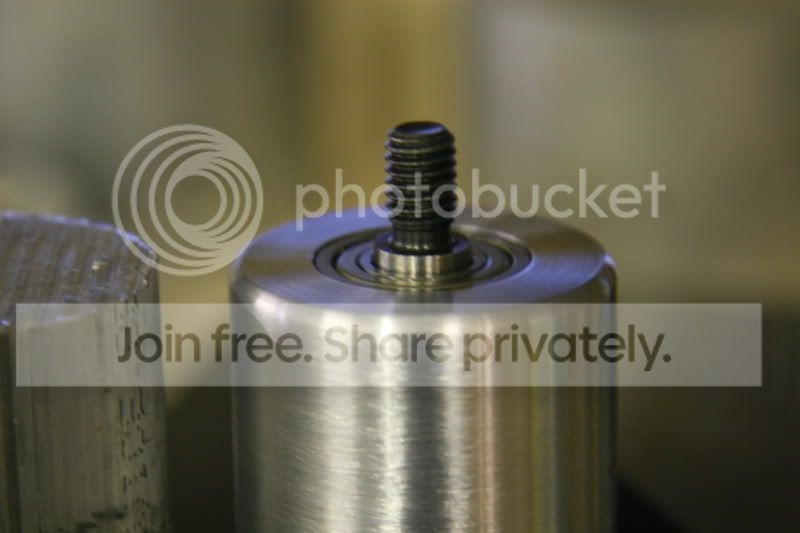
Here is one side of the wheel with a flush bearing:
IMG_1997.jpg


Here is the other side with the bearing inset to allow clearance for which you will see in the pictures below:
IMG_1998.jpg


Side that will get bolted to the platen for stand off:
IMG_1999.jpg


Cap head side which is inset:
IMG_2000.jpg


And here is one bolted to the platen:
IMG_2001.jpg


Stay tuned in, there will be more to come.

Greebe
 
Looking great. You have some great toys!
 
Do you get a press fit using those shoulder bolts in those bearings?

I tried that & it's a loose fit.

The fit is snug with no play. I made an aluminum washer to hold the wheel away from the platen arm. It allows the wheel to spin freely, but not move left to right. I think this is what you were asking, but if not let me know and I will try to explain myself better.

Thanks,
Greebe
 
Back
Top