The VHG Belt Grinder Build - (PICTURE Heavy!)

You can do it one of at least three ways. The drive wheel has a 6 degree included angle.

1. Set your compound to 3 degrees (Half the value of your included angle) with the wheel of the compound to the right. Then make your first taper cut on the front of the workpiece on the chuck side with the spindle turning in forward. Then advance your cross slide to the back of the workpiece and cut the tailstock side of the taper with the spindle in reverse. If you do it this way you are guaranteed a perfectly symmetrical tapered wheel.

2. Again set your compound to 3 degrees (Half the value of your included angle) with the wheel of the compound to the right. Then make your first taper cut as before but then to cut the other side simply reverse the workpiece on the chuck and proceed with you next taper cut. This might be your only option depending on how much cross slide travel you have.

3. The last option is to set the compound to 3 degrees left and cut one taper with the spindle in forward and then change the compound to the right to cut the other taper. This option works fine but if your setup with the compound is not exactly the the same then the crown on your wheel will be off. Even is you are less then half a degree off you will notice it on something like this.

The way I cut the drive wheel was on a mandrel between centers and then just flipped it end for end to cut the other taper. Essentially this is like method #2, but instead of having it in a chuck I used a mandrel so that the outside taper cuts would be exactly centered on the drive shaft hole.

I cut the tracking wheel with method #1. I have some pictures of making the tracking wheel that I will post soon.

Home that helps. I am not sure exactly what kind of cut you are looking to make on you hammer. If you have an example of what you are looking to make I could probably help you out. Feel free to send me an email.

Greebe
Thanks for the detailed reply Greebe.
I don't have a lot of experience on the lathe so appreciate your insight and experience.
I just assumed the wheels would be crowned rather than tapered (parabolic rather than linear changes in radius).
With such a small angle the difference is probably pretty negligible. And tapers don't require special tooling/fixturing.
Mainly I was trying to wrap my head around how one would essentially achieve convex profile vs a flat cut one on a manual lathe.
I'm thinking the simplest way might be cut a series of tapers on each side, leave a small flat in the center then smooth out the transitions with a file/sandpaper.
 
Alright I got the belt grinder finished this weekend. I started working on a small knife as well. This thing works really well, but I need some practice that is for sure. It is harder then it looks grinding a bevel.

I am going to try to catch up on the progress pictures and then show the final grinder so it stays in order.

Here is Part 1 of the process for turning the tracking wheel.

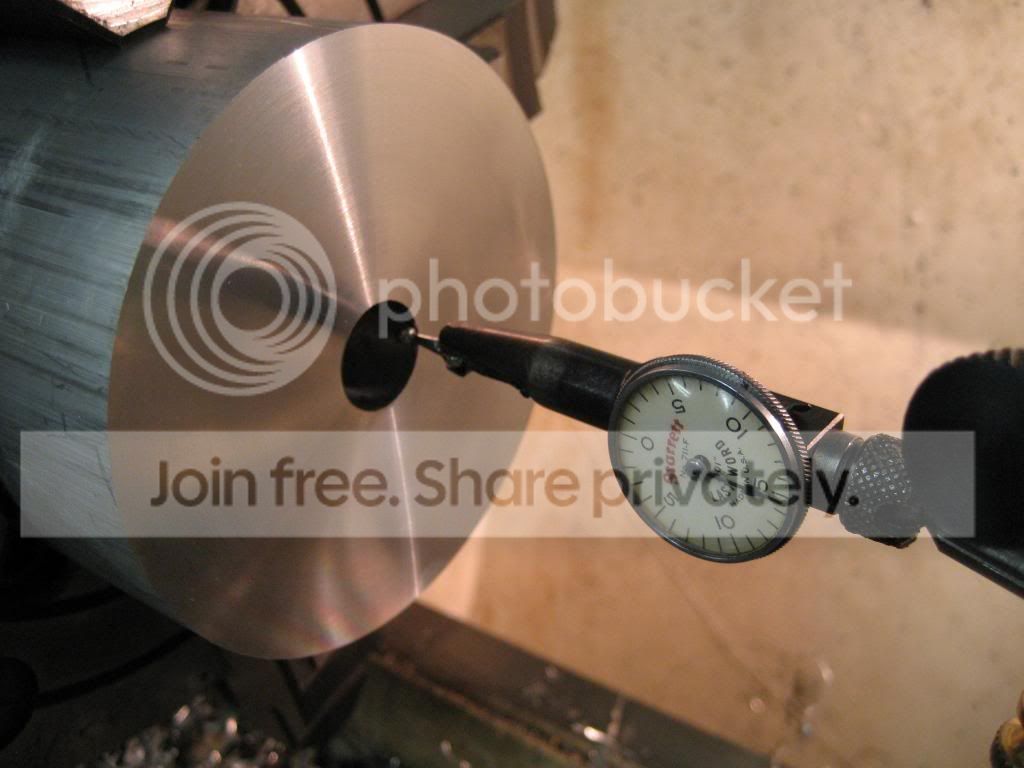
First indicate the slug in the 4 jaw chuck.

IMG_7711.jpg


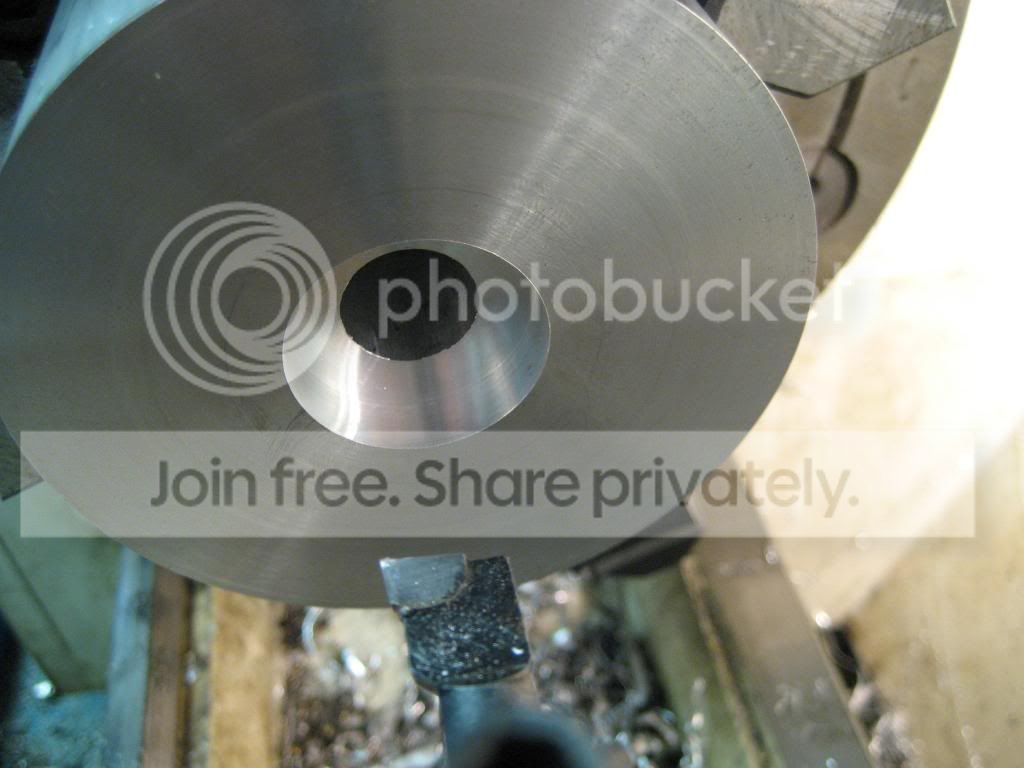
Then face it off.

IMG_7713.jpg


Here I drill it out to .500" and then precisely bore it out to .6248" for a tight fit for a mandrel.

IMG_7724.jpg


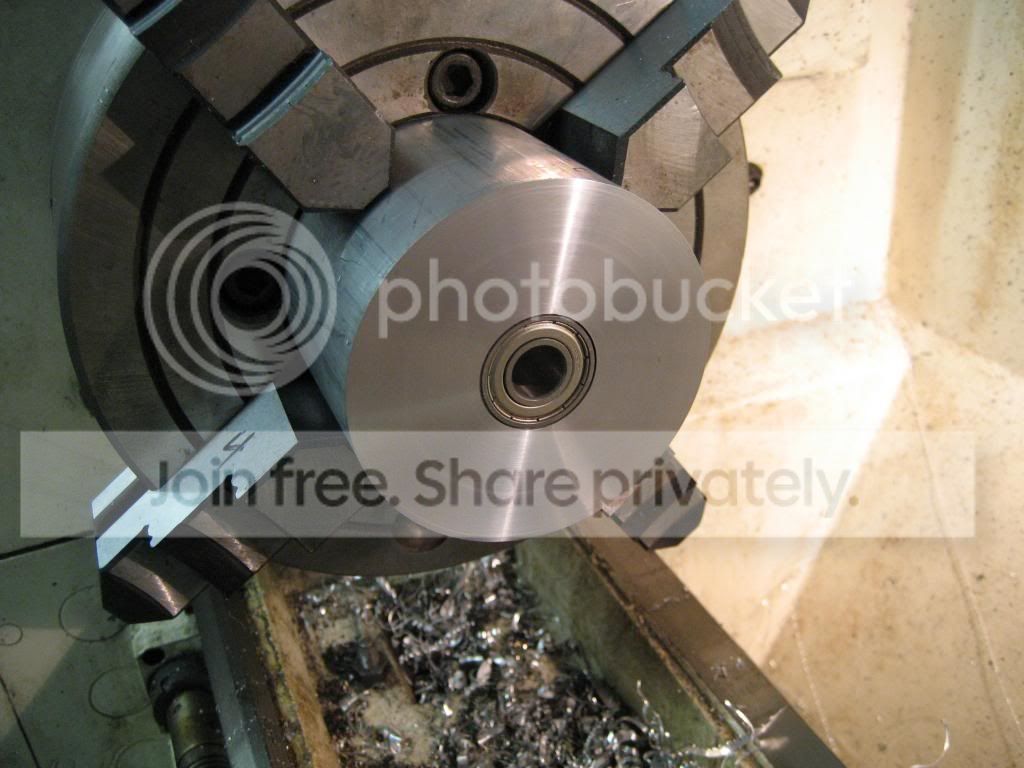
While it is set up on the 4 jaw chuck I bore the bearing pocket.

IMG_7725.jpg


IMG_7728.jpg


Greebe
 
Wow! After looking at your work on the machine, I have no doubt your knives will be outstanding.
 
Thanks for the compliment.

Here is the rest of the tracking wheel.

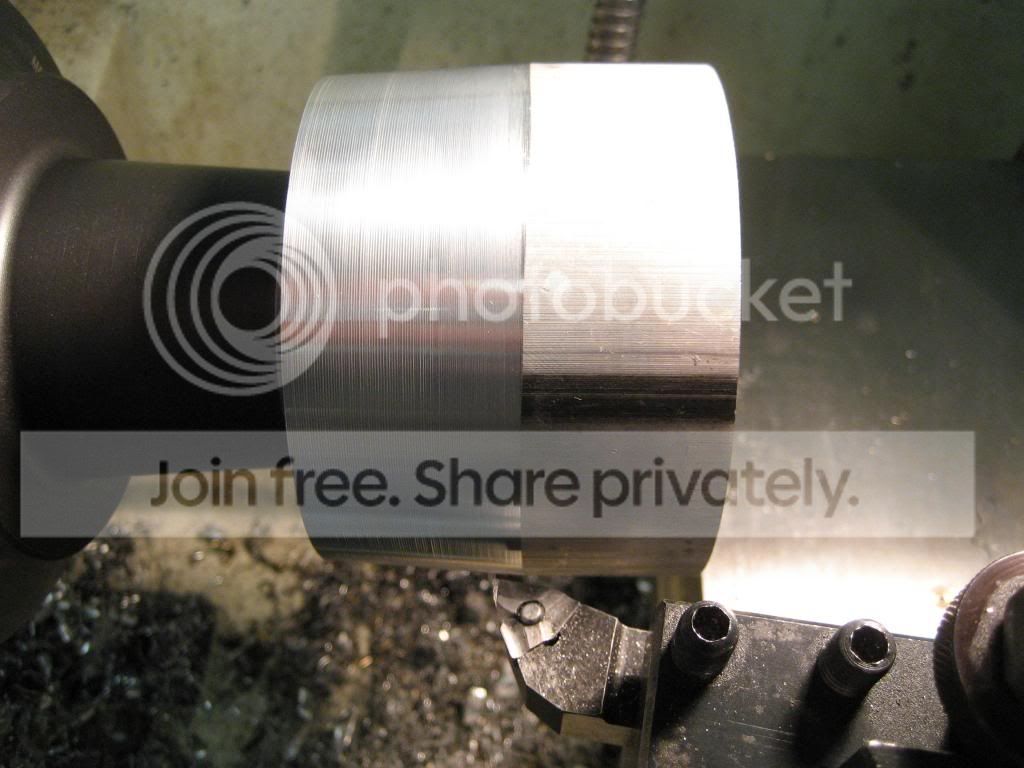
After turning the bore and one bearing pocket I turn the billet of 6061 around and remount it in the 4 jaw chuck indicating it precisely off of the bore.

IMG_7729.jpg


The wheel is then moulted on a precise friction fit arbor in a Bison Set-Tru 5C Collet Chuck with Hardinge collet. The compound ios set to 3.5 degree for a 7 degree included angle. I took light cuts as I did this without the tailstock. The reason I did not use the tailstock is that I made the first taper cut in the front with the spindle in forward and then took the other cut in the back with the spindle in reverse. So there would be no way to use the tailstock. However this setup is plenty ridged for tuning aluminum.

IMG_7730.jpg


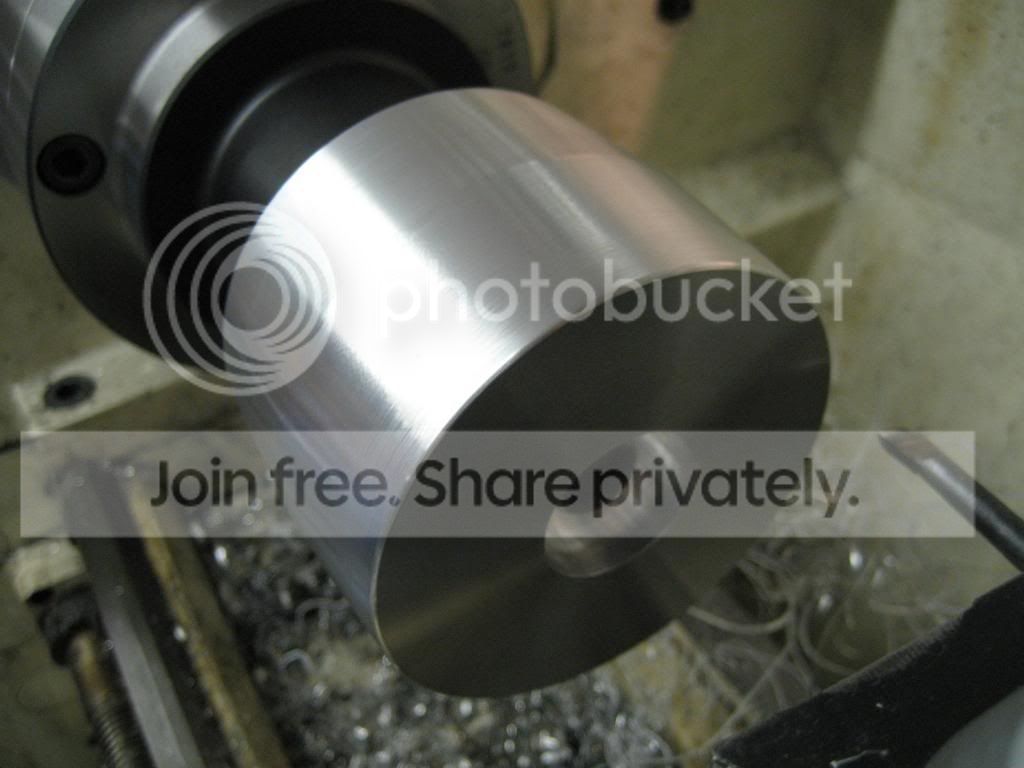
Here is a shot of the finished wheel. You can see the small boring bar used to turn from the backside.

IMG_7732.jpg


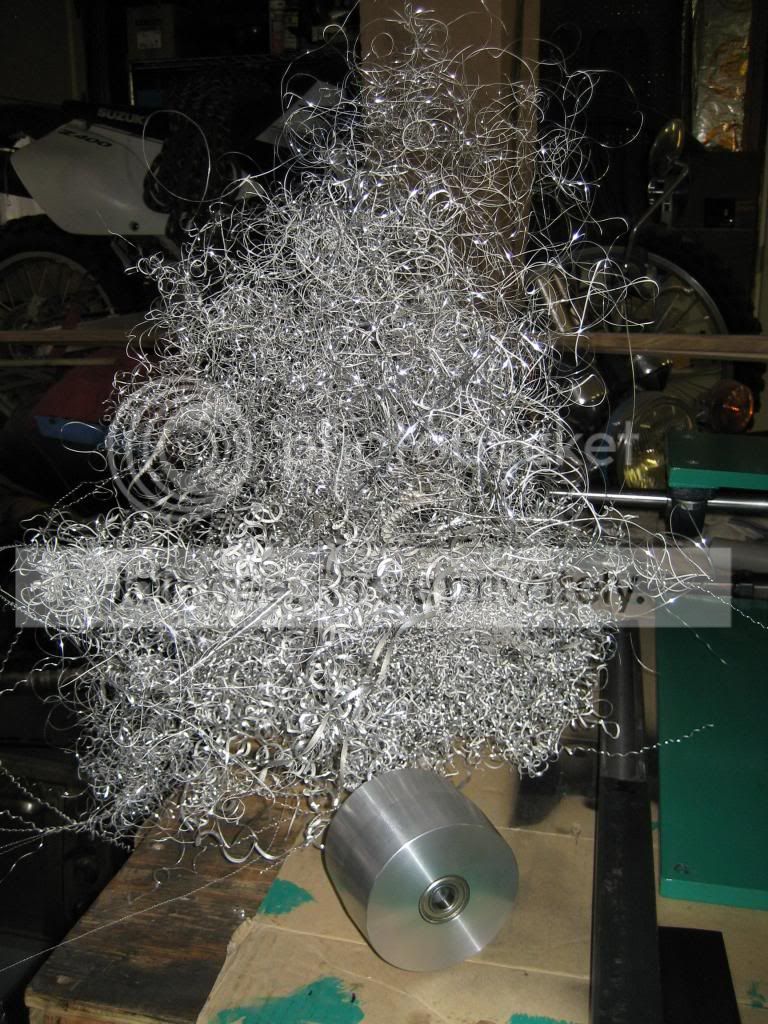
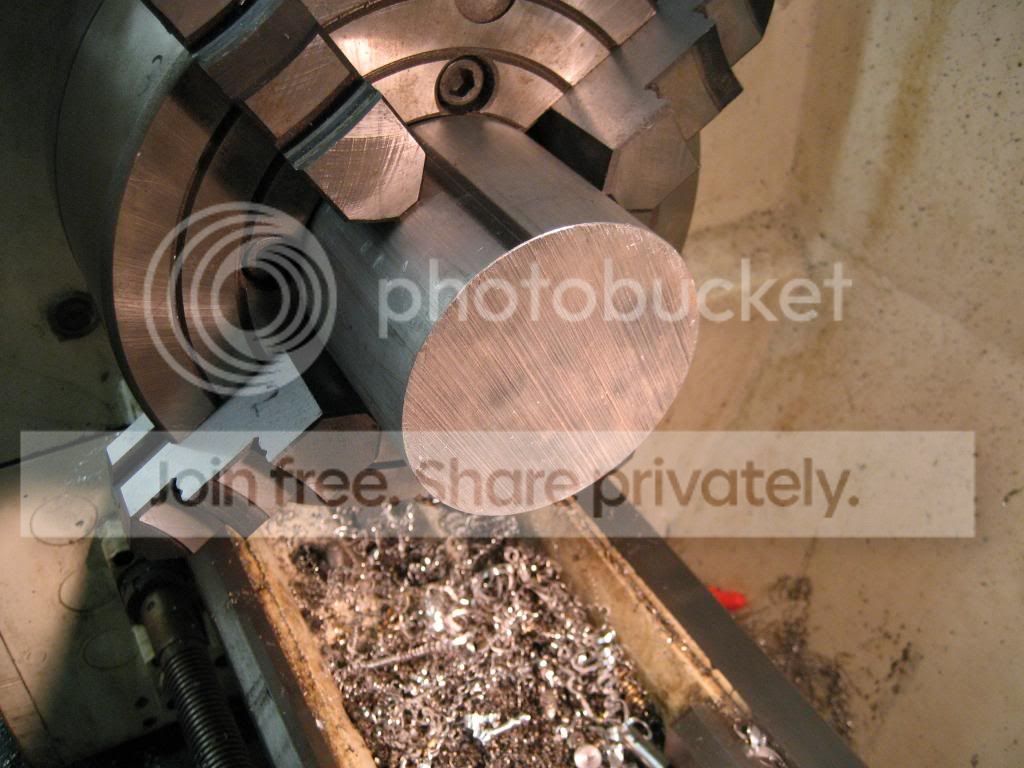
Here is the finished wheel with the rats nest of chips that come off of it. As you can tell, if you are a machinist, I was not using a indexable carbide inset for aluminum, thus the long chips that are common on a manual machine.

IMG_7734.jpg


That is it. One finished tracking wheel ready for mounting.

Greebe
 
Next I needed a way to mount the tracking wheel. I could have done it the easy way and used a 1/2 in bolt, but where would be the fun in that. So I went about turning a special flange bolt type of thing. I suppose this is a new type of bolt as I have never seen something like this before.

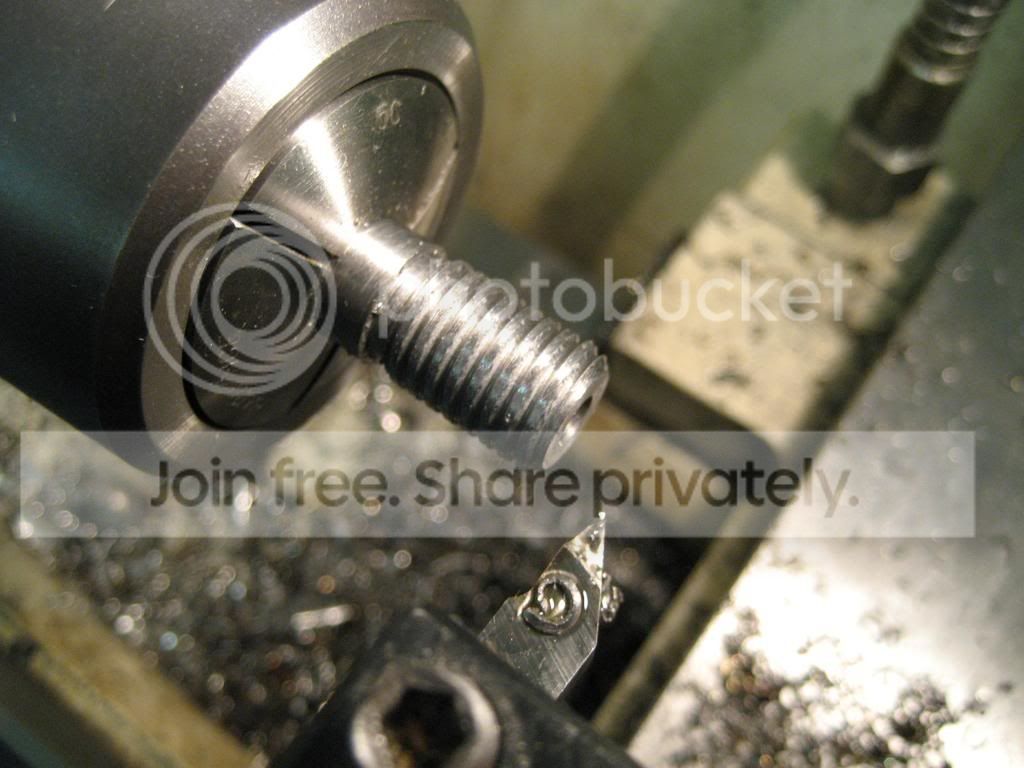
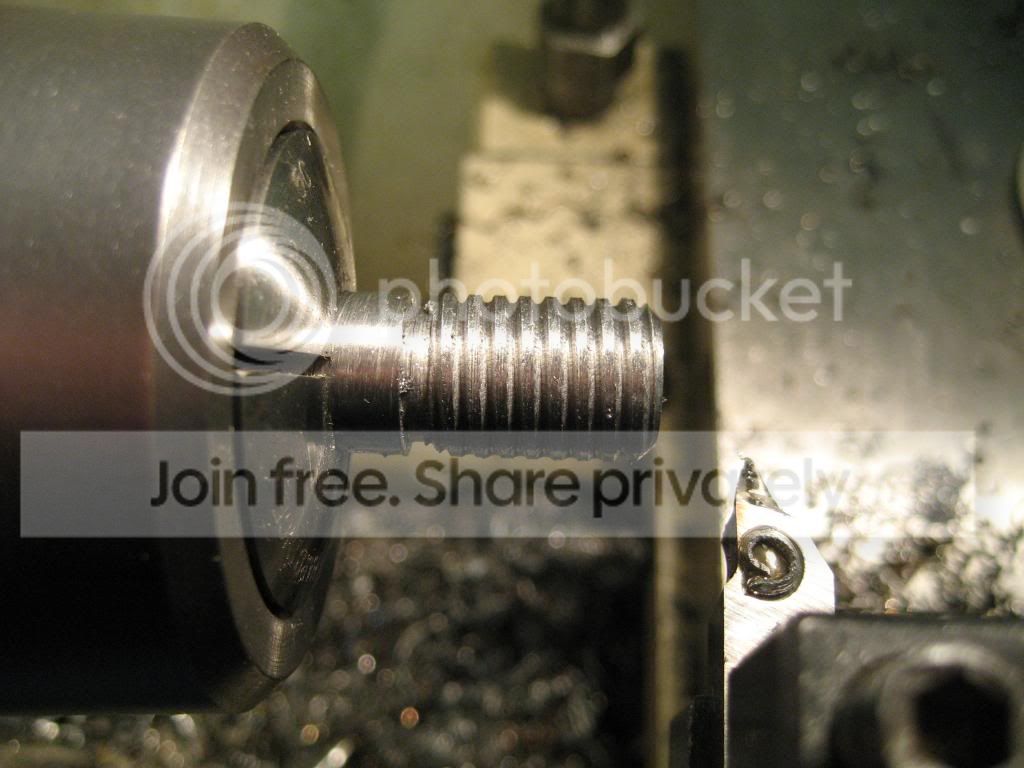
I did not take pictures of the initial process, but I Started out with a .625" A36 rod (5/8" rod) and turned it between centers to .500" (1/2") up to a shoulder. Then I single point threaded both ends. Here are the initial cuts threading one end. Not sure why I did not take a final thread picture.

IMG_7752.jpg


IMG_7753.jpg


This end was threaded and then parted off to .375" to thread flush into the .375" hinge arm.

IMG_7754.jpg


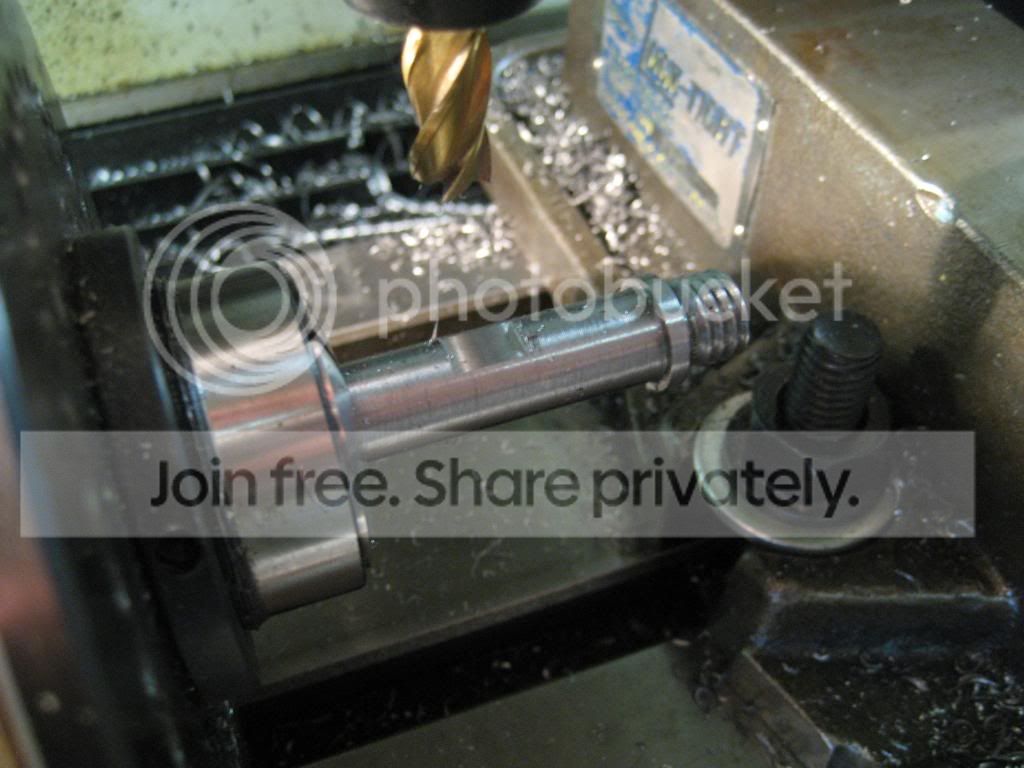
Then I put the bolt into a spin indexer and milled two flats for a wrench.

IMG_7757.jpg


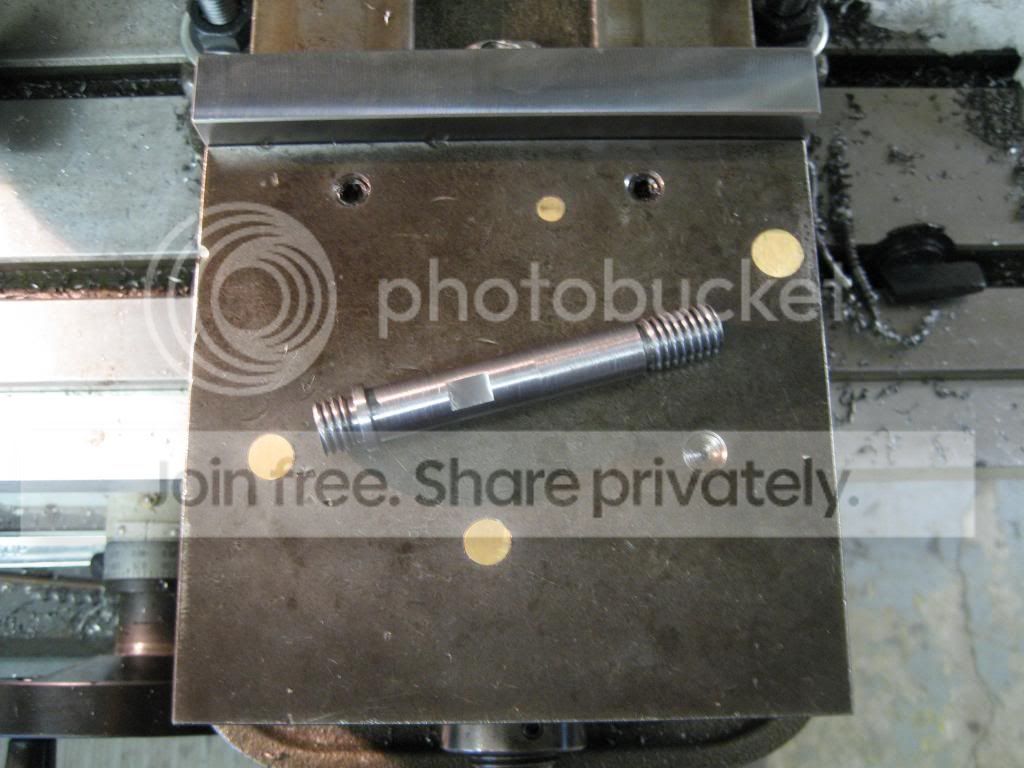
Here is the finished bolt. It has a few scratches on the .500" diameter smooth part as I was just working fast on this to get it done. All in all probably took about 20-30 minutes with set ups while demonstrating the process to my father while he was here visiting.

IMG_7760.jpg


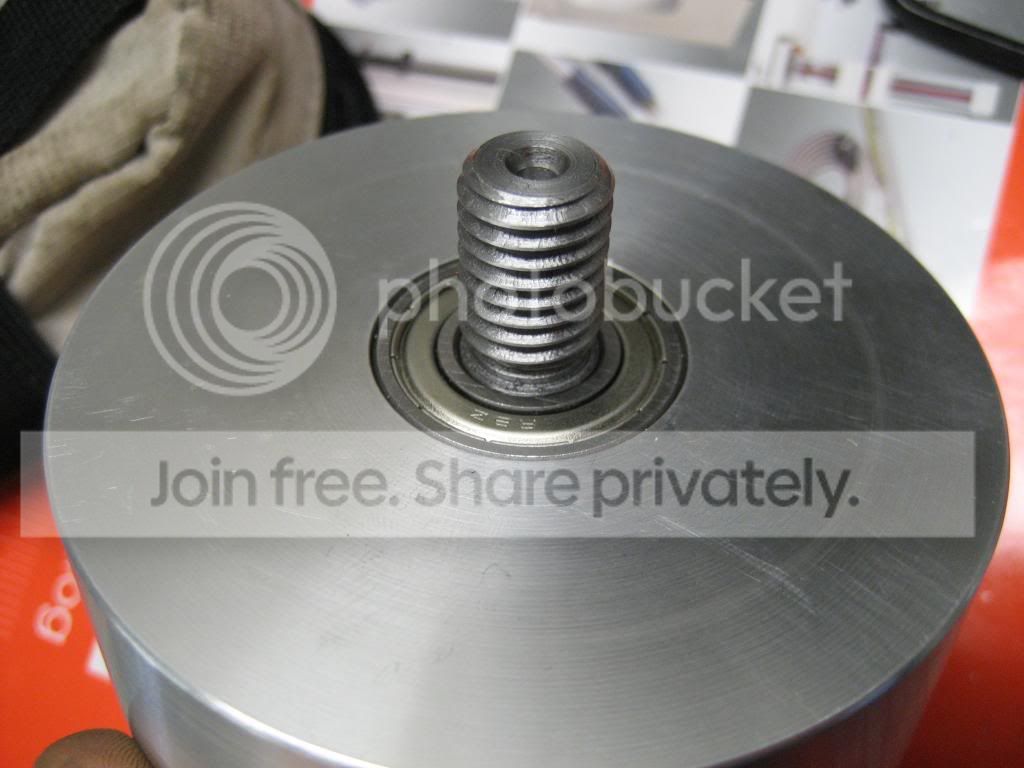
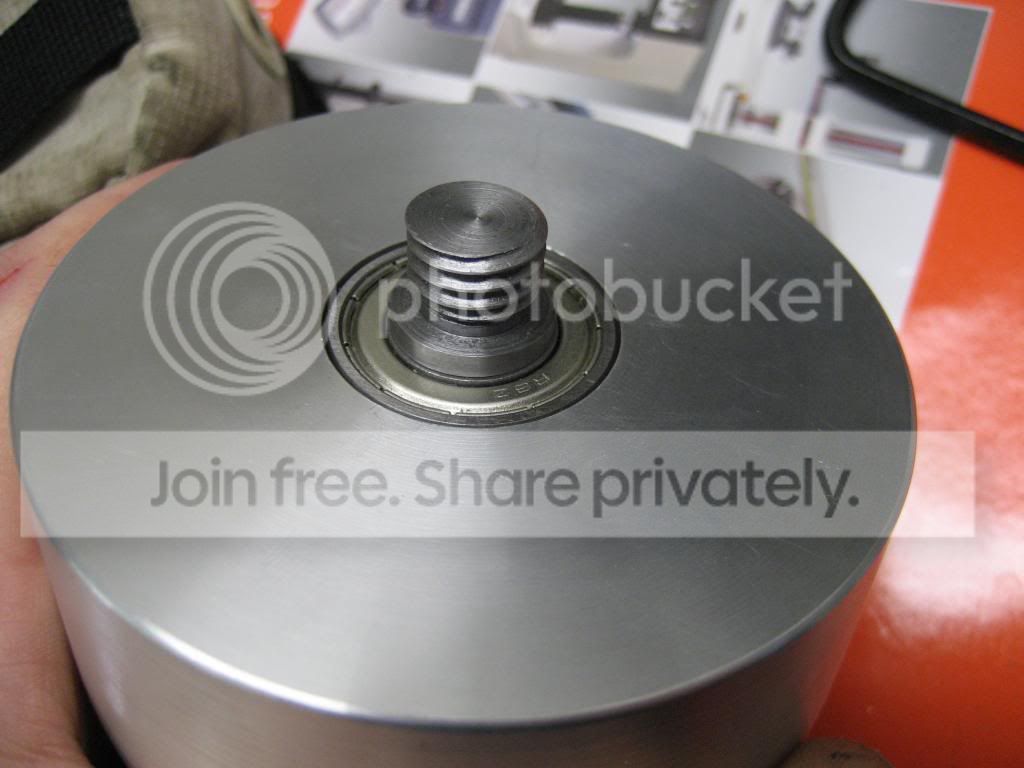
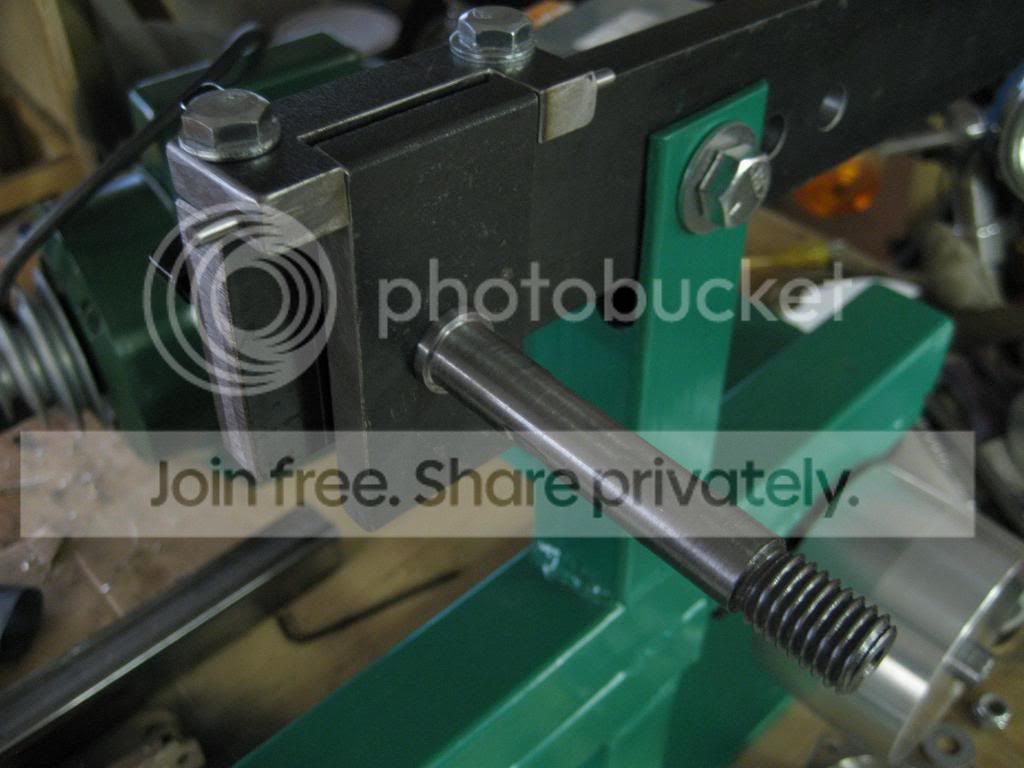
This is how it looks on the wheel with the flange on one side and the threaded end on the other for a lock nut.

IMG_7764.jpg


IMG_7763.jpg


And last but not leas the bolt mounted on the hinge.

IMG_7769.jpg


So there you have it. More complication in the desire to build a more precise part then just using the standard 1/2" bolt. As you guys might be able to see by now I am always looking for ways to make an improved part or design change just because I can. Hopefully you will see this in my knifes that I will be making soon. The desire to produce a nice and precise tool.

Thanks,
Dave
 
It is going to be a beautiful and rewarding machine built!!!
Did you consider some "knuckle clearance" in the flat platen arm design? I didn't very much in mine and i have some difficult grinding the right side bevel (edge up)
 
Here is the finished wheel with the rats nest of chips that come off of it. As you can tell, if you are a machinist, I was not using a indexable carbide inset for aluminum, thus the long chips that are common on a manual machine.

IMG_7734.jpg

How about grinding a chipbreaker into your tool ?

Lathecuttingtoolchipbreakerkeithfenner_zps84b8a92c.jpg


As far as I can tell, it forces the chip into a tighter curl, which breaks off.

fiddling with the rake angles may do the same thing.

I've got some bits that work and some that don't, I just try to copy the ones that work.
 
Back
Top