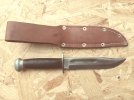
What is the point of using the word Bowie to describe a knife, if nobody can agree on what one looks like?
The word is overused and has no meaning anymore.
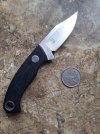
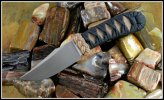
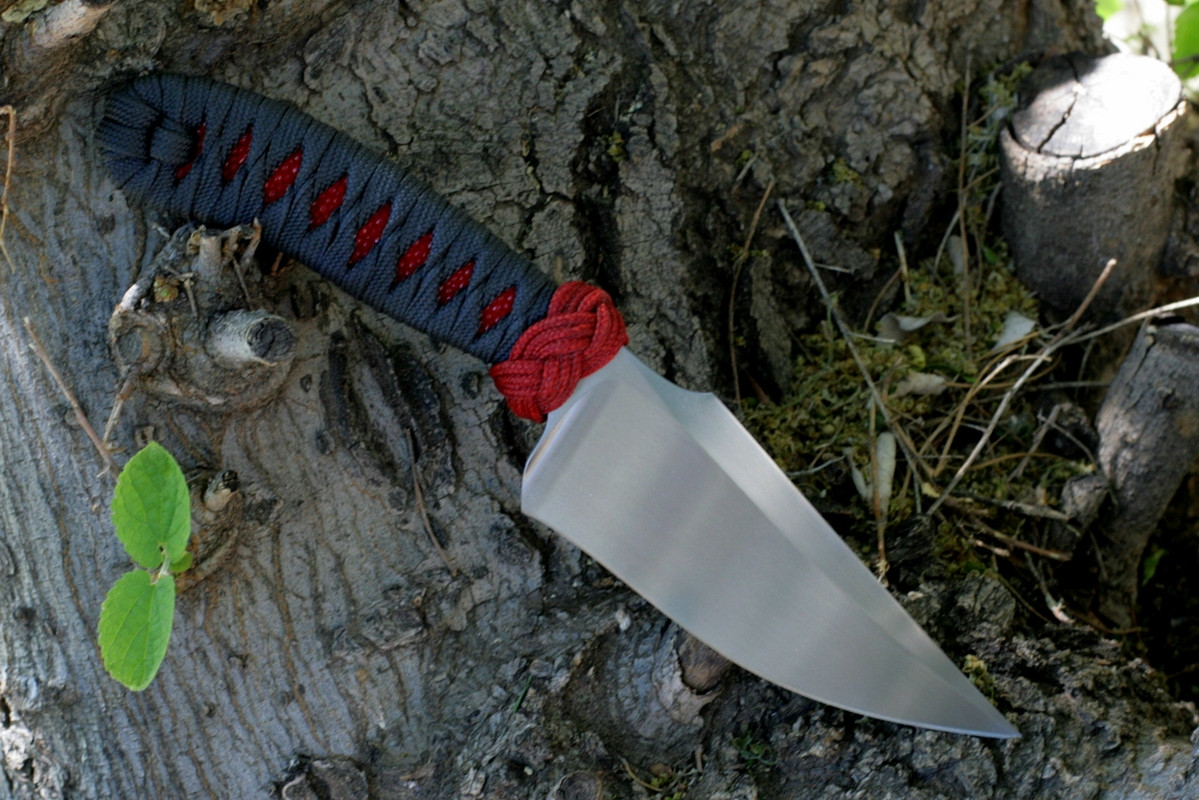
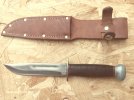
Look at the beautiful knives posted in this thread. Most have nothing in common with each other. But they’re all Bowies?
You make a good point, but I think there may be two separate lines of discussion here:
1. What did Jim Bowie's original knife look like?
2. What do a majority of reasonable people believe a "Bowie" knife looks like? Or, more to the point, what features does a knife need to exhibit for most reasonable people to say "
Yeah, that looks like a Bowie"? Whether or not it is good quality or useful are follow up questions.
I think we could agree that we will never get a truly definitive answer to Question #1, and you are certainly correct that 19th century smiths and cutlers cranked out massive numbers of fixed blade knives (some of them totally whacky) and marketed them as "Bowie Knives." I agree with you that the marketing bonanza confused the term, but I also think it is hard to deny that a common (but not exhaustive) set of features has emerged that gives us the ability to confidently address Question #2:
- fixed blade;
- relatively large blade;
- clipped point;
- some amount of belly in the blade as it approaches the tip; and
- some form of hand protection, either by a guard or a choil.
I view the term "Bowie Knife" as a category of knives akin to terms like "dagger," "tanto," or "chef's knife". If I see a knife with most or all of these features, my first thought is "
that looks like a Bowie," and I would wager that I am not alone in that.
By way of analogy, a "Hamburger" is a person from Hamburg, Germany. A "Hamburg Steak" is a patty of seasoned, ground meat (usually beef) cooked in a pan and served with onions, a common dish served in Hamburg, Germany (at least at one time). A Hamburg Steak stuck between bread is also called a "hamburger," and it doesn't stop being a hamburger whether or not you choose to add condiments and toppings. A smaller hamburger is often called a "Slider," but it is still just a version of a hamburger. All of these terms are perfectly accurate and choosing to add cheese, mustard, peanut butter, and/or arugula does not make a hamburger any less of a hamburger (unless a Hamburger moves to Berlin, in which case they might become a jelly donut).



 oldmanwilly
's Figure 45. Very useful, too.
oldmanwilly
's Figure 45. Very useful, too.