Rufus1949
Gold Member
- Joined
- Aug 22, 2021
- Messages
- 20,467

The BladeForums.com 2024 Traditional Knife is available! Price is $250 ea (shipped within CONUS).
Order here: https://www.bladeforums.com/help/2024-traditional/

Thank you sir. Coming to the mansion is always an adventure. You never know who you’re gonna run in to.Down right delicious looking.
I hope you enjoy the festivities.

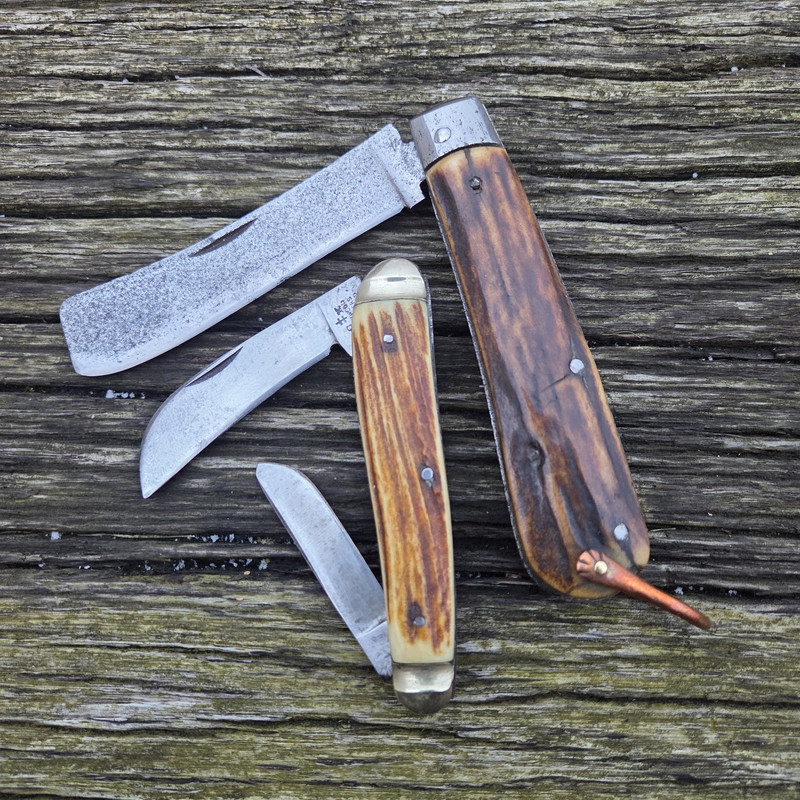
Thank you Bob! Tbo, I dont know either? I ran a few pics through AI and it did come up with something....Love both!
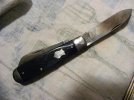
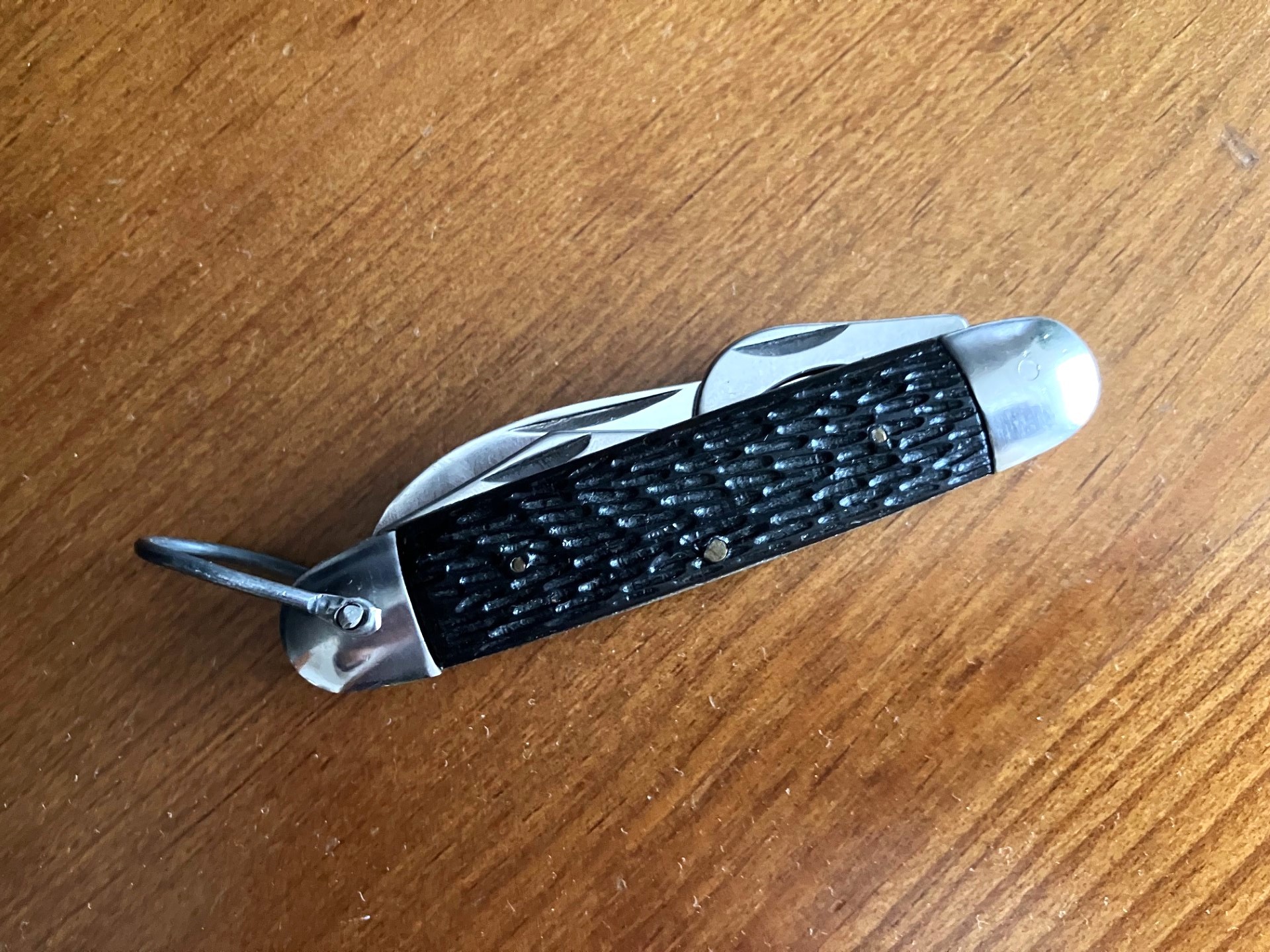
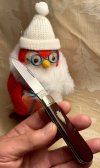
How would you classify the top blade?
Thank you for taking the time for such a detailed reply Mike.Thank you Bob! Tbo, I dont know either? I ran a few pics through AI and it did come up with something....
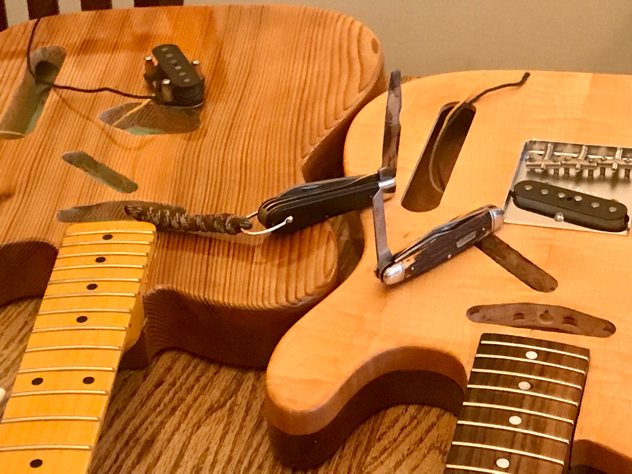
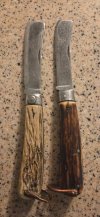
These are classic examples of Victorian-era Sheffield "hunter" or sportsman's rope knives (also commonly called sailors' or riggers' knives), produced in the late 19th century (consistent with pre-1890 dating based on style, marking, and construction).
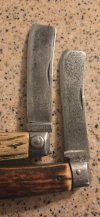
The blade shape is a pruning blade (also known as a curved pruning or hooked pruning blade). This is a distinctive variation seen on many Sheffield folding pocket knives of the period, particularly those marketed as "hunter" or multi-purpose sportsman's knives for rope work, gardening, or general utility.
Key Characteristics Matching Your Knives:
Straight (or nearly straight) cutting edge from heel to near the tip.
Strongly upswept/curved spine that rises toward the tip, creating a hooked or beak-like profile.
Blunt or rounded tip (reducing stabbing risk, ideal for rope cutting on ships or safe pruning).
Thick, robust construction suited to heavy slicing or draw cuts.
While modern terminology often defaults to "sheepsfoot" for any blunt-tipped, straight-edged maritime blade (due to their shared safety focus—no sharp point to puncture sails, lines, or people on a rolling deck), the classic sheepsfoot has a straight spine running parallel to the edge before a sharp/abrupt downward curve at the end. Your blades deviate from that with the pronounced upward curve on the spine, aligning instead with the pruning pattern.
This pruning style was popular on Sheffield knives for:
Cutting rope/lines (pulling material into the edge for controlled slicing).
Garden/agricultural tasks (trimming vines, branches, or harvesting without damaging plants).
General utility where a hooked tip aids in pulling or hooking material.

Gary, I hope that you and your family will find peace in your time of grief.
More concerned about his wife than his own fate ~ there might be a lesson in that.
He sounds like he was a fine man, my friend.
A loss is a loss, no matter the lead up. My condolences to you and your family, I hope y'all can find some comfort.
Undoubtedly a life well lived and a dedicated husband and father until the end!! I think many of us have been there with a not ‘unexpected’ loss, but the finality of it still hits hard. Prayers to you and yours!
Very sorry to hear of your loss Gary.
I know words cannot describe your feeling, but may you always carry wonderful memories of your dad.
My late condolences for your Dad's passing Gary @5K Qs .
My condolences.
My condolences for your loss, Gary.
Send strength and encouragement to you and your entire family.
@5K Qs
I'm sorry to hear of your father's passing. It's true that, even when expected, it's a shock to the system. (Mine died of cancer some 40 years ago after a 9-month fight.)
My deepest condolences to you and the family. May you all have fond memories of him.
Rail Splitter out for the day

I am sorry for your loss GT . It will take a while and then you can accept it . It is really tough to lose someone that you knew all your life and most likely taught you a lot of what you now know about life .
Harry
I’m so sorry for your loss, Gary.
I just now saw this sad news, Gary. Peace and strength to you and yours.
Sincere condolences Gary
My condolences on your loss. Losing a dad is not an easy one.


Thanks buddyDavid, that is a very rakish and businesslike angle on your lambsfoot blade . . . I like it!


Those fillets look INCREDIBLE. Cold smoked, chef?e. I smoked these Norwegian filets yesterday for tonight. I’ve used a modern folder and this chef knife.
They were actually a hot smoke, but very low heat. Thank you for the kind words!Those fillets look INCREDIBLE. Cold smoked, chef?