
-
The BladeForums.com 2024 Traditional Knife is available! Price is $250 ea (shipped within CONUS).
Order here: https://www.bladeforums.com/help/2024-traditional/
You are using an out of date browser. It may not display this or other websites correctly.
You should upgrade or use an alternative browser.
You should upgrade or use an alternative browser.
Whats your favorite woods for knife handles?
- Thread starter Kentucky
- Start date


- Joined
- Sep 2, 2006
- Messages
- 16,703
Like Danbo, I "likes" the curly koa. Used to have a "source," but he got old (even moreso than I!) and passed on ...
Sigh, for several reasons.
Sigh, for several reasons.
favorite all around? osage orange. When toasted, it is just really pretty.
Could you elaborate? I've actually got a big stump of osage heartwood, but when I've make a hammer handle out of it, it was bright orange, even after tung oil.
Where are you guys getting your African Blackwood? Mark doesn't seem to carry it.
Being a long time gunstock maker and dealer, I have researched walnut. Here is more than you actually wanted to know. Outside of the US, walnut is Jurglans Regia also known as English, French, Circassian, Hymalayan, and many other names. It is all the same wood although there are slight variations of it. The variations AND local conditions make it look different with some being golden base color or even gray base color. Young trees look much like maple in color with older trees starting to add dark streaks beginning in the tree center and eminating outward. Trees start putting on the best wood and color when they get to be 3' in diameter. Most in this country do not get that large. English is the thin shell walnut generally used for nut production. Now, tax laws discourage letting older trees get even older, so most are cut down prior to getting of decent size. In order to be more resistant to disease and root rot, commercial trees are grafted onto usually either Bastogne or Claro wanut root stock. This generally forms a burl root ball which has great value to veneer makers if large enough.
Walnut is thought to have originated in Persia. The thinner shelled examples were duplicated by the selected planting of their nuts eventually resulting in the thin shelled walnut we have today. The Romans thought highly of the walnut replanting its seeds to everywhere they went. When planted in England, the locals called it "Strange" nut which in their language was "Wealh" nut, its current name.
In America, we have other varieties. Both pecan and butternut are varieties of walnut. The most abundant species is American black walnut which has two main color types in golden and red. It is a thick shelled walnut but scientists are trying to thin the shell much as the ancient Persians and Romans did. Claro (Spanish for "bright") walnut originated in a small area in California.
There are two other varieties of walnut, one in Texas and one in California which are rarely seen.
Another major type is Bastogne which is a cross between English and Claro or black. Burbank was very hopeful for this tree but although it grows quickly (one 15' diameter tree was less than 90 years old when harvested), it produces few nuts.
A college nursery at UC Davis has an orchard of over 100 sub-varieties of walnut.
Walnut is thought to have originated in Persia. The thinner shelled examples were duplicated by the selected planting of their nuts eventually resulting in the thin shelled walnut we have today. The Romans thought highly of the walnut replanting its seeds to everywhere they went. When planted in England, the locals called it "Strange" nut which in their language was "Wealh" nut, its current name.
In America, we have other varieties. Both pecan and butternut are varieties of walnut. The most abundant species is American black walnut which has two main color types in golden and red. It is a thick shelled walnut but scientists are trying to thin the shell much as the ancient Persians and Romans did. Claro (Spanish for "bright") walnut originated in a small area in California.
There are two other varieties of walnut, one in Texas and one in California which are rarely seen.
Another major type is Bastogne which is a cross between English and Claro or black. Burbank was very hopeful for this tree but although it grows quickly (one 15' diameter tree was less than 90 years old when harvested), it produces few nuts.
A college nursery at UC Davis has an orchard of over 100 sub-varieties of walnut.
Could you elaborate? I've actually got a big stump of osage heartwood, but when I've make a hammer handle out of it, it was bright orange, even after tung oil.
Where are you guys getting your African Blackwood? Mark doesn't seem to carry it.
Osage will darken with exposure to UV light. Stick it in a window for a few weeks, and it will darken. The color mellows out after several years, the bright yellows and oranges fading to more of a burnt tone. If you don't want to wait you can scorch the surface with a torch to darken the color.
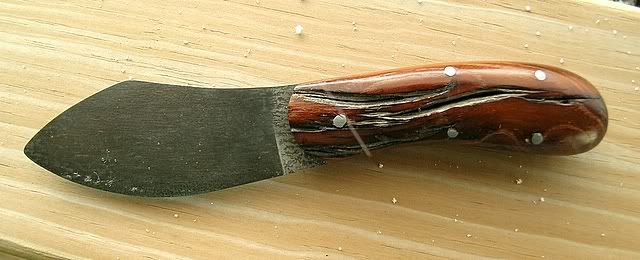
Here is a knife I did several years ago in osage, but the wood was recovered from a very old fencepost from eastern Kansas, and had been subjected to the elements for over 50 years.

- Joined
- Apr 11, 2007
- Messages
- 1,077
Could you elaborate? I've actually got a big stump of osage heartwood, but when I've make a hammer handle out of it, it was bright orange, even after tung oil.
Where are you guys getting your African Blackwood? Mark doesn't seem to carry it.
Lazlo,
I think what he means is introducing some heat, via a heat gun or torch. If done properly it give the osage a nice pattern.... Im sure theres pics on the forum of this being done. -L

jdm61
itinerant metal pounder
- Joined
- Aug 12, 2005
- Messages
- 47,357
Gary, they started protecting that stuff even before Castro took over. By the "golden age" of American electric guitars in the 50's, Gibson was already using Honduran mahogany. The crazy expensive Martins of the 1930's may have had Cuban mahogany necks, but that was the end of it. The one place where it can still be found in the US is the Florida Keys, but you can't cut it, just like the few remaining lignum vitae trees down there. A very big tree in Key Largo blew over in a storm a little while back and it was put up for auction. The winning bidder was the GSA who bought it for a restoration project of one of the old Federal government office buildings in Washington. Like non-stump Brazilian rosewood, a stash of Cuban mahogany logs will occasionally show up for sale, but at a very high price. You are right in that this is the wood that the English and early American furniture from the 1700's and 1800's that sell for $1 million plus for a card table were made of. Technically, the Cuban stuff is the "true" mahogany and all others are relatives. The Philippine stuff is not even of the same genus as the Cuban or Honduran wood. I too saw an old dresser made of the stuff a few years back and it looked like crazy walnut burl.
It's a shame that the Santa Domingo mahogany played out 100 years ago. It had a hardness that would rival most walnut and some of the most beautiful burls that you will ever see. [I guess that's why Victorian furniture makers used so much of it.] It's one of the few woods that I like better than black walnut. The entire head board of my Victorian bed is one big bookmatched burl of it. The color is such that I thought that is was walnut when I first saw it in the antique shop until I realized that it had a slightly more red color. Unfortunately the only mahogany that is even close to it now is in Cuba and you know what the chances are of getting any from there are. I'm not much of a fan of the Philipine variety that is available now.
Gary

- Joined
- Dec 13, 2008
- Messages
- 2,986
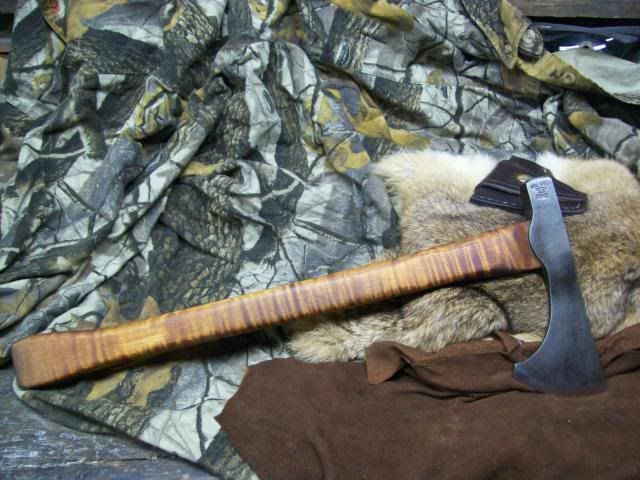
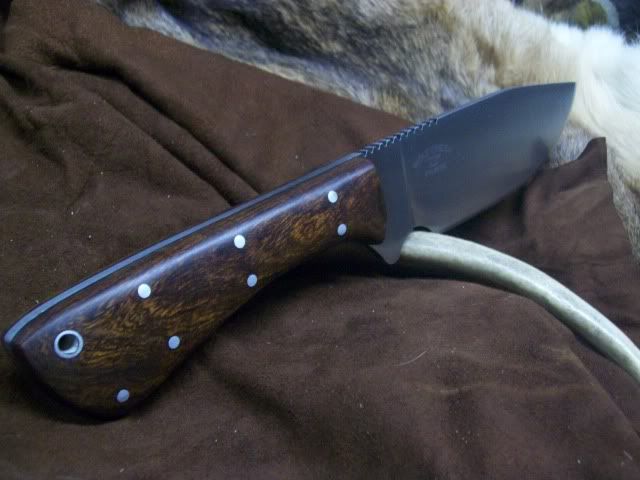
I also love curly maple..We use a ton of it on hawk/Axe hafts..i like it for knives to but I always ran into a problem using aqua fortis on scales that had epoxy soaked into the wood..Ive also come to like sheeps horn..Cocobolo can be really nice too..


Where are you guys getting your African Blackwood? Mark doesn't seem to carry it.
I noticed these guys have some decent prices on African blackwood, however they don't seem to have a lot in stock right now...


- Joined
- Dec 7, 2008
- Messages
- 7,187
My opinion has changed a lot over the years.
Since the majority of knifemakers making high end knives want stabilized wood with the exception of ironwood, hardness no longer affects my opinion.
If I can only pick one, it will be redwood because of the variations in the types of burl, and the metallic flash in the flamed stuff.
Since the majority of knifemakers making high end knives want stabilized wood with the exception of ironwood, hardness no longer affects my opinion.
If I can only pick one, it will be redwood because of the variations in the types of burl, and the metallic flash in the flamed stuff.

- Joined
- Feb 28, 2002
- Messages
- 13,348
Ironwood has been hugely popular with the bladesmith crowd for a looong time. As a consequence, I'm a bit tired of it. Walnut (in all its variations) and Koa top my list of current faves, but as a buyer, I more look for a handle that is an exceptional example of its type, rather than looking for a handle in a particular type of wood. If that makes sense.


Roger
Roger
Last edited:


- Joined
- Dec 31, 2007
- Messages
- 420
Amboyna Burl, Black Walnut Burl, and A wood called Bubinga Burl.
with Amboyna being Number 1. takes a nice shine and looks amazing.
with Amboyna being Number 1. takes a nice shine and looks amazing.

- Joined
- Nov 24, 2003
- Messages
- 2,357
Here is a knife I did several years ago in osage, but the wood was recovered from a very old fencepost from eastern Kansas, and had been subjected to the elements for over 50 years.
That is an absolutely fabulous use of aged material. I like it more every time I come back to this thread.
- Joined
- Nov 3, 2010
- Messages
- 65
I just love all the figures and the flash you can get from Redwood Burls, but I like figured Walnut too. Recently I worked some sycamore and that was impressive
Could you elaborate on the Sycamore? A pic or two would be great!!
- Joined
- Dec 7, 2008
- Messages
- 7,187
Could you elaborate on the Sycamore? A pic or two would be great!!
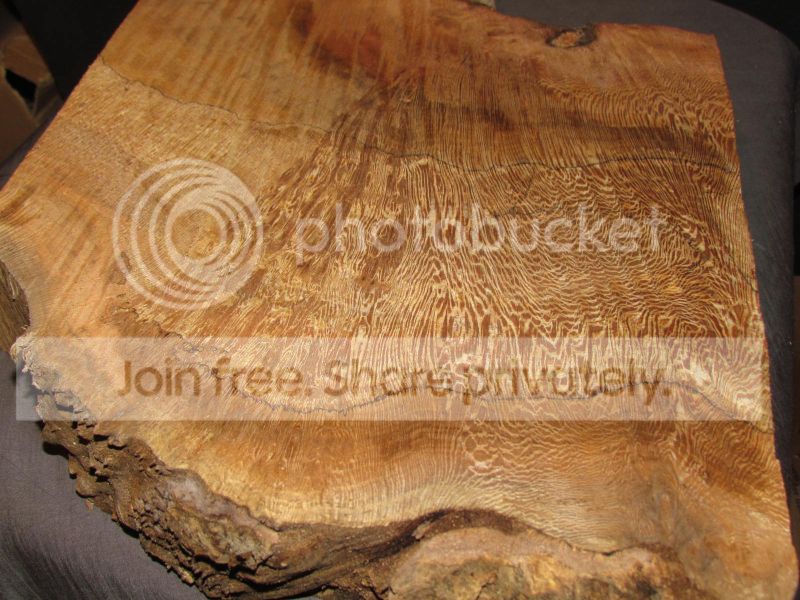
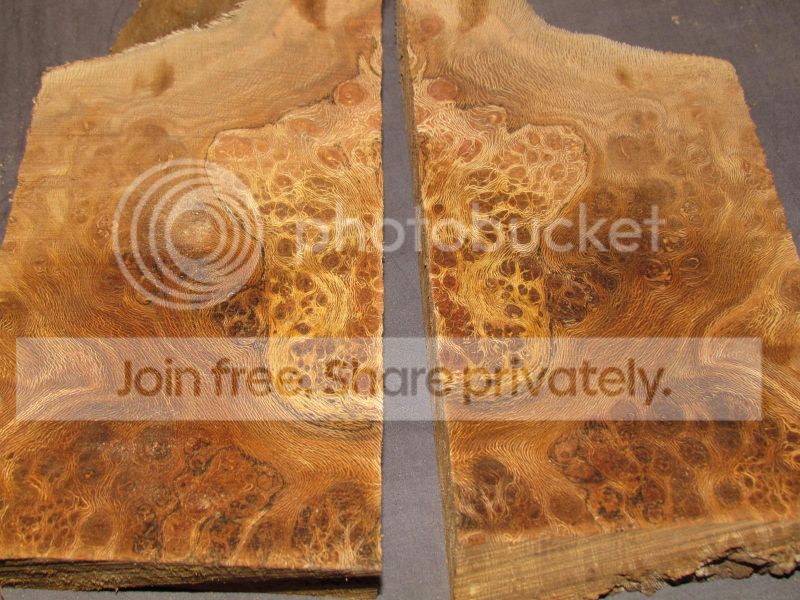

Nathan the Machinist
KnifeMaker / Machinist / Evil Genius
Moderator
Knifemaker / Craftsman / Service Provider
- Joined
- Feb 13, 2007
- Messages
- 19,558
I noticed these guys have some decent prices on African blackwood, however they don't seem to have a lot in stock right now...
That's where I get it. They frequently don't have a lot in stock because I buy it all. Ideal handle material, pretty, popular, stable, machines well. It is very dense (it sinks in water) and polishes well.
- Joined
- Nov 3, 2010
- Messages
- 65
Thanks Burl Source. That doesn't look like the sycamore that's keeping me warm right now.