Why are sheaths so expensive?

Fair enough, I'll freely admit I don't know anything regarding the kydex business besides I send in money, I get back a sheath. The main point of my post was wishing there was a slightly cheaper alternative, it's not so much the money as it is the point. Having an item cost 20 dollars more than what you feel the value is isn't going to break anyones bank, but it still nags at me. I do understand like I said, less volume = less money to make it worth their time unless they're priced higher.
 
two reasons: materials and labor.

I've purchases sheaths and I've made several. I've used moderately ghetto equipment and EXTREMELY ghetto equipment. some turned out okay, others looked like I ran over it with my car a couple of times (not far from the truth).

The material cost:
12x12 .08 black kydex sheet - 5.00
small tek-lock belt loop - 10.00
mounting screws/chicago screws/foam washers (10)- 6.00
Pack of rivets (100)- 10.00

tools required:
rivet flare - 2.00-100.00 (I have a 1 ton arbor press and riven flare bit from harbor freight that was about 50$)
closed cell foam - 9.00
drill press or dremel - 25.00-100.00
hacksaw/sander/sandpaper - 10.00-100.00 depending how ghetto you want to be
c-clamps - 10.00
channel iron or thick pieces of wood - 0.00-20.00


so. at the absolute cheapest to make your own sheath, assuming you have all the tools required, your minimum cost for 2 sheaths (12x12 kydex sheath) is 31$. This is assuming your going to work for free. You can stretch the cost out a little bit by using the 100 rivets and the other chicago screws for your next sheath, but it's only going to drop the price by a few dollars. your still looking at around 20$+ in raw materials unless you can buy in bulk. If you need to buy the bare necessary tools your looking at a minimum of 40$. You NEED something to cut holes in the kydex, cut the kydex, flare the rivets, and press the kydex into shape. that 40$ is even assuming your going to do it as absolutely ghetto as possible:

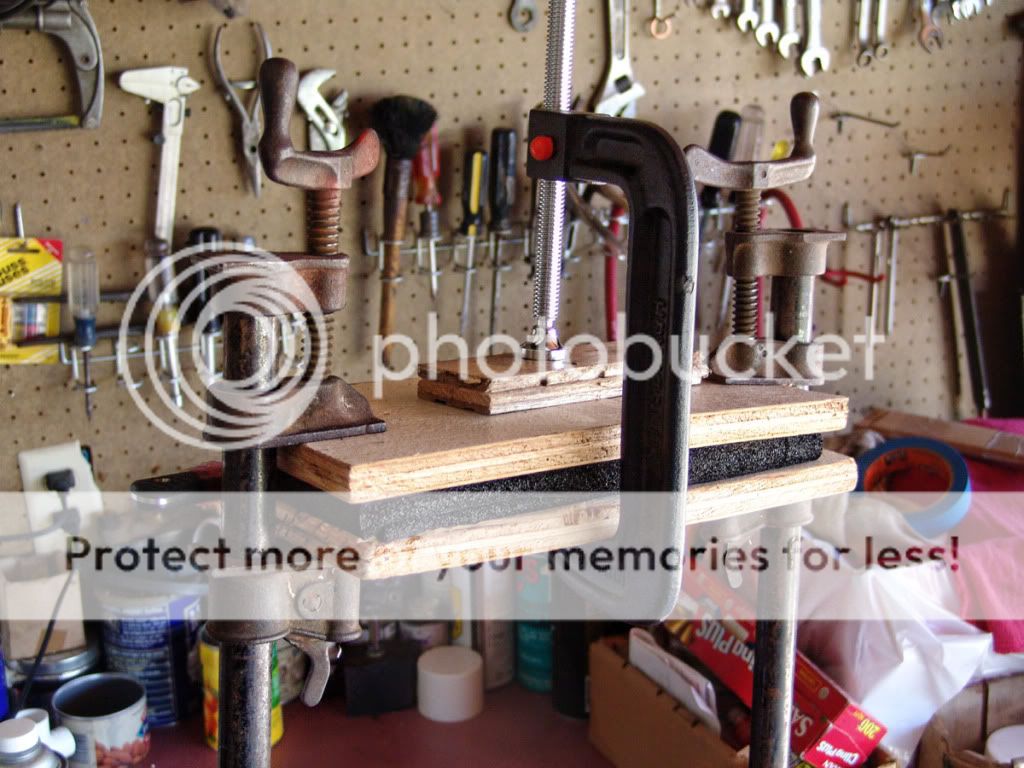
Your going to use your dremel to do everything. You're not even going to use rivets, your going to drill the holes with your dremel and use bolts and nuts to secure it, your not going to use a tek-lock your going to get a piece of belt leather and dremel holes into it. Your going to cut the kydex to shape with your dremel and your going to use 2 pieces of salvaged 2x4's with two c-clamps to press the foam against the kydex. your still looking at 9$ foam, 20$ dremel, and 10$ c-clamps.

Then there is labor. Lets assume the person wants to make a modest 10$ an hour, which is just above minimum wage here in california. It takes me at least 45 minutes to get a sheath from parts to usable, and an hour and a half if I'm trying to make it look nice, assuming all goes well. It's pretty hard to get things to work right when your jerry rigging channel iron and multiple c-clamps by yourself.


Add 15$ to your 31$ materials cost and you now have a 46$ sheath or [15+15+31]/2 = 30.50$ per sheath for two sheaths. Nothing is free. Nothing worth having is easy. If you want to make your own sheaths you can cut costs in the long run, but you probably won't get the quality and consistency as a maker purchased sheath and you'll have to spend the initial capital to get the equipment, unless you have your own shop that's already set up for that type of work.
 
Last edited:
also worth noting, making standard kydex sheaths isn't fun or therapeutic like knife making. it's frustrating and variable work thats really difficult to get consistent results across different knife patterns. each knife is a new struggle to get the right mix of secure grip and easy release. No one in their right mind would do this extensively for people they didn't know to break even, if you want to make a living at it you want to charge enough that you are able to pay bills. it's not easy to make enough sheaths to pay for living costs if your charging 10$ an hour.
 
actually, there is a way to make a usable sheath that's cheaper. it's really, REALLY not pretty, but it works.

Buy the 9$ foam, the 10$ c-clamps, find some 2-4's and buy a cut off of 2" pvc-1 pipe from a local hardware store. It is a god-awful sheath material because it's 5/32" wall thickness with little to no flex. That means your sheath is either sloppy and rattley or impossibly tight.

but it's cheap, and with minimal dremel work. you'll need to almost completely re-soften the handle portion of the pipe once you have it formed because thats the stickiest area, and then hand shape it to grip just enough to keep the knife from falling out. You'll have to figure out a way to carry it, unless your backpacking. also, it will look hideous.
 
Last edited:
19111111.jpg

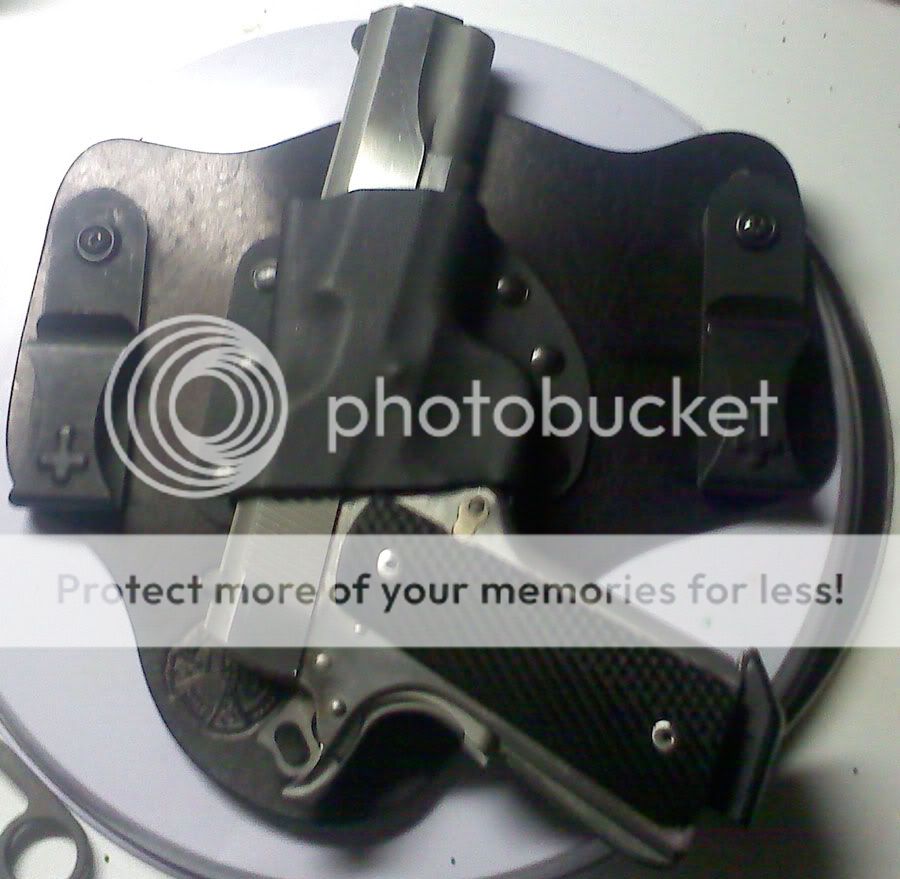
put a powder coat on that and see how fast it wears. Knives wear from kydex because the powdercoat is significantly softer then bare metal and because sand, grit, dust, and dirt gets trapped into the extremely confined and tight space the knife thins out. That holster is extremely open and easy to clean, with a knife you have almost 6 square inches of space thats less then 3/16" wide, so tight that you can't even clean it with a q-tip. Because it requires a tight fit, you can't even put a cloth over the knife and insert it to clean it out since the cloth will tear or simply not fit. I've used compressed air, high pressure water, alcohol and industrial degreaser on a sheath and STILL found there to be grit running across the edge when inserting the knife because it had been pressed into the kydex.

Kydex knife sheaths are significantly different than gun holsters as far as damage to the drawn item.
 
I use cheap military surplus sheaths from www.majorsurplus.com and they cost me less than $1.50 each. Less than 5 minutes of customization with some shears, a hole punch, a lighter, and some 550 paracord, and they fit my knives exactly the way I want. They hold tightly, with no rattle, and don't mar the finish. They're lighter, take up less space, and have a nicer tactile feel, than most fancy sheaths, too.

If you don't mind a sheath that is ugly as it gets, this might be the solution for you. For less than the cost of a bottle of water, you might as well give 'em a try.
 
one more post, then I'll stop. I've spent a lot of time getting to where I can make a sheath that works in 45 minutes, so I'm generally interested in the subject of do-it-yourself techniques that increase speed or cost effectiveness. I'm not exactly rich myself and can't really even afford the knives I buy let alone sheath material.

this sheath:
zIMG_6343.jpg


made using this technique (plywood, used oak flooring and tools I already have)
DSC01536.jpg


cost me around 20$ in base materials. this is cutting the cost of the 100 pack of rivets down, and reducing the cost of the kydex because I got 2.5 sheaths out of the 12x12 piece.

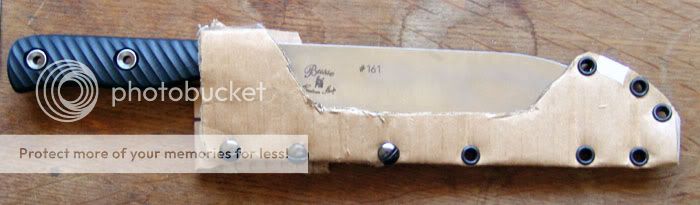
people joke about it, but cardboard sheaths aren't actually that good, mostly because they degrade when you get them wet. you can actually make a usable sheath out of used jeans and a strip of shoe sole rubber that's 1000x more durable.

DSC01532.jpg
 
under what section of that website? that sound awesome, but I'm not seeing any. is it a rotating inventory?

That's a good question. It looks like they restructured their site, and my old link isn't working. Poke around, and see if you can find them.

As I recall, they called them "frogs", not "sheaths".
 
I'm not talking about coating wear. I can regrind a satin finish and as soon as it's put back in the sheath, it'll come out scratched.

Either way, I got my answer to my questions.

put a powder coat on that and see how fast it wears. Knives wear from kydex because the powdercoat is significantly softer then bare metal and because sand, grit, dust, and dirt gets trapped into the extremely confined and tight space the knife thins out. That holster is extremely open and easy to clean, with a knife you have almost 6 square inches of space thats less then 3/16" wide, so tight that you can't even clean it with a q-tip. Because it requires a tight fit, you can't even put a cloth over the knife and insert it to clean it out since the cloth will tear or simply not fit. I've used compressed air, high pressure water, alcohol and industrial degreaser on a sheath and STILL found there to be grit running across the edge when inserting the knife because it had been pressed into the kydex.

Kydex knife sheaths are significantly different than gun holsters as far as damage to the drawn item.
 
In my opinion, it's a pain to do. I have all the necessary parts and tools to make kydex sheaths and it actually takes quite a bit of time to measure, cut, heat, press, drill, add rivets, and grind, not to mention you need to make it look good and the kydex dust gets EVERYWHERE so you better have a area dedicated for kydex. I'm no where as efficient as some of the makers on here, but I don't think these guys are getting rich from making custom knives.
 
For what its worth, I had to have a custom holster made for my hk-psp years ago. Being the fact that I'm left-handed, and its an hk-psp, special holster custom fit, more $$. I beleive when you go custom you get what you pay for.
 
I started making sheaths for the knives I was making. It expanded into making for the manufactured knives I carry, and for friends who had similar problems.

Without hustling the manufacturers, who make decent but limited designs, it is very difficult to make a sheath for all occasions for all comers as the permutations are considerable. It is not difficult to out do a manufactured sheath with a little experience , care and knowing what you want out of a knife.

Designing and making a sheath is an excellent experience.
 
Good question, good answers.
I have an inexpensive, $5., thick nylon sheath for my Nuc EDC and it works just fine. I will not replace it. I'd like to see more of these sheaths on the market.
 
have you ever taken a close look at the faces of the kydex benders in this forum? they weren't all born that ugly, that's from sniffing kydex all day long.

i'm sure their pricing reflects the cost of future reconstructive plastic surgery. someday even they will want a grilfriend.


.
 
IMHO the kydex sheaths for Busse or other knives are expensive because of the low volume. They have to be made individually by hand. Many kydex holsters are mass produced on an assembly line. High volume equals lower cost.

Do a search for custom made kydex holsters. Their cost is right up there with knife sheaths. I can find good quality holsters for $75 and up.

Yes, the volume factor is part of it. For the most part, I'm almost loosing money when I make sheaths if you factor in the tools, materials, shipping, communication and my time. I think it comes out to less than $4.00 per hour labor. Much less than I make at my real job. I mostly do it because I get satisfaction from the finished piece. A $200 knife is almost useless and even dangerous without a $40 sheath. I've been trying to keep my prices at $30 or less for 7" and under blades because I want to be a nice guy. In reality I should be charging closer to $40 to make it worth my time. Last Visible Canary gave an excellent explanation.
 
Last edited:
I knew that was coming, as it generally does on any msg board. Someone has a complaint about ANYTHING or a suggestion and it always leads back to "don't like it, do it yourself". I spend all day playing with machinery, the last thing I want to do is take up a kydex hobby.
1)If you knew it was coming then that's called trolling.
2) Hand made versus mass produced
3) This belongs in whine and cheese
4) Banned smiley
 
Thanks for the great thread! Although I have already come to my conclusions on this subject, the questions and honest answers were constructive and educational. Good on you folks who participated.:thumbup:
 
Back
Top