WIP: HD drop point hunter/ utility fixed blade

Joined
Apr 18, 2007
Messages
327
I've had a few people in the past interested in how I make my knives, so while I had a little breathing room I decided to follow one of my new designs from start to finish.

Here we go!

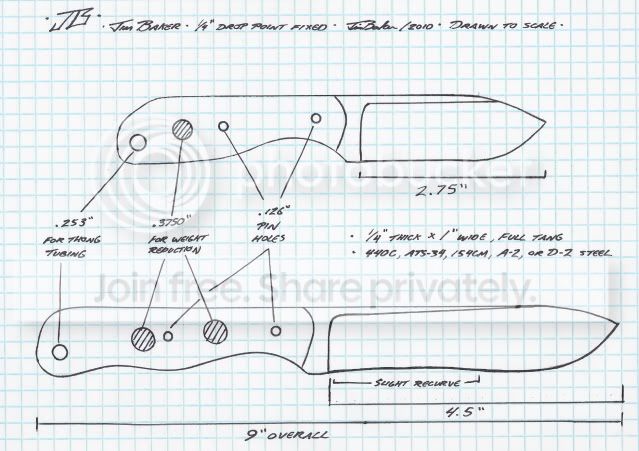
First, here's the original page from my design book; with basic sketches for a full size and compact model. All my designs start out on paper, usually as sketches I make while watching TV or just sitting around. Ones I like go into a giant folder, and are transferred to graph paper in full or 1/2 scale drawings as soon as possible (I have hundreds of sketches and I'm always adding new ones, so it's impossible to keep up). The final drawings then go into my design folder.
hddpdrawing.jpg


The idea behind this design is a heavy- duty knife suited for as many different uses as possible. I've based it on the classic drop point hunter profile, since it seemed to me the best blade shape for the job.
The knife is 1" wide, and will be cut from 1/4" thick barstock. I personally prefer thinner, lighter knives- but since I get a lot of requests for thicker blades, I decided to bulk these up!

The bevels will be hollow ground almost all the way to the top. This will make a deeply hollow ground blade that will take a razor edge, while leaving plenty of strength at the spine. The larger model will also have a slight recurve for slicing- probably not as obvious as the one in the drawing, but enough to add some curve and belly to the otherwise straight edge while keeping it easy to sharpen. The handle design is meant to accomodate any grip position desired- I'll post some in-hand pics later on down the line as well.

To be continued!
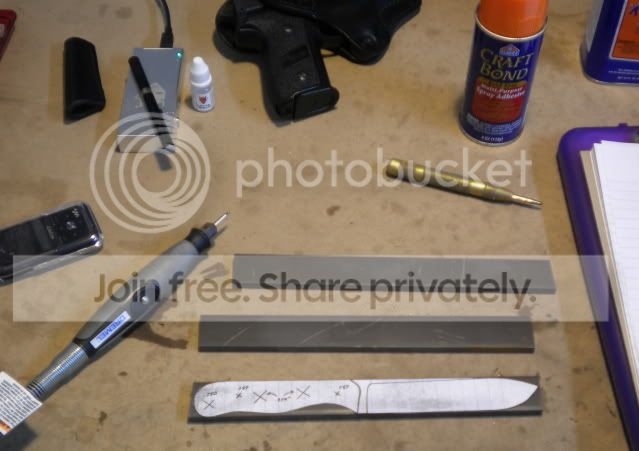
 
The next step is to transfer the design to the steel. Normally I will make a template of the knife from lexan if it's a design I will make regularly- but since most people are familiar with this method, I'll instead show one of my methods for one of a kind or custom orders:

layout.jpg


A copy of the design is traced on another piece of paper, including holes, and is then cut out. The "x" marks on the paper are the hole centers for centerpunching. The paper outline is sprayed with an instant adhesive and glued to the steel. After it dries for a minute, the hole locations are centerpunched (the center of the "x"). Next, I trace the outline using a ball- end diamond engraving bit in my dremel flex shaft tool.

At this point, you can remove the paper template if you wish and you will have a scribed, centerpunched blade outline on the steel. I am leaving it on the steel here for better visibility in the pictures.

Next step: cutting the profile from the steel.
 
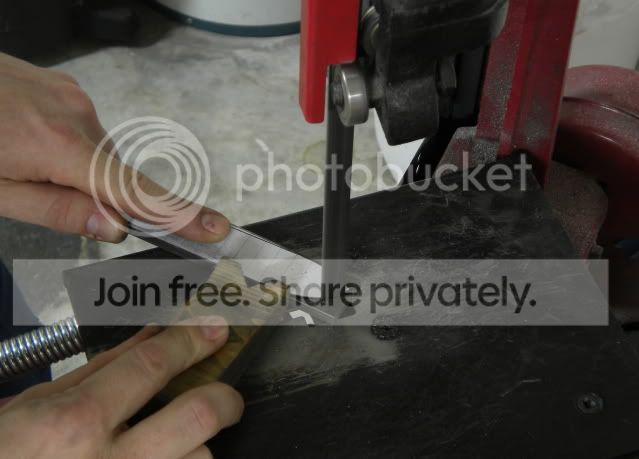
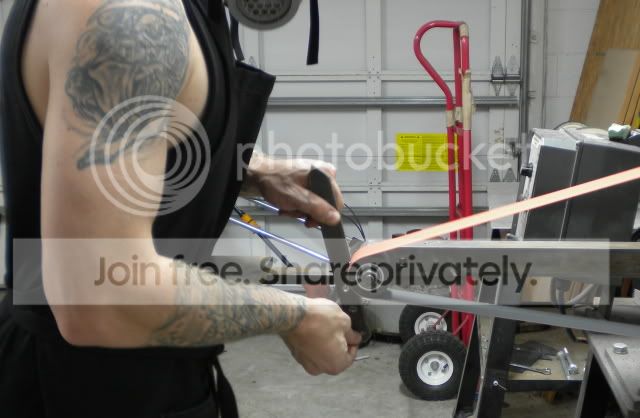
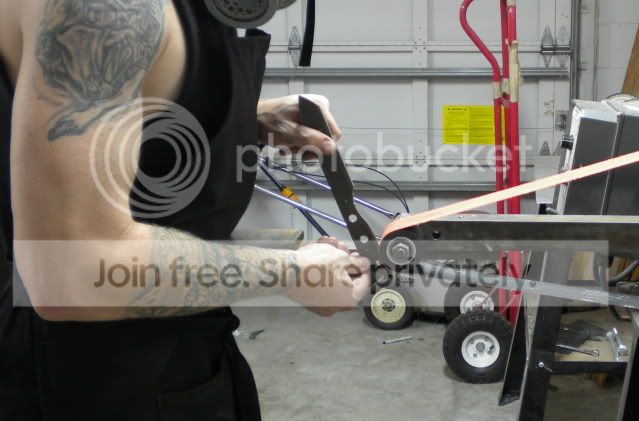
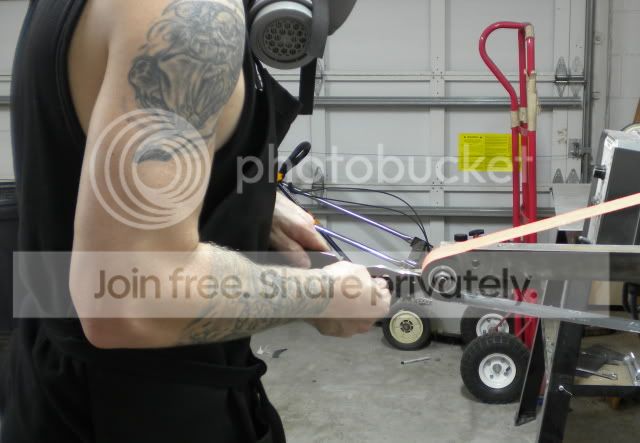
The outlined piece of steel is taken to the saw. Mine is a cheap Harbor Freight vertical/ horizontal bandsaw, but with a high quality Bi-metal blade it cuts just fine.

sawing1.jpg

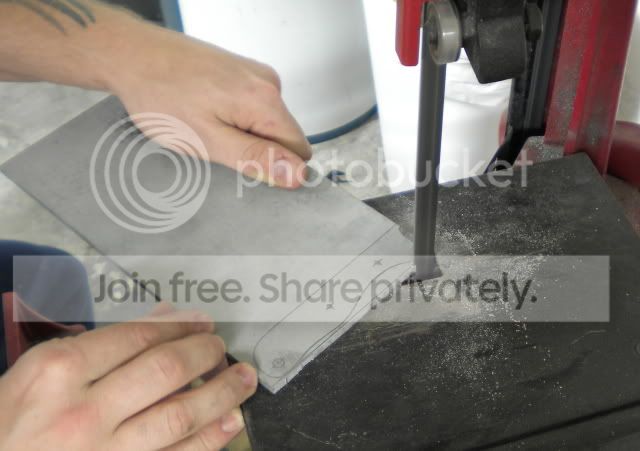
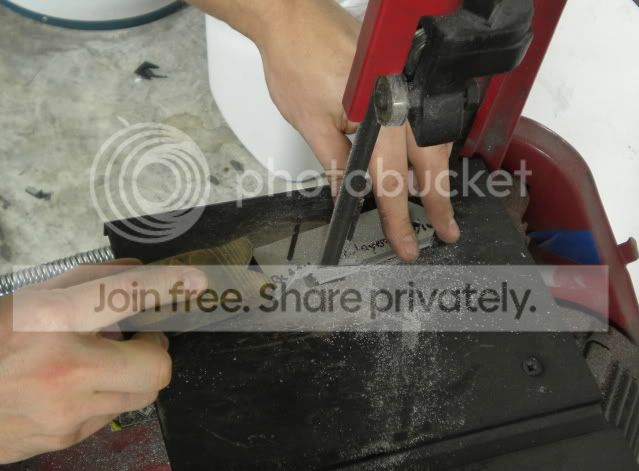
With safety glasses and respirator in place, the outline is cut. I run my bandsaw at around 80 fpm, and use a stick lubricant on the sawblade. Push sticks are a must here, I have about six of them in all different shapes. This one has a notch cut in it for use on angled cuts. I use light but steady pressure on the steel, and near the end of the cut I use almost no pressure and let the saw feed itself- this way there is no sudden break-through at the end of the cut which can be very dangerous to fingers!

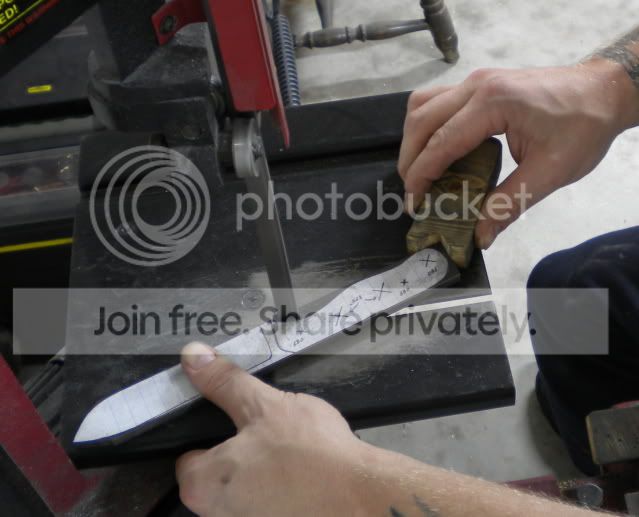
sawing2.jpg

For the inside curves I cut out a series of triangle shapes, getting as close to the outline as possible. You can see the notch of the push stick in action here.

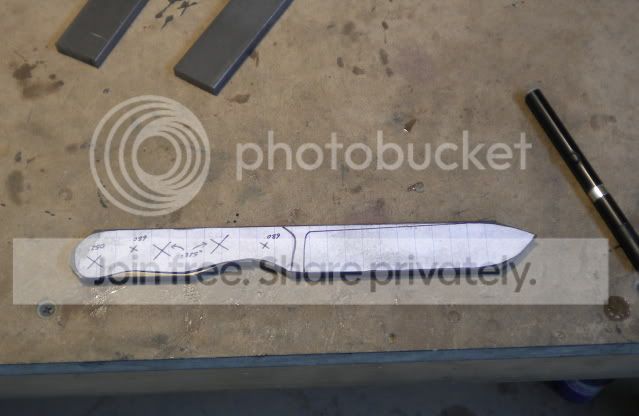
sawnprofile.jpg

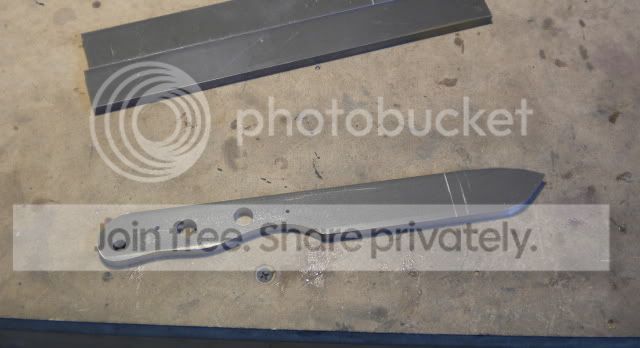
Here's the sawn profile. If you look in the index finger area you can see the metal left after making the triangle cuts. Less metal to remove makes the grinding work easier!

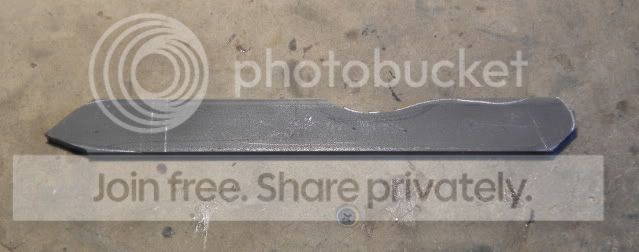
sawnprofile2.jpg

The rough cut blade, with the paper removed. You can see the scribed lines of the outline and the punched hole locations now. The rest of the excess steel will be removed on the grinder.
 
Next , onto my favorite tool in the shop- the 2HP variable speed KMG grinder. An expensive piece of equipment, but worth every penny- most of the work in my shop is done on it.

profiling1.jpg

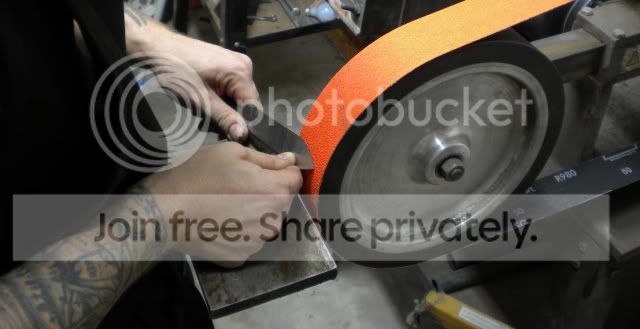
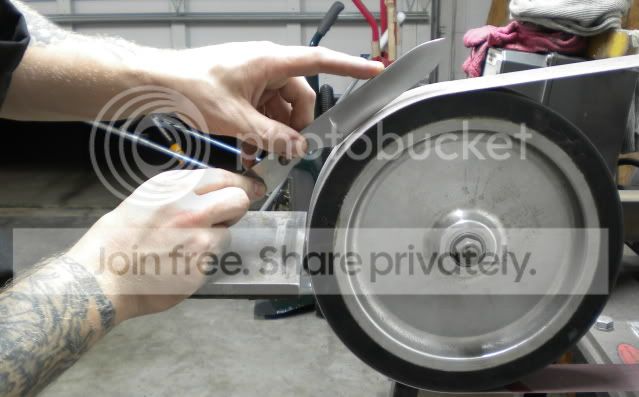
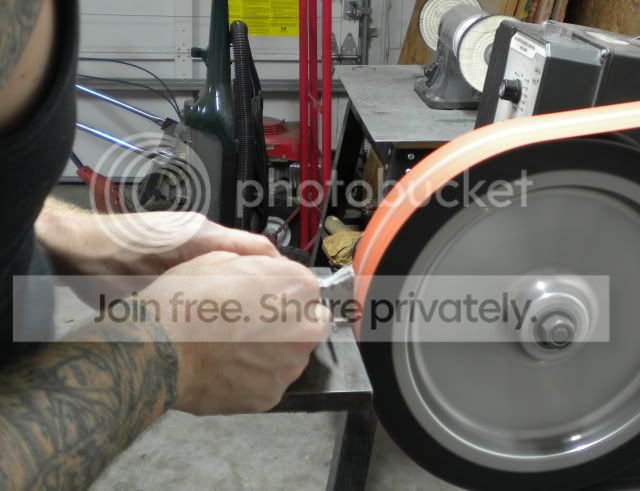
The 2" wheel is attached for profiling the blade outline. I use a somewhat worn 50 grit belt to get the bulk of the metal off, and follow it with 120 and 220 grit belts to finish it up.

profiling2.jpg

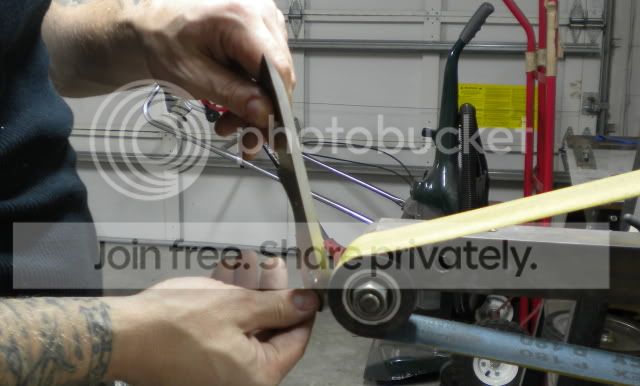
The key to this method is keeping the blade straight on the wheel, and making continuous strokes from top to bottom. If you stall or increase pressure in one area you'll get divots that will have to be ground out.

profiling3.jpg

At the end of a stroke, run the wheel over the curve at the bottom of the handle (when working the spine I begin from the point back to the butt). This will help blend your grinds together at the butt of the handle.

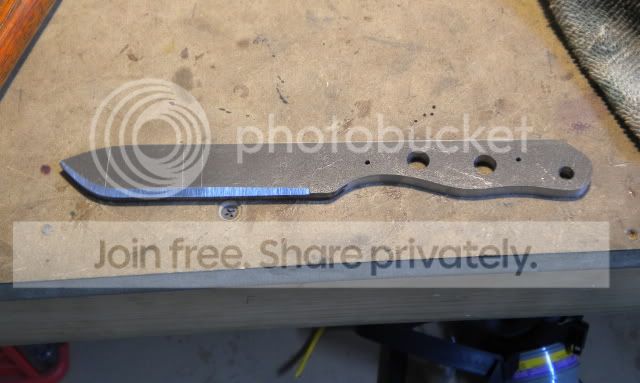
profiledblank.jpg

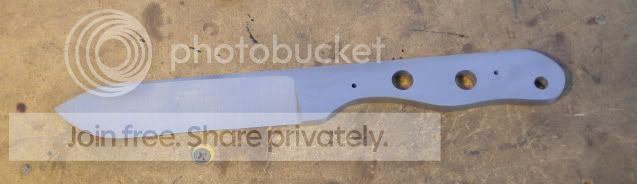
The finished profile, ready for the edge to be scribed. That's it for tonight, but I'll post some more shortly!
 
Last edited:
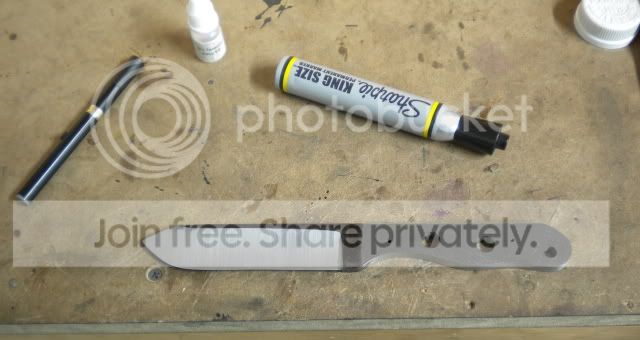
Next is scribing out the edge thickness and centerline for the blade bevel. I coat the edge with Dykem fluid before scribing, but in a pinch you can use a chisel-tip sharpie permanent marker- it's just not as durable. I've used a sharpie for this blade as an example.

scribededge.jpg

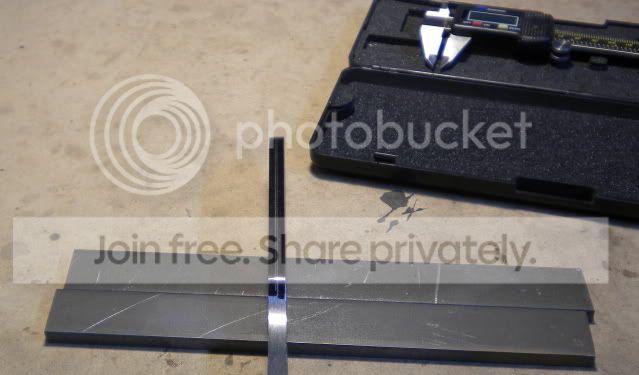
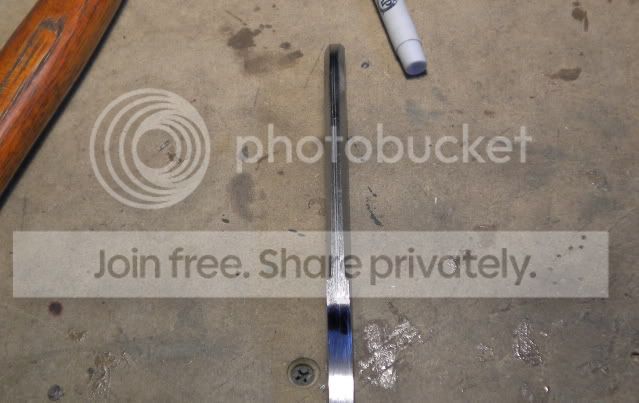
This piece of 440C measures out oversized at .290". To leave an edge thickness of around .020", I set the caliper at .135" and use them to scribe a line on both sides of the blade. This marks out the actual cutting edge, right down the center of the blade. Next, I scribe a line across the edge to mark the start of the plunge cut.

Now, on to the grinding!

firstbevel1.jpg

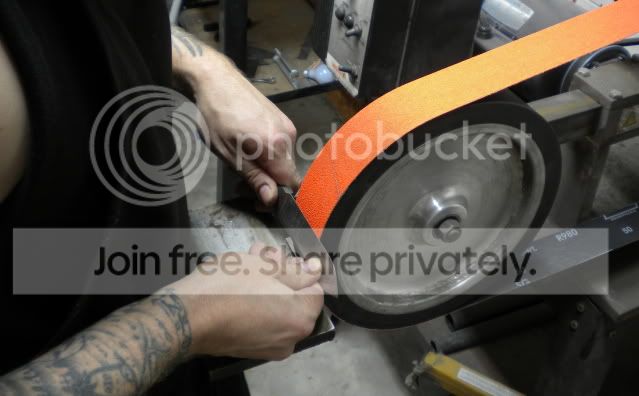
The first belt here is a worn 50 or 60 grit Norton Blaze belt. This belt is used to grind a starting bevel, almost all the way to the scribed line. This is to keep the steel from stripping the grit from my fresh belt in the next step.
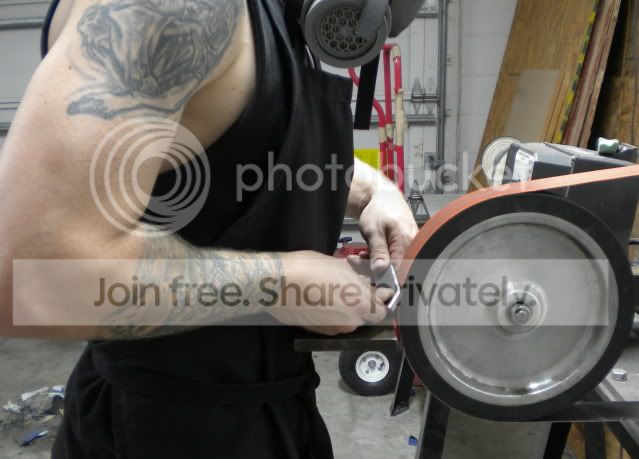
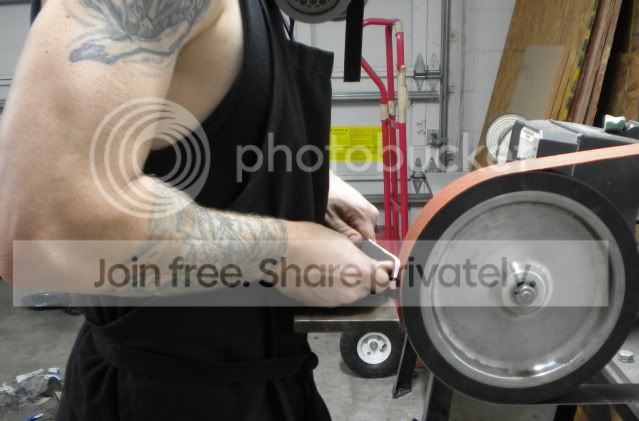
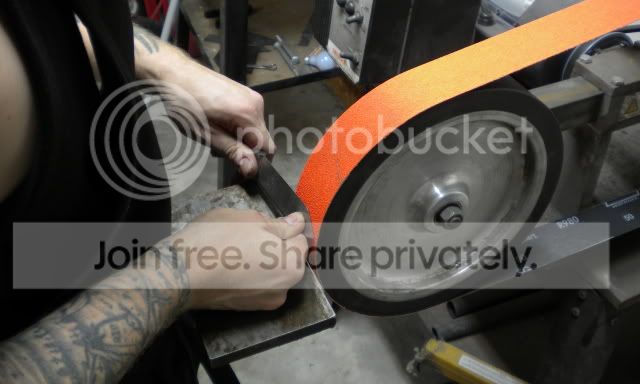
With the belt on the 10" wheel, The starting bevel is ground. I use high speed for this step to take the steel off fast in this step. My grinding technique is a bit unusual, but it works well for me: I set my support hand on the work rest, and keep my other arm close to my body. I move the blade across the wheel, using my support hand to apply pressure.

firstbevel2.jpg

I start my grind near the center of the blade, move backward and and stop near the plunge cut line, and then follow the grind out into the tip. For whatever reason, it works for me!

firstbevel3.jpg

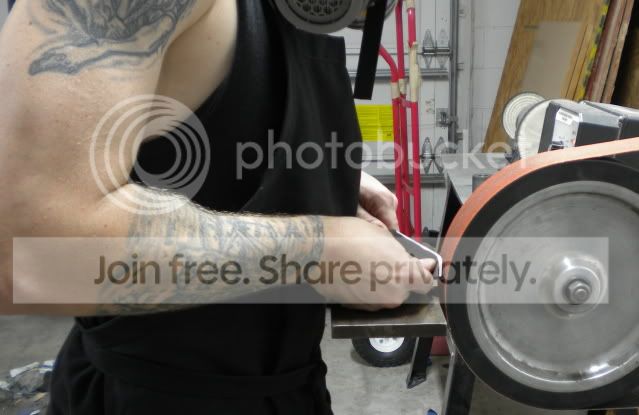
For the point area, I rotate the handle downward slightly to follow the curve up to the tip. The idea is to keep your grind paralell to the scribed mark the entire length of the edge.

firstgrindbevel.jpg

firstgrindthickness.jpg

The blade with the starting bevel- You can see the plunge cut area now, and the scribed lines are still nice and visible. It's not pretty yet, but it will get there!
 
Last edited:
Now it's time to really start grinding- there's a lot of metal that needs to come off!

roughgrind1.jpg

A nice, fresh 50 grit Blaze belt is put on, and the serious work begins. Grind, grind, and grind some more, following the scribed lines as a guide.
Rather than bog down the thread with a bunch of grinding pics, I've skipped ahead to near the end of the rough grind here.

roughgrind2.jpg

Following the grind line...

roughgrind3.jpg

... And rotating near the point to keep the edge even and straight. I dip the blade in water to cool after every pass, since the blade heats up quickly- although I still get hot fingers now and then:eek: Since I am left- handed, I watch my right-handed work carefully to keep it symmetrical with the other side of the blade.
50gbevel.jpg

A look at the rough ground bevel. I've covered the flats around it with the sharpie for contrast. The grind is almost to the final height, and the grind lines are straight, clean, and almost symmetrical.

50gedge.jpg

50gpoint.jpg

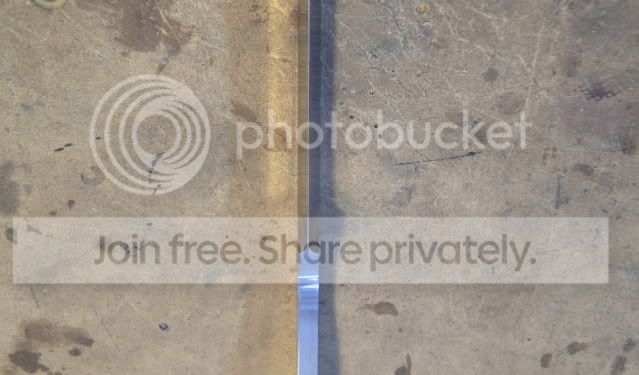
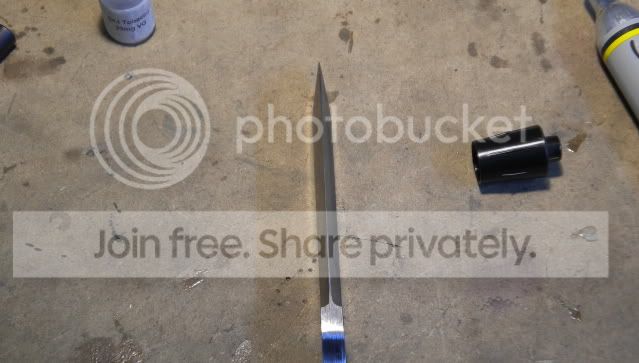
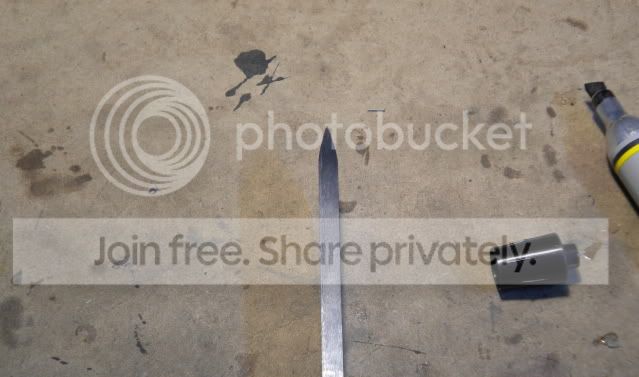
Here's a look at the edge and point. The result of carefully following the scribed lines is a centered edge about .020" thick ( a little hard to see here), with the point centered on the spine. The plunge cuts are aligned, but not perfect yet- those Blaze belts don't flex much. This will be refined with flexible belts later on.
 
Last edited:
Grinding flats:

grindingflats.jpg

The platen attachment is put on the grinder. My platen has a ceramic plate attached to help ensure a flat surface, and works very well for this. The reason I do this step after the rough bevel grind is simple- to remove as much metal as possible, so there is less work and wear on the platen and belt here.
For this step, I use a welder's magnet with a flat piece of steel plate attached. The steel is covered in tape when needed later on to keep it from scratching the surface it is on. The blade must also be kept cool here, or the magnet starts to lose its hold on your blade.

80gbevel.jpg

After going through the 50, 80, and 120 grit Blaze belts, I switch over to Norax 100x and then 65x belts. Afterwords, the finished flats are marked with initials and the steel type in the handle area for heat treating. The grind lines usually change a little, but they are easily cleaned up.
 
Next, it's back to the 10" wheel, to refine and finish the bevels.

120gbevel.jpg

The bevel after the 120 grit belt and the 100x Norton belt. In this step, the area to be recurved is ground in using extra pressure until it is thinner than the rest of the edge- the thinner the grind is here, the deeper the recurve will be.

grindingrecurve.jpg

The recurved area is now put onto the wheel and carefully ground and blended in until the edge thickness is the same as the rest.

65xbevel.jpg

The blade after the 100x and 65x belts. The recurve is not highly visible, but should add something to the cutting ability. It will also be easier to maintain.

65xthickness.jpg

Finally, here's a shot of the edge, now at the final thickness and with the plunge cuts refined by the flexible 100x and 65x belts.
A little more work and it's ready to go off to Paul Bos Heat treating!
 
Almost done... for now!

csinking.jpg

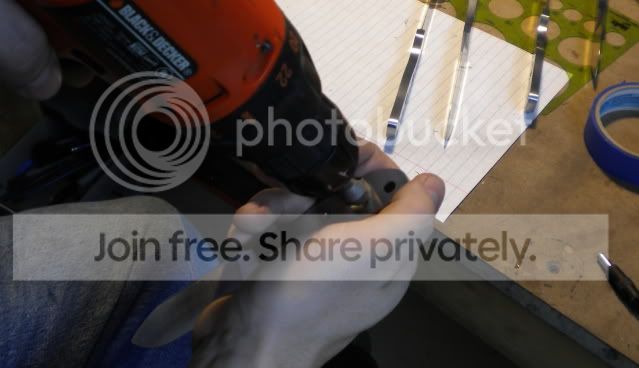
All the pin holes are reamed slightly oversized (.126" for 1/8" pins, .253" for the 1/4" thong tubing). After this, all the holes are chamfered by hand with a single- flute countersink in a cordless drill. This takes off any sharp corners here that could cause problems after the heat treating. I get a nice, evenly chamfered edge easily by holding the blade firmly but not tightly in my hand and running the drill slow- the countersink seems to center itself in the hole this way. It can also be done on the drill press, but I rarely find it neccesary.

deburring.jpg

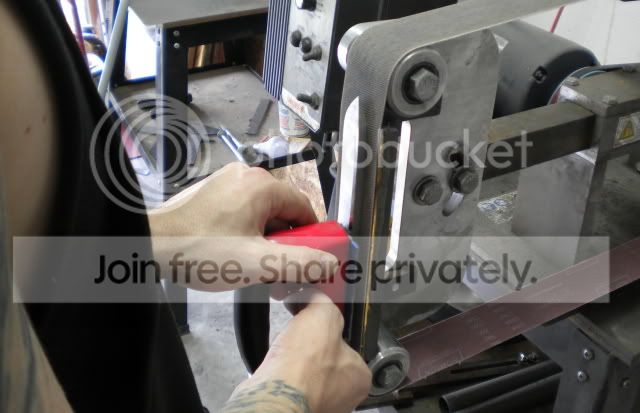
The last step before cleaning the blades up is to knock off the sharp edges around the blade. For this I use a worn 220 grit belt on my 2" wheel, and run the edges of the blade and handle over it. I use light pressure and quick movement here, to avoid taking off too much metal- which can affect the handle scale fit later on. This once again helps avoid heat treating issues, but it also helps keep the guys at Paul Bos heat treating from cutting themselves on a sharp burr of steel.
 
The knives are given one final check for anything that needs to be corrected, such as plunge lines, grind lines, edge thickness, missed scratches, warpage, and so on. After they pass, any blades that will be mirror finished are taken to the buffer. I load a spiral sewn muslin wheel with blending compound and buff the bevels and flats to blend the scratch pattern.
The last step is to clean the blades thouroughly, to remove any compound or contaminates from the blade. I use denatured alcohol to clean the entire blade, including inside all of the holes. Once they are clean, I don't even touch them with bare hands to ensure they are in the best condition possible for heat treating.


summer2010batch1.jpg

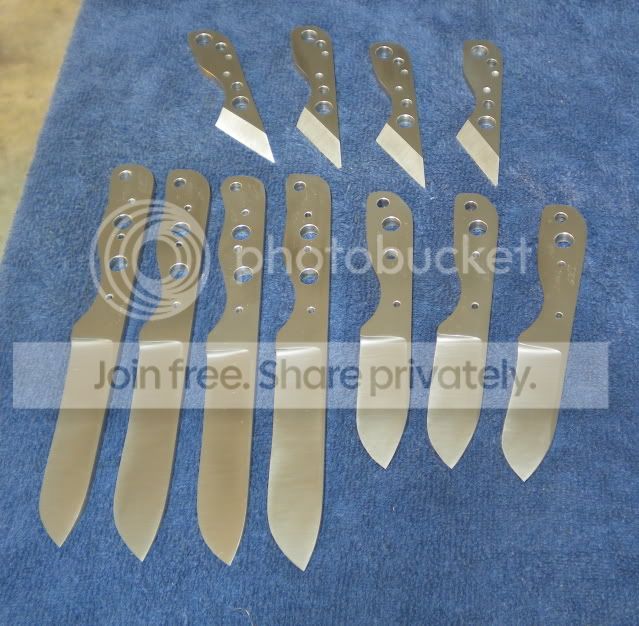
Here they are, cleaned and ready for hardening: four full size blades, three compact ones, and a set of chisel ground HD Kiridashis for a dealer order. All are built from the same design, yet each one is slightly different- and one of the compact models has a deeper recurve to the edge, just for fun (and BTW, the left center kiri's point isn't broken- it's just buried itself in the towel!)

That's all for now- I'll be back to finish this one off as soon as the blades return.
Thanks for watching so far!
 
Thanks for the WIP, I can't get enough of em. :thumbup: on the pictures too! ...and the Sig, someone knows where its at ;)
 
postHT.jpg

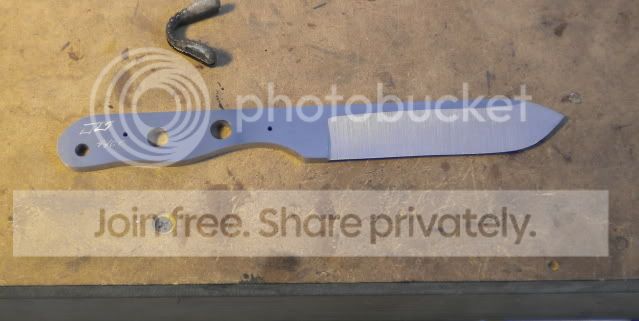
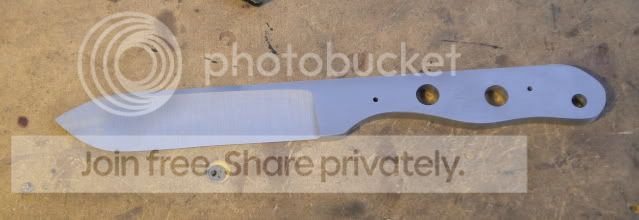
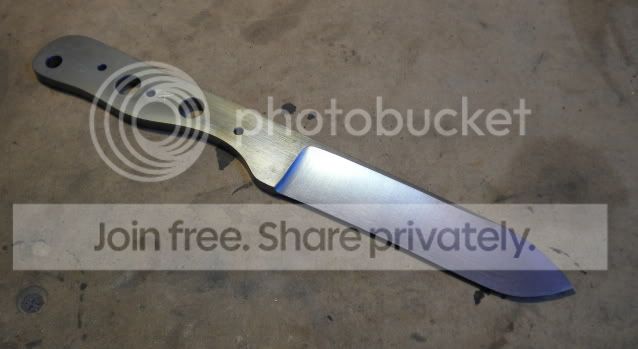
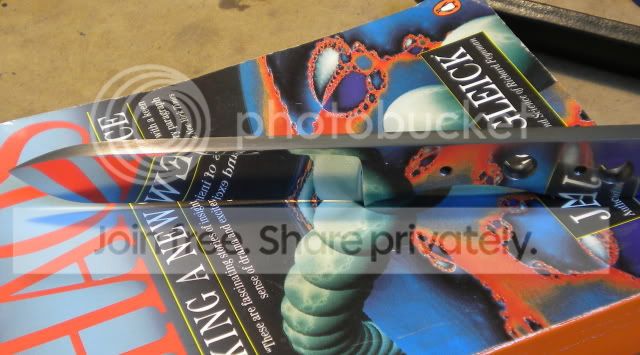
The blades are back from heat treating, and ready to finish.
Paul Bos does an excellent job, as you can see- the blades are straight and scale-free. Now on to polishing! To speed thing up a bit, I'll skip pics of the polishing process- it's the same method I use to grind.

flatspolish.jpg

First I polish the flats of the blade. I begin with the norton 65x belt, and progress through 45x, 16x, and finaly 5x belts for a mirror finish.
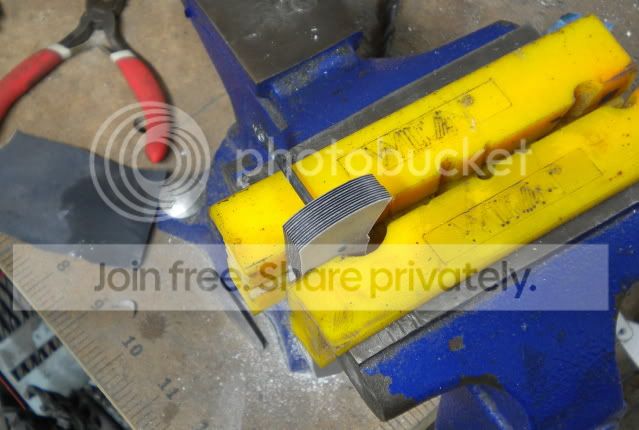
bevelpolish.jpg

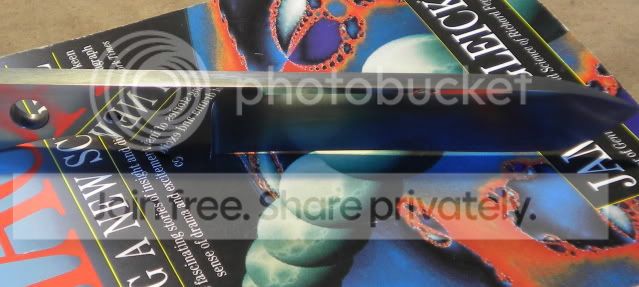
Next, the bevels are polished with the same belt sequence. Then the blade is buffed, first with a medium cut compound and then with green chrome to bring up a nice shine. If you look, you can see the spine is not polished yet- I incorporate this step later on to save a bit of time.

makersmarketch.jpg

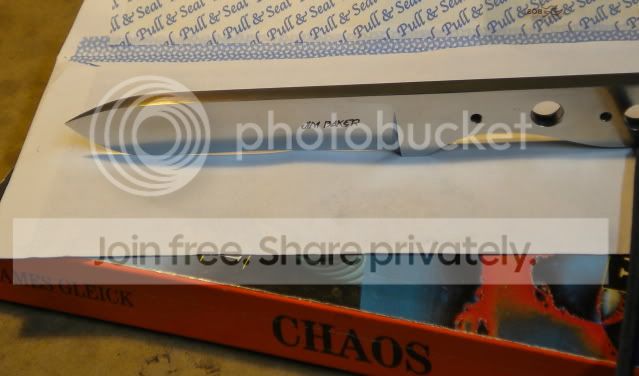
The last step here is the maker's mark and Paul Bos logo. I use an etch-o-matic machine for this, using stencils I make myself. This makes a crisp black etch, especially on a mirror polished blade.
 
tapedblade.jpg

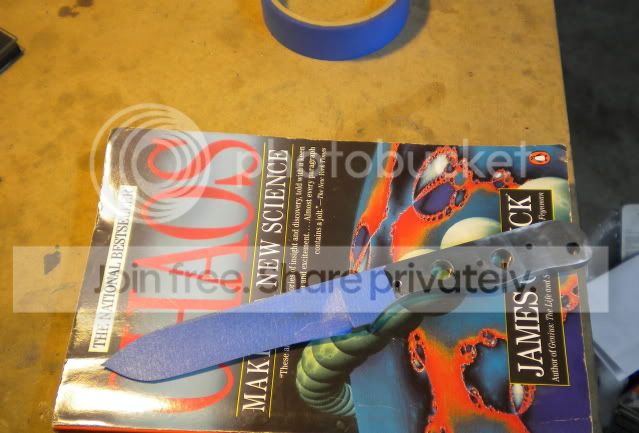
To avoid scratches, I cover both sides of the blade in blue painter's tape. The tape stays on all the way to the end- the blue tape holds well enough, but removes cleanly even after a day or two.

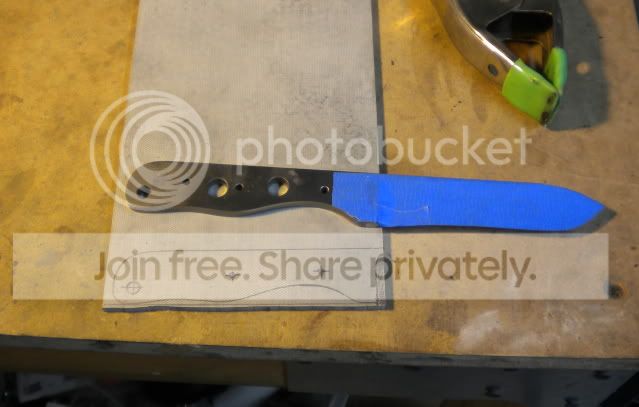
scaleoutline.jpg

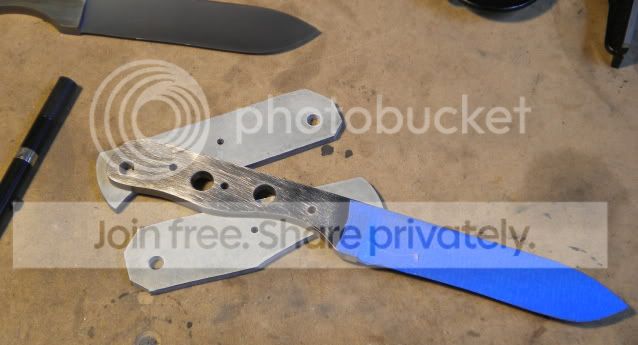
The blade is clamped to the handle material to trace the outline. This knife is being fitted with one of my favorites, 3/16" thick grey and black G-10.
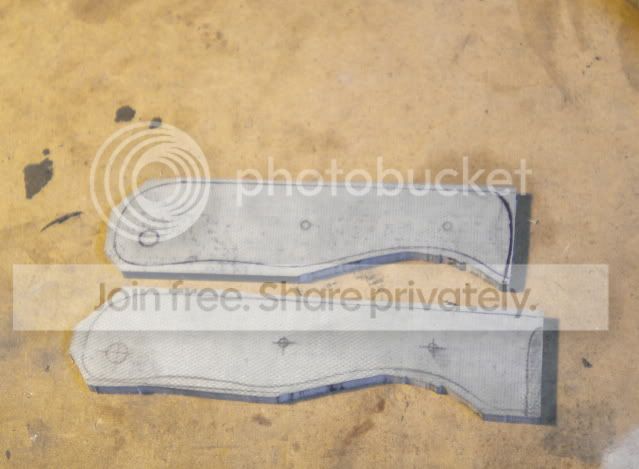
The outline and holes are traced, and the bevel location is marked also.

cuttingfirstscale.jpg

The first scale being cut. I find a good metal cutting blade cuts G-10 easily.
I like this method because I can hold the entire sheet instead of a small piece.

scalefrontmarking.jpg

Next I mark the front of the scale and cut off the excess, leaving a rough handle scale shape (top scale in the pic).

drillingfirstpinhole.jpg

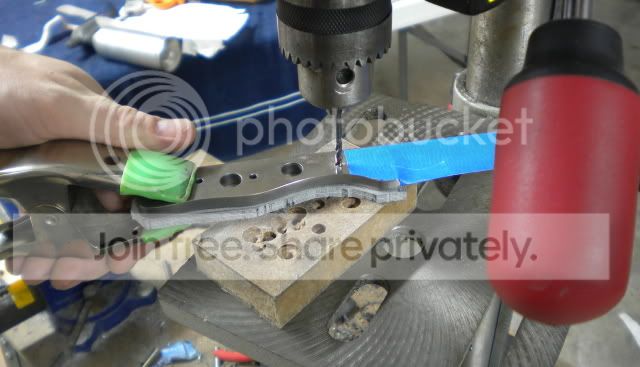
I drill the pin and thong tube holes in the first scale next. I clamp the blade to the scale and drill through it to avoid problems.
After drilling the holes, I put pins in to keep the scale and blade aligned for the other holes.
 
transferscaleholes.jpg

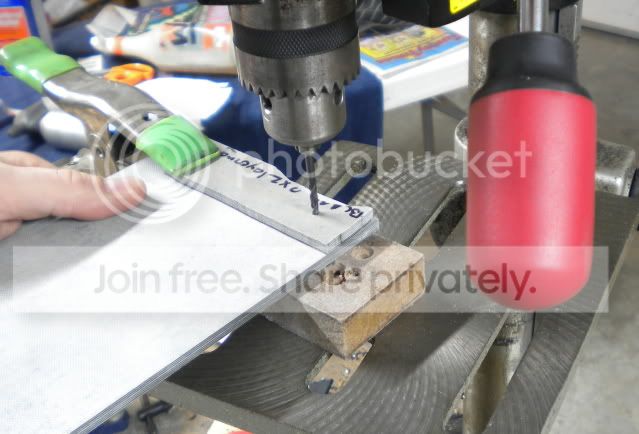
The 1st scale is clamped to the G-10 sheet and the holes are drilled through for the other scale, once again using pins to keep things lined up.

cuttingsecondscale.jpg

With the scale and sheet held together with the pins, I cut around the scale outline for the second one. (I used extra drill bits instead of pins, since they were handy!) The push stick is helpful again here.

shapingscalefronts.jpg

With the scales pinned together, I now shape the front of the handles.

finishedscalefront.jpg

The scale fronts are sanded to a final finish together. This again keeps everything lined up, and is much easier than trying to finish this area when attached to the blade. For the final touch I use a tapered pin reamer on the holes so the pins have room to expand.
readyforassembly.jpg

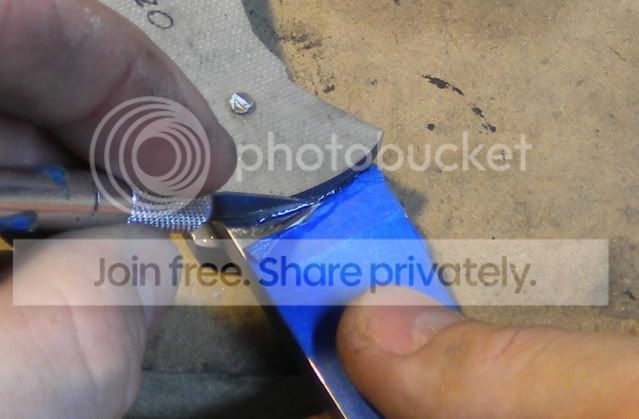
The scales and blade tang are roughed up nicely with 50 grit paper, and checked for gaps in the fit. I also mark out the scale front on the tape and cut it off just a bit short, so I can peel it back for assembly and stick it back over the ricasso area later. Everything is cleaned with acetone or alcohol and is ready to assemble.
 
epoxiedandclamped.jpg

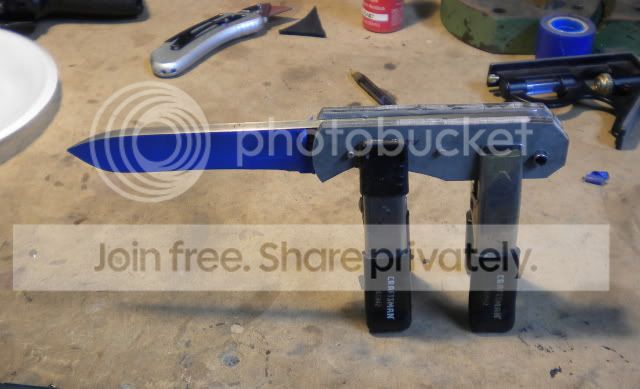
The blade and scales are epoxied, pins are placed, and everything is clamped up. I use Devcon 2-ton epoxy, mainly for one reason- it works very well in my experience. I have shop knives that have been left in the shop during both Ohio winters and Florida heat, and everything is still good as new.

trimmingscalefronts.jpg

cleaningscalefronts.jpg

After about 15 minutes, the epoxy is still slightly soft. I use an x-acto knife to remove the epoxy from the front of the scales easily, by carefully cutting along the scale edge. Once it is cut, the excess will peel cleanly away from the blade and the finished scale surface. I then leave the knife to sit overnight to set up.

tubeflaring-1.jpg

The last step before shaping:D: The pins are peened and the thong tube is flared. I use cut-off drywall screw heads to flare the tube by placing them in the ends and applying pressure with my vise.
readyforshaping.jpg

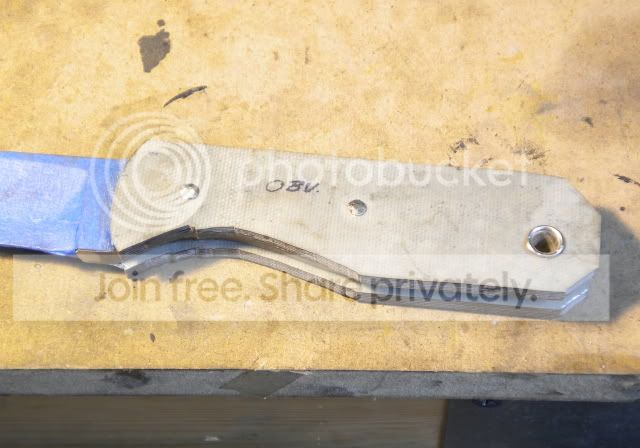
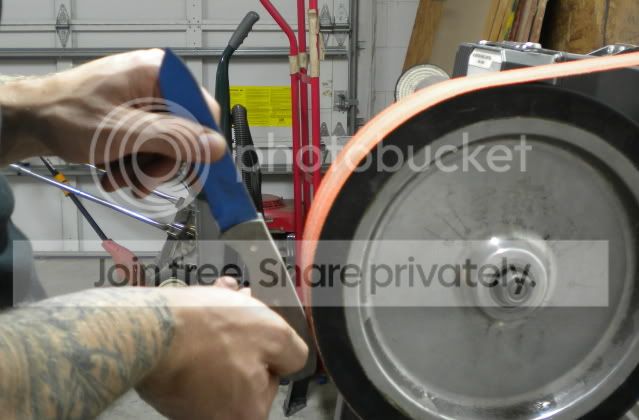
The final assembly, ready to be shaped. Almost done!
 
scaleprofiling.jpg

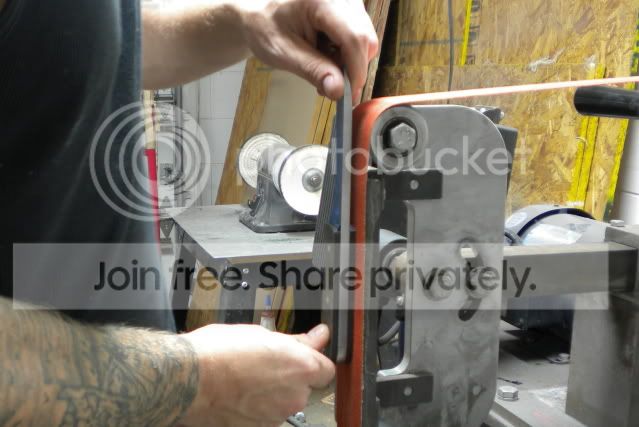
The scales are sanded flush on the grinder next. I also polish the spine and edges of the blade tang in this process. The 10" wheel is used on the spine (it's easier) and the 2" wheel is used for the curves.

scaleflats.jpg

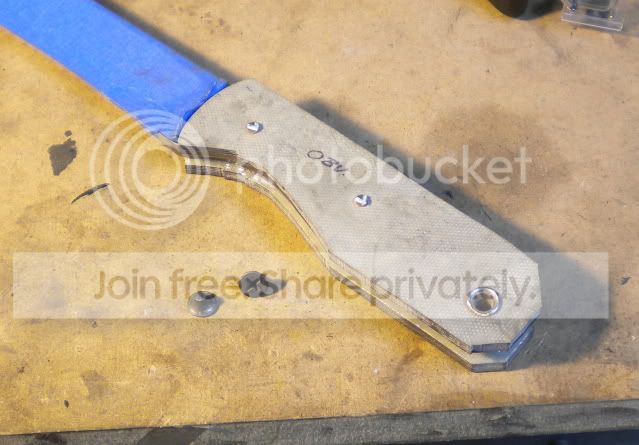
The flats of the scales are sanded on the platen, just enough to make the pins level with the surface. Don't let the pins get hot!

readyforsculpting.jpg

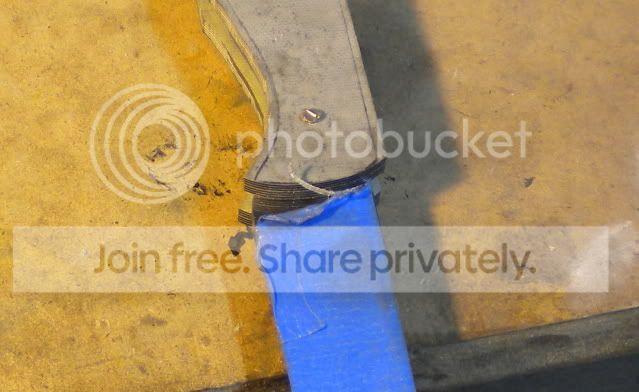
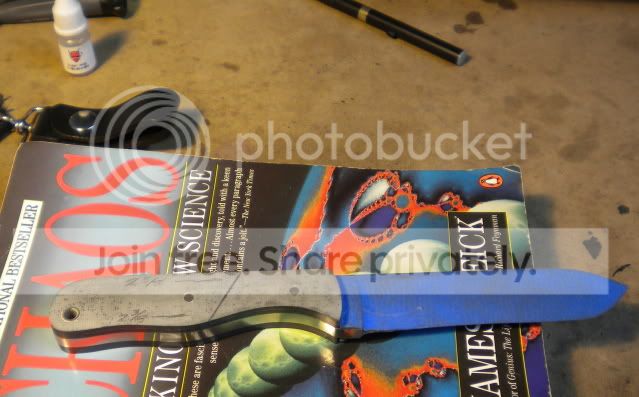
The handle is ready for shaping. This one is going to be sculpted, so it's left as-is for now. You can see the polished spine here in the pic- it's finished to 400 grit and then buffed. The diagonal line is a reference mark for the sculpting to come, and is also on the opposite scale.
 
Back
Top