WIP: HD drop point hunter/ utility fixed blade

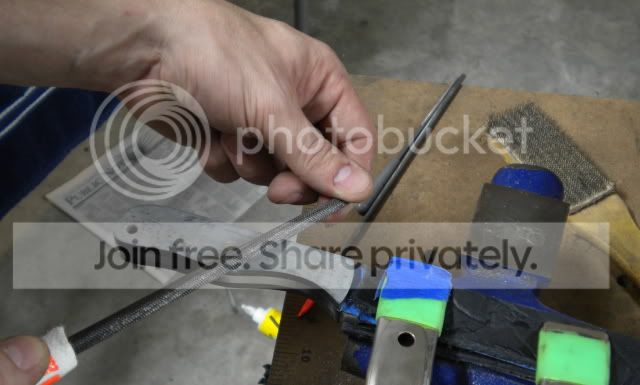
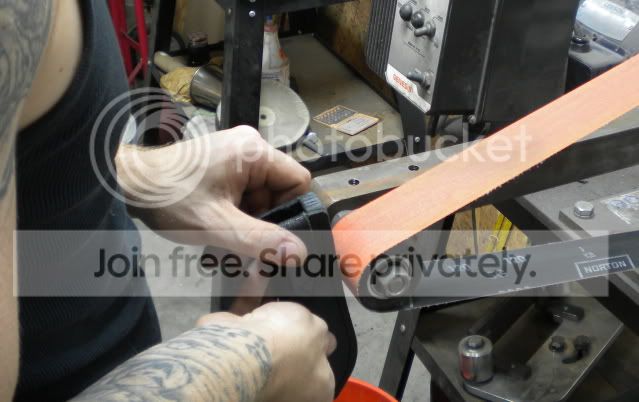
sculpting1.jpg

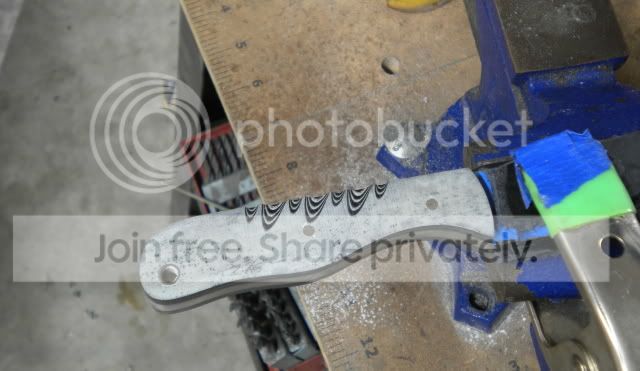
The handle is sculpted freehand with files, using the diagonal line for reference. A bit of paper towel and tape for padding on the file cuts down on the blisters. Keep a file card handy, and wear a respirator!
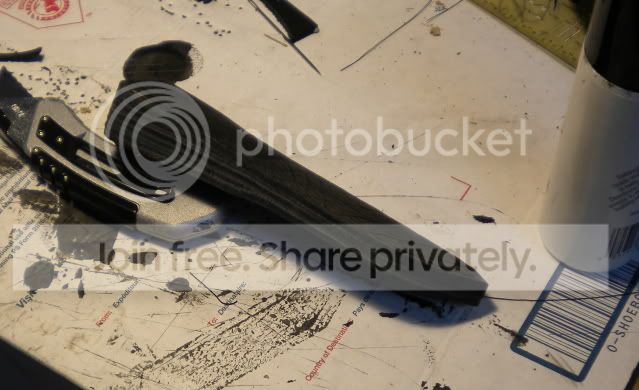
sculpting2.jpg

A squirt of WD-40 now and then brings out the pattern so you can see it a little better.
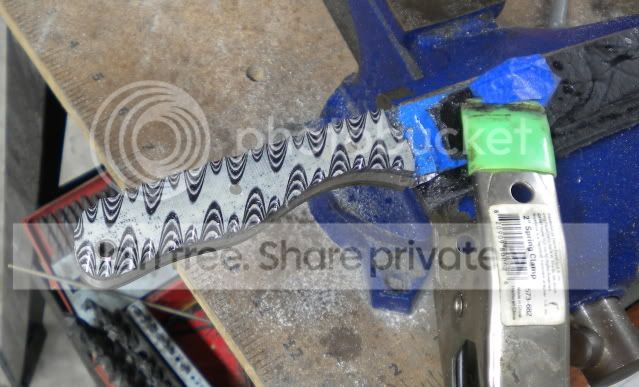
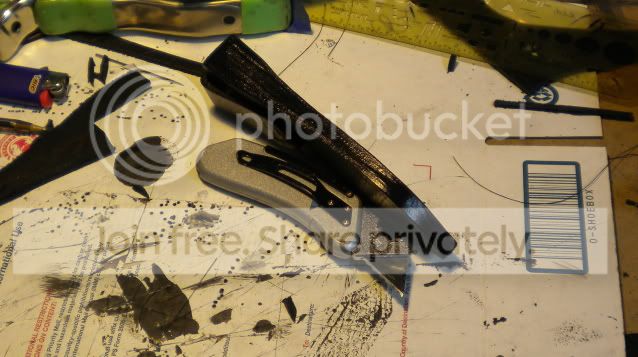
sculpting3.jpg

The handle, sculpted but not finished. The other scale is also done, keeping it symmetrical with the other scale as much as possible. The scales right now are sharp along the edges and not very comfortable yet.
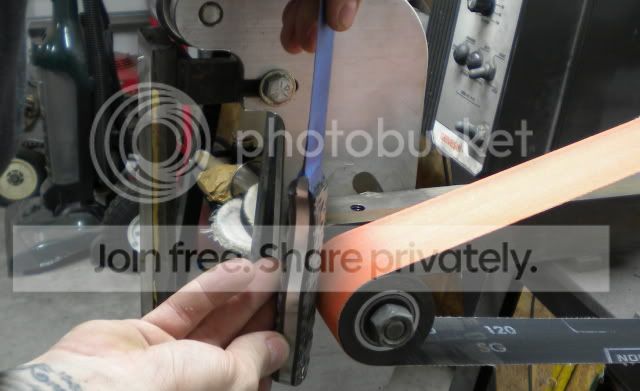
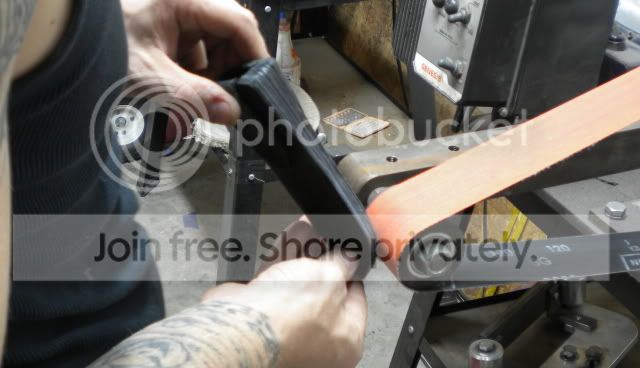
sculpting4.jpg

The handle is taken back to the grinder and the edges beveled. Then the scales are hand sanded to smooth everything out and blend it all together.
The buffer is the final step here, if desired.
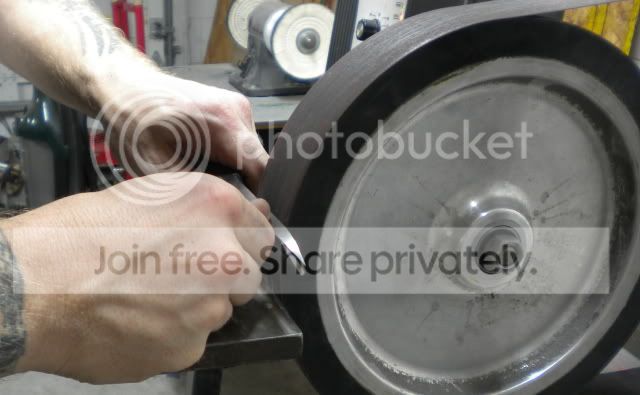
 
sharpening.jpg

My personal favorite part of knifemaking- sharpening! There's just nothing like a razor sharp knife, fresh from the grinder:D Normally I wait until the sheath is made, but I traced the blade pattern onto leather earlier so it's good to go.
I sharpen freehand on my KMG with the 10" wheel when I want a fine edge. I used to use the buffer- mounted sharpening wheels, but I get the same result this way- with the advantage of variable speed. Long before I made knives I was sharpening them, so it seems easy for me to keep a consistent edge grind.
The first step is a worn 400 grit belt, which I save for this step. This removes the bulk of the steel from the edge. Next up is a worn 600 grit belt, which takes it to a nice wire edge. Then a quick trip to the buffer, with a stiff sewn buffing wheel and some green chrome. With the edge down, I (very carefully) buff the edge to remove the wire edge and get a smooth, shiny, and sharp cutting surface.

The final result is a polished, scary sharp edge that makes hair jump from your arm- just the way I like them!
 
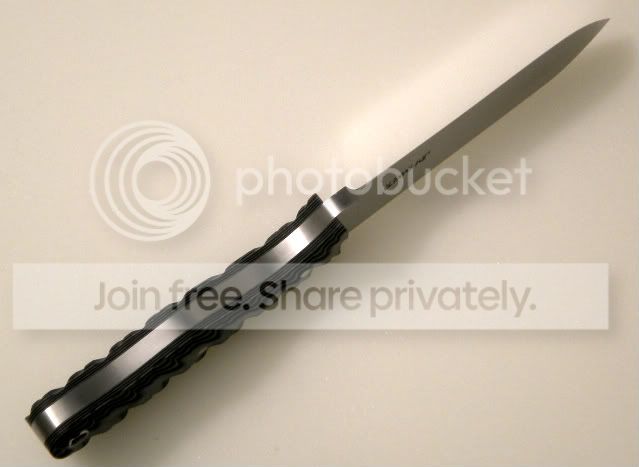
obv.jpg


rev.jpg


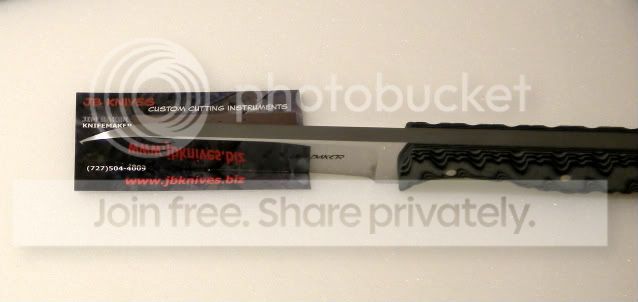
thickness.jpg


polish.jpg


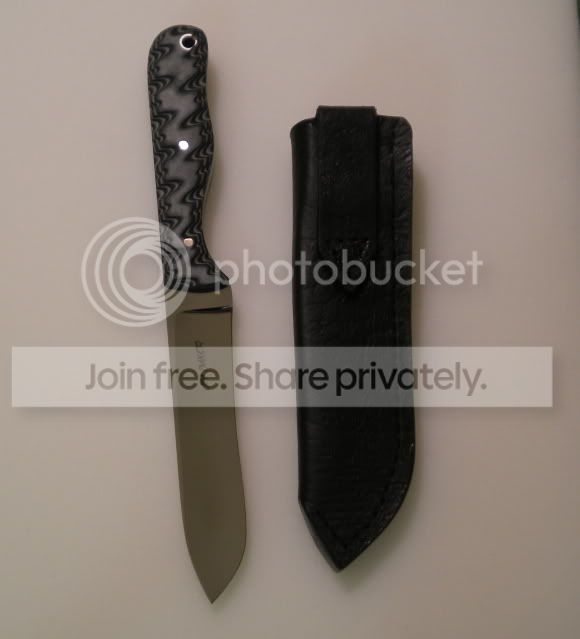
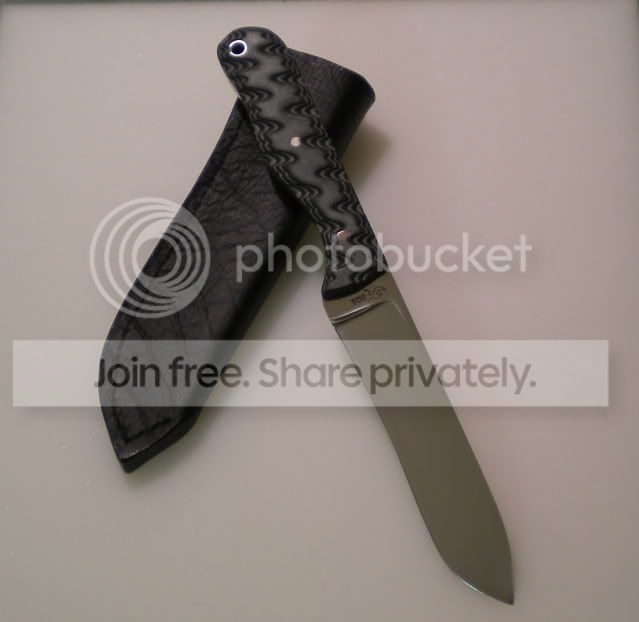
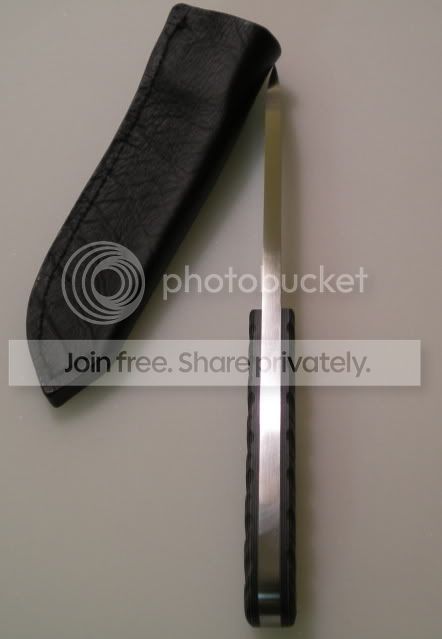
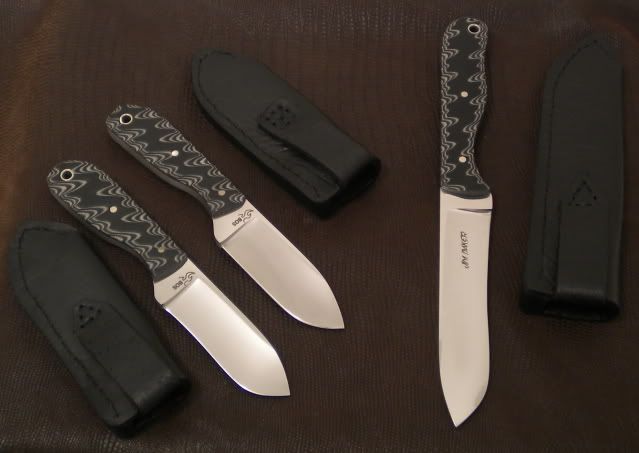
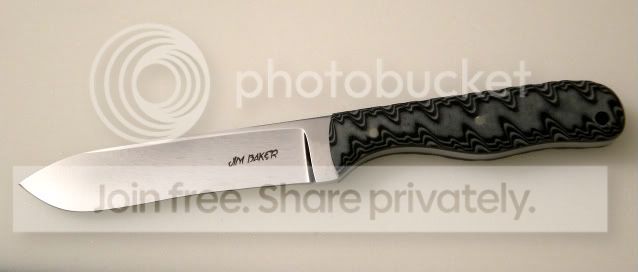
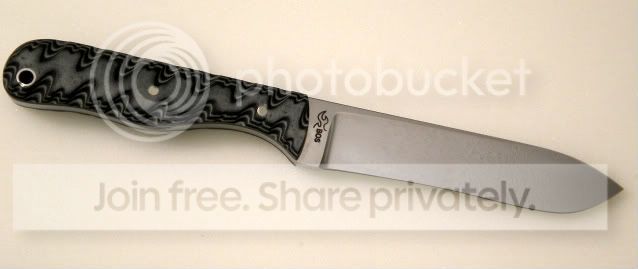
Here's some quick shots of the final product. What you see in the pics is the blade reflecting my popcorn ceiling- mirror polished blades are tricky to photograph.
The finished knife weighs 7.3 oz, and actually measures out at .260" in thickness near the ricasso. The deep hollow grind gives it a fine edge while keeping a thick spine almost all the way to the point. The handle is comfortable and has plenty of grip with the sculpting.

After doing some cutting tests, I have to say I'm impressed with it. The recurved edge slices and cuts very well, and the point pierces nicely without being fragile.
 
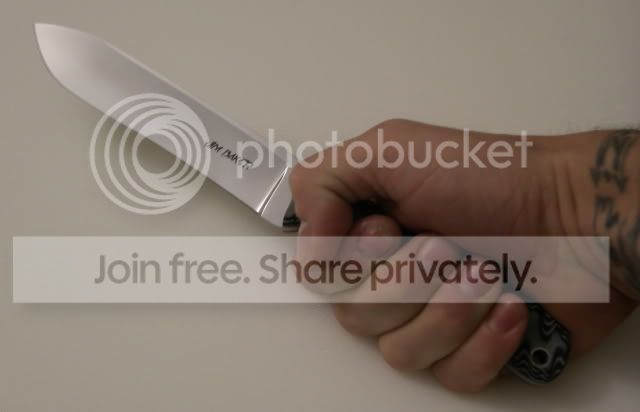
grip1.jpg


grip3.jpg


grip2.jpg


grip4.jpg


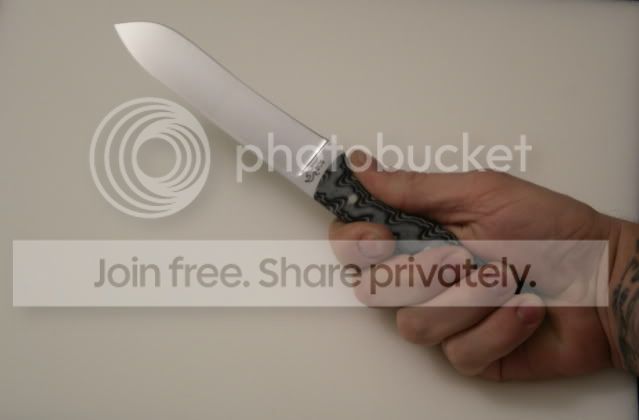
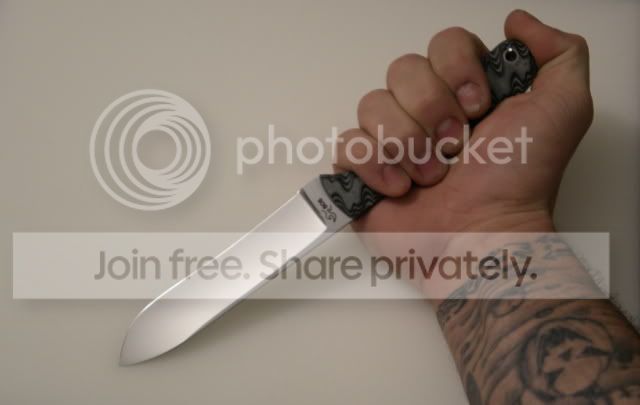
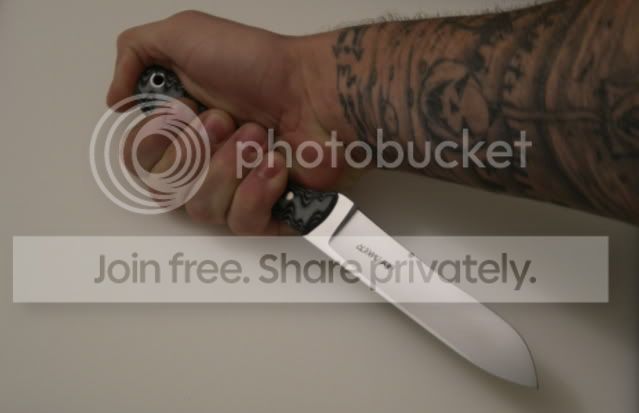
Some in-hand pics, in different grip positions. Because of the handle shape, even the last grip shown is comfortable.

balance.jpg


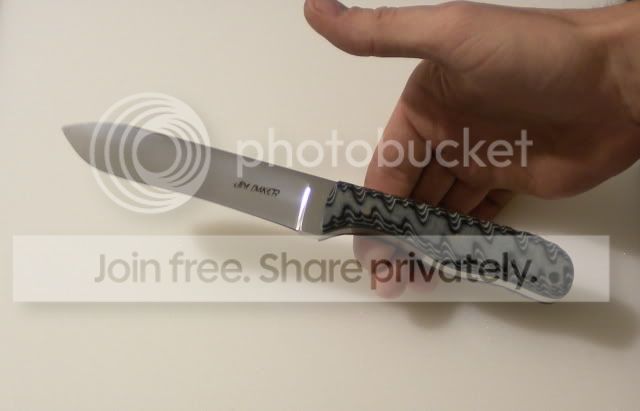
One last pic before sheath making, showing the balance point. It is just behind the index finger, which makes it easier to control without feeling too handle-heavy.


I'll be back shortly to finish this one off!
 
Great looking knives - I really like your choice in handle material and finish. Well done!
 
sheathlayout.jpg

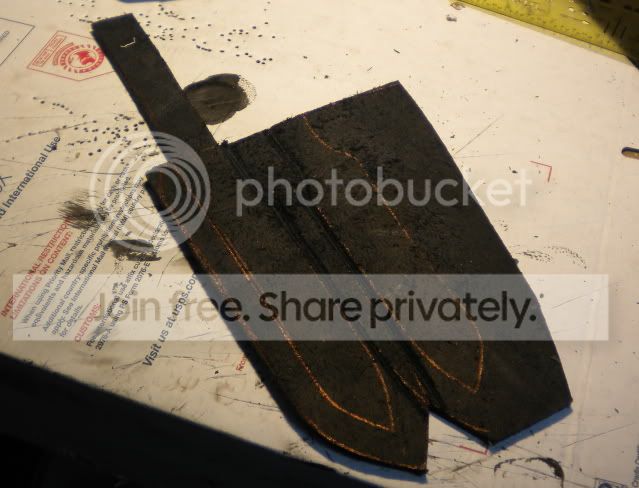
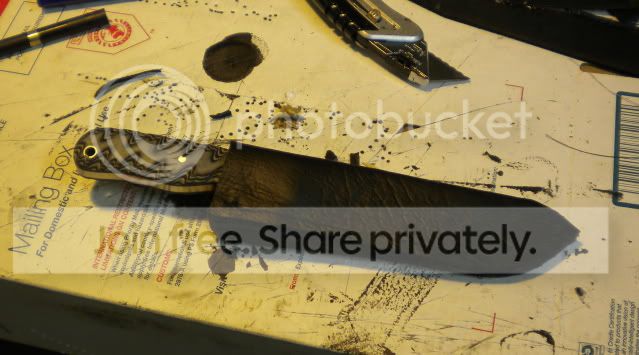
Now for the sheath. Here is my basic design, cut out and with the blade outline traced in pen. The folding grooves are cut also, leaving extra room at the top for the handle thickness.
The leather I prefer is an 8-9 oz. weight black leather with a textured "croc" print. It is very stiff and a bit difficult to cut and form- but it makes a tough sheath that the knife will not be likely to cut through.

sheathbeltloop.jpg

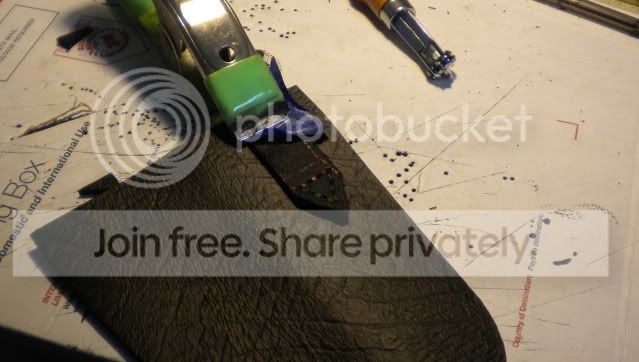
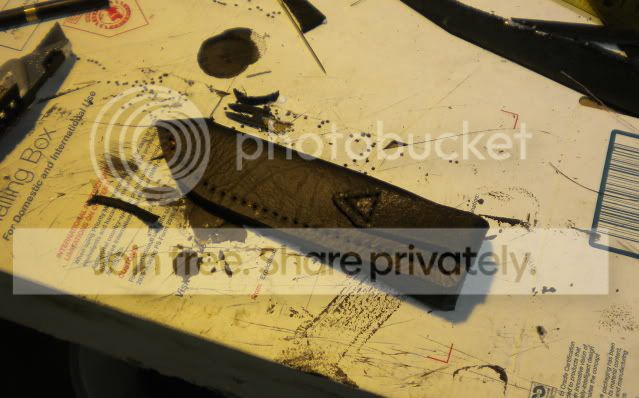
Next I figure out the belt loop length and then shape the end. The location of the stitches is marked, and then I clamp the loop as shown and punch the holes. I use a thick needle set up in my drill press for this, and "drill" all the holes.

sheathweltandbeltloopstitchinggroove.jpg

Before stitching the belt loop I use my groover and cut a groove over the stitch area on the inside of the sheath (The triangle shape visible in the pic). This keeps the stitching safe from the blade. I'll also finish the edges of the belt loop now- more on this later.

My welt piece is also in this pic. This one is 5 layers of 1/8" leather- the middle piece goes the entire sheath length and around the point, 2 go about halfway, and the last 2 are around 2" long. The layers are glued up well and clamped until dry, and then are skived to make a welt that is full thickness at the top and tapers down to the single center layer. This will keep the blade centered over the center welt piece to avoid the blade cutting through the sheath or between the welt and sheath sides.
 
sheathweltgluing.jpg

The welt being glued into place using the blade outline as a guide. I use Fiebing's leather cement, which holds so well stitching isn't really needed.
If you look you can also see the tip of the welt where it is cut out to the shape of the point. This keeps the point from piercing through the sheath end, since it would have to penetrate the entire welt thickness. The thicker part of the welt near the handle is glued just a little inside the knife outline, to put some tension on the sheathed knife. This will help keep your blade in the sheath while running or moving around.


sheathfinalgluing.jpg

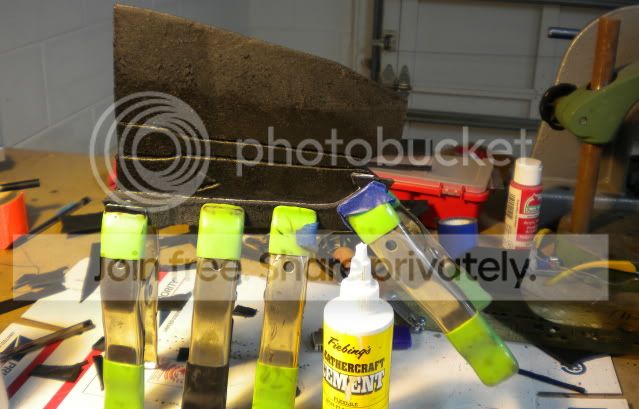
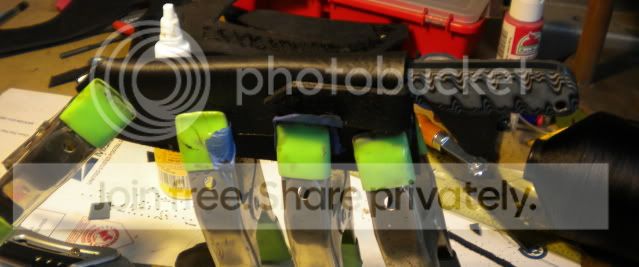
After the welt is dry, the sheath is folded over the knife and checked for proper fit. Once this is done, the sheath can get its final gluing. I keep the knife in place for this step until it is clamped to make sure everything stays where it needs to be, especially near the top- that thick welt likes to slide if you don't watch it. I let the cement set for about an hour before doing anything else.

sheathstitchingholes.jpg

Once dry, I trim the excess leather flush with the sheath. The stitching spacer is used to mark out the hole locations, and then it's back to the drill press to drill all 50 or so holes. The holes also go along the part of the welt piece behind the point to reinforce this area.
 
Last edited:
Time for some hand stitching. It's not very hard to do, but can be tedious and tough on the hands sometimes.
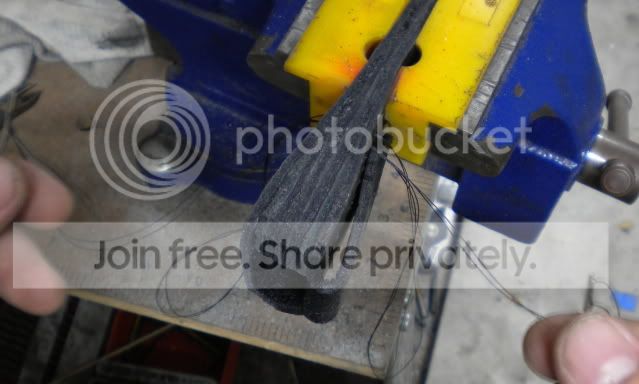
I use #69 nylon thread made for heavy leather work. My method is to make a loop of thread, with one needle at the knot and one at the opposite end of the loop. This way, 2 strands of thread go through the stitch with each needle.

sheathstitching1.jpg

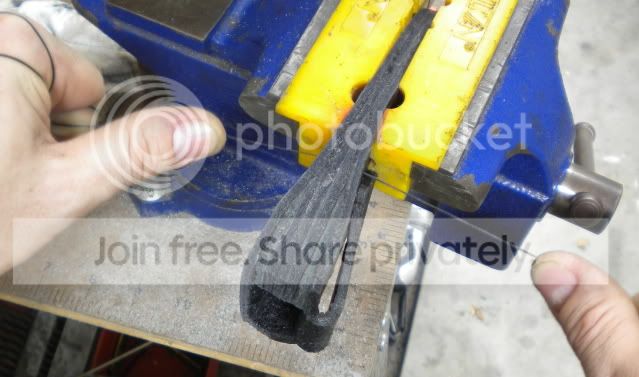
The thread is run through the first hole so that an equal amount is left on both sides. Next, both needles are run through the next hole in line - one from one side, and the other from the opposite side. In this pic you see both needles being passed through the same hole.

sheathpullingstitches.jpg

Once the needles are through, pull the stitches as tight as you can. Then, keep tension one one thread while passing the other needle through the next hole. Next, pull that thread tight and hold it while passing the second needle through the same hole. Once you reach the end, double your stitches back a few holes. To finish, I tie a knot close to the leather and cut the threads. A lighter will melt the thread ends, which I fuse together with a wet finger.

sheathstitched.jpg

Here's the stitched sheath ready to finish. Already the fit is nice and snug, and the knife will stay in the sheath even if held upside-down and shaken a little. The sheath is wetted with hot water next around the handle area and molded around the knife. This heavy leather will not mold much, but it only takes a little to increase the fit and accent the handle shape through the leather.
 
sheathedgeshaping.jpg

The stitched sheath is taken to the grinder, where a 120 grit belt quickly gets everything shaped up. A 220 grit belt smoothes it all out, and now we're ready to finish the edges.

sheathedgesnodye.jpg

The finished sheath edges, not yet dyed. Fiebing's edge dye finish works very well for me, leaving a shiny finished surface without buffing.
I apply several coats, waiting a few minutes between each. After a few coats have dried, the 220 grit belt will smooth out the sheath edges even better. This gets repeated a few times, until it looks good.

sheathedgebeveling.jpg

With the edges mostly finished, the sharp edges of the leather can be rounded. I use the 120 and 220 belts and do this on my grinder, running the edges of the sheath against the wheel with an upward motion. After the edges are all rounded, another coat or two of edge dye finishes it all off.

sheathedgesdyedandfinished.jpg

Here's the finished edge, smooth and shiny with no sharp corners. Finally finished!
 
wipsheath1.jpg


wipsheath2.jpg


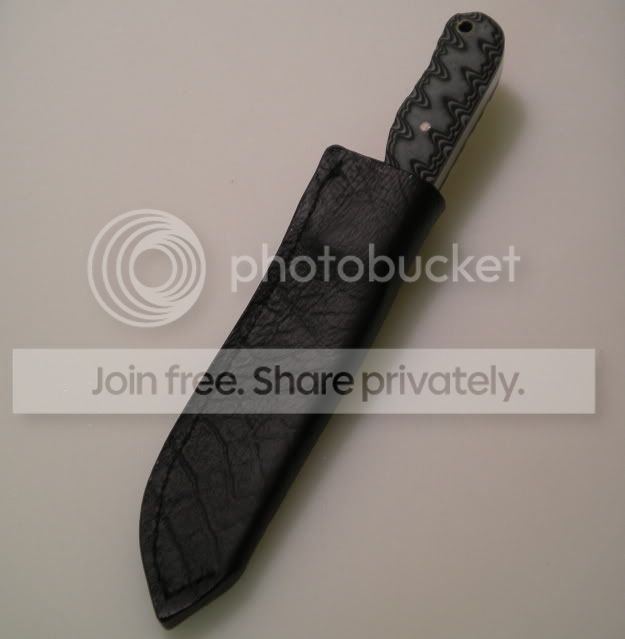
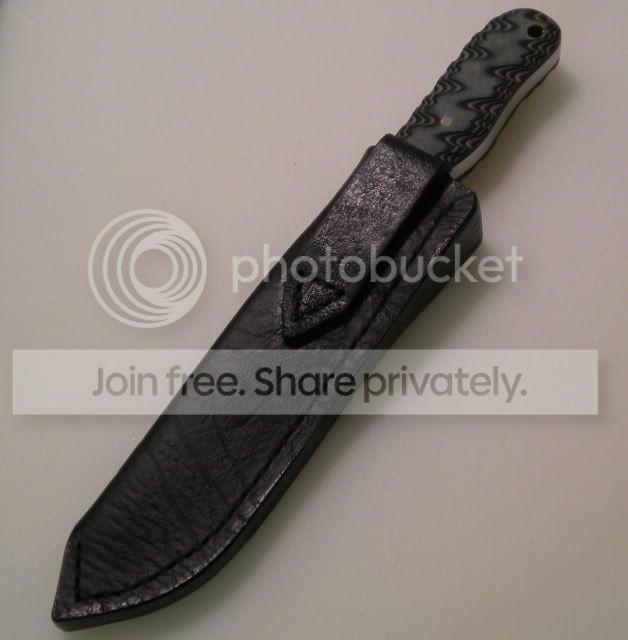
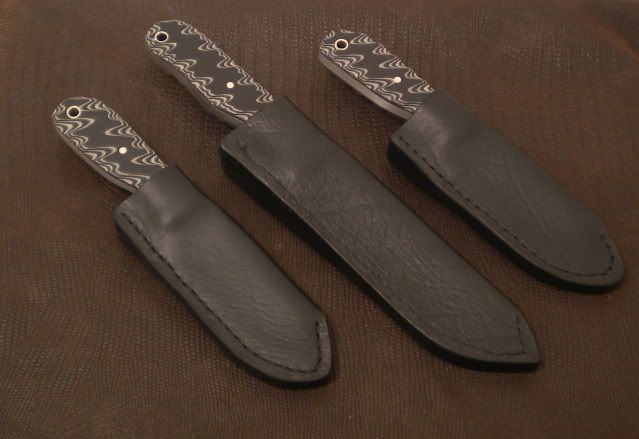
Pics of the finished sheath. I strapped it to my belt to ckeck it out, and it is very comfortable, riding with about 3" of the handle above the belt line. It is easy to draw while still keeping the knife secure. Having passed the final test, this one is now ready to go!

wipobverse.jpg


wipreverse.jpg


wipspine.jpg

The final result, ready for a new home. Now I just need some good pics:D

I hope you all enjoyed this WIP. In retrospect it seems this became almost as much of a tutorial as a work in progress, so thanks to everyone for sticking it out- maybe it will answer a few questions for someone. I have plans to do a similar folder WIP in a few months also.

Thanks for looking!
 
Ditto from me. Great thread!
I am really new to knifemaking and am starting my first knife kit. Your tips on handle-work will no doubt help me a lot.

The knives look awesome!

Quick question - I watched the knife kit finishing DVD that came with the "Knives 2010" book and he suggested adding black paint to the epoxy. I noticed that you did not do that. Why would that be beneficial if at all?

Rob
 
Wow! Very helpful thread, thank you so much for taking the time to post all of this. Like others have already said, it's really a great tool for a new maker like myself for reference:thumbup:
 
Thanks again guys- I'm glad this was able to help somebody out.

Ditto from me. Great thread!
I am really new to knifemaking and am starting my first knife kit. Your tips on handle-work will no doubt help me a lot.

The knives look awesome!

Quick question - I watched the knife kit finishing DVD that came with the "Knives 2010" book and he suggested adding black paint to the epoxy. I noticed that you did not do that. Why would that be beneficial if at all?

Rob
Rob, I only add black paint to my epoxy if I have filework on the tang that I want to fill in. The epoxy dries clear and is practically invisible between the scales and the tang- although I imagine it wouldn't hurt if you wanted to add it anyway.
The black paint just adds color to the epoxy, which looks better than clear if it is visible- such as filling in filework on the tang area.
 
Back
Top