Define "Bushcraft" knife for me please

I look for people all the time who are in survival situations.

I spent last night in zero degrees wind gusting 50 MPH with snow, training with 10 SAR colleagues with bare tarps only. Not one pocket knife was used, granted a light saw is usefull. Several large blades were used however to make insulative beds and hack up framing in very short order. A mere fire and a small knife could have concievably killed lessor trained people as winds drifted all heat away in addition to snow accumulation. A decent shelter and fire block was all that kept us from freezing.

This does happen to people out for an 8 mile hike with the dog.

Skam

But you chose to put yourself in that situation.

You could just have easily chosen a 4 season tent and some good liquor:thumbup:

I know I am not going to get lost with just a knife in the wilderness. Most places I go there is a max 10 to 14 mile walk out. That can be done in a day. Almost always I have a tent, stove et al on my back.

The far out scenario where I'm hacking stuff for shelters, maybe I'd like to try that for fun sometime but chances are I'm not going to be doing it for survival.

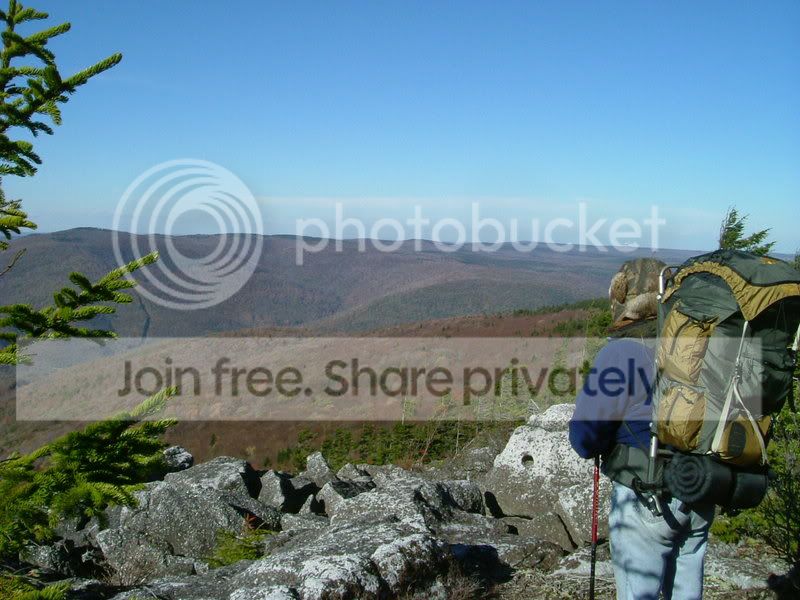
We've been talking so much about wilderness we need some pics!
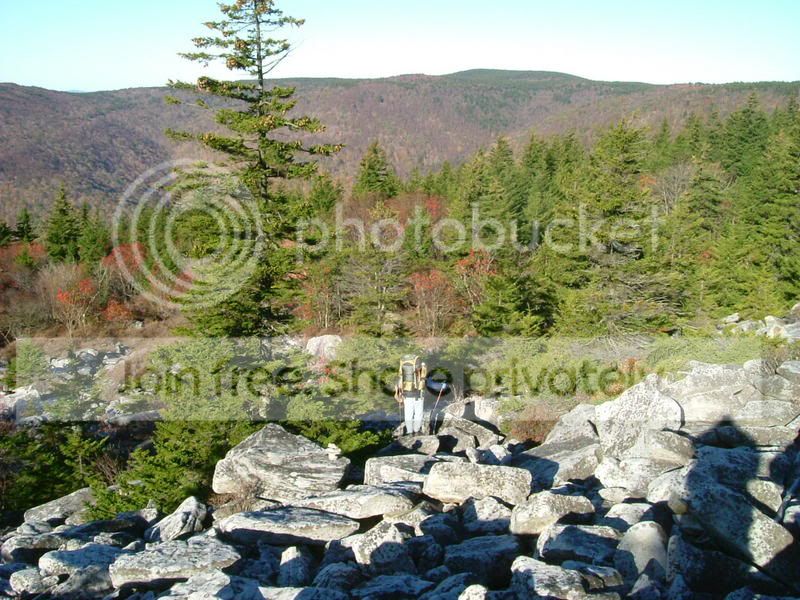
2006_1010Image0045.jpg

2006_1010Image0013.jpg

2006_1010Image0081.jpg
 
Do you guys routinely carry those big blades when you go hiking?

Yes, I carry my kukri with me.
My question is what are you guys doing that you end up in a survival situation with only your EDC?

I mean unless you're a bush pilot (where you may not have the room, or may have to ditch anything not on you in a crash) or in the military (where you just have too much other stuff to carry, or don't have room if you're a pilot), why don't you have decent gear with you?

For that matter, most people wouldn't have a bushcraft knife in their EDC anyway, because in many locales you can't carry a fixed blade due to local ordinance. Besides, most people in their everyday life won't be more than a few hours walk from safety in their everyday lives, with no bushcraft necessary on the way.

So since we're talking about mostly going into the wilderness by choice, why not bring what you need?
 
Hey Codg ... Im guessing there's a chance you might be descibing your own real life experience...


There is that chance. I only mention such things to illustrate the difference between a romp in the woods, a trip down a trail, learning woodcraft skills, and a true survival situation where those skills play a very important role. I am sure that Chris and more than a dozen others could relate experiences in other parts of the world where their own basic woods skills made the difference for them.
 
Wow. That exploded rather quickly! All I wanted was a definition of what some knifemaker's are terming a "bushcraft". Maker's such as Krein...

:D I tried redirecting back to your question as well as answering it myself naked. check back over the pages and sift for the on-topic answers.

Codger

PS- Good question by the way, regardless of the derailing. :thumbup:
 
In light of the definitions of a Bushcraft blade, I guess I find it more subjective.

My personal classification of a Bushcraft blade as the Blade that helps me accomplish whatever tasks I have in the woods in the most optimum way.

With that in mind, I can't find the one perfect knife that will do it all (the way I want it to be done optimally), so I take several of different kinds.

For the planned outing- I have that luxury of choice, but if the junk hits the fan when I don't have that luxury, my Bushcraft knife will be whatever I have in my pocket at the time, and I hope I have the sense, and forethought to use it in the most optimum way.

Be Well,

sp
 
30 years ago I picked up a 18" Bolo knife in the Philippines to go through jungle survival school. Handy knife to have in the jungle. Made beds to stay off the wet ground and shelters for the rain, and I used it to cook my dinner that I trapped.
Took the same Knife to an Arctic survival course in Alaska. Used my Bolo to cut snow blocks for a Igloo and later to dig a snow trench, and finely to cut some drift wood for a fire. Handy knife to have in the Arctic.
I've Had this Bolo knife with me in Africa, South America, Australia, Canada. All over the far east, and a great deal of the Uniter States. this knife sure has made life easier.
I have the skills to go out and make a stone/flint knife and have practiced them. That said My big Bolo is my favorite tool.
Uncle Sam doesn't pay for my field trips any more so more recent uses of my big knife is to retrieve a deer that expired from my arrow in the thickest patch of manzaneta. Trim some prickly pear cactus for a camp sight, and cut my way out of a blackberry thicket. I have used only the Bolo to turn a hickory sapling in to a long bow. Cant think of a tool I'd rather carry. I'd say MY woodscraft knife is a Bolo.
 
This is the "Wilderness and Survival Skills" forum. As such, is it not completely legitimate to have a thread discussing what constitutes a "bushcraft" knife without those who appreciate such knives having to defend their preferences against "only survival" or "one knife" standard?

"wierd" [sic]
"naive"
"silly"
"stupid"
"fad"
"worthless"
"macho"

Use of insulting words does not add to your argument. It does reduce the weight that most members here will give your opinions.

This has turned into a debate over "what is the IDEAL survival knife?" with some claiming that the "bush" blades are. I beg to differ. . . . Before this gets ridiculous, let's stick to the debate... what is a "bush" blade, and is it ideal for survival. . . .
May we not post on the topic of the thread?

So, on topic, the Marbles Woodcraft pattern was patented in 1916, IIRC. It has a 4 1/4" x 5/32" full flat-ground blade with a point in line with the handle, some straight edge, and considerable "belly." It was the most popular "hunting" and "outdoor" knife in North America in the decades before WWII. When the patent ran out, it was copied by Remington [when that was a "V" rated maker], Case, Kinfolks, and many others, including several European companies. That is not a "fad." That is a useful outdoor tool. I suspect Ray and MK would find it useful.

Would a Marbles Woodcraft be an exact functional replacement for all other cutting tools? Surely not. So what? It is enough that it is a useful tool, expecially for "bushcraft" tasks.

Mine didn't cost me $75.00 when I bought it a couple of years ago. I do not regret the purchase any more than I regret the khukuris I have or the much smaller knives I have, like the RD-9 or Bark River Golok.

"There is no best design. There are only best designs for: for certain people, for certain jobs, for certain demands." Ken Warner 1976
 
I think of a bushcraft type knife as being a good knife for camp-related chores and woods crafting. I think it was pretty well summed up in the first couple of replies in the beginning of this thread. Something around 4" or so with ergonomic grips, solid construction, etc. I don't have one, but I think the Fallkniven F1 would be nice for that stuff. I have a book at home that is mainly about living in the woods and making things like baskets, wooden bowls and tools, collecting plants and things like that. That book recommends a bushcraft style knife and I can see that a knife like that would be handy around camp.

I like a little more blade for the outdoors. For me, that means solitary backcountry bowhunting in wilderness areas. I don't go out for huge bowie-style choppers, I love my Puma White Hunter. It's absolutely perfect for me. Reminds me of an evolved Green River style knife. It's good for just about everything, but I always have a Leatherman Wave on my belt and an SAK in my pack or pocket. I use my SAK for whittling and skinning small game, fish and birds, my Wave for most of my camp-related utility chores and my White Hunter for skinning bigger game and heavier chores or in a pinch for defense. I belong to the camp that says there is no perfect tool for every task. There are compromises and I feel that you should use the right tool for the job.

I skinned a cow Elk last year with my Puma and it worked like a charm. I didn't have to sharpen it during the entire field dressing/skinning process. Sure I could have done the job with my SAK but it'd take longer and I'd be constantly having to hone it up. I've batoned with it and chopped with it, more for field testing purposes than necessity, and it performed well in both cases. I can do anything I've ever needed to do with my White Hunter and it's not too big to ride on my belt next to my .357. I admit, I'm not a fan of the thick european style scales and have thought about having them taken off and ground a little thinner to fit my hands better, but I asked a lot of makers at a knife show about that and the general consensus was to just leave it the hell alone. I respect their opinions and I decided to do just that.

For me, I use my Wave for just about everything around camp and could get along just fine with that if I had to. I can use the file for sharpening tools, the saw for limbing and digging judo tips out of stumps, the serrated blade for cutting cord and the straight edge for a lot of other things. Add in all the other features and it's a true winner for a camp tool. It's my most reached-for item when I'm backpacking, camping, hunting and fishing.

Back in the woods in Michigan I could see having something bigger than my White Hunter for hacking and trailblazing through the heavier brush, but in the Ponderosa Pine forests here in AZ I haven't had that need. And by bigger I mean a machete, not a Bowie knife.

M40, I couldn't help but notice that your Bowkri looks a lot like a White Hunter with a curve.
 
Yes, I carry my kukri with me.
. . .I mean unless you're a bush pilot (where you may not have the room, or may have to ditch anything not on you in a crash) or in the military (where you just have too much other stuff to carry, or don't have room if you're a pilot), why don't you have decent gear with you?. . .
That statement presumes that any knife or other gear that's not a big chopper isn't decent. It also presumes that a big blade is always a necessity. I stopped carrying a big blade because I found gear easier to carry that would also do what I needed.

This topic brings to mind the saying that if the only tool you have is a hammer, every problem looks like a nail. Many different knives from the SAK Rucksack to the BRKT Northstar to Khukuris and Bowie knives can be useful in bushcraft IF the guy holding the knife knows what he needs to build and how to build it. Knowledge trumps gear.
 
In a REAL survival situation ie:
plane crash
lost and storm moving in
stranded
a big blade is more valuable
but, if you dont know how to use a big blade it can be dangerous to the user
thats why when I take friends out in the woods I give then a frosts clipper not one of my big blades
If you know how to handle a big blade you know that you it can do a the tasks of a small one

In a survival situation you use what you have on you, commercial planes do not allow you to carry knives last I checked. Unless of course you live in a Lost setting. :D

Of course if I have a choice I rather take a big knife (my Weiler for example) with me, the problem it is heavy and kinda obvious. When I hike I suaully have some smaller blades up to 5" with me.
 
Wow. There's nothing wrong with thread drift, but it amazes me how some people feel the way to drift the topic their way is to insult others' opinions. Not right.

When in doubt, start your own thread, it's easy. This one is about bushcraft, not survival. The difference is in the places we go and the activities we expect to pursue there.

Surprises? Sure, so please -- next picnic you go on, carry a kitchen sink with you, to be certain you have everything.

Nothing wrong with someone hiking in to a fishing spot with a Mora -- typical bushcraft size and shape -- and spending the day relaxing by a stream. How many times does that situation fall apart?

One of the kinds of topics we run into here is developing skills, so talking about what a bushcraft knife is, which different ones would suit each of us, and how we could get the most out of it, is a classic Wilderness & Survival Skills discussion.

What about survival in a sudden snowstorm? The guy posting from North Carolina in the summer is not going to pack for that. Define your topic in a separate thread and we won't waste so much time fighting over what we're talking about here.
 
Hey m40,

You bend that handle on your new chopper and you'll have a Becker Machax (my favourite blade, BTW).
m40vsmachax-2JPG.jpg


Off course, up here, our beer has twist-off tops. :D

Seriously, though, if I were to be in a survival situation (whatever the hell that is), I would want the biggest, baddest, meanest, SOB of a chopper that I could get my hands on. I would rather improvise on the smaller cutting tools, if need be, than the chopper, and of course, my Machax can and has, carved fireboards and trap parts, just not as easily as a "bushcraft" knife.

When I'm in the bush for awhile, I carry the aforementioned Machax, along with a small pocket folder, a Vic Spirit multitool, and usually a Mora, of one kind or another.

The really interesting thing about my choices, is, I only have to please me. :)

Doc
 
Hey Esav,

I guess we were typing at the same time. I guess I should let your post sum it up, but I found it very interesting the comparison between the machax and m40's new design.

Doc
 
Good comparison. I wish I had a machaxe. It's a great concept, and it isn't even a massive, clumsy blade for lighter work. Have you handled his machete? I like that bolo style, it kind of swings itself. :)
 
Good comparison. I wish I had a machaxe. It's a great concept, and it isn't even a massive, clumsy blade for lighter work. Have you handled his machete? I like that bolo style, it kind of swings itself. :)

No, I don't know the man, nor have I seen his equipment first hand.
I noticed the blade lengths are about the same (9").

I find it to be a very useful tool, as you mentioned, not too big (easily carried) but quite effective for its size. Mine is one of the earlier ones, before Camillus started production.

Doc
 
I finally read all of this stuff, took about an hour or so, but I did it *phew*. Lots of replies for one days work. I would have to agree with the very first person to post on the definition of a bushcraft knife.

The only question still remaining to me is, why does a bushcraft blade have to be made of thin blade stock?

I love using my folders, just my preference from being in scouts forever (I think it was cpl punishment who mentioned being in scouts). I either carry my Benchmade Griptilian or my SOG Vulcan with me everyday and out on the trails. I think the vulcan is a good compromise between a thick and thin folder for most tasks. It has a .16" stock and a 3.5" blade which weighs out to 5.0 ounces. Here it is if you want to see one: http://sogknives.com/store/VL-01.html
Read about the 'specs' and disregard the initial desciption which says".125 stock" I have informed sog of this typo because the knife is actually .16"

If I am actually going to build a fire (most places have firebans in drought seasons) I'll just go for the stuff laying around. If I "have" to build a shelter then I haven't been a good scout to begin with, Be Prepared. I always have my buttpack with water and enough gear to cover all of the bases. No hacking required for shelter if you know any better. The Vulcan covers all of the bases for me, of course I haven't dealt with "harsh winter" conditions, but for my location and pretty much all of Texas I'd be okay.
 
. . .The only question still remaining to me is, why does a bushcraft blade have to be made of thin blade stock? . . .
I guess answering this depends on what you call "thin"? Is 3/16" "thin"? Bushcraft knives come that thick - and much thinner. Thinner slices better - especially thick materials.

No hacking required for shelter if you know any better.
Rather harsh implication aside, there are places in the world where hacking is considerably faster than collecting what's laying around - or busting it off with your hands. As you note, "I haven't dealt with "harsh winter" conditions, but for my location" etc. Texas is a big place, but it does not exhaust the full range of possible conditions of flora or weather.
 
Sorry if that seemed harsh, reading it from your post sounds pretty bad. I only meant that for my climate and surroundings, hacking isn't really required for a quick fix of things unless you are into that sort of thing.

Plus if you (generally speaking "you") actually looked ahead at the forecast and packed some sort of pocket tent in the first place with at least a space blanket, then you wouldn't NEED to hack stuff.

I guess it all leads down to experience, skill, and surroundings. I haven't had the NEED or actually the chance to have to hack stuff unless it was for fun, such as testing out a new hatchet or machette. So of course my view is a little biased, but so is everyones based on experience ;).
 
Back
Top