First aid for wounds

I was scratching my head that it took to the bottom of page 2 before steri-strips were mentioned.
Same rules, same dangers of infection if you close a dirty wound. It's just another way to close although it obviously can't be a wound that will have any pressure on the edges of the wound (an area that will move etc). Superglue, same deal.

It isn't necessarily HOW you close a wound but whether you should close it at all, absent a professional debridement and other appropriate wound cleaning.

There is a recurring misconception that keeps appearing though, closing a wound doesn't do ANYTHING to stop a major hemorrhage (bleeding). It stops minor oozing, but so does a simple bandage or even a series of bandaids.

I will say that a steristip or superglue doesn't presume as large and deep a wound as a wound needing sutures do. There is certainly less risk associated with a small superficial wound that one could close with a drop of superglue or a steristrip or two.
 
Last edited:
Here is a pretty terrible picture:
14191_21_1.jpg
 
Guys, you cant learn everything from an internet post on a forum. I could have wrote a 600 page thesis on wound care, but that would be pointless. I am trying to put it into simple easy terms, w/o getting to off track with advanced care. I really do not want to confuse people. I just want people to recognize the differant types of bleeding, and how to controll bleeding through direct pressure, and us of a tournequet if need be. I also wanted to emphisize the importance of cleaning a wound as best you can.

With Fxs, I wanted to explain basic splinting, and checking of distal pulses, and setting if nessicary to return bloodflow. And care of open Fx.

I never meant advocate you cauterize, or suture in the field, I just wanted to touch on what happens with these injuries, otherwise 1000 "what if?" questions would have came out.

Trust me, if you know how to recognize seriousness of wounds, and know how to apply direct pressure, and dress a wound, you are golden. That is a wonderull first step. If you want to learn more, look into a class, nothing is a substitute for hands on training.

If you can splint, and understand the imobilization of joints, and monitoring distal pulses You are golden.

Yes more serious stuff can happen, yes there are more advanced things to do. But, the basics is what is important, and the basics are what are built on for more advanced stuff.

I wasnt setting out to train you from my living room, that is impossable, just as I wasnt intending to write the journal of medicine.

Thank you for the kind words from those of you who took something away from this. You are who I wrote these for.
 
bumped because I don't have time to read right now and this damn virus is keeping me from using any storage devices on the network at work:grumpy:

This is great info just scanning it for a minute!!!:thumbup:

ROCK6
 

I went back and looked at my copy of Wilderness Medicine by Paul Auerbach and found a few ideas I thought I’d add to the discussion.

Auerbach emphasizes the need to clean the wound like the other posters have done. Cleaning in the field is best done by pressure irrigation with disinfected water since you don't usually have sterile saline or clean tap water available. The ER irrigation technique usually involves using saline or diluted betadine squirted through a syringe and catheter (18ga). I keep a syringe in my first aid kit for this very purpose.

Here is Auerbach's suggestion for field expedient irrigation:


Recommended Technique for Wound Irrigation

1. Fill a sandwich or garbage bag with disinfected water.
2. Disinfect the water with iodine tablets, iodine solution, or povidone-iodine or by boiling it.
3. Normal saline can be made by adding 2 teaspoons (9g) of salt per liter of water.
4. Seal the bag.
5. Puncture the bottom of the bag with an 18-gauge needle, safety pin, fork prong, or knife tip.
6. Squeeze the top of the bag forcefully while holding it just above the wound, directing the stream into the wound.
7. Use caution to ensure that none of the irrigation fluid splashes into your eyes.


Nice. Be careful not to let the pressured water drive debris into the wound. Saline is more gentle to living cells and it’s worth making some for cleaning purposes.

When it comes to closing up a wound there is clearly some debate. A well cleaned wound may actually be at less risk for infection if it is sutured or closed. But, “Even the most fastidiously cleaned wound can still become infected, particularly in a remote setting, because of constant exposure to microbes.” Infection sucks. Infection in a closed wound can really suck.

Auerbach comments:

"The same principles that govern wound management in the emergency department apply in the wilderness. The main problem faced in the wilderness is access to adequate supplies. In deciding to close a wound primarily or pack it open, take into account the mechanism of injury, age of the wound, site of the wound, degree of contamination, and ability to effectively clean the wound."

And:

"The amount of time elapsed after wounding is a critical risk factor: the longer the interval, the more likely is the chance for infection. After the first few hours, adequate wound cleansing is unlikely to be accomplished."

"Before a wound is closed, remove all foreign material and grossly devitalized tissue. Debridement can be accomplished using scissors, knife, or any other sharp object, and wounds can be closed with sutures, staples, tape, pins, or glue. Although suturing is still the most widely used technique, stapling and gluing are ideal methods for closing wounds in the wilderness."

I assume he would advise using a clean knife or scissors. Not the knife you just used to dress a deer. And who carries staples in the wilderness? Field expedient safety pin suturing could work though.

Lastly, let me throw in Auerbach’s gluing technique since gluing has been mentioned a few times:


Technique for Gluing Lacerations

1. Irrigate the wound with copious amounts of disinfected water.
2. Control any bleeding with direct pressure. Place a gauze pad moistened with oxymetazoline (Afrin) nasal spray into the wound to help control bleeding.
3. Once hemostasis is obtained, approximate the wound edges using fingers or forceps.
4. Paint the tissue glue over the apposed wound edges using a very light brushing motion of the applicator tip. Avoid excess pressure of the applicator on the tissue because this could separate the skin edges, forcing glue into the wound.
5. Apply multiple thin layers (at least three), allowing the glue to dry between each application (about 2 minutes).
6. Glue can be removed from unwanted surfaces with acetone, or loosened from skin with petroleum jelly.


I take regular super-glue (liquid, not gel) in my kit. My fingers are prone to cracking when they become repeatedly wet and dry in cold, dry weather. Super-glue is the best way I have found to close fissures/cracks and protect my fingers.

I agree with the other posters who point out that the decision to close a wound is more difficult than actually doing it. Training is essential. Maybe the old expression “don’t try this at home” should be modified to “don’t try this in the woods.” Like JW said, it’s hard to become a wilderness EMT based off a few posts written by some guy who was watching Survivorman re-runs at the time.

Just remember that a wound infection can seriously endanger life and limb. Septicemia can kill right quick. You are probably best advised to seek professional care as rapidly as possible if you have a wound requiring more than a couple Band Aids.
 
Yes nicely said Rotte!

I'll echo the usefulness of a wilderness first aid course. The one I took last year pulled all the stops. It was a week long course and everyday we would run through several training scenarios that built upon cummulative topics taught. The scenarios involved actors with fake blood and accident scenes designed to simulate different events from falls, cardiac arrest, spinal injury, large blood loss. The 'stress' related to our responses and being judged by our responses is what really set this course apart from the typical 3-h first responder first aid course. Having took that course though I still don't always feel 70% confident and reading threads like this one let me mentally review some of the key points gone over in the class.

So I really enjoy these threads.
 
Control bleeding before suturing wounds generally (exceptions: scalp wounds, facial wounds). If you are considering suturing in the field: use only one layer closure with monofilament suture and make sure you have at least observed technique at ER or OR. Don't suture feet, hand, knee, or elbow lacerations in the field (high chance of infection). Tourniquets are generally used last but in high velocity wounds (GSW) they are often used first. Quickclot and pressure are very helpful. Saline soaked guaze is often as good or better than bacitracin ointment. Consider coban to compress wounds. My background is as military trauma surgeon.
 
Control bleeding before suturing wounds generally (exceptions: scalp wounds, facial wounds). If you are considering suturing in the field: use only one layer closure with monofilament suture and make sure you have at least observed technique at ER or OR. Don't suture feet, hand, knee, or elbow lacerations in the field (high chance of infection). Tourniquets are generally used last but in high velocity wounds (GSW) they are often used first. Quickclot and pressure are very helpful. Saline soaked guaze is often as good or better than bacitracin ointment. Consider coban to compress wounds. My background is as military trauma surgeon.

GSW?

Good info!
 
This is a great thread and it is now sticky.
 
I'll see if I can merge them
 
Thank you JW for this thread, for the balls to say something, to help.
I know your not advocating doing anything "advanced" here but like you said,
what if the sh** hits the fan, what if their is no hospital or trained personal
to save my life or others, in the near future or ever!

Someday I or others may thank you (and the others here) for this thread (I do now)
and I will try and learn as much I can, in training and any other way I can.
I would never try any advanced medical procedure myself if I could get real medical help,
but some terrible day I may have too. Thanks Bro:thumbup:

-question: we had a thread here last year about stopping bleeding. One of the things talked
about was quik-clot and how it's okay but others recommended Celox and how it's better,
any suggestions or experience with either?
 
I have seen quick-clot, but thats as far as it goes. I have never used it, but from the things Ive read and heard, it is great stuff for GSWs. I have one of the QC sponges, and wouldnt hesitate to use it if I had to, depending on if the wound is a gusher, and I needed it stopped quick, or if all other means of bleeding controll have failed me.
 
Last edited:
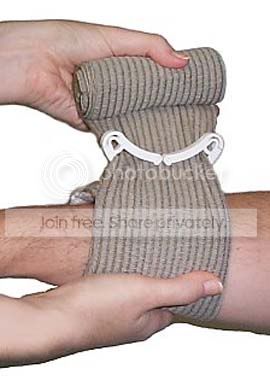
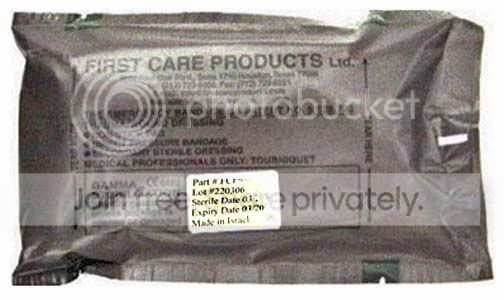
Id like to mention a few products I reccomend for your kits. These are great, The Israeli Trauma bandage is a pretty idiot proof pressure dressing and very easy to apply.

The Bandage Kit, Elastic" is also called the "trauma bandage", "emergency bandage", the "Israeli bandage", or the "Israeli pressure dressing". It replaces the standard battle dressing issued for decades in the first aid pouch. The main purpose of the trauma bandage is to serve as a pressure dressing. It can also be used to provide a tourniquet-like effect to slow blood circulation, though soldiers should use a Combat Application Tourniquet (CAT) as first choice if a tourniquet is needed. The trauma bandage is available to every servicemember as a component of the Improved First Aid Kit (IFAK) and the Combat Lifesavers Bag.

From website-

The Israeli Bandage must be kept inside its package to keep it clean. The Israeli bandage has a built in tension bar that applies continuous pressure to the wound, allowing the bandage to act as a stand-alone field dressing, sling, pressure dressing and mild tourniquet. It is ideal for head wounds, because it can be wrapped very easily. Directions on how to use the bandage are printed on the back of the package.

The Israeli Bandage was developed by Jerusalem-based First Care Products Ltd., a startup company founded by inventor Bernard Bar-Natan. First Care sold about 200,000 of the bandages to the U.S. military in 2003, and 800,000 in 2004.

Nine Steps to Apply the Israeli Bandage Properly

1.Remove the emergency trauma bandage package from the casualty's kit
2.Remove the bandage from the pouch
3.Place the pad (dressing) on the wound
4.Wrap the elastic bandage around the wounded extremity
5.Insert the elastic bandage completely into the pressure bar
6.Pull the elastic bandage back over the top of the pressure bar, forcing the bar down onto the pad
7.Wrap the elastic bandage tightly over the pressure bar
8.Continue to wrap the elastic bandage around the limb so that all edges of the pad are covered
9.Secure the hooking end of the closing bar into the elastic bandage to secure the bandage

medical_trauma_bandage_375.jpg


medical_trauma_bandage_700.jpg


I carry one of these in my jump bag, and we use them on our ambulance now.

I have applied one on a nice leg wound, and was very impressed.:thumbup:
========================================================================
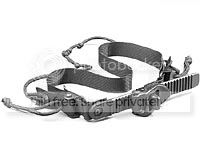
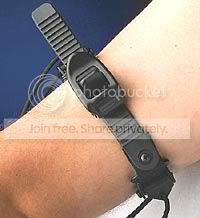
Here is an idiot-proof tournequet. I like the one handed version for a kit, b/c it allows you to apply it to yourself if need be. Galls is a great source for them, they can be had for around 30.00.:thumbup:

From Galls.com-

The only true one-handed tourniquet! The ripcord can be applied, tightened and released using only one hand. The unit is looped around the injured appendage, cinched firmly in place via the ripcord, then ratcheted to the degree of tightness necessary to staunch blood flow.

-Ratchet system allows for one-handed use
-Manageable in total darkness
-Completely washable and reusable
-Small enough to be included in any trauma pack
-Tactical black and made of non-reflecting materials

131677.jpg


131701.jpg
 
Fractures - unless you are experienced in reducing them, I would suggest splinting in place & transporting. Follow the RICES mnemonic - rest, ice (cool stream would work), compress (ace wrap - helps stabilize area & reduce swelling), elevate (again, reduces swelling), and splint. Open fractures - same - cover the protruding bone w/ moistened gauze, pad the area around it, splint in place - do not try to reduce it. SAM splints are great, and can be used in a variety of applications.

Sam

Bro i though I in RICEs stand for imobilisation?

Because it is already fracture so we do not want to move it even more?

How about dislocation? What is the treatment for dislocation?
i heard of a few treatment such as cold compression then pop it back but what do you think?
 
Back
Top