Michal Melichercik, traditional shepherd knives

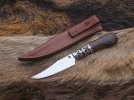
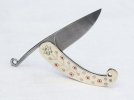
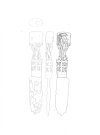
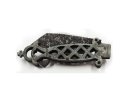
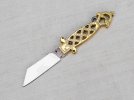
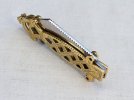
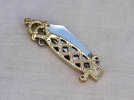
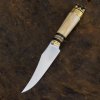
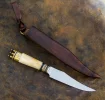
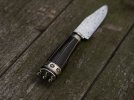
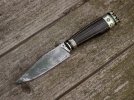
An older piece, made around 2017. I created this set as a wedding gift. A knife and belt for the groom, and a hairpin with earrings for the bride. The design was inspired by traditional folk motifs from the Novohrad region and Podpoľanie in Slovakia. The embossed decoration is further enhanced with copper tauzia placed in the center of the floral patterns. Materials used: copper, nickel silver, carbon Damascus steel, and bog oak. I no longer remember the exact dimensions, but it was a small knife.

View attachment 3080063
View attachment 3080064
View attachment 3080065
View attachment 3080060
View attachment 3080061
View attachment 3080068
View attachment 3080069
Just keeps getting better here. .👍👍👍
 
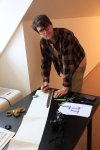
I’ve already introduced myself here as a craftsman, but I would also like to introduce myself as an author. So once again, greetings to everyone who loves knives — and to all who are fascinated by objects created by the human mind and hands.

Since childhood, I have been drawn to shaping material and adapting objects to my own needs and imagination. Creating and drawing always felt natural to me, which later led me to study mechanical engineering. I live in the Carpathian region, where ancient traditions are still alive — my grandfather spent his entire life working as a shepherd in the mountainous areas of our region. Over time, things simply fell into place.

Today, I work in my own small workshop. I value objects that carry a story within them. I often think about this during the making process, and in many cases there is no need to invent anything — the story has already been written by life itself.

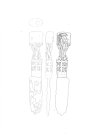
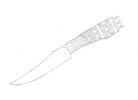
At the same time, I enjoy stepping outside of purely traditional themes. I am inspired by comics and visual storytelling, where strong imagery and deep lore play an important role. This way of thinking naturally finds its way into my concepts and sketches.
13.jpgIMG_9891.JPGkozelník.jpg
3b.jpgIMG_8092-4.jpg
 

Attachments

  • kozelník.jpg
    kozelník.jpg
    52.6 KB · Views: 3
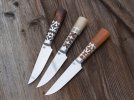
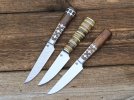
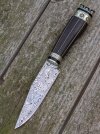
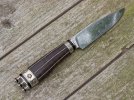
Three traditional shepherd’s knives made to order.
The handles are made of plum wood and walnut wood.
The knife in the middle is a combination of walnut wood and cattle horn.

In previous posts, I mentioned that inlaying horn with pewter is challenging. This piece of horn was properly dried and is estimated to be about 40 years old. This time, it worked out. I’m really happy about it.

250 mm

IMG_8176-2.jpg
IMG_8174.jpg
 
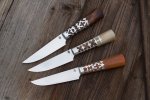
Three traditional shepherd’s knives made to order.
The handles are made of plum wood and walnut wood.
The knife in the middle is a combination of walnut wood and cattle horn.

In previous posts, I mentioned that inlaying horn with pewter is challenging. This piece of horn was properly dried and is estimated to be about 40 years old. This time, it worked out. I’m really happy about it.

250 mm

View attachment 3100604
View attachment 3100605
Some beautiful work👌
 
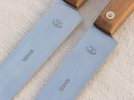
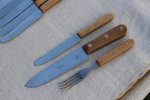
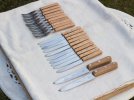
Hi everyone, it’s been a while since I last checked in. Today I’m adding a bit of Carpathian aesthetics and a special project I was invited to take part in.This kitchen cutlery set was made for a military history club dedicated to living history. The kitchen knives carry the marking “Wlaszlovits Štós”, referring to the historical knife and sabre factory in the village of Štós. It was founded by Jozef Wlaszlovits in 1803 and became the largest facility of its kind in the Kingdom of Hungary, exporting its products worldwide.In the attached photo you can see a Czechoslovak field kitchen, model M09.Materials: spring steel and beech wood.

IMG_8207.jpg
IMG_8203.JPGIMG_8197.jpg

16.jpg

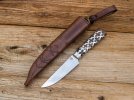
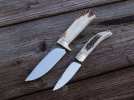
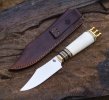
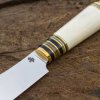
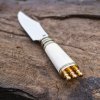
Materials used: N690, walnut, pewter and bogoak.
IMG_6246.jpg

Materials used: Damasteel, N690, walnut, brass, pewter, and cow‑horn.
IMG_8188-3.jpg

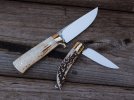
N690 brass, deer antler
IMG_8219-4.jpg
IMG_8213.jpg
 
Last edited:
Hi everyone, it’s been a while since I last checked in. Today I’m adding a bit of Carpathian aesthetics and a special project I was invited to take part in.This kitchen cutlery set was made for a military history club dedicated to living history. The kitchen knives carry the marking “Wlaszlovits Štós”, referring to the historical knife and sabre factory in the village of Štós. It was founded by Jozef Wlaszlovits in 1803 and became the largest facility of its kind in the Kingdom of Hungary, exporting its products worldwide.In the attached photo you can see a Czechoslovak field kitchen, model M09.Materials: spring steel and beech wood.

View attachment 3154325
View attachment 3154324View attachment 3154323

View attachment 3154326

Materials used: N690, walnut, pewter and bogoak.
View attachment 3154322

Materials used: Damasteel, N690, walnut, brass, pewter, and cow‑horn.
View attachment 3154321

N690 brass, deer antler
View attachment 3154327
View attachment 3154328

STUNNING WORK....... ALL OF THEM........👍👍👍.....

Definitely was.missing your posts...😉.....

EXQUISITE JOB.....👌👌👌
 
Back
Top