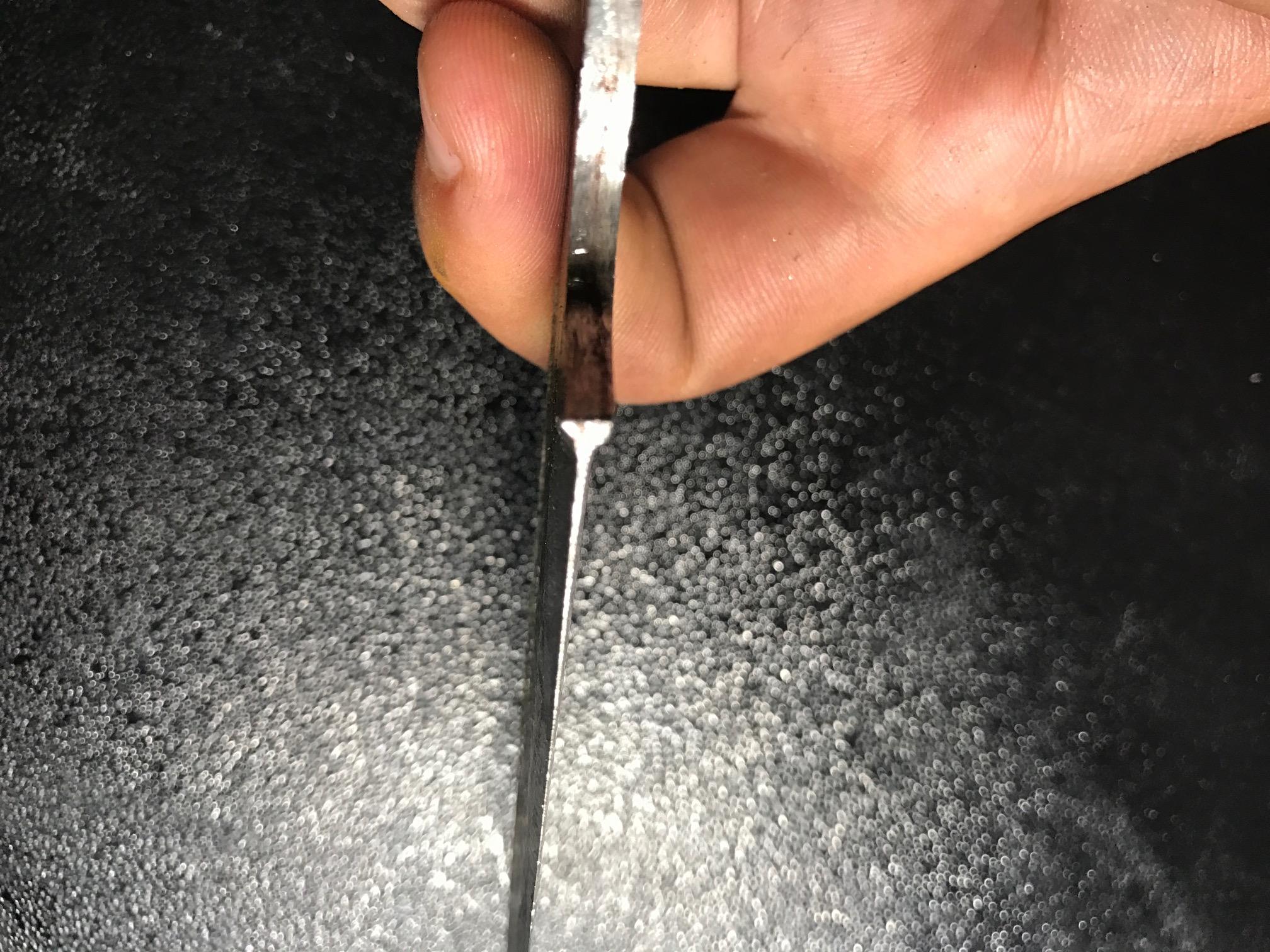
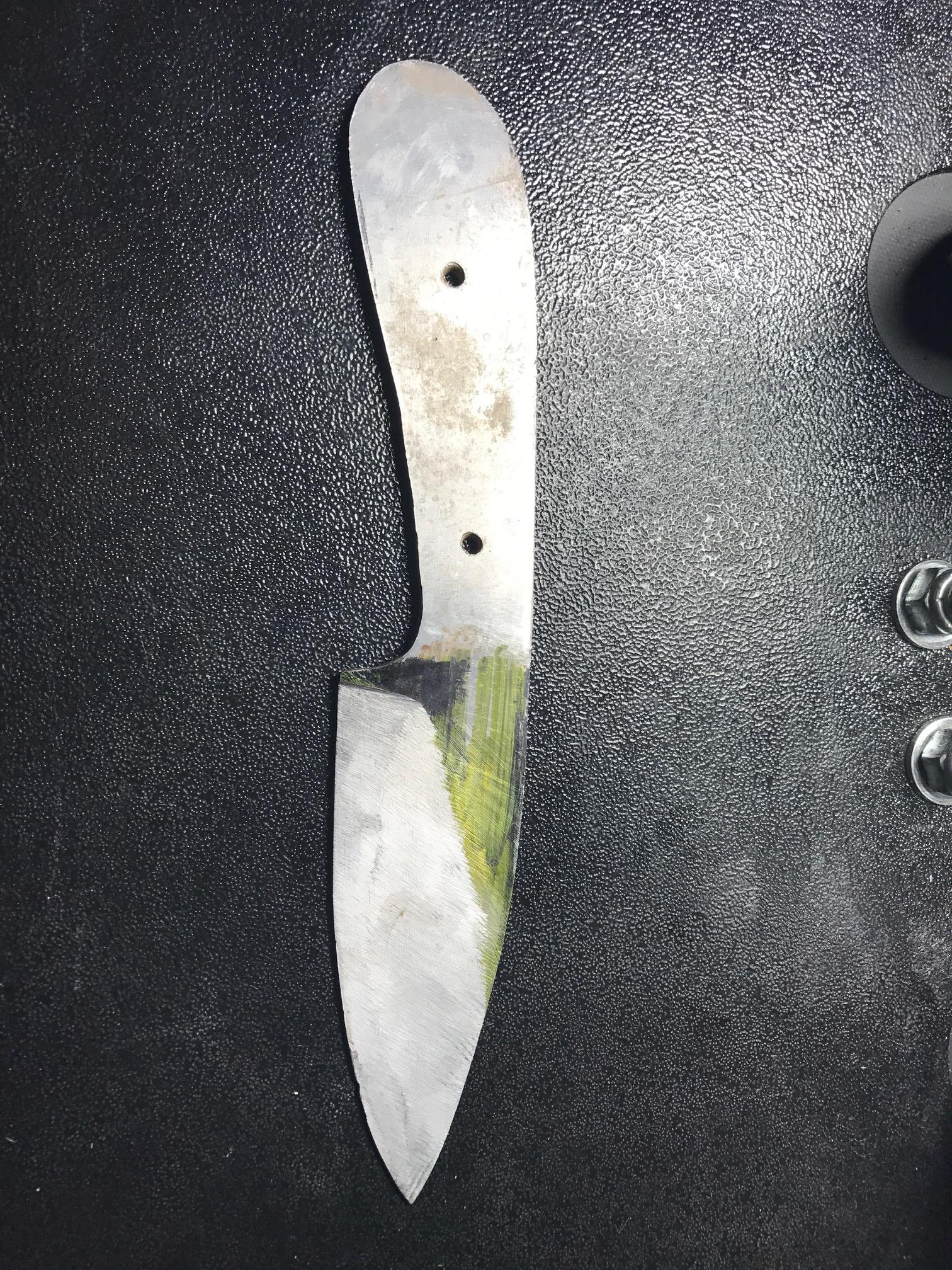
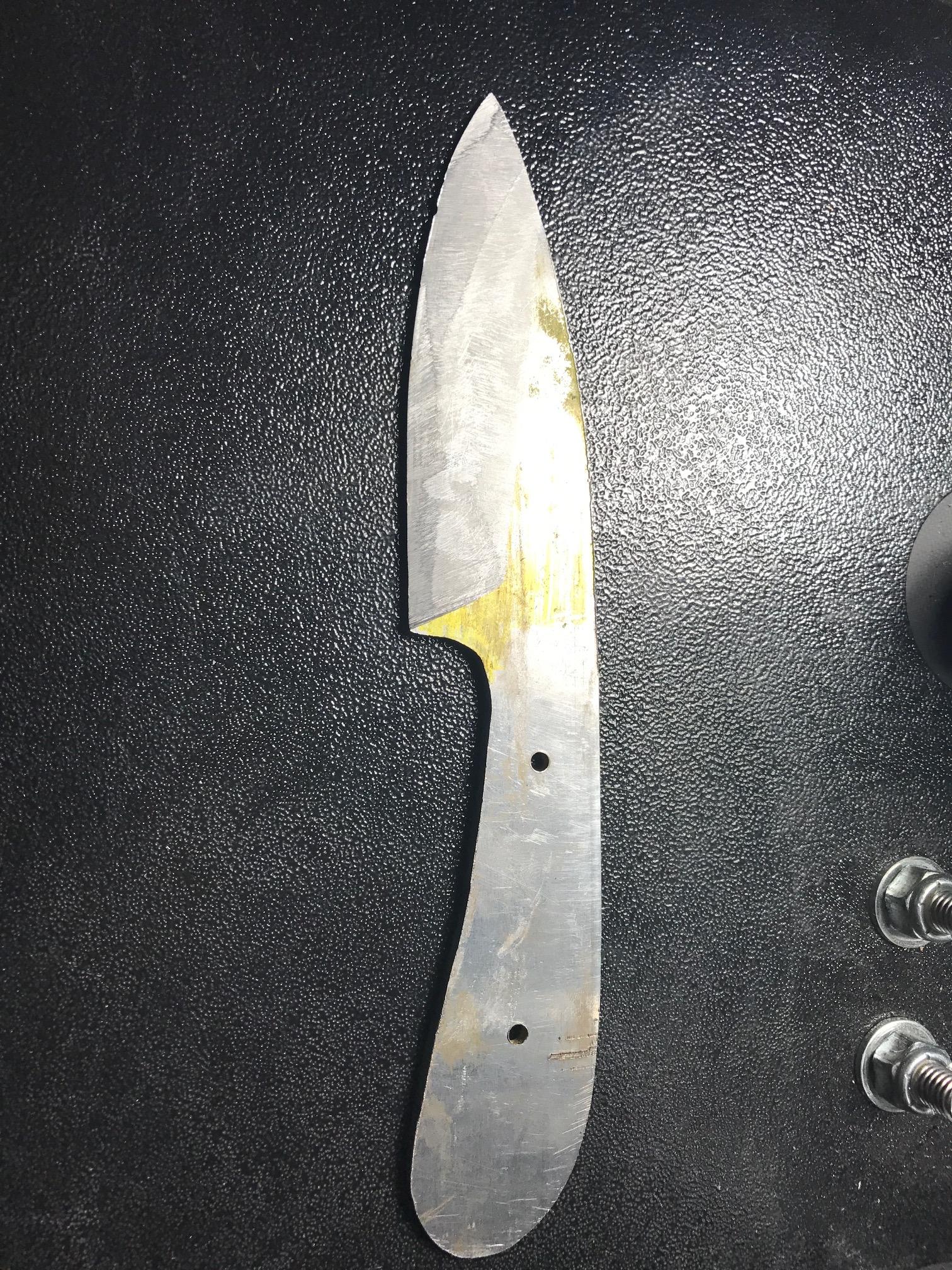
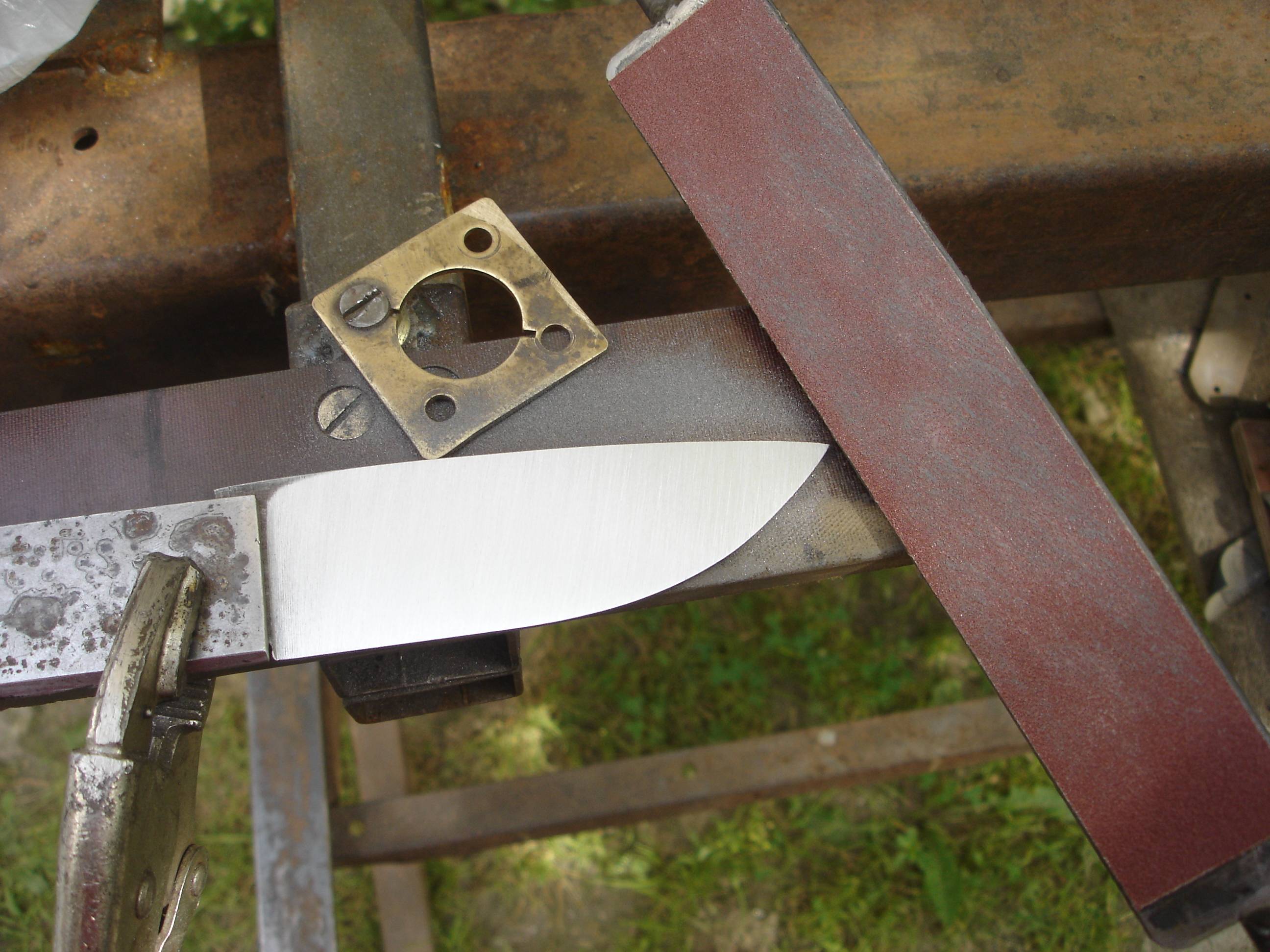
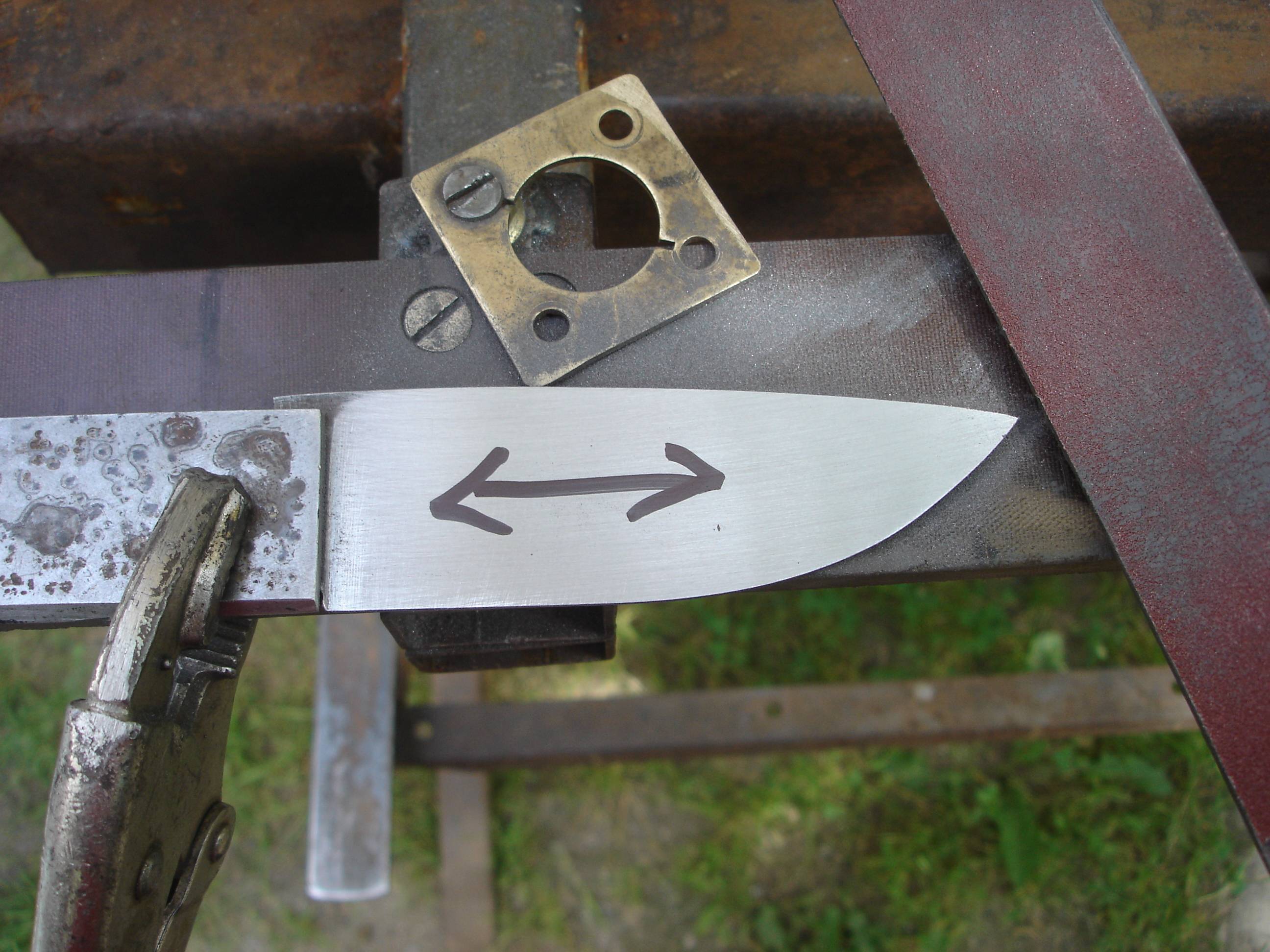
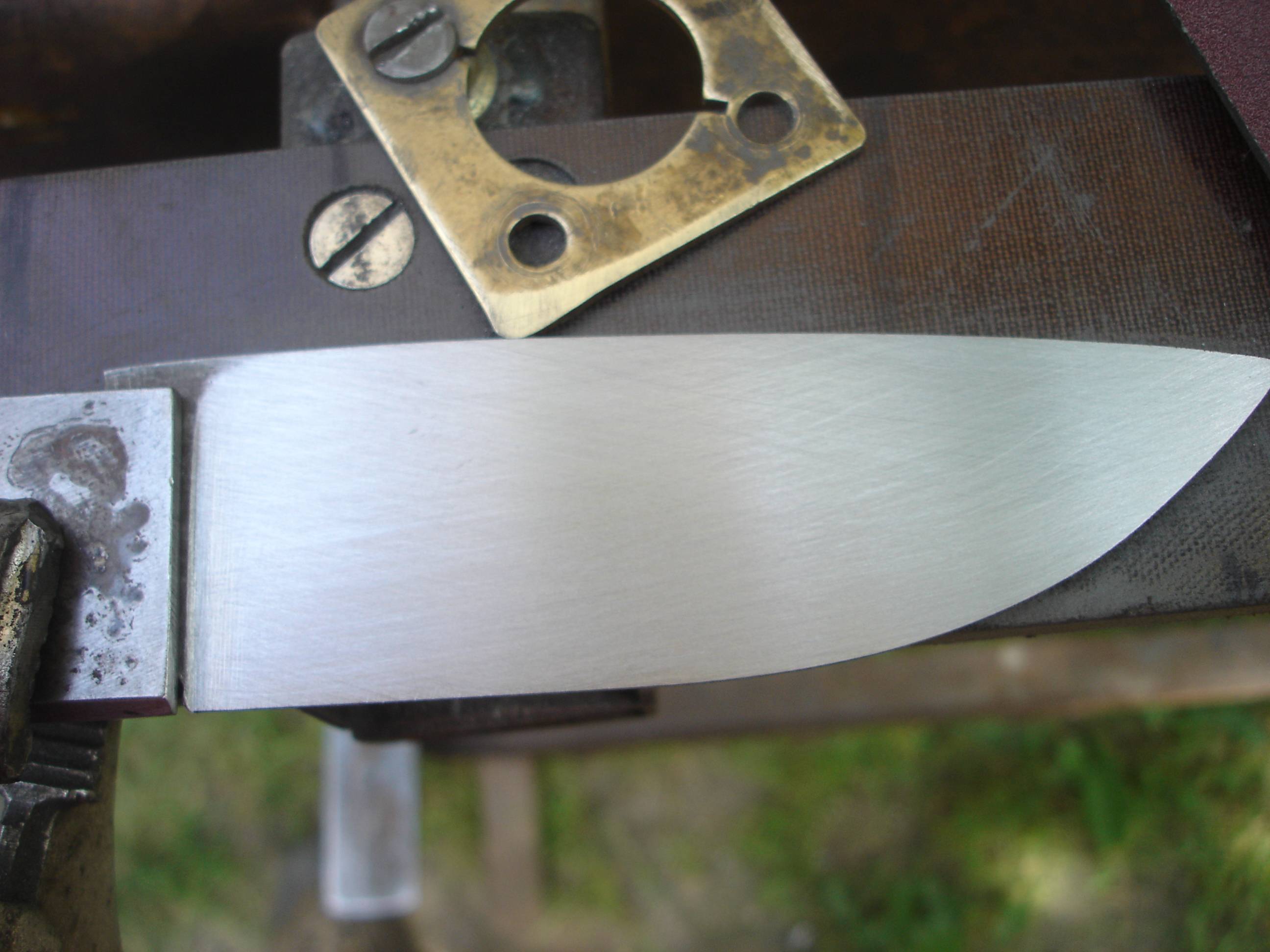
My first attempt at making a knife

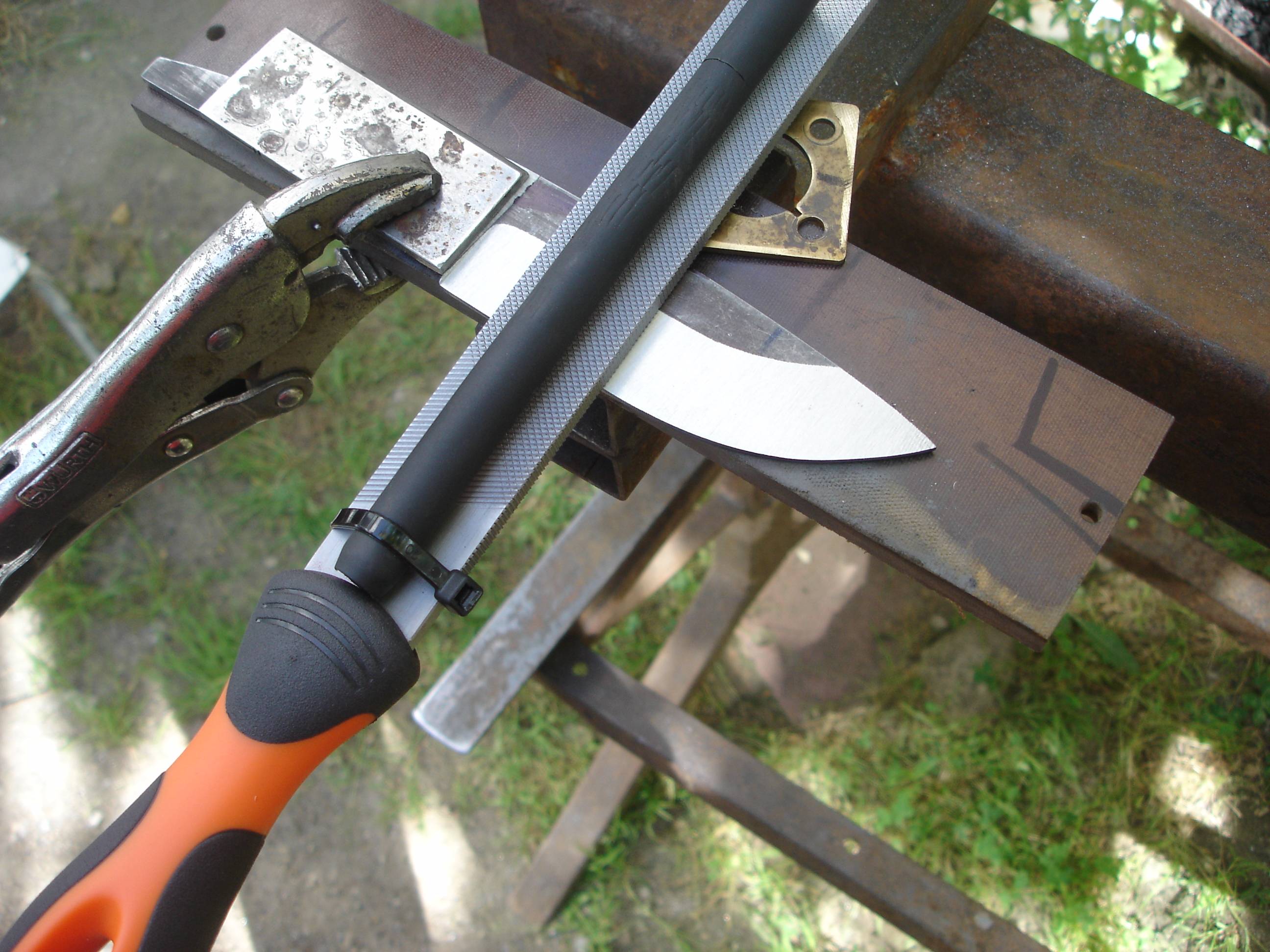
I would also (on the next one) clamp the blade in a position so that when the file is against the bolt stop, it is in more of a vertical position. It is easier to work with a straight up an down plunge line as a beginner.

Do you think i could get away with trying to make it more vertical now or is it too late?
 
You may not want to on this one since your so close to the finger choil already. You don't want to thin that out too much. Just go with it and get a feel for how all these new tools work. Don't stress about it.
 
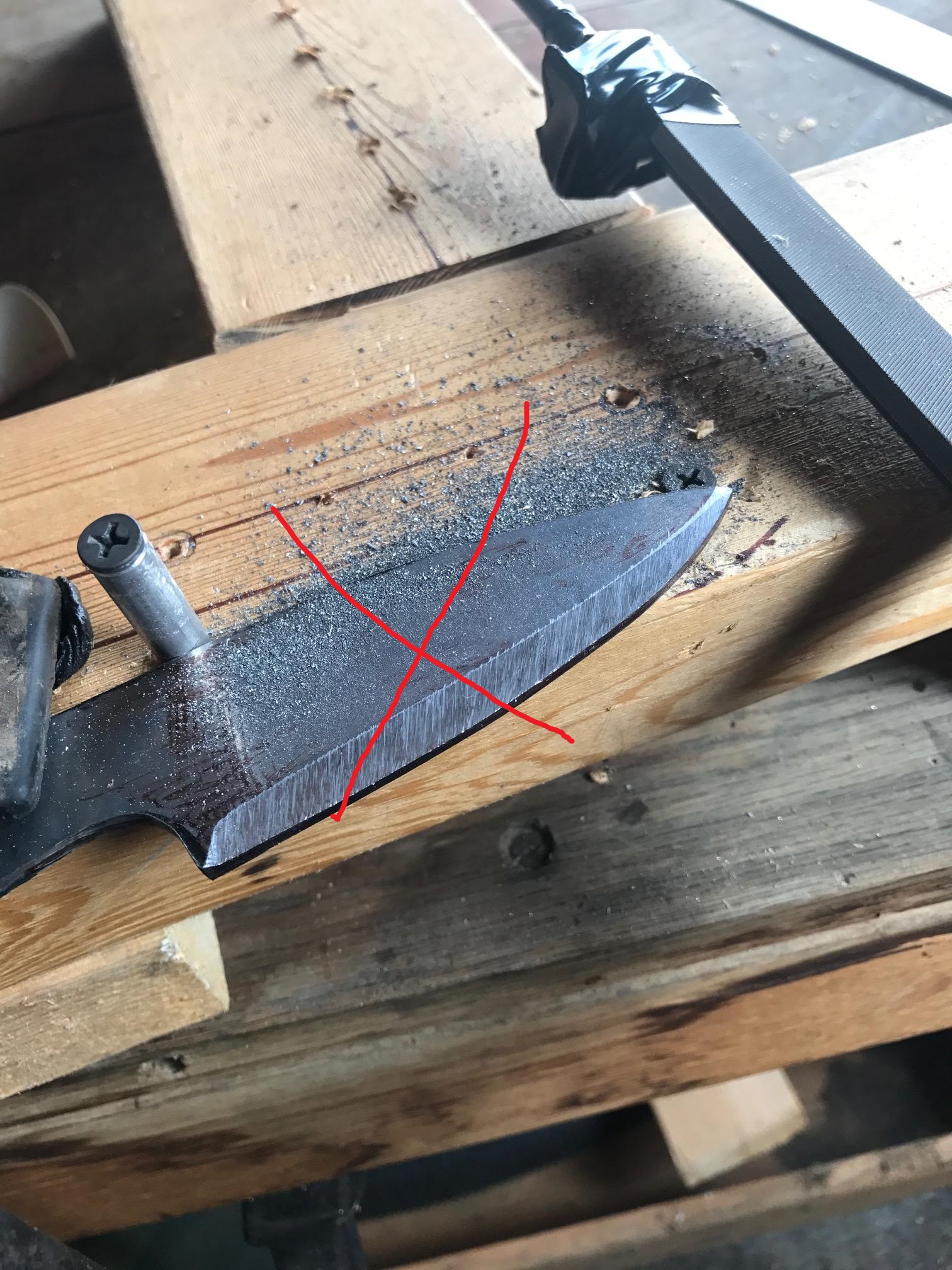
For those wondering...using the right type of file helps just a little bit. It was like night and day. I did what I could to fix the side I had been working on and get everything even. I'm not happy with the plunge line and will work on it more next. My tip is also a tiny bit off center. I don't know that I can fix it without making the tip to thin. I also ended up running the hose clamp on my file into the edge of the blade and chipping it. I worked most of it out and figure I will get the rest later. Oh well...learning experience.

My v1.0 jig has limitations. The next one will be better.


kmW2QnT.jpg

kHw6COD.jpg

1r5Hdp1.jpg
 
I can't remember the proper name of it, but there is a flat file with rounded edges that would work well for the plunges. A look around on Gessweins website should find one
 
I rounded the edges of my mill file so I'm sure I can probably clean them up with that.
 
Nice work on your first knife mate!
Just a few things I observed while filing my knives on the jig
1. Apply less pressure on the side you're filing later and go slower on that side, or keep alternating which side you're filing on every quarter inch or so. This helps get an even grind on both sides because if you apply equal pressure as you did on your first side, it bends ever so slightly due to thinner material supporting the edge part of the blade. This makes it very difficult to have equal grind lines on both sides.
2. Dull or grind the edges of your file. This way you get a smoother and more forgiving plunge line. It also makes it much easier to clean it up when you get to the sanding part.(I see you've done that already)
3. You will have to draw file your flats. The jig is a great starting point, but it doesn't give perfectly flat bevels. Plus draw filing your bevels will also get rid of most of the really coarse file marks and reduce your work while sanding.

Hope it helps.
 
For those wondering...using the right type of file helps just a little bit. It was like night and day. I did what I could to fix the side I had been working on and get everything even. I'm not happy with the plunge line and will work on it more next. My tip is also a tiny bit off center. I don't know that I can fix it without making the tip to thin. I also ended up running the hose clamp on my file into the edge of the blade and chipping it. I worked most of it out and figure I will get the rest later. Oh well...learning experience.

My v1.0 jig has limitations. The next one will be better.


kmW2QnT.jpg

kHw6COD.jpg

1r5Hdp1.jpg
;)
LCdZVol.jpg
 
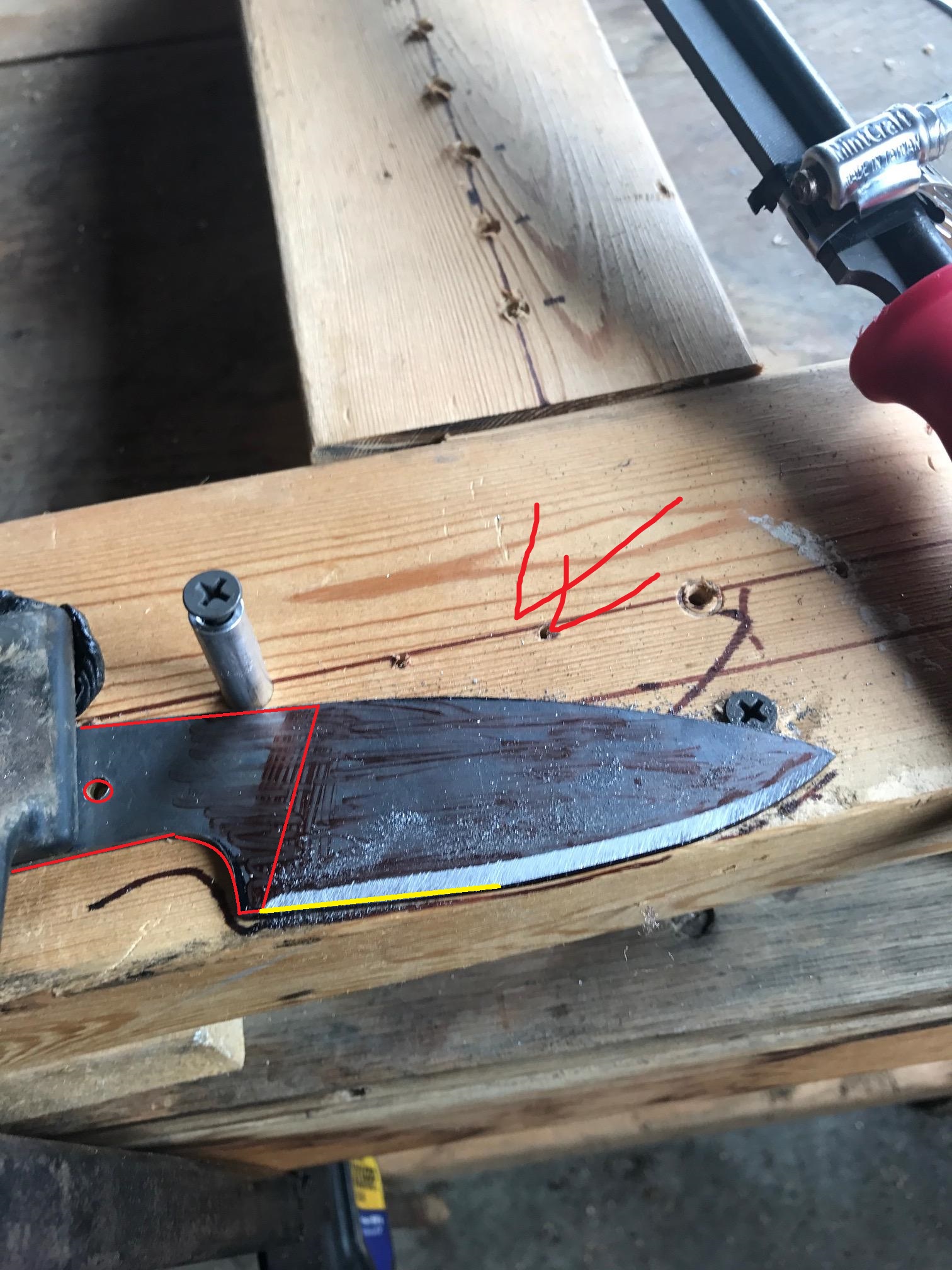
Let me give you a few tips . On first picture position of blade is wrong .Depends on what angle you want it to be plunge line you MOVE blade left or right NOT up or down the tip of blade .But always the edge to follow the line of wood on your jig ;)
It's much easier if you cut piece of mild steel in shape like you do when you make scale for handle . Drill holes for pins and side where you want to be plunge line CUT in angle you want . That way when you turn over blade to grind the other side the plunge line will be perfectly symmetrical . When you put a knife in a jig to grind you simply mount it so the file follow angle you have in mild steel plate . Like drawing I made in second picture .Red color is mild steel scale , yellow is line which MUST be always parallel to grinding jig edge . .. . I hope you understand my poor English :oops:
EmKJWK8.jpg

yoep1tt.jpg
 
Thank you very much for taking the time to do that. I did recognize early on that the angle wouldn't work and that is why I changed it. The edge on my knife is more curved that the ones I typically see in jig tutorials so I wasn't sure how to position it. Your explanation was very helpful.

One issue that I have is that when I lower the bolt to where I would be removing the steel from the spine above the choil, my hose clamp hits the jig and I can't file anymore. I'm going to fix that on my next jig by having the base where the knife is slightly higher than the back part of the jig. I'm also going to make that back part longer. The zip ties that you use will work better than the hose clamp as well as there is less to get in the way and if I hit my edge with it it won't mangle it like the hose clamp did.

I also had some issues with the screw that I used to keep the tip in place getting in the way towards the end. I think I'm going to use your clamping method and forego the screw next time.

I believe my next project is going to be a dagger so I get lots of practice with the bevels and getting everything straight and even.
 
i seem to have missed the part where you don't file it down to an edge prior to heat treating. I'm at a dull edge already. :(

Should I even bother heat treating this one?
 
That is a great start. Have you thought about doing a deliberate convex grind on the blade? I think that I recognize the template and if so that knife is a chopping beast in disguise. Excellent work for a first knife, keep going!
 
Should I even bother heat treating this one?[/QUOTE]


What steel are you using?
 
I put the template together from a few drop point knives I liked. It isn't supposed to copy any particular knife but it wouldn't suprise me if it was close to one.

It is 1084. Good call on just filing it down. Don't know why I didn't think of that.

I did do some jig mods today and got to a full flat grind. Straightened up my plunge line while I was at it. Not perfect but I guess that is what practice is for.

I think I am finally to the point where I need some sandpaper. Back to Home Depot I go I suppose.

0q0jm5a.jpg
 
Hey Feezle,
Go watch Nick Wheeler's hand sanding 101 before you start sanding, it'll save you heaps of time.
Also look at the draw filing video that is in the stickies, you might want to give that a go on your bevels with your single cut file before you sand.
It'll help get rid of the convex (if you want to get rid of that) and knock some of your deeper file marks. It'll also make your bevels into really flat planes and even everything up nicely.
Looking good though! Keep it up!
 
I put the template together from a few drop point knives I liked. It isn't supposed to copy any particular knife but it wouldn't suprise me if it was close to one.

It is 1084. Good call on just filing it down. Don't know why I didn't think of that.

I did do some jig mods today and got to a full flat grind. Straightened up my plunge line while I was at it. Not perfect but I guess that is what practice is for.

I think I am finally to the point where I need some sandpaper. Back to Home Depot I go I suppose.

0q0jm5a.jpg

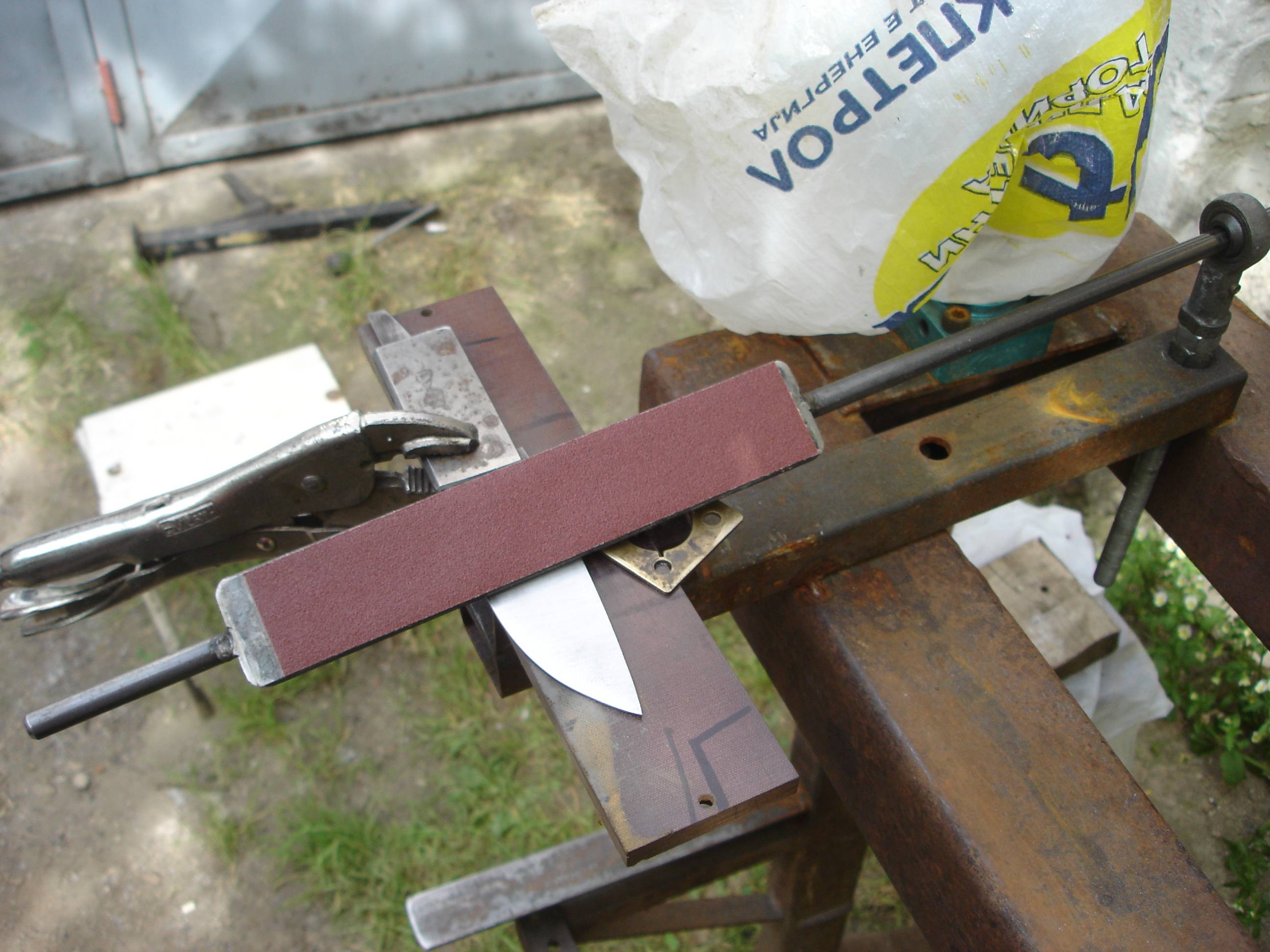
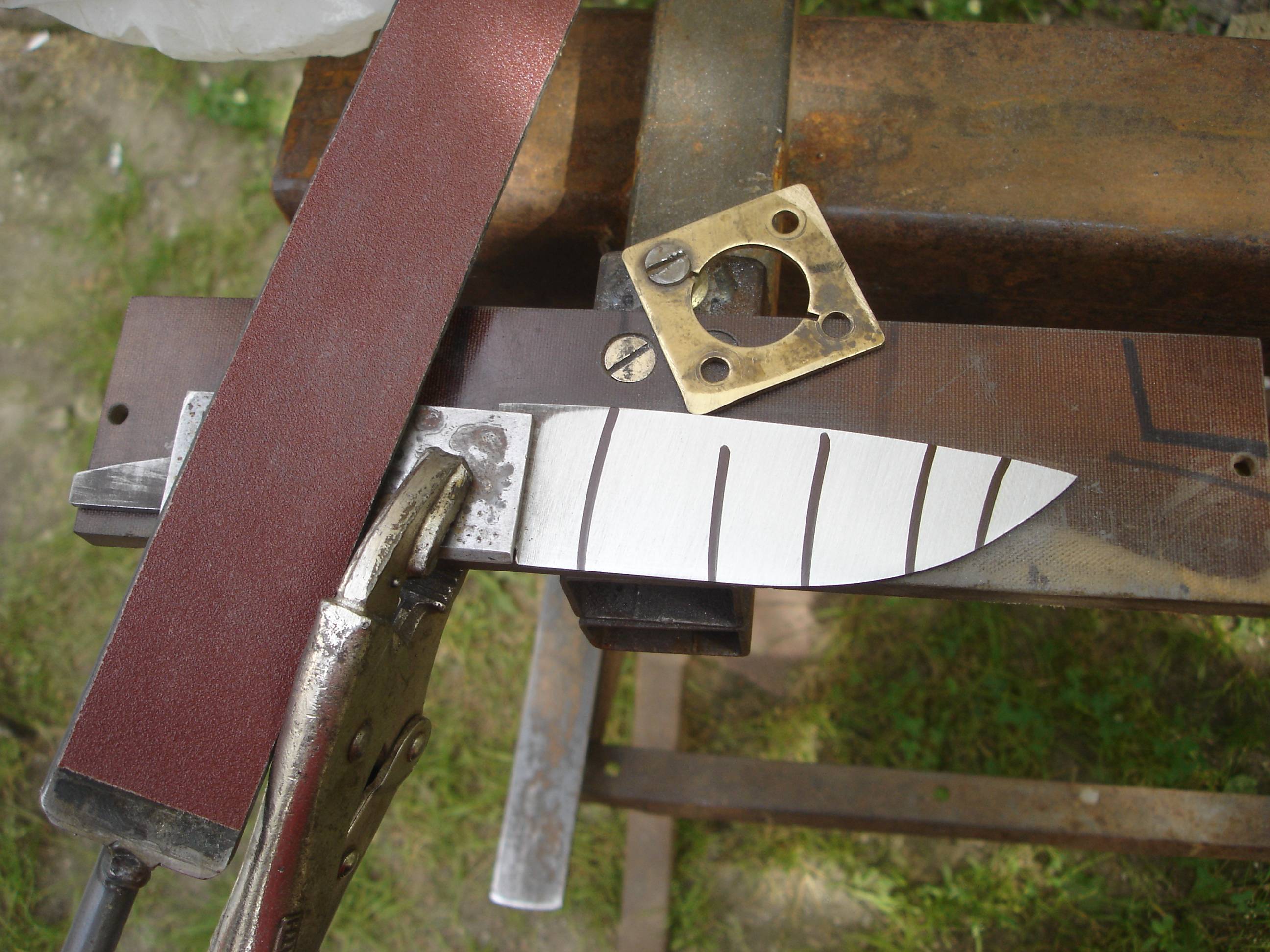
Well , when you mentioned it already ....sandpaper .This tool for jig will make you life easy :)
DtSqlCv.jpg

xbitAXN.jpg

EQseTJ4.jpg

COcpEku.jpg

407TsjC.jpg
 
Hey Feezle,
Go watch Nick Wheeler's hand sanding 101 before you start sanding, it'll save you heaps of time.
Also look at the draw filing video that is in the stickies, you might want to give that a go on your bevels with your single cut file before you sand.

The draw file video appears to be gone...which sucks because I was looking for a good tutorial on it. The sanding video was a huge help!
 
Back
Top