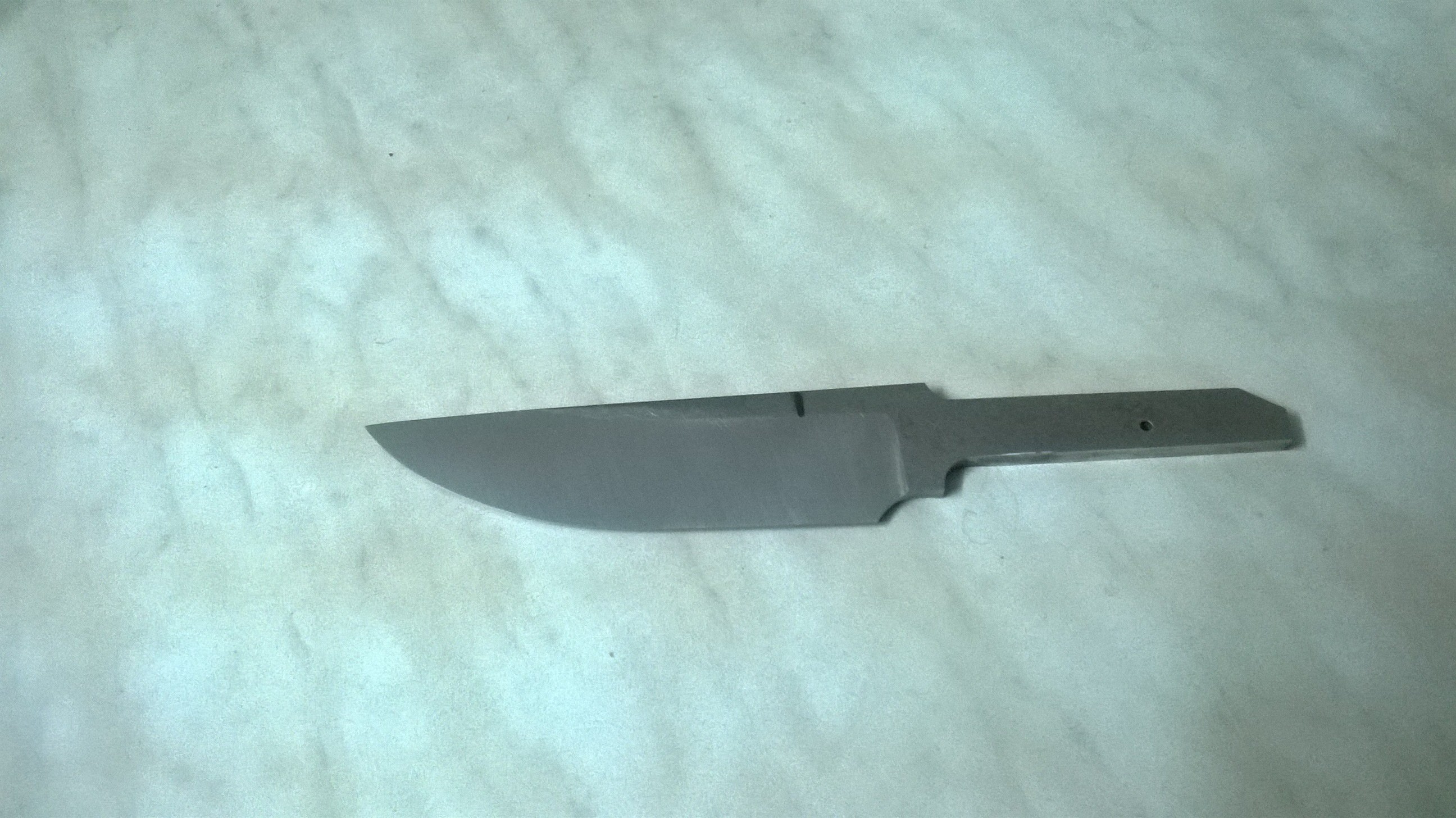
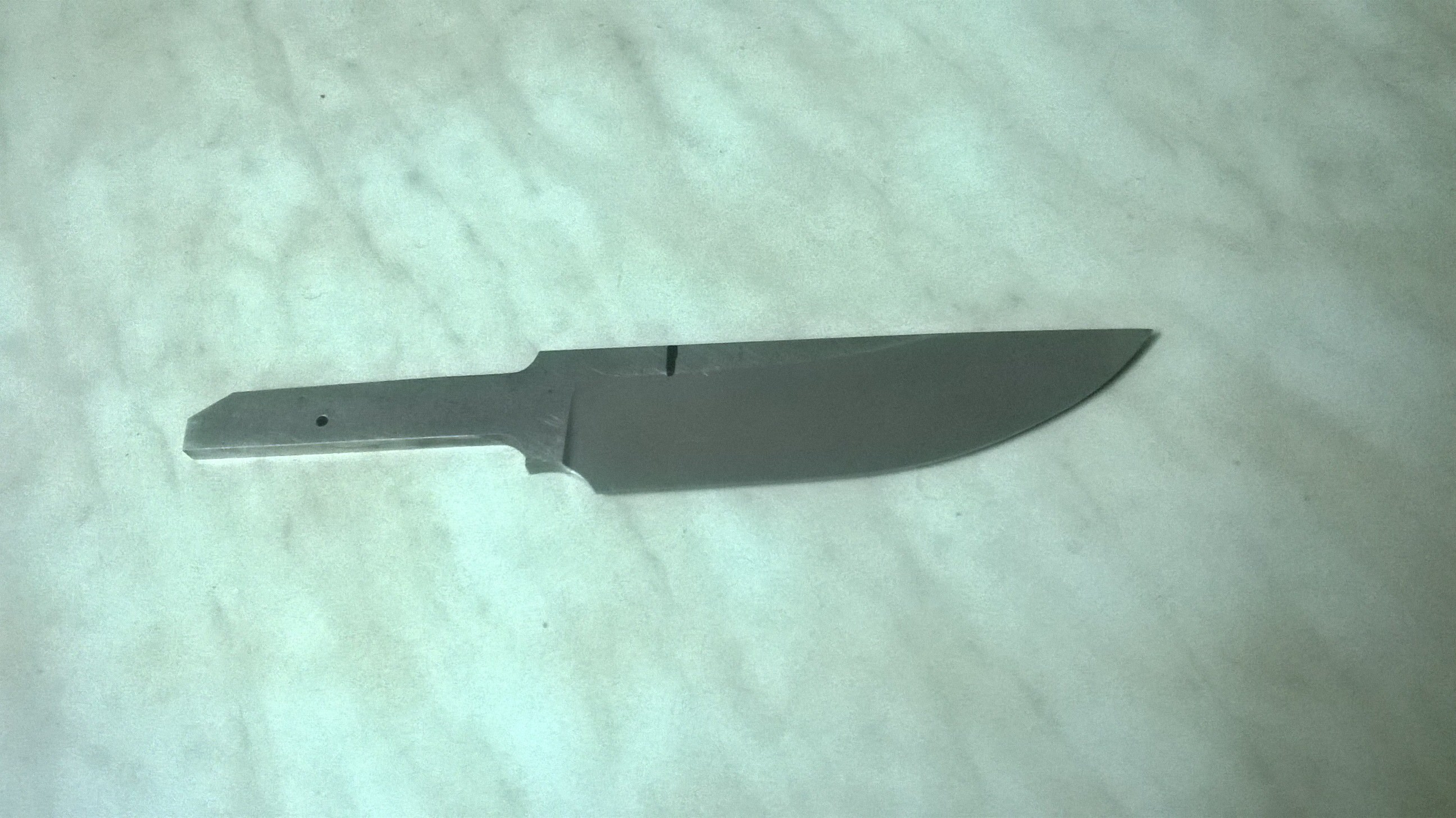
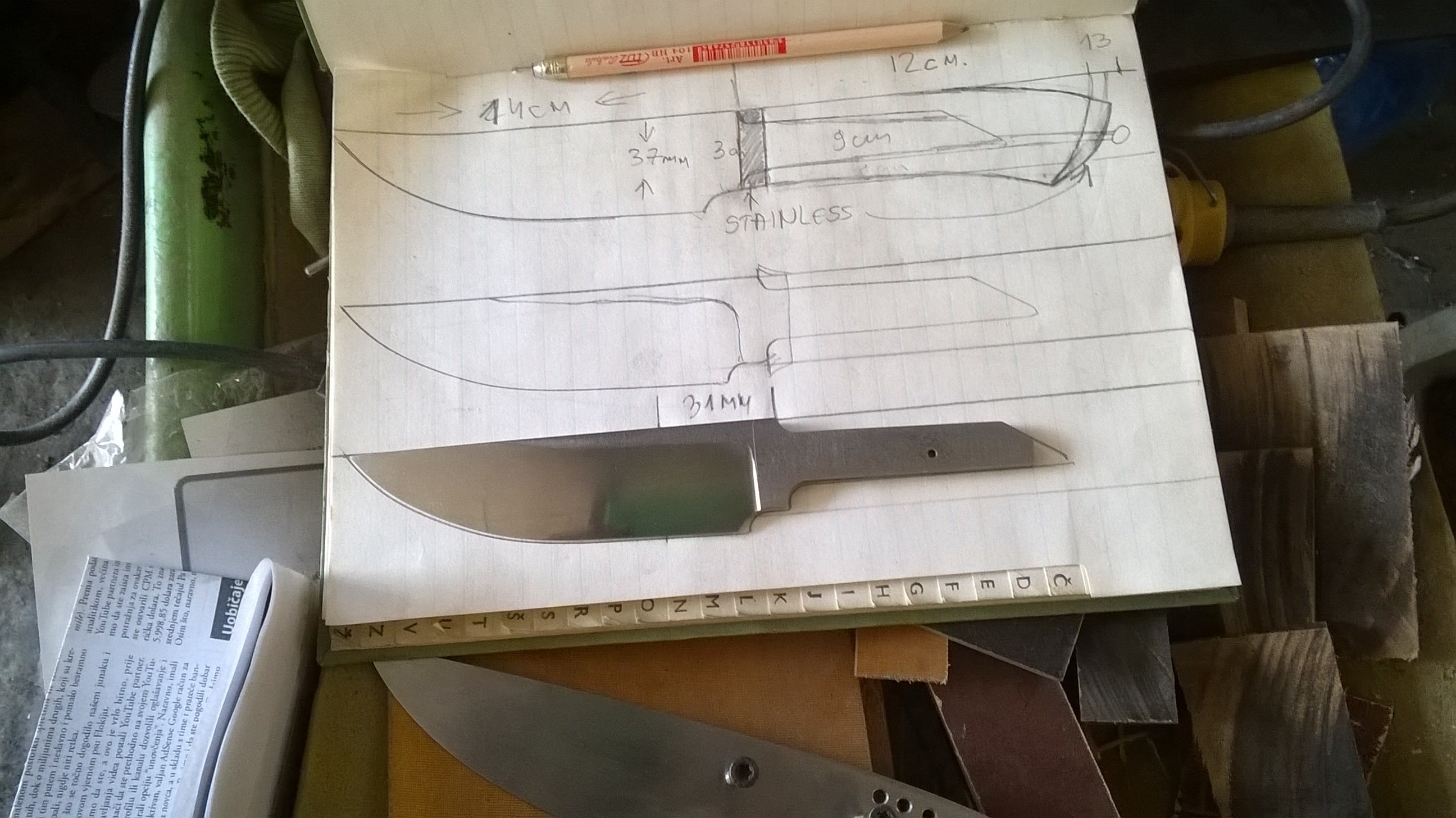
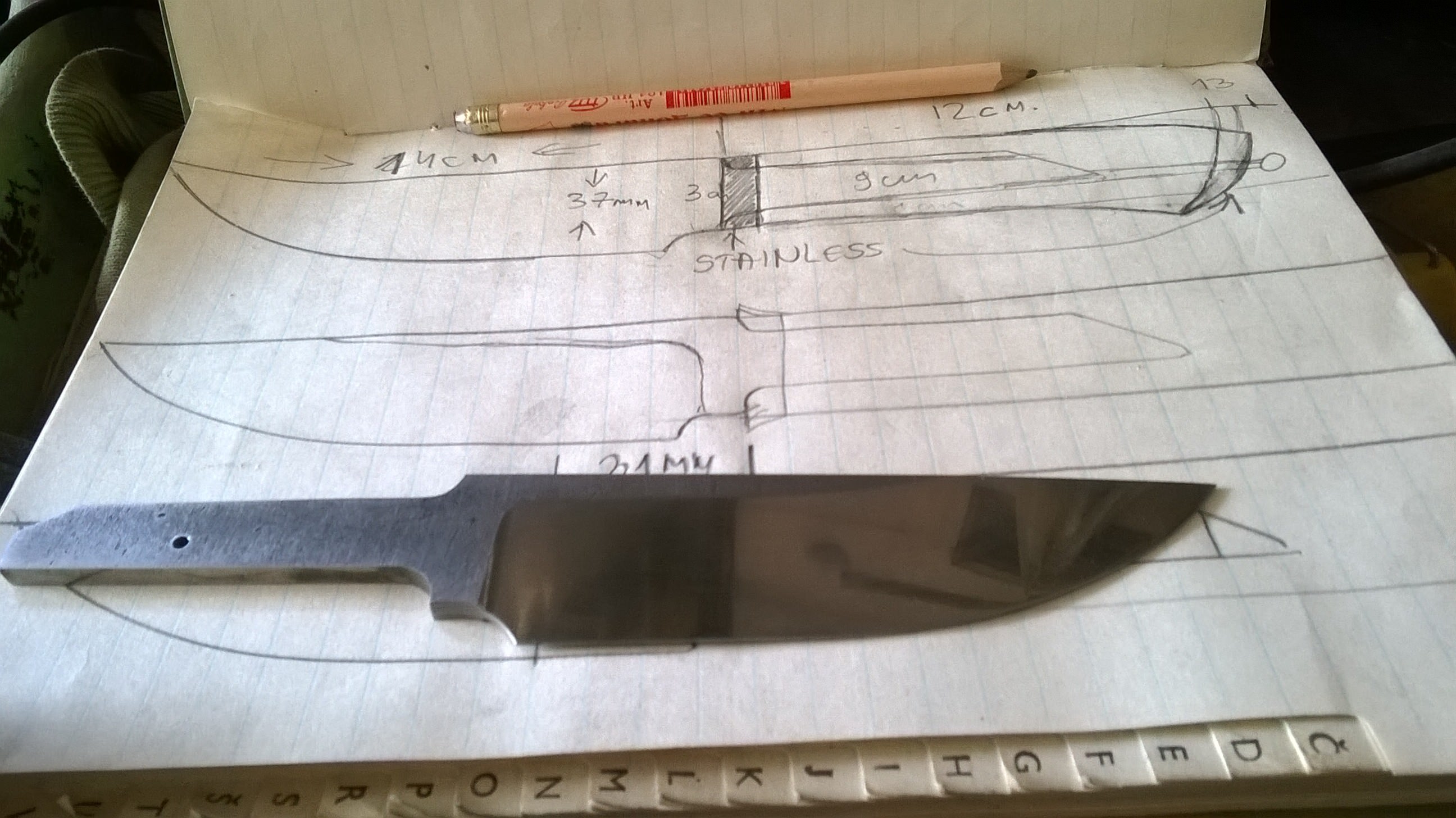
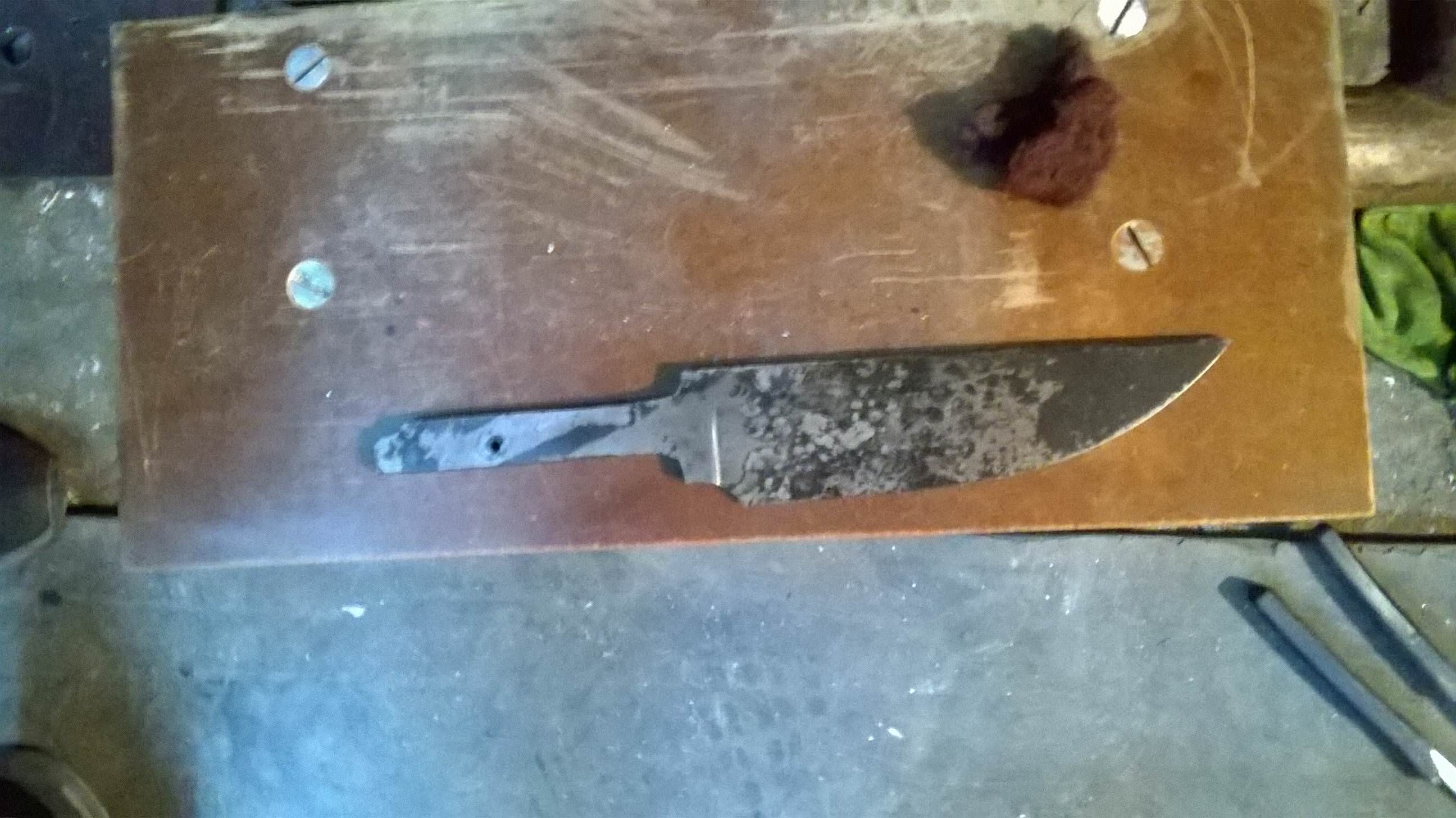
My first attempt at making a knife

Feezle, you were doing so well, as a mechanic/fabricator/machinist/artist/writer one thing I learned is once you start something, you finish it. No matter how it comes out you finish it. Several things happen when you finish a project.

1) You start to develop muscle memory and proper technique for the entire knife. If you don't finish this one you may have gotten better at the beginning stages but you'll still have to learn what you didn't finish. Wouldn't be so much if you learned the whole process from start to finish?

2) You learn how to adapt and deal with hiccups along the way. This will only make you a better knife maker earlier on because you'll already have one knife done.

3) The biggest one in my book is you get the satisfaction of knowing you finished it. You may not think much of it now but believe me that knife will haunt you till you do it. I know a few knife makers who went back years later to finish the blade to satisfy the feeling that they gave up.

I've made a couple of fixed blade, rebuilt a few slipjoints, repaired/restored/modified more knives than I remember. I won't even get into the things I've built over the years like you having no idea what I was doing. Just doing what makes sense and like you listening to the advice of others. What ever you decide to do, good for you for trying and I look forward to seeing what you do. Remember Charlie Mike Charlie Mike started with a Dremel tool and not much more than you have. He developed a style and he makes awesome knives and like many here as you've already found out, is more than willing to share what he knows to help advance your skills and the communities knowledge base.
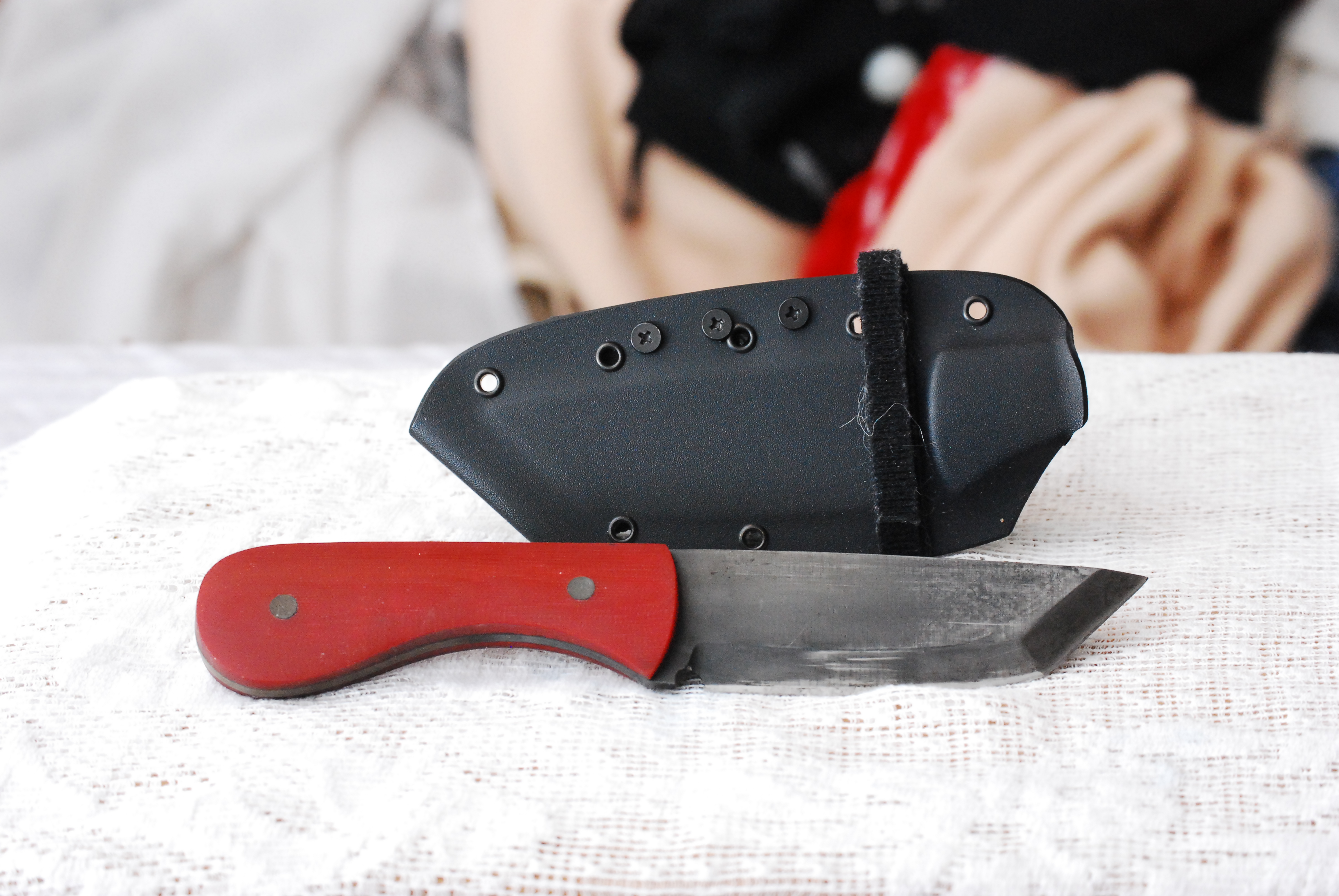
DSmQzuL.jpg


Again, good luck and looking forward to more WIPs from you. :)
 
Oh I'm not giving up on it. I'm going to finish it. I just need some more stuff to do the heat treat correctly and I'm low on funds right now. I bought quite a bit of steel so instead of waiting until I can heat treat this one I figured I would make some more. Also makes more sense to buy the material to do several handles at once.

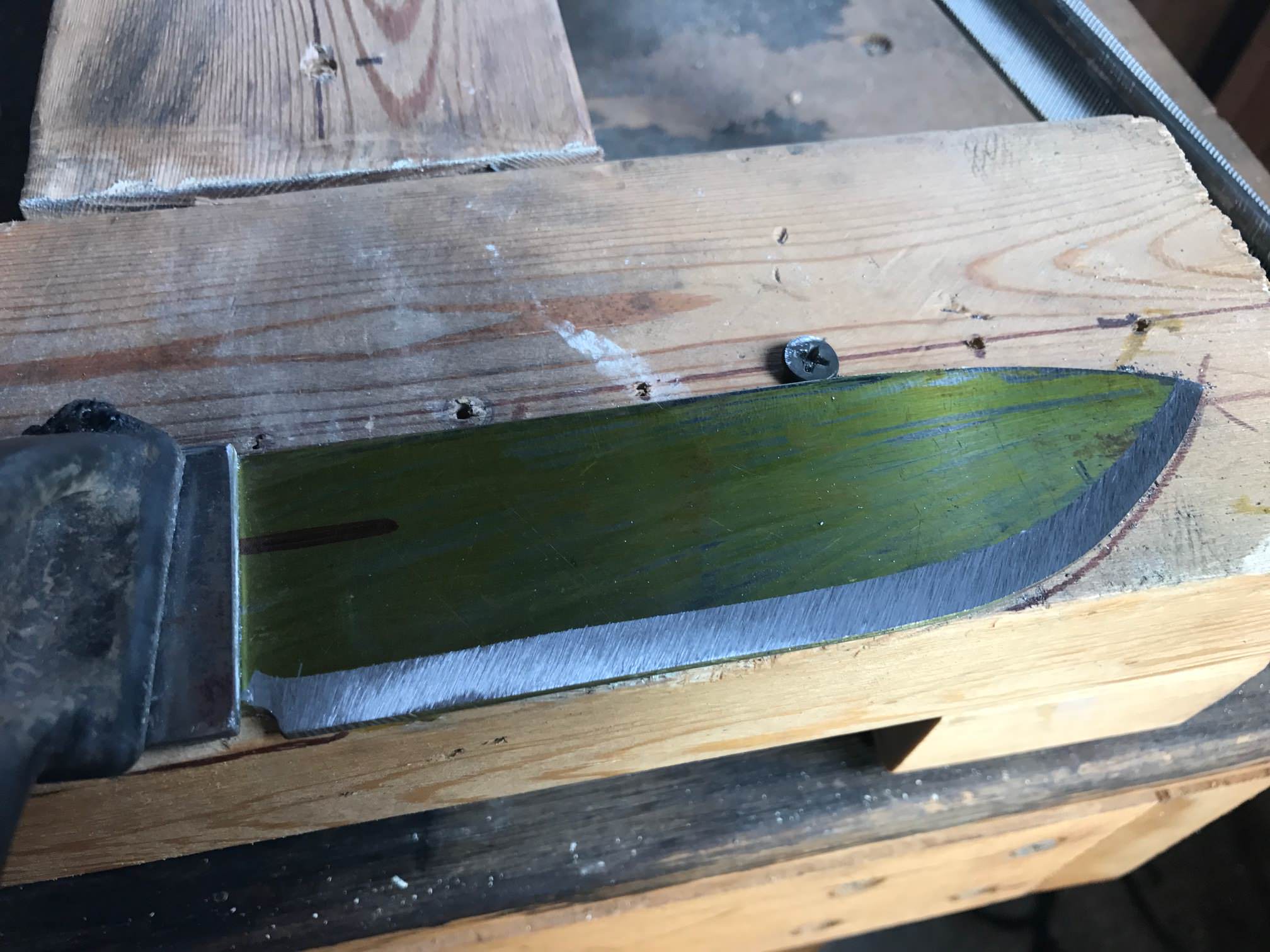
I have a bit of a low spot I have to work out on this one but good progress so far.

fYdjWah.jpg

8qIUi6d.jpg

37mKl5R.jpg
 
Last edited:
Shit bro, hand filing... thats hardcore :thumbup:
 
Several questions and a problem.

-Does the direction I file make a difference? I have found myself doing tip to handle for a while and then switching. I recently noticed that this change of direction slightly changes my angle. I'm guessing this isn't a good thing to do?
-Should I be going the same direction on both sides or does it not matter. For the most part I have been doing tip to handle on one side and then the opposite when I flip the knife over. I seem to get better results with tip to handle but it is difficult to do on the one side because I'm not ambidextrous.

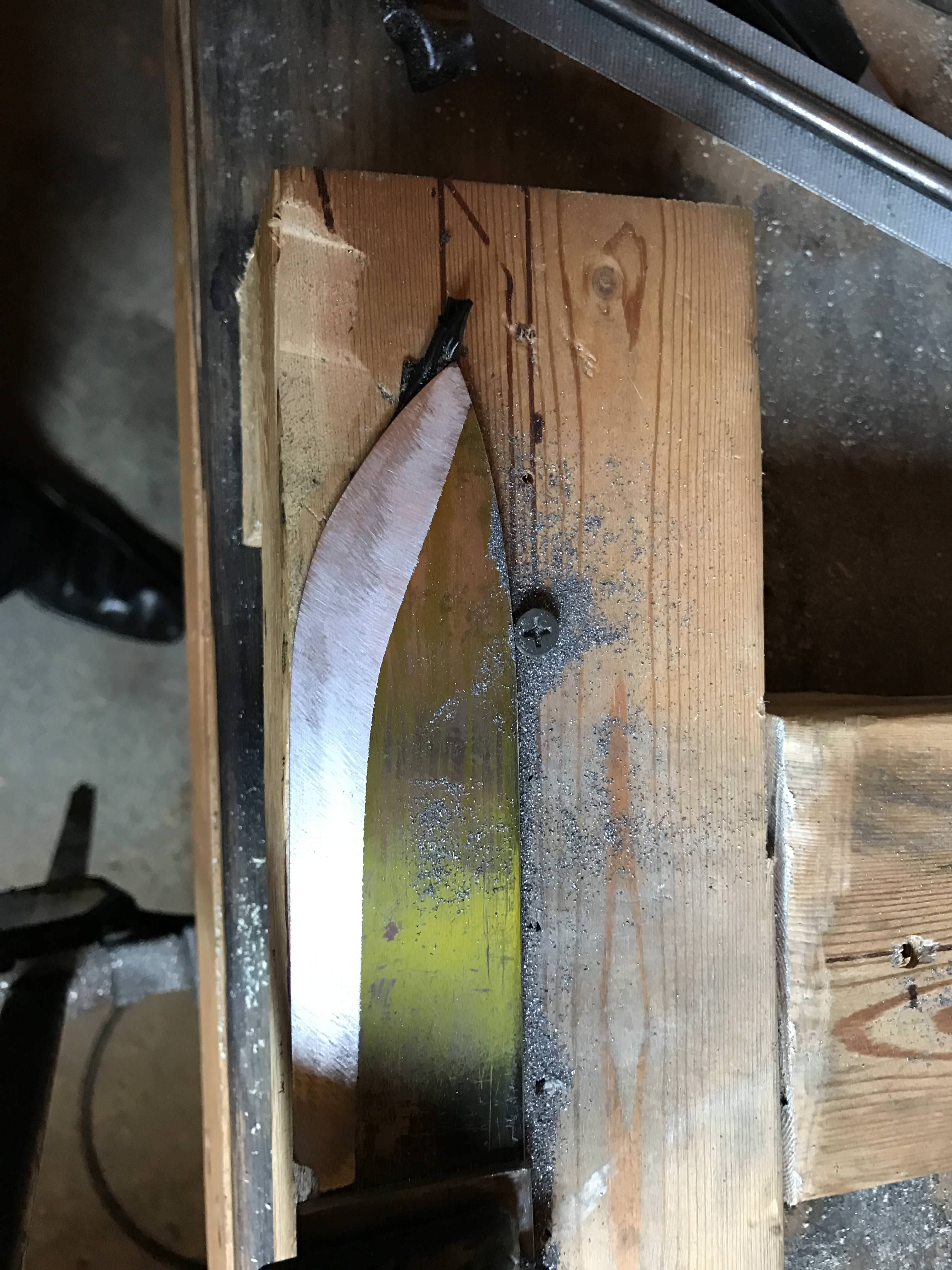
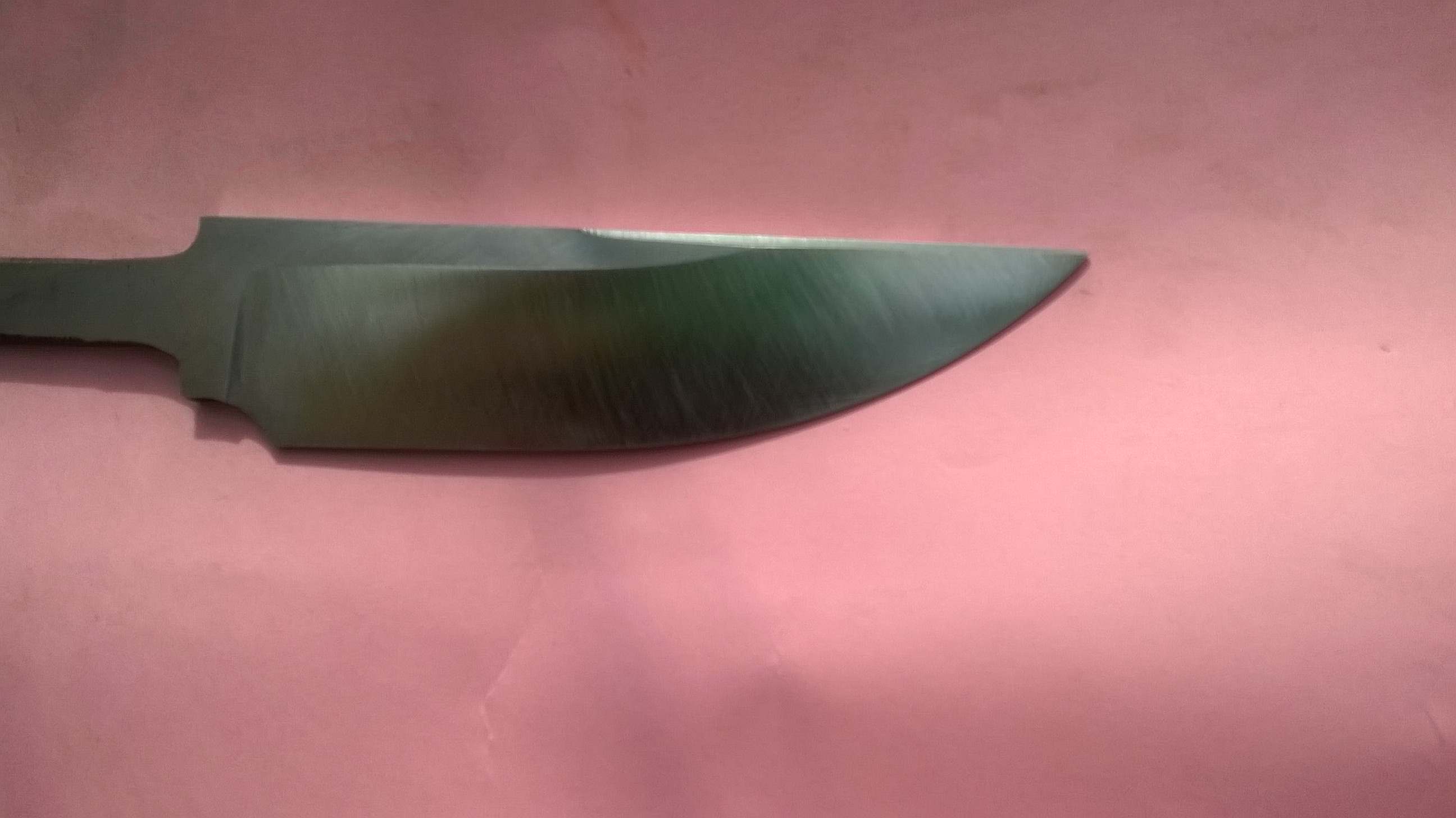
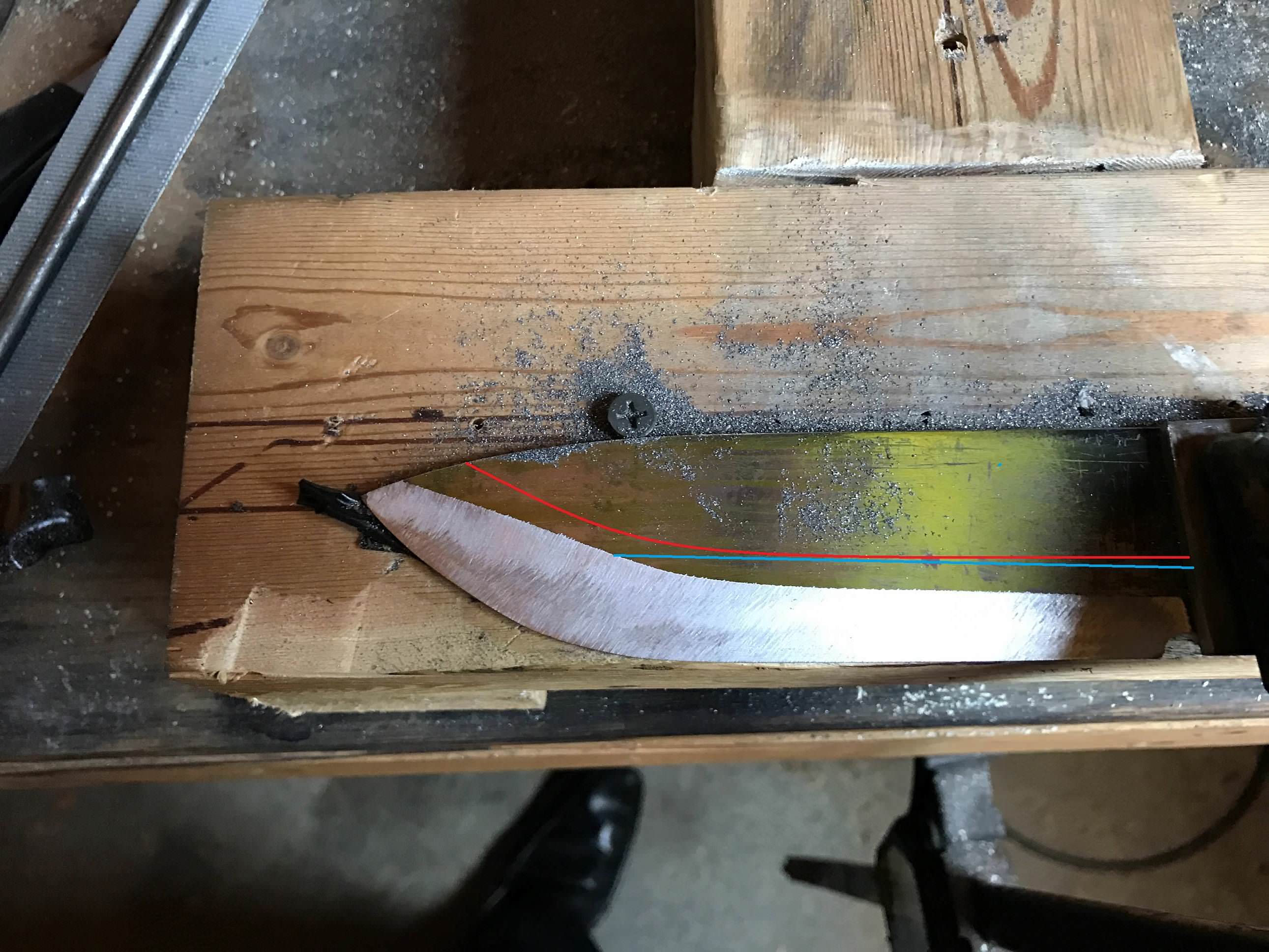
-Finally I'm having a tip issue. The first side I bevel looks fine. Then the other side doesn't get as much of a grind on the tip (see below). I'm assuming this is because the other side is beveled and when I apply pressure on this side, the steel flexes slightly away from my file. I have tried sticking a bit of leather or even some rolled up electrical tape under the tip to give it just a little more resistance but it doesn't seem to work and I'm also concerned about puting a bend in it if I use anything more rigid.

Any ideas?

3ovSHLi.jpg
 
I started with a 1x42 so I'm not gonna be of much help.
 
Several questions and a problem.

-Does the direction I file make a difference? I have found myself doing tip to handle for a while and then switching. I recently noticed that this change of direction slightly changes my angle. I'm guessing this isn't a good thing to do?
-Should I be going the same direction on both sides or does it not matter. For the most part I have been doing tip to handle on one side and then the opposite when I flip the knife over. I seem to get better results with tip to handle but it is difficult to do on the one side because I'm not ambidextrous.

-Finally I'm having a tip issue. The first side I bevel looks fine. Then the other side doesn't get as much of a grind on the tip (see below). I'm assuming this is because the other side is beveled and when I apply pressure on this side, the steel flexes slightly away from my file. I have tried sticking a bit of leather or even some rolled up electrical tape under the tip to give it just a little more resistance but it doesn't seem to work and I'm also concerned about puting a bend in it if I use anything more rigid.

Any ideas?

3ovSHLi.jpg
I never grind from tip to handle . .. ..
Watch this video
 
Last edited:
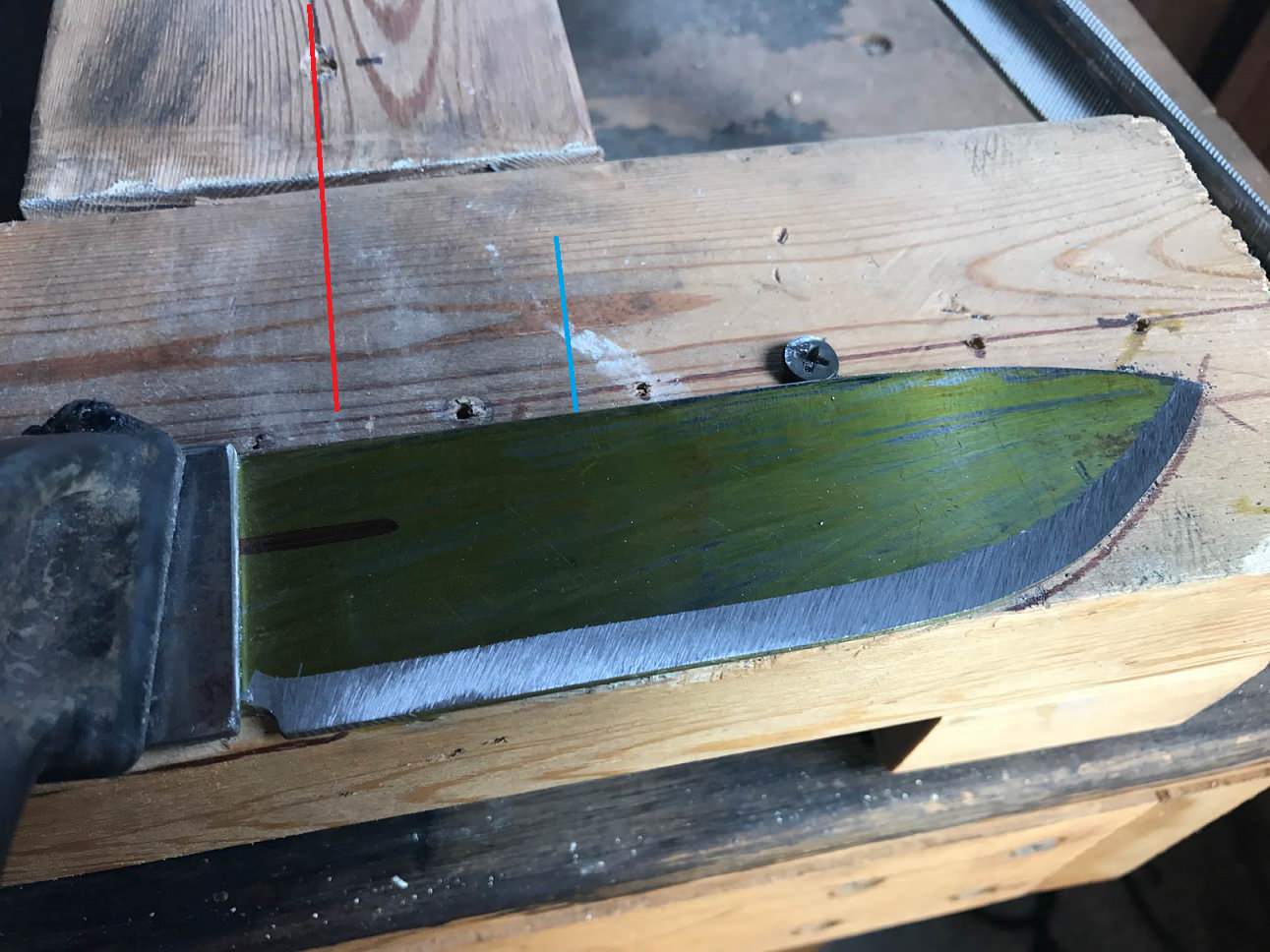
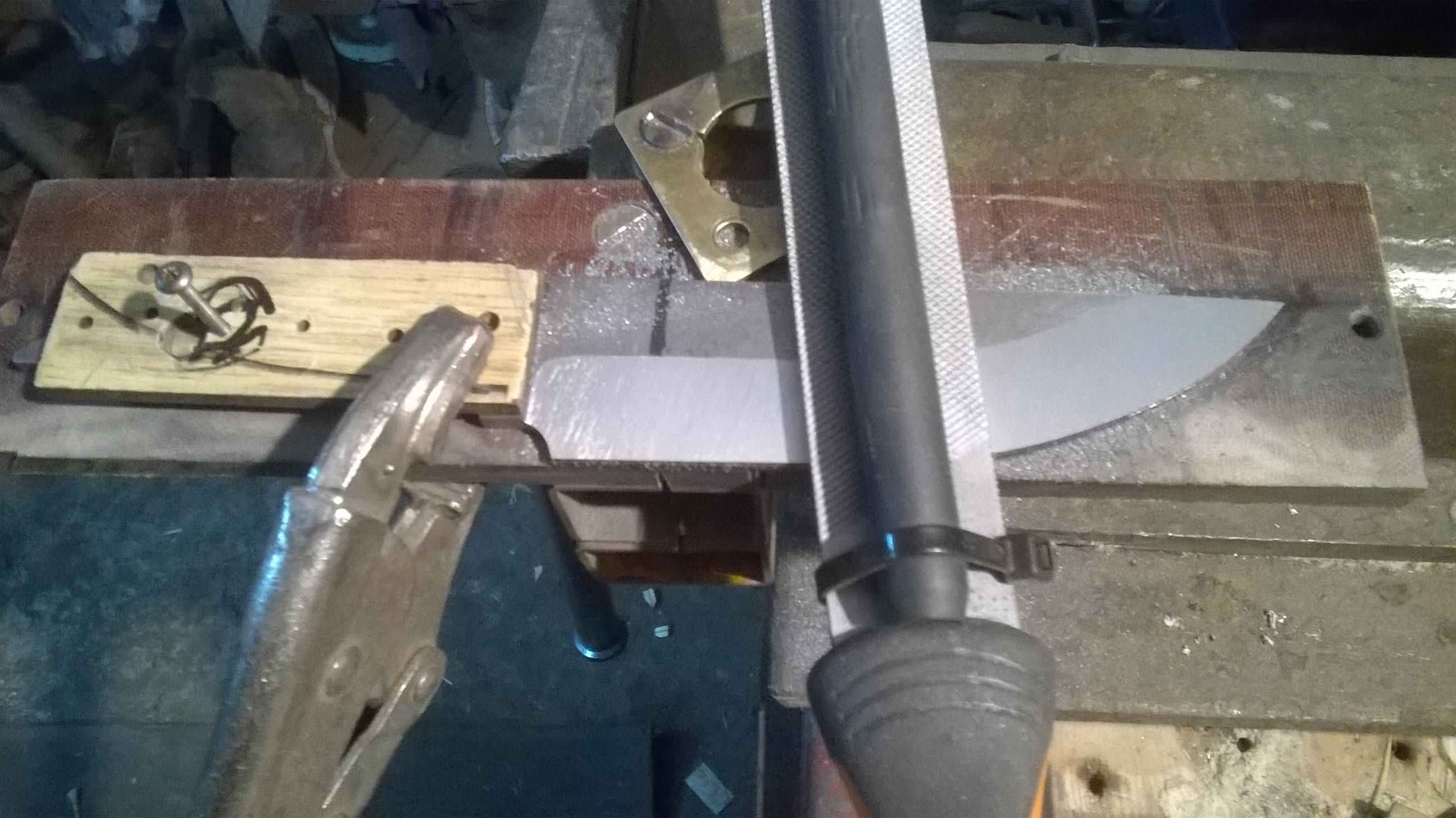
You have to keep grind line even like red line on picture .Start to grind only where is blue line until you reach the blue line . Then start to grind from plunge line to tip and take care that grind line always is like red line , then tip must come as it should . .While you grind angle on file is constantly changing .And if you don t grind even you have many different angle Remember ,file does not go in a straight line ,since the rod is in one point , file make circular line from plunge line to tip .When file come to grind belly that angle changed even more ...... Never mind , hard to explain in English :mad: Just try to keep grind like red line and everything will come in place .. .. Do not hurry, go slowly and from time to time draw with file from ricasso to tip .
U5yMNYu.jpg


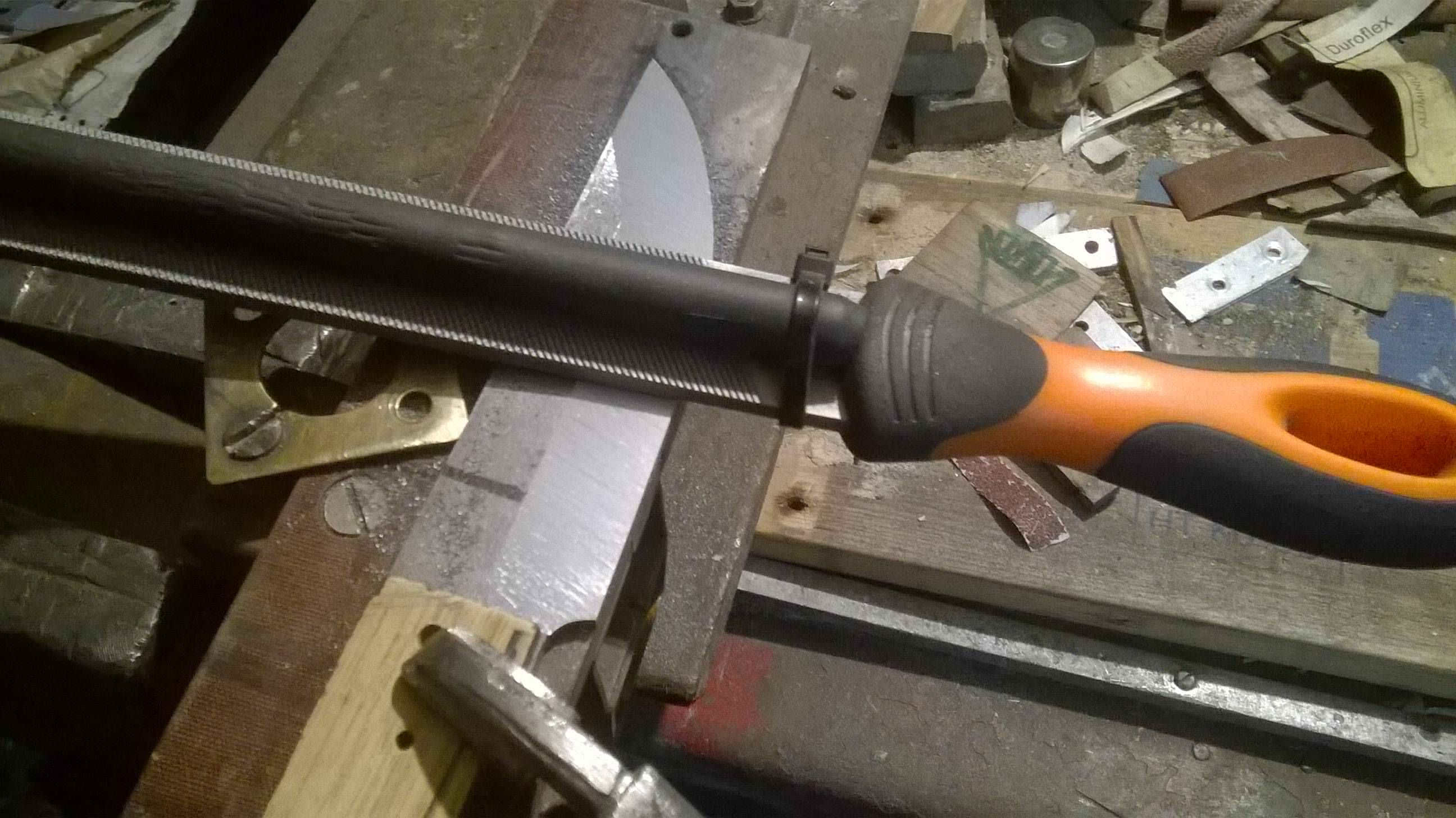
Look how does it look when I use my file jig . . .

d9AIh9n.jpg

5FjP1Iw.jpg


Central line is important for uniform grind .. ..

qqUeCRN.jpg

ATAnSva.jpg

zB7lb00.jpg


Ready for HT
o5qm8Sx.jpg

kTG8T0N.jpg

rgeSVw7.jpg

Ready for handle ;)
ArrA6Xg.jpg
 
Last edited:
Wait , can you take picture ... full jig together with blade and file ? It seems to me that ricasso is to close to make right angle with file ? Move left blade , blue line to come on place of red line ...if I m right , move blade left , blue line on place of red line ....That s why tip come like that :)
HdKtWuZ.jpg
 
I actually did move the knife back later on because I wasn't happy with my plunge line. On the other side I started where it should be. I'm almost certain the bevel looks like that near the tip because the other side is already beveled and not flat against the jig.
 
Ok I got it figured out. Filed and sanded to 220.
5IQtm3R.jpg


So new issue. My edge right before the tip is just a hair thicker than elsewhere. A little bit thicker near the plunge line too. I didn't think it was very noticable until I got it sanded. Is there a way to fix this without starting over with filing and sanding? Maybe when I put on a secondary bevel?

6PZtvOC.jpg
 
Now it looks much better :thumbsup: What is the thickness of edge now ? 0.5mm for HT is safe .... .
 
Before you discard the first knife. I'd suggest you go ahead and finish the bevel grind (filing) and do the HT & temper. Then put an edge on it. Forget a handle, just wrap with tape or something. Then test it for good HT. Sharpen it till it shaves hair off your arm, then cut through bunches of cardboard, whittle through a 2 x 4, cut a bunch of hemp rope, chop into some hard wood, jam the tip into wood and twist out, baton it through some seasoned hardwood... then see how the edge holds out. If it easily looses its sharpness, it's too soft & if it chips it's too hard (That's pretty elementary but it's a rough indicator of your HT quality). Then when you've done all that, stick it in a vice and break it and look at the grain pattern. Take note of how far it bends before breaking and whether it bends and stays bent, partially returns to straight, or springs back.
This will teach you a lot about your HT process. Without a good HT, a knife isn't much good regardless how pretty it is.
That first blade you've kind of lost interest in, use it as a test bed for HT. You haven't lost much and you've learned a lot.
Your knives will constantly improve in looks, make sure they have a quality HT.
 
I hate to say it but get a piece of junk steel and practice some free hand filing. In my small amount of knife making (about 30 knives) I never bothered with a jig to get things exact (seems like it never turns out that way anyway). I've freehand filled some pretty curvy recurve shapes too. In my experience, a file elk load up with material faster angling one way versus the other.
 
I don't plan on hand filing long enough to worry about learning to do it freehand.

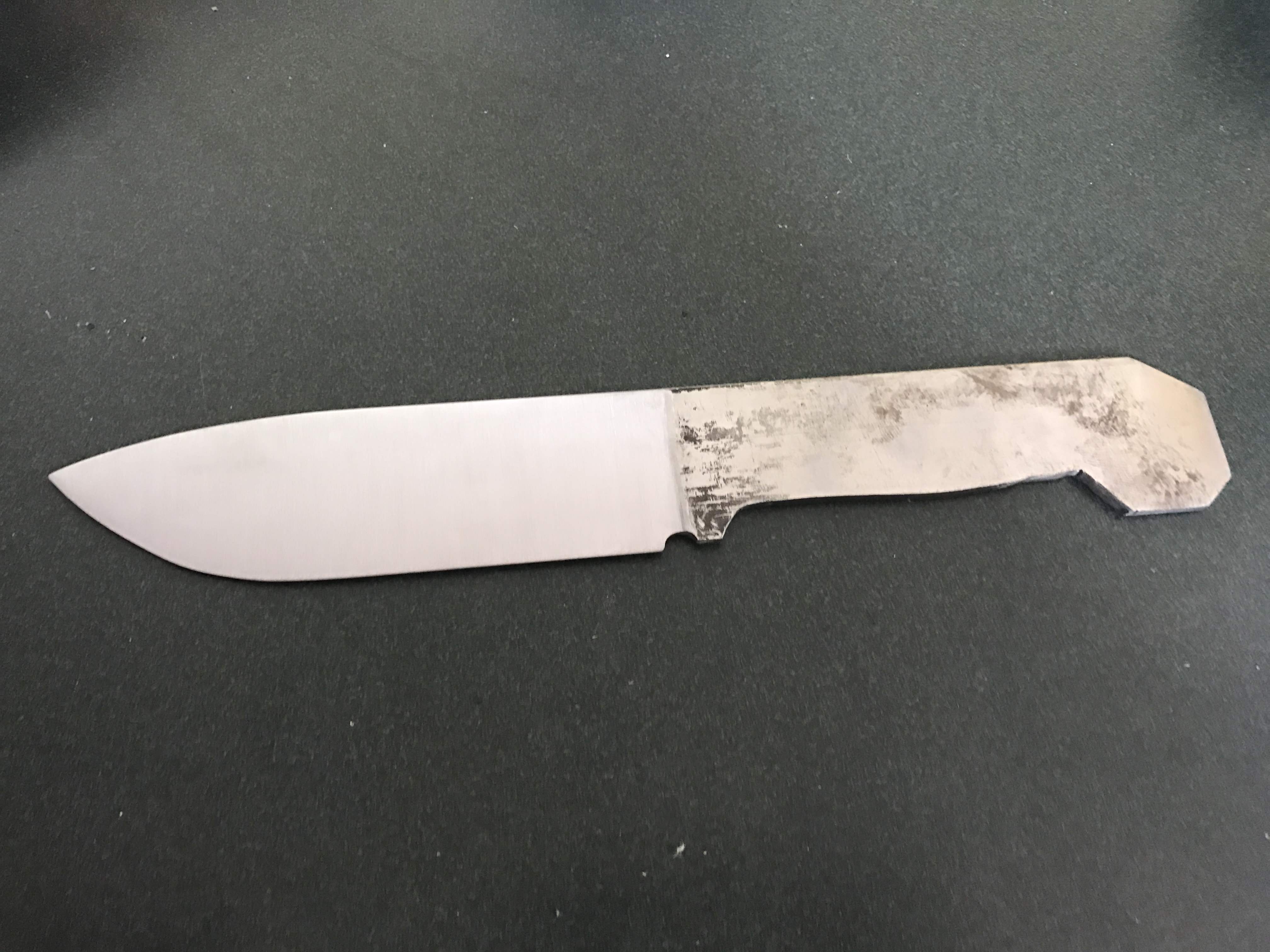
So I finally bit the bullet and heat treated both knives. We used an oxyacetylene torch. The small one was quite easy and has a very minor warp that in all honesty might have been there before heating. We quenched in canola oil.

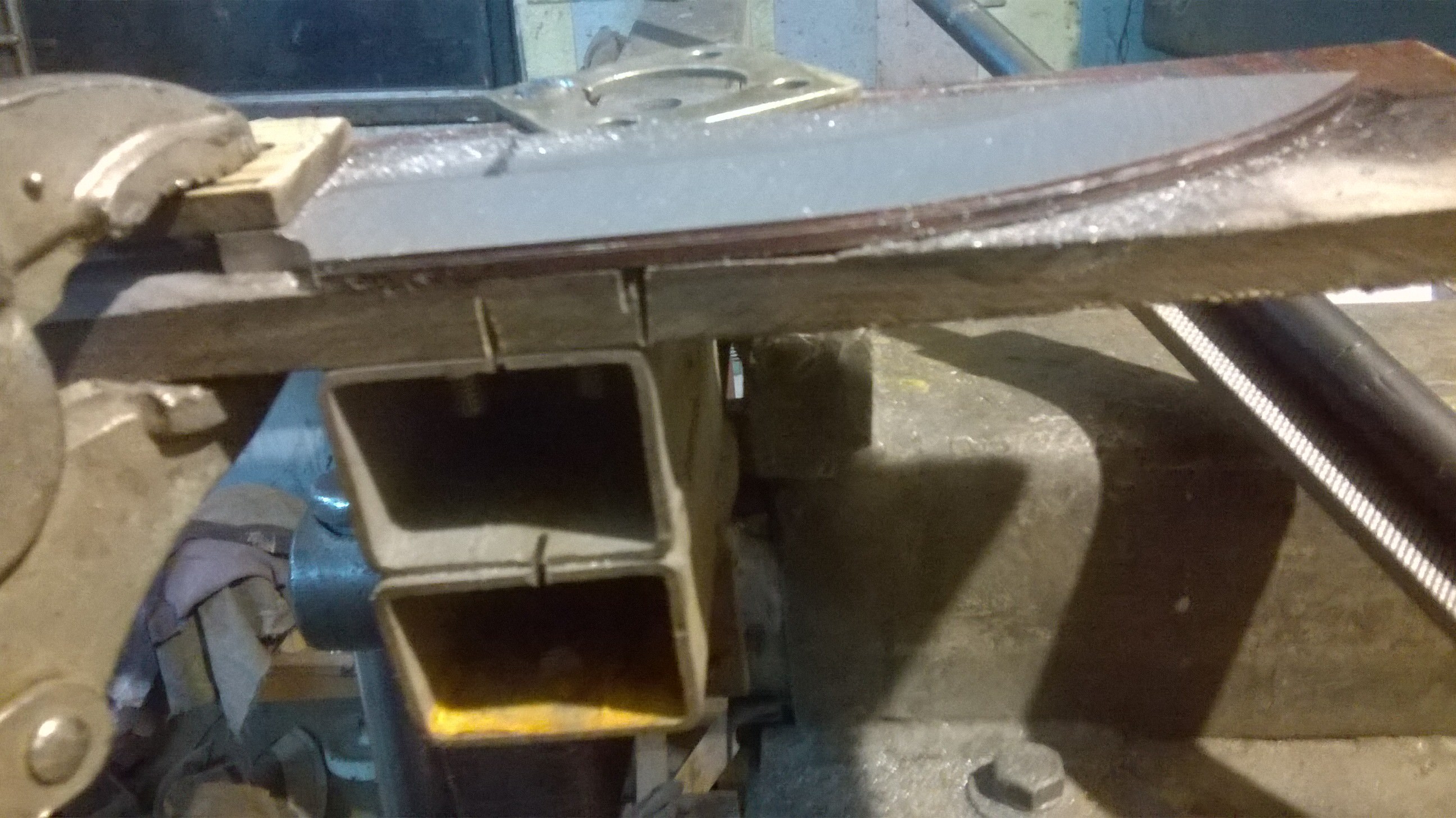
The larger knife wasn't as easy We ended up coming at it from both ends, one with the oxyacetylene and the other side with a propane torch. We should have flipped the knife periodically because this one warped quite a bit. While it was still hot I stuck it in a vise and straightened it as much as I could. I'm going to try to fix it some more during a tempering cycle but it has a heck of a wobble.

They are going through their first tempering cycle now in my convection oven.
 
Back
Top