Spyderhole - less efficient way to open a knife?

Status
Not open for further replies.
I don't really know what you've been reading. My premise was that for me, the holes don't work as well because they exceed the comfortable motion of my thumb, and asked who else feels that way.

I apologize if my use of the word "inefficient" caused some people to assume that this was about speed so some other factor, but I don't think my opening post left that much to doubt about what was being discussed. Most posters on this thread have not been arguing about much of anything with me or anyone else. There have been a physics discussions, but the only "arguing" other than that is when I have to say "No, I'm not talking about speed. No, not talking about defense," etc.

I'm not even sure what I'm supposed to "let go", except the posts that suggest that I'm trying to screw with people. I'm not.


So, one more time - the knives with holes are harder for me to use. They require more technique/concentration/dexterity/control for me (and some other people who already spoke for themselves), and that seems to be because they generally require a larger motion. And I was curious who else felt that way.

The fact that many people prefer holes and like the way it grabs their thumb is terrific - for them. Their experience, unfortunately, isn't helping my thumb at all. So let me apologize if my thumb is being "argumentative". It is really the only part of me that is arguing for or against holes, since I have not once tried to dissuade anyone who likes holes from their opinion.

Have you tried a smaller model instead? Smaller models will have a smaller arc, so you shouldn't have any trouble.
 
Have you tried a smaller model instead? Smaller models will have a smaller arc, so you shouldn't have any trouble.

The Q I have is pretty small.

Do the smaller knives have a smaller arc due to having smaller holes, or are the scales that much smaller?
 
Smaller Spyderco knives are typically smaller than the larger Spyderco knives; this I know to be true.

I also know that the two Military's, four Endura's, three PM2's, three Gayle Bradley's, two Police II's, two Police III's and gaggle of other spyderco folders I've owned opened quickly enough.

PS; I cannot think of any one-handed opening folder that doesn't open quickly enough for me at least; thumbstud, hole, flippa or whatever.

AFAIK,YMMV; IMHO. ;):thumbup:
 
It is less efficient because it requires a greater "thumb reach" from the simple fact that the thumb "sinks" into the hole, shortening its reach, whereas on a stub it is stopped much sooner and in effect makes the thumb "longer". It is an obvious effect, and I noticed it from the very start...

Also the stud, being smaller in diameter, can have its center closer to the pivot point, meaning a smaller arc, all else being equal.

There is no doubt in my mind the Spyderhole simply asks for significantly more reach and motion to open.

The big advantage of the Spyderhole is it affects the function of the knife not at all, offering no protrusion, and that is why I still like them. Also, in my experience, the thumb stud being a protrusion, it can be tugged at by the pocket fabric or other items, making it a poor combination with a typical liner lock, due to the risk of partial opening. A Spyderhole and lockback is the safest possible combination, while a thumb stud and liner lock is the worse.

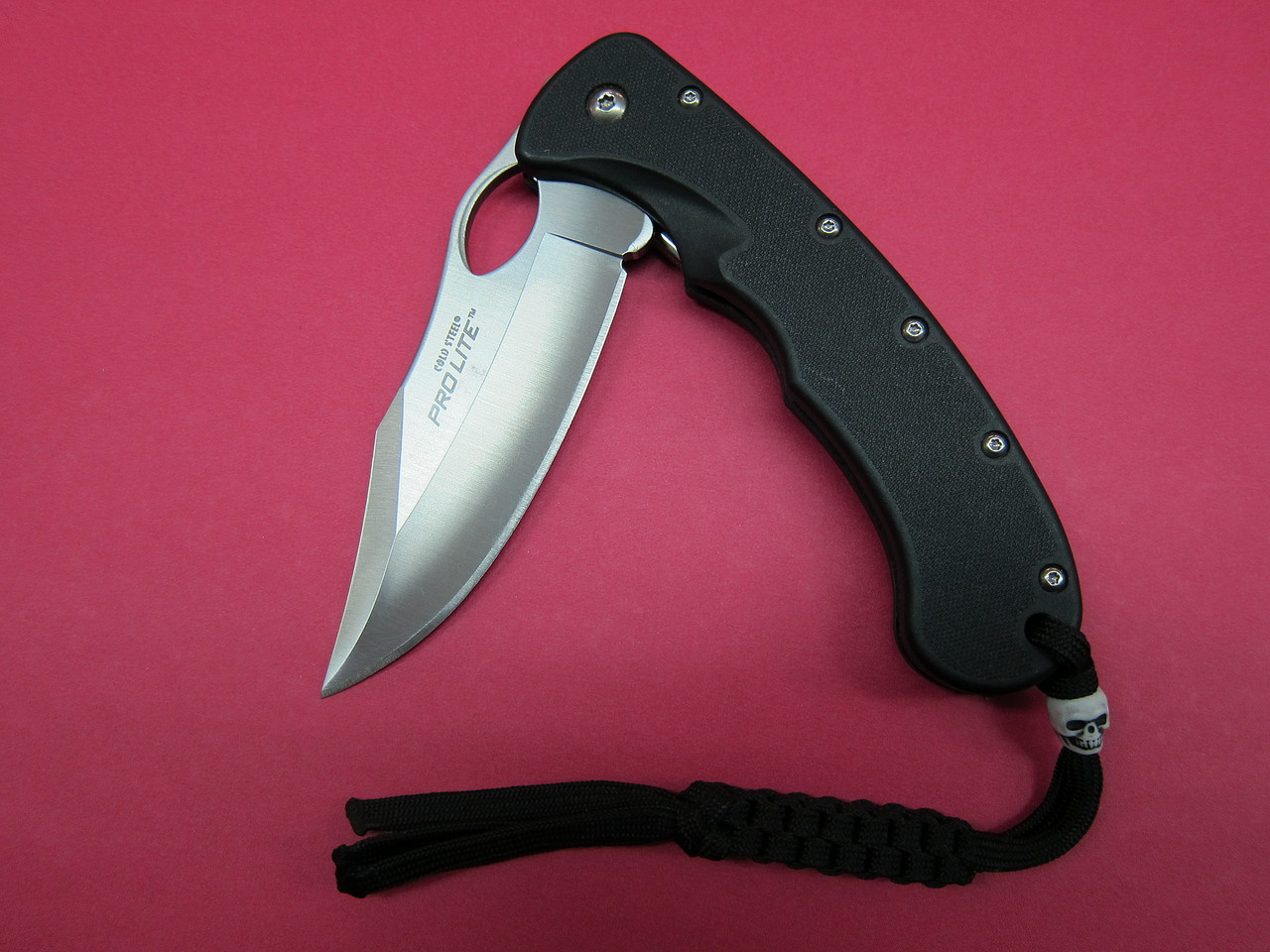
The most efficient "Spyderhole" I have seen was a variation of the design I have used for years on the Cold Steel "Pro Lite" series, where the hole was squeezed into an oval, which greatly reduced some of the height/reach issues:

12500C91D22C4F9A7FB3244F9A7E28.jpg


That particular range of knives were to me the best folders I have ever seen or used, and I usually hate liner locks...

I have big hands, so if the reach issue is noticeable to me it should be noticeable for most...

Gaston
 
I have big hands, so if the reach issue is noticeable to me it should be noticeable for most...

Gaston

I've never noticed it so I guess I am not in the "most" category. And if this much extra exertion on folk's poor little thumbs is such a problem, why is Spyderco selling so many knives? And hey, there are a ton of other companies to buy from so I guess I am wondering what the problem is? It seems some people just need something to complain and argue about. It is personal preference. Like the thumb hole buy it. Don't like the thumb hole don't buy it. So simple.
 
I stuck in my thumb and pulled out a plumb. Am I doing something wrong?
 
There's obviously a fine line between opinion and debate. Ask and you shall receive....something. To me, this is an interesting thread, but demonstrates that if you are seeking affirmation of an opinion this may not be the best place to find it. It is, after all, a "discussion" forum. By the way, I like Spydie holes and don't find them problematic in any way on an edc. (Wouldn't have one on a custom, though.)
 
For me the hole is more efficient do to less wasted energy since my thumb does not slip off when opening the knife.
Ever.

As I have more knives made by Spyderco than any other brand, it is also more efficient at getting cash out of my wallet. :)
 
Remember they sell the holes too. You could just buy one and glue it in.

Donuts are also the least efficient pastry.
 
It is less efficient because it requires a greater "thumb reach" from the simple fact that the thumb "sinks" into the hole, shortening its reach, whereas on a stub it is stopped much sooner and in effect makes the thumb "longer". It is an obvious effect, and I noticed it from the very start...

Also the stud, being smaller in diameter, can have its center closer to the pivot point, meaning a smaller arc, all else being equal.

There is no doubt in my mind the Spyderhole simply asks for significantly more reach and motion to open.

The big advantage of the Spyderhole is it affects the function of the knife not at all, offering no protrusion, and that is why I still like them. Also, in my experience, the thumb stud being a protrusion, it can be tugged at by the pocket fabric or other items, making it a poor combination with a typical liner lock, due to the risk of partial opening. A Spyderhole and lockback is the safest possible combination, while a thumb stud and liner lock is the worse.

The most efficient "Spyderhole" I have seen was a variation of the design I have used for years on the Cold Steel "Pro Lite" series, where the hole was squeezed into an oval, which greatly reduced some of the height/reach issues:

12500C91D22C4F9A7FB3244F9A7E28.jpg


That particular range of knives were to me the best folders I have ever seen or used, and I usually hate liner locks...

I have big hands, so if the reach issue is noticeable to me it should be noticeable for most...

Gaston

Wow, I have the complete opposite experience. I have larger hands and find the hole to be much smoother and more efficient to use rather than having to contort my thumb in to open studded knives. Also, interesting how the OP talked about all the weird opening methods you can do with Spydercos. To me that shows efficiency, no matter which way I pull the knife out of my pocket I can grab the hole and open it.
 
The Q I have is pretty small.

Do the smaller knives have a smaller arc due to having smaller holes, or are the scales that much smaller?

They use several hole sizes. The smaller knives use smaller holes and the hole is closer to the pivot, making the arc smaller. I mentioned the Ladybug a few posts back because it's the smallest easily available Spyderco I own. The arc is small and your thumb can't sink into the hole because it's not very large compared to the regular size hole.
 
It is less efficient because it requires a greater "thumb reach" from the simple fact that the thumb "sinks" into the hole, shortening its reach, whereas on a stub it is stopped much sooner and in effect makes the thumb "longer". It is an obvious effect, and I noticed it from the very start...

Also the stud, being smaller in diameter, can have its center closer to the pivot point, meaning a smaller arc, all else being equal.

There is no doubt in my mind the Spyderhole simply asks for significantly more reach and motion to open.

The big advantage of the Spyderhole is it affects the function of the knife not at all, offering no protrusion, and that is why I still like them. Also, in my experience, the thumb stud being a protrusion, it can be tugged at by the pocket fabric or other items, making it a poor combination with a typical liner lock, due to the risk of partial opening. A Spyderhole and lockback is the safest possible combination, while a thumb stud and liner lock is the worse.

The most efficient "Spyderhole" I have seen was a variation of the design I have used for years on the Cold Steel "Pro Lite" series, where the hole was squeezed into an oval, which greatly reduced some of the height/reach issues:

12500C91D22C4F9A7FB3244F9A7E28.jpg


That particular range of knives were to me the best folders I have ever seen or used, and I usually hate liner locks...

I have big hands, so if the reach issue is noticeable to me it should be noticeable for most...

Gaston

The larger arc is more efficient in that it requires less force. Torque is force times distance. Larger distance with the same force yields more applied torque. It takes less force to reach the necessary torque for opening because of the additional distance from the pivot.

So this actually makes the Spyderhole more efficient, not less.
 
Wow, I have the complete opposite experience. I have larger hands and find the hole to be much smoother and more efficient to use rather than having to contort my thumb in to open studded knives. Also, interesting how the OP talked about all the weird opening methods you can do with Spydercos. To me that shows efficiency, no matter which way I pull the knife out of my pocket I can grab the hole and open it.


5277314+_8d74f72636a83b499fb8d838bc93909e.gif


Logic levels intensify m'lord... ;):thumbup::D
 
They use several hole sizes. The smaller knives use smaller holes and the hole is closer to the pivot, making the arc smaller. I mentioned the Ladybug a few posts back because it's the smallest easily available Spyderco I own. The arc is small and your thumb can't sink into the hole because it's not very large compared to the regular size hole.

The larger arc is more efficient in that it requires less force. Torque is force times distance. Larger distance with the same force yields more applied torque. It takes less force to reach the necessary torque for opening because of the additional distance from the pivot.

So this actually makes the Spyderhole more efficient, not less.

5277314+_8d74f72636a83b499fb8d838bc93909e.gif


Logic levels intensify m'lord... ;):thumbup::D


Quoted myself and the other excellent statements just because... :cool::rolleyes::foot::D

Once you go hole you never go back.

13486-v1-490x.JPG
 
They use several hole sizes. The smaller knives use smaller holes and the hole is closer to the pivot, making the arc smaller. I mentioned the Ladybug a few posts back because it's the smallest easily available Spyderco I own. The arc is small and your thumb can't sink into the hole because it's not very large compared to the regular size hole.
Just throwing it in there, one of my favorite things about the ladybug and one of the reasons I think it's such a great design is that it's so easy to open and close even in such a small size.
 
Knives utilizing the "hole" don't even yield under pressure...

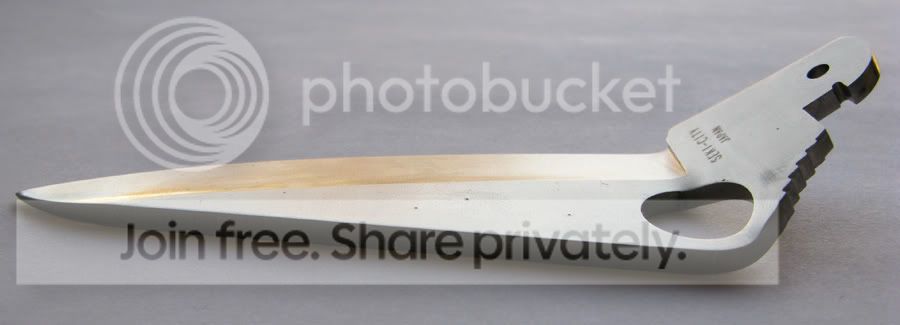
BentH1_3.jpg


True story. ;):p:cool:


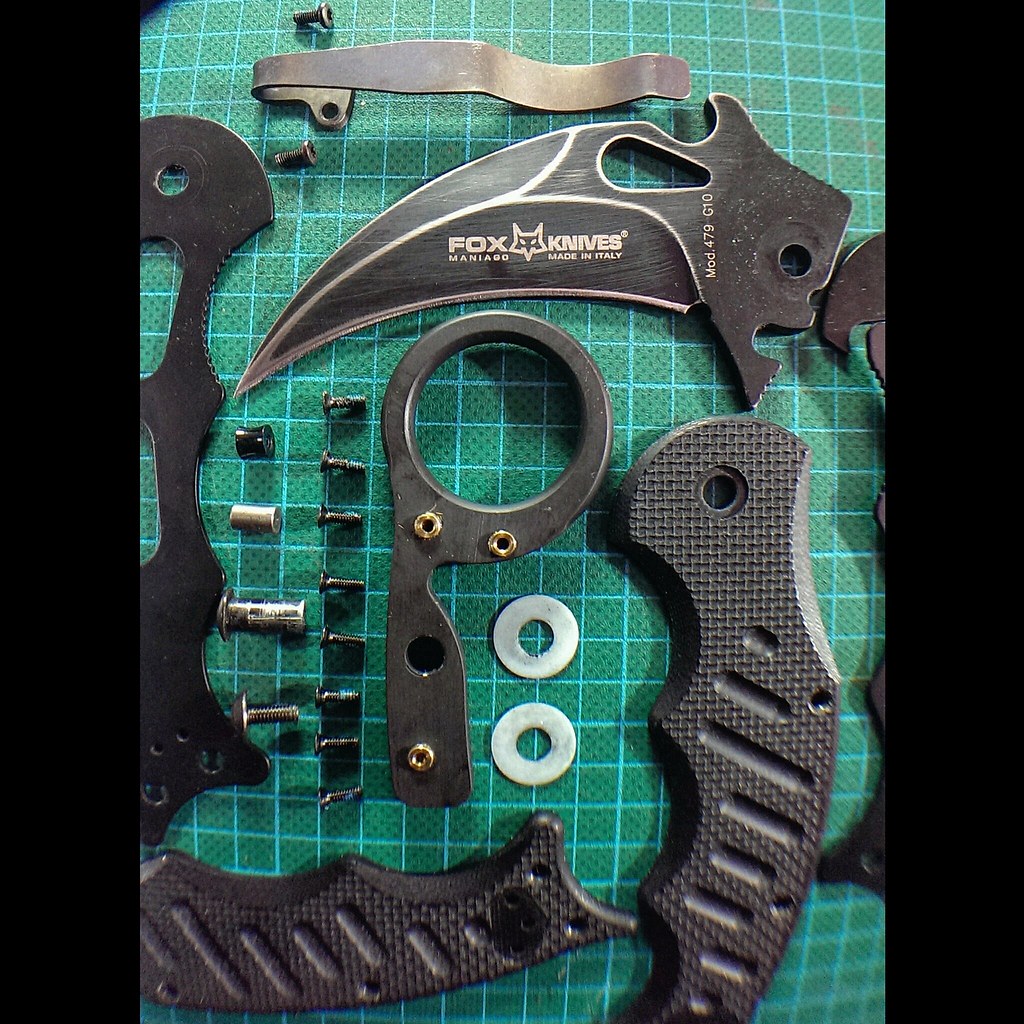
Also; a bad example of a wannabe spydie hole. ( Sorry fox, it doesn't work LOL.) :thumbdn::grumpy::rolleyes:

24046127404_e96252b28b_b.jpg
 
The larger arc is more efficient in that it requires less force. Torque is force times distance. Larger distance with the same force yields more applied torque. It takes less force to reach the necessary torque for opening because of the additional distance from the pivot.

So this actually makes the Spyderhole more efficient, not less.

Unless we are talking a very stiff lock back, there is always enough thumb strength to deploy a blade, regardless of leverage. With most liner locks leverage is not an issue at all: What is an issue is the aggressiveness of purchase: Properly made thumb studs offer an earlier, more aggressive purchase for a shorter arc, which is also related to why they interfere a little more with blade use, and also are more prone to partial self-opening...

If you are looking at a hurried deployment from a Spyderco, while not looking, and if you do not center your thumb correctly to the hole, you will get a partial opening, and then your thumb slips off before completing the inherently more prolonged arc: This is less common if you look at your hand, but doing it blind can easily have the thumb off-centered, and it then nearly always slips off before a full opening (at least on the large Civilian or Police 4" plus Models).

Practice of course improves this, but it is an inherent downside: It seems to me this was a little less noticeable on the Cold Steel Pro Lite oval hole, but I couldn't swear to it.

In a hurry and without looking, the hole is inherently a more error-prone opening, but the gain is a sleeker blade with no interference to deep cutting: It is a more than fair trade, and I am not saying it is in any way a bad choice, just that the downsides of thumb studs also have undeniable upsides...

The downside to thumb studs is precisely their purchase aggressiveness, which combines poorly with liner locks and might cause a partial in-pocket opening: A thumb stud with lock back is safer but they are not that common, and a stiff one could feel hard to open as you point out, due to a lack of leverage.

It is all a matter of degree.

Unless what you are saying is that the hole is always superior to thumb studs across the entire range of qualities?

Gaston
 
Gaston, :rolleyes:.
Unless we are talking a very stiff lock back, there is always enough thumb strength to deploy a blade, regardless of leverage. With most liner locks leverage is not an issue at all: What is an issue is the aggressiveness of purchase: Properly made thumb studs offer an earlier, more aggressive purchase for a shorter arc, which is also related to why they interfere a little more with blade use, and also are more prone to partial self-opening...

If you are looking at a hurried deployment from a Spyderco, while not looking, and if you do not center your thumb correctly to the hole, you will get a partial opening, and then your thumb slips off before completing the inherently more prolonged arc: This is less common if you look at your hand, but doing it blind can easily have the thumb off-centered, and it then nearly always slips off before a full opening (at least on the large Civilian or Police 4" plus Models).

Practice of course improves this, but it is an inherent downside: It seems to me this was a little less noticeable on the Cold Steel Pro Lite oval hole, but I couldn't swear to it.

In a hurry and without looking, the hole is inherently a more error-prone opening, but the gain is a sleeker blade with no interference to deep cutting: It is a more than fair trade, and I am not saying it is in any way a bad choice, just that the downsides of thumb studs also have undeniable upsides...

The downside to thumb studs is precisely their purchase aggressiveness, which combines poorly with liner locks and might cause a partial in-pocket opening: A thumb stud with lock back is safer but they are not that common, and a stiff one could feel hard to open as you point out, due to a lack of leverage.

It is all a matter of degree.

Unless what you are saying is that the hole is always superior to thumb studs across the entire range of qualities?

Gaston
 
If you are looking at a hurried deployment from a Spyderco, while not looking, and if you do not center your thumb correctly to the hole, you will get a partial opening, and then your thumb slips off before completing the inherently more prolonged arc: This is less common if you look at your hand, but doing it blind can easily have the thumb off-centered, and it then nearly always slips off before a full opening (at least on the large Civilian or Police 4" plus Models).

Practice of course improves this, but it is an inherent downside: It seems to me this was a little less noticeable on the Cold Steel Pro Lite oval hole, but I couldn't swear to it.

In a hurry and without looking, the hole is inherently a more error-prone opening, but the gain is a sleeker blade with no interference to deep cutting: It is a more than fair trade, and I am not saying it is in any way a bad choice, just that the downsides of thumb studs also have undeniable upsides...

The downside to thumb studs is precisely their purchase aggressiveness, which combines poorly with liner locks and might cause a partial in-pocket opening: A thumb stud with lock back is safer but they are not that common, and a stiff one could feel hard to open as you point out, due to a lack of leverage.

It is all a matter of degree.

From where are you pulling these "facts"?
 
Status
Not open for further replies.
Back
Top