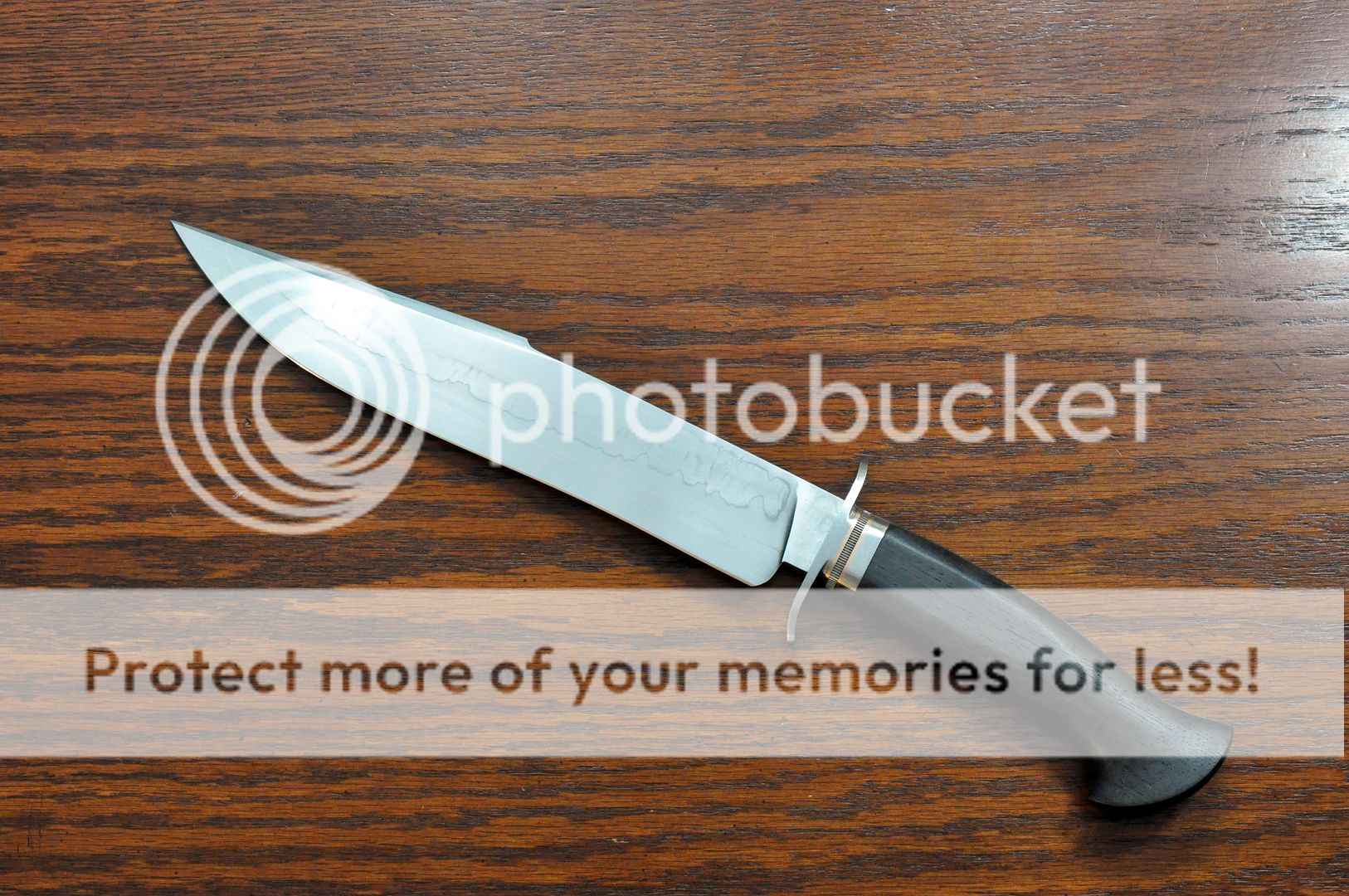
Thank you fiddleback, there in is a good example. Not to cut down my own work, but most if US know where the problems are on our own work. For these two, the primary focus was speed. I did the best job I could in the short time I had. There were minor flaws that in no way affect function.
The following is in the context of MS submission and my own point of view.
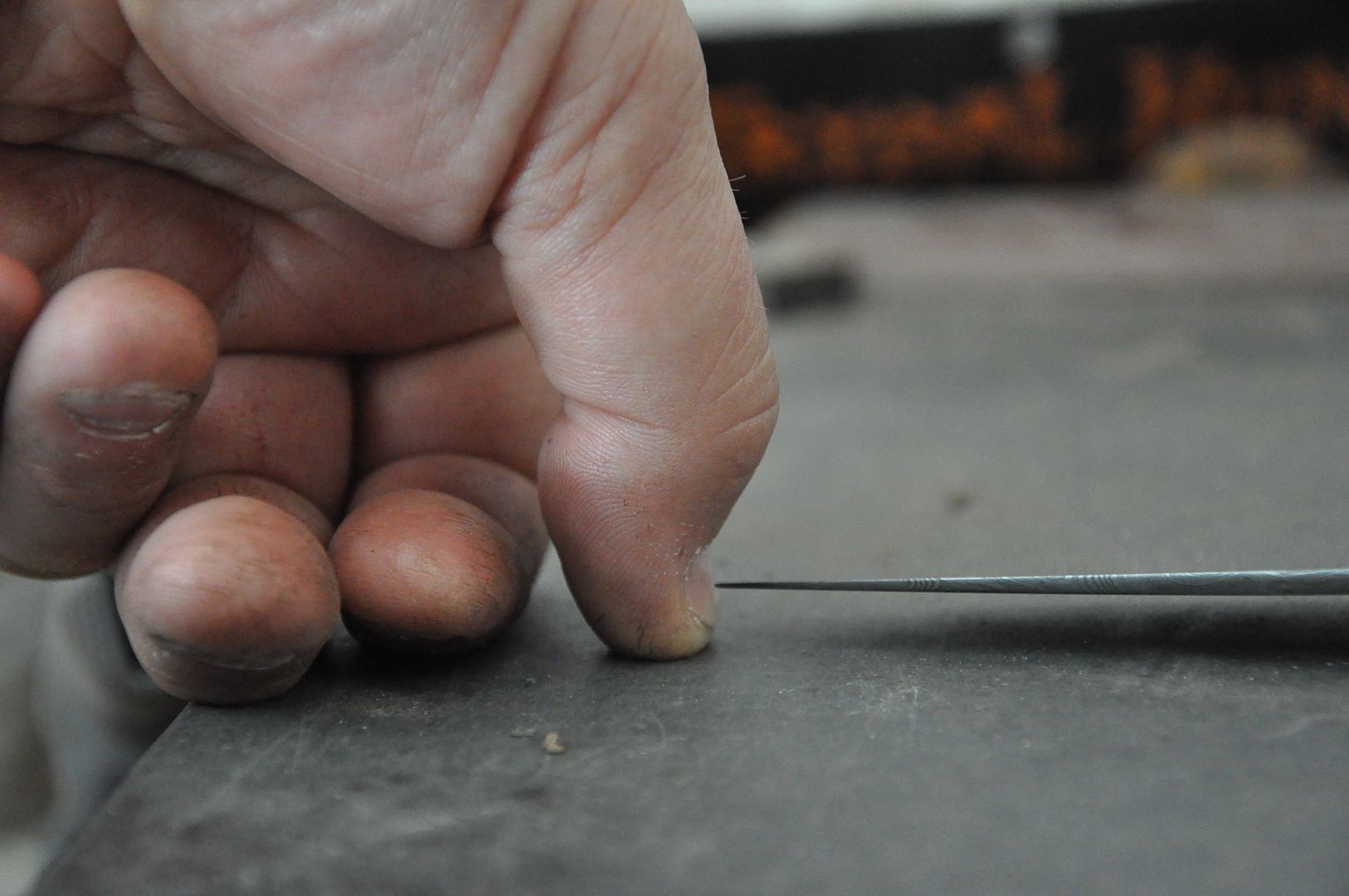
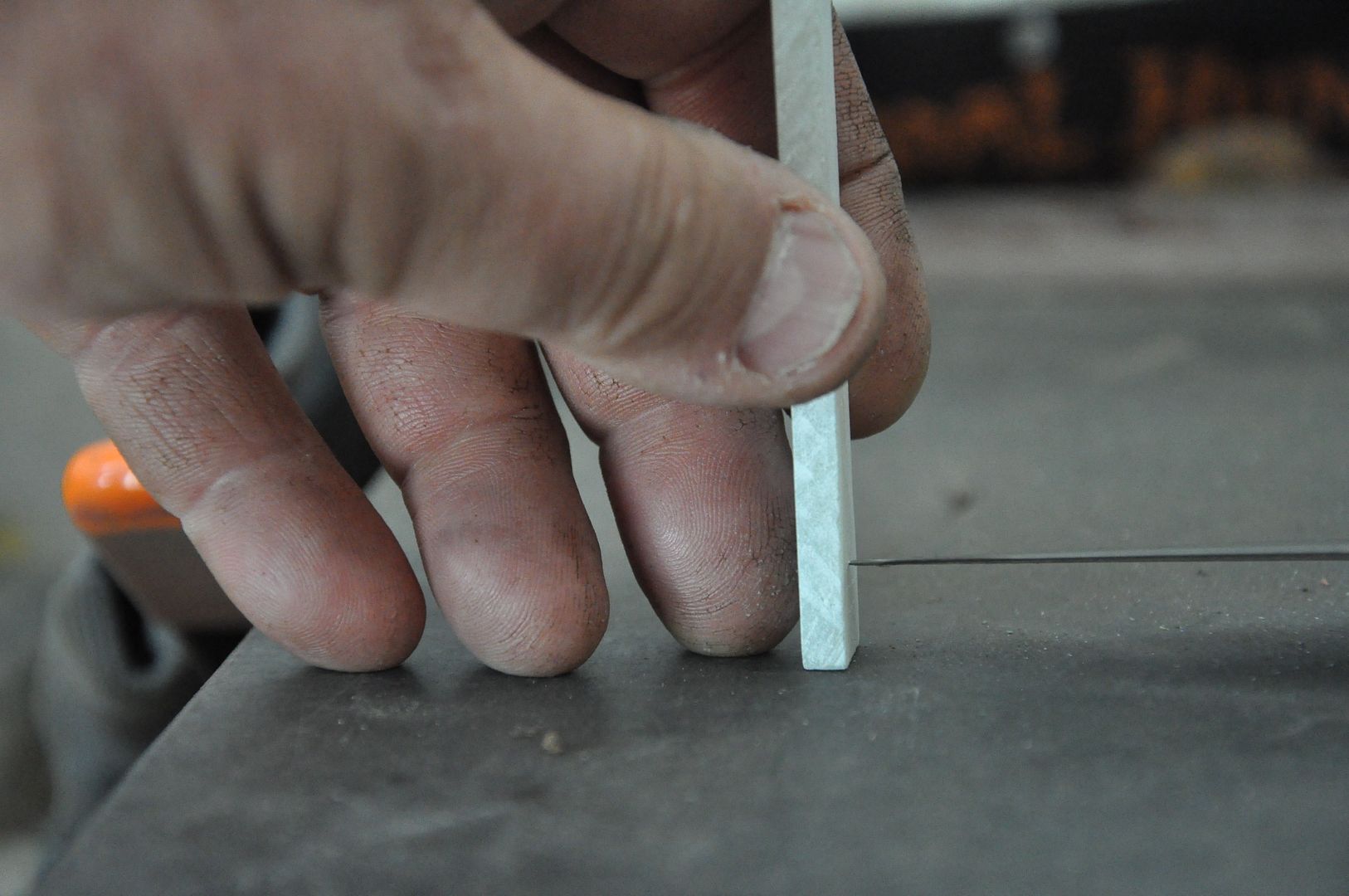
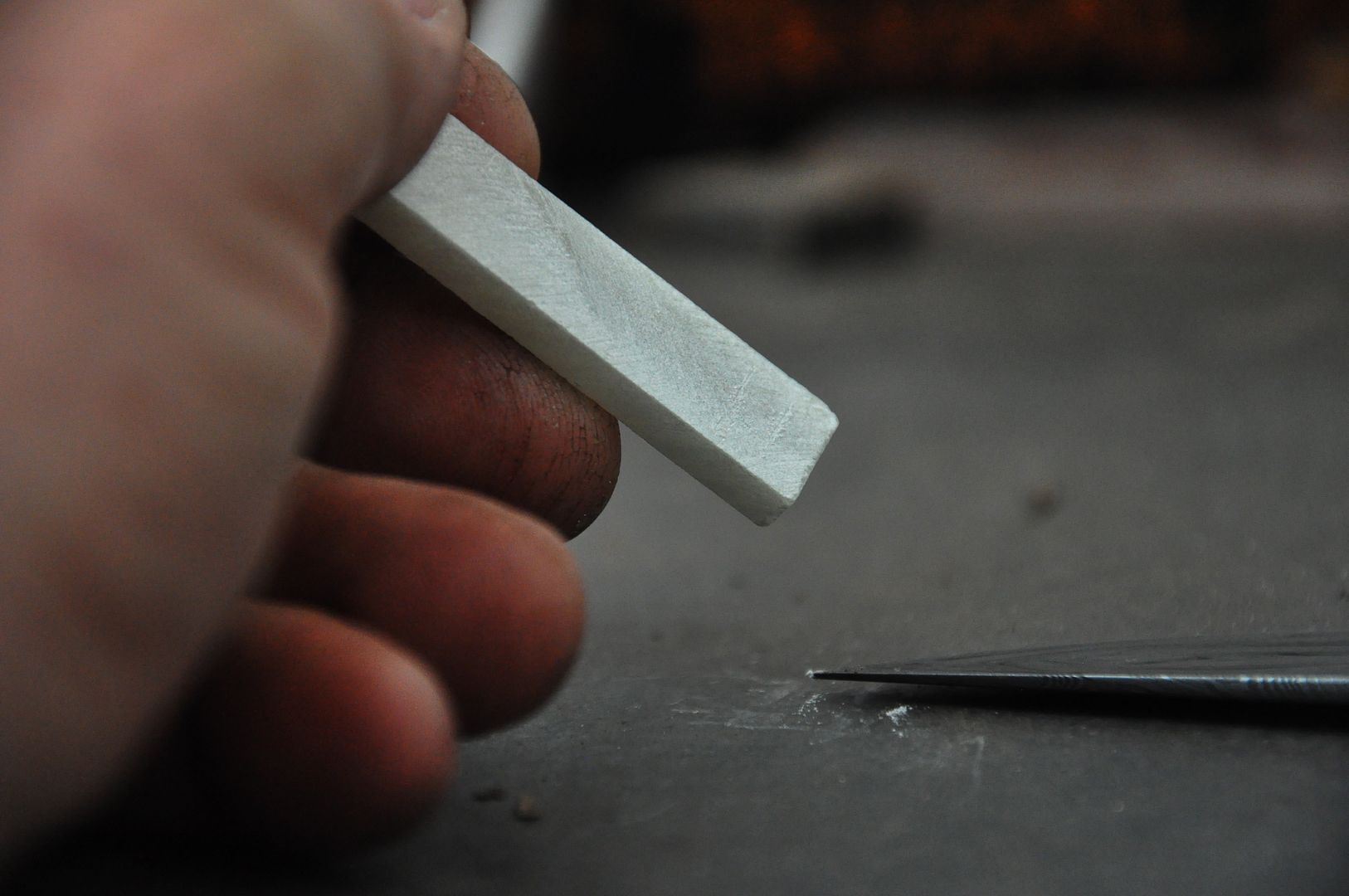
The Damascus bowie. The pattern is not consistent ie it is kind of smashed at the belly. I personally would never submit a knife with a handle like this due to the impossibility of getting the symmetry the judges are looking for, no reason to given them something to fail you on. The plunges, though I think they were pretty darned close I did not take the time to verify they were as close to exact as possible. And finally another reason not to use this type handle material, I am not positive it would have passed the old thumbnail test for overall straightness.
The big bowie. Now I have to admit, this one is close. Some problems I saw on very close scrutiny were,
The clip bevels are not perfectly even. The left side was a bit heavier. This one should have passed the thumbnail test but I did not actually check it. There was a possibility on this one also of the plunges being slightly off. They looked really close but taken the time and with the micrometer eyes of the judges may have been off enough to get a strike.
Now let me say, there is nothing "WRONG" with either of these knives. I just did not look at them with and eye for the MS test. Yes it makes a difference. The plunges off by .010 would be ok on most knives but not on an MS submission. Would any one of these flaws have failed me? Probably not, however the combination of them might have. I hope this illustrates at least my pov of what we need to think about when getting ready for testing.