The "Gunflint" Bowie

BTW- Where did you get that disc sander? Looks like some pics I saw of Michael Kanter's disc set-ups.

I traded Michael for the frame this Spring, then went up to his house about a month ago and wired up the controller and motor.
He comes to my house and forges Damascus, so we've got a "thing" goin' on.:eek:

( as a matter of fact, he engineered my press frame, too. He's a friggin' genius)
 
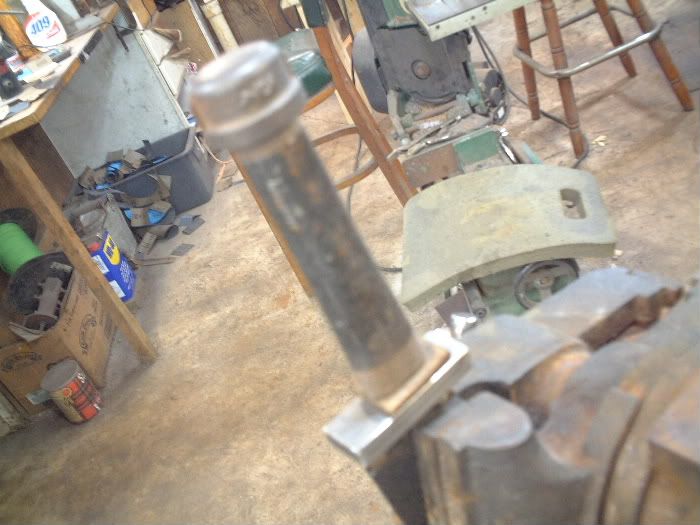
Way cool Karl, THANKS! How do hold that blade tight so it doesn't slip or get marred when you hammer your tang in place?

CDk-1.jpg
 
Way cool Karl, THANKS! How do hold that blade tight so it doesn't slip or get marred when you hammer your tang in place?

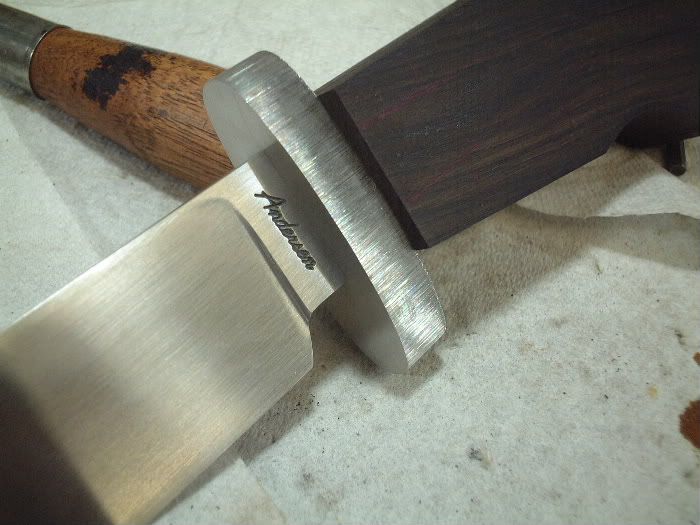
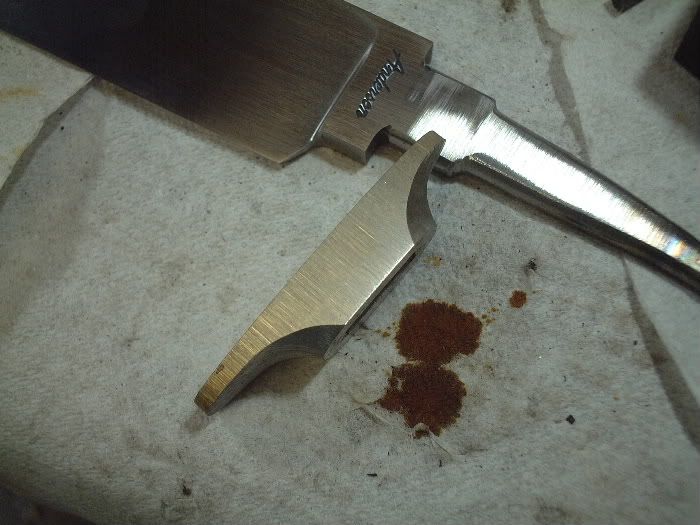
Phil, it's just wrapped in a piece of leather and I'm not really hammering it - it doesn't take much to seat it at this point.
It's milled to fit, it's not milled to not fit.
 
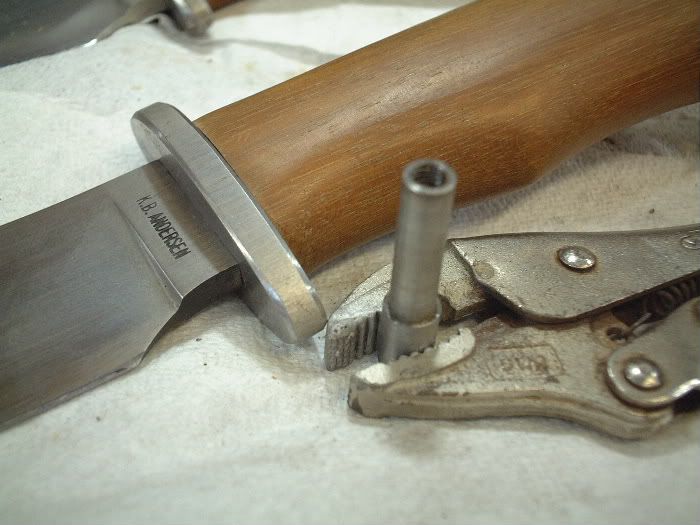
I wanted to take a moment and interject a little philosophy regarding the take-down knife assembly components.
I often sense a little pessimism or distrust of the assembly as I am showing here.
There's no need to fear.
I'll digress a moment and share what I've learned.
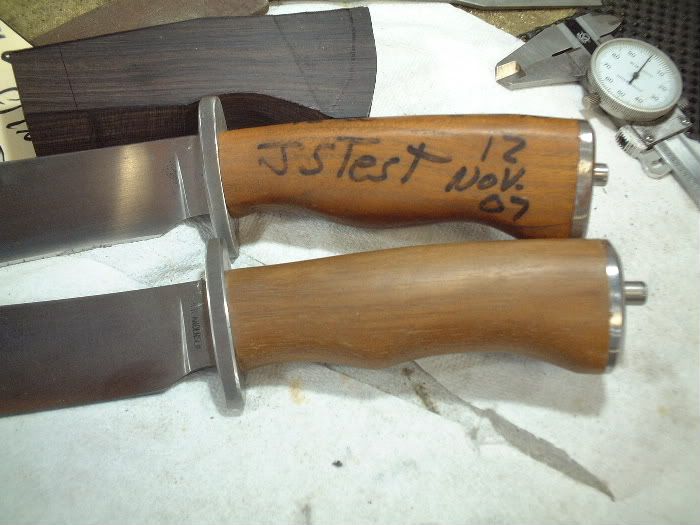
When I did my performance test with DH III in '07, I was determined to build a knife that wouldn't only pass the test, I wanted to defy the test.
I built two knives that would go through the shaving, cutting and shopping, but I wanted knives that could NOT be bent easily.
It took a four foot cheater bar for me to get my knife bent to 90 degrees, and there was a moment there that we were afraid I was going to pull the vise off the wall!
Anyway, both my official test knife and my practice knife were built in the take-down assembly.
When digging up these knives, I found two knives that I built in this fashion that were stamped "KBA" - just initials. That means those knives were made before I ever even got my first name stamp! So I've been building these things regularly for well over a decade and have never had one returned due to failure.
It is my opinion after making literally hundreds of these knives, and abusing countless numbers, that the pinned guard/handle, threaded tang and finial affixed into a solid position, is the single strongest assembly available for the hidden tang knife.
Almost regardless of tang length, when the tang is EXTENDED with a correctly fitted finial, the tang runs COMPLETELY through the length of the handle.
That said, even many other types of assembly provide enough structural integrity that nearly all the knives we make will survive about anything we can put them through.
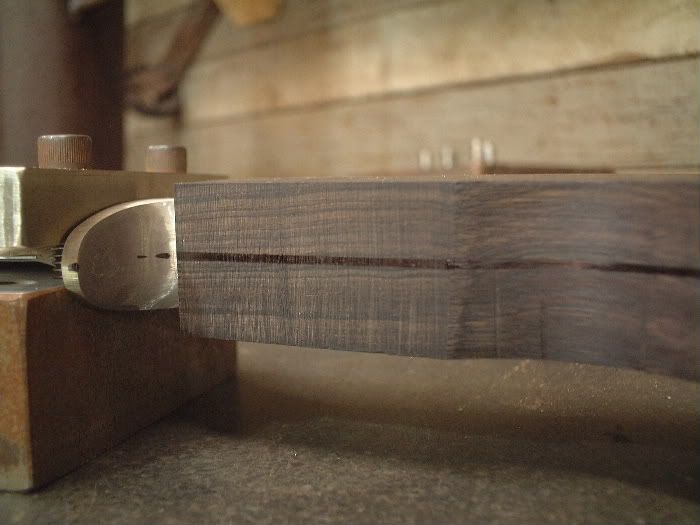
Note that in the last photo, from the ricasso through the guard, handle, than tang and finial, everything remained true and straight as a string after incredible lateral stress.
I stand behind every one I make.


CEj-1.jpg


CEm-1.jpg


CEl-1.jpg


CEk-1.jpg
 
Last edited:
The knife moved on nicely yesterday. But, the 'best made schemes of mice and men oft go awry' - right?
I'll share a moment of knife maker's honesty in a little bit.

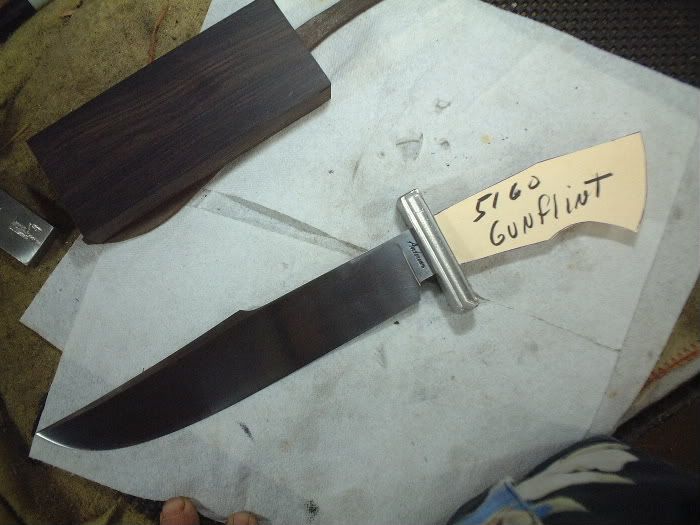
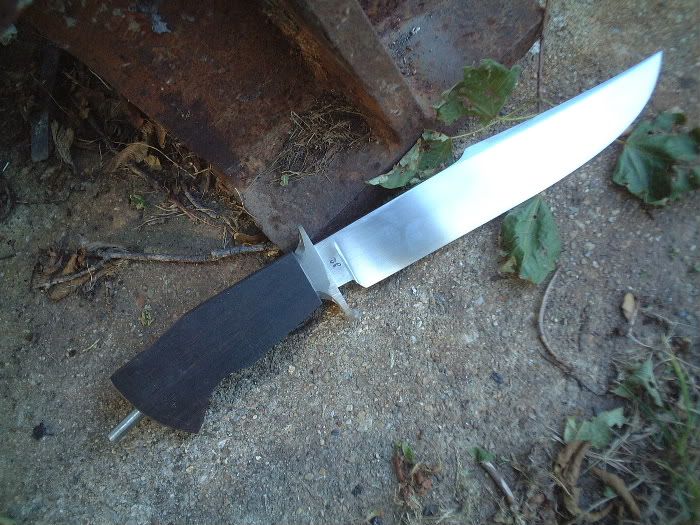
So, this is where we're going:

CEb-1.jpg


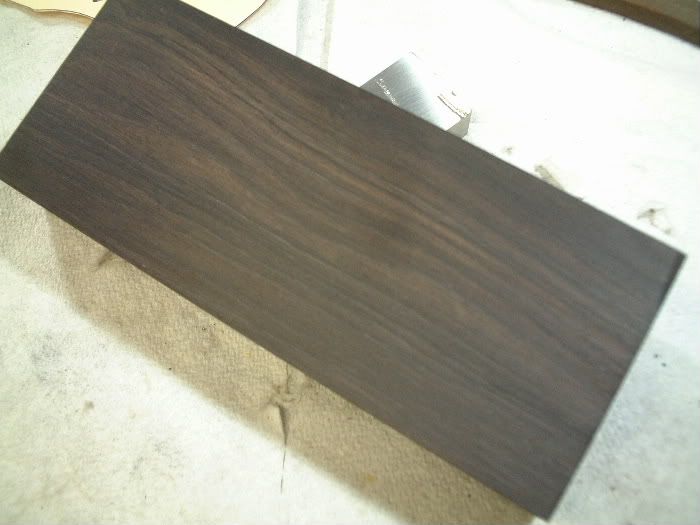
I like to use the Blackwood that has nicely grained variations in it rather than the simple ol' black Blackwood. So I always get the instrument grade:
(Sorry about the camera focus - I'm only doing this once)

CEa-1.jpg


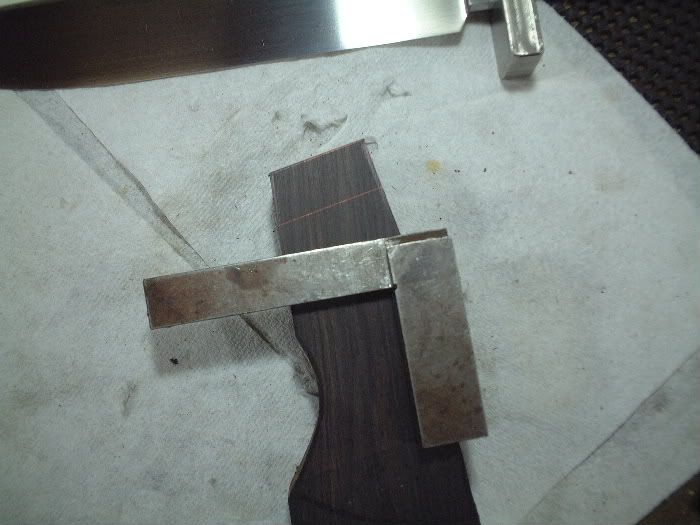
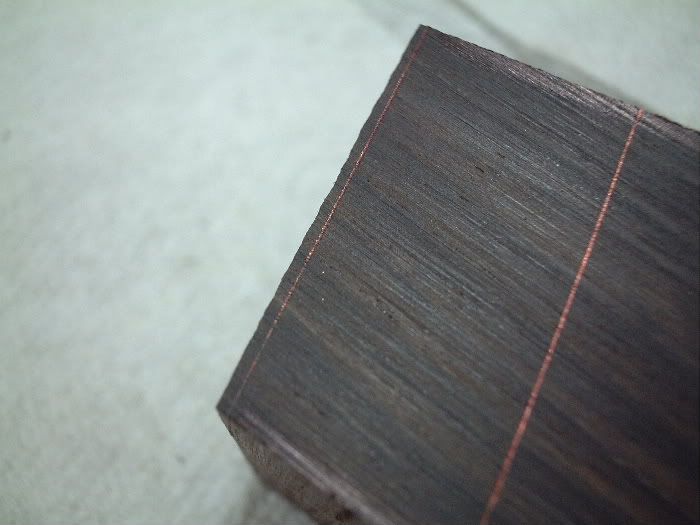
After I cut out the handle profile from the milled handle block, I mark the face cut with a pen on BOTH sides of a machinist square:

CEg-1.jpg


CEc-1.jpg


That way, if I inadvertently remove the front line, or if I don't like how it lines up with the handle-knife alignment, I will always have a reference to go from:

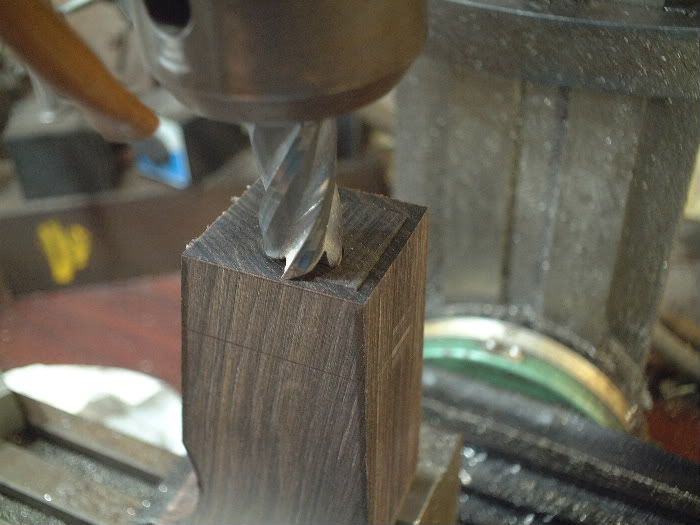
Then, I take it to the mill and mill the handle face:

CEf-1.jpg
 
Last edited:
Couple quick photos here.
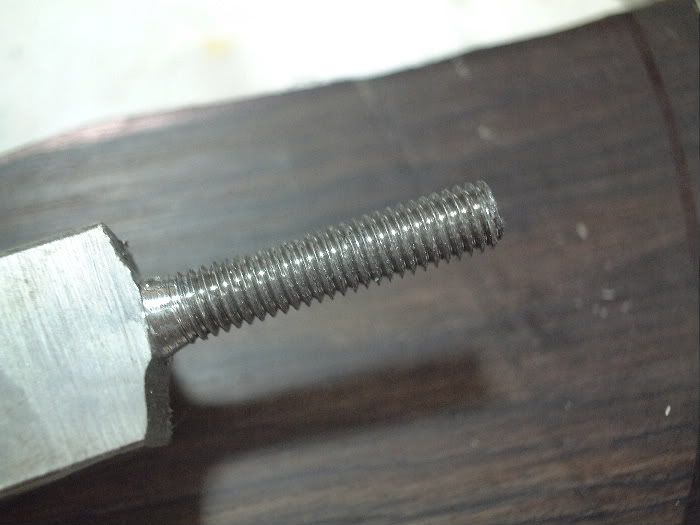
I''ve cut the tang off at the appropriate length and threaded it 10-32:
(I like them to look like a screw from the hardware store):

CEi-1.jpg


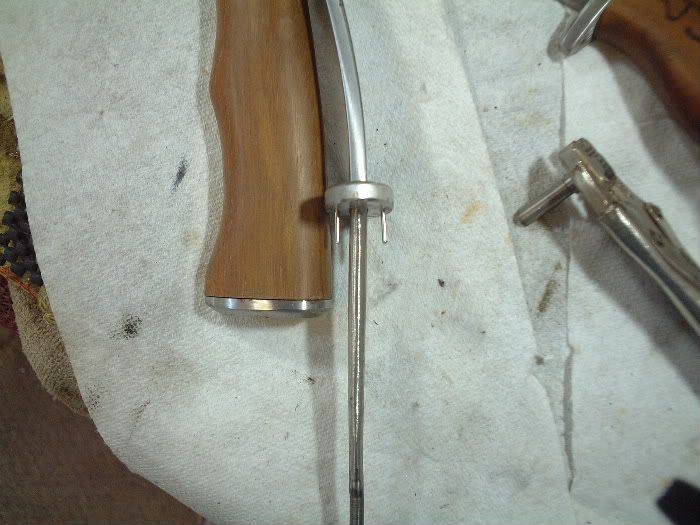
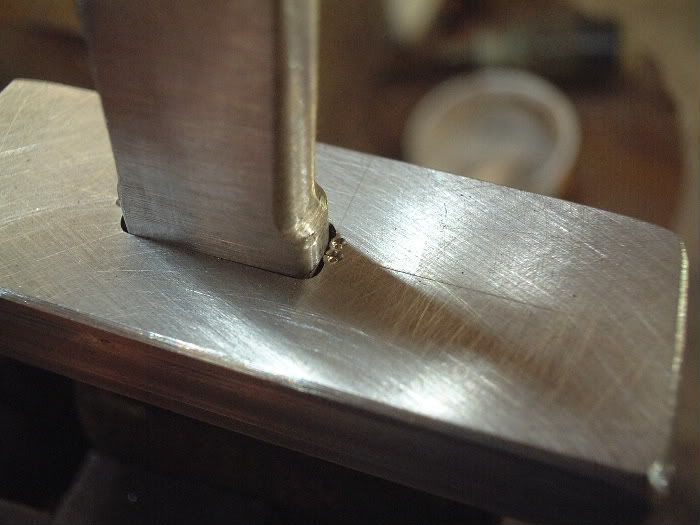
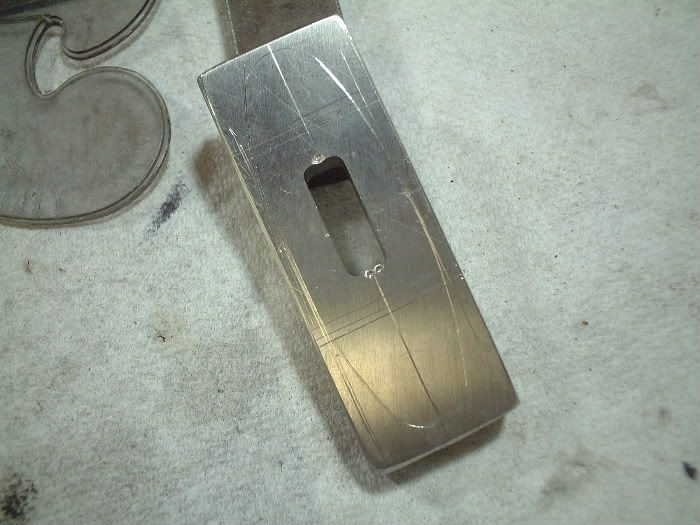
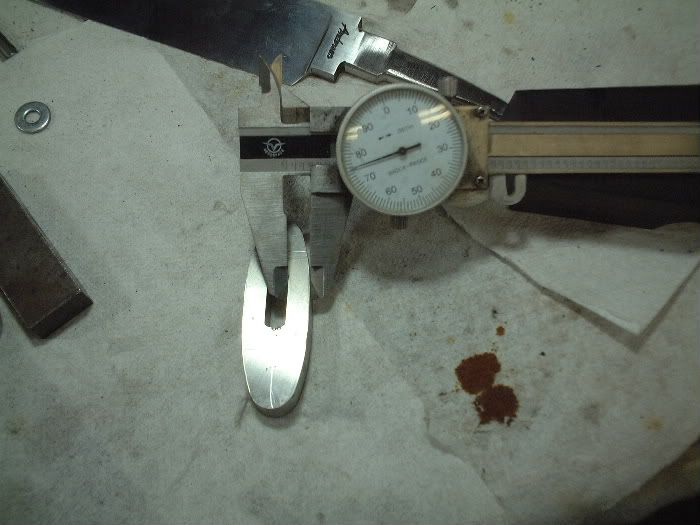
Now, I had the tiniest bit of play up and down in the guard. I need that to be in a really tight position when I get things pinned up, so I peined the top and bottom of the slot to eliminate any play:
(The new owner will see this, so I don't mind showing it here. It's just the way it is.)

CEh-1.jpg
 
Last edited:
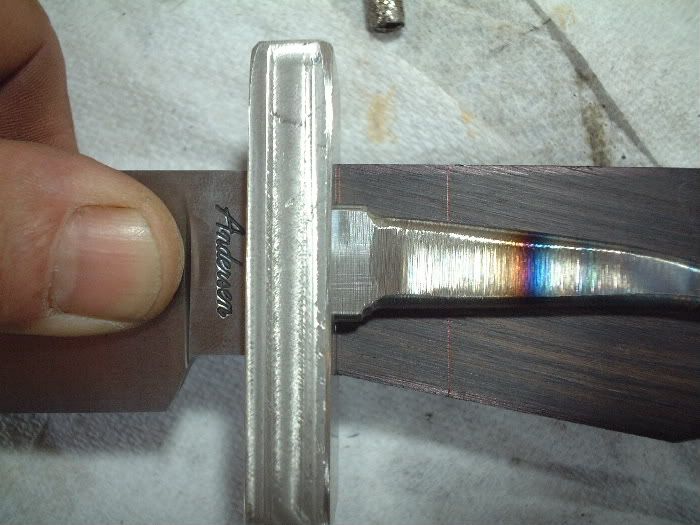
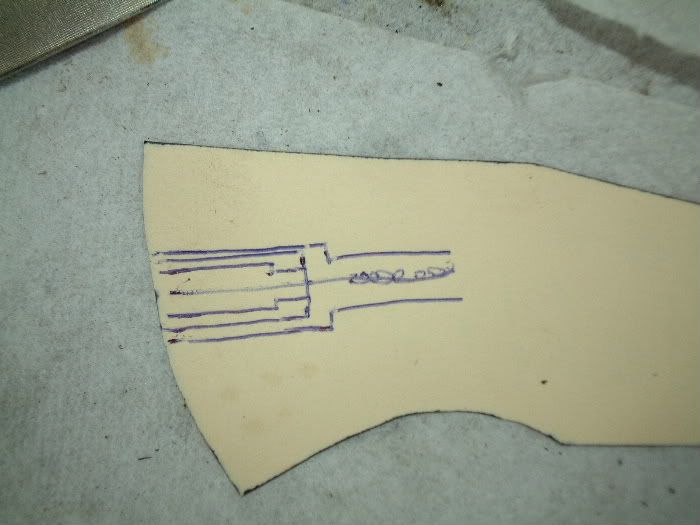
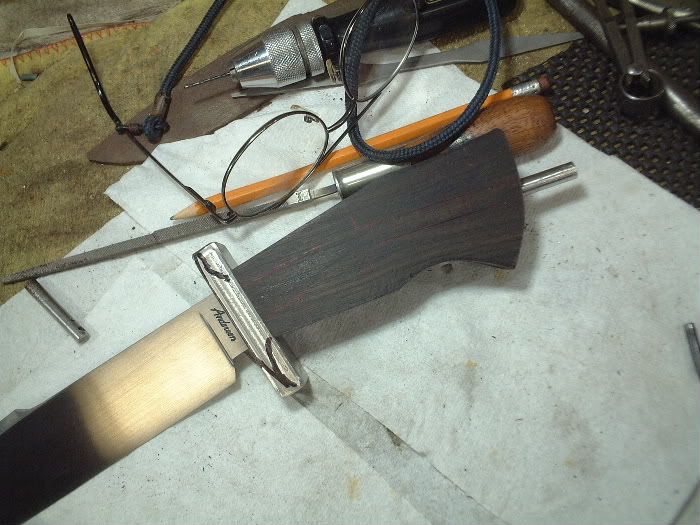
So, with the handle profile the way I like it, I lay the tang on the handle block and make my locations.
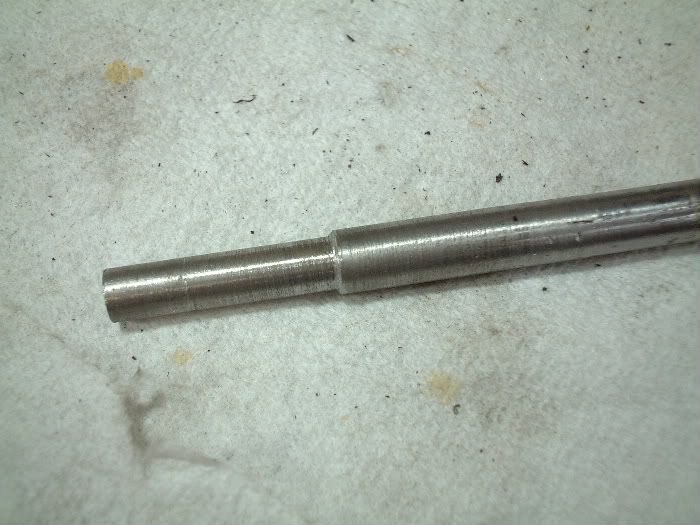
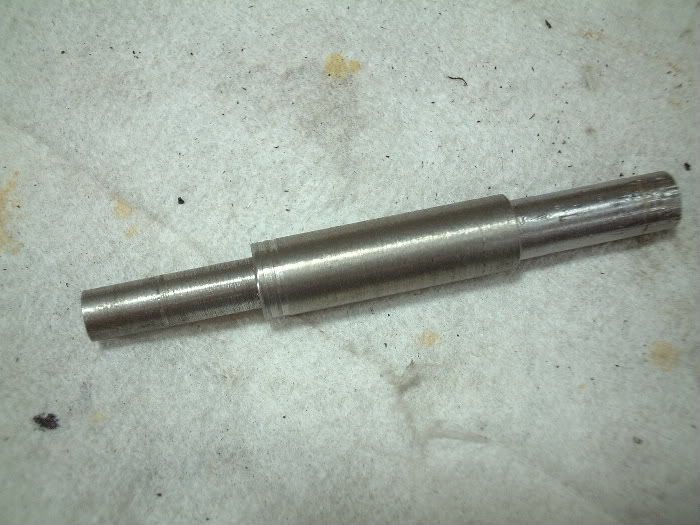
Note that the width of the tang through the guard continues for about 5/16", then steps down.

CEn-1.jpg


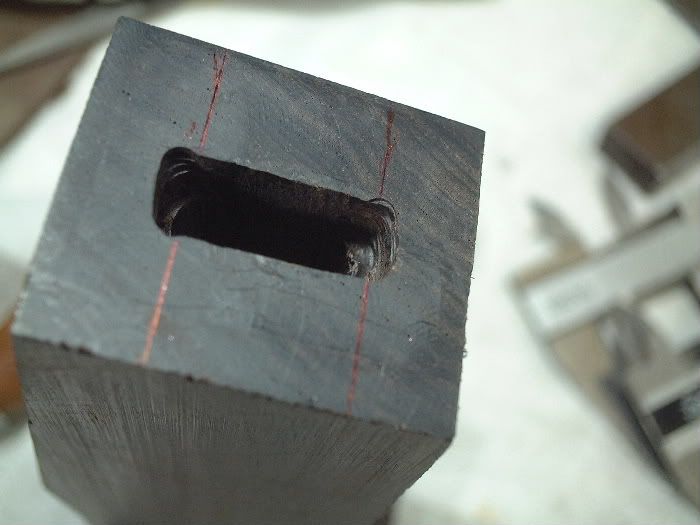
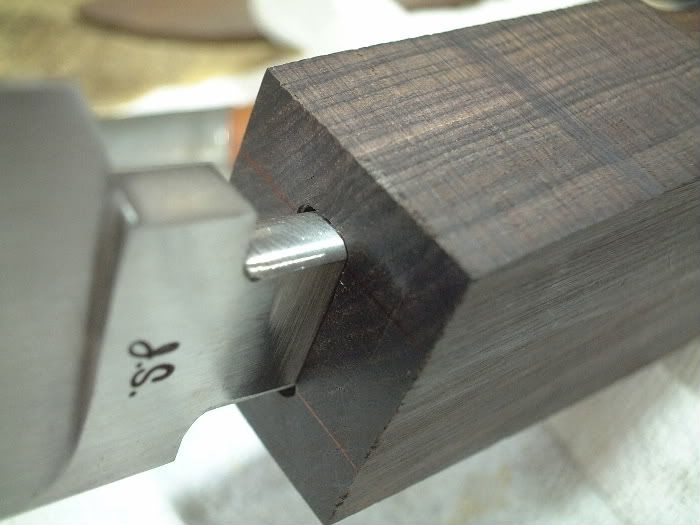
I mill my slot the width of the narrow portion.


CEq-1.jpg


CEr-1.jpg


Then I take a rotary tool and eat out two little pockets to accept the larger portions until they just fit:

CEt-1.jpg


CEs-1.jpg


CEu-1.jpg
 
Last edited:
I forgot a couple pictures:
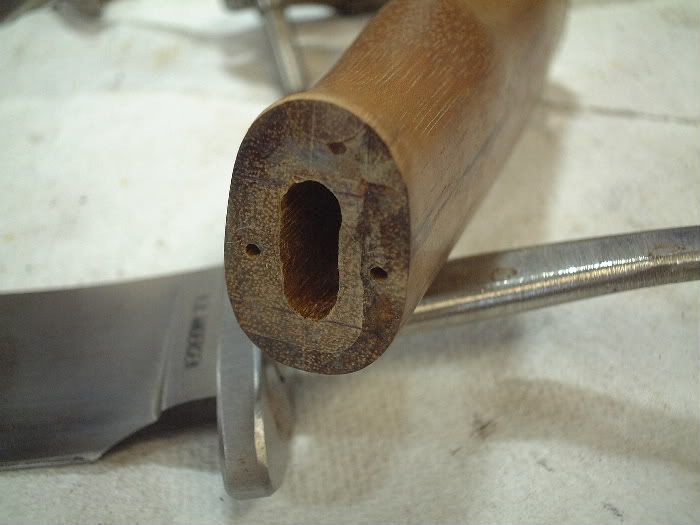
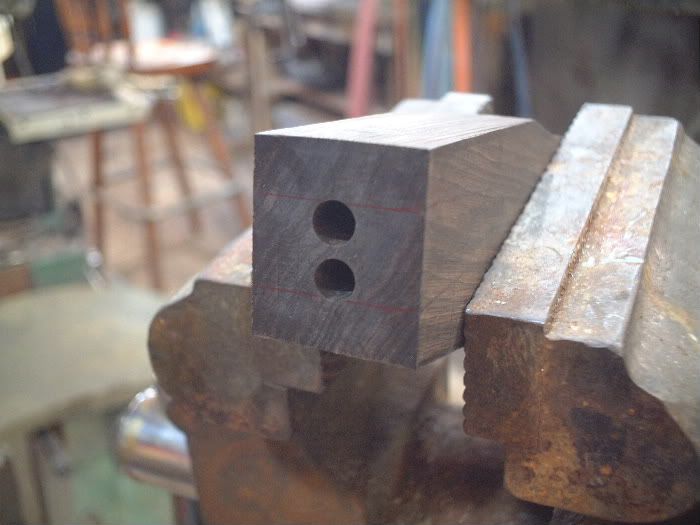
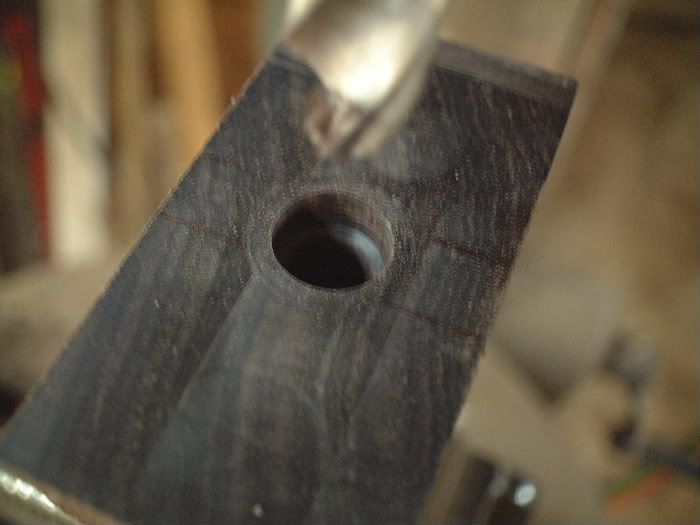
Here is the butt end view of the handle. I will drill two different sized holes - 1 at 5/16" all the way to the front holes, and then I go about 1" deep with a 3/8" hole. This creates a "ledge" for the finial "receiver" to sit upon.
This is that hole only about 1/4" deep for illustration - I then continue it down to 1" right down to the end of the threaded tang.

CEp-1.jpg


This is a poor illustration of what's going on in there:

CEo-1.jpg


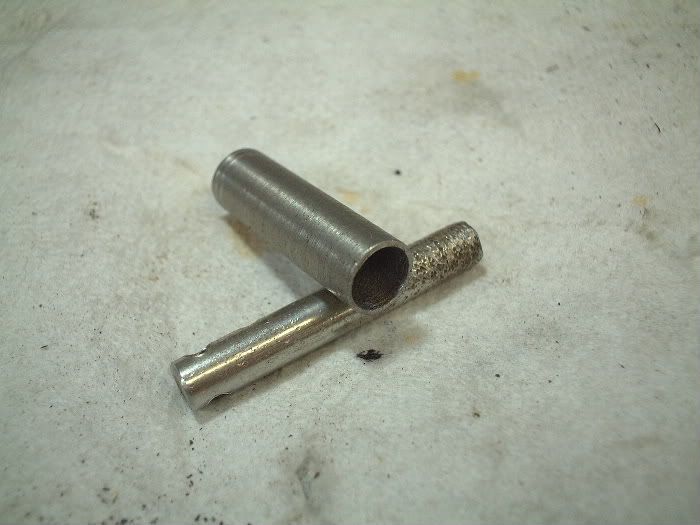
Then, I'll use a piece of 3/8" stainless 416. Drill a hole all the way through with a letter G drill and 3/4 of the way through with a 5/16" bit, This creates another ledge for the shoulder on the finial to rest upon and puuuuuuuuullllll everything together.

CEv-1.jpg


(This is a temporary finial I use during each knife I make so you can see the shoulder)

CEw-1.jpg


CEx-1.jpg
 
Last edited:
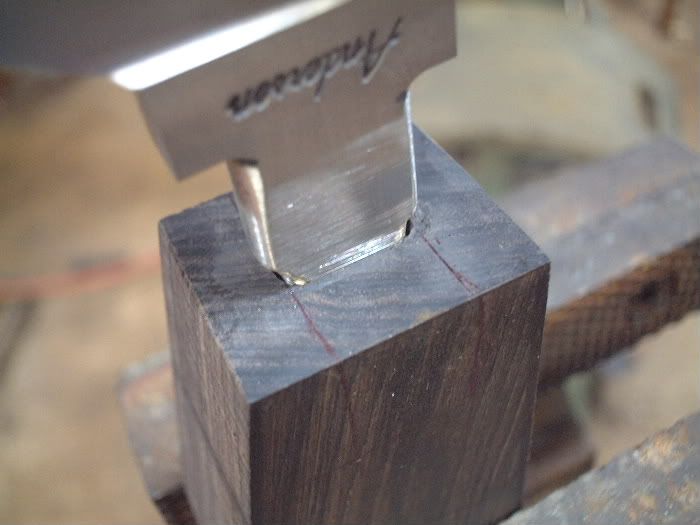
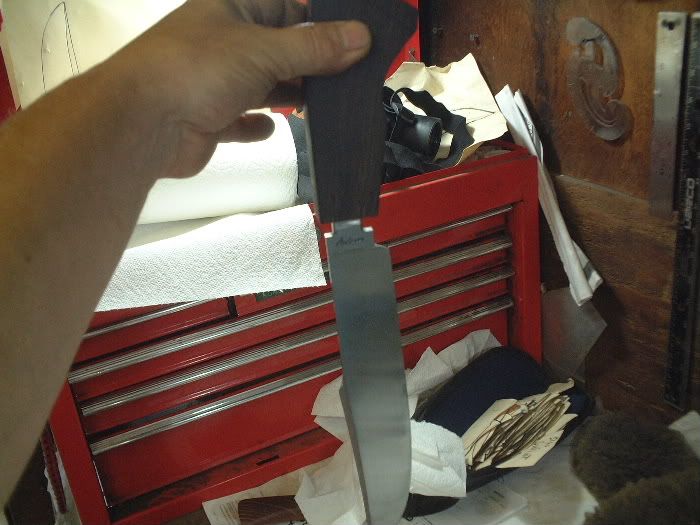
So, with all parts in place and finial receiver epoxied into place, we screw her together for the first time and check for fit:

CFa-1.jpg


Then, mark the guard for profiling:

CFb-1.jpg


Check each side of the slot for symmetry:

CFc-1.jpg


And she looks:

CFd-1.jpg
 
Last edited:
Really informative and enjoyable WIP Karl. Thanks for taking the time to do these, we learn a lot from them. Looks like another fine looking knife to boot.

Jon
 
I then give the guard a better shape:

CFe-1.jpg


And have pinned it to the handle with .625" stainless dowel pins:

CFf-1.jpg


CFg-1.jpg


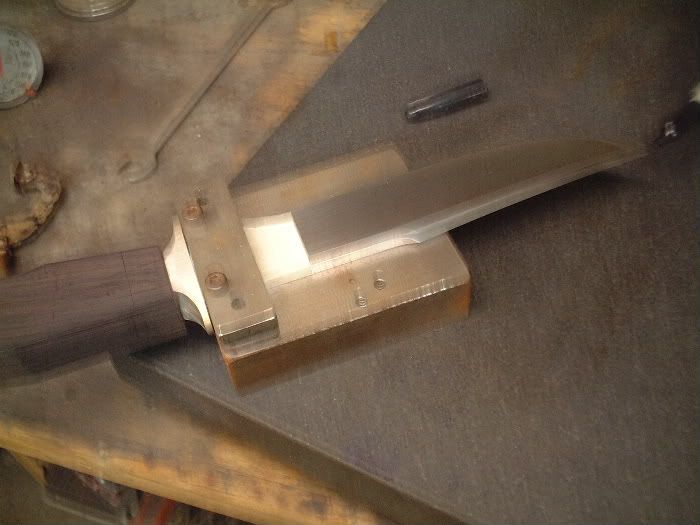
A procedure I learned from Kevin Cashen while discussing Daggers one day - I bolt the knife to a machined block and place on a lapping plate:

CFh-1.jpg


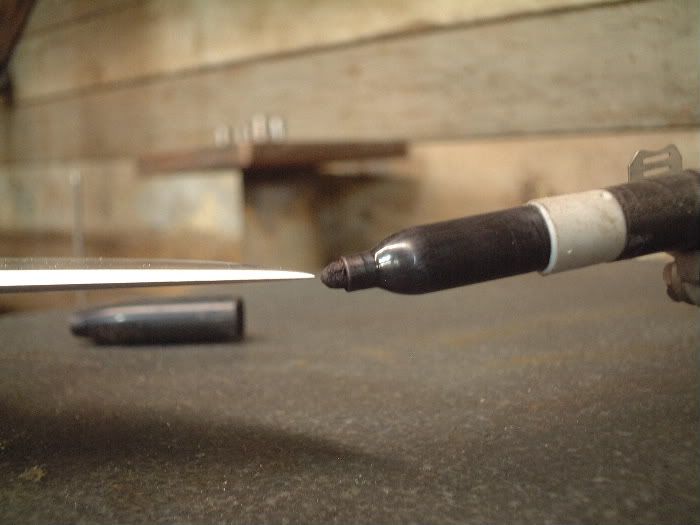
Locate the point with a surface gauge:

CFi-1.jpg


And mark the center of the handle material all the way around.

CFj-1-1.jpg
 
Last edited:
Did you read back yonder where I said I got in a little trouble?
Well, it happened.
I milled the face of the handle material.
Then me and the knife went 'round and 'round that shop for about an hour and a half.
Nothing seemed to line up!?? I could not figure it out.
After tweaking this and sanding that and on and on, I FINALLY got things to fit.
I was stumped.
So, I went to drill my pin holes in the handle material on my mill, and when I went to take out that 1/2" end mill I milled the handle face with, it just FELL OUT!!!
I only had that thing hand tightened.:mad:

As I went around the handle face, the bit was moving ever so slightly and made it some sort of weird shape, but it wasn't FLAT!!
It's flat now.
OK.
Feel stupid.
 
Last edited:
So I'm just being overly verbose here and I appreciate you indulging me this opportunity.
Here's something I'm going to pass along.
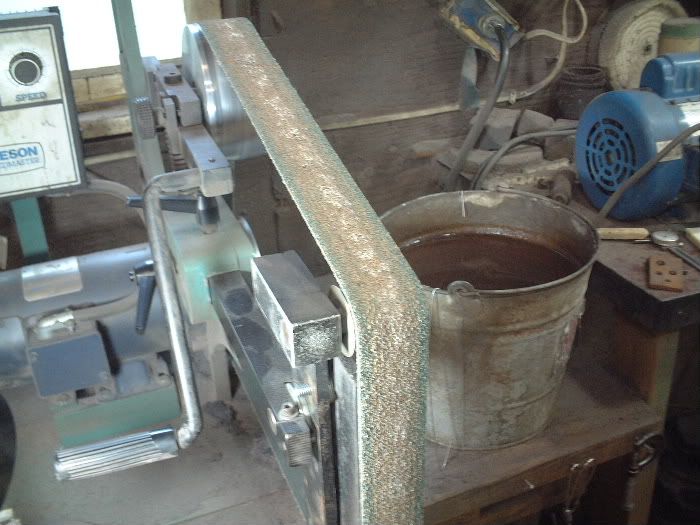
Below you will see a picture of a sanding belt.
After I have my handle material bolted on, I put on an 1 1/2" small wheel on the grinder and knock off the corners of the block and do a little bit of handle shaping just to get it done quickly.
I have used this belt since the Blade Show this year.
I used it to shape all the knives I brought TO the Blade Show this year.
I used it to shape all the handles on all the knives I've made in 2011.
I used it to shape all the knives I made throughout last year after the Blade Show.
I used it to shape all the knives I took TO the Blade Show in 2010.
I used it shape all the handles I made in 2010.
In other words, I've used this very belt to shape ALL the handles I've made in well over 1 1/2 years.
And it's the ONLY belt I've used.
A five dollar investment in over 1 1/2 years.
CEe-1.jpg
 
Last edited:
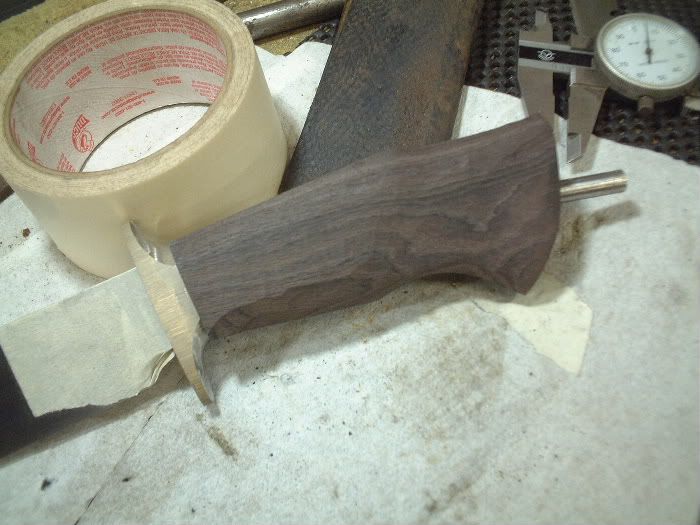
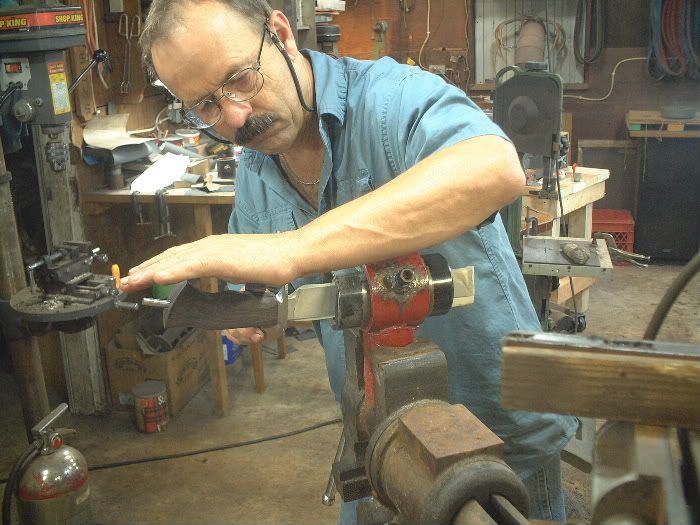
After I come off that belt I have this and go to files.

CFk-1.jpg


The most important file I use is the Nicholson Cabinet Maker's Rasp. It's NOT a cheap file, but will remove material so fast you can get in trouble!
The same file used by gun stock makers to shape entire gun stocks.
It works and it works well.

CFl-1.jpg


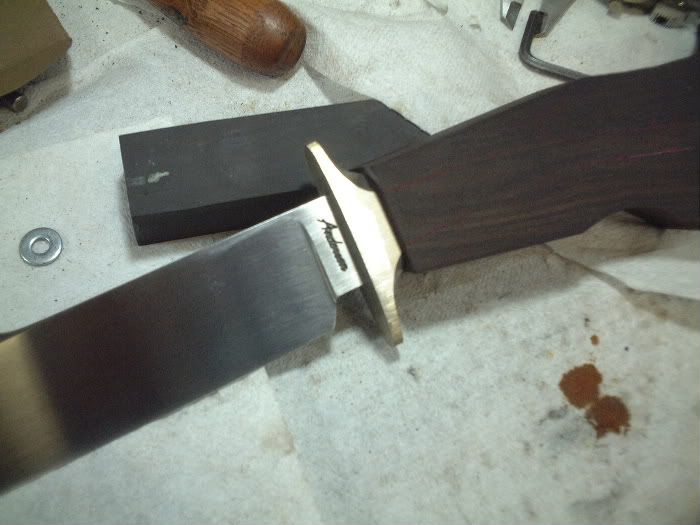
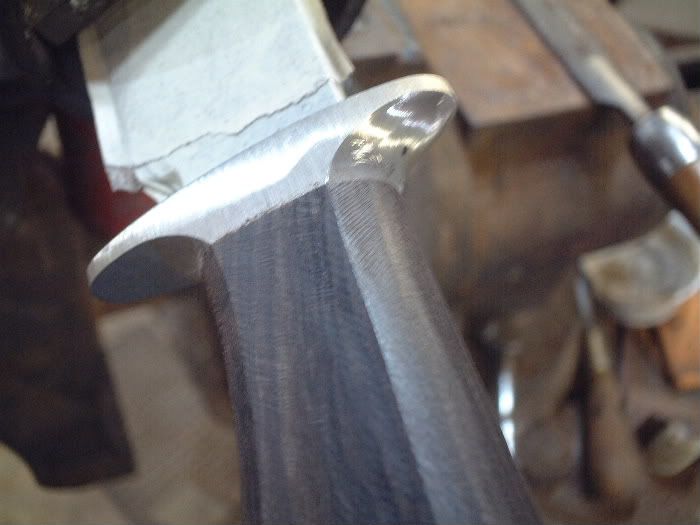
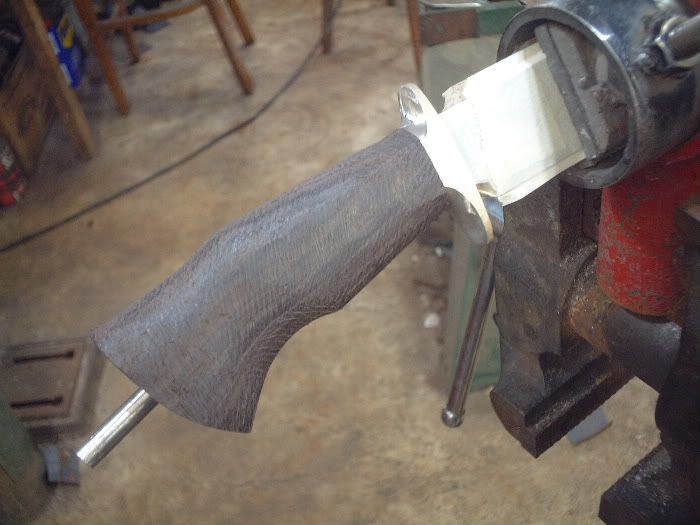
By shaping the guard first, I just file the handle to match the guard:

CFm-1.jpg


CFn-1.jpg
 
Last edited:
very impressive karl
i "m waiting to see here finished.
also i would be very pleased to hear more about the clay tempering.
 
Very informative with great shots Karl. Thanks for going to all the trouble for us. Youve got a nice roomy shop full of awesome tools. Waiting to see the finished bowie. Love that clip.
 
Looks like we do a lot of things quite similar Karl!

Funny about Kevin showing you the center line marking method, I came up with it a few years ago based on how I mark my blade centers with a height gauge and thought I'd really come up with something. Kevin has probably been doing it for 10 years! I turned a giz-wiz with the lathe so that I can put a pencil or a fine point sharpie in the surface guage, and that's a nice little thing to have.

Thanks for putting this together. :)
 
Back
Top