- Joined
- Oct 29, 2006
- Messages
- 2,912
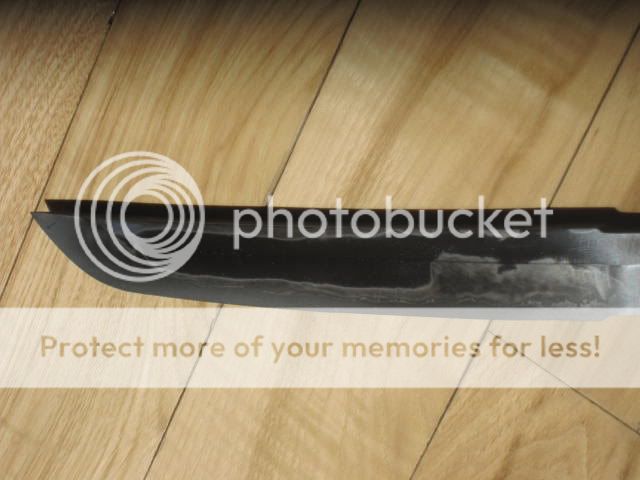
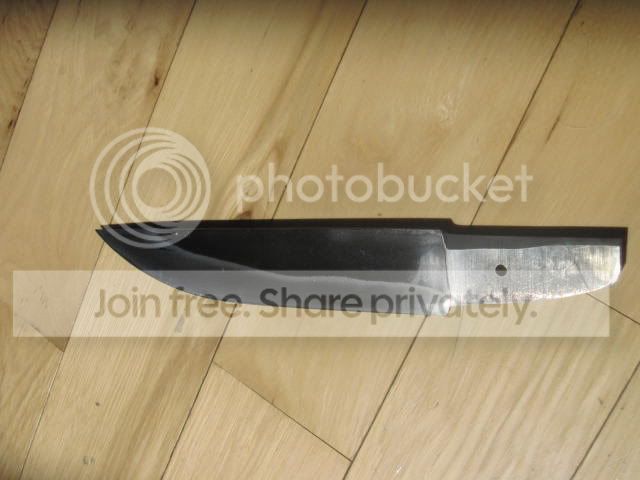
I just cracked my second blade in a row quenching in water.. 
I tried using my big Don Fogg style forge for HT this time and stupid me forgot about keeping the spine below critical... Got a nice even colour on the blade, all happy, then into the water,,, I did interrupt the quench but back in and ping, ping, ping... Nothing spectacular and again I hope it was the tongs doing something but then out of the tempering oven and sure enough, 3 cracks.
So... I dug around in some old threads to post this from Bill Burke.. stupid me for forgetting this..
Feeling pretty bummed... not so much for cracking the blade as for making the stupid mistake that made the blade crack..
Oh well...
I tried using my big Don Fogg style forge for HT this time and stupid me forgot about keeping the spine below critical... Got a nice even colour on the blade, all happy, then into the water,,, I did interrupt the quench but back in and ping, ping, ping... Nothing spectacular and again I hope it was the tongs doing something but then out of the tempering oven and sure enough, 3 cracks.
So... I dug around in some old threads to post this from Bill Burke.. stupid me for forgetting this..
Well at the risk of personnel retribution on here!!!
When I first started using clay and water I broke almost every blade that I did. But being too stupid to give up and succumb to the norm(parks 50) I kept at it. I did get better and was only breaking about two thirds of my blades. Then I went to Japan and watched as some of the best sword/knife makers in the world quenched blades IN WATER. I watched in amazement as orange hot knives were plunged into warm water and swirled around as if the smith were stirring a pot of soup, and i never seen one cracked blade. Sword smiths went from the fire right into cold water and held the screaming blade there until it was cool and again no cracks.
So When I returned Home I started breaking knives again. I broke knives if I austenitzed in a digitally controlled oven and I broke knives if I heated them in salts and I broke knives if I heated them in the forge. I went back to my old ways of interrupting my quench and didn't break as many but still most of them broke. I bought parks 50 and didn't break blades but the hamons where not what I wanted usually ending up very close to the edge. I reflected on what I saw in Japan and what finally dawned on me was that the edge was the only part of the knife that was above critical temp was the edge. I made more knives and put clay on them and heated in the forge with the windows covered and the lights out. checked the edge with a magnet and when it was nonmagnetic went back into the forge long enought o make sure my heat was even and then as fast as I could from the forge into the slack tub and held it there teeth gritted waiting fo the crack. the blade quit screaming What no ping!! over to the grinder for a quick look HOLY SHIT I got a STIFFY. this is cool. do five more as quick as I can slather on the clay and into the forge while it is still wet. heat into the water great I think I'm coming. OK time to do a sword I cant get it into the frorge so I will use my 48 inch paragon. heat into the water __________ping_________________ping ___PING pingpingpingpingping ping. It cracked almost every half inch for the entire length of the blade. SHIT. Now what the F*&^%. Oh dumb as the whole blade was at temp. duhh.
Anyway the purpose of this long drawn out story is to try and convey to you the bullshit that I put myself through and to let you know that I've done this enough to have some small idea of what I'm talking about and not just relaying information that I have heard or read somewhere.
So what I have learned. put a very thin wash of clay over the entire blade. put the clay on the back no more than 1/8th of an inch thick. while letting the edge soak at temp is importtant keeping the spine below critical is equally so, so you have to keep putting the blade in and out of the fire. THE MOST IMPORTANT THING IS TO NOT OVER HEAT THE BLADE. even the upper end of the austenitizing range is too hot for a water/brine quench with some steels. if the clay pops of the blade when heating it you didn't have the blade clean enough before putting on the clay dosen't matter if the clay is wet or dry. it is also more prone to cracking and a shitty looking hamon if the clay comes off. Nothing special needs to be done with the water as far as heating or cleaning if your heat and clay is right. I have done twenty five blade now into plain water with no cracks to preasent of course now the next ten will break since I have written all this down.
Good luck
Feeling pretty bummed... not so much for cracking the blade as for making the stupid mistake that made the blade crack..
Oh well...