
-
The BladeForums.com 2024 Traditional Knife is available! Price is $250 ea (shipped within CONUS).
Order here: https://www.bladeforums.com/help/2024-traditional/
You are using an out of date browser. It may not display this or other websites correctly.
You should upgrade or use an alternative browser.
You should upgrade or use an alternative browser.
What do you guys think of this???
- Thread starter norcalblacktail
- Start date

unwisefool
Gold Member
- Joined
- Jan 22, 2007
- Messages
- 10,106
That edge looks ridiculously thin. My stock game wardens have always been able to cut anything I've needed without sharpening the edge to transparency.

Jaxx
Moderator
- Joined
- Jan 18, 2006
- Messages
- 19,908
They're 3V? I didn't know that. Thank you for the correction. :thumbup:Agreed. Fehrman's are 3V which would lead me to believe they would perform better than S30V with the same reprofile job and at the same edge, but as compared to INFI.......

- Joined
- Jan 17, 2008
- Messages
- 2,422
Good post Jaxx. Fehrmans are CPM-3V.
Maybe I should invite Vassilli to the next one of our chop fests since he is in the Bay Area. That way he can get a different perspective of INFI instead of talking it down here on the forums based on some crazy thin edges.
Maybe I should invite Vassilli to the next one of our chop fests since he is in the Bay Area. That way he can get a different perspective of INFI instead of talking it down here on the forums based on some crazy thin edges.

- Joined
- Nov 17, 2008
- Messages
- 1,724
So,,,,,, for the most part, what we can obtain from his butchery of that GW is: Why mess with what works, especially so radically (since thats not a minor reprofiling),,,,,, maybe he should have purchased a Bad for his slicing chores instead of trying to alter a knife meant for something else. Personally I wouldn't try to slice tomatoes with a FFBM ,,,,,,,, would you ? ,,,,,, lol 

- Joined
- Mar 19, 2007
- Messages
- 2,433
Good post Jaxx. Fehrmans are CPM-3V.
Maybe I should invite Vassilli to the next one of our chop fests since he is in the Bay Area. That way he can get a different perspective of INFI instead of talking it down here on the forums based on some crazy thin edges.
Sounds like a good idea. I would have him bring his INFI to compare and contrast edge angles to yours and see what/how he uses them.
- Joined
- Jan 17, 2008
- Messages
- 2,422
As you can see in the pictures below I have had Ban change the edges on my knives and I put them through alot and have yet to see any type of rolling, rippling, denting or chipping.
Here is a quote from Ban I found that some of you may not have seen before.
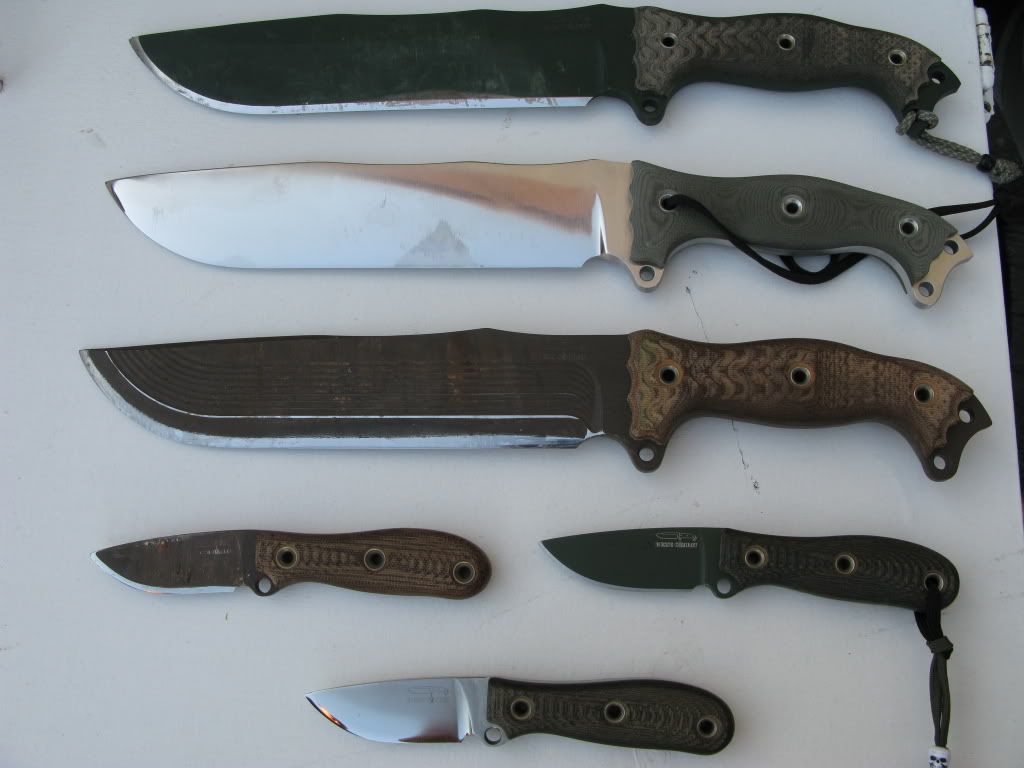
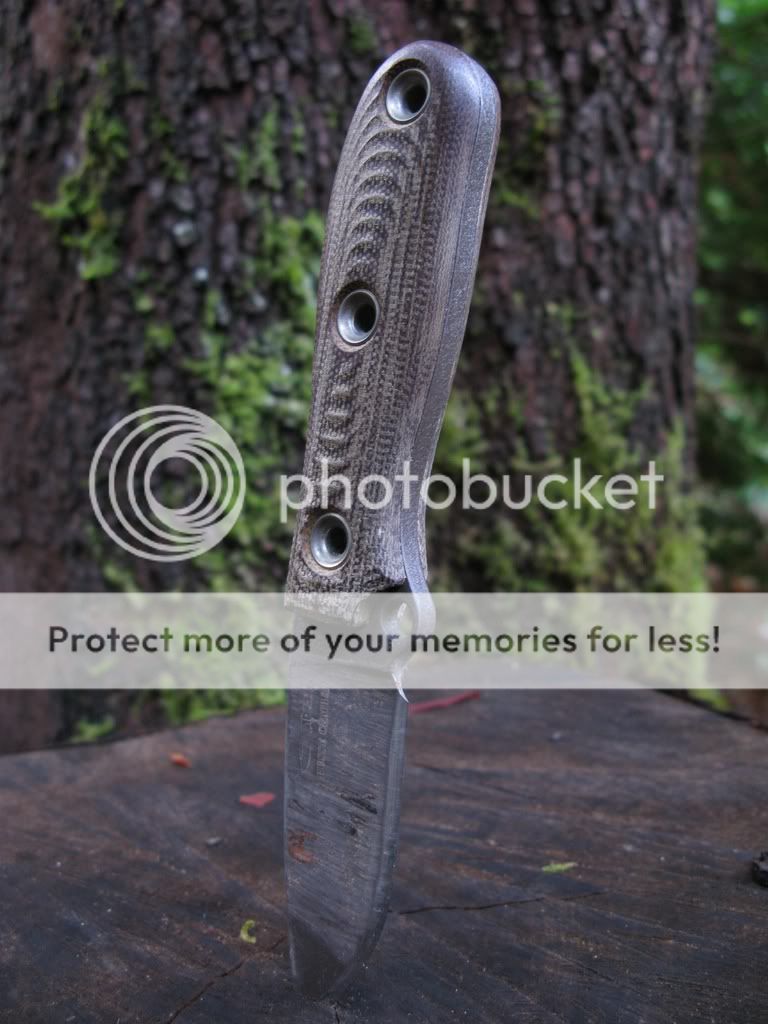
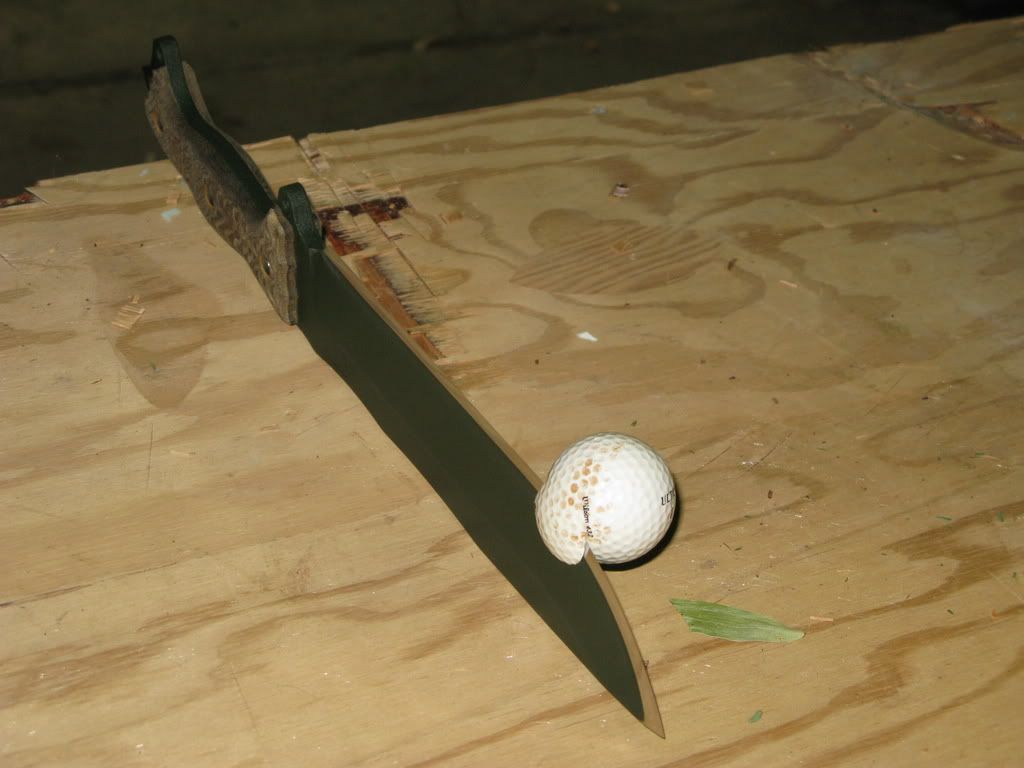
Here is a quote from Ban I found that some of you may not have seen before.
Jim,
The edges that I put on are not much different than yours. As a matter of fact your convexed edges are what inspired me to put them on my knives.
Here is a little hintTake your edge down to roughly about .032-.028 before doing the final convexing to zero. The ideal thickness will vary depending on the angle and thickness of the primary bevel. Through trial and error on multiple large choppers I have found that this is about perfect for all around heavy duty wood chopping. Concrete and metal is another story and I won't comment on that as thicker would be better in those cases.
I have gone down to .025 and got crazy deep bites. But that edge would sometimes take rolls if I use full power strokes and connect with knots in the wood.
I have taken it even thinner than .020 and got multiple large ripples when I hit the knots really hard. This happened when I tried to push the limits of my FABM. That is the reason why it is constantly evolving
Note that I am only referring to edges on large choppers that are capable of serious momemtum and power. Smaller knives that cannot generate that sort of force can probably benefit more from a thinner edge.

Cobalt
Platinum Member
- Joined
- Dec 23, 1998
- Messages
- 17,951
It's not a factory grind. I know Vasalli owns a GW and he's re-profiled it so I have no reason to believe he's not telling the truth. Plus he's a pretty upstanding guy here...
Based on past experience from what I have seen from him, I disagree. He's gone out of his own way to misinterpret his own test data in the past to make INFI look bad. Whether he intends it or just doesn't know how to interpret test results is irrelevant.


- Joined
- Oct 29, 2005
- Messages
- 19,834
Based on past experience from what I have seen from him, I disagree. He's gone out of his own way to misinterpret his own test data in the past to make INFI look bad. Whether he intends it or just doesn't know how to interpret test results is irrelevant.
best i can tell, he is the only one who can interpret his "data".
ive never been able to make heads nor tails of it. and the edges he puts on knives would fold cutting a birthday cake.

- Joined
- May 31, 2005
- Messages
- 6,860
Whew!

I'd say a VERY thin edge. WOW! It is a Skunker Warden!
WOW!
I got a SAR Warden from. . . Ah dangit. I forget. One of hte knifemakers that love Busse here. He reprofiled the edge. MUCH nicer slicer, but even at the profile he did it at, I'd not attempt heavy stuff. That edge is just THIN!
I'd say a VERY thin edge. WOW! It is a Skunker Warden!
WOW!
I got a SAR Warden from. . . Ah dangit. I forget. One of hte knifemakers that love Busse here. He reprofiled the edge. MUCH nicer slicer, but even at the profile he did it at, I'd not attempt heavy stuff. That edge is just THIN!
- Joined
- Mar 19, 2007
- Messages
- 2,433
best i can tell, he is the only one who can interpret his "data".
Ive never been able to make heads nor tails of it. And the edges he puts on knives would fold cutting a birthday cake.
lol:d

- Joined
- Sep 2, 2006
- Messages
- 16,703
Based on past experience from what I have seen from him, I disagree. He's gone out of his own way to misinterpret his own test data in the past to make INFI look bad. Whether he intends it or just doesn't know how to interpret test results is irrelevant.
Malice is always possible. I prefer other interpretations for purely personal reasons ... but of course, malice is possible.
As to proper interpretations of test results, I can only report that Nozh's approaches are idiosyncratic at best. He does what seems good to him without much regard for accepted practice in any technical community with which I am familiar.
He is free to do as he wishes. Just as I am free to to discount his results. And Mr. Busse is free to advise us to get on with our lives ... and have a nice drink.
 :thumbup:
- Joined
- Mar 19, 2007
- Messages
- 2,433
and have a nice drink.
You had me at "and have a nice drink!" So I will. Thanks OP!
I grind my edges really thin also. Keep in mind, when I grind them thin, I also thin out my Opinels. No joke. But when damage occurs, I don't blame anyone, I just figure that I've found the limit and adjust from there, depending upon what I want the knife to do.
The trick is finding that balance of cutting efficiency and damage. I usually experiment until I get to the point of damage that's unacceptable, then back off a little. Actually, instead of backing off, I put on a micro bevel that generally takes care of problems.
Every steel has it's limit. INFI is definitely better than most for resisting damage.
The trick is finding that balance of cutting efficiency and damage. I usually experiment until I get to the point of damage that's unacceptable, then back off a little. Actually, instead of backing off, I put on a micro bevel that generally takes care of problems.
Every steel has it's limit. INFI is definitely better than most for resisting damage.
- Joined
- Sep 2, 2006
- Messages
- 16,703
I grind my edges really thin also. Keep in mind, when I grind them thin, I also thin out my Opinels. No joke. But when damage occurs, I don't blame anyone, I just figure that I've found the limit and adjust from there, depending upon what I want the knife to do.
The trick is finding that balance of cutting efficiency and damage. I usually experiment until I get to the point of damage that's unacceptable, then back off a little. Actually, instead of backing off, I put on a micro bevel that generally takes care of problems.
Every steel has it's limit. INFI is definitely better than most for resisting damage.
An interesting philosophy. I've not done that with my knives ... well, once by accident when younger.
I wonder how reliable that is with steels that have large carbides?
Interesting.
Cobalt
Platinum Member
- Joined
- Dec 23, 1998
- Messages
- 17,951
- Joined
- Sep 2, 2006
- Messages
- 16,703
Brother, you have a LOT more patience than I do.
And they call me a scientist!
