- Joined
- Aug 20, 2019
- Messages
- 111
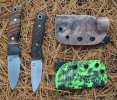
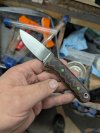
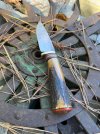
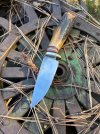
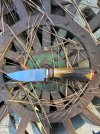
got this on the bench, my first attempt at twisted damascus this is just a test etch and i only am at 40 grit in this pic so hoping it will pop more when finished.

The BladeForums.com 2024 Traditional Knife is available! Price is $250 ea (shipped within CONUS).
Order here: https://www.bladeforums.com/help/2024-traditional/


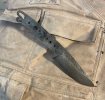
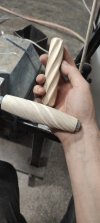
I had planned on stag when considering the build. Thanks!I love curly tails and as-forged blades. Makes me remember Tai Goo.
Sometimes, I think this is more realistic as a user than a fancy blade with fancy wood.
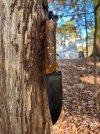
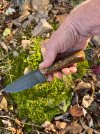


Nice jobBloodwood and 1095

Some fine work there....I had planned on stag when considering the build. Thanks!
View attachment 3007364
View attachment 3007365


Good luck!Recently went to full time maker. Prepping my next batch for heat treat, Profiled and drilled some S90V and CPM M4. More to do, but a good start to the week. Getting a 220V outlet installed this week in the garage so I can finally set up the TW-90 with a 2HP motor.
Recently went to full time maker. Prepping my next batch for heat treat, Profiled and drilled some S90V and CPM M4. More to do, but a good start to the week. Getting a 220V outlet installed this week in the garage so I can finally set up the TW-90 with a 2HP motor.

congratulations!Recently went to full time maker. Prepping my next batch for heat treat, Profiled and drilled some S90V and CPM M4. More to do, but a good start to the week. Getting a 220V outlet installed this week in the garage so I can finally set up the TW-90 with a 2HP motor.