What's so special about a bushcraft knife?

Yup... 760 is the one that caught my eye. Would anyone suggest it?
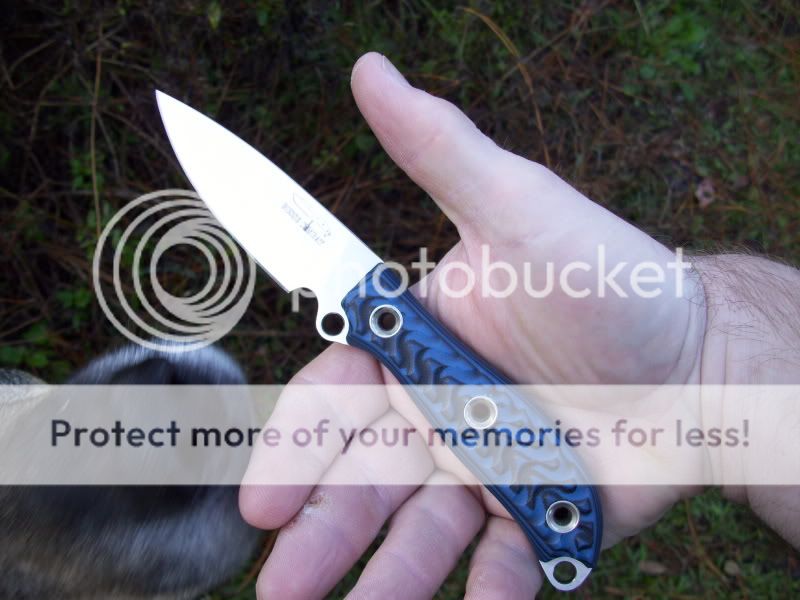
760craftblue.jpg

i have that one in tri-flex steel. i really like it. probably one of the most comforable handles i have ever used.

 
in this paragraph i think you answered your origianal question. those things arent necesary to survival, however, bushcraft isnt all about survival. its about being able to have whatever you want given the resources in the woods. it might not be a pipe or a bow for you, but i could be for somone.

i think i came off as a tad critical in my first post, but i am really merely contributing advice. i am sure busses are great blades.

I see your point about having the ability to create things in the woods. I think I'll get a bushcraft knife just as a utility knife for my pack... but I don't think building pipes or baskets or anything would be my cup of tea... I look towards knives as more survival tools when I buy wilderness knives that is. never been much into carving or wood work. I was under the impression that "Bush Craft" refered to survival in the bush. But it seems it's more of an art form when you get down to the more complex tasks.
 
So I get your point that a scandi knife is a great jack of all trades wood carving knife. But it ain't a chopper, it ain't a pry bar, it ain't a shovel, it ain't a hammer, and it is not going to support my body weight should i need it too.

That my friend is right.
:D
It's a knife that will cut the stuff that needs to be cut.
The style doesn't burden itself with internet survival baggage.

Support your body weight?!
:confused:
Well, if you need one that can do that, by all means have at it.
In fact, buy 2 :D
 
Well, really a bushcraft knife is one that can do. . .get this. . .bushcraft.

Guys like Ray Mears and Mors Kochanski defined THEIR "ideal" bushcraft knife as basically a full, exposed tang puukko.

But really any knife that you can use (or learn to use) for bushcraft will work -- including Busses.
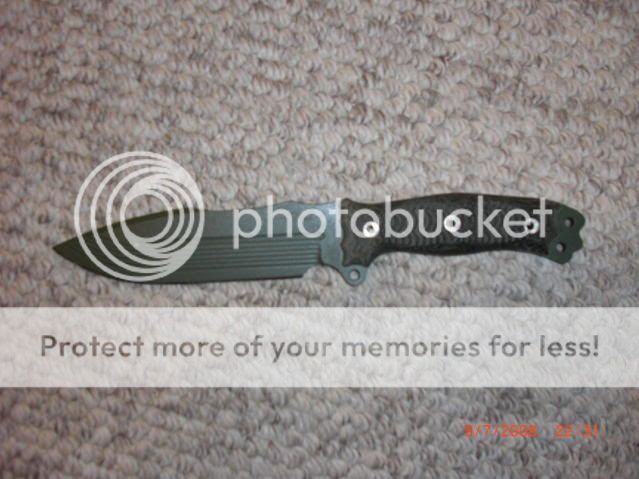
The BAD, in particular is a dandy bushcrafter:
100_0033.jpg


Only problem I've had with Busses as bushcrafters is the factory edge. They come with a very coarse "toothy" edge -- great for prying open car doors or cutting rope/seatbelts, etc, but blows on wood. Sharpening and then stropping to a smooth edge (keeping the factory grind angle) made them much, much better.

Even a Hellrazor (purpose designed fighting knife) does quite well in the woods.
Hellrazor01.jpg
 
so what would make the average bushcraft blade design the ideal choice for going into the woods. Plus on many I've seen they seem to have a very small finger guard. This of course is not a judgement on all bushcraft designs... just some of the ones I've seen... doesn't seem to be a lot of real estate there to keep your hand from running up on the blade.

I am finding that the term "bushcraft" is constantly evolving in definition away from the Mears or Kochanski concept. Lately, I have seen a number of very large, thick knives, labeled "bushcraft knives" by their makers. I seriously doubt some of these makers have ever carved a spoon, notched the components for a trap, made a few fuzz sticks, harvested plant life, or even tried peeling a potato or splitting reeds, limbs, grasses for crafts or cordage with their clumsy knives. These large knives may be great for other tasks, but IMHO, not for the art of bushcraft, specifically.

Yep, you don't push and stab with a guardless knife. However, making the knife an extension of your fingers is simple and natural with a guardless knife (I don't have a guard on my favorite kitchen paring knife either). Most of the "bushcraft" knives out there have the highly efficient soft wood Scandinavian bevel, though the convexed grind is becoming more and more common with its durability benefits.
 
I'm not defensive... LOL. I was more making a joke than anything. One member stated that scandis are sharper... I disagreed and then was corrected in that my example of sharpness was only an example of sharpness. I've said time and time again that I understand that different blade shapes lend themselves better to different tasks. If we took the perfect knife for every task with us in the woods... we'd leave the house with 37 knives LOL.


You mean we're NOT supposed to carry this many knives? :eek:
 
...Yep, you don't push and stab with a guardless knife...

What about making things like a bow drill divot? You have to push/bear down for that task. I could see the benefits of a small finger guard for motions such as that. Just a little food for thought.
 
That my friend is right.
:D
It's a knife that will cut the stuff that needs to be cut.
The style doesn't burden itself with internet survival baggage.

Good luck chopping wood with it.


Support your body weight?!
:confused:
Well, if you need one that can do that, by all means have at it.
In fact, buy 2 :D

Ya never know. And the scandi knives ain't gonna do it. I have Busse knives that can hold me, you, and your dog.
 
I am finding that the term "bushcraft" is constantly evolving in definition away from the Mears or Kochanski concept. Lately, I have seen a number of very large, thick knives, labeled "bushcraft knives" by their makers.

Yep, you don't push and stab with a guardless knife.

I think people are ignoring the bushcraft idea in favor of woodsrambling, with its chopping and camping and even hunting. Bushcraft itself should be setting up a comfortable place in the woods and using the knife to prepare all sorts of implements -- traps, fire making, utensils -- to make that experience work.

How about Japanese tanto as a fighting knife? No guard. You palm that short handle. Same thing with a short-handled, guardless bushcrafter. Your palm bears down on the butt of the knife so your fingers don't slide forward on the blade.
 
Yep, you don't push and stab with a guardless knife.

As I've said... sometimes a finger can run up on the blade by accident. No one is perfect and accidents can happen. A finger guard ads against that. Not having a finger guard isn't like a choice of those who are "Masters with a blade" la de dah. It's just a style choice. But even in a knife that doesn't need to be thrusted... if there is not finger guard present... your chances are better than you're gonna run your finger up on the blade. Accidents happen right?

Or would you say it's impossible to run your fingers up on the blade with a guardless knife?
 
Well, really a bushcraft knife is one that can do. . .get this. . .bushcraft.

Guys like Ray Mears and Mors Kochanski defined THEIR "ideal" bushcraft knife as basically a full, exposed tang puukko.

But really any knife that you can use (or learn to use) for bushcraft will work -- including Busses.
The BAD, in particular is a dandy bushcrafter:
100_0033.jpg

I see a curious nose in that picture.
 
How about Japanese tanto as a fighting knife? No guard.

Most Tanto that I've seen have some form of Tsuba. Unless you are talking about shirasaya. But that's not battle dress for a sword. I mean... sure I've seen decorative and ceremonial Tanto with no guard... but the usual battle piece has a Tsuba. Not always... but usually.
 
Back when it seemed like there were three common styles: the various big bowies, the skinners, and the "little" knifes. I recall it was common to have the two knife set up on a double leather sheath. Seemed like a reasonable way to do it. Of course you could just go with a 6-7" knife on your belt and an appropriate locking folder for the little things. Personally I'd rather bring a spoon, fork, and kettle than spend time carving wood. YMMV. However, I think a two knife setup is a good idea as a small knife is a lot easier for some applications. I sure wouldn't go out in the middle of nowhere without something on my belt that I could jam deep into anything that (legally) requires that sort of treatment.
 
Last edited:
What about making things like a bow drill divot? You have to push/bear down for that task. I could see the benefits of a small finger guard for motions such as that. Just a little food for thought.

I sure worded that poorly and not according to my thoughts. Keyboard fingers sometimes betray me. I do make push cuts with guardless knives, but not under a lot of force...unless I *palm* the handle. I do A LOT of woodcarving, and, I have superficially stub cut my index finger while pushing and not giving any attention to what was in my knife hand. I once cut my working index finger with a BR Northstar knife (no fault of the knife) because my XL hand slid down the small slippery Micarta handle and onto the cutting edge. I found palming this knife in my hand was not at all comfortable, and because of the size of my hand, I could feel very little handle surface and I simply lost control. I usually find that if the handle fits, I wear it. :)

think people are ignoring the bushcraft idea in favor of woodsrambling, with its chopping and camping and even hunting. Bushcraft itself should be setting up a comfortable place in the woods and using the knife to prepare all sorts of implements -- traps, fire making, utensils -- to make that experience work.

My thoughts, exactly. :thumbup:
 
Its a matter of carrying the right tools for the job, and in the wilderness a Busse knife really isn't the right tool. Fillet knives, scandi "bushcrafters", machetes, axes etc. usually are the right tool, and that's why people all over the world carry them and not knives resembling Busses. They might be unbelievably strong, unbreakable or whatever, but they're not wilderness tools.
 
Though I'm admittedly no expert, I can't imagine a scenario in which I'd need a blade to hold my body weight. Not trying to be confrontational, but I am curious.
 
Its a matter of carrying the right tools for the job, and in the wilderness a Busse knife really isn't the right tool. Fillet knives, scandi "bushcrafters", machetes, axes etc. usually are the right tool, and that's why people all over the world carry them and not knives resembling Busses. They might be unbelievably strong, unbreakable or whatever, but they're not wilderness tools.

Your gonna take heat for that one.:D


I some what agree, but I can garentuee that some one out there would beat the pants off ya on a survival coruse with a busse. Not me persay, as I dont own any, but the style of knife inst allways what counts, its the head and pair of hands behind it.

You get used to using a large knife, and eventually becomes a extra limb. I can do just as well if not better in the woods with a flat grind rather then a scandi, Personally its my favorite, but your level of skill is going to dictate what your ability out come is rather than your knife, what ever it is.
 
Here is my interpretation of the term "bushcraft".
It originates from the scandinavian countries where you have huge forests.
Living in a forest country requires and axe or a saw. With an axe you do most cutting things, even down to making fuzz sticks. With the axe being the primary tool you do not need a big knife, hence the short knife.
When Bushcraft started to become fashionable the tools that came with the lifestyle was again the axe and a smaller knife.
 
Back
Top