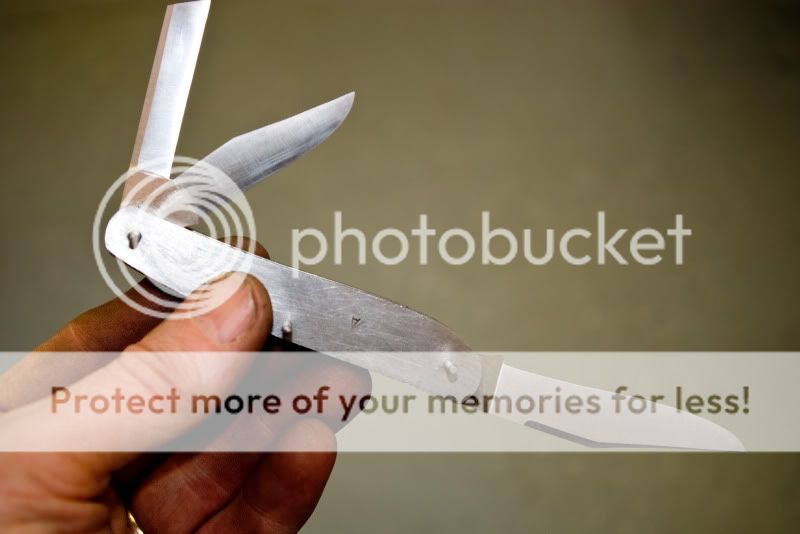
WIP (work in progress) Ken Erickson whittler

Ken, to close the gap (so to speak) I take it you're grinding the springs and not the tapered spacer ?

Either way, not much wiggle room there. :eek:

Let me start by saying thanks for the kind comments and encouragement on this project!

I grind the spacer down to about .010 or a tad less, gets like a knife but any thinner and you would have problems.
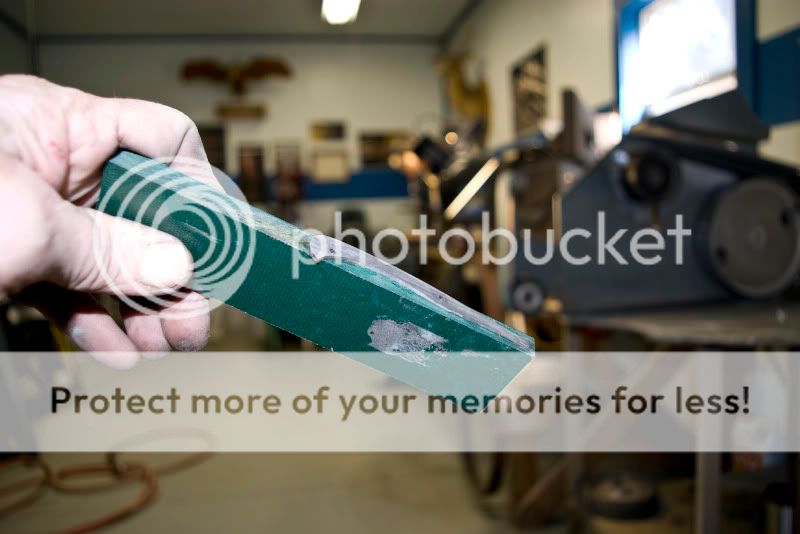
IMGP3750_edited-1.jpg


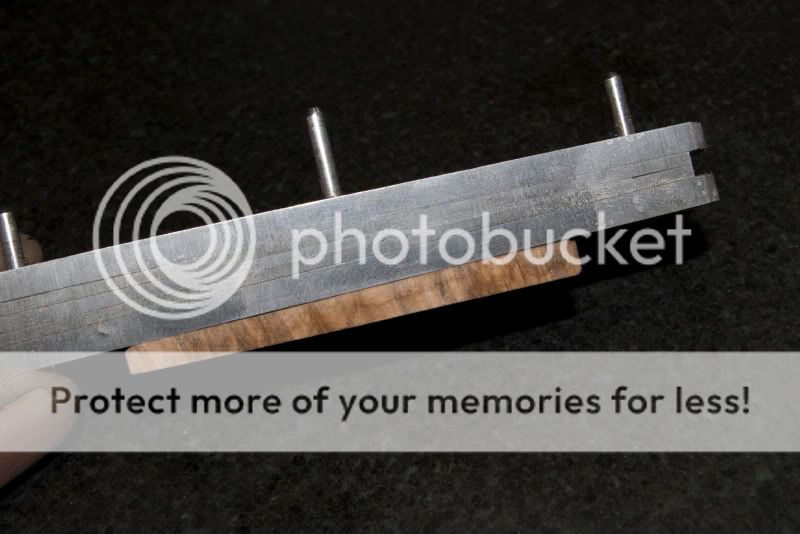
This is my spacer grinder! A piece of Micarta with the spacer super glued on.
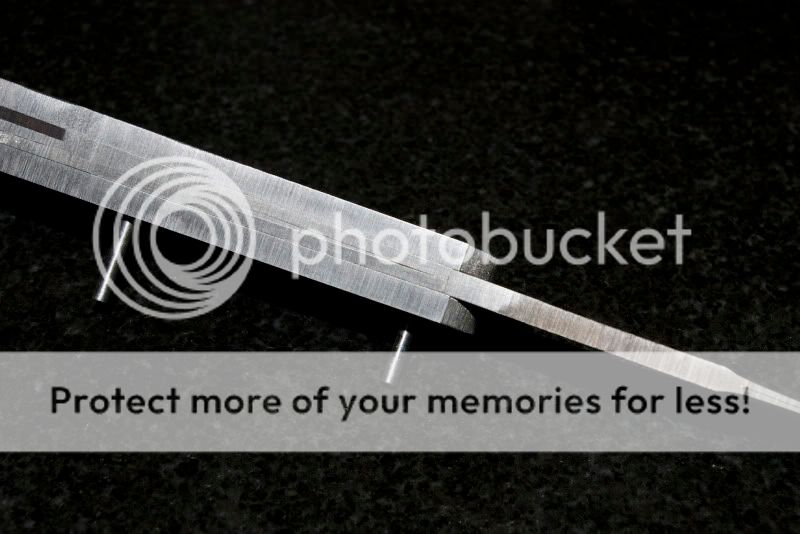
IMGP3757_edited-1.jpg


This is real close on the spacer, you can see the gap is closed. It leaves a tiny triangle shaped void.
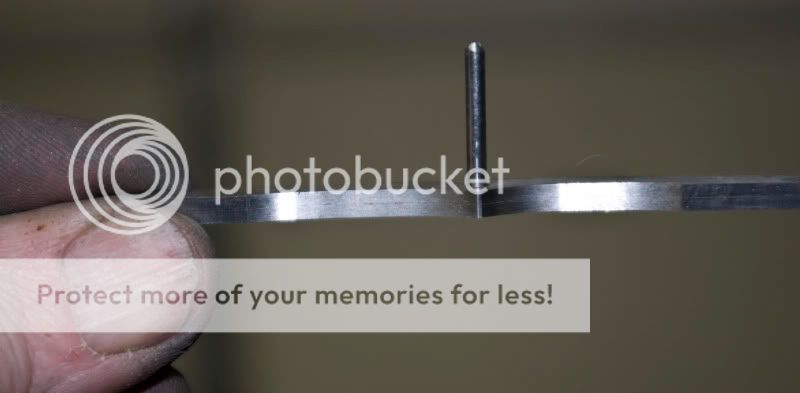
IMGP3755_edited-1.jpg


Its important both springs are the same especially on the master end were both springs rest on one tang..

IMGP3732_edited-1.jpg


I use a surface plate and gauge to mark a center line before I start to grind.

IMGP3733_edited-1.jpg


The center line scribed ready to start grinding.
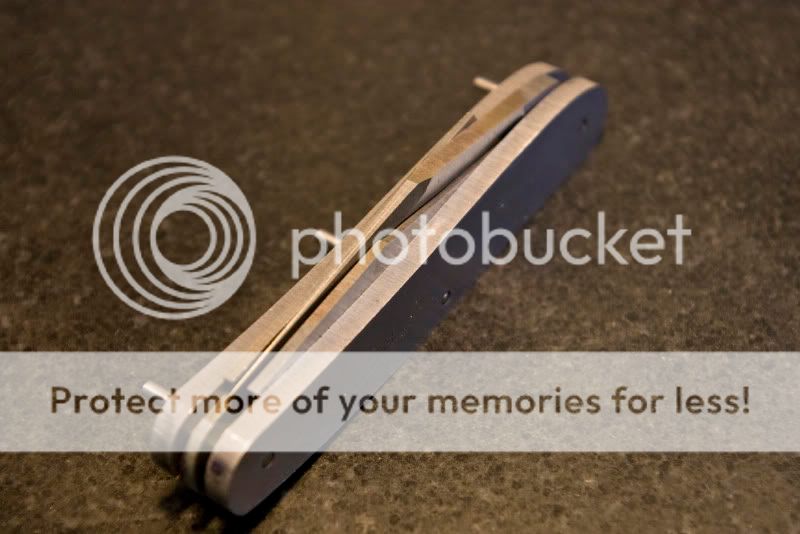
IMGP3760_edited-1-1.jpg


This is the very beginning of the grinding. You can see already the blades are starting to fit in the frame.


Thanks for taking the time to view and depending on my progress tomorrow I will have more pictures.
 
Last edited:
Thanks for the explanation, Ken.

Grinding the spacer to such tolerances. . .and equally/evenly. . . . .
Thud.gif


Dayummmm ! :D
 
Ken, it sure is a generous effort on your part to take the time to share your photo documentary of your master craftsmanship. Having made my living with hand and power tools for many years (carpentry/woodworking), I find the process you show us in pictures and script quite fascinating and informative; and when I carry my Erickson trapper I feel like I know it even better now.

Thank you much!
 
Ken-thanks for sharing your work with us-it shows how much goes into the making of one of your excellent knives!!!:thumbup:
 
Thanks Ken for your efforts in this thread, much appreciated, and for your generosity in sharing your knowledge.. This will be a great Knife (s)....:thumbup:
 
This is so interesting and informative, thanks very much Ken
 
This all took about 2 or 3 hours, right? :D

It's nice to see how much the extra effort of posting your struggle is appreciated here, and it IS appreciated. You'd think something as simple as a pocket knife(LMAO!!!!) wouldn't be that big of a deal to make from scratch...but it is. My eyes were sure opened up and I keep learning about these things every day.

Thanks, Ken, for sharing your work and showing others what it takes to make a good quality slip joint.
 
I made some progress on the whittler today.

IMGP3771_edited-1.jpg

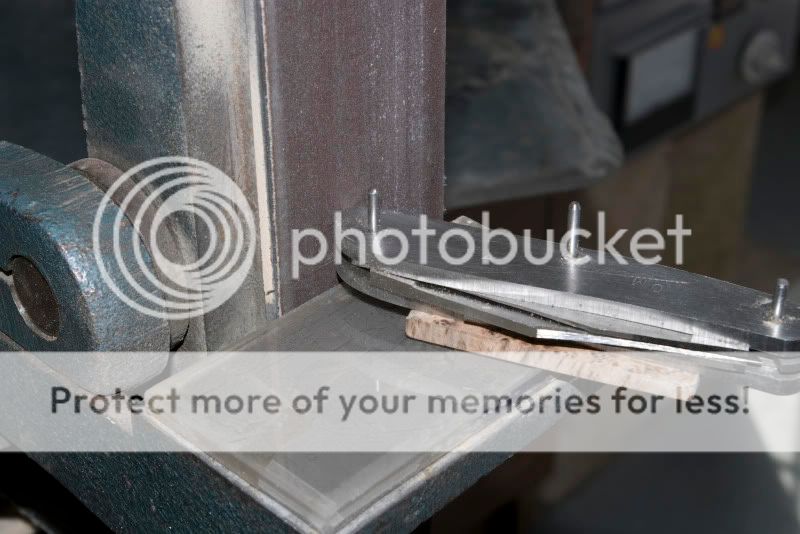
This picture shows a small wedge piece of hardwood super glued to one side of the frame. This allows me to square the ends of the knife up.

IMGP3772_edited-1.jpg

I use ceramic glass on my plattten and rest to keep things really square and flat

IMGP3773_edited-1.jpg

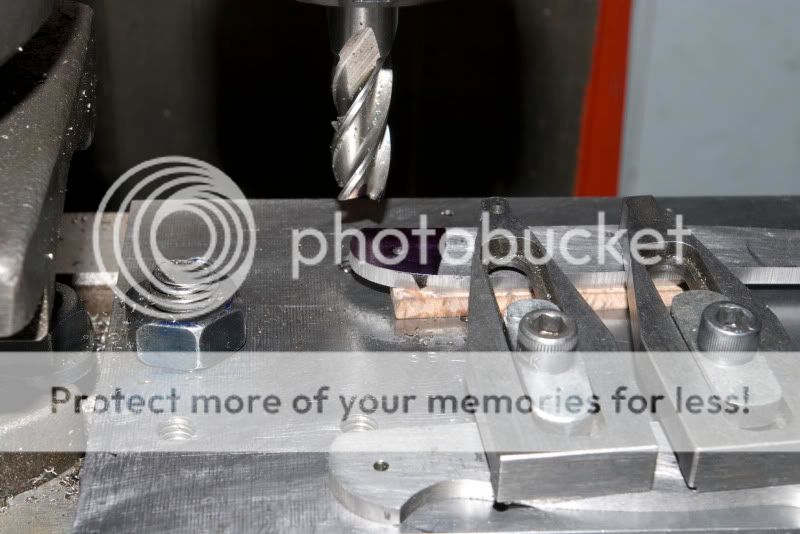
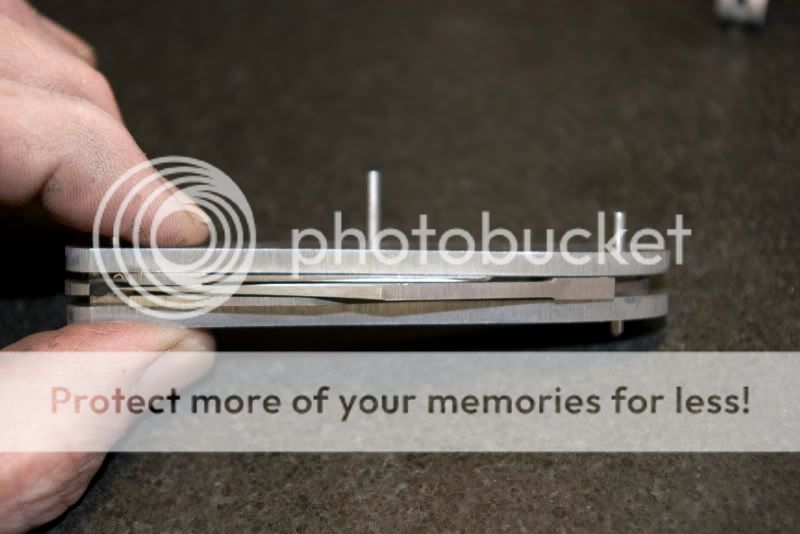
This is a extra step for this type of whittler. I am milling a matching angle from the front of the frame to a bit behind the pivot pin. This allows the master to be centered with good bearing when closed.

IMGP3775_edited-1.jpg

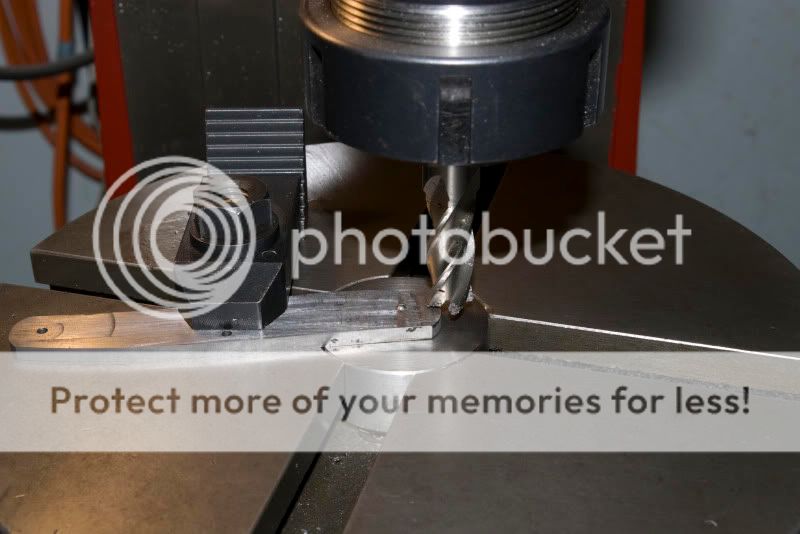
This is my rotary set up for milling the clearance for the tang.

IMGP3777_edited-1.jpg

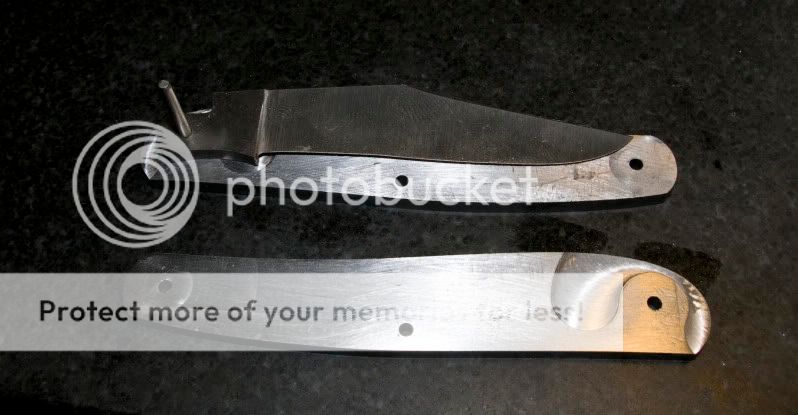
This shows the milled frames , keeps the tangs from getting scratches.

IMGP3763_edited-1.jpg

This shows the how the blades are starting to fit into the frame.

Things are progressing slow but steady at this point. I have all the tangs fit, rise and fall flush on the three blades. The next step will be to refine the grinds, cut swedges for clearance.

A few observations about this pattern whittler. I think some people have the notion that the master blade is a very strong and stout blade because the tang is much thicker. This IMHO is not the case because of the way the master has to be "dropped" on both sides to allow for secondary blade clearance. You end up with a master blade no thicker than most single or two blade slips. I would love to hear thoughts from others , makers included on this subject.

More to come! Stay tuned. :eek:
 
Last edited:
I think some people have the notion that the master blade is a very strong and stout blade because the tang is much thicker. This IMHO is not the case because of the way the master has to be "dropped" on both sides to allow for secondary blade clearance. You end up with a master blade no thicker than most single or two blade slips. I would love to hear thoughts from others , makers included on this subject.

First, let me say that this is one of the most informative threads I've seen in a long time. Thanks for sharing - :thumbup: :)

As far as the master being stronger, in my humble opinion it wouldn't be. where the blade grind reduces the thickness for clearance is where the "weak" point would be. (I could be wrong.) On a blade without that "clearance" grind, I think it would indeed be much stronger; a Case Seahorse Whittler comes to mind.

Thanks again for sharing this process.

thx - cpr
 
Ken,

Thanks for your Great Photos, and clear explanations. The good news is that you sure don't have to worry about any competion from me! :D

It is a pleasure seeing first hand, how you are doing this, and all of the work that goes into it.!

Thanks again for sharing this! :thumbup:

Kent
 
Ken, one question (excuse my complete greenhorn ignorance); in the photo of the milled frames, it looks as though a goodly amount was milled off, yet in the top down photo it isn't noticeable at all. Is it just the lighting that's causing it to look like a quarter of the thickness was shaved off, when in actuality it might be more like hundreths of an inch?

Great thread!!!

Eric
 
Ken, one question (excuse my complete greenhorn ignorance); in the photo of the milled frames, it looks as though a goodly amount was milled off, yet in the top down photo it isn't noticeable at all. Is it just the lighting that's causing it to look like a quarter of the thickness was shaved off, when in actuality it might be more like hundreths of an inch?

Great thread!!!

Eric


Eric,

Good question. It is the lighting. I mill .006 to.008, shooting for .007. I have found this to give best results. When I build a multi-blade with center liner being releived on both sides I end up with 1/2 the thickess as I normally use a .030 thick liner.

Ken
 
Ok, THAT explains it. It's awfully impressive how you go the extra mile to really make these knives engineering marvels!

Eric
 
This update is going to be somewhat redundant but here goes. Spent biggest part of the day refining the grinds and cutting the master nail pull. Hope everyone has a wonderful weekend!

IMGP3798_edited-1.jpg

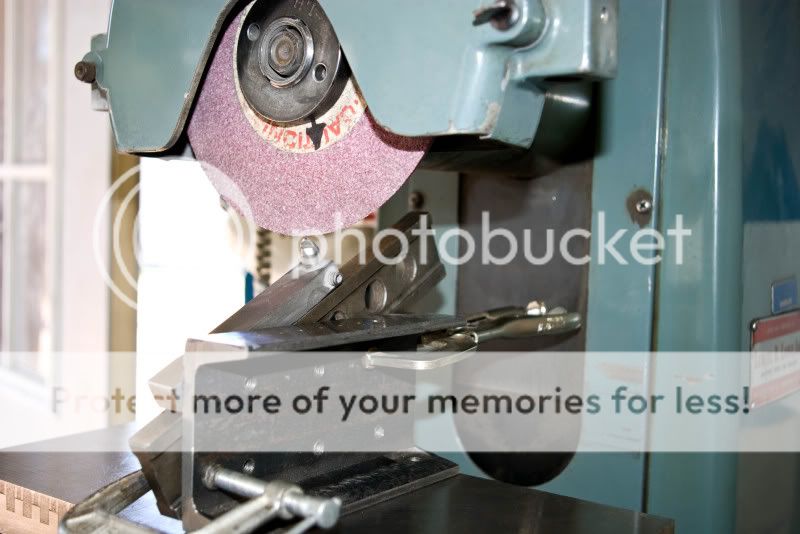
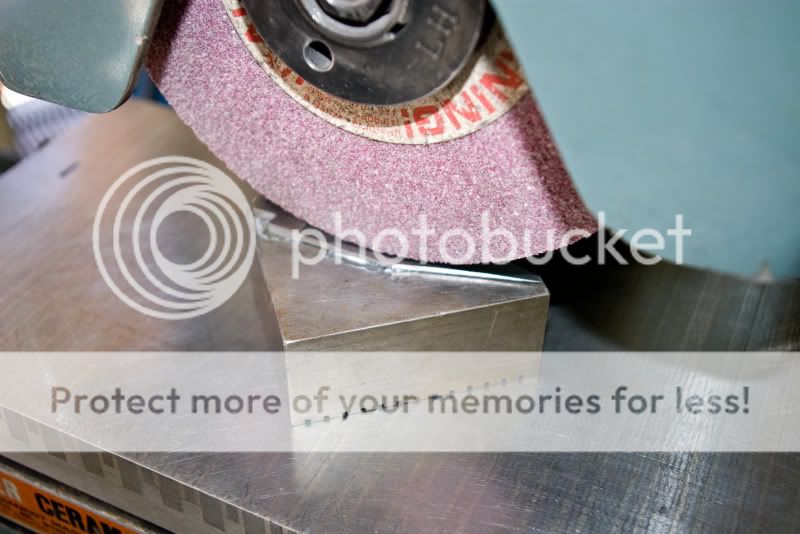
This picture shows my simple fixture for dressing my grinding wheel I use for nail pulls. This way I am assured that the angle is the same from knife to knife.

IMGP3799_edited-1.jpg

I have the master blade set on my fixture for holding the blades in position ready to cut the pull

A word about nail pulls. I think that there is almost as many ways of putting in nail pulls as there are makers. I have been playing around with using a fly cutter but the downside for me is then they have to be cut in before heat treat. When grinding I have the ability to place them were I want after the blade is shaped and swedges cut. Pros and cons to both ways. I admit that a clean well placed nail pull can really affect the over all look of a handmade slip.At times I miss the mark. I really have an appreciation for the way the factories placed nail pulls.

IMGP3802_edited-1.jpg

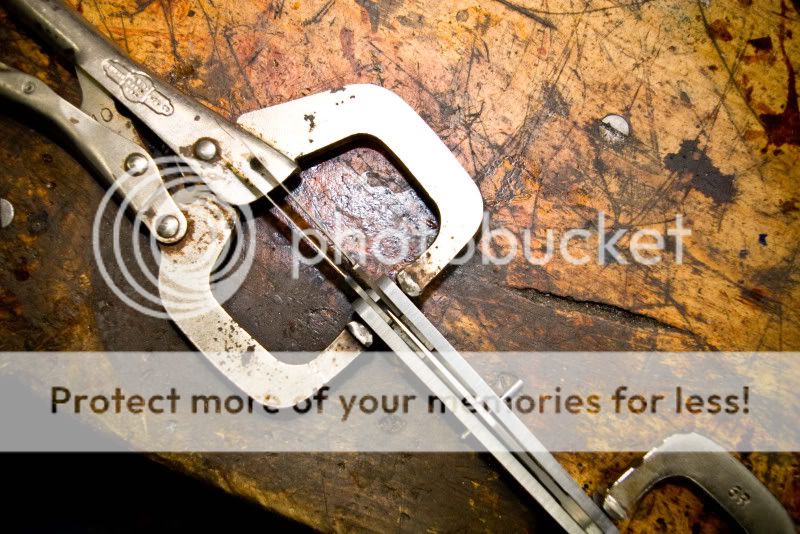
I just modified a set of Vice grip clamps to hold the frames under the same tension that the peened pins would have. I use hardened assembly pins(old 3/32 drill shanks) when I build a knife. I drilled a hole in each leg of the clamps that accept the pins. This way I can clamp right over the pin and adjust the tension. This helps me get the blade center right before I put the knife together for the last time.

IMGP3794_edited-1.jpg

You can see the grinds are really really close to be done.

The next set of progress pictures will deal with the frames/bolsters
 
Lookin' good, Ken. Time to knock off and knock back a beer! :cool::thumbup:
 
Ken,

Thank you again. Taking the time out to do this for us is an awesome gift.

Watching the knife come to life so to speak is a great education to me. Makes me want to watch every step. That really is a great blade combination on a whittler and the lines on the master and pen really are especially schweet.
 
Ken,

This W.I.P. thread, is by far one of the best threads that have been put on here. I know that there are some really good knifemakers out there, that know this stuff, but probally for the majority of us "non-knifemakers", this has been a fantastic eye opener!:thumbup:

You photos and explanations are very well thought out!:p

WOW! ;) Hope you put your tools away for the weekend. :D
Kent
 
Ken
Great pictures and terrific descriptions. Makes me really appreciate the knives all that much more.
Rick
 
Too great of a thread to be on the second page.:cool:
 
Back
Top