
-
The BladeForums.com 2024 Traditional Knife is available! Price is $250 ea (shipped within CONUS).
Order here: https://www.bladeforums.com/help/2024-traditional/
You are using an out of date browser. It may not display this or other websites correctly.
You should upgrade or use an alternative browser.
You should upgrade or use an alternative browser.
WIP (work in progress) Ken Erickson whittler
- Thread starter ken erickson
- Start date

- Joined
- Aug 27, 2004
- Messages
- 2,701
I'm really enjoying this thread.nice looking shop too.
Thanks on the shop, My shop used to be in my damp cold basement. Also wanted to mention that I did not do any clean up of the shop before starting this thread.
NO DUST BUNNIES WERE HARMED DURING THE MAKING OF THIS WIP

I have a couple more pictures before I post pictures of the frame/bolster work.
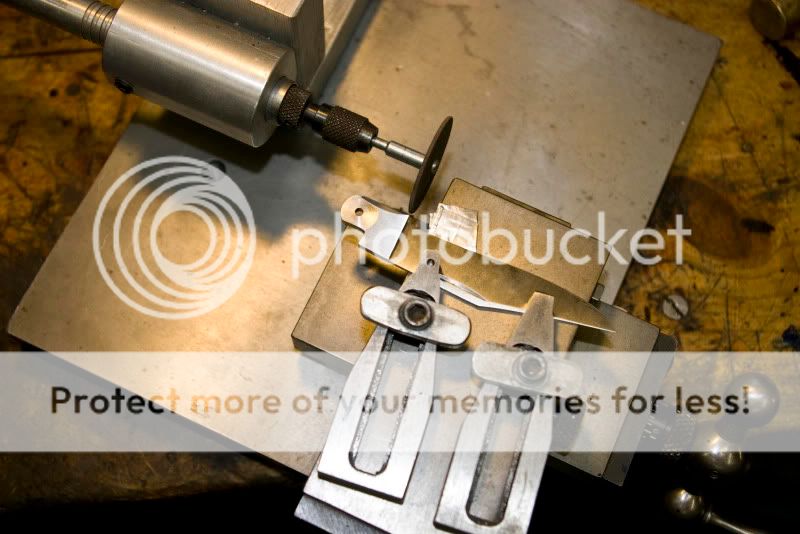
This shows how I cut my choils. I scrounged a little compound from the local used machinery guy and made this choil cutter. This allows me to cut consistent choils from blade to blade and knife to knife. Overkill some might say, but I like it.
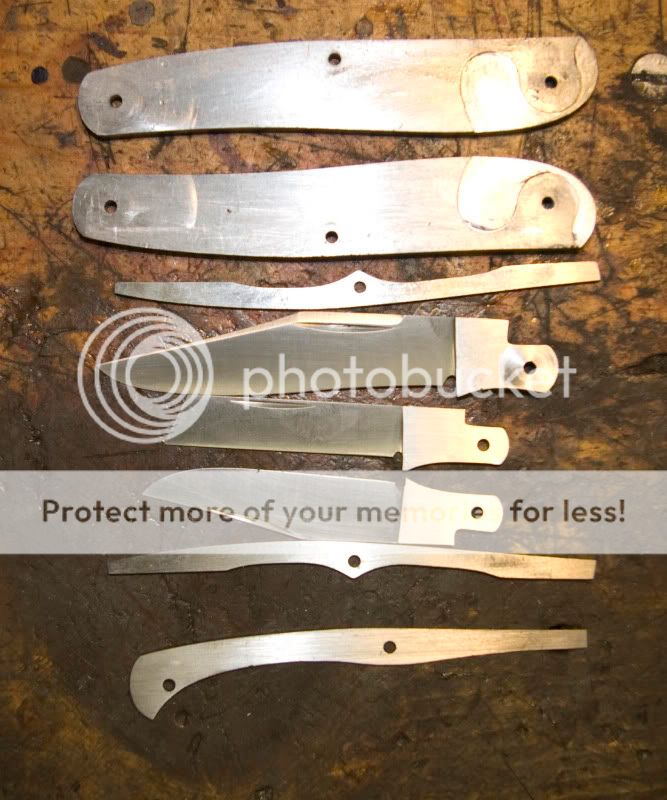
This is the layout of the parts with choils and nail pulls done
More to come later this evening. Thanks for taking time to view this thread!

- Joined
- Jan 7, 2003
- Messages
- 1,131
Very interesting. this kind of work seams to need a little patience. Thank you. Bosse

waynorth
Dealer / Materials Provider
- Joined
- Nov 19, 2005
- Messages
- 34,787
This is the first time I've seen this thread! Been away for a bit.
Ken let me commend you on presenting this WIP for our education and enjoyment! :thumbup:
If posting pictures and razzing each other is the glue that holds this community together, this WIP is the epoxy!!
I'd also like to say that I admire your bravery, in making a true wedged spring whittler. It is arguably one of the top three toughest folders to make.
Seeing the care you take with the hundreds of small steps just boggles my rash and undisciplined mind.
Thanks for the effort, and the unparalleled presentation!!
I'm on the edge of my seat, and completely forgot about my popcorn! (can't forget the razzing part)!
Ken let me commend you on presenting this WIP for our education and enjoyment! :thumbup:
If posting pictures and razzing each other is the glue that holds this community together, this WIP is the epoxy!!
I'd also like to say that I admire your bravery, in making a true wedged spring whittler. It is arguably one of the top three toughest folders to make.
Seeing the care you take with the hundreds of small steps just boggles my rash and undisciplined mind.
Thanks for the effort, and the unparalleled presentation!!
I'm on the edge of my seat, and completely forgot about my popcorn! (can't forget the razzing part
)!
Last edited:


- Joined
- Mar 28, 2005
- Messages
- 607
Hi Ken, adding my appreciation for your demo, and I just have to ask, Do you grind your bevels by hand or is it done using fixtures. I'm seeing that most of the processes for these folders seem to be done using machinist skills rather that just hand held grinding and shaping.
- Joined
- Aug 27, 2004
- Messages
- 2,701
Hi Ken, adding my appreciation for your demo, and I just have to ask, Do you grind your bevels by hand or is it done using fixtures. I'm seeing that most of the processes for these folders seem to be done using machinist skills rather that just hand held grinding and shaping.
Good question. I flat grind all my blades free hand. I grind the blades when they are in the frame so as to give me something to hold onto. I do use a pusher "stick" on the tip end of the blade as I push up against the flat platten.
I made pretty good progress today on this knife. Tomorrow I will take it apart (again!) and make patterns for the next two. This step of making a prototype was a necessity for me. I will make subtle changes in blade shapes, run-ups, nail pulls etc.
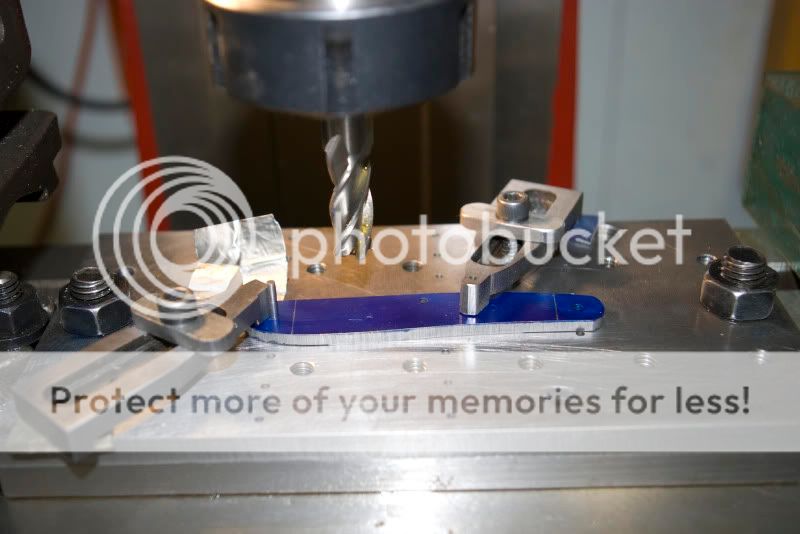
This next set of pictures shows how I get mirror frame/bolsters. Keep in mind that many makers will do this step differently than I. I am getting ready to mill the material away between the bolsters leaving .032 thickness
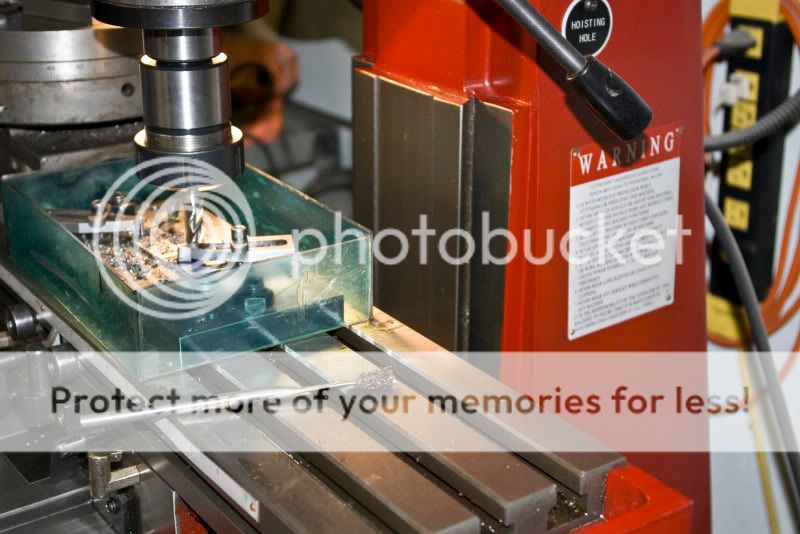
I have made a small lexan box to contain as many flying chips as possible. Not because I am a neat freak but keeps down on the flat tires
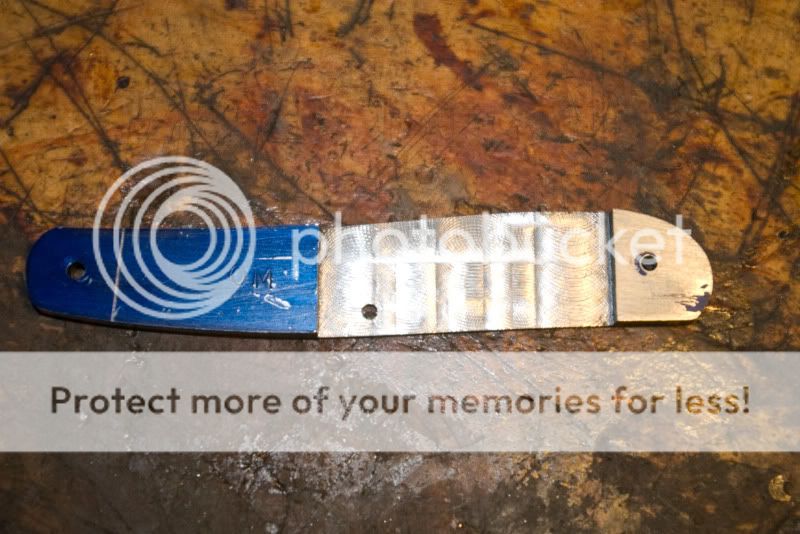
This shows 1/4 of the milling done.
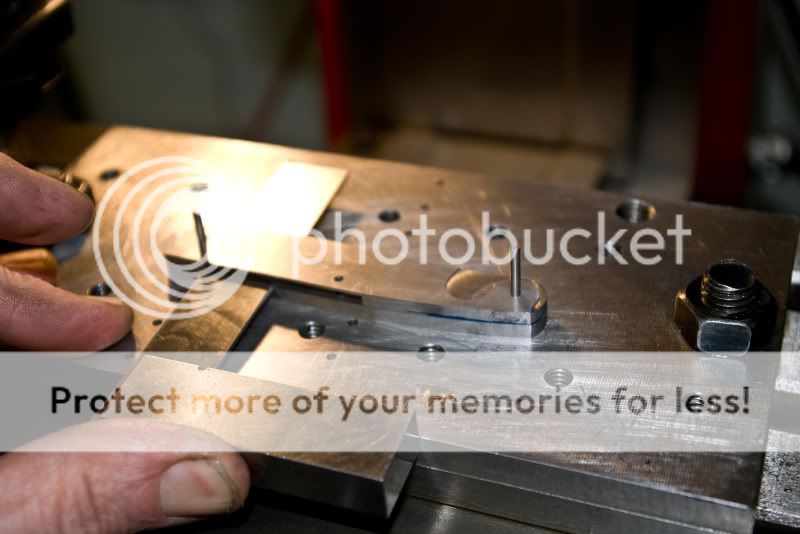
This is how I get a mirror , or matching pile side/mark side frame. You can see that I have the side needing milling down on my tooling plate with the already milled opposite frame on top. I use a square to pick up the bolster and square it with my tooling plate. Using the stops set on the milling table allows me to mill the new bolster to the right angle and length as the first.
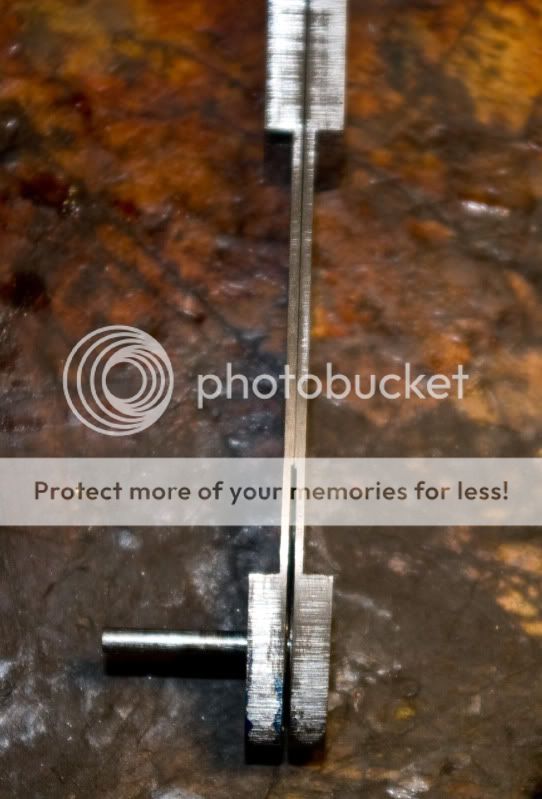
After milling both sides and both ends, if I did my part, I end up with a true mirror mark and pile side.
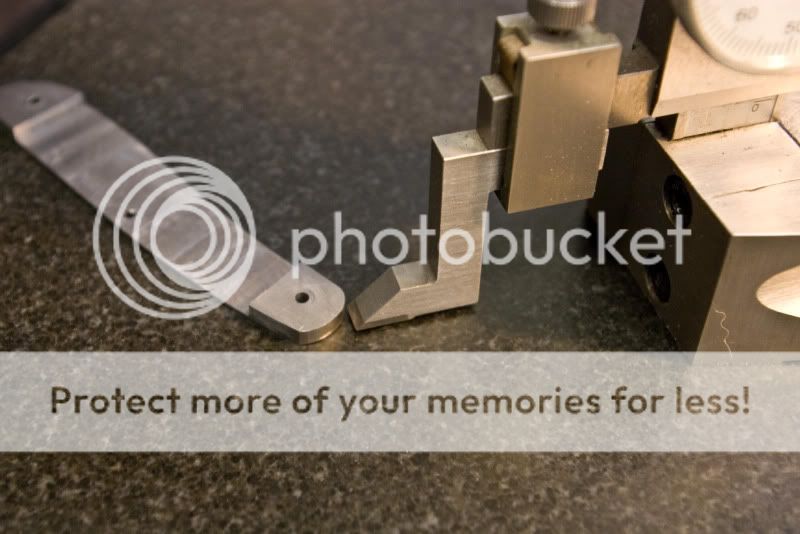
I use a surface plate and scribe to mark the bolster before rounding.
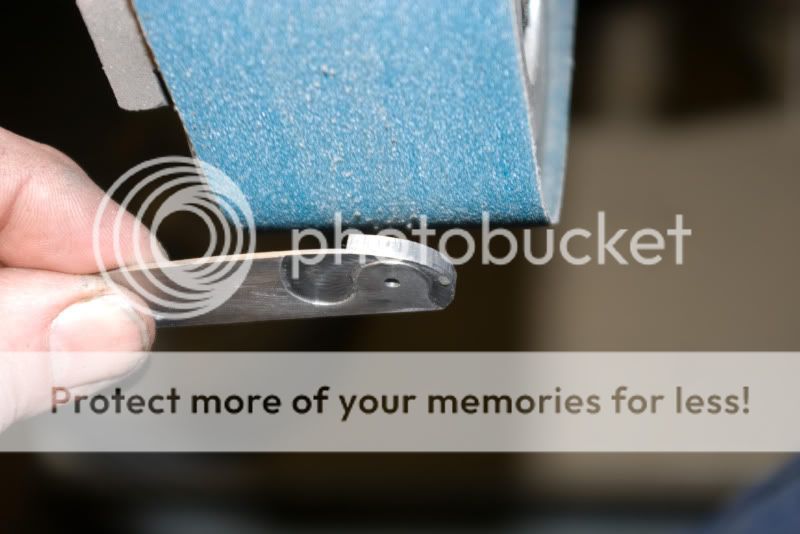
This picture is staged as I was not able to hold the camera and hold the frame as I round the bolster with both hands.

After rounding all four bolsters I mark the location of the holes for the scale pins

I use the first side as a template to drill the opposite side frame
- Joined
- Aug 27, 2004
- Messages
- 2,701
I had to continue a new post as I was limited to number of pictures,
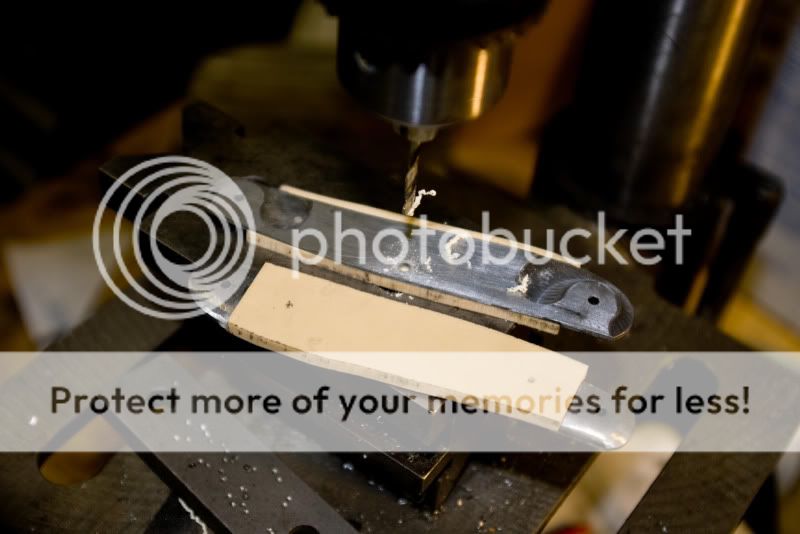
I have fit the Pre-ban elephant Ivory, RELAX guys, really antique Ivory Micarta on this prototype.
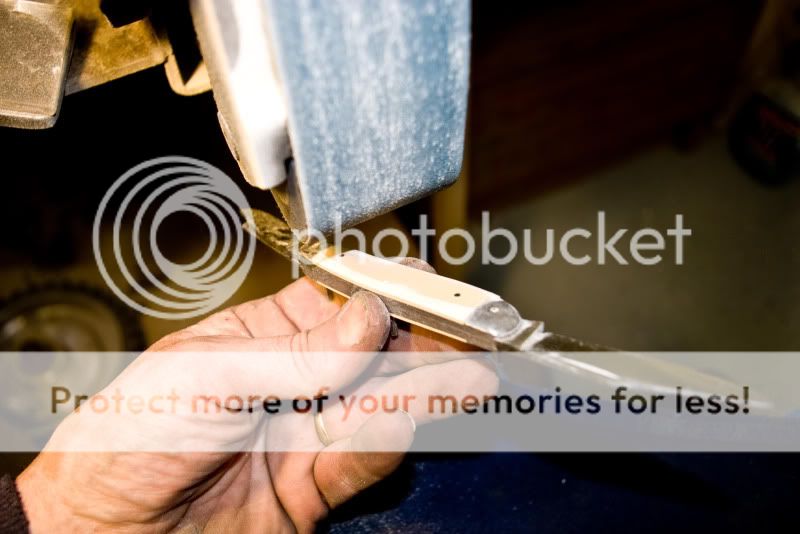
Shaping the Micarta on my belt grinder.
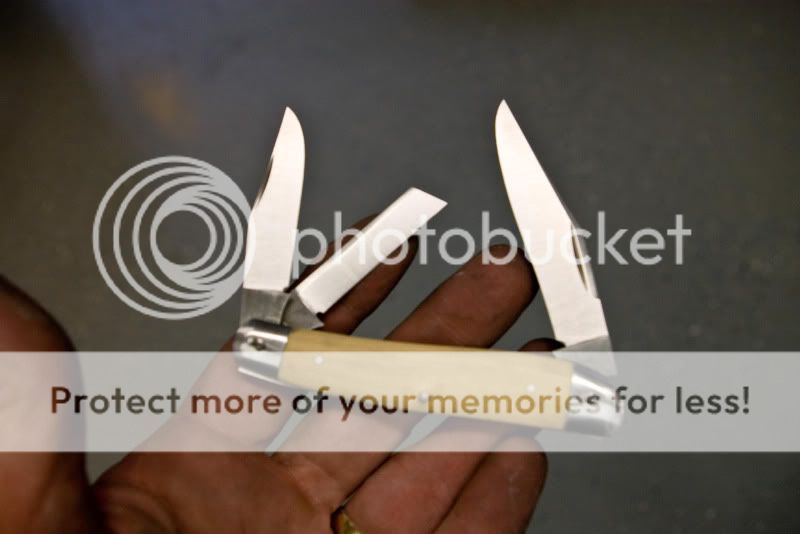
Starting to look like a knife!
I should have updated progress pictures by tomorrow evening. Thanks for staying tuned.
Ken
I have fit the Pre-ban elephant Ivory, RELAX guys, really antique Ivory Micarta on this prototype.
Shaping the Micarta on my belt grinder.
Starting to look like a knife!
I should have updated progress pictures by tomorrow evening. Thanks for staying tuned.
Ken


- Joined
- Oct 16, 2003
- Messages
- 1,362
Amazing work, Ken.
James
James


- Joined
- Jan 18, 2007
- Messages
- 34,153
This is riveting!
If that Whittler turns out like one of your Dog Leg Jacks (Ivory)I saw recently on a famous person's photo collection...then it will be a sensation! Looking forward to seeing the shield go on.
If that Whittler turns out like one of your Dog Leg Jacks (Ivory)I saw recently on a famous person's photo collection...then it will be a sensation! Looking forward to seeing the shield go on.
- Joined
- Aug 27, 2004
- Messages
- 2,701
! Looking forward to seeing the shield go on.
You must have made slip joints! The shield is in and pictures taken. I will post tonight.
Thanks everyone for the comments. As Kerry said , its hard to break concentration, and take pictures. On this knife its all good as it slows me down a bit and makes me think of my next step.
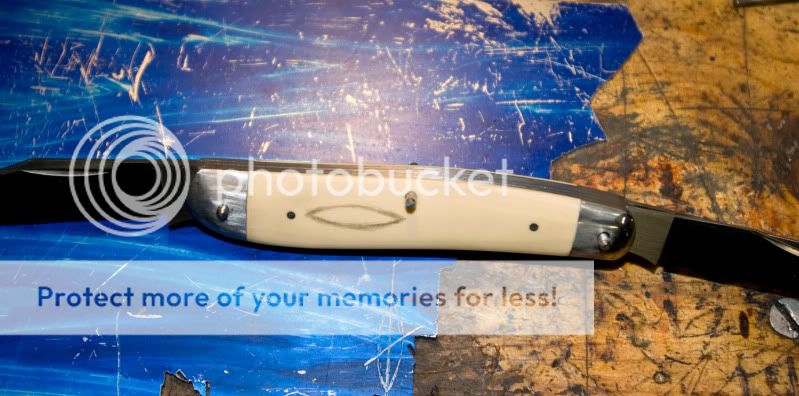
I will be insetting a oval shield in. Certain patterns lend themselves to certain shields and I think the flowing lines of a serpentine jack or whittler is a pattern that a oval shield fits. You can see that I just penciled in the shield

I use a porta-band saw for cutting all my parts, frames, blades,springs, and shields
Last edited:
- Joined
- Aug 27, 2004
- Messages
- 2,701

I super glue the shield in place on the mark side then use a scribe that is really sharp(a needle would work also). I scribe around the shield carefully a few times to cut into the scale material.

This picture shows the scribed line ready to remove the material inside the lines to accept the shield
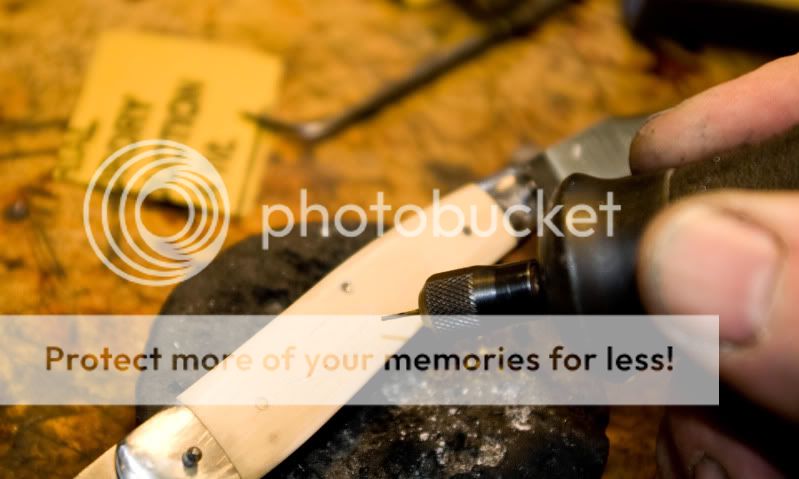
On this shield I am using a Dremel tool with a 1/32 dental burr. Again , many different ways of inletting a shield including the traditional parser plate and parser.
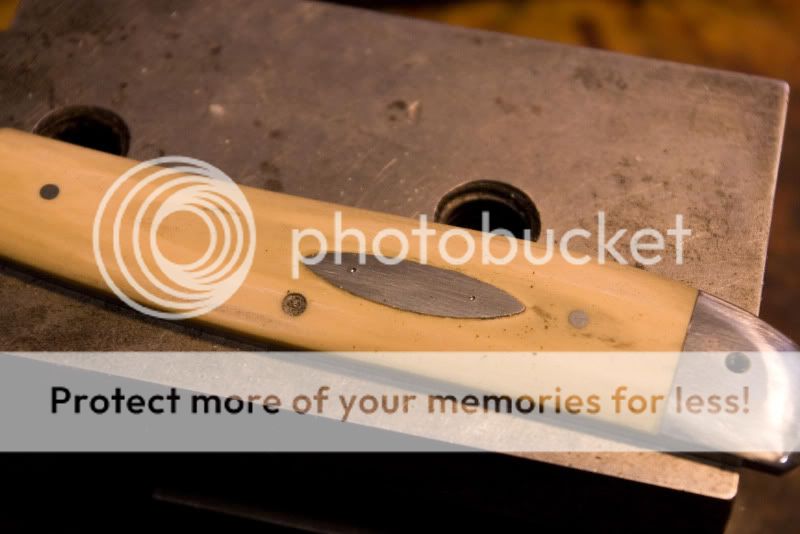
Provided I did not drink too much coffee this is what you should end up with. I have the two pin holes center punched. I will drill these with a 1/16 bit
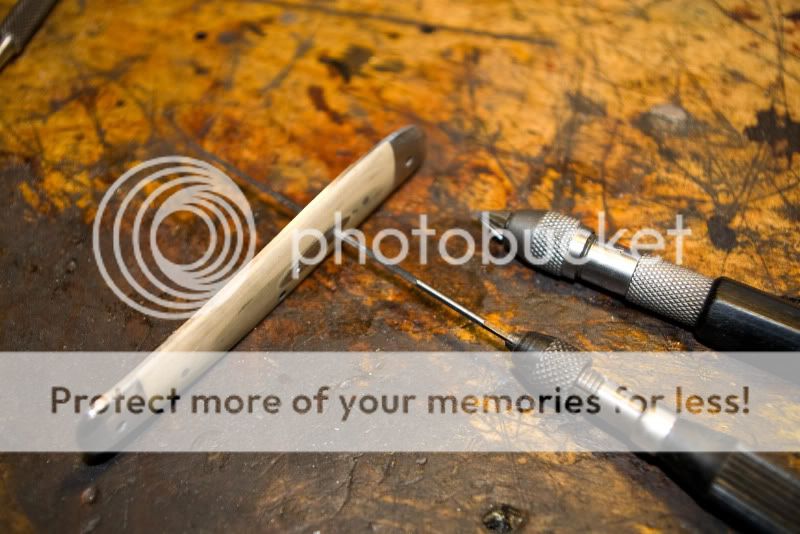
These are the two tools I use to set the pins. I use the long tapered reamer from the front side and the short tapered cutter from the back. The long reamer leaves a tapered hole that makes it easy to hide the pin.
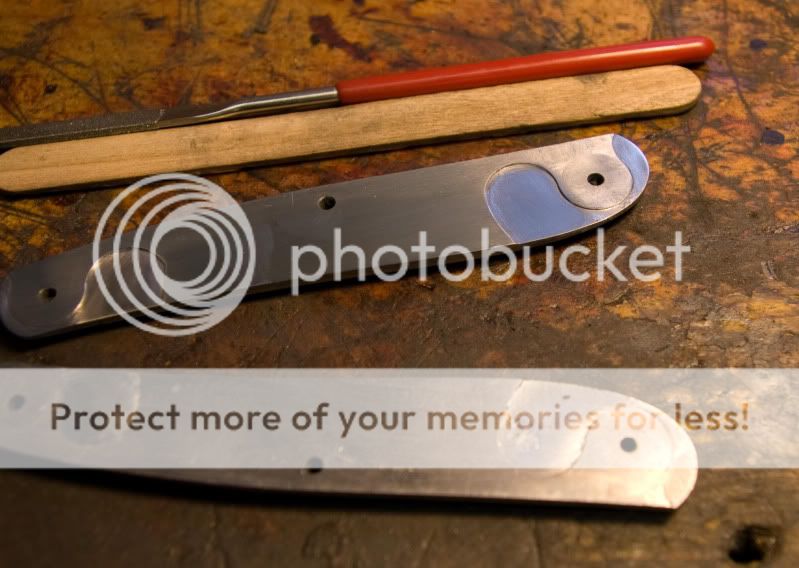
I am at the point were I spend a lot of hand sanding time cleaning things up. I use various sticks, files and wet or dry paper to take the inside of the frames to about 600 grit. The mark side frame on top has been cleaned up a bit. You can see the pins for the scales and shield are pretty much hidden on the inside also.
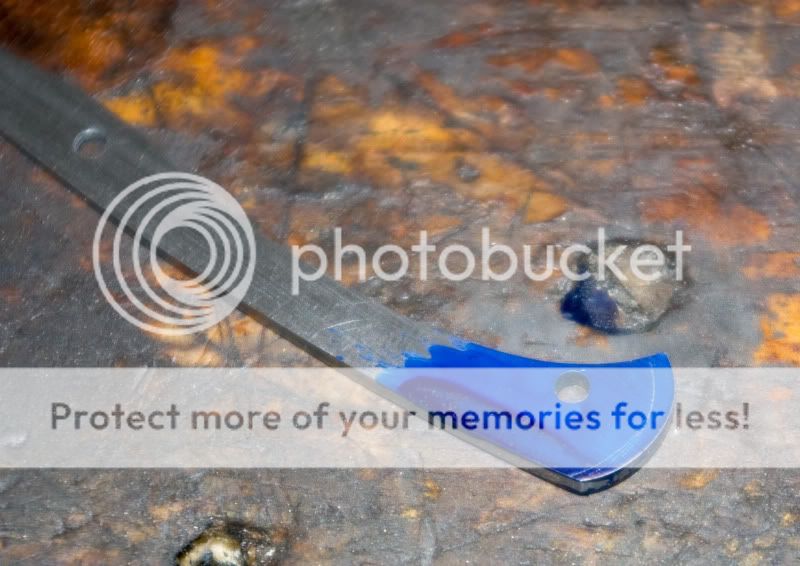
One of the items that has to be taken care of is to mark the center spacer and remove a bit of material to keep from the tangs being scratched. This would be difficult to hold and mill. I do it by hand on my belt sander
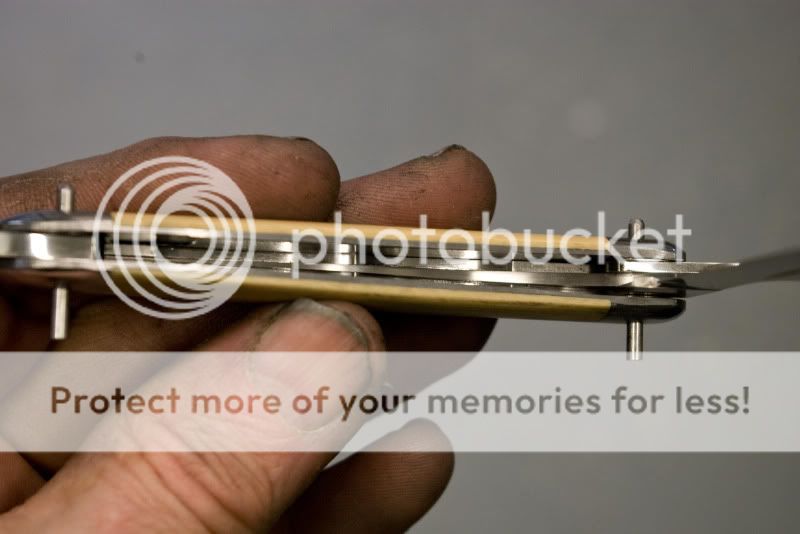
This shows what can be expected from the inside cleanup work. With a whittler or stockman the well is much more open than a single blade or jack with a center liner. This being the case its more important to get a better finish inside.
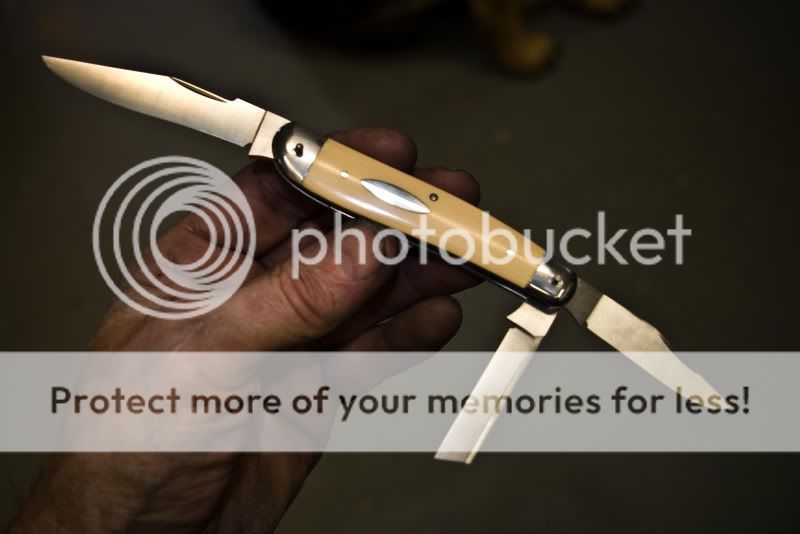
For the most part all that is left is lots of hand work. Finishing the inside, making sure the bolsters are nicely rounded.
I will have a few more pictures showing how I peen the pivot pins then a set of completed pictures along with a few notes on what will be done differently on the next two knives. I plan on also showing, noting the flaws in this knife so others, including myself , may learn from them.
Ken
Last edited:

- Joined
- Oct 11, 2001
- Messages
- 3,768
Very cool. As others have said, it's great to see all of the steps that are part of the process. Makes me appreciate all custom slip joints more. Thanks Ken.
