- Joined
- Jan 18, 2007
- Messages
- 34,180
Great find, Oakleaf shield always a looker


The BladeForums.com 2024 Traditional Knife is available! Price is $250 ea (shipped within CONUS).
Order here: https://www.bladeforums.com/help/2024-traditional/
Great find, Oakleaf shield always a looker
Fine restoration jobWell it’s had a haircut and a shave. There was some extremely deep rust and pitting in the ridges so I took them completely off. I’ve been hand stoning the logo side cheek for hours. It’s got some old battle wounds and what appears to be an old grinder scar at the 7:00-8:00 position that I don’t like but I’m not going to take off enough material to remove them. The logo is certainly more prominent now. The striking surfaces were essentially pristine after some surface rust removal. Makes me wonder how hard they are.
View attachment 3091637
 Of course if it were an old knife a chorus of voices would chant "leave it as it is, never clean off
 Primble
in restoration of old knives. Hammers deserve preservation too
Primble
in restoration of old knives. Hammers deserve preservation too  Looking forward to seeing it with a new handle

I know what you’re saying. I don’t mind patina at all but this had level of rust on it that was detrimental and would have shortened the life of the hammer if not addressed. I think it had surely been buried in an old barn floor or something. Fortunately the eye is still in good shape. I was concerned since it was packed full of dirt. I plan on using it like I bought it at the hardware store last week so my main concern was eliminating the rust while still keeping the logo. I might blue it when I’m finished.Fine restoration job
rustpatina, years of character, stories to tell, let it be bla bla" I'm not convinced by this dirge, rusting hulks are what they are, but knives with slight corrosion/wear are enhanced by careful restoration. Otherwise you run the risk of a knife deteriorating further and becoming one of those fossils, I'm not talking about buffing a knife into oblivion either but I admire the careful work done by people such as
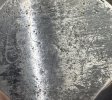

Could it be a couple scratches?I know what you’re saying. I don’t mind patina at all but this had level of rust on it that was detrimental and would have shortened the life of the hammer if not addressed. I think it had surely been buried in an old barn floor or something. Fortunately the eye is still in good shape. I was concerned since it was packed full of dirt. I plan on using it like I bought it at the hardware store last week so my main concern was eliminating the rust while still keeping the logo. I might blue it when I’m finished.
One advantage of cleaning things like this up is that sometimes you find markings that weren’t visible before. I uncovered a new mystery on it yesterday. It’s got a US then a slanted line below followed by an exaggerated V or M shape. I posted pictures on an old tool forum to see if they could come up with something. I’m thinking it might be some type of manufacturer location marking. They don’t look like military markings I’ve seen on old tools. I believe by the logo this hammer was made between 1912-1940. Maybe someone on here will recognize it. I’m still researching it.
View attachment 3093102
I initially thought so but looking at it under magnification it looks like the rest of the markings. I think it’s shallow because it’s stamped across a curved surface. I believe that’s the reason the Keen Kutter logo is so much shallower at the top than the bottom as well. Corrosion seemed to be a consistent depth across the cheeks. The straight line below is at an identical angle to the U and is perfectly centered between the S and the V/M shape. The V/M shape is also perfectly mirrored if you divide it down the center. So, I’m fairly confident those four marks were added intentionally. It’s hard to get a good picture of it all. It could have just been added by the owner or an old tool room marking. I’ve been looking into who Keen Kutter contracted to make their hammers but I haven’t found anything to make any sense of it yet. I believe a lot of them were made by True Temper and Stanley.Could it be a couple scratches?
To me, the depth is too shallow, and the width looks a bit thin for a stamp. Also, a small nearby nick is deeper.
Your idea of bluing (or browning) has merit, tho a light coat of oil every so oft will be necessary.I’m trying to figure out how to keep it visible and still get a protective finish on it.
I have thought about it. I do forced patinas on about half of the knives I make. I’m a little concerned about some of the deeper scratches and nicks trying to rust if I do that though. It has remnants of some ancient black coating that I can’t get off without sanding deeper than I want to. Soaking in acetone overnight didn’t touch it. Nor will a wire wheel. I need to get that off before I apply any kind of new finish.Your idea of bluing (or browning) has merit, tho a light coat of oil every so oft will be necessary.
Have you considered a hot vinegar forced patina everywhere but the faces?
As with a knife blade the patina will protect against rust, with a "bonus" of not needing the occasional wipedown with an oil or silicon rag.
small/tiny "Dremel" teardrop diamond or ball grinding wheel that fits where the black is, maybe?I have thought about it. I do forced patinas on about half of the knives I make. I’m a little concerned about some of the deeper scratches and nicks trying to rust if I do that though. It has remnants of some ancient black coating that I can’t get off without sanding deeper than I want to. Soaking in acetone overnight didn’t touch it. Nor will a wire wheel. I need to get that off before I apply any kind of new finish.

Yep, you were rightDon't worry, it will grow on you.


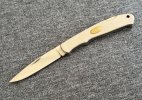
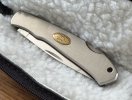
 Jolipapa
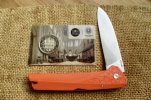
as he sent me not only a Kiana in Orange but a beautiful commemorative 2€ coin celebrating the final restoration of Notre Dame cathedral after the hideous fire of 2019, one of Europe's cultural landmarks.
Jolipapa
as he sent me not only a Kiana in Orange but a beautiful commemorative 2€ coin celebrating the final restoration of Notre Dame cathedral after the hideous fire of 2019, one of Europe's cultural landmarks.

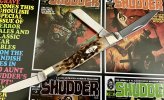
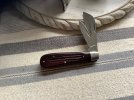
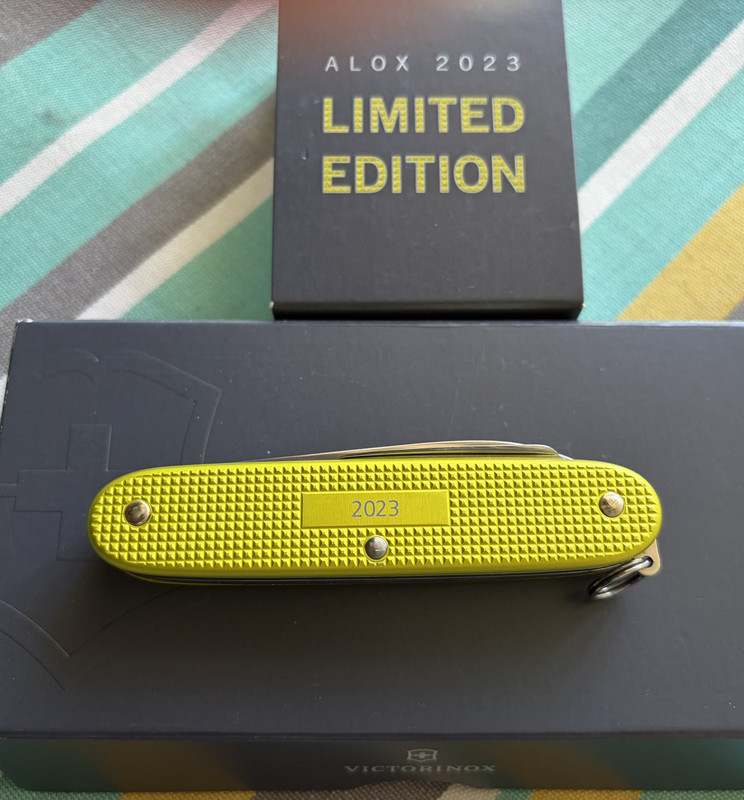
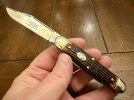
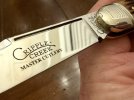
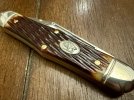
Yeah, those are good looking. I’m sorry I missed out on the drop on those. I have the blue paper GEC Tidioute iteration, but the jigged bone in the fancier trim level is super nice.Cripple Creek 32 in chestnut jigged bone just landed in my mailbox, and what a sweet knife!
View attachment 3096629View attachment 3096630View attachment 3096631

Wow congratulations Will.Couple of weeks back I was musing about the French knife Florinox Kiana. Some say It's a contemporary Opinel but I find it more Douk-Douk: cast handle, backspring and a lock, lightweight well made and tough working knife. So being in the EU I got one from a French dealer in Sea Green, VERY satisfied with it and a grand surprise. Another surprise awaited me with striking kindness and generosity from out friend
Many thanks indeed Alain
View attachment 3096778
Yeah I really like this knife a lotYeah, those are good looking. I’m sorry I missed out on the drop on those. I have the blue paper GEC Tidioute iteration, but the jigged bone in the fancier trim level is super nice.