A local guy offered to sell me these knives....

No. No. No. With all due respect, it may be time to read more, actually use some knives, and post less.

I'm starting to wonder if that guy isn't pulling our legs. To the OP, no, "surgical steel" is nothing but a bad sign in this context. Those knives are almost certainly junk.

Mr. Surgeon's insight in post #51 above is interesting, but not really helpful in explaining what "surgical steel" denotes when used in the context of the knife world.
 
Last edited:
Your scalpel manufacturer readily provides the steel type used. That is good, as well as what should be expected in a GOOD/RELIABLE manufacturer/supplier.

The problem with the use of the "surgical" reference on knives is simply one of hype, deception and/or obfuscation...

They don't provide it readily, you have to contact them for the information.

It is unfortunate that it has come to that, though, as I mentioned concerning Gerber, "surgical stainless" is sometimes used as a generic description since they switch steels on models from time to time and would rather not hassle with designing new boxes with the proper steel nomenclature describing the contianed product. I remember rumors about Cold Steel's "Carbon V" changing composition from time to time, and I know that some spread similar rumors about the Bussekin steels since Jerry gives them "special" names :)


But the purpose of my post was primarily in response to things like this:

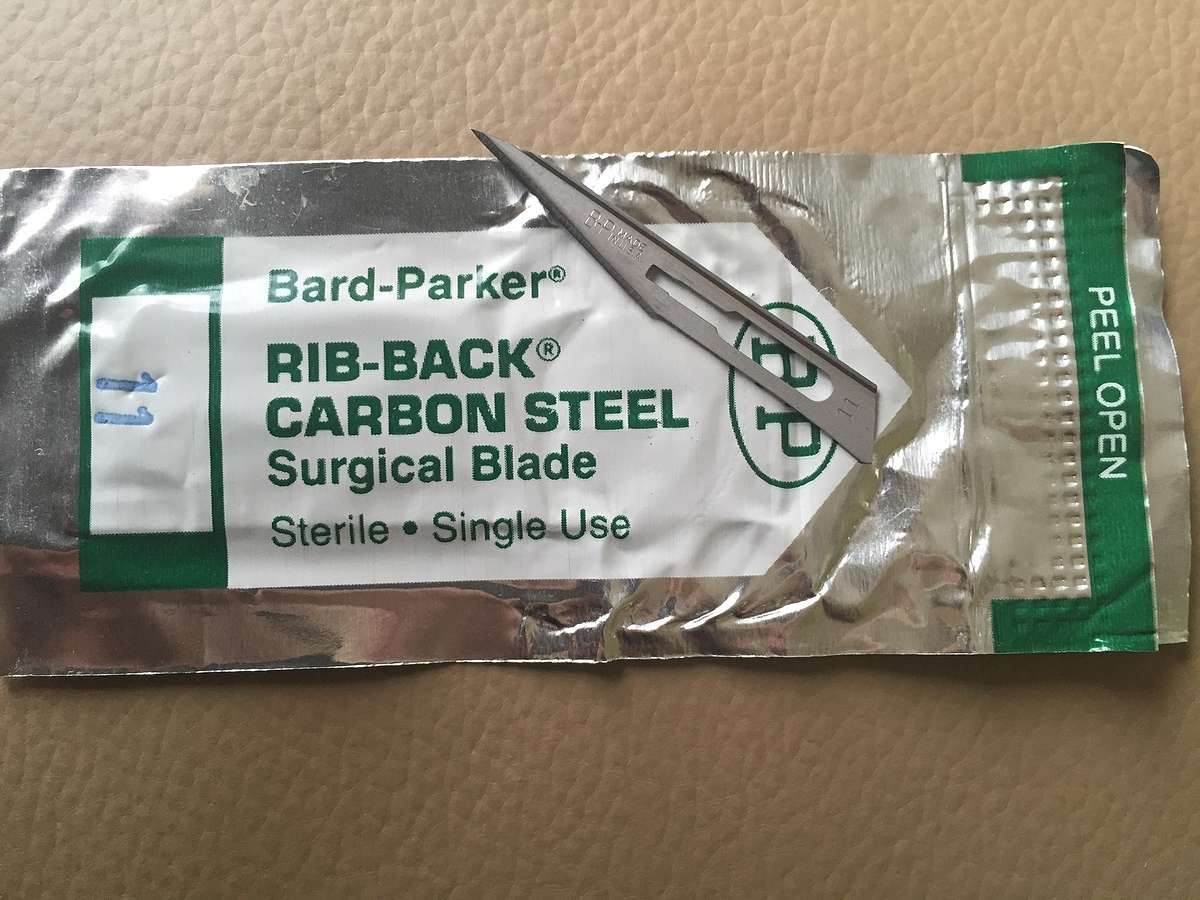
Surgical steel is exactly garbage... Scalpels gets used once and thrown away...
Do you really want a knife made out of something that won't take a new edge?

Our scalpels are used once and thrown away, true, but they are made out of very good steel under very tight tolerances, absolutely NOT "garbage", and they most certainly can take a new edge, we just don't normally bother.

Perhaps what is required is for people like jimmyd1982 and others to stop thinking "scalpel" when they read "surgical stainless" since all of our other tools are also made of "surgical stainless" steel, just not the same steel as our scalpel blades.

One more thing: most of our instruments are made of high quality steel to precision standards, they are expensive to purchase and we re-sterilize them as many times as possible. However, we also have disposable "trauma packs" that include less precise instruments (clamps and scissors) made from what is probably 420J2 in... you guessed it, Pakistan. These we do not usually re-sterilize, they are tossed or given to the patient to take home if asked for.


Regarding the Pakistani knives in this thread, those are certainly the product of someone's labor, hopefully he/she made a fair wage, and the handles of some are decently pretty... perhaps one day "Made in Pakistan" will be much like "Made in Japan" or "Made in Taiwan" is today? Maybe not. And certainly not anytime soon.

 
I'm sorry, i know i don't know you and please try to see this as i do- from the outside?

But......you just told a guy to "read more and post less" while you have 15,691 posts?

You've got to see the irony in that......honestly, i'm not trying to be rude; it just made me LOL ;-)

This guy have history of following me through the threads, posting a lot and often personal, questionable insults,everywhere I post he shortly appears with his sarcastic, ignorant comments of personal character...I has reported him to mods number of times, yet he is still here and insulting others.I would not pay much of attention to this or neither to his posts.
 
This guy have history of following me through the threads, posting a lot and often personal, questionable insults,everywhere I post he shortly appears with his sarcastic, ignorant comments of personal character...I has reported him to mods number of times, yet he is still here and insulting others.I would not pay much of attention to this or neither to his posts.

He's been registered on this forum for 8 years and has 71 posts....
 
This guy have history of following me through the threads, posting a lot and often personal, questionable insults,everywhere I post he shortly appears with his sarcastic, ignorant comments of personal character...I has reported him to mods number of times, yet he is still here and insulting others.I would not pay much of attention to this or neither to his posts.

I has quoted for posterity.

You defended surgical steel as used for a knife steel. Enough said. Op learned something and hopefully the lurkers and future knife nuts did as well. This thread will come up when people research surgical steel in the future.
 
Last edited:
I recently handled a knife that actually clarified its' Surgical steel as being 1095 steel on the blade stamp itself.

I remember it because it surprised me.

It seems like "Surgical Steel" isn't a protected trademark or anything, and anyone can use it to describe any kind of steel.
 
They key difference being that Marcinek knows what he's talking about....

Well thanks, but lets not get carried away! :D I do make every effort to only answer questions that I know the answer to. If I don't know, I shut up and read the posts of people who do.
If its a decent steel, makers will identify it. If is a steel a maker doesn't want to name, calling it "surgical" (or "400 series") are common ways to hide that.

As for real surgical steel, it is interesting to hear that AUS-8 actually IS surgical steel. I like AUS-8. But I have never heard of a knife made of AUS-8 where the maker didn't say "AUS-8" and called it "surgical steel."
 
these are chipaway by frost cutlery , I would be wary of them and at said price I would run.
 
If its a decent steel, makers will identify it. If is a steel a maker doesn't want to name, calling it "surgical" (or "400 series") are common ways to hide that.

As for real surgical steel, it is interesting to hear that AUS-8 actually IS surgical steel. I like AUS-8. But I have never heard of a knife made of AUS-8 where the maker didn't say "AUS-8" and called it "surgical steel."

I wonder if it has become necessary as was indicated in one of the other posts above: since "surgical steel" isn't a specific steel-type, respectable makers using stuff like AEB-L and AUS-8 but not indicating it found themselves in competition with other manufacturers peddling lesser materials (420J2) under the same title "surgical steel". Users can tell the difference between the quality of either brand, but then some brands that once produced quality products of higher-end steel start peddling cheaper stuff (e.g. Gerber) and now users aren't sure who to trust and think "surgical steel" is "garbage", so manufacturers start advertising the specific steel-type used...

But that hasn't happened with surgical blades yet as far as I know, and we just buy from reputable manufacturers - I guess they haven't felt a need to advertise the specific steel type yet, unlike in the sports-knives industry.
Pick up a pack of brand-name utility (box-cutter) blades - do they specify steel-type of just say "high carbon" or something like that? Look at saws and drill-bits and other more mundane cutting implements even from high-end manufacturers - how many give the actual steel-type vs just "high-speed steel" or something similar? We knife-enthusiasts are a special crowd for demanding more information from makers/manufacturers regarding the materials they use. *shrug*
 
We knife-enthusiasts are a special crowd for demanding more information from makers/manufacturers regarding the materials they use. *shrug*

Without question. That goes for just about everything we chat about here. Joe Nonknifeenthusiast doesnt care. The mystery steel serrated tanto from the gas station is gonna work fine for him.

Of course Joe and his online chums are probably off at some other online forum discussing how ill-informed we are for using the wrong kind of lawn mower or dental floss or temperature to brew our coffee at.

"Surgical steel", like the one on the OPs knives...it will work. Its not going to explode or crumble into dust. Might even stay sharp for a while and the user can just give it a few passes on the pull through V sharpener.

But we are all here because it matters to us more.
 
Rule #1) Never meet up with a girl from Craigslist.

Rule #2) Never buy a knife from Craigslist.

Rule #3) Never go to Craigslist.
I've bought western 49s for less than $70 off craigslist. I've met up with people off craigslist for events and had a grand time.

I wonder if it has become necessary as was indicated in one of the other posts above: since "surgical steel" isn't a specific steel-type, respectable makers using stuff like AEB-L and AUS-8 but not indicating it found themselves in competition with other manufacturers peddling lesser materials (420J2) under the same title "surgical steel". Users can tell the difference between the quality of either brand, but then some brands that once produced quality products of higher-end steel start peddling cheaper stuff (e.g. Gerber) and now users aren't sure who to trust and think "surgical steel" is "garbage", so manufacturers start advertising the specific steel-type used...

But that hasn't happened with surgical blades yet as far as I know, and we just buy from reputable manufacturers - I guess they haven't felt a need to advertise the specific steel type yet, unlike in the sports-knives industry.
Pick up a pack of brand-name utility (box-cutter) blades - do they specify steel-type of just say "high carbon" or something like that? Look at saws and drill-bits and other more mundane cutting implements even from high-end manufacturers - how many give the actual steel-type vs just "high-speed steel" or something similar? We knife-enthusiasts are a special crowd for demanding more information from makers/manufacturers regarding the materials they use. *shrug*

Without question. That goes for just about everything we chat about here. Joe Nonknifeenthusiast doesnt care. The mystery steel serrated tanto from the gas station is gonna work fine for him.

Of course Joe and his online chums are probably off at some other online forum discussing how ill-informed we are for using the wrong kind of lawn mower or dental floss or temperature to brew our coffee at.

"Surgical steel", like the one on the OPs knives...it will work. Its not going to explode or crumble into dust. Might even stay sharp for a while and the user can just give it a few passes on the pull through V sharpener.

But we are all here because it matters to us more.

...Or, the economics of those industries are different, in that these industries continuously buy new product and consume old product, so that if the manufacturer were to slip bad product in, the consumer business would notice and take their business away.

Medical scalpels and saw blades are consumables. Sport knives are durable goods. Because consumables require businesses to continuously buy, it's in the manufacturer's interest to make sure the consumer has no reason to contract with another company. For durable goods, they just need to make you a sucker once, and then the worst you can do is word of mouth as opposed to directly hurting the bottom line.

Zero
 
wait did the guy who wants to sell these to em' say surgical steel or do the blades say surgical steel somewhere on them (I can't tell from the pics)?
 
Our disposable surgical scalpels are commonly made from AUS-8 stainless steel.

AUS-8 is ok steel, gets sharp easily but doesn't stay sharp for very long. Most knife enthusiasts insist on better, but in the overall world of cutlery AUS-8 is at least average. The small step up to AUS-10 is actually a significant improvement.

But the fact is that many/most low-end knives made with mystery "surgical stainless" are not using good Japanese AUS-8 steel, or anything close to it. Nor are they heat-treating to 58-59 Rockwell hardness that AUS is capable of.
 
....Our disposable surgical scalpels are commonly made from AUS-8 stainless steel. This is comparable to your 13C26 and AEB-L or 440B stainless steels. Would any of you throw away knives made from such steel? Is it "garbage"? ...We do not bother washing and resharpening/reusing the blades NOT because we couldn't but because we don't have to and it is cheaper to simply use a new one...
This is correct to some extend. Not all disposable surgical blades are stainless steel made, actually they are less used, because they are more expensive and used mostly in specialty surgeries. The most widely used, disposable surgical blades are made of Carbon steel, they are thrown away not only because they are contaminated already but because the process of cleaning and reusing them is more expensive than the process of completely recycling them.

ZozIAY.jpg


Your handles and other surgical instruments are made of different flavors of Stainless steels - 440b and so on, they have to be able to withstand all the different sterilization processes, that involve steam, condense, different aggressive mediums as the Cydex solutions and so on...

I can't believe this "surgical steel" thing is topic of 3 pages, right after it was summarized very well after the OP... "Surgical steel" is a steel that needs to be stain resistant to be used in this field. This is all it means in reality. Everything you cut and use those instruments for is too soft to require some fancy hardening process that will make the instruments used more expensive they already are... The blades that require to be very sharp, as scalpels and so on, are usually disposable and made of material that will take good edge. For bone cutting tools used in Ortho they use mostly disposable carbon blades, stainless steel blades for some of the tools used in Neurology are made of SS because they are reusable few more times, as the Craniotomy drills and such...

For the record: I was professionally involved with the surgical field for 10 years in Europe and another 10 years in US, in US I scrubbed in Orthopedic, Open Heart, Ophthalmology, Neurology and Urology surgeries and was OR Equipment specialist in a major OR with over 40 operating rooms, that I was responsible for, on a daily bases.
 
All this talk about "surgical steel" and is surgical steel good or not misses the point that the blades in question are probably NOT made from any steel that is actually made into surgical instruments, not to mention its heat treat might be bad too.

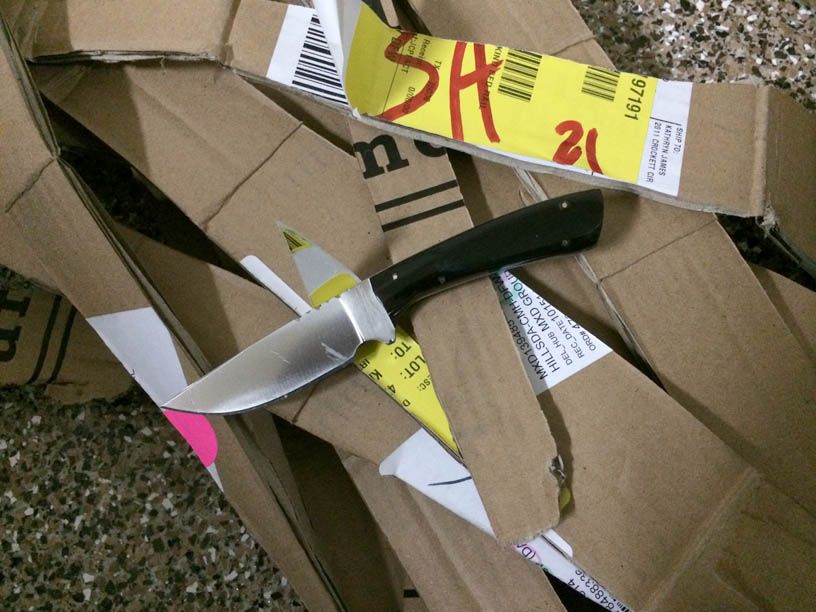
We buy knives that are stated to be made with steels that we know, and we trust that the maker will do a decent heat treat, but how do we really know? I bought a custom knife once with unknown steel and more recently got curious about using it. I don't have a way to do a Rockwell test but decided to sharpen the knife and do a cutting test. If a person bought one of these questionable "surgical steel" knives, maybe they could do a similar test with some cardboard. It would be even better if they had a knife of known quality for comparison. The result of my tests was that my knife might not be the best steel available but it had enough heat treat to be functional.

photo2014-11-16b_zps57cd6b4d.jpg
 
Back
Top