Anyone else tired of the excessive flipper craze?

I probably have a problem, my thumbs must be too weak :p

Lol...that would explain it! Weak thumbs. Apparently, folks with more beefy thumbs are snapping those lockbars like dry twigs, according to what I'm reading here.

You need to hit the gym!

 
Flippers help with thinking a folder may disengage onto my fingers, but it's not absolute.

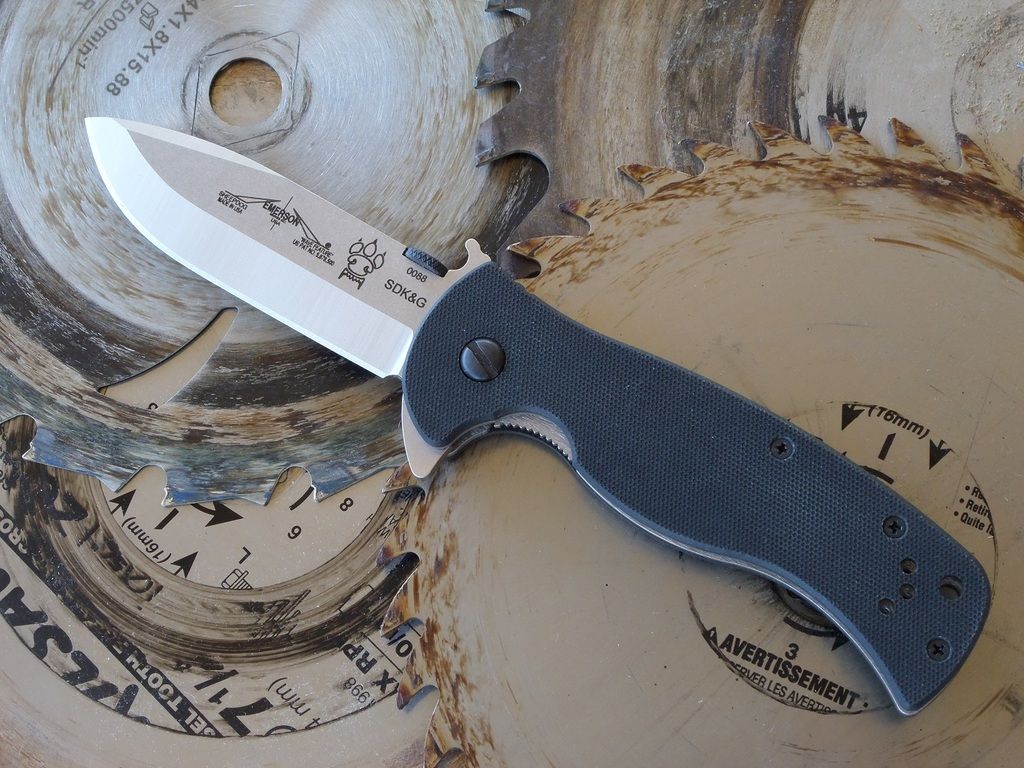
Flippers that are larger accomplish a safety of sorts, example being Emerson Sheepdog:

SAM_3172_zpsgofmp3ns.jpg


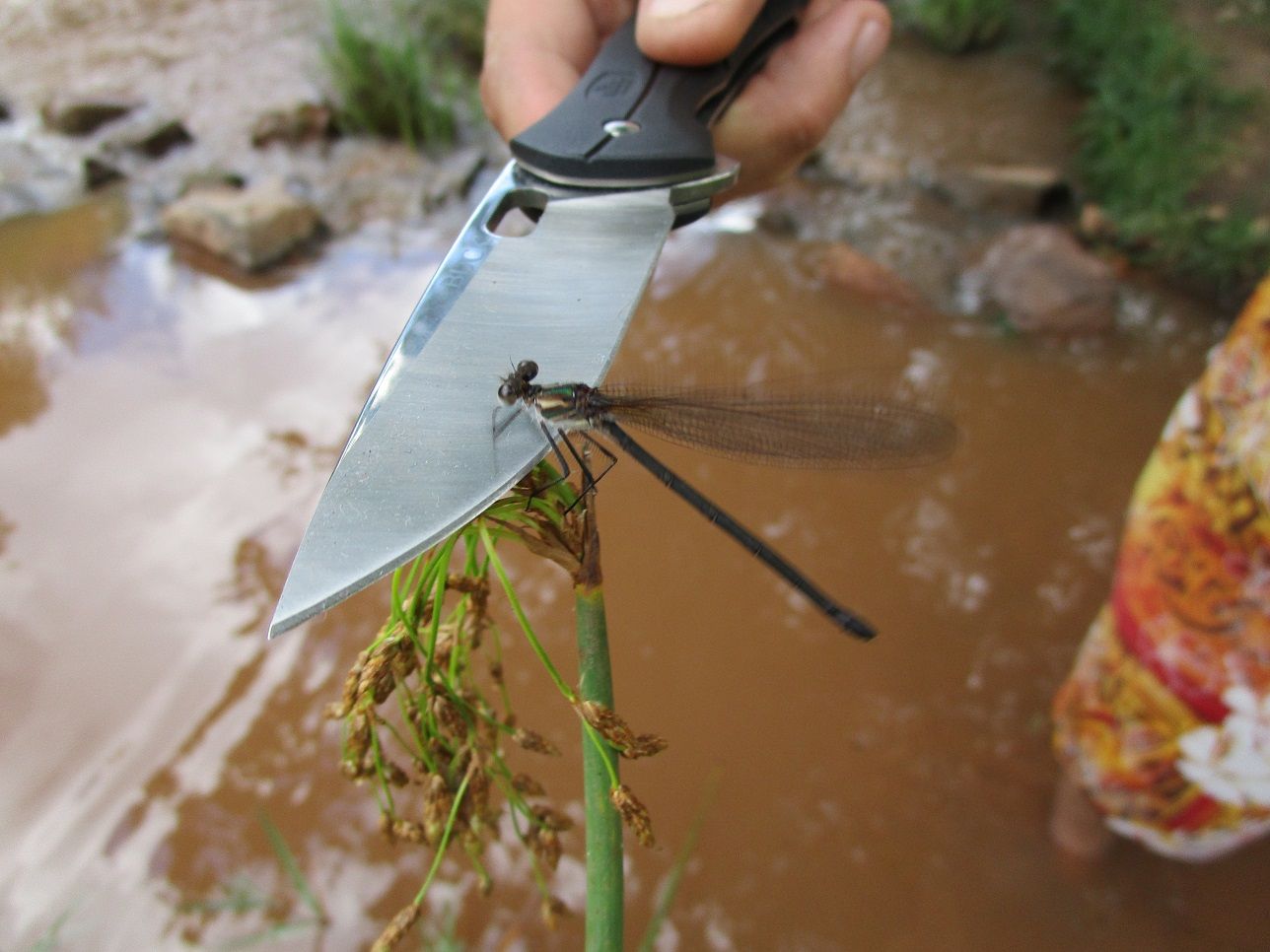
Now I like the Buck Vantages, but don't think of the flipper as providing any safety with it's small size:

IMG_0455_zpshmccpdyt.jpg


I purposely look for flippers, I like them, but if a folder doesn't have it then the blade really has to overcome in other areas for me to buy it now.

I also like how flippers have ended the argument for me against flipping your knife open, it's ok, actually how they are designed to function, and to have fun with your knife!
 
Noice. Saw your post in the Emerson forum. The sheepdog is a possible exception I would consider, since it isn't the only way to open it.
 
...And if you know anything about torque, I am sure you would agree that you could break a framelock bar with your hands due to the skinny cut out section that acts as the spring.

Both are more susceptible to lateral torque

If you knew anything about torque (and what the heck is lateral torque), you would know that torque is a twisting force that tends to cause rotation. You know , like the drive shaft on a car, a screwdriver, or a drill. If you can break a frame lock bar with your bare hands by applying torque, then your name must be Clark Kent.

The force that both of you are referring to is leverage, not torque.
 
You also have to be extra aware of your hand placement on the knife to be able to use the flipper effectively. Then knowing how to actuate the flipper correctly (variations in detent strength, flipper geometry, and force needed varies from model to model). It just seems like so much extra necessary steps over traditional one-handed opening mechanisms like thumb studs, thumbs disks, and the Spyderhole.

All of the above is true for thumb studs, thumb discs, and holes as well. So should we just get rid of all of them?
 
I admit now that I did not read every single post in this long thread. So what I'm about to say might have been said before.
I am not saying this is a physical negative, meaning that it will cause harm to the blade, but I generally don't like blades with holes in them. I own some spydies, but the spyder hole is by far my least favorite way to open a knife, and on my endura titanium Damascus version it's almost nonfunctional with one hand.
I prefer the flipper due to it's reliability, the fact that it serves as an automatic guard protecting against accidents caused by slipping forward onto the blade and, I like the way they look. However, I also really like the flipper because it is just a part of the blade, nothing added, nothing cut out, it's just metal of the blade used to open it.
Thumb studs are fine, and my second favorite method of deployment, but I have problems with them. Why do I need it on both sides (most knives do have them on both sides) if I'm right handed,? Is it pressed or screwed in? Will the threads hold or will it come loose and fall out, which I've had happen albeit on cheaper "work" knives you get at hardware stores (think 20 years ago or more). What if my thumb is cut or hurt, now what.
That last point is valid because the flipper, at least the way I use them, gives multiple options for opening. If possible, depends on the knife, I don't use the tip of my finger at all. I hold the knife as if I'm going to cut something in a hammer grip, choke up a little and use the inside of one of my joints on the index finger. For me, that's the best deployment method. It allows me to keep the knife in hand, in the position I will be using it without having to twist or readjust much, if at all, after opening it.

That's my two cents. For what it's worth.
 
If you knew anything about torque (and what the heck is lateral torque), you would know that torque is a twisting force that tends to cause rotation. You know , like the drive shaft on a car, a screwdriver, or a drill. If you can break a frame lock bar with your bare hands by applying torque, then your name must be Clark Kent.

The force that both of you are referring to is leverage, not torque.

Assuming others don't know what they're talking about is a character defect. Lateral torque can unlock both designs in a way that it cannot with other lock designs.
 
Jamesh,
I'm interested in your inertial deployment method and speed, as I'm interested in unique ways to open knives.
I used to "speed-deploy" my Buck as if it had the Spydie hole before Spyderco existed, and was fascinated by buttefly knives, gravity knives, switchblades, etc.

Can you post your method to YouTube (or tell me if this was already covered and I missed the post)?
 
Flippers, nope. Love them. Too many companies trying to flood the markey these days with crap designs and fly by night operations though that I Think the communities and industries can do wothout. Not all is crap, but I cannot see the time, energy, and passion put into some of these things being sold en mass these days. Knife like objects, $400 for a knife made in China? Nope.
 
Personally, I'm sick of stainless steel...


Really?! You sport some beautiful stainless knives!

As for me the only the "deployment method issue" is a purely aesthetic thing. I don't particularly like the way thumb studs mess up the lines of some otherwise gorgeous knives....doesn't mean I don't use the thumb stud. Just wish it wasn't there on some knives....cold steel is a good example. I love everything about my code 4 clip except the ugly thumb stud. Wish it had that sexy groove like a marfione Anax or something similar.
I don't mind using two hands. Never been in a knife fight though :P

Edit: is inertial deployment where you wiggle it like a shake weight til the blade drops out?? XP
 
To each their own I guess. I personally like all methods of opening. I carry a traditional and a OHO everyday, and sometimes it's a flipper. Sometimes it's not. If you don't like them, don't buy them. Pretty easy resolution if you ask me. There are so many diverse patterns out there, and it shouldn't be hard for someone to find exactly what they are looking for. If you don't like flippers, who cares??
 
All of the above is true for thumb studs, thumb discs, and holes as well. So should we just get rid of all of them?

It's only true if you use one of those opening mechanisms to flip the knife open, usually with a thumb flick. I could never find a thumb disk that was flickable, though. Maybe it's just me.

In addition to a modern one-handed opener, I always have something more traditional on me with the tried-and-true nail nick. Make mine a long pull. ;)
 
Assuming others don't know what they're talking about is a character defect. Lateral torque can unlock both designs in a way that it cannot with other lock designs.

Maybe I'm defective, :D but define lateral torque for me. If you're talking about sticking the blade into something and twisting, then that is just plain old torque. If you're talking about sticking the blade into something and applying force laterally, like prying, then that is not torque, its leverage.

Torque refers specifically to a twisting force.

ETA: Please don't take this post a argumentative, or condescending. I'm just trying to clarify, for my own understanding, what type of force you were referring to.
 
Last edited:
Maybe I'm defective, :D but define lateral torque for me. If you're talking about sticking the blade into something and twisting, then that is just plain old torque. If you're talking about sticking the blade into something and applying force laterally, like prying, then that is not torque, its leverage.

Torque refers specifically to a twisting force.

ETA: Please don't take this post a argumentative, or condescending. I'm just trying to clarify, for my own understanding, what type of force you were referring to.

Oops! In that case I jumped on you too quick, I'm talking about A, I specified lateral because, when talking locks and disengagement, you can also push down on the handle to create torque around the pivot.
 
If you knew anything about torque (and what the heck is lateral torque), you would know that torque is a twisting force that tends to cause rotation. You know , like the drive shaft on a car, a screwdriver, or a drill. If you can break a frame lock bar with your bare hands by applying torque, then your name must be Clark Kent.

The force that both of you are referring to is leverage, not torque.

The is not exactly correct. Torque is a force applied at a perpendicular distance from a momemt. It can lead to rotatation, but is the premise of the common simple tool of a lever. t= F x d. (Hence lb-ft or ft-lb of torque).

Leverage is the application of torque. They are basically one in the same. Example: torque wrench. Long handle = leverage to apply more torque for a given force.

A gear is another use of torque; the larger the radius for a given force the greater the torque due to the distance set from the moment (center).

So the first comment holds true for the lock bar as the cut out section is the moment (commom terms pivot point) with the force applied to the lock bar (from the side or perpendicular).

Torque can be and is applied in a "twisting" or angular rotation direction when speaking in terms of round objects such as gears, drive shafts or screw drivers. BUT, this is the same priciple at work in a common lever. Torque can also be applied to and object with does not reult in motion (a stuck lever, a rusty bolt, etc).

I do believe lock protectors are used to prevent the common man, not Clark Kent, from over bending a frame-lock bar as it is a "lever" and when a "force" is applied at a "distance" that is the length of the lock bar, from the side "perpendicular" to open excess "torque" can result at the lockbar cut out resulting in damage or to the mechanism.

Just so we stay on track....
 
Last edited:
The is not exactly correct. Torque a force applied at a perpendicular distance from a momemt. It can lead to rotatation, but is the premise of the common simple tool of a lever. t= F x d. (Hence lb-ft or ft-lb of torque).

A gear is another use of torque; the larger the radius for a given force the greater the torque due to the distance set from the moment (center).

So the first comment holds true for the lock bar as the cut out section is the moment (commom terms pivot point) with the force applied to the lock bar (from the side or perpendicular).

Laymen often associate a priciple to the comment use and torque can be and is applied in a "twisting" or angular rotation direction when speaking in terms of round objects such as gears, drive shafts or screw drivers. BUT, this is the same priciple at work in a common lever.

Just so we stay on track....
I stand corrected.:o
 
Did someone say titanium framelock flipper?


Titanium is strong and light, the framelock is simple to use and more than robust enough for my EDC needs, and finally, the flipper makes one-handed deployments breeze, while the tab acts as a convenient finger guard.

In my collection I have Spydie holes, thumb studs and discs – love 'em all – but the flipper remains my favorite method for one-handed deployment.

Regards,
Adam
 
Back
Top