Seriously.
If you like something and you can afford it, and it is INDEED marginally better. Why would you not partake?
Do you wear a Timex or Casio watch if you can afford a Patek or AP?
Do you drive a ford when you can afford an infinity?
Come on Brah.
Point of diminishing returns.
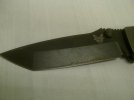
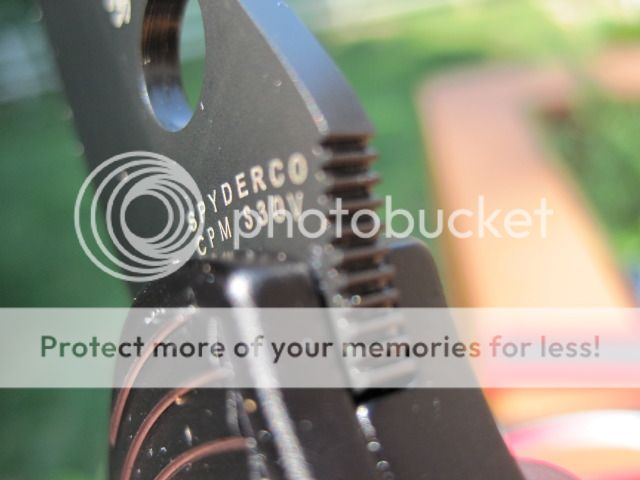
I used to have every high end Spyderco Military sprint model there was, but in the end my OLFA does pretty much everything the Military did, and is in some ways superior.
I could be wearing something with a top of the line ETA movement right now, but after looking at how inflated the prices are on mechanical watches (that industry is messed up) I bought a few reputable Chinese watches instead ($75 each). One keeps time extremely well, averaging just over +1 Second Per Day, and the other is well within COSC standards. They are lacking in a few ways, but the price to performance ratio is incredible.
Why bother owning something that comes with so much added risk (loss, damage, theft) when you can use something that performs effectively the same at a small fraction of the cost?
For the most part, it is all marketing hype. They develop the steel (including mystery magical ones like Infi and Carbon-V) just to sell it to you. Most users don't care, and the guys who work hardest with knives, every day of their lives, go with whatever their employers supply. Mont Blanc pens have alot going for them, but just about everyone uses cheap disposable pens for work. The same principle applies here. The only real and unique attribute to these latest and greatest super steals is their ability to empty a collector's wallet.
n2s
Your analogy with the Mont Blanc is a little off. Comparing a $500 fountain pen with a ball point pen is like comparing a pocket knife with a stamping machine. They achieve similar results, but the mechanisms are different. Once you're comparing apples to apples, saying that a $10 fountain pen can write just as well as a $500 fountain pen, then you've got a statement comparable to saying that a $10 knife can be made just as sharp as a $500 knife. In both cases all that is needed for optimal performance is half decent materials and a good understanding of the required geometry. Where the analogy drops off is that there's just a few more characteristics that only mildly affect writing performance in the pen (counting the ink and paper as separate issues), where sharpness is just one of many characteristics of steel that can affect performance.
The trouble is that the variables surrounding what makes a good knife steel are not fully understood. We can take guesses, see what happens when you improve one attribute or another, but coming to solid conclusions is very difficult (mostly because knives are directly operated by people).
That we have many high performance and incredibly good steel types in use today is unquestionable. Whether or not the improved attributes they bring to the table are useful to your specific application is highly debatable, and that's half the reason you see so much fuss and hoopla about them. We're exploring the unknown, reaching into new frontiers. It's all very exciting stuff and people like to see for themselves (which is why I have a kiln and a few bars of the highest alloy steel I can get my hands on sitting in the toolshed).
If you're just trying to point out that the newfangled steel types have made little impact on the basic function of a knife, I heartily agree. If you actually think that people are putting expensive and difficult to work with steel into knives not expecting to see any benefit to the end user, you might want to loosen the tinfoil hat a bit (I do think there are plenty of good reasons to wear one, this just isn't one of them).