
-
The BladeForums.com 2024 Traditional Knife is available! Price is $250 ea (shipped within CONUS).
Order here: https://www.bladeforums.com/help/2024-traditional/
You are using an out of date browser. It may not display this or other websites correctly.
You should upgrade or use an alternative browser.
You should upgrade or use an alternative browser.
Bose Knives
- Thread starter VCM3
- Start date


- Joined
- Oct 26, 2005
- Messages
- 17,543
Awwww crap... I forgot the scale pins
It's alot & Charlie brings up another construction detail,how many blades have bushings ?
-Vince
Hi all,
I was looking through the galley over on the boseknives site and found these 2 images that I have a question about.
http://boseknives.com/gallery/main.php?g2_itemId=213
http://boseknives.com/gallery/main.php?g2_itemId=3113
Given that you can see the inside of the liners on these 2 knives. You can also see where the handle material and shields have been pinned in the liners. As a knifemaker I have always tried to make them invisible inside the liners same way the pivot pin is invisible in the bolsters. Is having them visible not a problem? I have never used ivory or stag before so I could easily see it as a result of having to be careful with those materials.
Alistair
I was looking through the galley over on the boseknives site and found these 2 images that I have a question about.
http://boseknives.com/gallery/main.php?g2_itemId=213
http://boseknives.com/gallery/main.php?g2_itemId=3113
Given that you can see the inside of the liners on these 2 knives. You can also see where the handle material and shields have been pinned in the liners. As a knifemaker I have always tried to make them invisible inside the liners same way the pivot pin is invisible in the bolsters. Is having them visible not a problem? I have never used ivory or stag before so I could easily see it as a result of having to be careful with those materials.
Alistair

KnifeHead
Knifemaker / Craftsman / Service Provider
- Joined
- Apr 5, 2006
- Messages
- 5,581
Hi all,
I was looking through the galley over on the boseknives site and found these 2 images that I have a question about.
http://boseknives.com/gallery/main.php?g2_itemId=213
http://boseknives.com/gallery/main.php?g2_itemId=3113
Given that you can see the inside of the liners on these 2 knives. You can also see where the handle material and shields have been pinned in the liners. As a knifemaker I have always tried to make them invisible inside the liners same way the pivot pin is invisible in the bolsters. Is having them visible not a problem? I have never used ivory or stag before so I could easily see it as a result of having to be careful with those materials.
Alistair
I think you're going to risk the chance of cracking the handle material if you try to pein the pins that well. It's not a problem if the pins show on the inside as long as the work is clean.
I think you're going to risk the chance of cracking the handle material if you try to pein the pins that well. It's not a problem if the pins show on the inside as long as the work is clean.
Also, this is a case where making the pins "invisible" on the liner side may not be the wisest choice as a knifemaker -- you *want* people to be able to see that your scales and shield are genuinely properly pinned and peened, not just glued together with "pins" just dropped into blind holes and glued in for appearance.
-- Dwight
Last edited:

Also, this is a case where making the pins "invisible" on the liner side may not be the wisest choice as a knifemaker -- you *want* people to be able to see that your scales and shield are genuinely properly pinned and peened, not just glued together with "pins" just dropped into blind holes and glued in for appearance.
-- Dwight
Good to know then. Hopefully it will stop things like this from happening in the future. Basically happened when I was peening on the inside of the liner trying to fill in the countersunk hole. Sorry to fill up the Bose thread with these questions but if there is anyone we should try and look up to as a slipjoint maker you couldn't go too wrong with Tony Bose
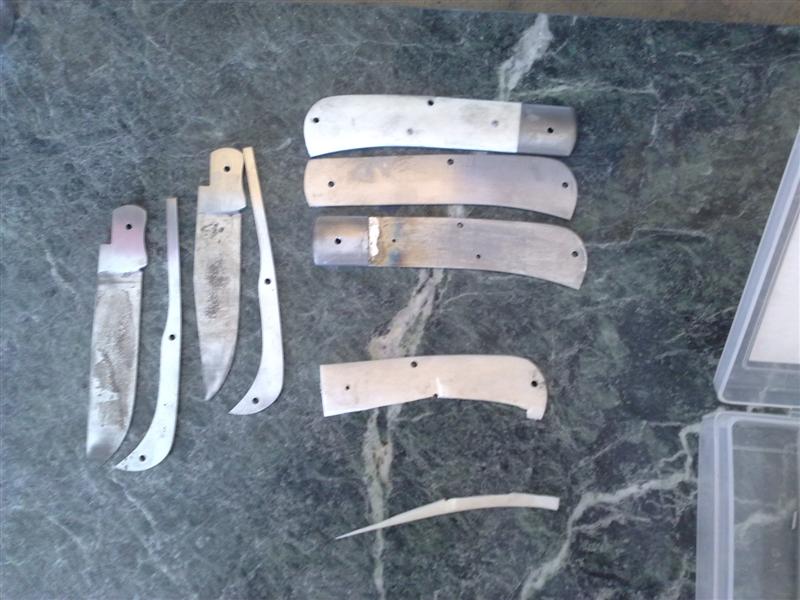
Thanks everyone,
Alistair
Good to know then. Hopefully it will stop things like this from happening in the future. Basically happened when I was peening on the inside of the liner trying to fill in the countersunk hole.
Thanks everyone,
Alistair
Something you can do that may help, is to start a "head" on your scale and shield pins before you insert them - the head goes to the liner side of course. They used to call these somewhat preformed pins "nails", as should be obvious.
-- Dwight
Something you can do that may help, is to start a "head" on your scale and shield pins before you insert them - the head goes to the liner side of course. They used to call these somewhat preformed pins "nails", as should be obvious.
-- Dwight
Hmm, I'll have to give that a go sometime as well. This was my first attempt at using bone on a knife so I still have a lot to learn, I have been using micarta or g10 up til now. I thought I would try out some bone before I get onto some of the more expensive handle materials like stag or MOP. I just wish the pet store here carried the already bleached bone like they do over there. I must have tried 20 different shop in 4 states here before giving up.
Alistair

Looks like this is callimg for a new tutorial on my web site. Where u at Knifehead?
I'm like Charlie, I would rather see them so I know they are there. Make it look like you intended for it to be that way.
That would be great Tony. I have been going through this thread over the last week. 283 pages is a lot to go through
 but there is some good stuff in there and a lot of inspiration.
Alistair


- Joined
- Aug 27, 2004
- Messages
- 2,701
An interesting discussion on the pin treatment on the insides! I personally shoot for the clean look inside and work at getting my pins to "disappear" on the inside liner. I would find it reprehensible to use the clean look to hide the fact that no pins were used or dummy pins used as I am sure most makers would also.
As always I enjoy seeing and learning about Tony's and Reece's knives in this thread:thumbup:
Ken
As always I enjoy seeing and learning about Tony's and Reece's knives in this thread:thumbup:
Ken
KnifeHead
Knifemaker / Craftsman / Service Provider
- Joined
- Apr 5, 2006
- Messages
- 5,581
Here's the count according to KnifeHead:
5 blades
3 springs
2 liner/bolster sub-assemblies (ahHAAAA!)
2 cut liner/spacer
3 bushings
2 pivot pins
1 center pin
2 covers/scales
1 shield
1 shield pin
4 cover/scale pins
26 parts, unless you want to count the pre-assembled bolsters as parts then it would be 30...but, that doesn't count. KnifeHead has spoken.
PS..I would have got the count wrong on the absence of the 2 bushings if 2toes hadn't posted that pic, which Tony shot with his own camera before the knife was assembled.
5 blades
3 springs
2 liner/bolster sub-assemblies (ahHAAAA!)
2 cut liner/spacer
3 bushings
2 pivot pins
1 center pin
2 covers/scales
1 shield
1 shield pin
4 cover/scale pins
26 parts, unless you want to count the pre-assembled bolsters as parts then it would be 30...but, that doesn't count. KnifeHead has spoken.
PS..I would have got the count wrong on the absence of the 2 bushings if 2toes hadn't posted that pic, which Tony shot with his own camera before the knife was assembled.
An interesting discussion on the pin treatment on the insides! I personally shoot for the clean look inside and work at getting my pins to "disappear" on the inside liner. I would find it reprehensible to use the clean look to hide the fact that no pins were used or dummy pins used as I am sure most makers would also.
As always I enjoy seeing and learning about Tony's and Reece's knives in this thread:thumbup:
Ken
Dummy pins would potentially also mean the end user could use the knife harder than the maker intended and have a scale pop off. Not something I would to have happen to anyone that bought one of my knives.
Alistair

waynorth
Dealer / Materials Provider
- Joined
- Nov 19, 2005
- Messages
- 34,914
Here's the count according to KnifeHead: - -
2 liner/bolster sub-assemblies (ahHAAAA!) - -
26 parts, unless you want to count the pre-assembled bolsters as parts then it would be 30...but, that doesn't count. KnifeHead has spoken.
Chief Knives-in-the-Head speaks with a forked tongue!
Chief Charlie-Belly-Hangs-Over says bolsters are parts! 30 it is!!
I think you're going to risk the chance of cracking the handle material if you try to pein the pins that well. It's not a problem if the pins show on the inside as long as the work is clean.
Also, this is a case where making the pins "invisible" on the liner side may not be the wisest choice as a knifemaker -- you *want* people to be able to see that your scales and shield are genuinely properly pinned and peened, not just glued together with "pins" just dropped into blind holes and glued in for appearance.
-- Dwight
I just had another thought. If you have the pins visible on the inside is it possible for dirt or fluff to get stuck in there and scratch up you blade? Has anyone had a problem with this? I haven't heard of it as a problem before.
Alistair
I just had another thought. If you have the pins visible on the inside is it possible for dirt or fluff to get stuck in there and scratch up you blade? Has anyone had a problem with this? I haven't heard of it as a problem before.
Alistair
Nah, being able to see where the pins are is nowhere near the same as pin stubs or edges or burrs sticking out from the liners -- the whole thing is flattened smooth on a granite plate (or some equivalent process) after peening. You wouldn't even be able to feel them if you could get your finger in there somehow.
-- Dwight