Hurricane Hermine blew through here last night, but everyone is safe around my stomping grounds.
I took some time this morning to survey any damage, accompanied by a Fiddleback Forge Patch knife. This model is useful as a small bushcraft knife, EDC knife, adventure knife, and general utility blade.
I have had a soft spot for the patch since it was introduced in July of 2014, but I never had a single one that resonated with me until now. I was lucky to bring this one in on a trade with a fellow forum member.
This one is 5/32" A2. Over the weekend, I put a compound double bevel on it at 15 degrees per side, followed by 20 degrees per side. The cutting edge is robust enough for any EDC or woods related task, yet behind it is a thinner bevel that increases the blades slicing ability. The result is the nice and heavy feel of a thicker knife with the cutting ability of a much thinner blade.
There has been alot of talk recently about osage orange. This is tarara amarilla, also known as tarara or canarywood,
Centrolobium microchaete. Quite distinct from osage, but easy to confuse!
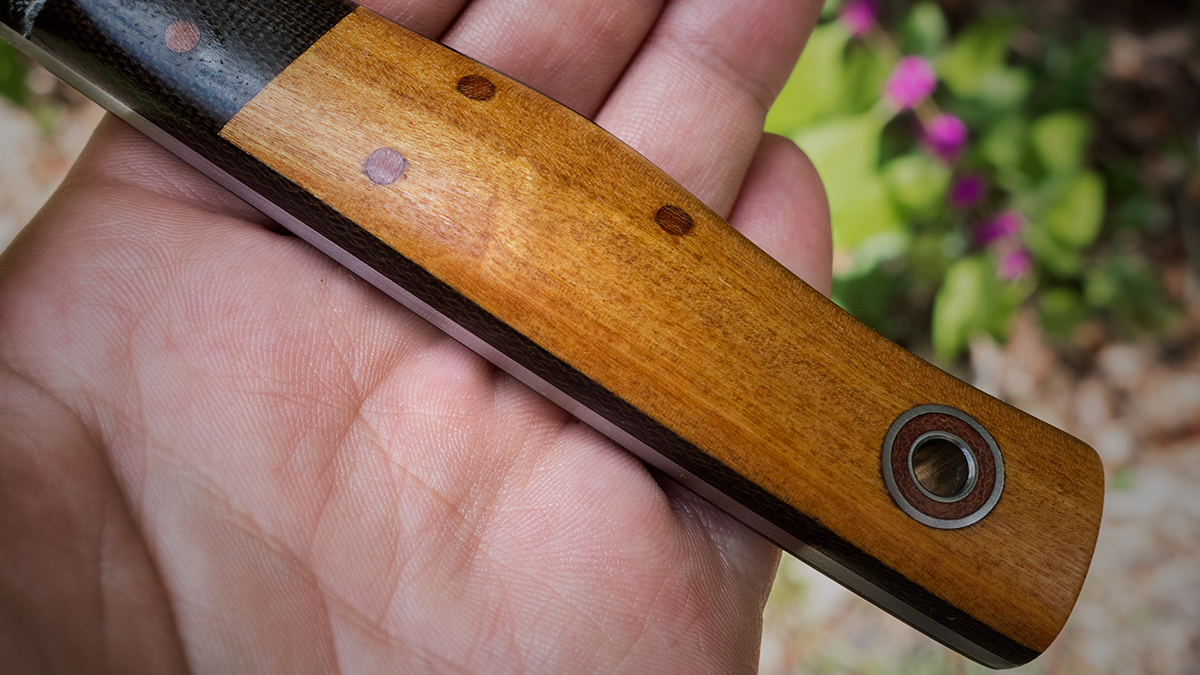
The wood is not stabilized, has a deep, rich, chatoyant amber coloration, and distinctly contrasts the OD green micarta liners and bolsters. Additionally, it is not a threatened species and it is considered non-toxic.
We need to see more of this wood around!
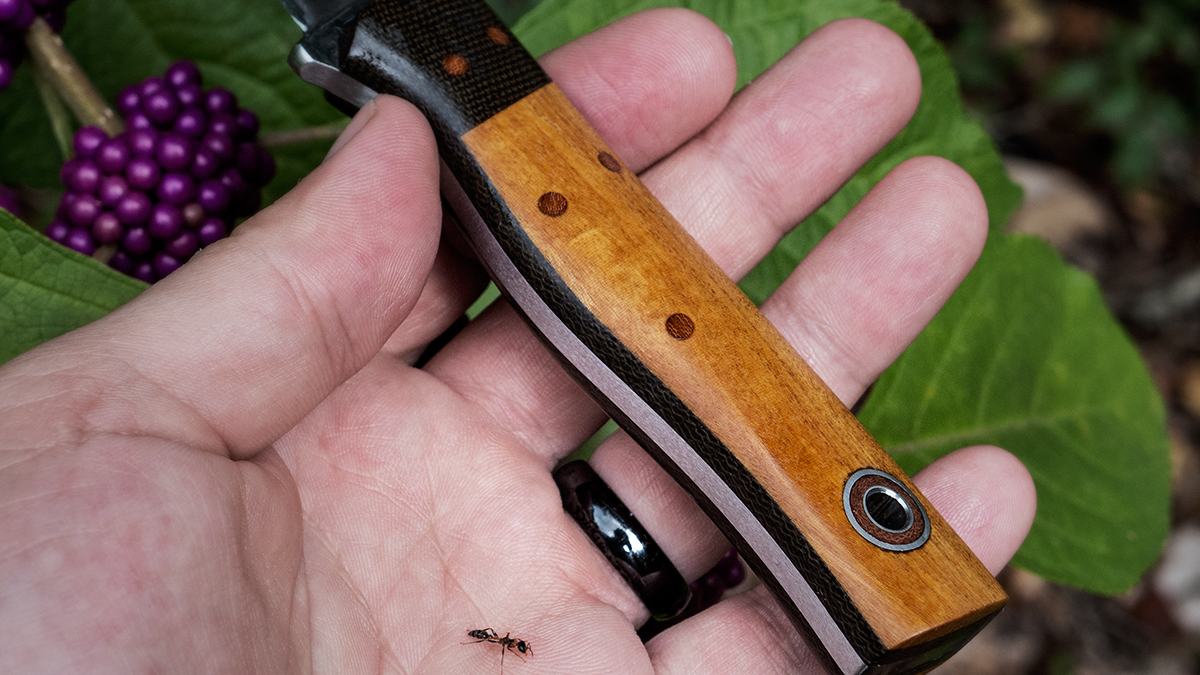
Inspired by our own Mistwalker, I wanted to take some pictures of the knife in hand against a natural backdrop. Here, the edge is highlighted in front of an American beautyberry (
Callicarpa americana) bush.
The spalting on this patch is remarkable.
The grain of tarara is distinct from osage. There are less rays, but more web-like patterning, very much like ziricote. On this piece, there are notable shifts in color from yellow to red.
I have become quite fond of it.